
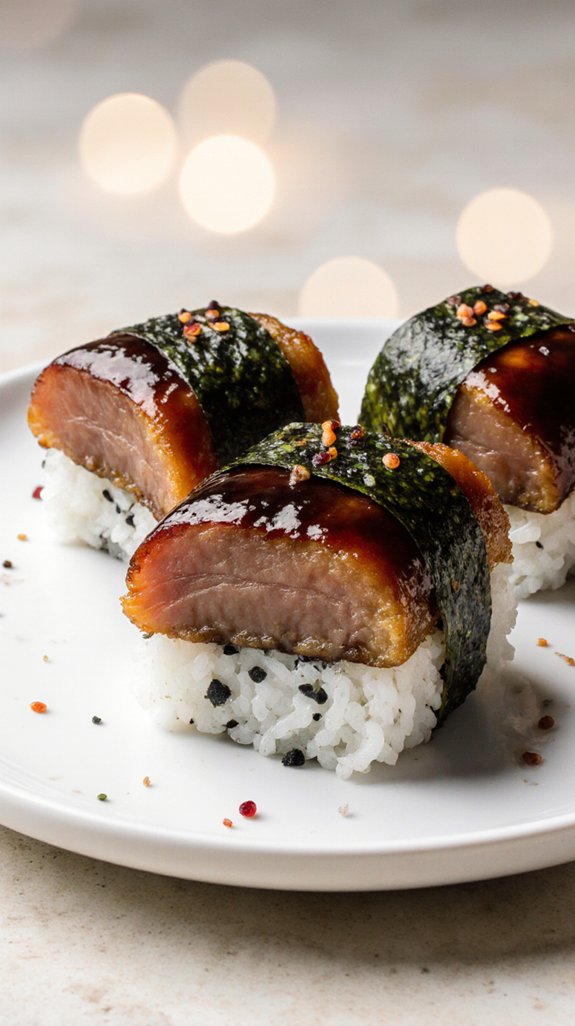
I’ve spent years perfecting my spam musubi game, and I’m convinced the secret lies in getting that perfect golden-brown crust on the spam before assembling. There’s something magical about the contrast between crispy, caramelized meat and soft, seasoned rice wrapped in seaweed. If you’re tired of soggy, basic musubi that falls apart before reaching your mouth, this technique will change everything about how you approach this Hawaiian comfort food classic.
Why You`ll Love this Crispy Spam Musubi

While Spam musubi might seem like a simple snack, this crispy version takes it to a whole new level that’ll make you wonder why you haven’t been making it this way all along.
The crispy texture transforms ordinary Spam into something remarkable, creating a satisfying crunch that contrasts beautifully with the soft, seasoned rice. I love how the caramelized edges add depth to each bite, making it impossible to stop at just one piece.
The flavor balance is what really sets this recipe apart—the sweet-savory glaze perfectly complements the saltiness of the Spam, while the furikake seasoning adds an extra layer of umami that ties everything together.
It’s comfort food at its finest, combining familiar flavors in a way that feels both nostalgic and exciting.
Shop Related Products

Easy and Convenient: With the Musubi Mold Kit, making musubi has never been easier. The kit includes a specially designed mold and press that streamline the process, allowing you to create perfectly shaped musubi every time. Say goodbye to messy and uneven musubi attempts - this kit ensures consistent results with minimal effort,Non-stick, BPA free.

Connect with the Rich History of Japanese Cuisine: With this Japanese egg pan, you'll whip up tasty Tamagoyaki and Korean omelet rolls with ease; It's also ready to produce everything from crispy bacon and juicy steak to fluffy pancakes and delicate crepes

Built for Performance: Forged heavy-gauge aluminum (commercial-grade 3004) construction distributes heat evenly and prevents hot spots
What ingredients are in Crispy Spam Musubi?
The beauty of crispy Spam musubi lies in its simplicity—you only need a handful of accessible ingredients to create this beloved Hawaiian snack. Most of these items can be found at your local grocery store, with perhaps a quick stop at an Asian market for the specialty items. The ingredient list is straightforward, but each component plays a vital role in building the layers of flavor and texture that make this recipe so addictive.
- 5 cups cooked sushi rice (room temperature)
- 12 ounces Spam
- 6 tablespoons soy sauce
- 4 tablespoons mirin
- 4 tablespoons sugar
- 5 sheets nori seaweed (cut in half lengthwise)
- Nori Goma Furikake (Japanese seasoning)
When selecting your ingredients, quality matters. Use short-grain sushi rice for the best texture and stickiness—regular long-grain rice won’t hold together properly. For the Spam, the classic variety works perfectly, though you can experiment with different flavors if you’re feeling adventurous. The mirin and furikake can be found in the Asian section of most supermarkets, but if you can’t locate furikake, you can substitute with sesame seeds and a pinch of salt, though the authentic seasoning really does make a difference in achieving that traditional taste.
How to make this Crispy Spam Musubi

Making crispy Spam musubi is easier than you might think, and the process becomes second nature after you’ve made a batch or two. Start by opening your can of Spam and removing the meat, then thoroughly wash both ends of the can—this clean can will become your molding tool.
Slice the 12 ounces of Spam into 10 equal pieces and fry them in a pan until they’re beautifully crispy on both sides. While the Spam drains on a paper towel, grab another pan and combine 6 tablespoons of soy sauce, 4 tablespoons of mirin, and 4 tablespoons of sugar. Bring this mixture to a boil over medium-high heat, then reduce it to low. Add your crispy Spam slices to this sweet-salty glaze and let them simmer until the sauce thickens and clings to each piece, creating that irresistible sticky coating.
Now comes the fun part—assembling your musubi. Lay one half-sheet of nori on a clean, dry surface with the shiny side down. Position your cleaned Spam can on the lower third of the nori sheet, then fill it with some of your 5 cups of cooked sushi rice, pressing it down until it reaches about three-quarters of the way up the can.
Sprinkle the rice with furikake seasoning for that authentic Japanese flavor, then top it with one glazed Spam slice. Carefully lift the can straight up to release your perfectly shaped rice block, and dip the can in a bowl of water between uses to keep it from sticking.
Fold the nori up and over the Spam and rice, rolling tightly until everything is wrapped. A little moisture on the end of the nori will help seal it shut. Repeat this process with the remaining slices, and you’ll have a platter of delicious Spam musubi ready to enjoy. If you’re looking to upgrade your kitchen setup, consider investing in premium cooking appliances that can help you achieve perfect results every time.
Shop Related Products

Contains 1 - 0.81oz Pack of Organic Sushi Nori Seaweed; Now with 9 Thicker Nori Sheets, but the same amount of seaweed (weight)

PREMIUM RESTAURANT QUALITY : No more buying Sushi. Enjoy and Eat like you are in a Sushi Restaurant. Make your Sushi using our Roasted Seaweed Sheets and your favorite fillings. That’s the perfect way to enjoy a Sushi Night with your family and friends! It is Okay to make a mistake while rolling. It contains 50 sheets, so you still have many chances

50 sheets + FREE Sushi Rolling Mat - Certified Raw - dried at under 85 degrees Fahrenheit - UnCooked, UnHeated
Crispy Spam Musubi Substitutions and Variations
One of the best things about Spam musubi is how adaptable it’s to your personal tastes and dietary needs.
If you’re looking for vegan alternatives, I’ve found that marinated tofu or even thick slices of king oyster mushrooms work wonderfully when fried until crispy. You can also try tempeh for a nutty flavor.
For spicy variations, I love adding a layer of sriracha mayo or sprinkling togarashi seasoning over the rice. Some people mix kimchi into their rice for extra kick, and that’s become one of my favorite tweaks.
You can even swap the teriyaki glaze for a gochujang-based sauce if you want Korean-inspired heat.
The possibilities really are endless, so don’t be afraid to experiment with what you have.
What to serve with Crispy Spam Musubi
Wondering what sides will complete your Spam musubi meal? I’ve got some fantastic sides suggestions that’ll make your plate shine.
Try serving edamame sprinkled with sea salt for a protein-packed appetizer, or whip up a crisp cucumber salad with rice vinegar dressing.
Miso soup works beautifully as a warm companion, while pickled vegetables add that tangy crunch I absolutely love.
For drink pairings, you can’t go wrong with green tea—it’s invigorating and cuts through the richness of the Spam perfectly.
If you’re feeling adventurous, try ramune, that fun Japanese soda with the marble.
Beer lovers will appreciate a light lager, while sake offers a more traditional touch.
These combinations create a balanced, satisfying meal that’ll have everyone asking for seconds.
Final Thoughts
Spam musubi has earned its spot as one of my favorite comfort foods, and I’m thrilled you’re giving this recipe a try.
There’s something special about the flavor balance between salty Spam, sweet teriyaki glaze, and seasoned rice wrapped in crisp nori. It’s pure culinary nostalgia in every bite, reminding me of lazy beach days and family gatherings.
The beauty of this recipe lies in its simplicity—you don’t need fancy equipment or hard-to-find ingredients. That empty Spam can becomes your perfect mold, making the process straightforward and fun.
Whether you’re packing these for lunch, serving them at parties, or enjoying a late-night snack, spam musubi delivers satisfying comfort every time.
I hope this becomes a staple in your kitchen too.
Frequently Asked Questions
Can I Make Spam Musubi Ahead of Time and How Long Does It Last?
Yes, I’ll share my make ahead storage tips: you can prepare spam musubi up to 24 hours in advance. I wrap them individually in plastic wrap and refrigerate. They’re best consumed within one day for ideal freshness.
What’s the Best Way to Reheat Leftover Spam Musubi?
I’ll reheat your spam musubi using the oven method at 350°F for 10 minutes to restore crispiness. Alternatively, I’ll use microwave settings on medium power for 30-45 seconds, though it won’t be as crispy.
Can I Use a Different Mold if I Don’t Have a Spam Can?
I’d recommend using alternative molds like a small rectangular container, cookie cutter, or even a clean tuna can. You can create creative shapes while maintaining the traditional musubi structure. Just guarantee whatever you choose packs the rice firmly and evenly.
Do I Need to Use Sushi Rice or Can I Substitute Regular Rice?
You can substitute regular rice, but I recommend sushi rice for best results. Sushi rice benefits include its sticky texture that holds the musubi together perfectly. Regular rice options work but may crumble more easily when eating.
Should Spam Musubi Be Served Warm or at Room Temperature?
I prefer serving spam musubi warm or at room temperature—both work beautifully! The ideal serving temperature depends on personal preference. Warm musubi offers crispy spam, while room temperature makes it perfect for portable meals.