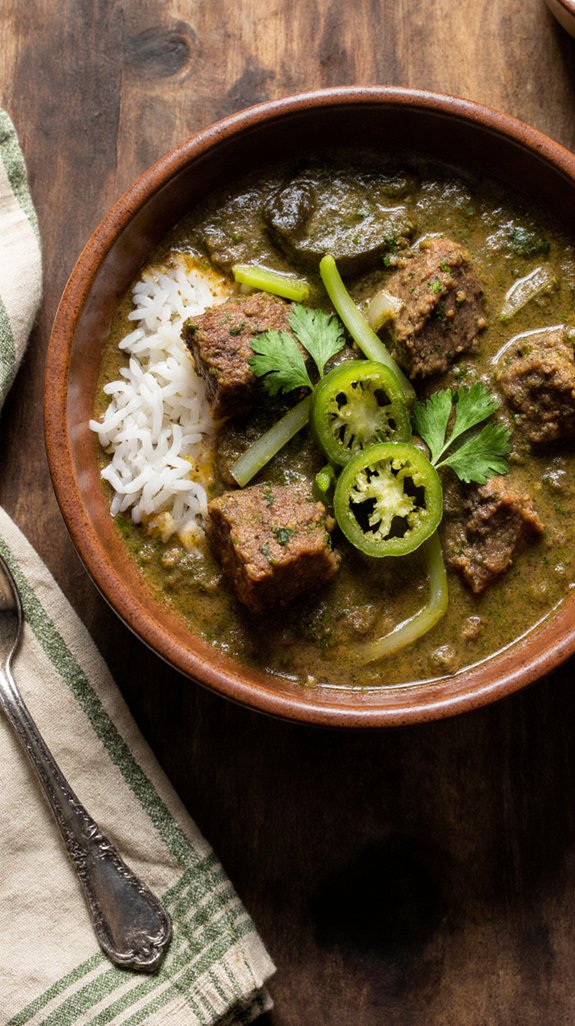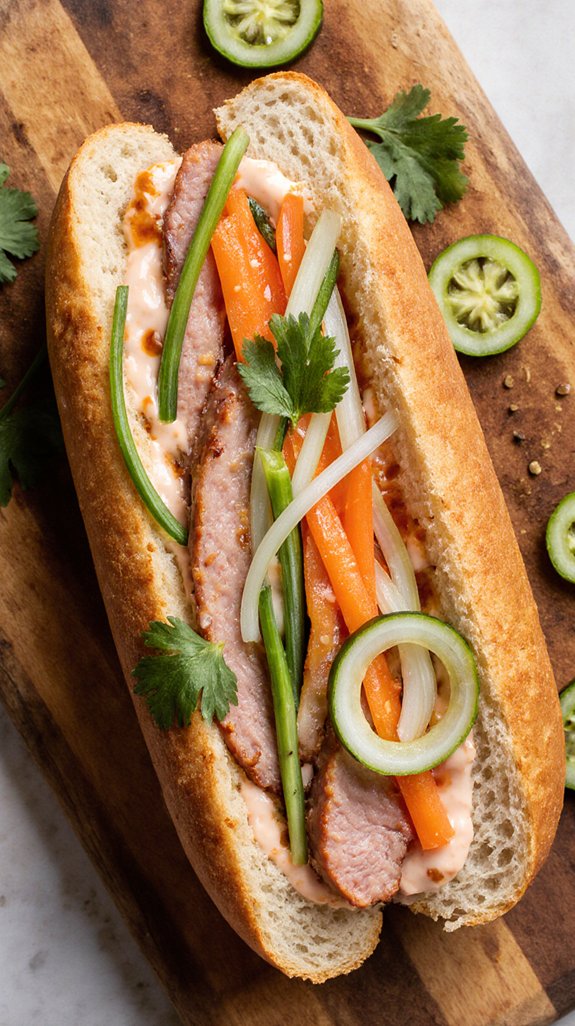
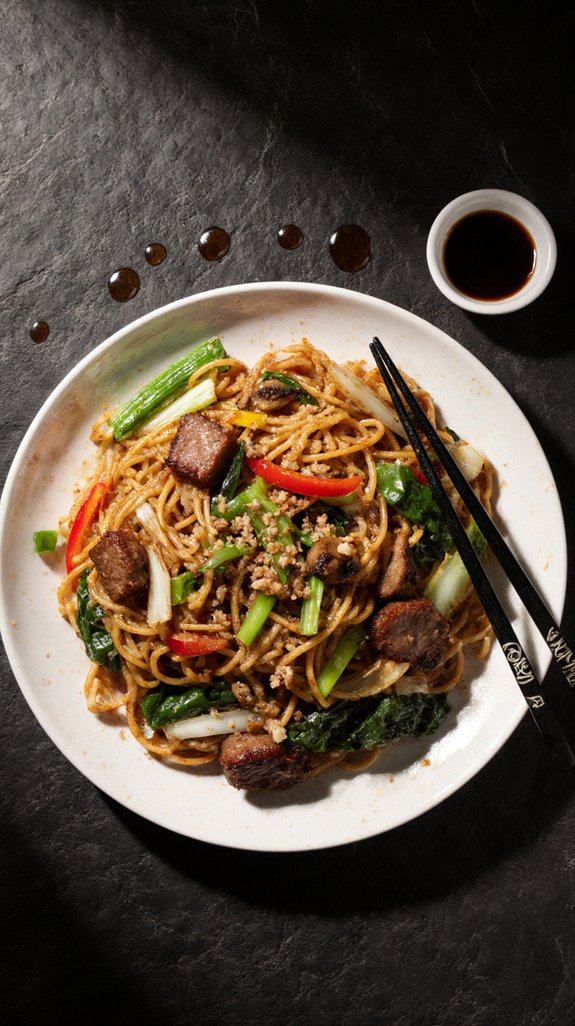
I’ve been making chow mein for years, and I’m convinced the secret to restaurant-quality results lies in getting those noodles perfectly crispy. You know that satisfying crunch you get from your favorite takeout spot? I’m going to show you exactly how to achieve it at home, along with the authentic techniques that transform simple ingredients into something truly special.
Why You`ll Love this Authentic Chow Mein with Crispy Noodles
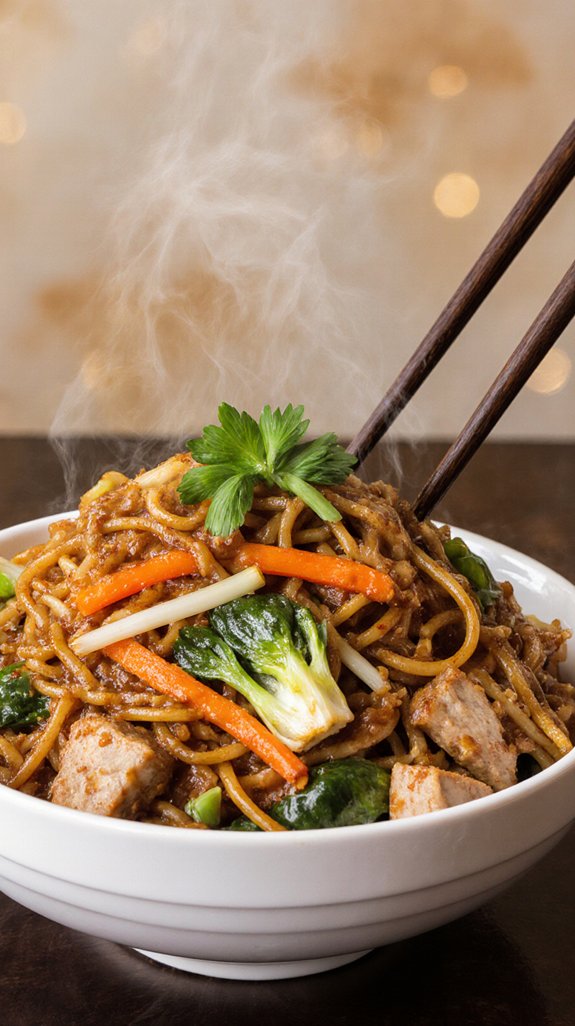
When I first mastered this authentic chow mein recipe, I couldn’t believe how much better it tasted than takeout—and it’s actually simpler to make than you’d think.
The flavor profile hits every note perfectly, with savory soy sauce complementing tender meat and crisp vegetables.
What really sets this dish apart is the incredible texture contrast you’ll get from pan-frying those noodles until they’re golden and crunchy on the edges while staying tender inside.
You’re combining fresh ingredients with straightforward techniques that deliver restaurant-quality results in your own kitchen.
Plus, you can customize the vegetables and protein to match your preferences.
This recipe gives you complete control over seasoning and freshness, making every bite more satisfying than anything you’d order in.
What ingredients are in Authentic Chow Mein with Crispy Noodles?
The beauty of authentic chow mein lies in its balanced combination of protein, vegetables, and noodles, all brought together with the right seasonings. This recipe calls for ingredients you can easily find at your local grocery store or Asian market, with flexibility built in for substitutions based on your preferences and what’s available.
The ingredient list is straightforward and designed to create layers of flavor and texture that make this dish truly memorable.
Ingredients:
- 1 lb pork stew meat or 2 1/2 cups cut up chicken meat
- 1 1/2 teaspoons seasoning salt
- 1 medium onion, chopped
- 1-2 garlic cloves
- 1 cup celery, chopped
- 3/4 cup red, yellow, and orange pepper, chopped (you can use all or only one color of pepper)
- 5 mixed mushrooms
- 1/2 cup bamboo shoots
- 3 cups white cabbage, thinly sliced
- 1/2 (14 ounce) bag chow mein noodles
- 3 tablespoons soy sauce
- Salt, to taste
- Pepper, to taste
- Margarine or oil for frying
When selecting your ingredients, you have flexibility with both the protein choice and the vegetables. The recipe works equally well with pork or chicken, allowing you to use whichever you prefer or have on hand.
For the peppers, you can create a colorful presentation by using all three colors, or simplify by sticking with just one variety. The mixed mushrooms add an earthy depth, but you can substitute with whatever mushroom varieties are available.
Make certain your cabbage is sliced thinly to guarantee it cooks evenly and integrates well with the other vegetables and noodles.
How to make this Authentic Chow Mein with Crispy Noodles
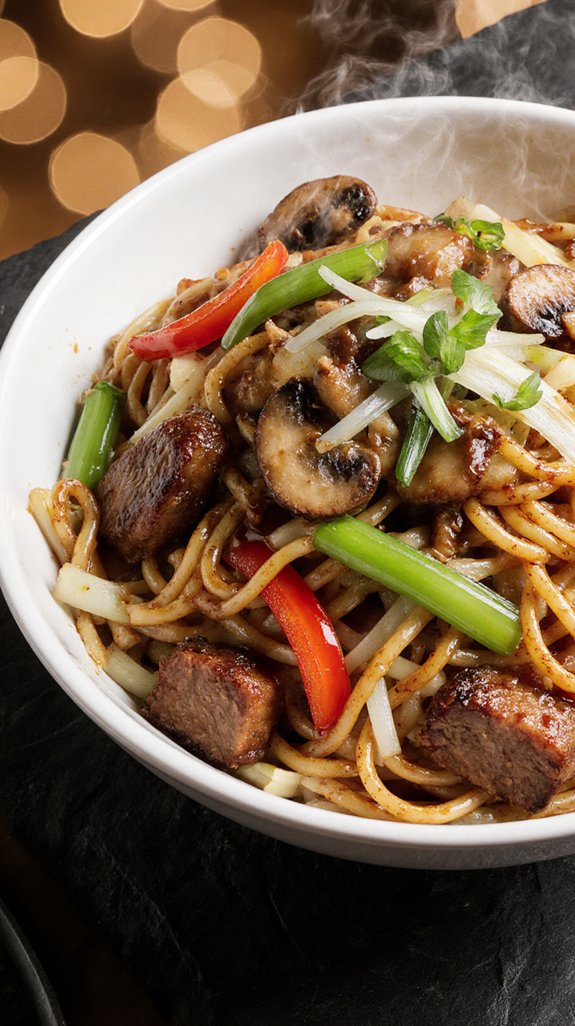
Making authentic chow mein is easier than you might think, and the process comes together quickly once you have all your ingredients prepped and ready to go. Start by heating some margarine or oil in a large frying pan over medium-high heat, then add your 1 lb of pork stew meat or 2 1/2 cups of cut-up chicken meat. Season the meat with 1 1/2 teaspoons of seasoning salt as it cooks, allowing it to brown nicely on all sides.
Once the meat is browned, add your 1 medium chopped onion and 1-2 garlic cloves to the pan, frying them for approximately 2 minutes until they become fragrant and the onion starts to soften. This creates the aromatic base that will flavor your entire dish.
Next, it’s time to add all your vegetables in stages to guarantee they cook properly. Toss in the 1 cup of chopped celery, 3/4 cup of chopped peppers, 5 mixed mushrooms, 1/2 cup of bamboo shoots, and 3 cups of thinly sliced white cabbage, then sauté everything together until the vegetables become soft but still retain a bit of crunch.
While the vegetables are cooking, bring a separate pot of water to a boil for your noodles. When the water is boiling, add salt according to your preference and cook the 1/2 bag of chow mein noodles for approximately 4 minutes, which is shorter than most package directions suggest to prevent them from getting too soggy.
Once your noodles are done, drain them thoroughly and give them a quick rinse with hot water to remove excess starch. Add the noodles directly to your frying pan with the meat and vegetables, then pour in 3 tablespoons of soy sauce and mix everything together until well combined.
Taste your chow mein and adjust the seasoning with additional salt and pepper as needed. The result is a perfectly balanced dish where crispy-tender noodles mingle with savory meat and vegetables, all coated in that signature soy sauce flavor that makes chow mein so irresistible. Having the right premium kitchen gadgets can make preparing this dish even more efficient and enjoyable.
Shop Related Products

HexClad’s Hybrid technology features a laser-etched hexagonal nonstick surface that combines both stainless-steel and our TerraBond ceramic coating for the ultimate sear and easy cleaning.

HexClad’s Hybrid technology features a laser-etched hexagonal nonstick surface that combines both stainless-steel and our TerraBond ceramic coating for the ultimate sear and easy cleaning.

[Healthy Cooking]Our stir fry pan made with 316 stainless steel,durable and more sturdy-resistant. SGS approved,Free of PFOS, PFOA. Requiring less oil for cooking,and a healthy cooking environment for you and your family.
Authentic Chow Mein with Crispy Noodles Substitutions and Variations
One of the best things about chow mein is how adaptable it’s to whatever ingredients you have on hand or dietary preferences you need to accommodate. For chow mein variations, you can swap pork or chicken for beef, shrimp, or tofu.
I’ve even made vegetarian versions using just mushrooms and extra vegetables. If you can’t find chow mein noodles, noodle substitutes like lo mein noodles, ramen noodles, or even spaghetti work surprisingly well.
You can also experiment with different vegetables—snow peas, bok choy, carrots, or bean sprouts all make excellent additions. For a spicier kick, I sometimes add chili garlic sauce or sriracha to the soy sauce.
The key is maintaining the balance between your protein, vegetables, and noodles while keeping that signature savory flavor.
Shop Related Products

Asian style chow mein stir-fry noodles

Add a touch of Asian-inspired flavor to your favorite recipes with La Choy Chow Mein Noodles

What to serve with Authentic Chow Mein with Crispy Noodles
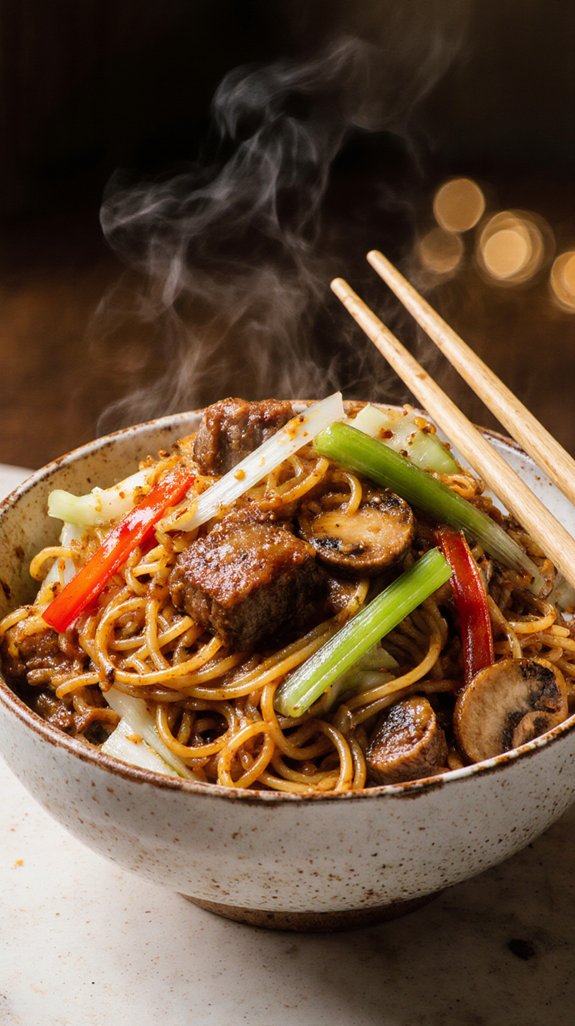
While chow mein is hearty enough to stand alone as a complete meal, I love pairing it with a few complementary dishes to create a full Chinese-inspired feast.
For side dishes, I recommend starting with crispy spring rolls or steamed dumplings as appetizers. A light cucumber salad with rice vinegar adds a revitalizing contrast to the savory noodles, while egg drop soup or hot and sour soup makes an excellent accompaniment.
If you want additional vegetables, consider serving stir-fried bok choy or garlic green beans.
For beverage pairings, hot jasmine tea is my top choice, though iced green tea works beautifully too. If you prefer something sweeter, a cold glass of lychee juice complements the dish perfectly without overpowering the flavors.
Final Thoughts
After trying countless variations over the years, I’ve come to appreciate that authentic chow mein isn’t just about following a recipe—it’s about understanding the balance between textures and flavors.
The crispy noodles provide that essential crunch, while the tender vegetables and savory protein create harmony in every bite.
Don’t be intimidated by ingredient substitutions—swap chicken for pork, use whatever colorful peppers you have on hand, or experiment with different mushroom varieties.
These cooking tips I’ve shared will help you master the technique, but remember that practice makes perfect.
The beauty of chow mein lies in its versatility, so feel free to adjust seasonings and ingredients to match your preferences.
With each attempt, you’ll develop your own authentic version that keeps everyone coming back for seconds.
Frequently Asked Questions
Can I Make Chow Mein Ahead of Time and Reheat It Later?
I’d recommend making chow mein fresh for best texture, but you can meal prep components separately. Store noodles apart from the meat and vegetables, then combine when reheating. Use reheating tips like quick stir-frying to maintain crispness.
How Do I Store Leftover Chow Mein and How Long Does It Last?
I’ll store your leftover chow mein in an airtight container in the refrigerator for proper leftover storage. The chow mein lifespan is typically 3-4 days when refrigerated, ensuring safe consumption and maintaining quality.
What’s the Difference Between Chow Mein and Lo Mein Noodles?
The main difference I’ll explain is in cooking techniques: chow mein noodles are stir-fried until crispy, while lo mein uses softer boiled noodles tossed with sauce. Both noodle types start similarly but get prepared differently.
Can I Use Frozen Vegetables Instead of Fresh Ones for This Recipe?
Yes, you can use frozen vegetables, and they offer great frozen vegetable benefits like convenience and longer shelf life. However, fresh vegetables provide better texture comparison since frozen ones release more moisture and may become softer when cooked.
How Do I Prevent the Noodles From Sticking Together After Cooking?
I’ll guarantee proper noodle separation by rinsing them thoroughly with hot water after draining, which removes excess starch. Then I’ll immediately toss them with the vegetables and meat to prevent sticking together.