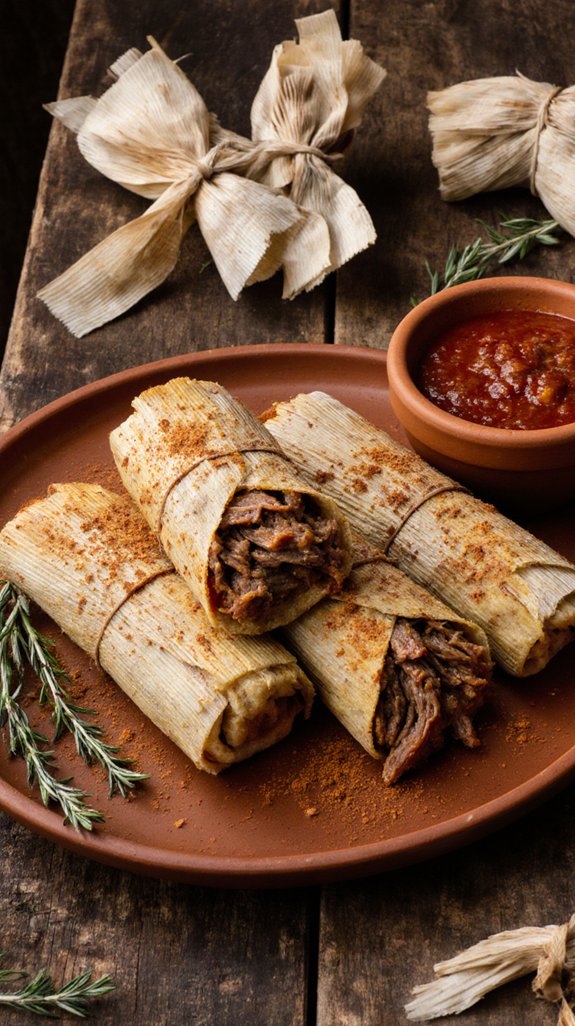
I’ve spent years perfecting my tamale recipe, and I’m excited to share what I’ve learned with you. Making authentic tamales from scratch requires time and patience, but the result is something you simply can’t buy at a store. The tender masa, the perfectly seasoned filling, and that incredible moment when you unwrap a steaming tamale—it’s all part of an experience that transforms your kitchen into something special.
Why You`ll Love these Authentic Homemade Tamales
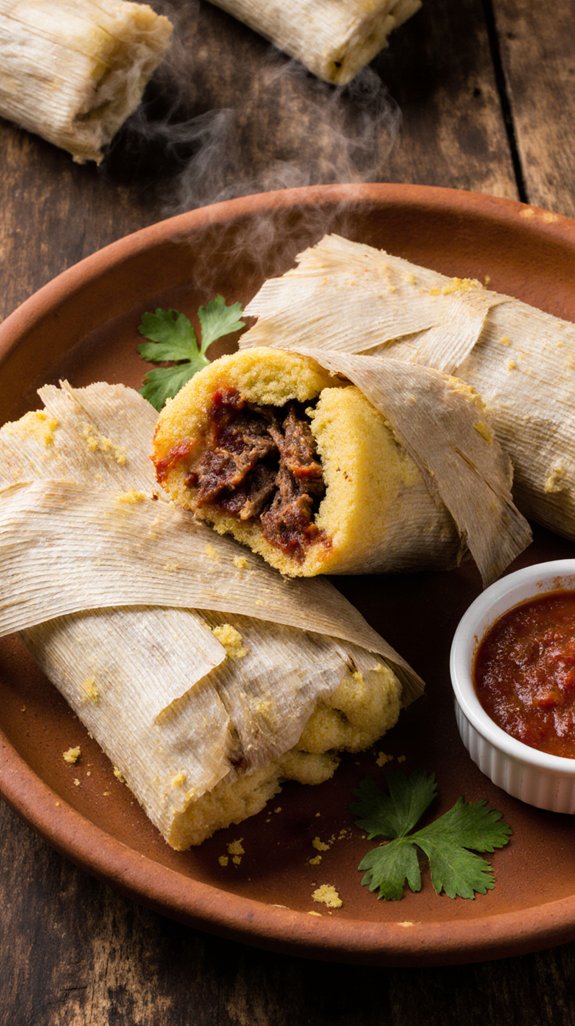
Why should you make tamales from scratch when store-bought versions are so convenient?
I’ll tell you exactly why: homemade tamales connect you to rich cooking traditions that’ve been passed down through generations. When you make them yourself, you control every ingredient, creating tender masa and perfectly seasoned pork that no store can match.
There’s something special about the process too. Making tamales brings people together, turning meal prep into memorable family gatherings where everyone helps spread masa, add filling, and fold corn husks. The aroma filling your kitchen as they steam is absolutely incredible.
Plus, you’ll end up with dozens of tamales you can freeze and enjoy for weeks, making all that effort totally worthwhile.
What ingredients are in Authentic Homemade Tamales?
The foundation of authentic homemade tamales lies in a carefully selected group of ingredients that work together to create the perfect balance of flavors and textures. At the heart of these traditional Mexican delicacies is the masa dough made from cornmeal and shortening, which forms the tender outer layer. The savory pork filling gets its depth from a blend of aromatic spices and the pork’s own cooking liquid, which also enriches the masa itself.
For the Masa (Corn Shells):
- 1 lb cornmeal
- 1/2 lb shortening
- 4 teaspoons salt
- 2 2/3 cups warm pork stock
For the Pork Filling:
- 2 lbs lean boneless pork
- 4 tablespoons chili powder
- 4 tablespoons toasted paprika
- 2 teaspoons ground cumin
- 1 teaspoon oregano
- 1 teaspoon ground cayenne pepper
- 2 teaspoons black pepper
- 1 teaspoon salt
- 4 garlic cloves, pressed
- 1 cup pork stock
Other Essentials:
- 50 corn shucks (husks), trimmed to approximately 4×6 inches
- Water for soaking husks and boiling pork
When gathering your ingredients, pay special attention to the corn husks, which need to be soaked for several hours in hot water until they become soft and pliable.
The pork stock serves double duty in this recipe—it’s used both to create a moist, flavorful masa and to bind the spices into the shredded pork filling. Make sure to reserve all the stock after boiling the pork, as any leftovers can be transformed into a delicious sauce to serve alongside your finished tamales.
How to make these Authentic Homemade Tamales
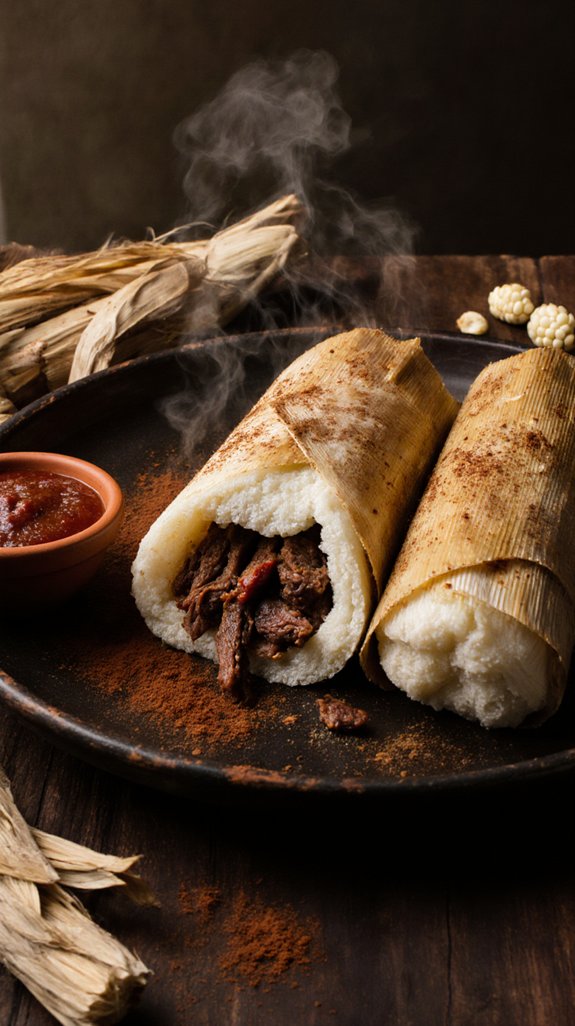
Making authentic homemade tamales is a rewarding process that unfolds in several satisfying stages.
Begin by preparing your filling: cut 2 lbs of lean boneless pork into three chunks and boil them in water for about 45 minutes, or until the meat is tender enough to shred easily. This is essential—don’t discard that cooking liquid! Reserve all the pork stock for later use.
Once the meat has cooled slightly, remove any excess fat and shred it by hand, similar to how you’d prepare pulled pork for barbecue. In a mixing bowl, combine the shredded pork with 1 cup of the reserved stock, 4 tablespoons each of chili powder and toasted paprika, 2 teaspoons ground cumin, 1 teaspoon oregano, 1 teaspoon ground cayenne pepper, 2 teaspoons black pepper, 1 teaspoon salt, and 4 pressed garlic cloves. Mix everything thoroughly and pop it in the fridge while you prepare the masa.
While your 50 corn shucks soak in hot water for several hours until they’re soft and pliable, it’s time to make the masa. Using your hands or a mixer, work 1/2 lb of shortening into 1 lb of cornmeal until well combined. Add 4 teaspoons of salt, then gradually mix in 2 2/3 cups of warm pork stock until you have a thick, spreadable paste.
Now comes the assembly, which takes a bit of practice but becomes easier with each tamale. Remove one corn shuck from the water (keeping the rest submerged so they stay workable), and using an offset spatula or table knife, spread some masa into the middle of the shuck in a rectangle about 2×4 inches and roughly 1/8 inch thick. Having the right Mexican cooking tools makes spreading the masa and assembling tamales significantly easier and more efficient. Place a tablespoon of the seasoned pork filling down the center of the masa.
Here’s where the technique matters: carefully roll the tamale so the masa wraps around the filling, using the corn shuck as a guide rather than rolling it inside. Think of it like using a bamboo mat to roll sushi—the shuck helps you shape the tamale but shouldn’t end up tucked inside the masa itself. The shuck should wrap loosely around the finished tamale since the masa will expand during steaming.
Tie both ends of the shuck closed and set the tamale aside. Repeat this process until you’ve used all your ingredients, then arrange the tamales in a single layer on a steamer rack set over boiling water. Steam them for 1 hour, and if you have any leftover stock, you can transform it into a flavorful sauce to serve alongside your beautifully handcrafted tamales.
Shop Related Products

[Foldable Design for Easy Storage]:This collapsible foot spa can be easily folded, the size after folding is only: 3.1”*16.9”*12.6”,The foot tub can be easily placed under the bed, in the drawer, car, behind the door, does not take up more space, It is very suitable for travel and camping.
White 12 Quart Dishpan is ideal for a variety of basic household needs and is designed to fit inside of a standard single or twin-sized sink.

COLLAPSIBLE PEDICURE FOOT BATH: Not like traditional foot bath basin as big and heavy. Our basin tub folds up into portable size and opens up into a bucket. Light weight and compact size when folding. Foldable size is about 17X13.2X2.8 inches, weight is about 1.4 lbs. Easy to pack, store or dry after soaking your feet.
Authentic Homemade Tamales Substitutions and Variations
When you’re craving tamales but find yourself missing an ingredient or two, don’t worry—this recipe is surprisingly adaptable to what you have on hand or your dietary preferences.
For alternative fillings, try shredded chicken, beef, or cheese with roasted peppers instead of pork. I’ve made vegetarian options using black beans, roasted vegetables, or potatoes with cheese that turned out incredibly satisfying.
You can adjust spice levels by reducing the cayenne pepper and chili powder for milder tamales, or adding more for extra heat.
For masa variations, substitute half the shortening with lard for a more traditional flavor, or use vegetable shortening to keep them vegetarian. The cornmeal-to-liquid ratio stays the same regardless of your modifications.
Shop Related Products

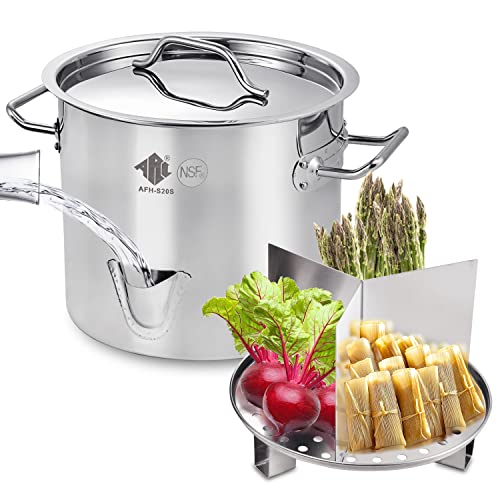
PREMIUM STAINLESS STEEL: ARC Vegetable steamer pot and parts are made of multi-ply construction high-quality food-grade stainless steel. It is durable and easy to clean

What to serve with Authentic Homemade Tamales
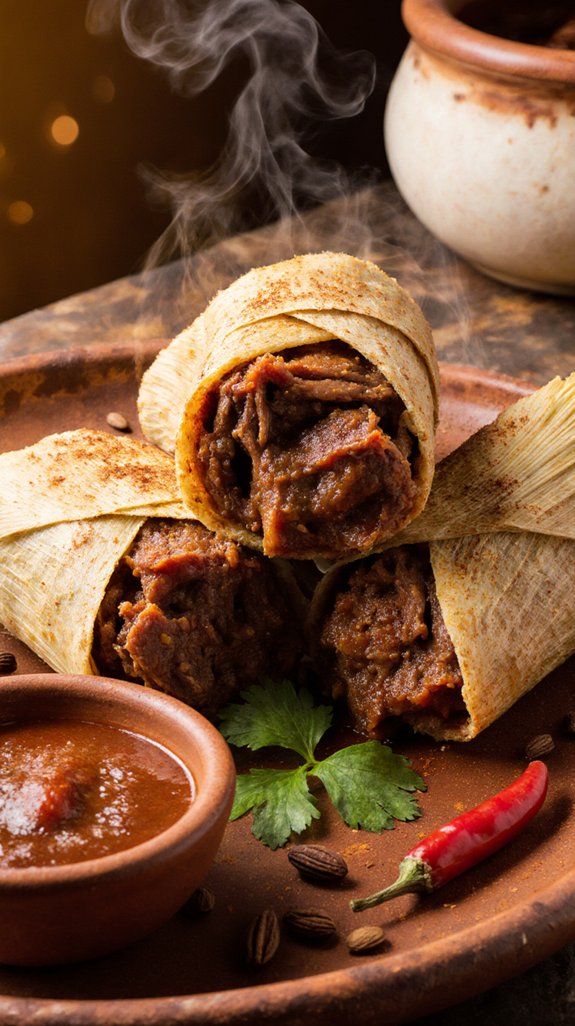
Authentic tamales deserve accompaniments that complement their rich, savory flavors without overshadowing the main attraction. My favorite sides suggestions include Mexican rice, refried beans, or a simple green salad with lime vinaigrette.
These options balance the hearty masa without competing for attention. For condiment pairings, I always set out fresh salsa verde, which adds brightness, and crema or sour cream to cool the spice.
Pickled jalapeños and sliced radishes provide crunchy texture and acidity that cut through the richness. Don’t forget warm tortilla chips and guacamole for guests to enjoy while the tamales steam.
I’ve found that keeping accompaniments simple allows the tamales’ complex flavors to shine. A cold Mexican beer or horchata makes the perfect beverage pairing.
Final Thoughts
Tamale-making isn’t just about following a recipe—it’s about creating a tradition you’ll want to repeat year after year.
I’ve shared my cooking tips throughout this guide, from working the shortening into the cornmeal to achieving that perfect masa consistency. The flavor enhancements come from toasting your paprika and properly seasoning your shredded pork with garlic, cumin, and oregano.
Remember, steaming for the full hour guarantees your tamales cook through completely. Don’t get discouraged if your first batch isn’t perfect—rolling tamales takes practice, and each attempt teaches you something new.
Once you master this recipe, you’ll have a skill that brings people together, fills your kitchen with incredible aromas, and creates memories that last far beyond the meal itself.
Frequently Asked Questions
Can I Freeze Tamales and How Long Will They Stay Fresh?
Yes, I can freeze tamales! Following proper freezing tips, I’ll wrap them individually in plastic wrap, then store them in freezer bags. They’ll stay fresh for up to six months with proper storage duration maintained.
How Do I Know When the Tamales Are Fully Cooked?
I’ll know my tamales are fully cooked after following the cooking times of steaming for 1 hour. I can do a texture check by unwrapping one—the masa should pull away cleanly from the corn shuck.
What’s the Best Way to Reheat Leftover Tamales?
I’ll reheat leftover tamales using the microwave method for speed—wrapping them in damp paper towels for two minutes. Alternatively, I prefer the oven technique, steaming them at 325°F for twenty minutes for better texture.
Can I Make Tamales Without a Steamer?
Yes, I can make tamales without a steamer using alternative cooking methods. Common tamale substitutes include a metal colander over boiling water, a makeshift rack in a large pot, or even slow cookers with elevated settings.
How Far in Advance Can I Prepare Tamales Before Steaming?
I’d recommend assembling your tamales up to 24 hours before steaming them. This advance planning actually helps with tamale preparation since the flavors meld beautifully. Just refrigerate them covered, then steam directly from cold.