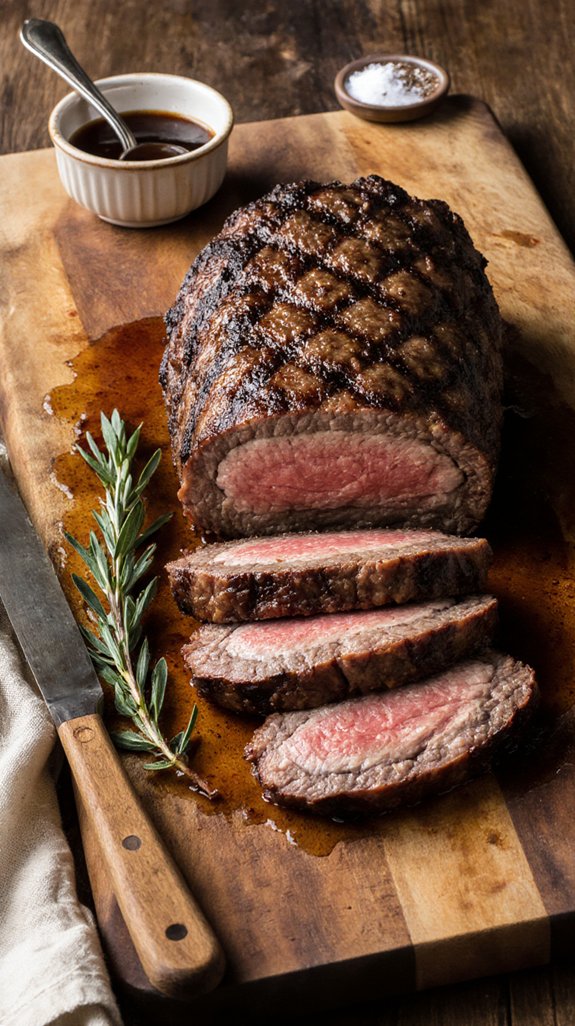
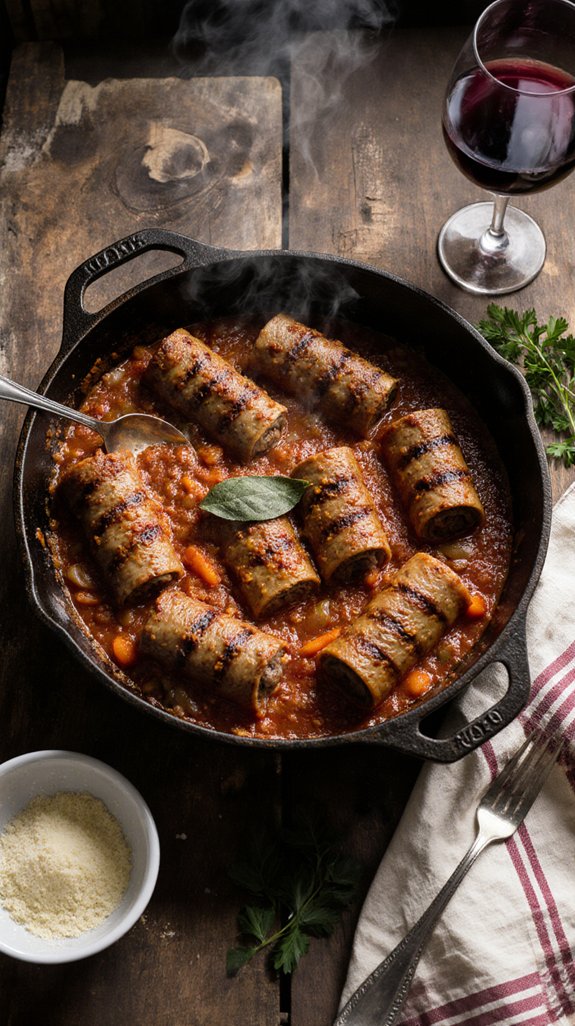
I’ve been making braciole for years, and I’m convinced it’s one of those dishes that truly gets better the longer it simmers. There’s something magical about rolling thin slices of beef around a savory filling, then letting them braise for hours in tomato sauce until they practically melt off the fork. The best part? Your whole house smells incredible, and you’ll feed everyone at your table without breaking a sweat.
Why You`ll Love this Sunday Sauce Braciole
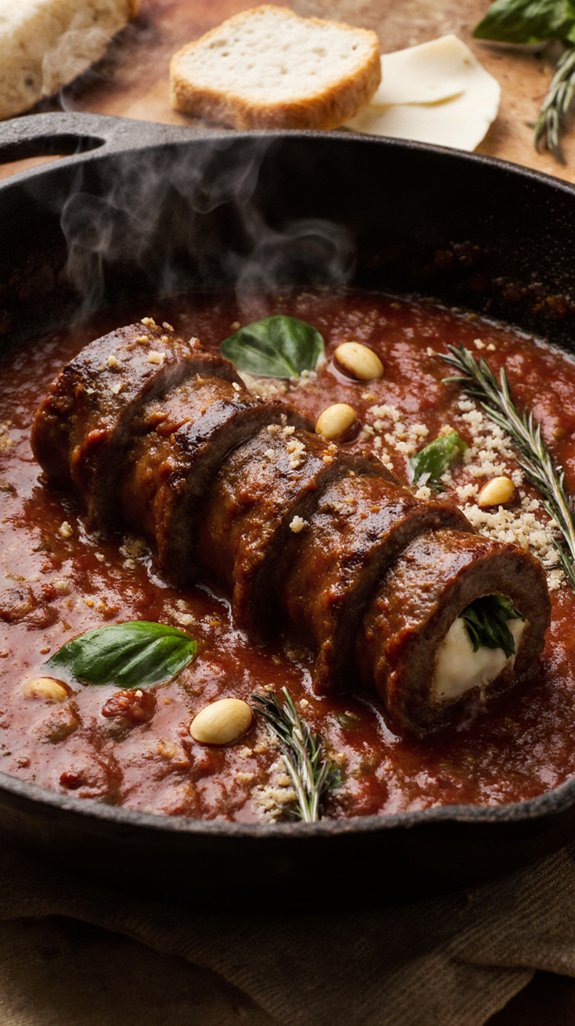
While many recipes promise comfort and flavor, this Sunday Sauce Braciole delivers something truly special—it’s the kind of dish that transforms your kitchen into an Italian grandmother’s home.
I love how these tender beef rolls, stuffed with savory Italian sausage and herbs, create layers of rich flavor that develop during a slow simmer in wine-spiked tomato sauce.
This is authentic Italian cuisine at its finest, combining simple ingredients into something extraordinary. The recipe feeds a crowd, making it perfect for Sunday dinners when family gathers around the table.
What really makes this braciole stand out is how the meat becomes fork-tender while the sauce deepens into pure comfort food magic.
It’s a dish that rewards patience with unforgettable taste.
What ingredients are in Sunday Sauce Braciole?
This hearty Italian braciole brings together quality beef, savory Italian sausage, and aromatic herbs in a rich tomato-wine sauce. The ingredient list is straightforward but carefully balanced, combining protein with fresh vegetables, herbs, and pantry staples that build deep, layered flavors during the slow cooking process.
For the Braciole:
- 2 1/2 lbs round steaks
- 1/2 lb Italian sausage
- 1/2 cup chopped parsley
- 1/4 cup grated parmesan cheese
- 1 clove garlic, minced
- 1 teaspoon Italian seasoning mix
- 2 teaspoons salt (divided)
- 1/2 teaspoon lemon-pepper seasoning
- 2 tablespoons olive oil
For the Sauce:
- 1 large onion, chopped (1 cup)
- 1/2 cup chopped carrot
- 1 1/2 cups dry red wine
- 1 (16 ounce) can plum tomatoes
- 1 (6 ounce) can tomato paste
- 1 bay leaf
When selecting your ingredients, choose round steaks that are relatively uniform in thickness for easier pounding and rolling. The Italian sausage should be removed from its casing before mixing with the other filling ingredients. For the wine, select a dry red that you’d enjoy drinking, as it contributes considerably to the sauce’s depth. Fresh parsley makes a noticeable difference in the filling, though dried can work in a pinch. Having wooden picks or kitchen string on hand is essential for securing the rolls during cooking.
How to make this Sunday Sauce Braciole
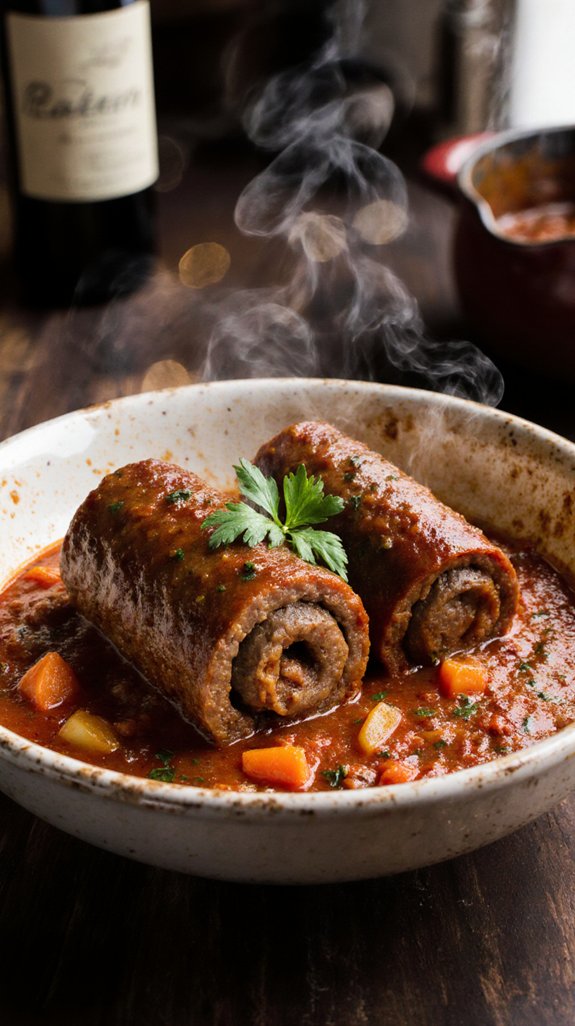
Making braciole is easier than you might think, though it does require a bit of patience and love. Start by trimming all the fat from your 2 1/2 lbs of round steaks, then cut the meat into 8 equal pieces. Using a wooden mallet, pound each piece until it’s very thin—this tenderizes the meat and makes it easier to roll.
While you’re doing this, remove the casing from 1/2 lb of Italian sausage and break it up in a medium bowl. Mix in 1/2 cup chopped parsley, 1/4 cup grated parmesan cheese, 1 clove of minced garlic, 1 teaspoon Italian seasoning, 1 teaspoon salt, and 1/2 teaspoon lemon-pepper seasoning until everything is well combined. Spread about 2 heaping tablespoons of this savory sausage mixture onto each flattened steak, then roll them up tightly like a jelly roll. Secure each roll with wooden picks or tie them with kitchen string so they hold their shape during cooking.
Heat 2 tablespoons of olive oil in a Dutch oven and brown the beef rolls in batches—about 3 or 4 at a time—until they develop a nice golden crust on all sides. Remove them to a plate while you work on the sauce.
In the same pot, add 1 cup of chopped onion and 1/2 cup chopped carrot, cooking them for about 5 minutes until they soften. Pour in 1 1/2 cups dry red wine, scraping up any flavorful brown bits from the bottom of the pot. Stir in one 16-ounce can of plum tomatoes, one 6-ounce can of tomato paste, the remaining 1 teaspoon of salt, and 1 bay leaf. Bring this mixture to a boil, then reduce the heat to a gentle simmer.
Return the browned beef rolls to the pot, cover it, and let everything cook together for about 1 hour. The long, slow simmer allows the flavors to meld beautifully and the meat to become wonderfully tender. When you’re ready to serve, don’t forget to remove those wooden picks or strings—nobody wants to bite into those! Having the right professional kitchen appliances can make preparing dishes like braciole much more efficient and enjoyable.
Shop Related Products

Quality Enameled Dutch Oven: The Lodge Essential Enamel Cast Iron Dutch Oven gives you all the benefits of cast iron cooking, great heat retention and durability, without fear of rust; it's also PFAS free

Even Heat Distribution Retention: This Umite Chef Dutch oven Made with heavy-duty enameled cast iron, ensures even heat distribution for perfect searing and slow cooking, locking in flavors. thickened walls lock in heat for slow braising, searing, and baking. Unlike thin pots that scorch food, this professional-grade Enameled cast iron potSuperior heat retention after preheating (allow 5-7 mins for even distribution). CRITICAL: Always cool naturally for 45+ mins before cleaning. Thermal shock (hot-to-cold contact) cracks enamel. USE TIP: Preheat 2-3 mins on medium-low only

【Airtight Lid Locks In Freshness & Flavor】Experience the magic of this Dutch oven with lid, precision-engineered to create a tight seal. It locks in moisture and essential nutrients, delivering richer flavor and incredibly tender, juicy results in every dish—from slow-braised meats to hearty soups. Achieve a perfect, crispy crust on your artisan loaves—it's the ultimate Dutch oven for bread baking. The interior self-basting dots continuously redistribute condensation, ensuring your food stays perfectly moist, never dry or mushy
Sunday Sauce Braciole Substitutions and Variations
One of the beautiful things about braciole is how flexible it is—you can adapt this recipe to suit what you have on hand or your personal taste preferences.
Traditional methods call for round steak, but you can use flank steak or even chicken cutlets.
Braciole fillings aren’t set in stone either—I’ve swapped Italian sausage for ground beef mixed with breadcrumbs, or added pine nuts and raisins for regional adaptations inspired by Sicilian cooking.
Flavor variations might include fresh basil instead of parsley, or provolone cheese in place of Parmesan.
For ingredient swaps, white wine works when you’re out of red.
Cooking techniques vary too—some cooks prefer braising in the oven rather than simmering on the stovetop, which creates equally tender results.
Shop Related Products

All of the Flavor, None of the Sticky Mess: Seeking truly nonstick cast iron cookware? Try this braiser pan. The cast iron heats & cooks evenly while the smooth enamel coating resists sticking.

ENAMELED CAST IRON BRAISER FOR EVERYDAY COOKING – This 3 QT braiser enameled cast iron cookware is perfect for braising, roasting, simmering, baking bread, soups and one pot meals. Ideal size for 2-3 people and small family dinners.

PREMIUM ENAMELED CAST IRON DUTCH OVEN WITH LID - Made from heavy-duty enameled cast iron, this Dutch oven with lid delivers even heat distribution and excellent heat retention for reliably cooking meals evenly and keeping them warm for longer. Use for soups, braising meats, roasting, simmering, and slow cooking without hot spots or scorching.
What to serve with Sunday Sauce Braciole
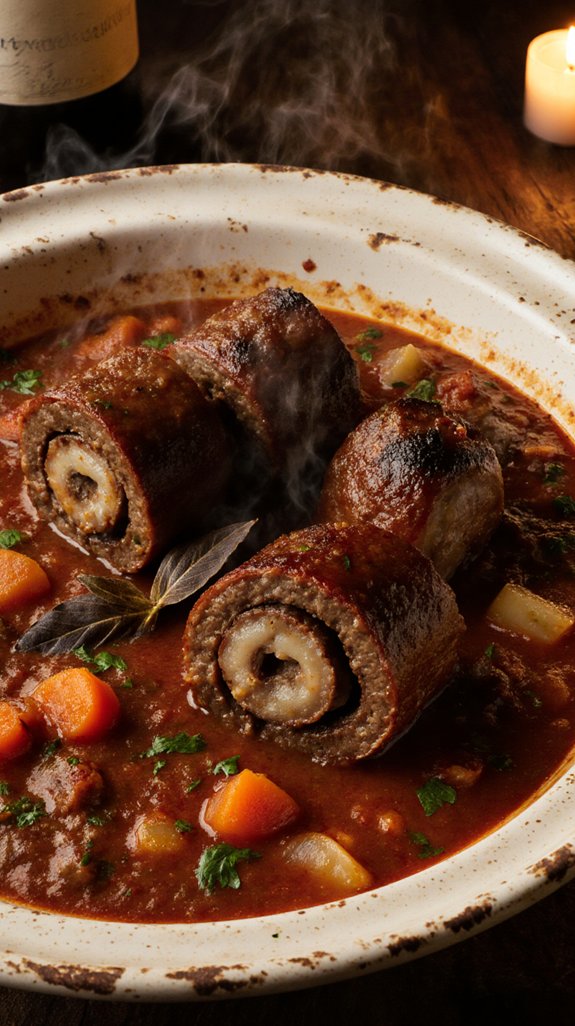
Now that you’ve got your braciole perfectly seasoned and simmered, let’s talk about what belongs on the plate alongside it.
I always serve mine over a generous pile of spaghetti or rigatoni, letting that rich tomato sauce coat every strand. Garlic bread is non-negotiable in my kitchen—you’ll want something to soak up every last drop of sauce.
For side dishes, I keep it simple with a crisp Caesar salad or roasted vegetables like zucchini and bell peppers.
The wine pairing matters too. Since braciole has bold flavors, I reach for a medium-bodied Chianti or Sangiovese. These Italian reds complement the tomato sauce beautifully without overpowering the meat.
Trust me, this combination creates the perfect Sunday dinner.
Final Thoughts
After making this braciole a few times, you’ll start to understand why it’s been passed down through generations of Italian families. The rich flavors, tender meat, and satisfying process make it a dish you’ll want to share with your own loved ones.
Here are a few final cooking tips to keep in mind: always pound the meat thin enough so it rolls easily, and don’t skimp on browning the rolls properly.
If you’re thinking about meal prep, this dish actually improves overnight as the flavors meld together. You can prepare the rolls ahead of time and refrigerate them until you’re ready to cook.
Once you’ve mastered the technique, braciole becomes second nature, turning any Sunday into something special.
Frequently Asked Questions
Can I Make Braciole Ahead of Time and Reheat It Later?
Yes, I’d recommend making braciole ahead since the flavors improve overnight. I’ll refrigerate it for up to three days, then reheat it gently on the stovetop or in a 325°F oven until warmed through.
How Do I Store Leftover Braciole and Sauce Properly?
I’ll store leftover braciole in an airtight container with the sauce completely covering the meat rolls. For proper sauce preservation and leftover storage, I’ll refrigerate it for up to four days or freeze for three months.
What’s the Best Way to Slice Braciole for Serving?
I’ll remove the picks or string first, then use a sharp knife to cut each braciole into 1/2-inch thick slices. For serving presentation, I arrange the pinwheel slices on a platter and spoon sauce over them.
Can Braciole Be Frozen After Cooking?
Yes, I can freeze braciole after cooking for up to three months. My freezing tips include cooling completely first and storing in airtight containers. For reheating methods, I recommend thawing overnight, then gently warming in sauce.
How Do I Prevent the Braciole Rolls From Unraveling During Cooking?
I’ll secure my braciole rolls with kitchen twine tied around the center and ends, or use the toothpick method by inserting multiple picks through the seam. Both techniques keep them intact during braising.