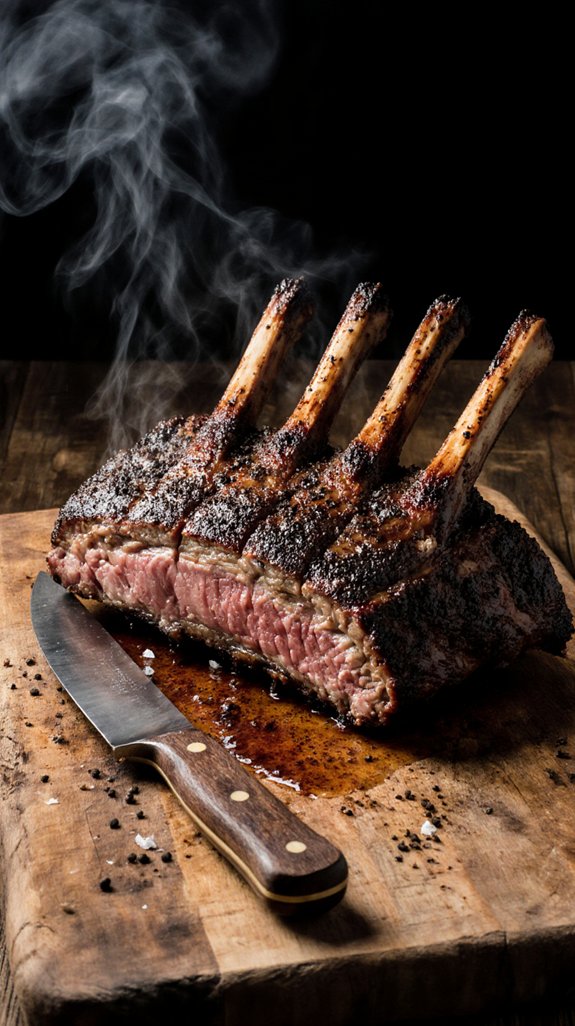
I’ve spent years perfecting my slow-smoked beef ribs, and I’m here to tell you that achieving BBQ perfection isn’t as complicated as you might think. The secret lies in understanding three key elements: quality meat selection, proper temperature control, and patience during the smoking process. Once you master these fundamentals, you’ll create ribs with a deep mahogany bark and meat so tender it practically falls off the bone.
Why You`ll Love these Slow-Smoked Beef Ribs
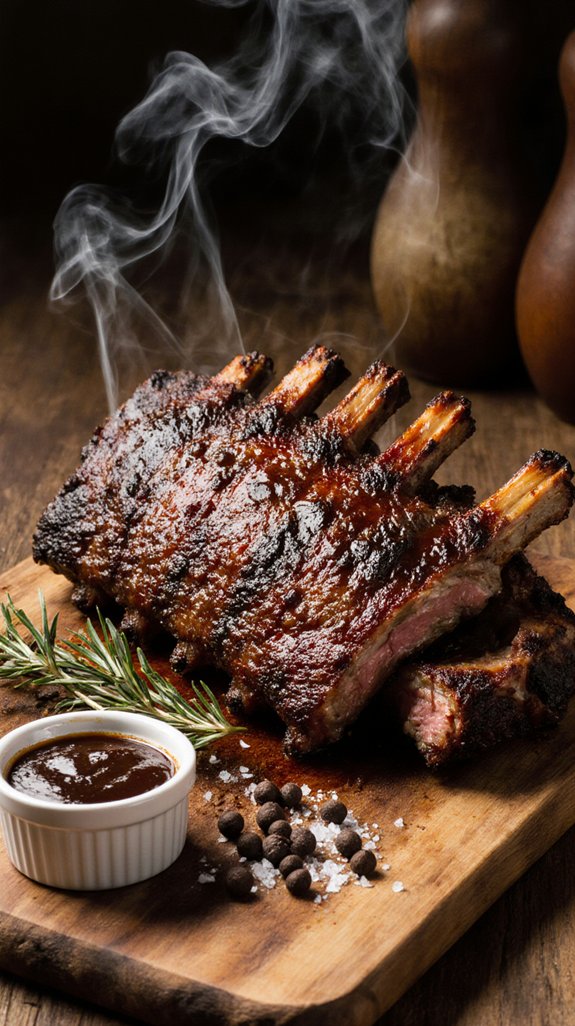
When you bite into a perfectly smoked beef rib, the meat practically falls off the bone, and that’s exactly what makes this recipe so special.
I’m excited to share why you’ll absolutely love these ribs. First, the smoky flavor develops gradually over several hours of cooking, creating deep, rich taste layers you can’t achieve with quick grilling methods.
The low temperature transforms tough connective tissue into gelatin, giving you an incredibly tender texture that melts in your mouth.
What I appreciate most is how simple this recipe is—you need just salt, pepper, and patience. There’s no complicated sauce or marinade required.
The beef’s natural flavor shines through, enhanced by nothing more than seasoning and smoke.
What ingredients are in Slow-Smoked Beef Ribs?
The beauty of slow-smoked beef ribs lies in their simplicity, requiring only a handful of high-quality ingredients that allow the natural flavor of the meat to take center stage. This minimalist approach means that each component plays a vital role in the final result, so choosing quality ingredients matters more than ever.
Ingredients:
- 1 rack beef ribs (about 1 pound)
- Coarse salt
- Fresh coarse ground black pepper
When selecting your ingredients, the quality of the beef ribs themselves is paramount—look for well-marbled racks with good meat coverage between the bones. For the seasoning, coarse salt and freshly ground black pepper create a traditional bark on the exterior during the long smoking process. While the recipe calls for these basic seasonings, you can adjust the ratio to your preference, though the classic 50/50 blend is a tried-and-true starting point. The coarseness of both the salt and pepper is important, as finer grinds can create an overly salty or harsh coating during the extended cooking time.
How to make these Slow-Smoked Beef Ribs
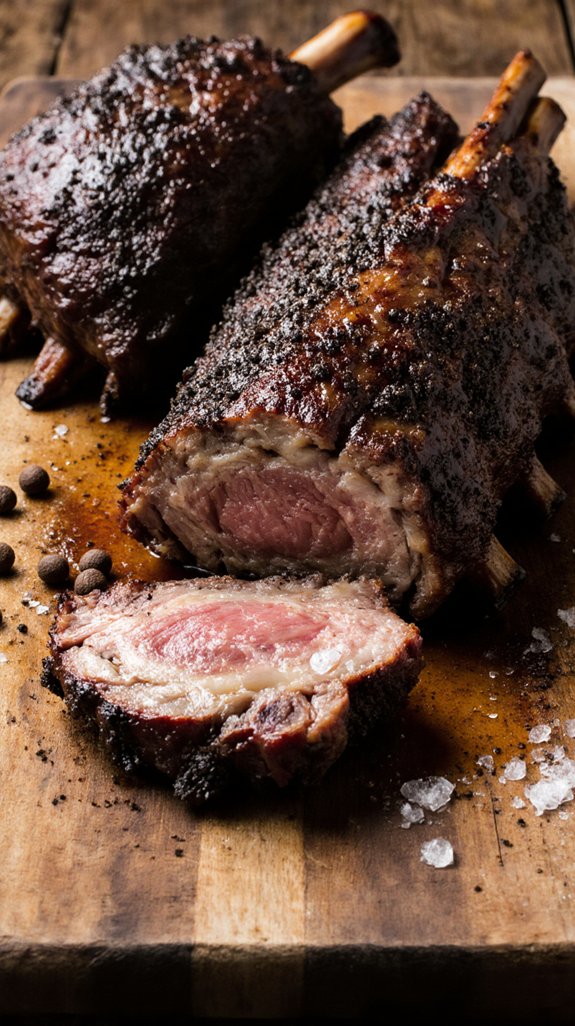
The preparation for these slow-smoked beef ribs couldn’t be more straightforward, which is part of their appeal. Start by generously sprinkling your 1 rack of beef ribs (about 1 pound) with a blend of coarse salt and fresh coarse ground black pepper, making certain to coat all sides of the meat.
Don’t be shy with the seasoning—the long cooking time means the flavors will mellow and penetrate deep into the meat, creating that coveted crusty bark on the outside. Once seasoned, you’re ready to start the smoking process, which is where patience becomes your most important ingredient.
Place the seasoned ribs on the lower rack of a fire pit, positioning them nearest to the fire, or set them on a preheated grill that’s holding steady at 300 to 350 degrees F. For the best results, consider using an offset smoker grill which provides excellent temperature control and consistent smoke circulation throughout the cooking chamber. The key to perfect beef ribs is low and slow cooking until the internal temperature reaches 190 to 200 degrees F, which typically takes 4 to 6 hours.
During this time, you’ll want to rotate the meat three times throughout the cooking process to guarantee even heat distribution and smoke exposure on all sides. This rotation helps develop that beautiful, consistent bark while preventing any hot spots from overcooking certain areas.
The magic happens during those hours of smoking, as the connective tissues break down and the fat renders, transforming tough ribs into tender, pull-apart perfection. Use a reliable meat thermometer to check for doneness rather than relying solely on time, since variables like rib thickness and actual grill temperature can affect cooking duration.
Once the ribs hit that ideal internal temperature range, remove them from the heat and let them rest for about 10-15 minutes before slicing between the bones to serve.
Shop Related Products

Dual-Chamber Design: Features a main charcoal grill chamber and side offset smoker, offering 510 sq. in. total cooking space. The outdoor grill accommodates 4-6 BBQ enthusiasts with its spacious barbecue grill area & additional warming rack

XXL Cooking Area: This barrel charcoal grill includes 443 sq. in. porcelain-enameled steel wire cooking grates, 184 sq. in. chrome-plated steel wire warming rack, and 184 sq. in. offset smoker

Precise Temperature Management: Achieve grilling excellence with the accurate built-in thermometer in the main grill chamber. Our grill-smoker combo lets you monitor the temperature without opening the lid, ensuring your food cooks under optimal conditions. Adjustable air vents on both the grill and smoker regulate airflow and smoke intensity, making it easy to control the heat whether you're slow-cooking ribs or searing steaks
Slow-Smoked Beef Ribs Substitutions and Variations
While this classic recipe shines with just salt and pepper, you’ve got plenty of room to customize these slow-smoked beef ribs to match your personal taste preferences.
I’ve experimented with various seasoning variations over the years, from adding garlic powder and paprika to creating full-blown dry rubs with brown sugar, cumin, and cayenne pepper.
If you’re interested in marinade options, try soaking your ribs overnight in a mixture of soy sauce, Worcestershire sauce, and apple cider vinegar for deeper flavor penetration.
You can also brush on your favorite BBQ sauce during the last hour of cooking, though I recommend waiting until then to prevent burning.
The key is enhancing the beef’s natural flavor rather than masking it completely with heavy seasonings.
Shop Related Products

Bluetooth Monitor Remotely: Govee Bluetooth meat thermometer lets you check the temperature of your grill, smoker, or oven from your phone. With this smart BBQ thermometer, you can multitask while grilling.

Smart Display Base with Control: The ThermoMaven G1 wireless meat thermometer features a versatile smart display base that offers real-time temperature readings and allows you to set temperatures directly on the device—no app required. With our user-friendly one-click setup, you can connect the probe, pair it with the base, and start cooking in seconds—no complicated setup needed!

SMART BASE CONTROL: Set temperatures, monitor progress, and receive alerts directly from the base without needing your phone nearby.
What to serve with Slow-Smoked Beef Ribs
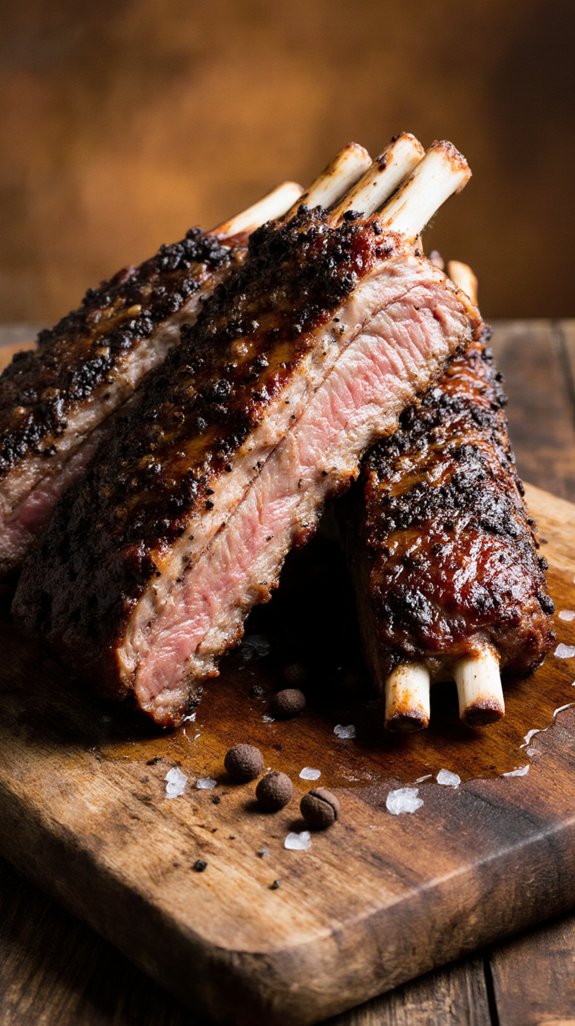
After spending hours perfecting these fall-off-the-bone beef ribs, you’ll want side dishes that complement their rich, smoky flavor without competing for attention.
My favorite sides suggestions include creamy coleslaw, which provides a cool, crunchy contrast to the tender meat. Baked beans add sweetness that balances the savory ribs perfectly, while cornbread soaks up all those delicious juices.
I also love serving grilled corn on the cob or mac and cheese for a truly indulgent meal.
For drink pairings, I recommend a bold red wine like Malbec or Zinfandel, which stands up to the robust flavors. If you prefer beer, try a dark stout or amber ale.
Sweet tea remains a classic choice that never disappoints at any barbecue.
Final Thoughts
Smoking beef ribs takes time and patience, but I can promise you the results are absolutely worth every minute you spend tending the fire.
The tender, flavorful meat that falls right off the bone is something special that’ll impress everyone at your table. Throughout this guide, I’ve shared cooking tips to help you master the low-and-slow method, from maintaining steady temperatures to knowing when your ribs are perfectly done.
I’ve also provided serving suggestions that’ll make your meal complete. Whether you’re a backyard barbecue beginner or looking to refine your technique, these beef ribs will become your go-to recipe for gatherings.
Fire up that smoker and get ready to create some seriously delicious barbecue.
Frequently Asked Questions
Can I Use a Regular Oven Instead of a Grill or Fire Pit?
Yes, I’d recommend your regular oven as one of the best oven alternatives. Set it to 300°F and use similar cooking techniques: season well, cook low and slow until the internal temperature reaches 190-200°F for tender ribs.
How Do I Know When Beef Ribs Are Done Without a Thermometer?
I’ll check for visual cues like the meat pulling back from the bones. I’ll also do a tenderness test—when the ribs bend easily and the meat tears apart effortlessly, they’re done.
Should I Wrap the Ribs in Foil During Cooking?
I don’t recommend wrapping these ribs in foil since they’re cooked unwrapped. However, wrapping benefits include faster cooking and moisture retention. Foil alternatives like butcher paper work well if you prefer wrapped ribs.
How Long Can I Store Leftover Smoked Beef Ribs?
I’ll store your leftover smoked beef ribs in the refrigerator for 3-4 days or freeze them for up to 3 months. Proper leftover storage guarantees food safety, and I recommend gentle rib reheating to maintain their tenderness and flavor.
What Type of Wood Chips Work Best for Smoking Beef Ribs?
I’d recommend hickory chips for a classic bold taste, mesquite flavor for intense smokiness, or cherry wood and apple smoke for milder, slightly sweet notes that complement beef ribs beautifully.