
I’ll never forget the first time I tore into a slice of proper milk bread at my friend’s house, the way it stretched and bounced back like a cloud between my fingers. That bread changed everything I thought I knew about homemade loaves, and honestly, once you’ve mastered this recipe, your regular sandwich bread will feel like a distant, disappointing memory. Here’s what makes it so special.
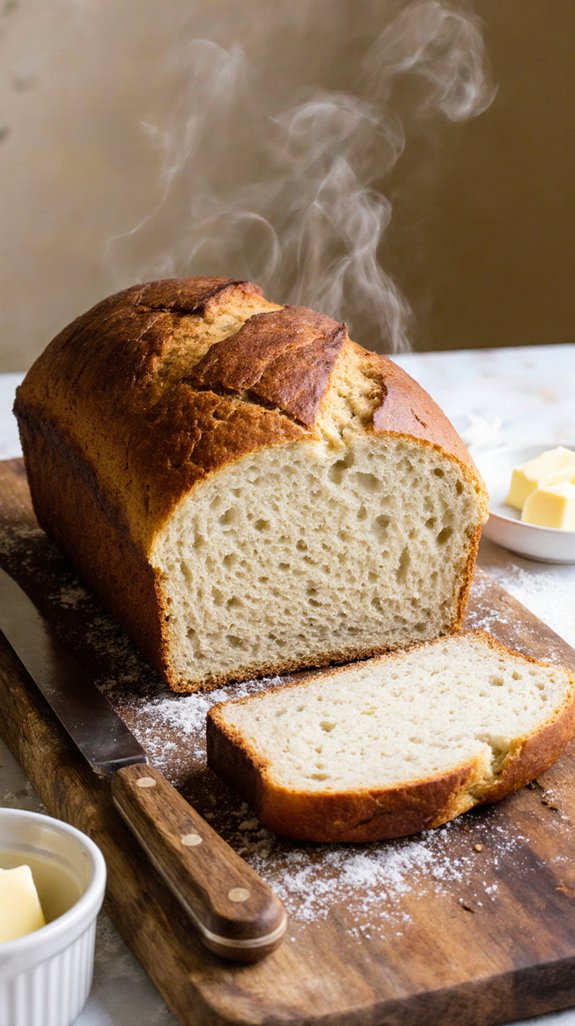
Fluffy Homemade Milk Bread Recipe Worth Every Bite
Ingredients
Method
- Grease a standard loaf pan and sift 4 cups of bread flour into a large, warm bowl.
- Add 1 large egg, 4 tablespoons softened butter, 2 teaspoons active dry yeast, 1/4 teaspoon salt, and 1 teaspoon granulated sugar to the flour.
- Gradually mix in 1 cup warmed milk, kneading until dough is smooth and elastic. You may not need all the milk.
- Cover the bowl with a clean kitchen towel and let the dough rise in a warm spot for 1 hour.
- After rising, knead the dough briefly, shape it, and place it into the prepared loaf pan.
- Let the dough rise again for 45 minutes in a warm spot until puffed.
- Before baking, brush the top with beaten egg or milk for a golden finish.
- Bake in a 450°F oven for 15 minutes, then reduce temperature to 425°F and bake for an additional 20 minutes.
- Remove from oven when golden brown and hollow-sounding when tapped. Cool before slicing.
Why You`ll Love this Fluffy Homemade Milk Bread
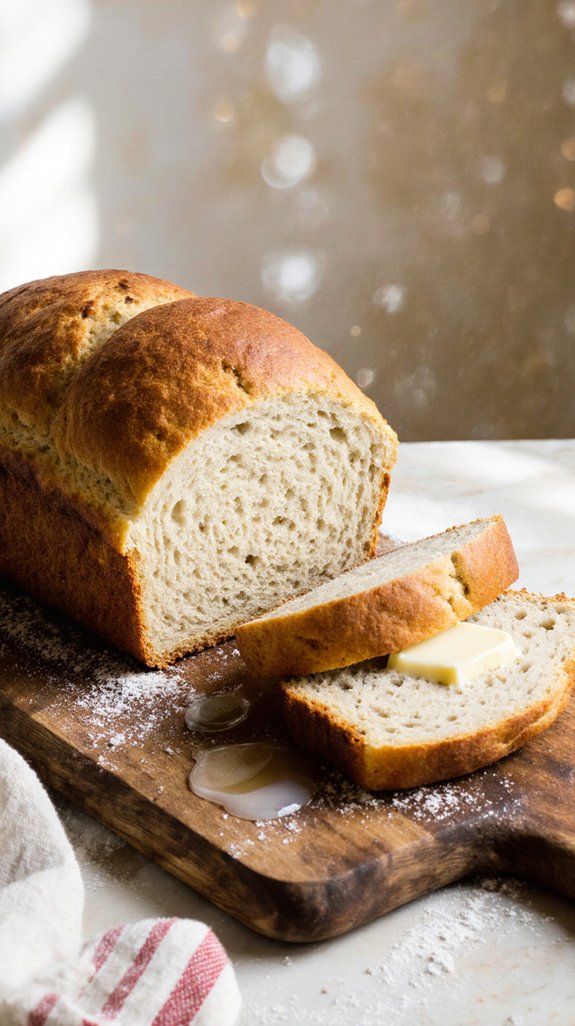
When I first pulled a loaf of this milk bread from my oven, I couldn’t believe something so soft and pillowy had come from my own kitchen, and I’ve been hooked ever since.
The texture comparison between store-bought bread and this homemade version is like night and day—this loaf practically melts on your tongue.
Beyond the incredible softness, the bread benefits extend to its versatility and storage life.
Victorians knew what they were doing when they praised this recipe for teatime and breakfast use.
I’ve found it makes the best toast, sandwiches, and even French toast you’ll ever taste.
The slight sweetness from the milk creates a delicate crumb that stays fresh for days, making every slice worth the minimal effort required.
What ingredients are in Fluffy Homemade Milk Bread?
This classic milk bread recipe requires just a handful of simple, everyday ingredients that work together to create an incredibly soft and tender loaf. The combination of bread flour for structure, milk for richness, and butter for flavor produces a bread that’s both light and satisfying. Each ingredient plays an essential role in achieving that signature fluffy texture that makes this bread so special.
Temperature is particularly important when preparing your ingredients for this recipe. The egg and butter should both be at room temperature to guarantee they incorporate smoothly into the dough, while the milk needs to be warmed just enough to activate the yeast without killing it—avoid scalding. The recipe calls for bread flour rather than all-purpose flour because its higher protein content develops more gluten, giving the loaf better structure while maintaining its soft crumb. Keep in mind that you may not need all of the milk listed, so add it gradually as you knead to achieve the right dough consistency.
Shop Related Products

🍐【Compatible】K45, K45SS, KN15E1X, KSM75, KSM85PS, KSM88PSQ, KSM90, KSM95, KSM96, KSM97, KSM100, KSM103, KSM105, KSM110, KSM120, KSM150, KSM150A, KSM151PS, KSM152, KSM153, KSM154, KSM155, KSM156HB, KSM158, KSM160A, KSM175,KSM180, KSM180LEBK, KSM180RPMB

Note: Compatible with almost all KitchenAid 4.5-quart and 5-quart tilt-head stand mixers. You can find your model on the bottom of the mixer. Compatible models include: K45, K45SS, KN15,KDM90, KA15, BEA30, RRK150, KSM45, KSM75, KSM85, KSM88, KSM90, KSM95, KSM96, KSM100, KSM103, KSM106, KSM110, KSM111, KSM120, KSM125, KSM150, KSM151, KSM152, KSM153, KSM154, KSM155, KSM156, KSM160, KSM170, KSM175, KSM177, KSM180,KSM195, KSM200

Why Choose a Spiral Dough Hook?Unlike C-shaped kitchen aid dough hook that just rotate and pull, this spiral dough hook actively pushes dough down while kneading.The spiral design creates continuous downward pressure that ensures even kneading of heavy doughs.
Fluffy Homemade Milk Bread Substitutions and Variations
One of my favorite things about this milk bread recipe is how forgiving it’s when you need to swap ingredients or want to experiment with different flavors.
I’ve successfully used alternative sweeteners like honey or maple syrup instead of granulated sugar, though you’ll want to reduce the liquid slightly since they add moisture.
For flavor variations, I love adding a tablespoon of vanilla extract or folding in cinnamon and raisins during the second kneading.
My grandmother used to brush melted butter on top instead of the egg wash, which created this gorgeous golden crust that tasted like childhood weekends.
You can also substitute whole milk for the low-fat version if you want an even richer crumb, which I do whenever I’m feeling indulgent.
Shop Related Products

Premium Bread Baking Supplies Set: This value-packed baking must haves includes 2 carbon steel large sandwich bread loaf pans (outside size: 10.6"×5.9"×2.7" , inner size: 9"×5"×2.7") and 2 BPA-free silicone bread pan liners - professional baking sets for cooking nonstick perfect for batch baking and home bakery prep.

8 x 4-INCH LOAF BAKING PAN: Great for baking meatloaf, sweet or savory breads, thick cakes or brownies, smaller portions of lasagnas or casseroles, and more for the perfect bake every time

THE PERFECT PAIR: Two 9x5-inch loaf pans built for versatility—bake sweet and savory side by side for the same meal, or double up on a favorite recipe and freeze one for later
What to serve with Fluffy Homemade Milk Bread
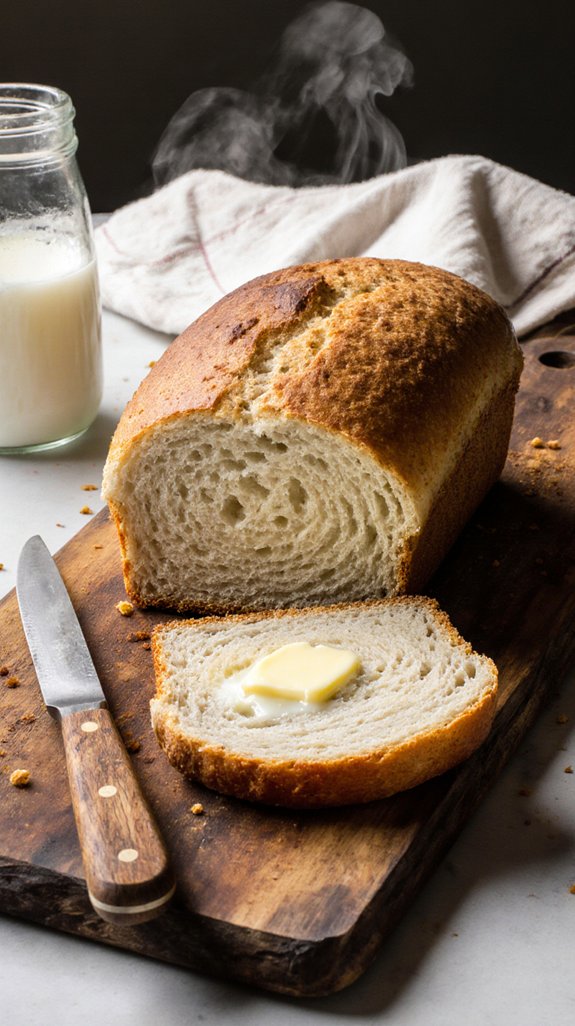
When you pull a golden loaf of milk bread from the oven, you’re holding something that deserves companions as simple and comforting as the bread itself.
I’ve found the best serving suggestions lean into the bread’s subtle sweetness and pillowy texture. For breakfast, slather warm slices with salted butter and jam, or transform them into French toast that’ll remind you why mornings matter.
At teatime, pair thin slices with honey or preserves, just as the Victorians intended. My favorite toppings ideas include creamy peanut butter, fresh strawberries, or even a smear of Nutella when I’m feeling indulgent.
This bread shines alongside soups too, particularly tomato or chicken noodle, where its soft crumb soaks up every drop without falling apart.
Final Thoughts
There’s something deeply satisfying about mastering a recipe that’s traveled through generations, and this milk bread proves you don’t need fancy equipment or hard-to-find ingredients to create bakery-worthy results in your own kitchen.
I’ve shared my best baking tips throughout this recipe, from warming your bowl to watching that second rise carefully. The storage methods are simple too—just wrap your cooled loaf in plastic and keep it at room temperature for up to three days, or freeze slices for quick toast later.
Once you’ve made this bread a few times, you’ll develop your own rhythm with the dough, understanding exactly how it should feel when it’s ready. That’s when you know you’ve truly made it yours.
Frequently Asked Questions
Can I Freeze Milk Bread Dough Before Baking?
Yes, I can freeze milk bread dough before baking. After the first rise, I’ll shape it, wrap it tightly in plastic wrap for proper dough storage, and freeze. When ready, I’ll thaw it overnight before the second rise, making freezing dough convenient.
How Do I Know When the Dough Has Risen Enough?
I’ll know the dough’s risen enough when it’s roughly doubled in size and feels light and puffy to touch. The recipe specifies a rising time of about one hour, then forty-five minutes for the second rise.
What Makes Milk Bread Different From Regular White Bread?
I’ll tell you that milk bread’s texture is softer and fluffier than regular white bread because of the milk, butter, and egg. The milk bread flavor is also richer and slightly sweeter, making it perfect for breakfast.
How Long Does Homemade Milk Bread Stay Fresh?
I’ll share the shelf life: homemade milk bread stays fresh for 3-4 days at room temperature. For storage tips, I recommend keeping it in an airtight container or sealed bag to maintain its soft, fluffy texture longer.
Can I Use a Bread Machine for This Recipe?
Yes, you can use a bread machine for this recipe with some adaptation. I’d recommend using your machine’s dough cycle for mixing and kneading, then transferring to a loaf pan for the final rise and oven baking.