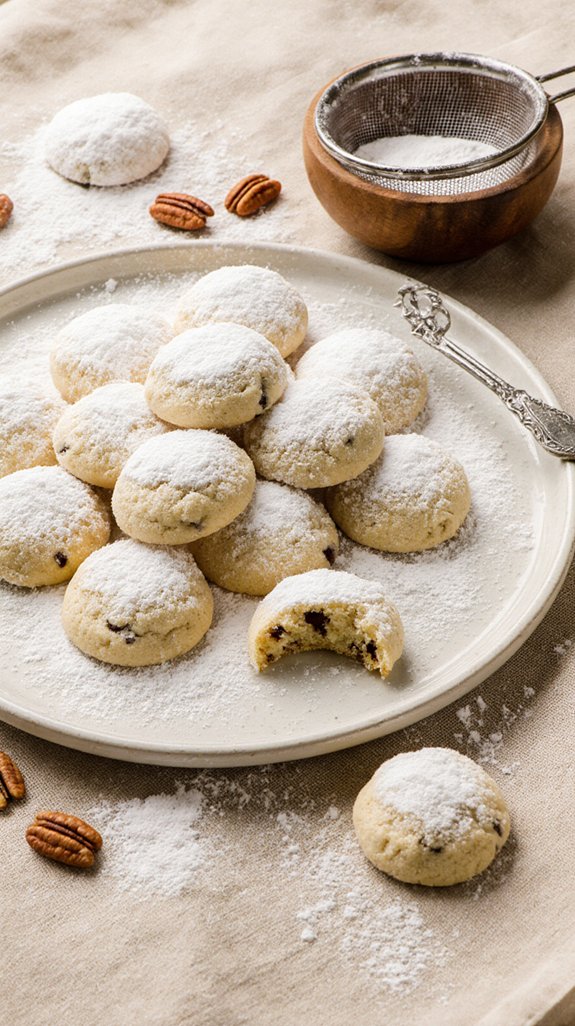
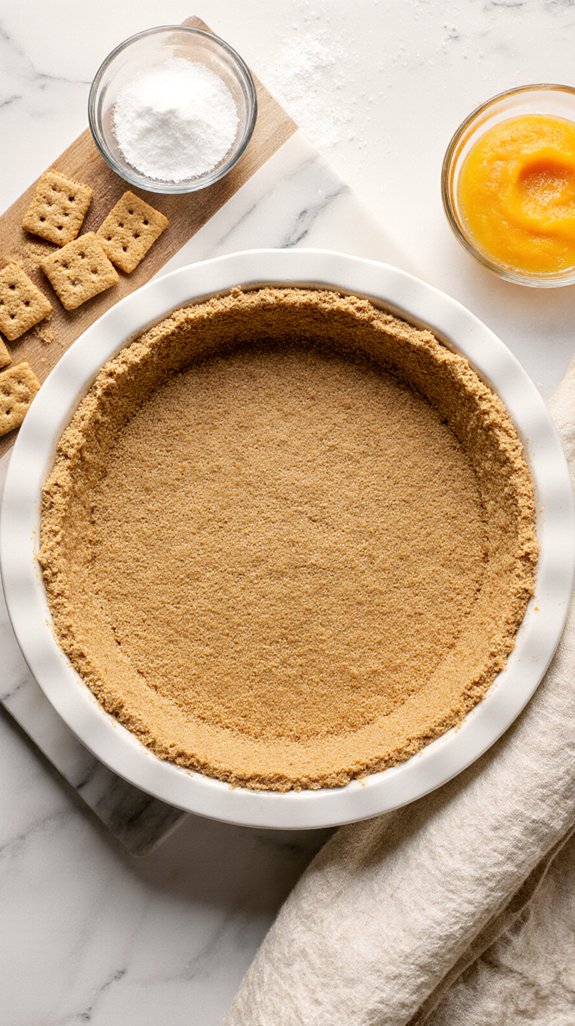
I’ve always been drawn to crusts that do more than just hold a filling, and this tropical mango version completely transformed how I think about graham cracker bases. Instead of relying on butter alone, I started incorporating smooth mango puree, which creates this incredible balance between sweet and tangy while keeping everything perfectly moist. The method is surprisingly straightforward, though there’s one essential step most people miss that makes all the difference in texture.
Why You`ll Love this Tropical Mango Graham Cracker Crust
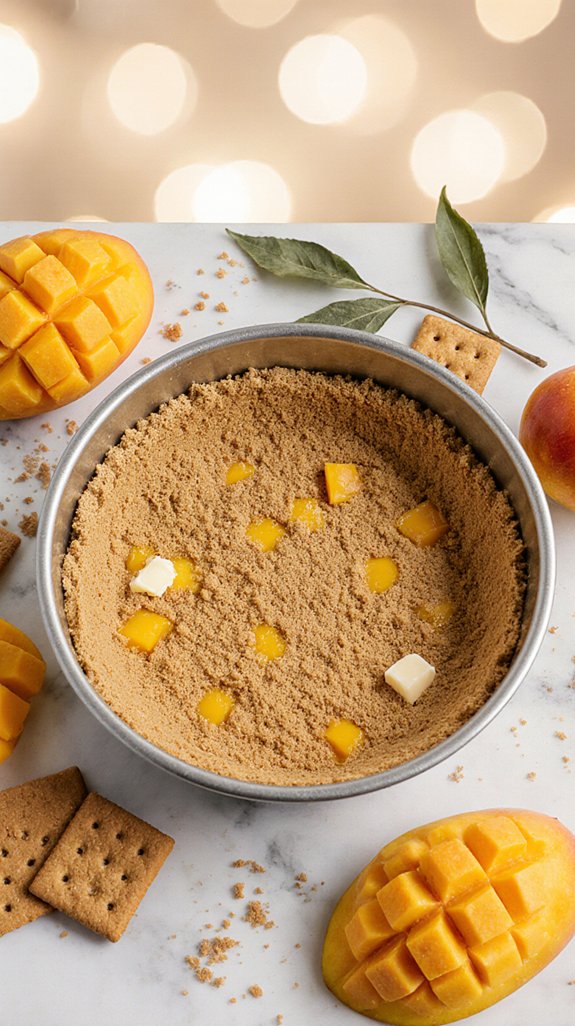
While traditional graham cracker crusts have their place, this tropical version transforms an everyday dessert base into something special with one simple addition.
The mango puree brings authentic tropical flavor that reminds me of beach vacations I’ve taken, where fresh fruit wasn’t just a garnish but the main event.
I’ve found that adding mango to the crust creates layers of flavor that work through the entire dessert, not just the filling. It’s become my go-to dessert inspiration whenever I want to elevate a simple pie or cheesecake.
The subtle sweetness doesn’t overpower, and the natural fruit sugars help bind the crumbs beautifully.
You’ll notice how the mango adds moisture without making the crust soggy, which I initially worried about.
What ingredients are in Tropical Mango Graham Cracker Crust?
This tropical twist on a classic graham cracker crust requires just three simple ingredients that come together to create something extraordinary. The beauty of this recipe lies in its simplicity – you likely already have most of these items in your pantry, with the mango puree being the only specialty ingredient that sets it apart from traditional crusts.
- 1 1/2 cups graham cracker crumbs
- 3 tablespoons raw sugar
- 1/4 cup mango puree
The quality of your mango puree makes a significant difference in the final flavor of this crust. Fresh mango puree will deliver the most vibrant tropical taste, though frozen mango that’s been thawed and blended works wonderfully as well.
Raw sugar adds a subtle molasses note that complements the fruit, but you can substitute regular granulated sugar if needed. The graham cracker crumbs can be made from whole crackers processed in a food processor, or you can purchase pre-made crumbs for convenience.
When selecting your mango puree, verify it’s smooth and without chunks, as a consistent texture helps the crust bind properly and bake evenly.
How to make this Tropical Mango Graham Cracker Crust
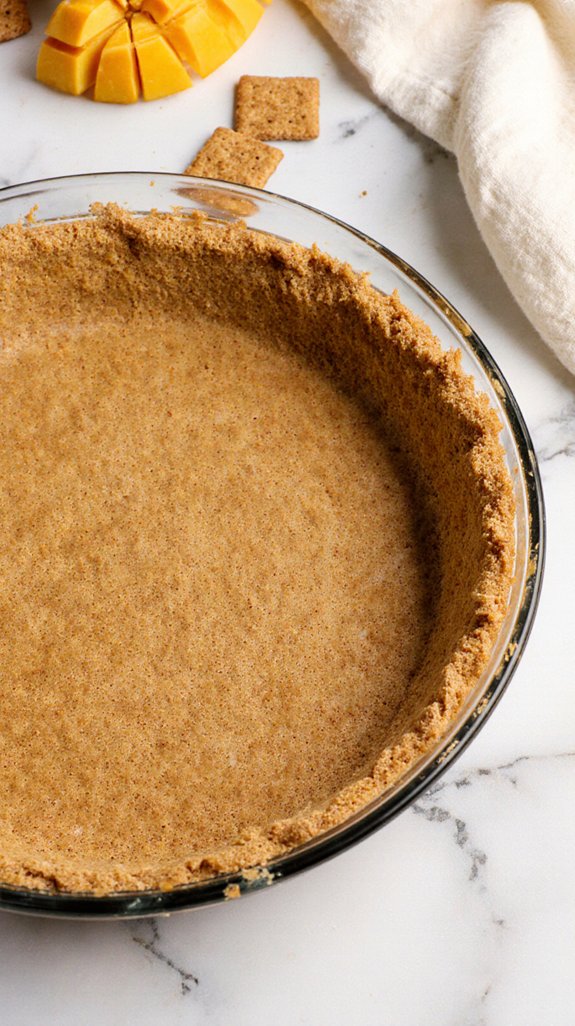
Making this tropical graham cracker crust is wonderfully straightforward, even if you’re new to baking. Start by combining your 1 1/2 cups of graham cracker crumbs, 3 tablespoons of raw sugar, and 1/4 cup of mango puree in a medium-sized bowl. Mix everything together thoroughly until the mixture resembles wet sand and holds together when you press it between your fingers.
The mango puree acts as a binder here, taking the place of the melted butter you’d typically find in a traditional graham cracker crust, which gives this version its unique tropical character and lighter texture.
Once your mixture is well combined, transfer it to a 9-inch pie plate and begin pressing it firmly into the bottom and up the sides. Use the bottom of a measuring cup or your fingers to create an even layer, paying special attention to the corners where the bottom meets the sides – this helps prevent any weak spots that might crack later.
The key is applying consistent pressure so the crust holds together nicely after baking.
Pop your prepared crust into a preheated 350-degree oven for about 15 minutes, watching for it to become firm to the touch. You’ll notice the edges might turn just slightly golden, and the whole crust will feel more set than when it went in.
After removing it from the oven, let it cool completely on a wire rack before adding any filling. This cooling step is essential because adding filling to a warm crust can make it soggy or cause your filling to break down, and nobody wants that after all your careful work. If you’re looking to elevate your baking results further, consider investing in premium kitchen appliances that offer precise temperature control and even heating.
Shop Related Products
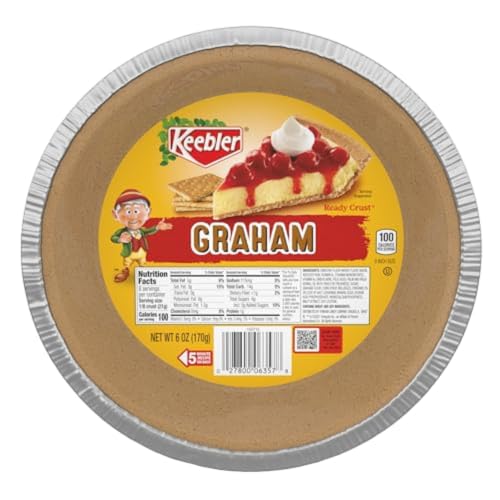
Twelve 9-inch Keebler Ready Crust Graham Cracker Pie Crusts

Great tool to have, with a different size on either end

Two 6 ounce graham cracker pie crusts
Tropical Mango Graham Cracker Crust Substitutions and Variations
One of my favorite things about this mango crust is how easily you can adapt it to whatever fruit you’ve got on hand or whatever flavor profile you’re craving. I’ve swapped the mango puree for papaya, pineapple, or even passion fruit when I’m feeling adventurous. For alternative crusts, try using vanilla wafers or gingersnaps instead of graham crackers, which adds a spicy warmth that pairs beautifully with tropical fruit. You can also experiment with flavor variations by adding a pinch of cinnamon or cardamom to the crumb mixture. My aunt once mixed in shredded coconut, which created this incredible texture that reminded me of vacation. The key is maintaining the same ratio of dry ingredients to wet, so your crust holds together properly without becoming soggy.
Shop Related Products

Pineapple shape cake pan measures 10.5 x 6.5 x 2.25- inch and easy release nonstick surface ensures your pineapple cake will look like a pineapple Made from Aluminized steel;...
What to serve with Tropical Mango Graham Cracker Crust
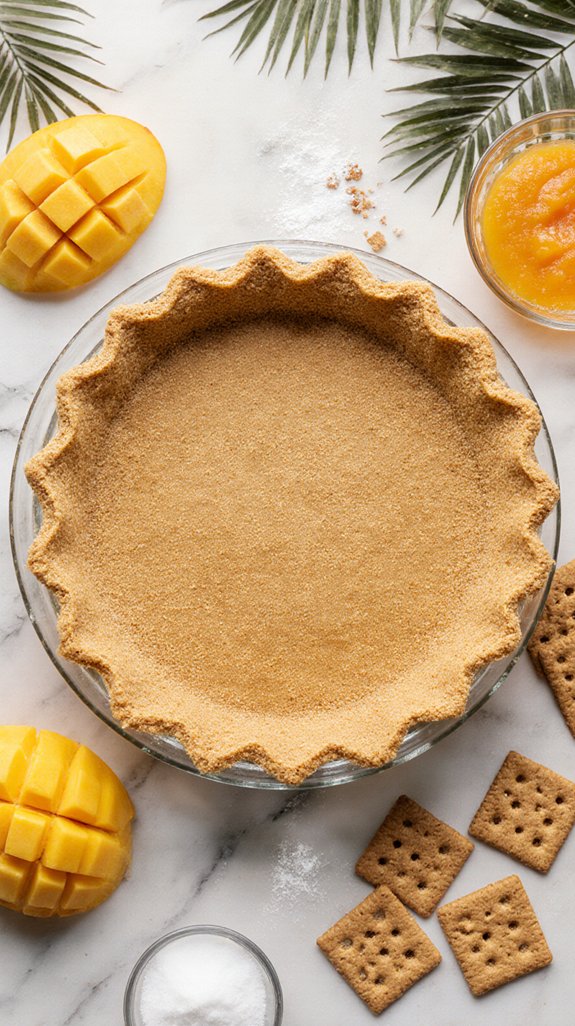
Now that you’ve got this gorgeous tropical crust ready to go, you’ll want to fill it with something equally special that lets those mango flavors shine.
I love pairing it with no-bake cheesecake filling, the tangy cream cheese playing beautifully against the sweet crust. Coconut cream pie works wonderfully too, creating layers of tropical goodness that remind me of beach vacations I’ve never actually taken.
For mango toppings, try fresh mango slices, passion fruit curd, or toasted coconut flakes.
The dessert pairings I reach for most often include key lime filling, vanilla custard, or even simple whipped cream with lime zest.
Whatever you choose, keep it relatively light and bright, letting that mango-infused crust be the star it deserves to be.
Final Thoughts
When you press that final bit of crust into your pie plate, smoothing the edges with your fingertips until they’re just right, you’re creating something that transforms an ordinary dessert into a conversation starter.
I’ve learned that good baking techniques don’t require expensive equipment, just patience and attention to the details that matter. This mango crust reminds me that sustainability practices can be delicious too, using every bit of that ripe mango instead of letting it go to waste.
The beauty of this recipe lies in its simplicity, how three ingredients come together to create something memorable. Trust your instincts, embrace the sticky fingers, and know that imperfect edges taste just as wonderful as perfect ones.
Frequently Asked Questions
Can I Make This Crust Ahead of Time and Freeze It?
Yes, you can make this crust ahead and freeze it! I’d recommend wrapping it tightly in plastic wrap, then aluminum foil. It’ll stay fresh for up to three months, making meal prep effortless.
How Long Does the Baked Crust Stay Fresh at Room Temperature?
I’d recommend storing your baked crust at room temperature for no more than 24 hours. After the 15-minute baking time, once cooled, wrap it tightly. For longer crust storage, I suggest refrigerating or freezing it instead.
What’s the Best Way to Prevent the Crust From Crumbling When Slicing?
I’d recommend ensuring adequate chilling time—at least two hours—before cutting. For slicing technique, I use a sharp knife dipped in hot water, wiping it clean between cuts to prevent crumbling and achieve neat slices.
Can I Use Frozen Mango Instead of Fresh for the Puree?
Yes, I’d recommend using frozen mango for the puree. There’s no difference between frozen vs fresh for this recipe—just thaw the mango completely and blend it until smooth before measuring out the required amount.
Do I Need to Pre-Bake the Crust for No-Bake Fillings?
No, you don’t need to pre-bake for no-bake fillings, though I recommend it. Pre-bake necessity depends on your preference—baking enhances crust texture, making it crispier and helping it hold together better when slicing.