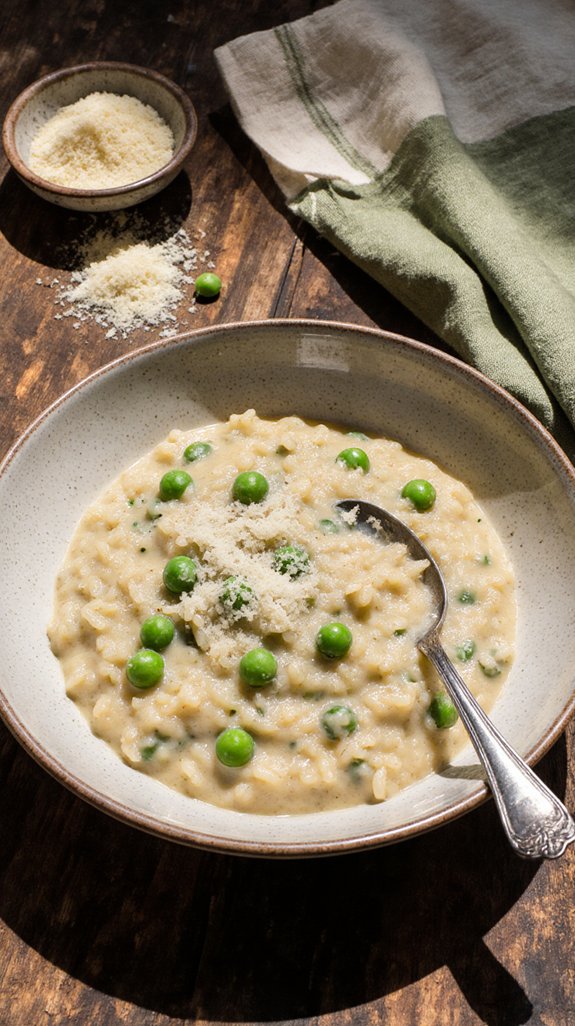
I’ve spent years perfecting my risotto technique, and I’m convinced this creamy Parmesan version is the gold standard. Sure, you’ll need to commit about 30 minutes to standing at the stove, stirring frequently, but that’s exactly what transforms simple Arborio rice into something extraordinary. The secret lies in patience and the right ratio of ingredients, which creates that signature velvety texture everyone craves. Let me show you why this classic Italian dish deserves a permanent spot in your dinner rotation.
Why You`ll Love this Creamy Parmesan Risotto
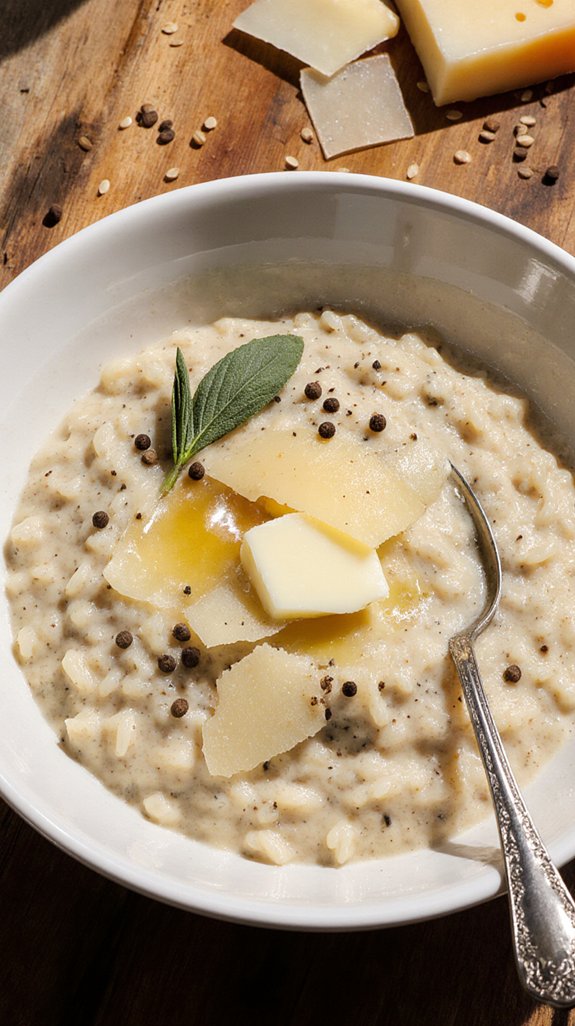
While some recipes demand hours of prep work and exotic ingredients, this creamy Parmesan risotto comes together with pantry staples and delivers restaurant-quality results in about 30 minutes.
I love how this dish transforms simple ingredients like rice, butter, and cheese into pure comfort food magic. The cooking techniques might seem intimidating at first, but once you master the rhythm of adding stock and stirring, you’ll feel like a professional chef.
What really sets this risotto apart is its versatility—it works as an elegant weeknight dinner or impressive enough for entertaining guests. The creamy texture and rich Parmesan flavor create that perfect balance between indulgent and satisfying, making every stir absolutely worth it.
What ingredients are in Creamy Parmesan Risotto?
The beauty of this creamy Parmesan risotto lies in its simplicity—you don’t need a long shopping list or hard-to-find ingredients. Most of what you’ll need is likely already in your kitchen, making this an accessible recipe for any home cook. The key is using quality ingredients, especially when it comes to the Parmesan cheese and butter, as they greatly impact the final flavor and texture.
Ingredients:
- 5 cups water
- 2 tablespoons vegetarian chicken soup mix
- 2 tablespoons butter
- 1 onion, finely minced
- 1 stalk celery, minced
- 1 1/2 cups risotto rice
- 1 cup dry white wine
- 2/3 cup Parmesan cheese, grated
- 1 cup frozen peas
When selecting your ingredients, pay special attention to the rice—you’ll want authentic risotto rice like Arborio, Carnaroli, or Vialone Nano, as these varieties contain the right amount of starch to create that signature creamy texture. For the wine, choose something you’d actually drink, as its flavor will concentrate during cooking. Freshly grated Parmesan cheese makes a noticeable difference compared to pre-grated versions, which often contain anti-caking agents that can affect the creaminess. The vegetarian chicken soup mix provides a convenient flavor base, but you can substitute it with vegetable bouillon or homemade stock if preferred.
How to make this Creamy Parmesan Risotto

Making this creamy Parmesan risotto requires patience and attention, but the process is wonderfully straightforward once you get the rhythm down. Start by mixing 5 cups of water with 2 tablespoons of vegetarian chicken soup mix in a pot and bringing it to a boil—it’s smart to prepare a little extra liquid just in case you need it. Once boiling, reduce the heat to maintain a gentle simmer throughout the cooking process.
In a separate large pan, melt 2 tablespoons of butter over medium heat, then add 1 finely minced onion and 1 minced stalk of celery. Sauté these aromatics for 2 to 3 minutes until they become translucent but haven’t taken on any color. Add 1 1/2 cups of risotto rice to the pan and stir gently for about one minute, making sure each grain gets coated with the buttery mixture without breaking apart.
Now comes the most important part—building that signature creamy texture through careful liquid addition. Pour in half of the 1 cup of dry white wine and stir constantly until the rice absorbs it completely. Then begin adding the simmering stock about 1/2 cup at a time, stirring after each addition and waiting until the liquid is absorbed before adding more. This gradual process should take about 18 to 20 minutes total, and you’ll want to taste the rice as you go to catch that perfect moment when it’s tender but still has a slight bite in the center (al dente).
As you get closer to the end, add smaller amounts of stock more frequently to avoid overcooking. When the rice reaches that ideal texture, remove the pan from the heat immediately and work quickly to finish the dish. Stir in the remaining wine along with 2/3 cup of grated Parmesan cheese and 1 cup of frozen peas.
The residual heat will warm the peas through and melt the cheese into a luxuriously creamy coating. This final step brings everything together, creating that rich, velvety consistency that makes risotto so irresistible.
Shop Related Products

【Superior Nonstick Performance】 - Carote non stick frying pan with lid is made with natural granite materials, providing superior nonstick performance with 100% PFOA-free and non-toxic properties. Enjoy healthier cooking with less oil intake. Advanced technology ensures a long-lasting and naturally nonstick surface that effortlessly releases food.

HEALTHY CERAMIC SKILLET - Made of natural ceramic, free of PFOA, PTFE, PFAS, PFOS, lead and cadmium, safe and healthy. No toxic substances will be produced even overheated. No coating to come off into your food.
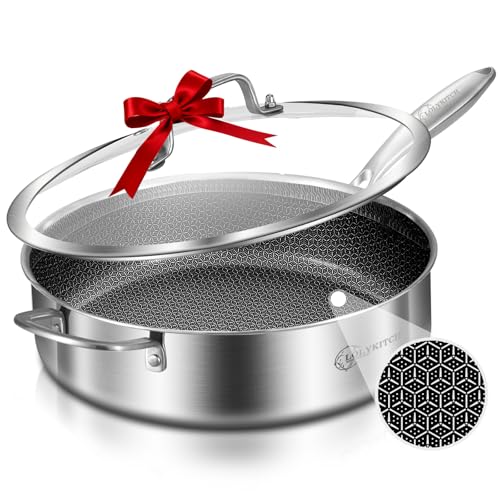
Tri-Ply Stainless Steel:All Lolykitch cooking pan made with a high-purity aluminum core sandwiched between with 2 layers of durable stainless steel, excellent durability for year to come.Highly polished 18/8 food grade stainless- steel cooking surface with a starburst finish,plus won't adverse react with food to alter natural tastes
Creamy Parmesan Risotto Substitutions and Variations
Once you’ve mastered the basic technique, you’ll find that risotto is incredibly versatile and welcomes all kinds of creative swaps and additions.
For risotto variations, try stirring in roasted butternut squash, sautéed mushrooms, or fresh asparagus during the final minutes of cooking. You can swap vegetarian chicken stock for vegetable, beef, or seafood stock to complement different ingredients.
Don’t have white wine? Use an extra cup of stock instead, though you’ll miss some acidity.
For ingredient swaps, substitute the Parmesan with Pecorino Romano for a sharper flavor, or use Gruyère for nutty richness. I’ve even replaced butter with olive oil when I want a lighter finish.
The frozen peas work beautifully, but fresh spinach, arugula, or chopped herbs make excellent alternatives. Additionally, using high-quality premium copper cookware can enhance the cooking process and improve the final texture of your risotto.
Shop Related Products
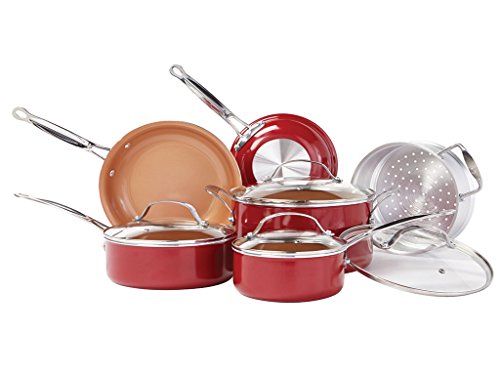
Tough-grade copper-infused ceramic cookware set

This set is made from high quality Pure Copper making it exclusive and durable. 2) This set has been beautifully designed to add grace to your dining experience. 3) Easy to clean and wash, With Pitambari Powder & they have very exotic shining.

10 PIECE COOKWARE SET: This pot and pan set includes 8 inch and 10 inch frying pans, 5.25 qt saute pan with lid, 2.25 qt and 3 qt sauce pans with lids, and a 8 qt stock pot with lid for versatile cooking
What to serve with Creamy Parmesan Risotto

Pairing this creamy, comforting risotto with the right dishes can transform it from a simple side into a complete meal that’ll impress anyone at your table.
I love serving it alongside grilled chicken, pan-seared salmon, or roasted shrimp for excellent protein options that complement the rich, cheesy flavors.
For lighter fare, a crisp arugula salad with lemon vinaigrette cuts through the creaminess perfectly.
When it comes to wine pairings, I recommend a crisp Pinot Grigio or Sauvignon Blanc that balances the butter and Parmesan. If you prefer red, try a light-bodied Pinot Noir.
You can also serve this risotto as a main course by adding sautéed mushrooms, roasted vegetables, or fresh herbs like basil and thyme to make it more substantial and satisfying.
Final Thoughts
This creamy Parmesan risotto has become one of my go-to recipes because it delivers restaurant-quality results with surprisingly simple techniques.
The key risotto techniques I’ve shared—adding stock gradually, stirring consistently, and maintaining the right temperature—truly make the difference between ordinary and extraordinary.
I hope these cooking tips give you the confidence to master this classic dish in your own kitchen. Remember, the rice should be tender but still have a slight bite, and the final texture should be flowing, not stiff.
Don’t rush the process or skip the constant attention it requires. Every stir builds that signature creaminess. Investing in premium stainless cookware can elevate your cooking experience and help achieve those perfect results.
Once you’ve nailed this basic version, you’ll find endless ways to customize it with your favorite ingredients and seasonal vegetables.
Frequently Asked Questions
Can I Make Risotto Ahead of Time and Reheat It Later?
I don’t recommend freezing risotto since it loses its creamy texture when reheated. However, you can refrigerate it for up to two days. For reheating tips, add warm broth gradually while stirring to restore creaminess.
Why Is Constant Stirring Important When Making Risotto?
I stir constantly because it promotes starch release from the rice grains, creating that signature creamy texture. The motion also guarantees even flavor development and prevents sticking or burning on the pan’s bottom.
How Do I Know When My Risotto Is Perfectly Cooked?
I’ll know my risotto’s perfectly cooked by tasting the texture—it should be tender but al dente with a slight bite. Visual cues include grains that look creamy and flow when stirred, not stiff or soupy.
Can I Use a Different Type of Rice Instead of Risotto Rice?
I don’t recommend substituting other rice varieties for risotto rice. Traditional arborio, carnaroli, or vialone nano contain specific starches essential for achieving that signature creamy texture through proper stirring and cooking techniques that other rices simply can’t replicate.
How Do I Store Leftover Risotto Properly?
I’ll store leftover risotto in an airtight container in the fridge for up to three days. For freezing risotto, I’ll portion it into freezer bags. My reheating tips include adding broth while warming to restore creaminess.