I’ll never forget the first time I served leg of lamb at a dinner party, convinced I’d ruin it, only to watch my guests scrape their plates clean. There’s something about a perfectly herb-crusted lamb, glistening with roasted garlic and fresh herbs, that transforms a simple meal into something memorable. The secret isn’t complicated technique or fancy equipment, just a few smart steps that guarantee tender, flavorful meat every time.
Why You`ll Love this Herb-Crusted Leg of Lamb
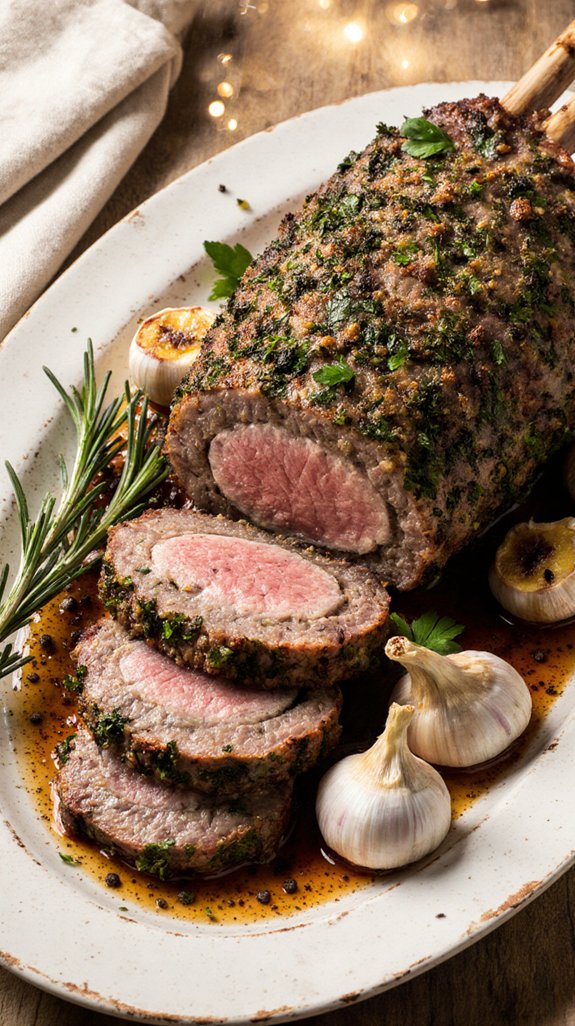
When I first learned to make herb-crusted leg of lamb, I’ll admit I was intimidated by the prospect of cooking such an expensive cut of meat, but the technique turned out to be surprisingly forgiving.
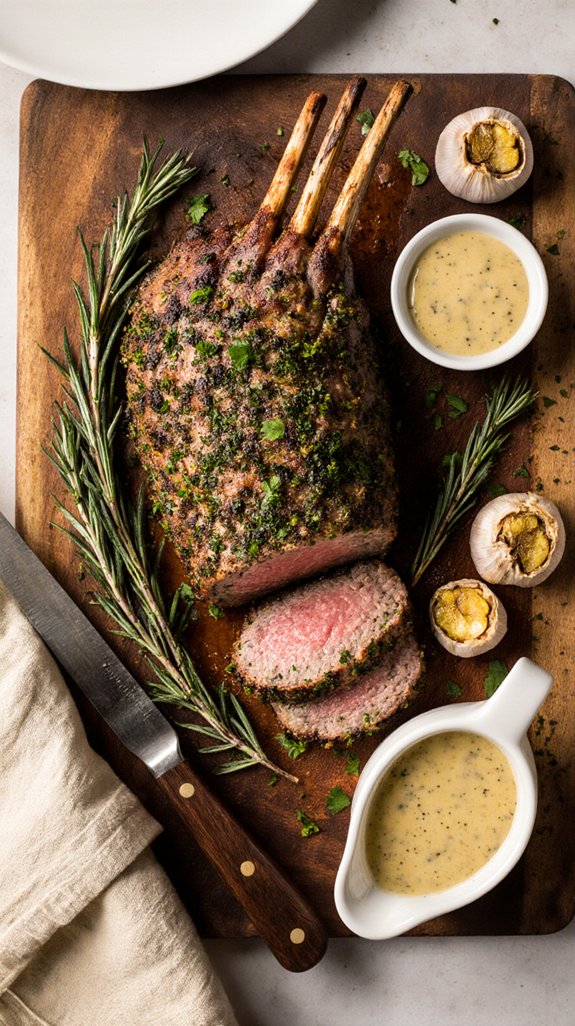
The combination of flavorful herbs creates an aromatic crust that transforms the roast into something restaurant-worthy, while the mustard acts as the perfect glue to hold everything in place.
What I love most is how the tender meat practically melts in your mouth, especially when you cook it to a perfect medium-rare and let it rest properly.
The roasted garlic sauce adds richness without overwhelming the dish, and honestly, it’s easier than you’d think to pull off this impressive centerpiece for any special occasion.
What ingredients are in Herb-Crusted Leg of Lamb?
The ingredients for this herb-crusted leg of lamb are straightforward and focus on fresh herbs that create an aromatic, flavorful crust. You’ll need a boneless leg of lamb as your centerpiece, along with Dijon mustard to help the herb mixture adhere to the meat.
The combination of fresh thyme, rosemary, sage, and parsley creates a classic flavor profile that complements the richness of the lamb perfectly. For the roasted garlic sauce, you’ll use whole garlic cloves, wine, stock, and butter to create a silky accompaniment.
Ingredients:
- 1 (5 lb) boneless leg of lamb
- 4 tablespoons extra virgin olive oil
- 1/2 cup Dijon mustard
- Salt and fresh ground pepper
- 1 tablespoon fresh thyme leaves (chopped)
- 1 tablespoon fresh rosemary leaves (chopped)
- 1 tablespoon fresh sage leaves (chopped)
- 1 tablespoon fresh flat-leaf parsley (chopped)
- 10 garlic cloves (each sliced in half)
- 1/2 cup dry white wine (or red wine as an alternative)
- 1 cup veal stock or chicken stock
- 1 tablespoon unsalted butter
The quality of your ingredients will make a noticeable difference in this recipe, particularly when it comes to the herbs and the stock. Fresh herbs are essential rather than dried, as they provide the vibrant flavor and aroma that define this dish.
If you can’t find veal stock, chicken stock works well as a substitute, though veal stock will give you a richer, more luxurious sauce. The choice between white and red wine is flexible based on your preference, with white wine offering a lighter, more delicate flavor and red wine providing deeper, more robust notes.
How to make this Herb-Crusted Leg of Lamb
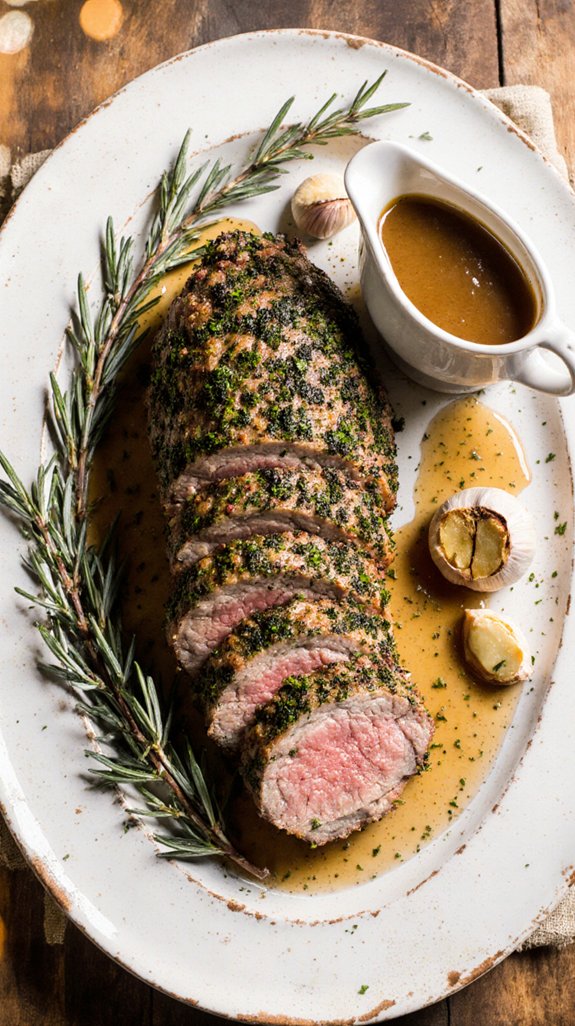
Making this herb-crusted leg of lamb begins with getting a beautiful sear on the meat, which locks in flavor and creates texture.
Heat 4 tablespoons of extra virgin olive oil in your roasting pan until it’s very hot, then place your 5-pound boneless leg of lamb fat side down first. You want to sear it until it develops a golden-brown color, then flip it over to sear the other side.
Once both sides are nicely browned, remove the lamb from the heat and let it rest for about 5 minutes. This brief rest allows the meat to relax before you add the herb coating. While it’s resting, brush 1/2 cup of Dijon mustard generously over both sides of the lamb, then season with salt and fresh ground pepper.
Mix together 1 tablespoon each of chopped fresh thyme, rosemary, sage, and flat-leaf parsley in a small bowl, then press this herb mixture onto both sides of the mustard-coated lamb, making sure it adheres well.
Now it’s time to roast the lamb and prepare that delicious garlic sauce. Add the 10 halved garlic cloves to your roasting pan and place the herb-crusted lamb right on top of them.
Pop the pan into a preheated 350-degree oven and cook for 15 to 20 minutes for medium-rare doneness. When the lamb is ready, remove it from the oven and the roasting pan, then wrap it tightly in aluminum foil to rest while you make the sauce.
Place the roasting pan on your stovetop over medium heat, remove the softened garlic cloves and set them aside, then discard all the excess fat from the pan. Pour in 1/2 cup of dry white wine and 1 cup of veal or chicken stock, letting the mixture reduce by half while you scrape up any flavorful bits stuck to the bottom of the pan.
Transfer the roasted garlic to a blender or food processor, add the reduced wine and stock mixture, and blend until completely smooth. Pulse in 1 tablespoon of unsalted butter to give the sauce a silky finish, season it well with salt and pepper, and you’re ready to serve this impressive dish. Investing in premium kitchen appliances can make preparing elaborate recipes like this much easier and more enjoyable.
Shop Related Products

SIZE - 16L x 12W x 6H inch and inside dimensions 15L x 10.5W x 3.5H inch.

Ideal for large cuts such as ham, brisket, turkey or roasts up to 20lb. The high domed lid helps keep meats moist and distributes heat evenly, and the high sides reduce splattering in the oven. Stainless steel flat rack elevates meats for even browning.

The dutch oven is carefully crafted with a carbon steel core, and the sturdy enamel steel design ensures its durability,high temperature resistance.Free from harmful substances such as PFOA and PTFE
Herb-Crusted Leg of Lamb Substitutions and Variations
If you don’t have fresh herbs on hand, dried herbs work perfectly fine in this recipe, though you’ll want to use about one-third of the amount since dried herbs pack a more concentrated flavor.
I’ve experimented with different herb types over the years, and while the classic combination of thyme, rosemary, sage, and parsley creates that traditional French flavor, you can substitute oregano or marjoram if that’s what’s in your pantry.
For cooking methods, I’ve also tried this recipe on the grill instead of roasting in the oven, which adds a wonderful smoky depth.
The key is maintaining that initial sear to lock in the juices, regardless of which direction you take the recipe afterward.
Shop Related Products

SUPERIOR COOKING FOR YEARS TO COME: Heavy-duty steel roaster pan designed to resist warping for years of roasting performance

[SMALL OVAL ROASTER PAN CAPACITY] JY COOKMENT Small roasting pan is 13" long and 8.7" wide (11" x 7" inside), It is the right size for a small chicken, ham and vegetables. Hold up to 4-5 lbs.

What to serve with Herb-Crusted Leg of Lamb
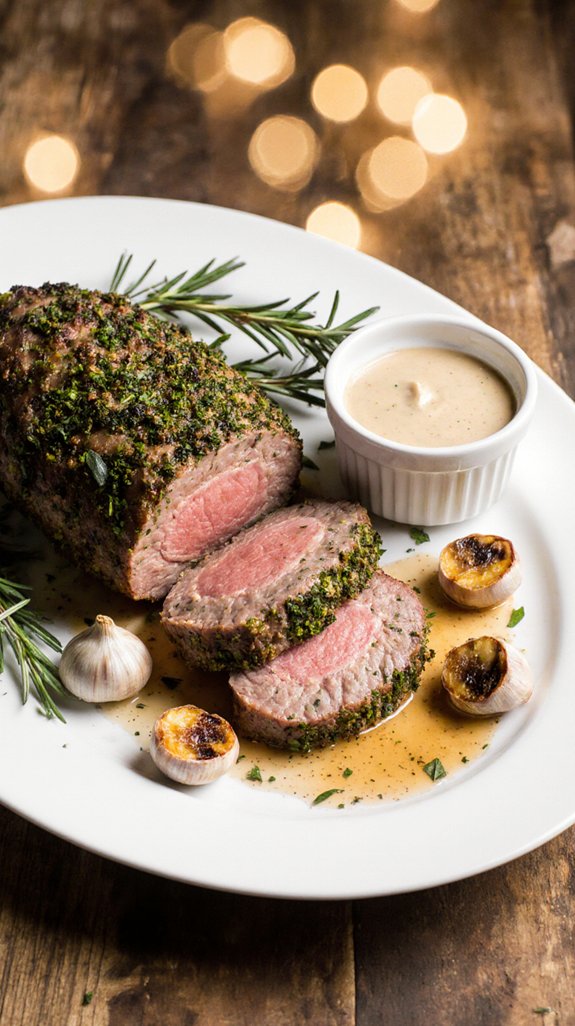
Once you’ve perfected your herb-crusted lamb, the next question naturally becomes what belongs on the plate alongside it.
I’ve learned that roasted potatoes with rosemary make an ideal companion, their crispy edges soaking up that gorgeous garlic sauce. Side dishes should complement, not compete—think roasted asparagus, creamy gratin, or a simple arugula salad with lemon vinaigrette.
My grandmother always served hers with buttered green beans and pearl onions, which I still crave.
For wine pairings, I reach for a bold Cabernet Sauvignon or Bordeaux blend, though a rich Côtes du Rhône works beautifully too. The tannins cut through the lamb’s richness while enhancing those herbs.
Don’t overthink it—keep sides simple and let your beautifully crusted lamb shine.
Final Thoughts
This herb-crusted leg of lamb has become my go-to centerpiece for gatherings where I want to impress without spending all day in the kitchen, and I hope it becomes yours too.
The lamb preparation might seem intimidating at first, but once you’ve done it once, you’ll realize it’s actually quite forgiving. The key cooking techniques—searing for color, roasting to medium-rare, and resting before slicing—work together to create something truly special.
I’ve made this recipe at least a dozen times now, and each time I’m reminded that restaurant-quality results don’t require professional training. They just require patience, good ingredients, and a willingness to trust the process.
Your guests will think you’ve been cooking for years.
Frequently Asked Questions
Can I Prepare the Herb-Crusted Lamb Ahead of Time?
Yes, I’d recommend preparing the herb crust mixture ahead and storing it refrigerated. You can also sear the lamb earlier, but I suggest applying the mustard and herbs just before roasting for ideal flavor and texture.
How Do I Know When the Lamb Reaches Medium-Rare Doneness?
I’ll check doneness indicators using meat thermometers inserted into the thickest part of the lamb. For medium-rare, I’m looking for an internal temperature of 130-135°F before removing it from the oven to rest.
What’s the Best Way to Slice Lamb for Serving?
I’ll slice the lamb against the grain at a slight angle to create tender, attractive pieces. For serving presentation, I arrange the slices overlapping on a warm platter, then drizzle the roasted garlic sauce over them.
Can I Use Dried Herbs Instead of Fresh Ones?
Yes, I can use dried herbs, but I’ll need only one-third the amount since dried herbs have more concentrated flavor intensity compared to fresh. The crust won’t be quite as vibrant or aromatic.
How Should I Store and Reheat Leftover Lamb?
I’ll store your leftover lamb in an airtight container in the refrigerator for up to three days. When reheating, I recommend using low oven heat around 300°F to maintain moisture and prevent drying out.