I’ve spent years trying to recreate the kolaches my grandma used to make, the ones that filled her kitchen with that unmistakable aroma of butter and toasted walnuts. After countless attempts and a few kitchen disasters, I finally cracked the code to her secret recipe, and it turns out the magic ingredient was hiding in plain sight all along—something you probably already have in your fridge.
Why You`ll Love these Secret Kolaches with Walnut Filling
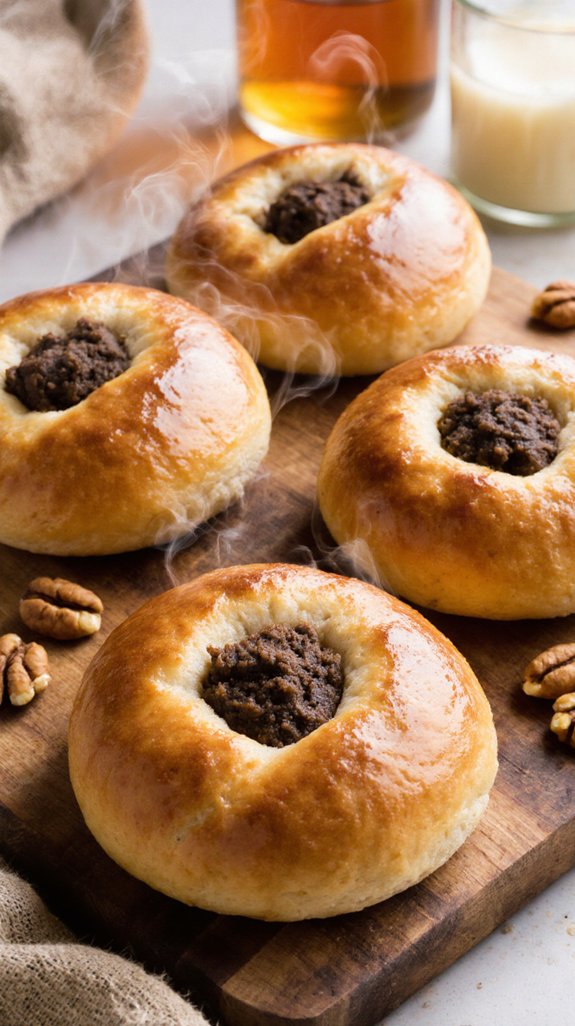
Why do these unassuming little pastries hold such power over anyone who tries them?
I’ll tell you exactly what makes my grandma’s kolaches impossible to resist. First, there’s the tender, flaky dough made with cottage cheese instead of the traditional yeast, which means no waiting around for rising.
Then comes that walnut filling, perfectly sweetened with brown and white sugar, creating the ultimate comfort food that melts in your mouth.
But honestly, it’s about more than taste. These cookies carry family traditions in every bite, connecting us to generations past.
When I pull them from the oven, golden and fragrant, I’m transported back to grandma’s kitchen.
They’re simple enough for beginners yet impressive enough to become your signature treat at every gathering.
What ingredients are in Secret Kolaches with Walnut Filling?
The beauty of these Secret Kolaches lies in their surprisingly short ingredient list. You won’t need any exotic items or hard-to-find specialty ingredients. Everything can be found at your local grocery store, making this recipe accessible for any home baker who wants to recreate these nostalgic treats.
The cottage cheese in the dough is what sets these apart from traditional yeast-based kolaches, giving them their distinctive tender texture while keeping the process quick and simple.
For the Dough:
- 1 lb oleo (margarine)
- 1 (16 ounce) carton cottage cheese
- 4 cups flour
For the Filling:
- 1 lb crushed walnuts
- 1/2 cup brown sugar
- 1/2 cup white sugar
- 1 beaten egg white
For Rolling:
– Powdered sugar
When gathering your ingredients, make sure your oleo and cottage cheese are at room temperature for easier mixing. The walnuts should be finely crushed but not ground into powder—you want some texture in the filling.
The egg white acts as a binder for the filling, so don’t skip it. Having powdered sugar ready for rolling is essential, as it prevents sticking and adds a delicate sweetness to the exterior of each kolache.
How to make these Secret Kolaches with Walnut Filling
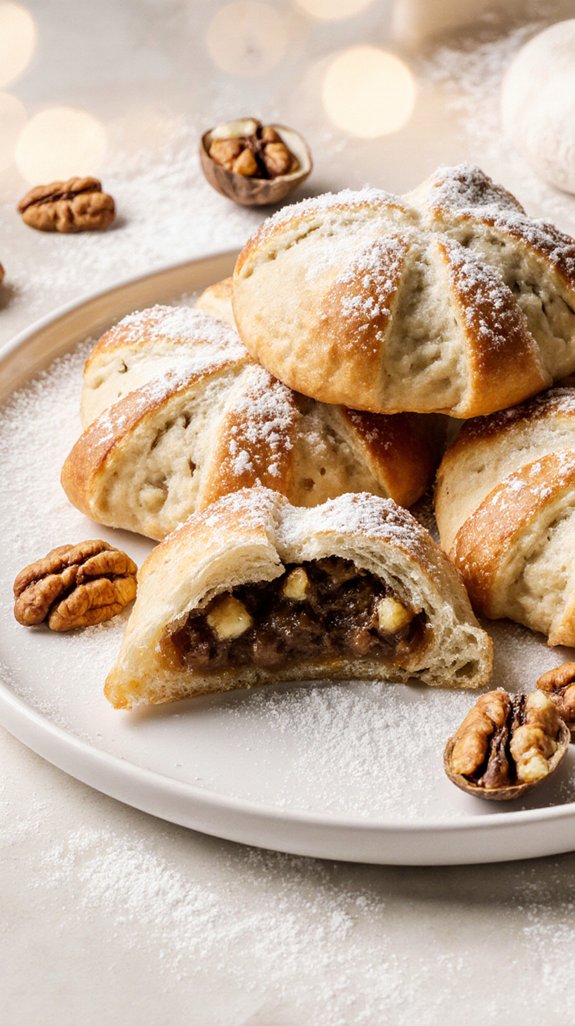
Making these Secret Kolaches is delightfully straightforward, especially since there’s no yeast involved and no waiting for dough to rise. Start by mixing together 1 lb oleo, 1 (16 ounce) carton of cottage cheese, and 4 cups of flour until everything comes together into a cohesive dough.
Once mixed, pop the dough into the refrigerator to chill while you prepare the filling. This chilling step is important because it makes the dough much easier to handle and shape later.
While the dough is resting, combine 1 lb of crushed walnuts, 1/2 cup brown sugar, 1/2 cup white sugar, and 1 beaten egg white in a separate bowl. Mix these filling ingredients together until they’re well blended and the egg white has coated the walnut mixture.
When you’re ready to assemble, take the chilled dough from the refrigerator and work with small pieces at a time, keeping the rest cold. Pinch off a walnut-sized portion of dough and flatten it out, then roll it in powdered sugar to prevent sticking and add a touch of sweetness.
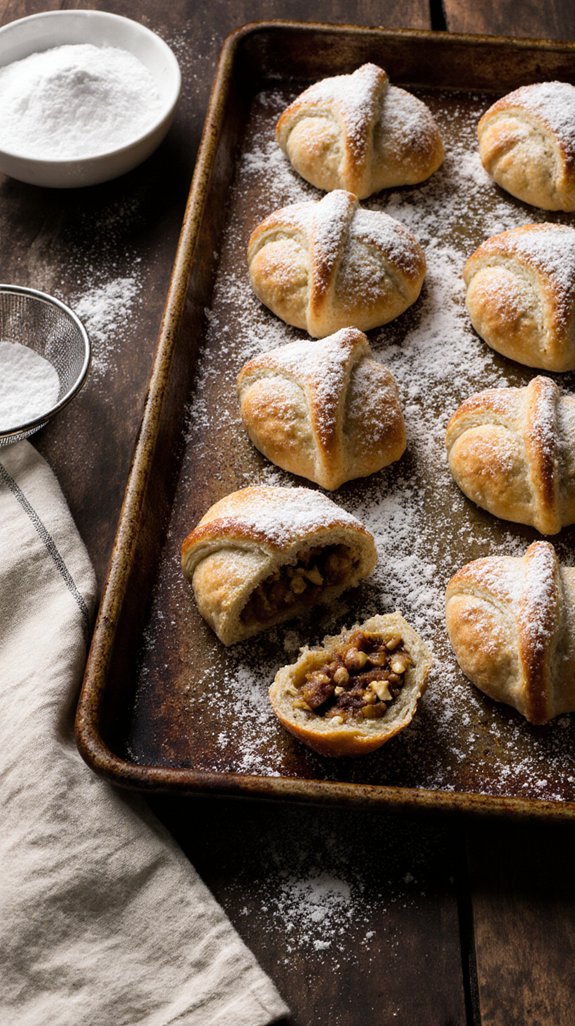
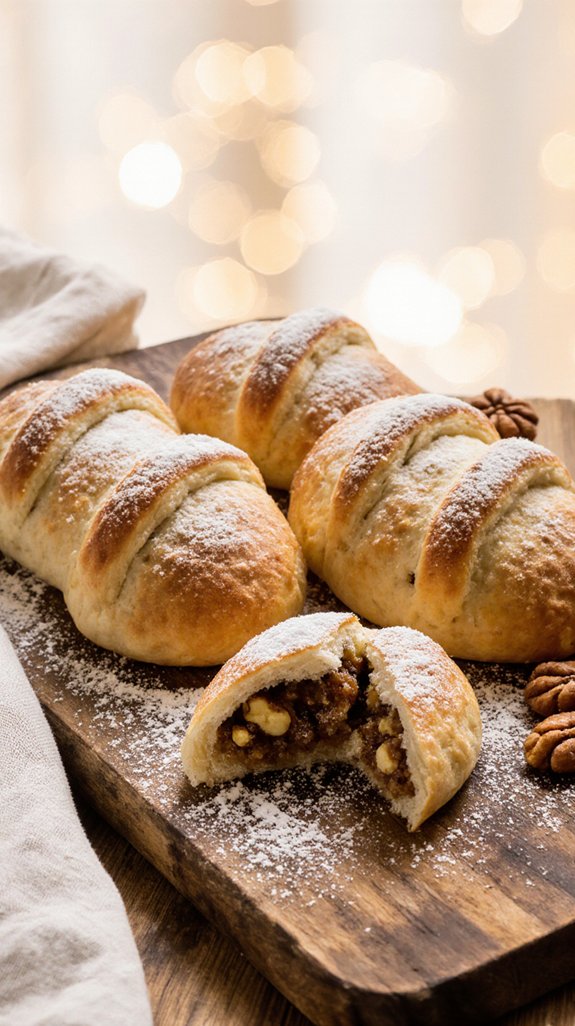
Place about 1 teaspoon of the walnut filling in the center of the flattened dough, then carefully roll it up, pinching the edges to seal the filling inside. The powdered sugar not only keeps things from getting sticky but also gives each kolache a lovely dusted appearance.
Once all your kolaches are formed and placed on a baking sheet, slide them into a 350-degree oven and bake for 18 minutes, until they’re lightly golden and set. The result is a tender, slightly sweet pastry with a rich walnut center that practically melts in your mouth. If you’re looking to upgrade your baking experience, investing in a premium cookware set can make preparation and cleanup even easier.
Secret Kolaches with Walnut Filling Substitutions and Variations
While Grandma’s original recipe is absolutely perfect as written, I’ve learned over the years that this forgiving dough welcomes all sorts of creative tweaks and ingredient swaps. The walnut filling can be replaced with poppy seed paste, apricot preserves, or even chocolate chips for alternative fillings that’ll make these pastries your own. I’ve substituted half the flour with almond flour when friends request gluten free options, though the texture becomes slightly more delicate. You can swap the oleo for butter if you prefer, and I’ve used cream cheese instead of cottage cheese with wonderful results. The brown sugar in the filling works beautifully when replaced with honey or maple syrup, adding subtle flavor variations that Grandma would’ve appreciated, even if she’d never admit her recipe needed improving.
Shop Related Products
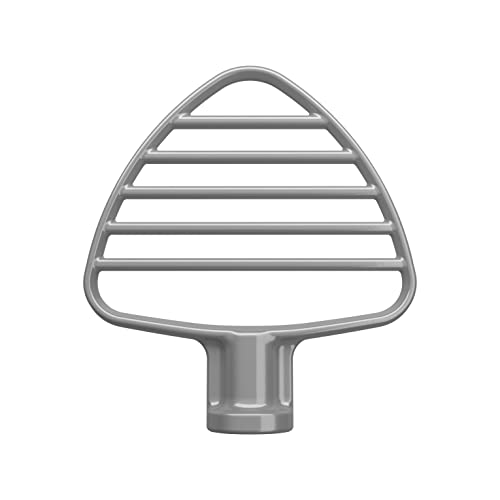
Fits all 4.5 and 5 Quart KitchenAid Tilt Head Stand Mixers, sold separately
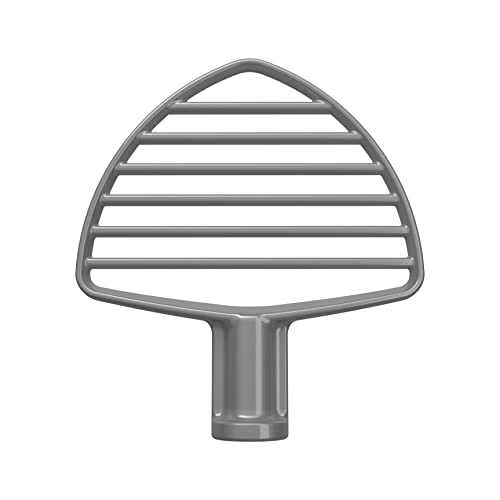
Fits KitchenAid Bowl-Lift Stand Mixers with Stainless Steel Bowls Only - models: KV25G0, KP26M9, KP25M0, KP26M1, KSM758, KSM759, KSM6583, KSM500, KL26M8, KF26M22, KF26M1Q, KP26N9, KP26M8, KV25ME, KV25MC, KSM55, KSM60, KSM70, sold separately

Fits all 4.5 and 5 Quart KitchenAid Tilt Head Stand Mixers, sold separately
What to serve with Secret Kolaches with Walnut Filling
Once you’ve mastered the basic recipe and experimented with your favorite variations, you’ll quickly discover that kolaches shine brightest when paired with the right accompaniments.
My grandmother always served these warm from the oven alongside strong black coffee, and I’ve found that coffee pairings truly elevate the entire experience. The slightly bitter notes balance the sweet walnut filling perfectly.
For serving suggestions, I recommend arranging them on a simple platter with fresh fruit—sliced apples or pears work beautifully. A dusting of powdered sugar just before serving adds visual appeal.
During holidays, I’ll add a small bowl of whipped cream for guests who want extra indulgence.
These kolaches also pair wonderfully with hot tea, particularly Earl Grey or chamomile, creating a comforting afternoon treat.
Final Thoughts
After more than three decades of baking these kolaches, I can honestly say this recipe has become far more than just a collection of ingredients and instructions—it’s transformed into a living connection to my grandmother and the generations before her.
Every time I pull that first golden tray from the oven, I’m transported back to her kitchen, watching her weathered hands shape each piece with practiced ease.
These walnut-filled pastries have anchored our family traditions through countless holiday gatherings, baptisms, and Sunday afternoons.
I’ve watched my own children master the technique, and now my granddaughter asks to help roll the dough.
That’s the real magic here—not just preserving a recipe, but keeping love alive through butter, flour, and tradition.
Frequently Asked Questions
Can I Freeze the Kolache Dough for Later Use?
Yes, I’d recommend freezing dough after mixing the oleo, cottage cheese, and flour. When you’re ready, use proper thawing methods by refrigerating overnight. This maintains the dough’s texture for rolling and baking perfectly.
How Should I Store Leftover Baked Kolaches?
I’ll store your leftover baked kolaches in an airtight container at room temperature for up to three days. When reheating kolaches, I recommend warming them in a 300°F oven for five minutes to restore their freshness.
What Is Oleo and Can I Substitute It?
Oleo’s an old-fashioned term for margarine. For oleo clarification, you can substitute it with butter or modern margarine as butter alternatives. I’d recommend using unsalted butter—it’ll give your kolaches a richer, more authentic flavor than margarine.
Can I Use a Different Nut Instead of Walnuts?
Yes, you can substitute other nuts! I’d recommend pecans for a similar texture and flavor as a pecan filling works beautifully. You could also try almond paste for a different but traditional kolache variation that’s equally delicious.
How Do I Know When the Kolaches Are Done Baking?
I’ll share my baking tips for checking doneness indicators: after 18 minutes, your kolaches should have lightly golden edges and bottoms. I gently lift one to check—if it’s firm and golden underneath, they’re perfectly done.