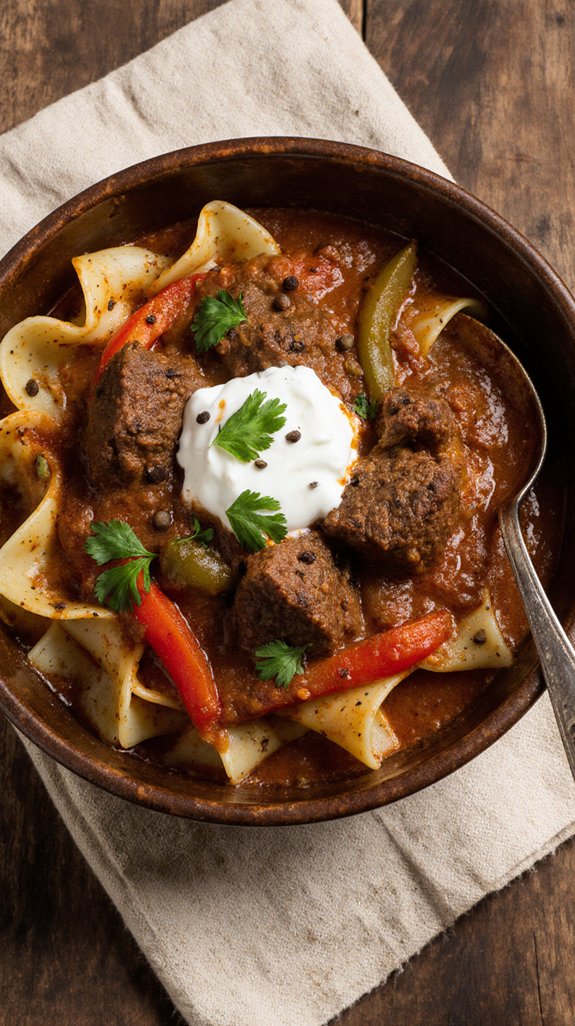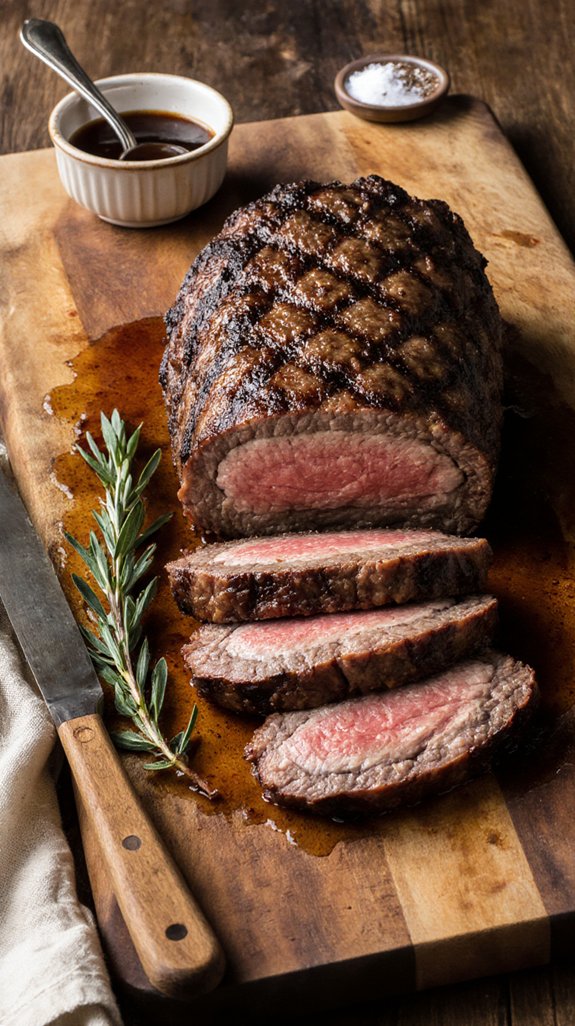
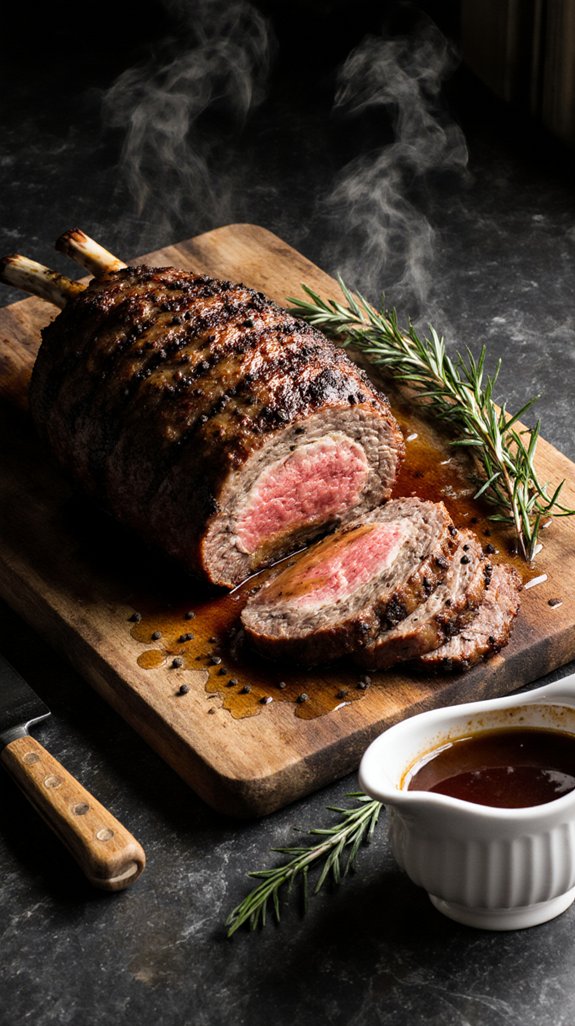
I’ll never forget the first time I watched my grandmother pull a perfect rib roast from the oven, its mahogany crust glistening with juices that pooled into the most incredible au jus I’d ever tasted. She made it look effortless, though I later learned her secrets involved careful timing, a good meat thermometer, and one surprising technique that changed everything for me.
Why You`ll Love this Perfect Rib Roast Au Jus
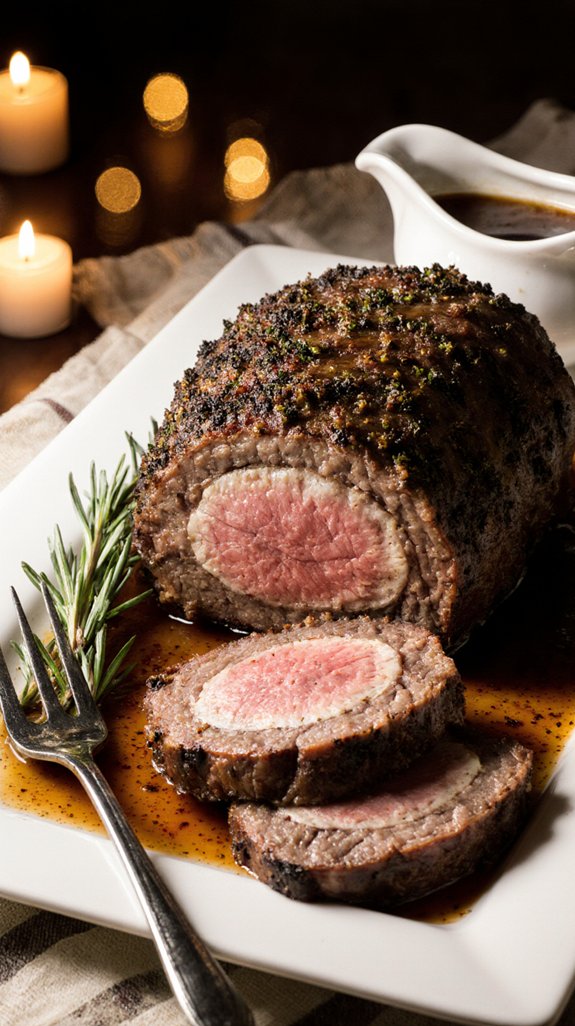
When I first mastered this rib roast, I realized I’d been intimidating myself for years over what’s actually a straightforward, nearly foolproof recipe.
The garlic-studded meat transforms into something restaurant-worthy, with a gorgeous crust that gives way to tender meat so pink and juicy you’ll wonder why you ever hesitated.
What really sold me, though, was the flavorful sauce you make from those beautiful pan drippings, that concentrated beefy essence mixed with wine that somehow tastes like you spent all day on it.
You’re basically letting the oven do the heavy lifting while you look like a culinary genius.
My family requests this every holiday now, and I’ve stopped pretending it’s difficult to make.
What ingredients are in Perfect Rib Roast Au Jus?
This classic rib roast au jus requires just a handful of simple ingredients that come together to create an impressive main course. The foundation is a quality rib roast, enhanced with aromatic garlic cloves that infuse the meat with flavor from the inside out.
Basic seasonings and pantry staples round out the ingredient list, proving that exceptional results don’t require complicated shopping lists.
Ingredients:
- 4 lbs rib roast
- 8 garlic cloves
- 1 teaspoon salt
- Fresh ground black pepper
- 1/2 cup red wine
- 2 cups beef broth
- Olive oil (optional, for coating)
The quality of your rib roast makes all the difference in this recipe, so choose a well-marbled cut with good fat coverage on top. The red wine you select for the au jus doesn’t need to be expensive, but it should be something you’d actually drink—avoid cooking wines, which tend to be overly salty.
While the olive oil isn’t strictly necessary, it helps the salt and pepper adhere to the meat’s surface and promotes even browning. Fresh garlic cloves are essential here since they’ll be inserted directly into the meat, and pre-minced versions simply won’t work for this application.
How to make this Perfect Rib Roast Au Jus
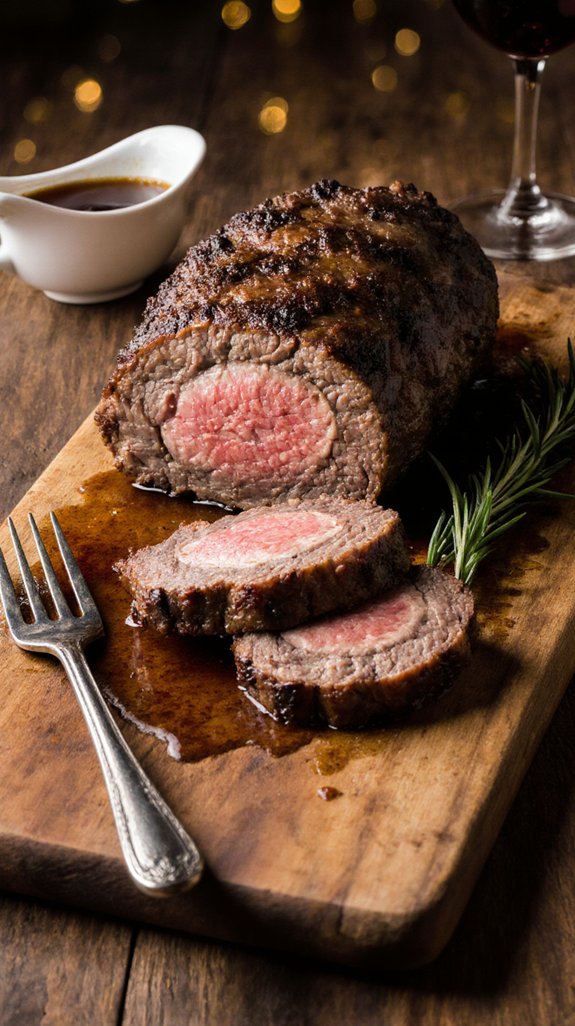
The key to this impressive rib roast starts the day before you plan to serve it. Begin by halving your 8 garlic cloves, then use the point of a sharp knife to poke holes throughout the roast and insert the garlic pieces deep into the meat. Cover the roast and let it rest in the refrigerator overnight, giving those aromatic garlic flavors plenty of time to work their way through the beef.
The next day, pull your roast out of the fridge 2 to 3 hours before cooking—this step is essential because bringing the meat to room temperature guarantees it cooks evenly throughout, rather than ending up overcooked on the outside and undercooked in the center.
When you’re ready to cook, preheat your oven to a hot 450 degrees. Rub 1 teaspoon of salt and a generous amount of fresh ground black pepper all over the roast, and if you’d like, coat it lightly with olive oil first to help the seasonings stick.
Place the roast fat side up in your roasting pan and slide it into that hot oven for 20 minutes to get a beautiful sear on the outside. After that initial blast of heat, reduce the temperature to 350 degrees and continue roasting until a meat thermometer inserted into the thickest part reads 140 degrees for perfect medium-rare doneness.
Once it reaches that temperature, transfer the roast to a cutting board and resist the urge to carve right away—letting it rest for 20 minutes allows the juices to redistribute throughout the meat.
While your roast is resting, it’s time to create that rich au jus using all those flavorful drippings left in the pan. Place the roasting pan directly on your stovetop over high heat, pour in 1/2 cup of red wine, and let it bubble away for several minutes while you scrape up all those delicious brown bits stuck to the bottom of the pan.
Add 2 cups of beef broth and let the mixture cook and reduce by half, which should take about 20 minutes. This concentrated sauce will be the perfect complement to your beautifully roasted beef, adding moisture and an extra layer of savory flavor to each slice. For consistently excellent results with recipes like this, investing in premium cooking appliances can make all the difference in achieving restaurant-quality meals at home.
Shop Related Products

EASIER CLEANUP AFTER ROASTING: This nonstick turkey pan for oven roasting helps food and drippings release more easily for less scrubbing after Thanksgiving dinner. The carbon steel body helps spread heat evenly for turkey, chicken and vegetables.

Healthy Material - The Tifanso heavy-duty turkey roasting pan with rack is made of high-quality, non-toxic stainless steel and contains no chemical coatings, ensuring that no harmful substances leach into your food. This turkey roasting pan can withstand temperatures up to 450℉ and is corrosion-resistant, promising a long service life without easy deformation. The oven pan heats quickly and distributes heat evenly, allowing you to make delicious gravies directly on an induction stove.

Holiday-Size Capacity: The 17.2 x 13.4 x 6 in carbon steel body is made to roast up to a 25 lb turkey, giving large birds, prime rib, chicken, and family-size meals room to cook without squeezing them into smaller pans
Perfect Rib Roast Au Jus Substitutions and Variations
Once you’ve mastered this classic preparation, you’ll probably find yourself wanting to experiment with different flavors and adapt the recipe to what you have on hand.
For substitutions suggestions, I’ve swapped red wine for balsamic vinegar when my wine rack’s empty, and it adds a lovely tang. White wine works too, though you’ll lose some depth.
If garlic feels too aggressive, fresh rosemary sprigs tucked into those same slits create an earthier profile that my mother-in-law actually prefers.
For flavor variations, try rubbing the roast with Dijon mustard before the salt and pepper, or mix smoked paprika into your seasoning blend.
Even a coffee-cocoa rub sounds wild but delivers surprisingly rich results that’ll make your guests ask questions.
Shop Related Products

Premium Double Nonstick Coating: Armorbear roasting pan features a high-quality dual-layer nonstick coating that is completely free of PFOA, PTFE, Teflon and lead, ensuring a safe and healthy cooking for your family. Both the inside and outside of the baking tray are non-stick, making cleanup a breeze.

Single-ply polished stainless-steel construction with warp-resistant bonded base
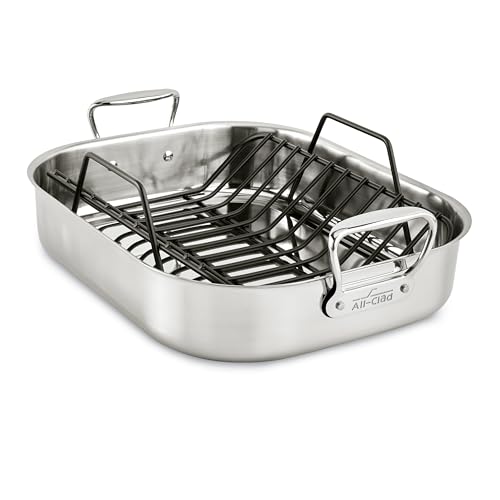
This All-Clad Large Stainless Steel Roaster with Nonstick Rack, 13 x 16 inch provides ample space for all your roasting needs, ensuring you can cook large cuts of meat or multiple dishes simultaneously.
What to serve with Perfect Rib Roast Au Jus
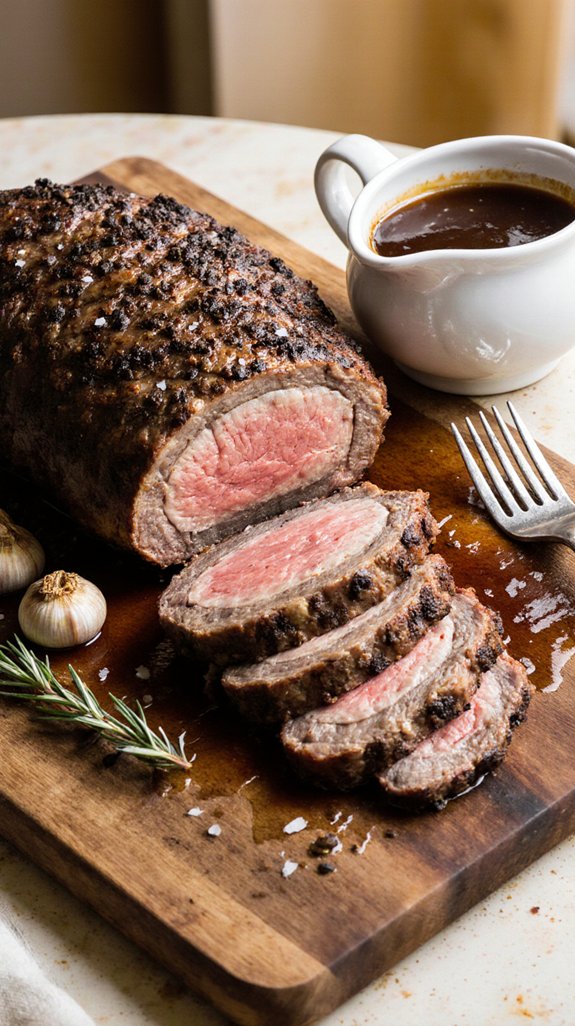
How do you honor a roast this impressive without letting your sides fade into the background? I’ve learned they need to complement, not compete.
Classic Yorkshire pudding works beautifully, soaking up that rich au jus like it was designed for the job. Creamy horseradish mashed potatoes add sharp contrast to the tender beef, while roasted Brussels sprouts with bacon bring a savory crunch.
For wine pairings, I always reach for a bold Cabernet Sauvignon or earthy Pinot Noir, wines that stand up to the meat’s richness. Side dishes should be simple but memorable, prepared ahead so you’re not scrambling while the roast rests.
My grandmother always included a crisp salad too, something fresh to cut through all that indulgent, satisfying richness.
Final Thoughts
Mastering this rib roast has taught me more than just cooking technique, it’s shown me how a single dish can anchor an entire gathering.
Every time I carve into that perfectly cooked meat, I’m reminded that good food doesn’t need to be complicated. The resting time isn’t negotiable, I’ve learned this the hard way when I got impatient and watched precious juices run all over my cutting board.
My slicing technique has improved with practice, thin, even cuts across the grain that showcase that rosy center. This roast has become my confidence dish, the one I turn to when I want to impress without stress.
It’s proof that sometimes the simplest recipes create the most lasting memories.
Frequently Asked Questions
Can I Use a Boneless Rib Roast Instead of Bone-In?
Yes, I can use a boneless rib roast. While I’ll miss some flavor differences from the bones, the boneless benefits include easier carving and more even cooking. I’ll adjust my cooking time since boneless roasts cook faster.
How Do I Know When the Roast Has Reached 140 Degrees?
I’ll use a meat thermometer inserted into the thickest part of the roast, avoiding fat and bone. Following cooking temperature guidelines, I’ll check it periodically during roasting. These meat thermometer tips guarantee accurate doneness every time.
What Size Roasting Pan Works Best for This Recipe?
I’d use a roasting pan that’s 14-16 inches, giving your 4-pound roast enough space without excess surface area. Among pan material choices, stainless steel or heavy-gauge aluminum work best for proper browning and deglazing.
Can I Prepare the Au Jus Ahead of Time?
Yes, you can make the au jus ahead of time. I recommend making au jus up to two days early, storing it refrigerated, then reheating au jus gently on the stovetop before serving with your roast.
How Should I Store Leftover Rib Roast?
I’ll store leftover rib roast by wrapping it tightly in aluminum foil or placing it in an airtight container. Proper leftover storage keeps the meat fresh in your refrigerator for 3-4 days maximum.