I still remember the first time I made pasta primavera in my tiny apartment kitchen, tossing bright green asparagus and tender zucchini with hot linguine while steam fogged up my glasses. Spring vegetables have this incredible way of transforming simple pasta into something that feels both indulgent and invigorating, especially when you catch them at their peak. The real secret isn’t just about which vegetables you choose, but understanding how to keep them crisp-tender while building a sauce that clings to every strand.
Why You`ll Love this Fresh Pasta Primavera
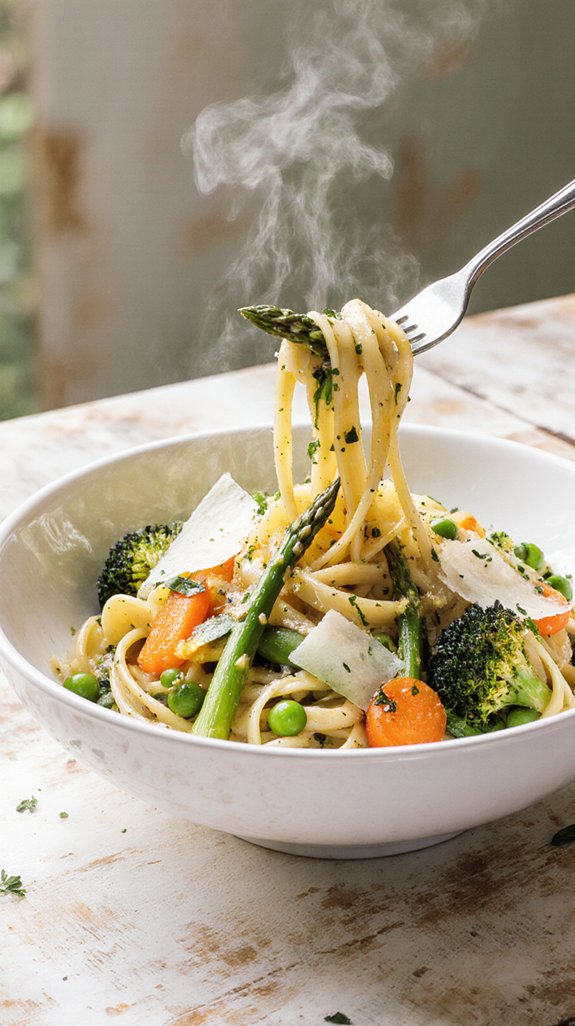
Because this pasta primavera celebrates vegetables at their absolute peak, you’ll find yourself making it on repeat through spring and summer.
I’m obsessed with how the simple cooking techniques transform everyday seasonal vegetables into something genuinely special. The steaming keeps asparagus and broccoli vibrant, while sautéing mushrooms with garlic creates this earthy foundation that makes the whole dish work.
What I love most is the lightness—there’s no heavy cream weighing you down, just a delicate wine-and-milk sauce that clings to each linguine strand. The parmesan adds richness without guilt, and those fresh herbs bring brightness that reminds me why I wait all winter for spring produce.
It’s comfort food that doesn’t leave you feeling sluggish, which is exactly what warm-weather cooking should deliver.
What ingredients are in Fresh Pasta Primavera?
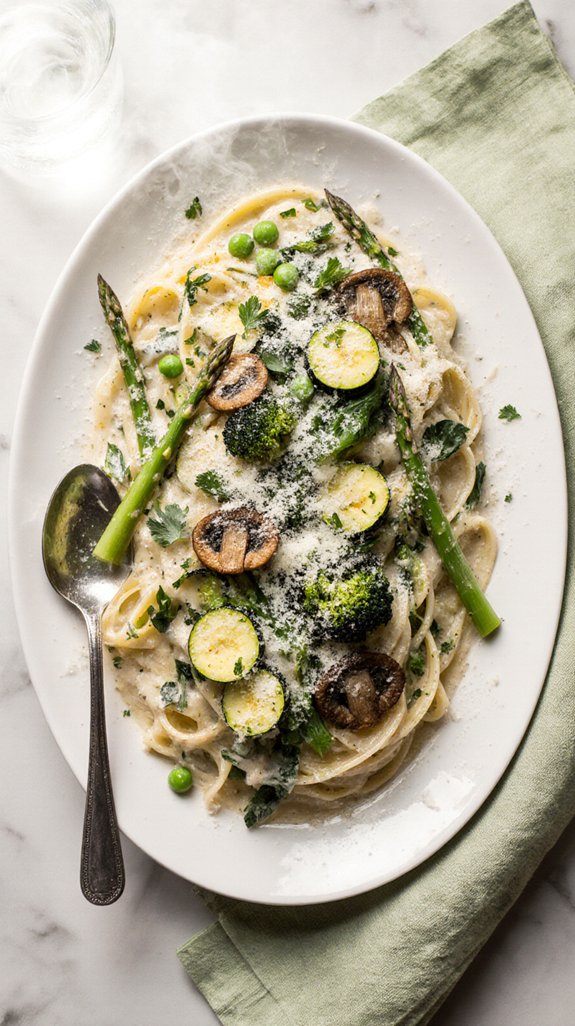
This pasta primavera brings together a colorful array of fresh spring vegetables with linguine in a light, creamy sauce. The ingredient list focuses on seasonal produce that steams to crisp-tender perfection, complemented by a delicate wine-based sauce that lets the vegetables shine. You’ll need both fresh and pantry staples to create this restaurant-quality dish at home.
For the vegetables:
- 4 ounces asparagus, cut into 1-inch pieces
- 1/2 cup broccoli florets
- 1/2 cup fresh snow pea pods, cut into 1-inch pieces
- 1/2 cup yellow squash, sliced
- 1/2 cup zucchini, sliced
- 8 ounces mushrooms, sliced
- 1 garlic clove, chopped
- Vegetable cooking spray
For the pasta and sauce:
- 8 ounces linguine, uncooked
- 2 tablespoons dry white wine
- 1/4 teaspoon chicken bouillon
- 3/4 cup skim milk
- 1 tablespoon all-purpose flour
- 1/4 cup + 1 tablespoon parmesan cheese (divided)
- 1 tablespoon water (for vegetables)
- 1/4 cup hot water (for sauce)
For seasoning:
- 1 tablespoon chopped fresh parsley
- 1 1/2 teaspoons chopped fresh basil
- 1/8 teaspoon salt
- 1/2 teaspoon pepper
The vegetables listed here are guidelines rather than strict requirements—feel free to substitute whatever looks freshest at your market or use what’s thriving in your garden. The sauce relies on skim milk to keep things light, but the flour guarantees it thickens properly without needing cream. Fresh herbs make a noticeable difference in this dish, so avoid dried versions if possible. The parmesan is divided between the sauce and a final sprinkle on top, adding savory depth at two stages of the recipe.
How to make this Fresh Pasta Primavera
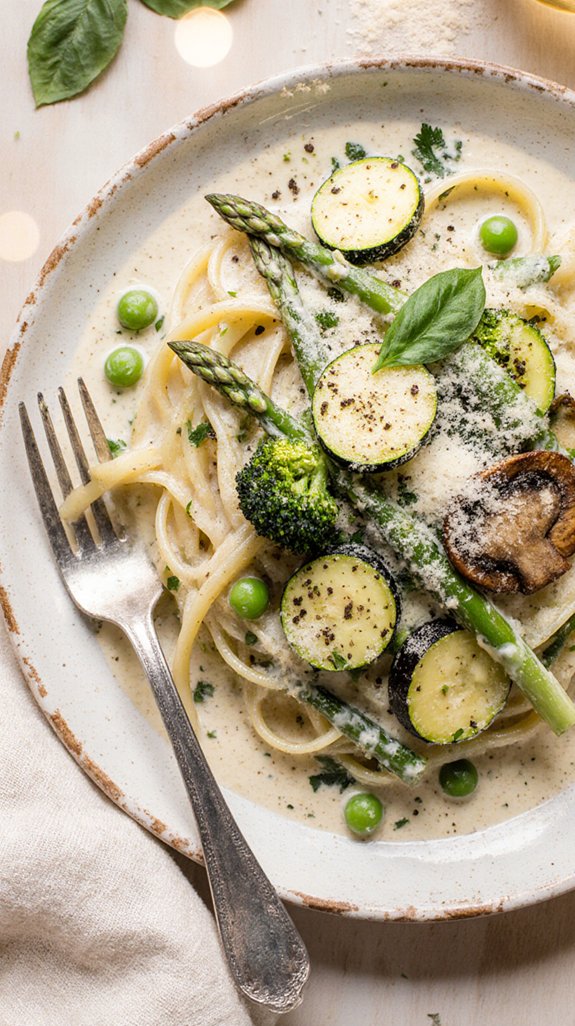
Start by steaming your vegetables to bring out their vibrant colors and fresh flavors. Arrange the 4 ounces of asparagus pieces, 1/2 cup broccoli, 1/2 cup snow peas, 1/2 cup yellow squash, and 1/2 cup zucchini in a steamer basket over boiling water. Let them steam for 15 to 20 minutes until they’re crisp-tender, which means they’ll have a slight bite without being crunchy or mushy.
While those are steaming, coat a large nonstick skillet with cooking spray and heat it over medium-high heat. Add the 8 ounces of sliced mushrooms and chopped garlic clove, sautéing them for about 5 minutes until the mushrooms release their moisture and become tender. Once your steamed vegetables are ready, add them to the skillet along with 1 tablespoon of water, then reduce the heat and let everything simmer together uncovered for 5 minutes. Set this beautiful vegetable mixture aside while you work on the pasta and sauce.
Cook the 8 ounces of linguine according to package directions, drain it, and set it aside. For the sauce, combine 1/4 cup hot water, 2 tablespoons dry white wine, and 1/4 teaspoon chicken bouillon in a small saucepan, bringing it to a boil. Let this mixture cook down until it reduces to just 2 tablespoons, concentrating those flavors.
In a small bowl, whisk together the 3/4 cup skim milk and 1 tablespoon flour until smooth, then gradually add this to your wine reduction, stirring constantly for about 5 minutes until the sauce thickens and becomes bubbly. Pour this creamy sauce over your cooked linguine and toss everything together, then add 1/4 cup parmesan cheese, 1 tablespoon chopped fresh parsley, 1 1/2 teaspoons chopped fresh basil, 1/8 teaspoon salt, and 1/2 teaspoon pepper, tossing again to distribute the herbs and seasonings evenly.
To serve, arrange the pasta on a large platter and top it with your reserved vegetable mixture, creating an attractive presentation that shows off all those gorgeous colors. Finish with a sprinkle of the remaining 1 tablespoon of parmesan cheese over the top, and you’re ready to enjoy a lighter version of this classic Italian-American favorite that doesn’t sacrifice flavor for health. For an even more authentic experience, consider investing in a premium pasta maker to create your own fresh linguine from scratch.
Shop Related Products

WHAT'S IN THE BOX: One 11-inch stainless steel everyday pan with one stainless steel steamer insert and one tempered glass lid

HEALTHY CERAMIC SKILLET - Made of natural ceramic, free of PFOA, PTFE, PFAS, lead and cadmium, safe and healthy. No toxic substances will be produced even overheated. No coating to come off into your food.

One 5 oz can of PAM Non Stick Olive Oil Cooking Spray
Fresh Pasta Primavera Substitutions and Variations
One of my favorite things about pasta primavera is how forgiving it’s when you need to swap ingredients based on what’s in your fridge or what looks good at the market.
For vegetable swaps, I’ve used green beans instead of asparagus, cauliflower in place of broccoli, and bell peppers when I’m out of squash. The key is maintaining that mix of colors and textures.
As for sauce alternatives, you can replace the milk-based sauce with a simple garlic and olive oil mixture, or even toss everything with pesto if you’re feeling adventurous.
I’ve also swapped linguine for penne or bow ties without issue. The recipe adapts beautifully to whatever spring vegetables catch your eye at the farmer’s market.
Shop Related Products

Chef's Choice Stainless: Mirror finish. Classic looks, professional performance

15-PIECE SET: NutriChef 15-piece nonstick cookware set includes pink & blue sauce pot, yellow cooking pot, green dutch oven pot, black small fry pan, red medium fry pan, slotted spoon, slotted spatula, lids, pasta server, soup ladle, & potato masher

COMPLETE KITCHEN IN A BOX – This 20 Pc non toxic cookware set includes everything you need to completely outfit your kitchen and take cooking and baking to the next level, includes a full cookware set with a 8.5” frying pan, 10” frying pan, 9.5” deep frying pan, 1 QT saucepan, 2.5 saucepan, 4 QT pot all with tempered glass lids, a 5 QT stockpot with a stainless steel steamer insert, plus a complete baking set with cookie sheet/jelly roll pan, loaf pan, muffin tin, square pan, 3 utensils and more!
What to serve with Fresh Pasta Primavera
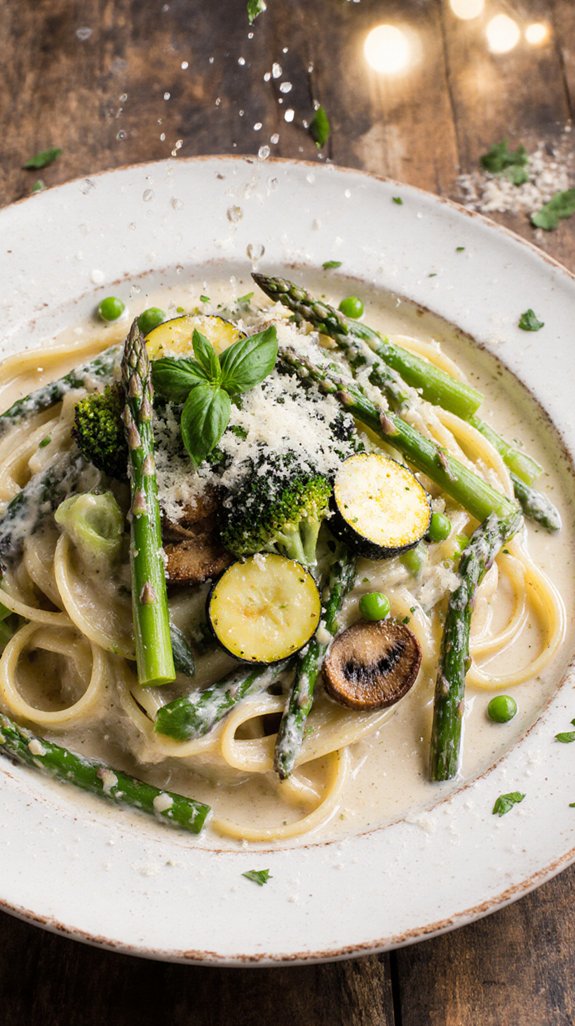
When I serve pasta primavera for dinner, I like to keep the sides simple since the dish itself is already packed with vegetables and flavor.
A crisp green salad with lemon vinaigrette cuts through the creamy sauce beautifully, and I’ll sometimes add arugula or spinach for a peppery bite.
For salad pairings, I stick with light dressings that won’t compete with the parmesan.
Crusty garlic bread is always welcome at my table, perfect for soaking up any extra sauce.
As for wine options, I reach for a chilled Pinot Grigio or Sauvignon Blanc, both of which complement the fresh vegetables without overpowering them.
My mom always served this with a simple Chardonnay, which works beautifully too.
Final Thoughts
This pasta primavera has earned its place in my weekly rotation because it delivers restaurant-quality results without the fuss or the price tag.
The beauty of this recipe lies in how it adapts to whatever seasonal ingredients look best at your market, whether that’s tender spring asparagus or summer zucchini.
I’ve learned that the key cooking tips really do matter here—don’t skip steaming those vegetables until they’re just crisp-tender, and make sure your sauce thickens properly before tossing it with the pasta.
Once you’ve made this a few times, you’ll develop your own rhythm with the timing, and it’ll feel like second nature.
It’s the kind of meal that makes you look forward to cooking.
Frequently Asked Questions
Can I Make Pasta Primavera Ahead of Time and Reheat It?
I don’t recommend making pasta primavera ahead since the vegetables become mushy when reheated. However, you can prep ingredients separately and combine them fresh. If reheating’s necessary, use gentle stovetop methods rather than microwaving.
How Long Does Leftover Pasta Primavera Last in the Refrigerator?
I’ll store your leftover pasta primavera in the refrigerator for 3-4 days maximum. For leftover safety, I always use airtight containers and guarantee proper refrigerator storage at 40°F or below to prevent spoilage.
Can I Freeze Pasta Primavera for Meal Prep?
I don’t recommend freezing pasta primavera for meal prep. The vegetables become mushy and watery when thawed, compromising texture and flavor. For best results with freezing tips, prepare fresh batches instead of freezing leftovers.
Is Pasta Primavera a Traditional Italian Dish or American Invention?
I’ll tell you that pasta primavera is actually an American invention, not traditional Italian. While it draws from Italian origins and cooking techniques, the dish was created in New York City during the 1970s with American adaptations.
What Wine Pairs Best With Pasta Primavera for Dinner?
I’d recommend pairing a crisp white wine like Pinot Grigio or Sauvignon Blanc with pasta primavera. While red wine works with heavier pasta dishes, white wine complements the fresh vegetables and light cream sauce perfectly.