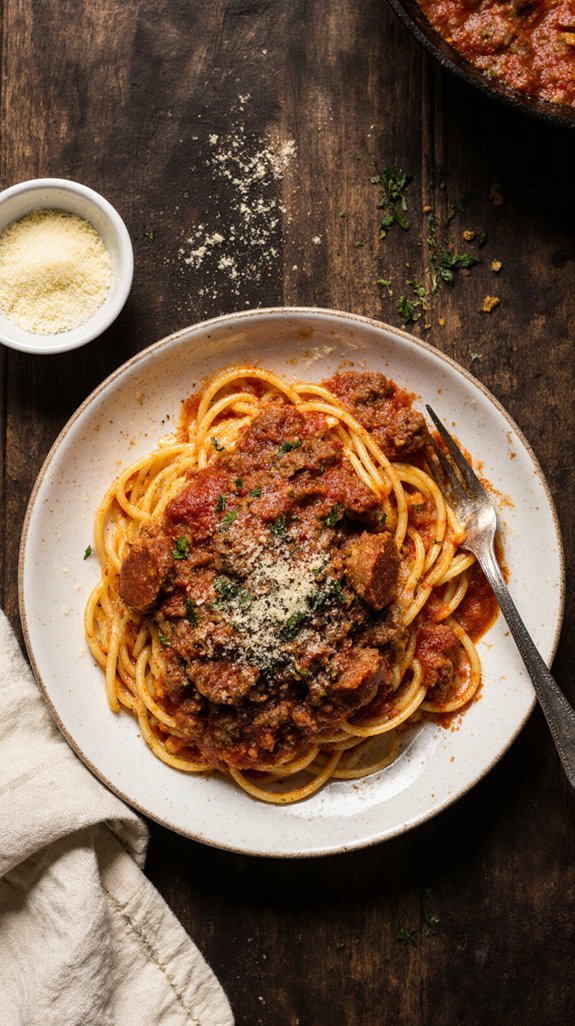

I’ll never forget the first time I tasted puttanesca at my friend’s house, when her Italian grandmother unapologetically dumped what seemed like an entire jar of capers into the pan. The sharp, salty boldness shocked me then, but now I crave those fearless flavors that don’t apologize for their intensity. If you’re tired of bland pasta and ready to embrace something with real personality, this recipe will transform your weeknight dinners into something worth talking about.
Why You`ll Love this Bold Puttanesca

While most pasta sauces whisper their intentions, puttanesca screams them from the rooftops, and that’s exactly why I’ve come to love this brash, unapologetic dish.
Throughout pasta history, recipes have evolved to suit refined palates, but puttanesca refuses to apologize for its bold personality.
I’ll admit, the first time I tasted those salty anchovies mingling with briny olives and fiery red pepper flakes, I wasn’t sure whether to embrace it or run away.
But that’s the beauty of understanding flavor profiles—once you accept that not everything needs to be subtle, you discover a whole new world.
This sauce doesn’t hide behind cream or butter; it announces itself proudly, demanding your attention with every bite, and I’ve learned to appreciate that confidence.
What ingredients are in Bold Puttanesca?
This bold puttanesca brings together a carefully curated selection of Mediterranean ingredients that create its signature punchy flavor. The foundation begins with quality pasta and olive oil, then builds layers of intensity through preserved and fresh ingredients that each contribute their own distinct character to the final dish.
- 8 ounces pasta
- 1/4 cup olive oil
- 3 garlic cloves, minced
- 2 cups chopped tomatoes, pushed through a sieve
- 4 anchovy fillets, rinsed and chopped
- 2 tablespoons tomato paste
- 3 tablespoons capers
- 20 Greek olives, pitted and coarsely chopped
- 1/2 teaspoon crushed red pepper flakes
- Salt for pasta water
The quality of your ingredients matters greatly in this dish since there’s nowhere for inferior products to hide. When selecting anchovies, look for ones packed in olive oil rather than salt for a smoother flavor, and don’t skip the rinsing step as it removes excess brine.
Greek olives like Kalamata work beautifully here, though any briny, oil-cured variety will deliver the salty punch this sauce needs. Fresh garlic is non-negotiable—pre-minced versions simply won’t provide the same aromatic foundation.
The tomatoes benefit from being pushed through a sieve to create a smoother texture while maintaining their fresh taste, and using San Marzano tomatoes when available elevates the sauce further.
How to make this Bold Puttanesca

Making puttanesca is remarkably straightforward, which is part of its charm as a pantry-staple meal. Start by bringing a large pot of water to a boil, and here’s a helpful tip: wait until the water is fully boiling before adding salt, since salted water actually takes longer to reach a boil.
Once you’ve salted the water, add your 8 ounces of pasta and cook it for 8 to 10 minutes until it reaches that perfect al dente texture—tender but with a slight bite in the center. While the pasta bubbles away, you can turn your attention to building the sauce, making this a true one-pot-plus-one-pan situation that won’t leave your kitchen looking like a disaster zone.
In a skillet over low heat, warm the 1/4 cup of olive oil and add your 3 minced garlic cloves, letting them cook gently until they turn golden and fill your kitchen with that unmistakable aroma. This is where patience pays off—rushing the garlic over high heat will leave you with bitter, burned bits instead of a sweet, aromatic base.
Next, add your 2 cups of chopped and sieved tomatoes to the skillet and let them cook for about 5 minutes, which allows the raw edge to cook off while the tomatoes start to break down into a sauce. Then comes the flavor explosion: stir in the 4 chopped anchovy fillets, 2 tablespoons of tomato paste, 3 tablespoons of capers, 20 coarsely chopped Greek olives, and 1/2 teaspoon of crushed red pepper flakes.
Let this magnificent combination simmer together for 10 minutes, stirring occasionally to prevent sticking and to help those bold flavors meld into something greater than the sum of their parts. The anchovies will actually dissolve into the sauce, leaving behind a savory depth rather than a fishy taste, while the capers and olives contribute bursts of briny brightness.
When your pasta is done and drained, toss it directly into the skillet with the sauce, letting every strand get coated in those punchy, Mediterranean flavors. The residual starch on the pasta will help the sauce cling beautifully, creating a dish that’s both simple and intensely satisfying. If you’re looking to elevate other staples in your kitchen with the same attention to quality, consider investing in a premium rice cooker to take your grain game to the next level.
Shop Related Products

EXCEPTIONAL DESIGN: enjoy mirror finish, classic look and professional performance. Aluminum encapsulated base heats quickly and spreads heat evenly– eliminating hot spots

304 FOOD GRADE STAINLESS STEEL SAUCEPAN: 2.5 QT saucepan with lid. Special matte finish inside to prevent scratches over time and mirror finish outside for shiny and stylish look. Easy to read measurement marks inside. Suitable for Induction, gas, electric, halogen, vitroceramic cooktops.

Swiss Non-Stick Coating - Swiss ILAG nonstick granite coating, SGS approved. PFOA free, smokeless, safe & healthy. Cooking with little oil for healthy diet.
Bold Puttanesca Substitutions and Variations
One of the beautiful things about puttanesca is how forgiving it’s when you need to swap ingredients based on what’s actually sitting in your pantry at midnight on a Tuesday.
I’ve made countless ingredient swaps over the years, and the sauce holds up beautifully.
Can’t find anchovies? Use fish sauce or even a splash of Worcestershire. No capers? Chopped green olives work in a pinch.
For spicy variations, I’ll sometimes double the red pepper flakes or add a diced jalapeño with the garlic.
Fresh tomatoes can replace canned when they’re in season, though you’ll need to simmer longer.
I’ve even used different pasta shapes, from penne to linguine, and it’s always delicious.
The bold flavors adapt surprisingly well.
Shop Related Products

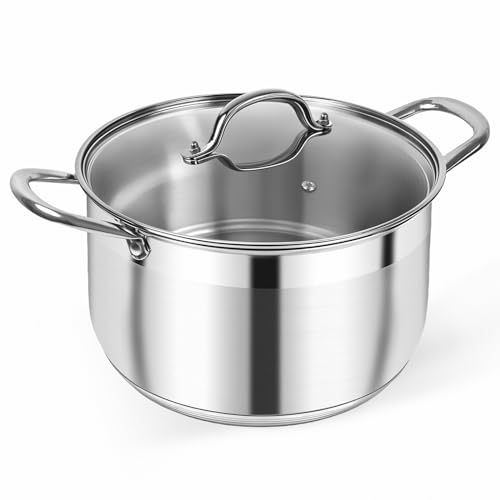
Stainless steel and 5 layers bottom: Kirecoo 8-Quart Stainless Steel Stockpot with Lid is an essential kitchen cookware, boasting an advanced stainless steel construction with a 5-layer thickened base. This cooking pot features high temperature and corrosion resistance, promising a long service life without easy deformation. Composed of aluminum, iron, aluminum, and a magnetic base, the 5-layer bottom of stockpot has good sturdiness and performance. It heats quickly and distributes heat evenly.
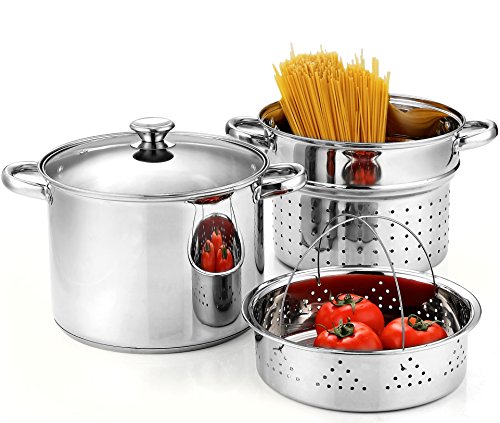
Pasta Pot Set: Pasta pot with strainer lid, 4 piece includes 8 quart stockpot, steamer Insert, pasta insert/pot, and a tempered glass lid for your cooking needs
What to serve with Bold Puttanesca

When puttanesca hits the table with all those punchy, briny flavors, you need side dishes that won’t compete but will complement.
I keep it simple—a crisp green salad with lemon vinaigrette cuts through the richness beautifully, or crusty bread for soaking up every drop of that salty sauce.
For wine pairing, I always reach for a dry white like Vermentino or Greco di Tufa, though a light-bodied red such as Chianti works surprisingly well.
My grandmother would serve blanched green beans tossed with olive oil and garlic, which added a fresh, mild contrast to the bold pasta.
Sometimes I’ll do roasted broccoli or zucchini, keeping the seasoning minimal—just salt and pepper.
The key is letting puttanesca remain the star.
Final Thoughts
This recipe has stayed in my kitchen rotation for decades because it delivers restaurant-quality flavor with pantry staples and minimal fuss. I’ve shared these cooking tips with countless friends who’ve become converts, and each time someone reports back with excitement, I’m reminded why puttanesca remains my go-to weeknight savior. The beauty lies in how forgiving it is—you can adjust the anchovies, add more garlic, or double the capers based on your mood. These flavor enhancements make it yours while keeping the bold, briny spirit intact. I hope you’ll make this sauce your own, tweaking and tasting until it feels like home. After all, the best recipes aren’t just followed—they’re lived with, adapted, and eventually, passed along.
Frequently Asked Questions
Can I Make Puttanesca Sauce Ahead of Time and Reheat It?
Yes, I absolutely recommend batch cooking puttanesca sauce ahead of time. You can refrigerate it for up to five days with proper sauce storage, then simply reheat and toss with freshly cooked pasta when you’re ready.
How Long Does Leftover Puttanesca Last in the Refrigerator?
I’ll store your leftover puttanesca sauce in an airtight container in the refrigerator for 3-4 days. Proper leftover storage guarantees ideal sauce longevity, though I recommend reheating it gently to preserve those bold flavors.
Is Puttanesca Sauce Supposed to Be Spicy or Mild?
I’d describe puttanesca as moderately spicy with a bold flavor profile. The recipe includes red pepper flakes for heat, but you can adjust the spice level to your preference—add more for extra kick or reduce for milder taste.
What Does Puttanesca Mean and Where Did This Dish Originate?
I’ll share the origin story with you: “puttanesca” translates to “in the style of prostitutes” in Italian. This Neapolitan dish’s true beginnings remain culinary folklore, though most accounts trace it to mid-20th century Naples.
Can I Freeze Puttanesca Sauce for Later Use?
Yes, I can freeze puttanesca sauce for up to three months. Here are my freezing tips: use airtight storage containers, leave headspace for expansion, and label with the date before freezing.