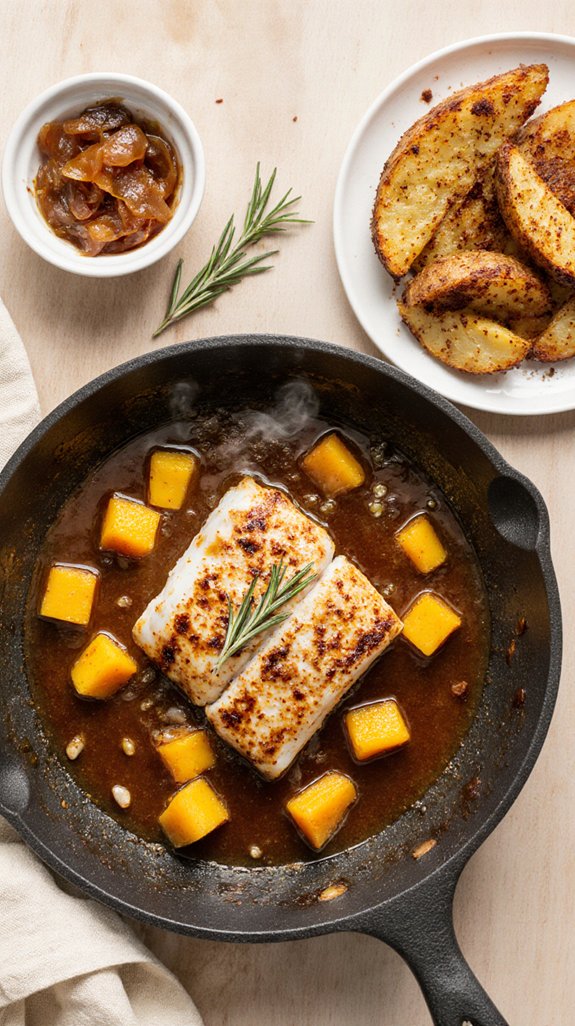
I’ve been making this Tropical Mahi Mahi with Mango for years, and it’s become my go-to recipe when I want something that feels special but doesn’t chain me to the kitchen. The combination of savory cashew butter sauce with sweet, juicy mango creates this incredible balance that honestly surprises people every time I serve it. What makes this dish even better is how the flavors come together in ways you might not expect.
Why You`ll Love this Tropical Mahi Mahi with Mango

Because this tropical mahi mahi brings together bold flavors in one simple pan, you’ll find yourself making it on repeat.
I’m hooked on how the creamy cashew butter melts into the soy sauce and hoisin, creating a savory base that perfectly balances the sweet mango chunks. The flavor profile hits all the right notes—sweet, salty, and subtly spiced with garam masala and paprika.
What really sells me on this recipe is how forgiving the cooking techniques are. You’ll sauté the fish quickly in coconut oil, then let everything simmer together until tender. Even if you’re new to cooking fish, this method makes it nearly impossible to mess up.
Plus, it takes less than 15 minutes from start to finish, making weeknight dinners actually doable.
What ingredients are in Tropical Mahi Mahi with Mango?
This tropical mahi mahi recipe keeps things invigoratingly simple with just a handful of ingredients that pack serious flavor. You’ll need items that bridge Asian-inspired seasonings with tropical sweetness, creating a fusion dish that tastes far more complex than the ingredient list suggests. Most of these components are pantry staples or freezer-friendly options, making this an accessible recipe even when you haven’t planned ahead.
Ingredients:
- 8 ounces mahi mahi filet (frozen)
- 1/4 cup frozen mango chunks
- 1 tablespoon coconut oil
- 1 tablespoon smooth cashew butter
- 2 tablespoons minced garlic
- 1 teaspoon hoisin sauce
- 2 teaspoons soy sauce
- 1 tablespoon garam masala
- 1 teaspoon paprika
The beauty of this ingredient list is its flexibility. If you can’t find cashew butter, almond butter works as a substitute, though it will slightly alter the flavor profile. The frozen mahi mahi and mango mean you don’t need to worry about fresh ingredients going bad, and both cook beautifully from frozen. Keep in mind that the garam masala is the star spice here, bringing warmth and complexity, so don’t skip it or substitute with curry powder unless you’re prepared for a different taste altogether.
How to make this Tropical Mahi Mahi with Mango

Making this tropical mahi mahi is wonderfully straightforward, even if you’re working with frozen fish straight from the freezer. Start by combining everything except the 1 tablespoon of coconut oil and the fish itself in a bowl—that means mixing together the 1/4 cup frozen mango chunks, 1 tablespoon smooth cashew butter, 2 tablespoons minced garlic, 1 teaspoon hoisin sauce, 2 teaspoons soy sauce, 1 tablespoon garam masala, and 1 teaspoon paprika.
Give it a good stir to create your sauce mixture. Once that’s ready, heat the coconut oil in a pan and add your 8 ounces of mahi mahi filet, sautéing it for about 3 minutes to get a nice initial sear on the fish.
After those first few minutes, add the rest of your prepared ingredients to the pan with the fish and continue cooking over medium heat. The goal is to cook everything until the mahi mahi becomes soft and flaky, which shouldn’t take too long.
One thing to keep in mind is that the frozen mango chunks might need a bit more time than the fish to fully cook through and soften up. If you notice the fish is done but the mango is still firm, you can remove the fish to a plate and let the mango cook for an extra minute or two, then pour the sauce and mango over the top of your perfectly cooked fish.
This dish pairs beautifully with sides like pan-fried potatoes seasoned with rosemary and garlic, or some caramelized onions for added sweetness.
Shop Related Products

Eco-friendly Classic Granite – Non-stick Granite Material, PFOS,PFOA free, our cookware ensures your daily cooking is always safer and healthier.

【SNOWFLAKE TECHNOLOGY】Our design is created through a laser etching process to provide both stainless steel and non stick surface. This dual surface allows to cook with less oil, grease, and butter.Our clad surface is 50% more than usual Hex surface non stick frying pans.

HEALTHY SKILLET - Switzerland ILAG nonstick surface. Free of PFOA, PFOS, lead, cadmium and other toxic materials that can leach into food, safe & healthy.
Tropical Mahi Mahi with Mango Substitutions and Variations
While this recipe is delicious as written, I’ve found that it’s incredibly forgiving and lends itself well to all sorts of creative swaps based on what you have on hand.
For mango alternatives, I’ve successfully used frozen pineapple chunks, peach slices, or even fresh papaya. Each brings its own tropical sweetness to complement the fish.
The spice combinations are equally flexible—if you don’t have garam masala, try curry powder or a simple blend of cumin and coriander.
I’ve also substituted the cashew butter with almond or peanut butter when needed. The hoisin sauce can be replaced with teriyaki or sweet chili sauce for a different flavor profile.
Don’t be afraid to experiment with what’s available in your pantry.
What to serve with Tropical Mahi Mahi with Mango

Once you’ve nailed down your perfect variation of this dish, you’ll want to think about what goes on the plate alongside it.
The original recipe suggests pan-fried rosemary garlic potatoes with caramelized onions, which creates amazing flavor pairings with the tropical notes. I love how the earthy potatoes balance the sweet mango and savory fish.
Rice works beautifully too, especially coconut rice or jasmine rice that soaks up the sauce. For lighter side dishes, consider roasted vegetables like asparagus, green beans, or Brussels sprouts. A crisp salad with citrus vinaigrette cuts through the richness nicely.
You could also serve quinoa or couscous for a grain-based option. The key is choosing sides that complement without competing with the bold spices and tropical flavors already happening on your plate.
Shop Related Products

HEALTHY CERAMIC NONSTICK: Our healthy and easy-to-clean ceramic nonstick coating is derived from sand and delivers effortless release with quick cleanup

HEALTHY CERAMIC SKILLET - Made of natural ceramic, free of PFOA, PTFE, PFAS, lead, and cadmium, ensuring safety and health. This skillet does not produce toxic fumes even when overheated, and no coating will come off into your food.

HEALTHY NONSTICK CERAMIC FRYING PAN : Cook without harmful chemicals. This PFAS-free, PTFE-free, PFOA-free, Lead & Cadmium-free frying pan ensures a safer, non-toxic cooking experience for you and your family. Metal utensils should not be used on ceramic cookware to prevent scratches
Final Thoughts
This tropical mahi mahi recipe brings together unexpected flavors that really shouldn’t work on paper but create something special on the plate. The combination of cashew butter, mango, and garam masala creates a fusion that’s become one of my go-to weeknight dinners.
Beyond the incredible taste, you’re getting serious health benefits from the omega-3s in the fish and antioxidants in the spices.
Here’s my biggest cooking tip: don’t rush the process. Let that mahi mahi develop a nice sear before adding your sauce ingredients, and remember that frozen mango needs extra time to soften.
I’ve made this dish dozens of times now, and it never fails to impress. Give it a try, and you’ll understand why this recipe has earned its permanent spot in my rotation.
Frequently Asked Questions
Can I Use Fresh Mahi Mahi Instead of Frozen?
Yes, you can absolutely use fresh mahi mahi instead of frozen. I’d actually recommend it since fresh vs frozen makes a difference in seafood quality. Fresh fish will give you better texture and flavor in this tropical recipe.
How Do I Know When Mahi Mahi Is Fully Cooked?
I’ll share some cooking tips for checking fish doneness: mahi mahi is fully cooked when it reaches 145°F internally and flakes easily with a fork. The flesh should turn opaque white and no longer look translucent.
Can I Prepare This Recipe Ahead of Time?
Yes, you can prepare this recipe ahead of time by mixing the marinade ingredients beforehand. I’d recommend storing them separately from the fish. The marinade benefits from resting, making meal prep easier when you’re ready to cook.
What’s the Best Way to Thaw Frozen Mahi Mahi?
I recommend using safe thawing techniques like placing the frozen mahi mahi in your refrigerator overnight. Alternatively, I’ll seal it in a bag and submerge it in cold water, changing the water every thirty minutes until thawed.
How Should I Store Leftover Mahi Mahi?
I’ll store your cooked mahi mahi in an airtight container in the refrigerator for up to three days. Proper leftover storage and fish preservation are essential—make sure it’s completely cooled before refrigerating to maintain quality and safety.