
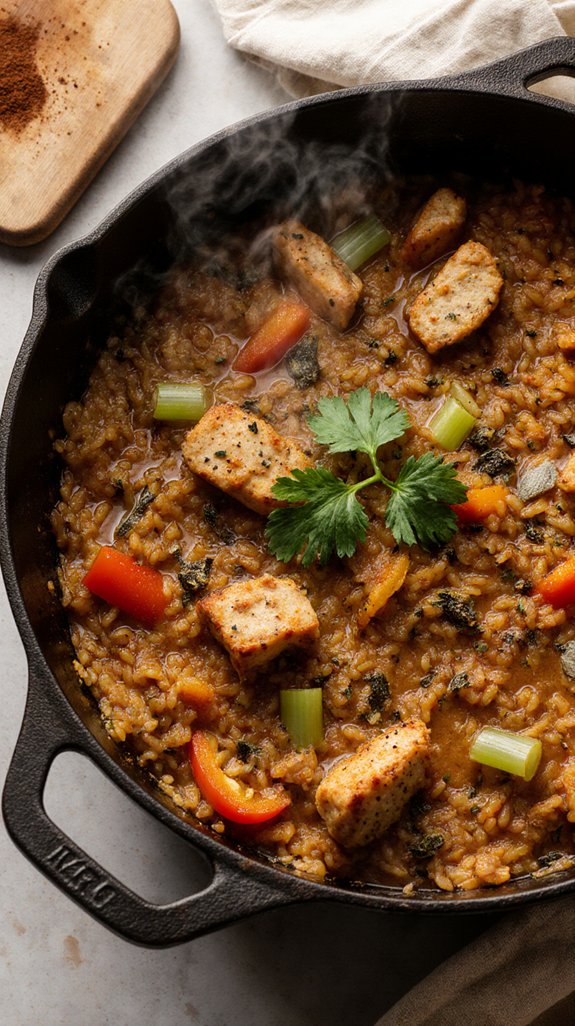
I’ve been making jambalaya for years, and I’ll tell you something it doesn’t need meat to satisfy your soul. This vegetarian version captures everything I love about traditional Louisiana cooking: bold spices, hearty texture and that perfect balance of heat and comfort. When cold weather hits or I’m craving something that sticks to my ribs, this one-pot wonder delivers every single time, and you’re about to discover why it’ll become your new go-to recipe.

Hearty Vegetarian Jambalaya Recipe for Soul-Warming Comfort
Ingredients
Method
- Preheat the oven to 400°F.
- In a small bowl, combine all seasoning mix ingredients and set aside.
- Drain the canned tomatoes, reserving the liquid. Coarsely chop the tomatoes.
- Pulse the seitan in a food processor about 12 times until shredded.
- In a Dutch oven, combine the reserved tomato liquid and vegetable broth.
- Bring to a boil over medium-high heat, add the brown rice and 1/4 teaspoon salt, then cover and simmer for 20 minutes.
- While the rice cooks, heat the olive oil in a skillet over medium-high heat.
- Add the chopped onion and cook until slightly softened.
- Add the garlic, red bell pepper, celery, and seasoning mix.
- Stir well, then add the chopped tomatoes and shredded seitan.
- Cook for about 3 minutes, stirring to combine.
- Transfer the vegetable mixture into the Dutch oven with the rice.
- Stir well, cover, and place in the oven.
- Bake for 30 to 45 minutes, until the liquid is absorbed and the rice is tender.
- Remove from the oven and let stand, covered, for 5 minutes.
- Stir gently and serve garnished with fresh parsley.
Why You`ll Love this Hearty Vegetarian Jambalaya
Because this vegetarian jambalaya delivers all the bold, spicy flavors of the Louisiana classic without any meat, you won’t miss a thing.
I’m excited to share this comfort food recipe that transforms simple ingredients into a soul-warming meal. The combination of aromatic spices, tender seitan, and perfectly cooked brown rice creates layers of flavor in every bite.
What makes this dish special is how the cumin, cayenne, and thyme work together to build that signature jambalaya heat and depth. It’s a true vegetarian delight that satisfies even the heartiest appetites.
Plus, it’s practical—most of the cooking happens hands-off in the oven, giving you time to relax while your kitchen fills with incredible aromas.
This one-pot wonder proves that plant-based cooking can be just as satisfying as traditional versions.
What ingredients are in Hearty Vegetarian Jambalaya?

This hearty vegetarian jambalaya brings together a vibrant mix of proteins, vegetables, and aromatic spices that create the authentic taste of Louisiana cuisine. The ingredient list is straightforward and features pantry staples alongside a few fresh elements that bring everything to life.
The seitan serves as the protein base and should be well-drained before processing to achieve the right texture. Brown rice takes longer to cook than white rice, which is why this recipe uses a combination of stovetop simmering and oven baking to guarantee the grains are perfectly tender. Don’t discard the liquid from the canned tomatoes—it adds essential moisture and flavor to the dish. Fresh parsley at the end provides a bright finishing touch that balances the warm spices.
Shop Related Products

【TRI-PLY STIANLESS STEEL】Tri-Ply Stainless Steel Pan Combines Ergonomic kitchenware Design and superior features for better cooking performance. Stainless steel surface doesn't react with food or alter flavors.

Fast & Even Heating — 3-PLY fully bonded from base to rim for consistent performance and durability; the stainless surface sears beautifully and is ideal for deg-lazing to make pan sauces.

Premium Stainless Steel Construction - Crafted with premium stainless steel, our stainless steel pan ensure long lasting beautify and durability, and is highly resistant to rust and corrosion.
Hearty Vegetarian Jambalaya Substitutions and Variations
When you’re ready to customize this jambalaya to suit your taste or use what’s already in your pantry, you’ll find plenty of room to experiment with different ingredients and flavors.
I’ve had great success with ingredient swaps like chickpeas or white beans instead of seitan, and you can easily substitute white rice for brown if you prefer a softer texture.
The spice adjustments are entirely up to you—I sometimes double the cayenne when I’m craving extra heat, or add smoked paprika for a deeper, smokier flavor.
You can also throw in okra, mushrooms, or kidney beans to bulk up the dish.
Feel free to use fresh thyme instead of dried, and if you don’t have celery seed, simply add more fresh celery.
What to serve with Hearty Vegetarian Jambalaya
Since jambalaya is already a complete one-pot meal packed with rice, vegetables, and protein, I like to keep my side dishes simple and complementary rather than heavy.
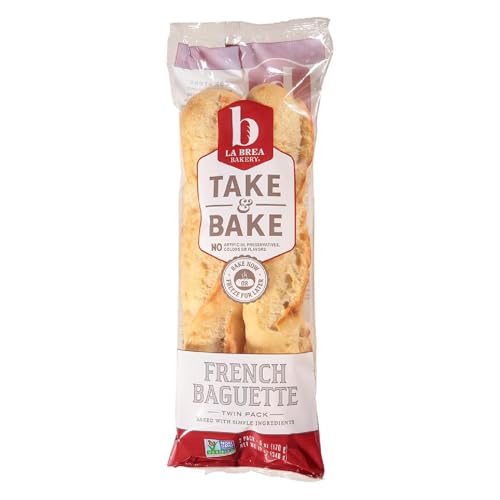
For sides suggestions, I recommend a crisp green salad with a tangy vinaigrette to cut through the richness, or some crusty French bread for soaking up the flavorful sauce. Cornbread also works beautifully, adding a slightly sweet contrast to the spicy dish.
For beverage pairings, I find that iced tea, either sweetened or unsweetened, complements the bold flavors perfectly. A light beer or sparkling water with lemon also refreshes your palate between bites.
If you prefer wine, try a crisp white like Sauvignon Blanc, which balances the heat and spices nicely.
Shop Related Products
Product Type:Bread

【CRISPY GOLDEN-BROWN BAGUETTES EVERY TIME】Bake up to 4 loaves simultaneously with perforated baguette baking pan. Enjoy uniformly shaped baguettes with a light, airy interior and a crisp, golden-brown crust every time. Elevate your baking game with Pavsrmy baguette bread tray and indulge in warm, fresh baguettes at home with ease. (Pro Tip: Use both hands to lift the french bread loaf pan when baking 4 loaves to prevent sliding.)

Final Thoughts
This vegetarian jambalaya has become one of my go-to recipes whenever I’m craving bold, satisfying flavors without spending hours in the kitchen.
Beyond its incredible taste, I appreciate the health benefits that come from using wholesome ingredients like brown rice, fresh vegetables, and plant-based protein.
There’s something special about enjoying a dish with such deep cultural significance while adapting it to fit a vegetarian lifestyle.
The traditional Creole seasonings still shine through, creating that authentic jambalaya experience everyone loves.
Whether you’re cooking for family, friends, or just yourself, this recipe delivers comfort and nourishment in every bite.
I hope it becomes a favorite in your kitchen too, bringing warmth and flavor to your table.
Frequently Asked Questions
Can I Make This Jambalaya in a Slow Cooker or Instant Pot?
I’ve successfully adapted this jambalaya for both appliances. For the slow cooker, I combine all ingredients and cook on low for 4-6 hours. In the Instant Pot, I use the rice setting for perfectly cooked results.
How Long Does Leftover Jambalaya Stay Fresh in the Refrigerator?
I’ll store your leftover jambalaya in an airtight container in the refrigerator for 3-4 days. For food safety and proper leftover storage, make sure it cools completely before refrigerating, and reheat thoroughly before serving.
Can I Freeze Jambalaya and How Do I Reheat It Properly?
Yes, I’ll share freezing techniques and reheating methods with you. Freeze jambalaya in airtight containers for up to three months. I recommend reheating it gently on the stovetop with added broth, or microwave until steaming hot throughout.
Is It Necessary to Use Brown Rice or Can White Rice Work?
You can use white rice instead of brown rice. I’ll adjust the cooking time since white rice cooks faster, around 20-25 minutes versus 30-45. You’ll lose some nutritional benefits but gain convenience.
What Is Seitan and Where Can I Buy It?
Seitan is wheat-based protein I’ll find at health food stores or well-stocked grocery stores. Among seitan benefits, it’s high in protein and has a meaty texture. For seitan alternatives, I can use tofu, tempeh, or chickpeas instead.