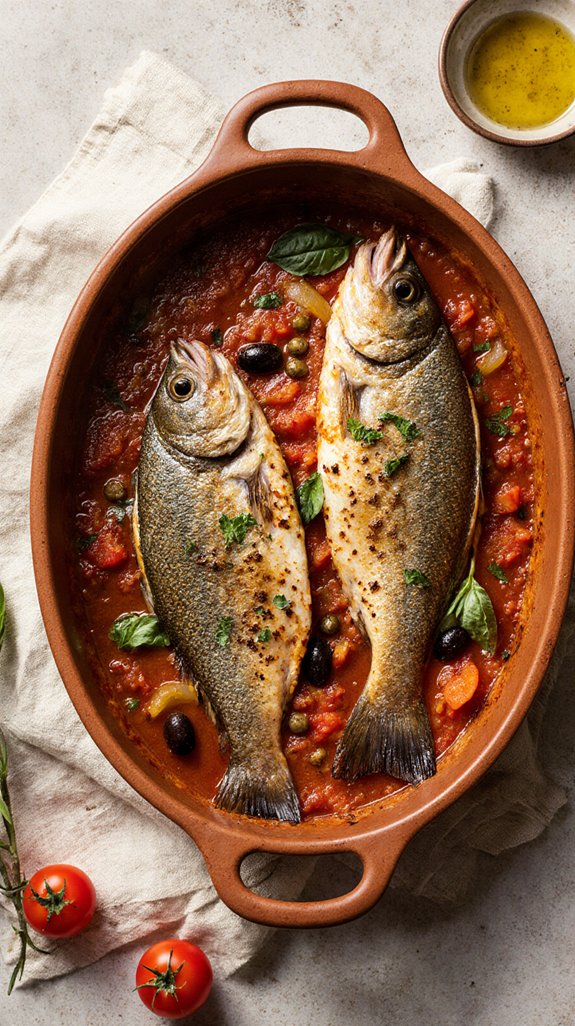
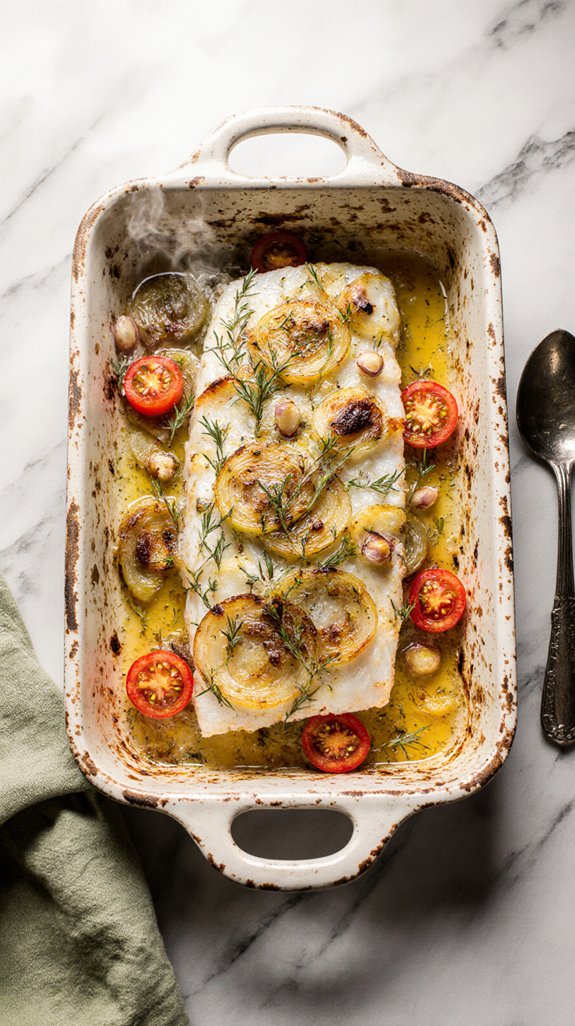
I’ve always believed that saffron has this remarkable ability to transform even the simplest ingredients into something that feels special, almost celebratory. When I first made this Mediterranean halibut gratin, I was skeptical about layering fish beneath vegetables, worried it’d turn out dry and overcooked. Instead, I discovered that the leeks and tomatoes create this protective blanket, keeping everything remarkably moist while infusing the halibut with flavors that’ll make you wonder why you haven’t been cooking fish this way all along.
Why You`ll Love this Mediterranean Halibut Gratin with Saffron
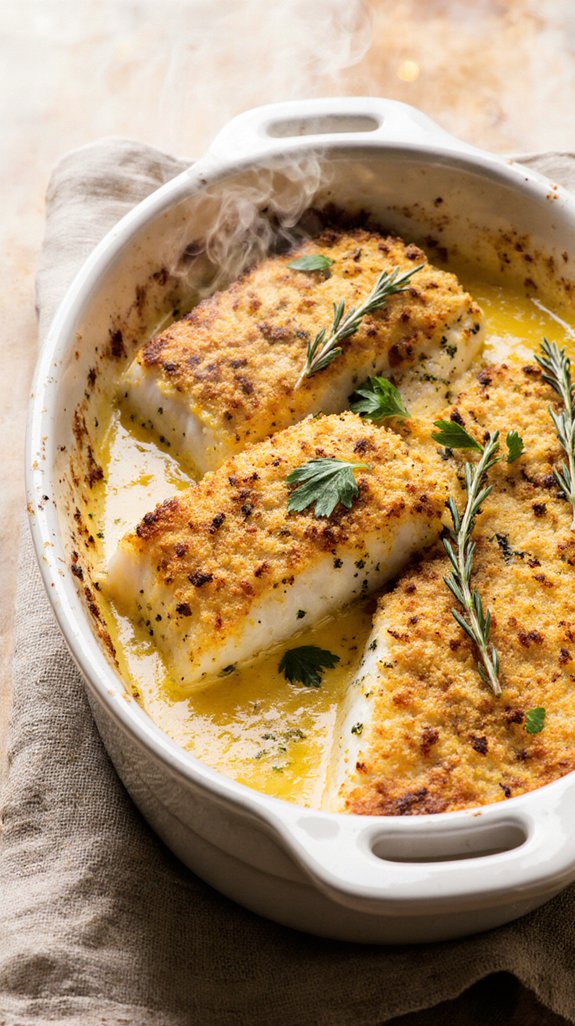
Because this Mediterranean halibut gratin combines simple ingredients in a way that feels both rustic and refined, it’s become one of those recipes I turn to when I want to impress without spending hours in the kitchen.
The flavor profile hits all the right notes, with sweet caramelized leeks and onions playing against the earthy saffron and bright tomatoes. I love that halibut stays tender and flaky under this aromatic blanket of vegetables, never drying out like it might if you simply pan-seared it.
The health benefits don’t hurt either, since you’re getting omega-3s from the fish without any heavy cream or butter weighing things down. It’s the kind of dish that makes you feel good about what you’re eating while tasting absolutely indulgent.
What ingredients are in Mediterranean Halibut Gratin with Saffron?
The beauty of this Mediterranean halibut gratin lies in its straightforward ingredient list that lets the natural flavors of the fish and aromatics shine through. You won’t need any hard-to-find specialty items, just fresh produce, quality fish, and a few pantry staples that come together to create layers of complex flavor.
The saffron is the only ingredient that might require a special trip, but its golden color and distinct aroma make it worth seeking out.
- 3 lbs halibut, cut into pieces
- 1 extra large white onion, cut into rounds
- 2 large leeks, cut into rounds
- 1 pinch saffron
- 5 medium tomatoes, cut in rounds
- 2 tablespoons olive oil
- 2 tablespoons chicken broth
- 1 teaspoon bay leaf
- 1 tablespoon thyme
- 4 garlic cloves, smashed
- Salt and pepper to taste
When selecting your halibut, look for thick, firm fillets with a clean ocean smell rather than anything fishy.
The leeks should be thoroughly washed since sand and dirt often hide between their layers. For the saffron, a little goes a long way—that pinch will infuse the entire dish with its signature flavor and golden hue.
Fresh thyme works beautifully here, though dried will do in a pinch. Make sure your tomatoes are ripe but still firm enough to hold their shape during baking, as they’ll provide both moisture and a slight acidity that balances the richness of the fish.
How to make this Mediterranean Halibut Gratin with Saffron
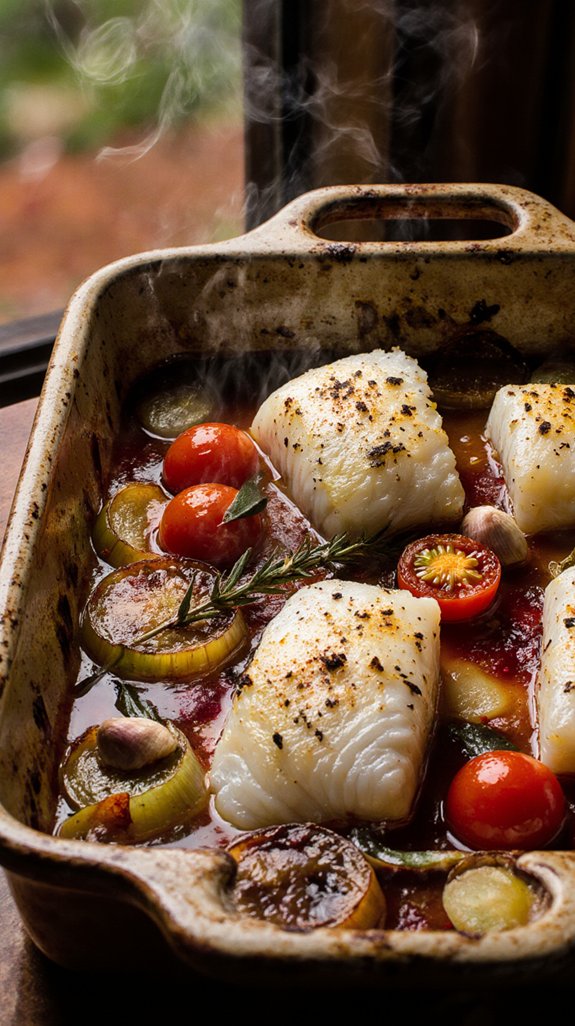
The process begins with creating a flavorful vegetable base that will infuse the fish with aromatic goodness. In a large pan, sauté 1 extra large white onion (cut into rounds) and 2 large leeks (also cut into rounds) in 2 tablespoons of olive oil. As they cook, season the mixture with 1 teaspoon of bay leaf, 1 tablespoon of thyme, and salt and pepper to taste. This sautéed blend will serve double duty, creating layers of flavor both beneath and above the halibut.
While the vegetables are cooking, preheat your oven to 400°F and cut your 3 lbs of halibut into manageable pieces that will cook evenly and look beautiful when served.
Now comes the layering, which is where this gratin really takes shape. Spread half of your sautéed onion and leek mixture across the bottom of a baking dish, creating a flavorful foundation. Arrange the halibut pieces on top of this vegetable bed, then place the 5 medium tomatoes (cut in rounds) over the fish. Tuck the 4 smashed garlic cloves strategically under the tomato slices where they’ll perfume the dish as it bakes.
Top everything with the remaining half of the sautéed mixture, creating a protective blanket that will keep the fish moist. In a small bowl, mix 2 tablespoons of chicken broth with 1 pinch of saffron, stirring until the saffron releases its golden color into the liquid. Pour this saffron-infused broth evenly over the entire dish.
Slide the baking dish into your preheated 400°F oven and let it bake for 30-40 minutes. The halibut is done when it flakes easily with a fork and the tomatoes have softened into the layers below. The aroma that fills your kitchen will be incredible—a combination of sweet leeks, earthy thyme, pungent garlic, and that unmistakable hint of saffron that makes this dish truly special. Using premium curry cookware ensures even heat distribution throughout the baking process, helping the delicate halibut cook perfectly without hot spots.
Let it rest for just a few minutes before serving to allow all those Mediterranean flavors to settle together.
Shop Related Products
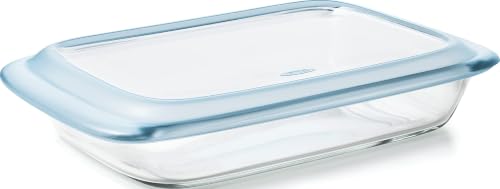
FREEZER-TO-OVEN: Thermal shock-resistant borosilicate glass allows this baking dish to go from the freezer directly to the oven without cracking. Ideal for meal prep, potlucks, entertaining, and convenient for everyday cooking and storage needs.

6-PIECE BAKEWARE SET: 6-piece set of 3 oven-safe glass baking dishes and 3 lids for making casseroles, desserts, stews, and more

Meet Your Daily Needs: DOWAN larger and deeper ceramic baking dish measures 15.6"L x 9.3"W x 3.1" H (including handle size)-135 OZ, sized perfectly for cooking lasagna, casseroles, chicken, roast, bread, pasta, beef, and more. Whether you're cooking a family dinner or serving food, this versatile casserole dish has got you covered.
Mediterranean Halibut Gratin with Saffron Substitutions and Variations
While this recipe shines with authentic Mediterranean ingredients, I’ve learned over the years that substitutions can save the day without sacrificing flavor.
Saffron alternatives include turmeric mixed with a pinch of paprika, which mimics that golden color beautifully, though I’ll admit the floral notes won’t be quite the same. You can also use annatto seeds steeped in warm broth.
For vegetable variations, I’ve swapped leeks for fennel when my grocery store runs out, adding a subtle anise flavor that pairs wonderfully with halibut. Zucchini rounds work perfectly in place of tomatoes during summer months, and I’ve even layered in thinly sliced potatoes for a heartier version.
The beauty of gratin dishes is their flexibility.
What to serve with Mediterranean Halibut Gratin with Saffron
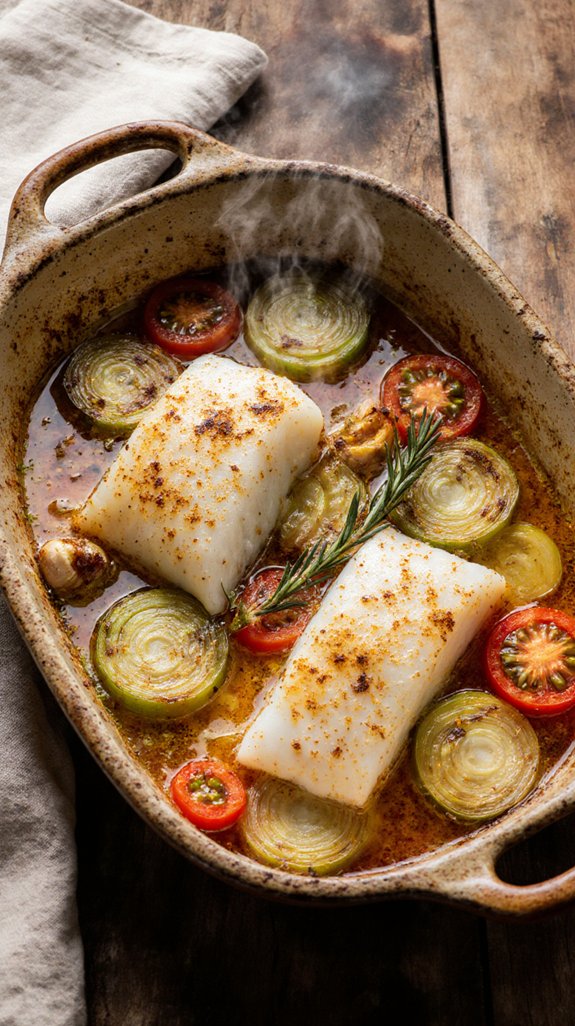
Choosing sides for this halibut gratin always takes me back to family dinners along the Spanish coast, where simple accompaniments let the star of the meal shine without competing for attention.
My pairing suggestions center on textures and temperatures that complement rather than overwhelm. I’ll serve crusty bread for soaking up the saffron-infused broth, a crisp green salad dressed with lemon vinaigrette, and roasted fingerling potatoes when I’m feeding hungrier crowds.
Side dishes like steamed green beans with almonds or garlicky spinach add color without fighting the tomatoes already layered in the dish.
Sometimes I’ll set out a bowl of marinated olives and sliced fennel as guests arrive, which primes everyone’s palate for the Mediterranean flavors ahead.
Final Thoughts
After you’ve planned your sides and set the table, this recipe becomes one of those meals that practically cooks itself while you catch up with the people you’re feeding.
I love how the saffron flavor deepens in the oven, turning everything golden and fragrant. The halibut benefits from this gentle, covered cooking method—it stays moist and flaky instead of drying out like it might under a broiler.
This dish reminds me why I started cooking Mediterranean food in the first place. It’s honest, it’s nourishing, and it doesn’t require fancy techniques or hard-to-find ingredients.
You layer everything in one pan, slide it into the oven, and forty minutes later you’ve got something that tastes like you’ve been cooking all day.
Frequently Asked Questions
Can I Prepare This Halibut Gratin Ahead of Time and Refrigerate Before Baking?
Yes, I’d recommend assembling this dish up to 4 hours ahead for meal prep. Refrigerate it covered, then bring to room temperature before baking. The saffron provides excellent flavor enhancement during marination time.
What Type of Baking Dish Works Best for This Recipe?
I’d recommend using a 9×13-inch ceramic dish or glass bakeware for this recipe. Both distribute heat evenly and won’t react with the acidic tomatoes. I prefer ceramic dishes because they retain heat beautifully for serving.
How Do I Know When the Halibut Is Fully Cooked?
I’ll share some cooking tips for checking fish doneness: the halibut’s fully cooked when it flakes easily with a fork and reaches an internal temperature of 145°F, appearing opaque throughout rather than translucent.
Can I Freeze Leftovers of This Mediterranean Halibut Gratin?
I don’t recommend freezing this halibut gratin since fish and tomatoes don’t freeze well together. For leftover storage, I’d keep it refrigerated for up to two days. Freezing tips: consider freezing components separately instead.
Should I Cover the Dish With Foil While Baking?
I don’t recommend covering the dish with foil while baking. The halibut gratin benefits from uncovered baking, allowing the tomatoes to caramelize and the flavors to concentrate beautifully at 400°F.