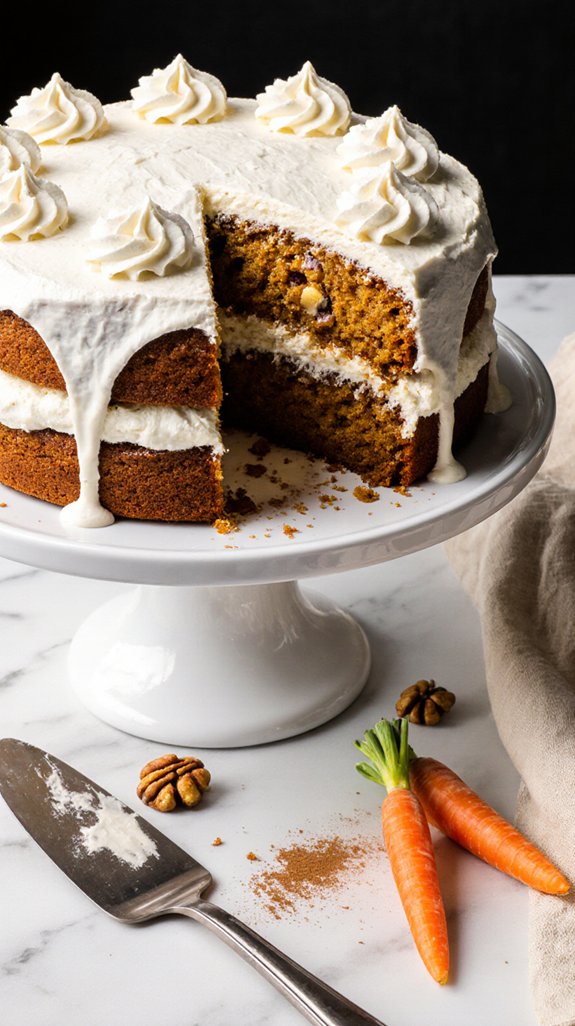
I’m going to share Gordon Ramsay’s restaurant-quality carrot cake recipe with you, and trust me, it’s nothing like the dry, overly sweet versions you’ve probably encountered at mediocre bakeries. This cake combines perfectly spiced layers with crushed pineapple and toasted walnuts, then gets topped with a cream cheese frosting that’ll make you wonder why you ever settled for store-bought. What makes this recipe truly special is the technique that keeps everything incredibly moist while developing those deep, caramelized flavors professional kitchens are known for.
Why You`ll Love this Gordon Ramsays Carrot Cake

Because this carrot cake delivers restaurant-quality results without requiring professional pastry skills, you’ll find yourself making it again and again for every special occasion.
The unique flavors come from the careful balance of warm spices, crushed pineapple, and toasted walnuts that work together beautifully.
I love how the cream cheese frosting isn’t overly sweet, letting the cake’s natural flavors shine through.
The perfect texture is what really sets this recipe apart—it’s incredibly moist without being dense or heavy, thanks to the combination of oil, eggs, and pineapple.
You’ll appreciate that it looks impressive enough for a dinner party but tastes comforting like a classic homemade dessert.
It’s the kind of cake that makes people ask for the recipe.
What ingredients are in this Gordon Ramsays Carrot Cake?

The foundation of Gordon Ramsay’s famous carrot cake relies on carefully selected ingredients that work in harmony to create its signature restaurant-quality texture and flavor.
Unlike simpler carrot cake recipes, this version combines both granulated and brown sugar for complexity, uses a generous amount of oil for moisture, and incorporates crushed pineapple as a secret ingredient that keeps the cake tender without making it heavy.
The spice blend of cinnamon, nutmeg, ginger, and cloves creates warmth without overwhelming the natural sweetness of the carrots, while toasted walnuts add essential textural contrast.
For the Cake:
- 2 cups all-purpose flour
- 2 teaspoons baking powder
- 1½ teaspoons baking soda
- 2 teaspoons ground cinnamon
- ½ teaspoon ground nutmeg
- ½ teaspoon ground ginger
- ¼ teaspoon ground cloves
- 1 cup granulated sugar
- ¾ cup light brown sugar, packed
- 1¼ cups vegetable oil
- 4 large eggs, room temperature
- 2 teaspoons vanilla extract
- 3 cups finely grated carrots (about 4-5 medium carrots)
- 1 cup crushed pineapple, drained well
- 1 cup chopped walnuts, toasted
- ½ cup shredded coconut (optional)
The quality of your ingredients directly impacts the final result, so use fresh spices for maximum flavor and make sure to grate the carrots finely rather than using pre-shredded versions that can be too dry.
The crushed pineapple must be thoroughly drained to prevent excess moisture, and the walnuts should be toasted beforehand to bring out their nutty flavor and prevent sogginess.
For the frosting, using full-fat cream cheese and real butter at proper room temperature is vital for achieving that silky, spreadable consistency that makes this cake truly restaurant-worthy.
For the Cream Cheese Frosting:
- 16 ounces cream cheese, softened
- ½ cup unsalted butter, softened
- 4 cups powdered sugar
- 2 teaspoons vanilla extract
- 1-2 tablespoons heavy cream or milk
How to make this Gordon Ramsays Carrot Cake

Making Gordon Ramsay’s famous carrot cake starts with proper preparation and organization, which is exactly what sets restaurant baking apart from typical home recipes. Begin by preheating your oven to 350°F (175°C) and preparing two 9-inch round cake pans by greasing them thoroughly and lining the bottoms with parchment paper for easy release.
In a large bowl, whisk together 2 cups all-purpose flour, 2 teaspoons baking powder, 1½ teaspoons baking soda, 2 teaspoons ground cinnamon, ½ teaspoon ground nutmeg, ½ teaspoon ground ginger, ¼ teaspoon ground cloves, and a pinch of salt until everything is evenly distributed. This dry mixture creates the foundation for your cake’s structure and flavor.
In a separate large mixing bowl, whisk together 1 cup granulated sugar, ¾ cup packed light brown sugar, and 1¼ cups vegetable oil until the mixture is smooth and well combined. Then add 4 large eggs (at room temperature) one at a time, beating thoroughly after each addition to guarantee proper emulsification. Stir in 2 teaspoons vanilla extract, and you’ll notice the mixture becoming lighter and more cohesive.
Now comes the vital assembly step that determines your cake’s final texture. Using a spatula, gradually fold the dry ingredients into the wet mixture, being careful not to overmix—you want to combine everything just until no flour streaks remain visible. Gently fold in 3 cups finely grated carrots, 1 cup well-drained crushed pineapple, 1 cup toasted chopped walnuts, and ½ cup shredded coconut if you’re using it, making sure these ingredients are evenly distributed throughout the batter without deflating the mixture.
Divide the batter equally between your prepared pans and bake for 30-35 minutes, checking for doneness by inserting a toothpick into the center—it should come out clean or with just a few moist crumbs clinging to it. Let the cakes cool in their pans for 10 minutes before carefully turning them out onto wire racks to cool completely, which is essential before frosting.
While the cakes cool, prepare the signature cream cheese frosting that makes this dessert truly restaurant-worthy. Using an electric mixer on medium speed, beat together 16 ounces softened cream cheese and ½ cup softened unsalted butter for about 3 minutes until the mixture is completely smooth and fluffy with no lumps remaining. Investing in a premium cookware set can elevate your baking results by ensuring even heat distribution and consistent performance throughout the entire process.
Gradually add 4 cups powdered sugar one cup at a time, beating well after each addition to prevent graininess, then incorporate 2 teaspoons vanilla extract and 1-2 tablespoons heavy cream or milk to achieve a perfectly spreadable consistency.
Once your cake layers are completely cool—and this is important because warm cake will cause the frosting to melt and slide off—place the first layer on your serving plate and spread a generous amount of frosting on top. Position the second layer on top, then frost the entire cake’s top and sides, using an offset spatula to create smooth, professional-looking finishes that would make any restaurant pastry chef proud.
Shop Related Products

BAKE LIKE A PRO: Set of two 9-inch round cake pans designed for even heat distribution, perfect for layer cakes, cheesecakes, and more.

HEALTH, SAFTEY AND LONG-LASTING: TeamFar round cake pan is healthy and safe for daily use, Crafted from pure stainless steel without toxic coatings or chemicals, Rust-resistant and solid construction ensure long lasting service life, Compared to aluminum pans, This cake pans is a reliable baking companion

Premium Carbon Steel Build: High-quality carbon steel with reinforced rim prevents warping. Ensures superior heat conduction for even baking up to 450°F – perfect for golden, large 9 inch layer cakes, sheet cakes, and deep-dish pizzas
Gordon Ramsays Carrot Cake Substitutions and Variations

If you’re looking to customize this carrot cake to fit dietary needs or simply want to experiment with different flavors, I’ve got plenty of options that won’t compromise the restaurant-quality results Gordon Ramsay demands.
For gluten-free alternatives, swap the all-purpose flour with a 1:1 gluten-free baking blend that contains xanthan gum.
Nut-free options work perfectly by omitting the walnuts and adding extra shredded coconut or raisins instead.
Among substitution options, you can replace the oil with melted coconut oil or applesauce for lighter results.
For flavor variations, try adding orange zest to the batter, swapping half the carrots with grated zucchini, or incorporating crystallized ginger for extra spice.
You can even make a dairy-free version using vegan cream cheese and plant-based butter in the frosting.
What to serve with this Gordon Ramsays Carrot Cake

While this carrot cake stands beautifully on its own as a show-stopping dessert, pairing it with complementary beverages and accompaniments can transform it into a truly memorable restaurant-style experience.
I recommend serving it with freshly brewed coffee or espresso, which cuts through the richness of the cream cheese frosting perfectly. For beverage suggestions, consider a dessert wine like late-harvest Riesling or a tawny port that echoes the cake’s warm spices.
If you’re exploring dessert pairings, a small scoop of vanilla bean ice cream alongside each slice adds a delightful temperature contrast. Hot spiced chai tea also works wonderfully, reinforcing the cinnamon and ginger notes.
For an elegant presentation, I’ll often add a dollop of lightly sweetened whipped cream and a sprinkle of toasted walnuts on top.
Shop Related Products

ENJOY MAKING ESPRESSO: This 2 pcs glass espresso cups has a crystal clear appearance and smooth lines. Each cup contains about 4 ounces, and can easily fill 2 shots of coffee at a time, meets your daily needs, and is the ideal espresso machine accessories for both home and coffee shop

Make Your Favorite Espresso Coffee At Home: The CASABREWS coffee machine with milk frother allows you to prepare all your favorite espresso-based coffees. You can enjoy a barista-brewed latte, cappuccino or macchiato at home. Stainless steel appearance, stylish and durable, ideal for any size kitchen. This compact espresso coffee maker is perfect for home or office use

Final Thoughts
This carrot cake delivers everything you’d expect from a Gordon Ramsay-inspired recipe: restaurant-quality results with techniques that are completely achievable in your home kitchen.
I want you to feel confident knowing that following these baking tips will give you a dessert that rivals anything you’d find in a high-end bakery. The combination of properly prepared ingredients, careful mixing methods, and that silky cream cheese frosting creates something truly special.
What makes this carrot cake stand out is how each element works together—the moisture from the pineapple, the warmth from the spices, and the richness from the frosting.
You’ll impress everyone who tries a slice, and the best part is that you made it yourself with straightforward techniques that produce professional results.
Frequently Asked Questions
How Long Does This Carrot Cake Stay Fresh at Room Temperature?
I don’t recommend keeping this cake at room temperature due to the cream cheese frosting. For ideal cake freshness and food safety, I’d refrigerate it, where it’ll stay fresh for up to five days.
Can I Make This Carrot Cake Ahead of Time for Special Occasions?
I’ll share special occasion tips: you can absolutely make this ahead. The unfrosted layers offer excellent freezing options for up to three months, or assemble it fully frosted one day before serving for ideal freshness.
What’s the Best Way to Store Leftover Frosted Carrot Cake?
I recommend refrigerator storage for up to 5 days in an airtight container to keep the cream cheese frosting fresh. For longer preservation, freezer storage works perfectly for up to 3 months when properly wrapped.
Why Is My Carrot Cake Dense Instead of Moist and Fluffy?
Your cake’s likely dense because you overmixed the batter or used incorrect ingredient ratios. I recommend folding ingredients gently and following precise measurements. Proper baking techniques, like room-temperature eggs, also guarantee that fluffy texture you’re after.
Can I Use Pre-Shredded Carrots From the Store Instead of Fresh?
I don’t recommend using pre-shredded carrots because they’re typically drier and lack the moisture content needed for proper texture. Fresh versus pre-shredded makes a significant flavor impact—fresh carrots deliver better sweetness and moisture essential for this restaurant-quality cake.