I’ve spent years perfecting my gnocchi technique, and I’m convinced these little potato pillows are one of the most rewarding things you can make from scratch. They’re surprisingly simple—no fancy equipment or hard-to-find ingredients required—yet they feel elegant enough for special occasions. The real magic happens when you master that delicate balance between tender and perfectly textured, and I’m about to show you exactly how to get there every single time.
Why You`ll Love this Homemade Gnocchi
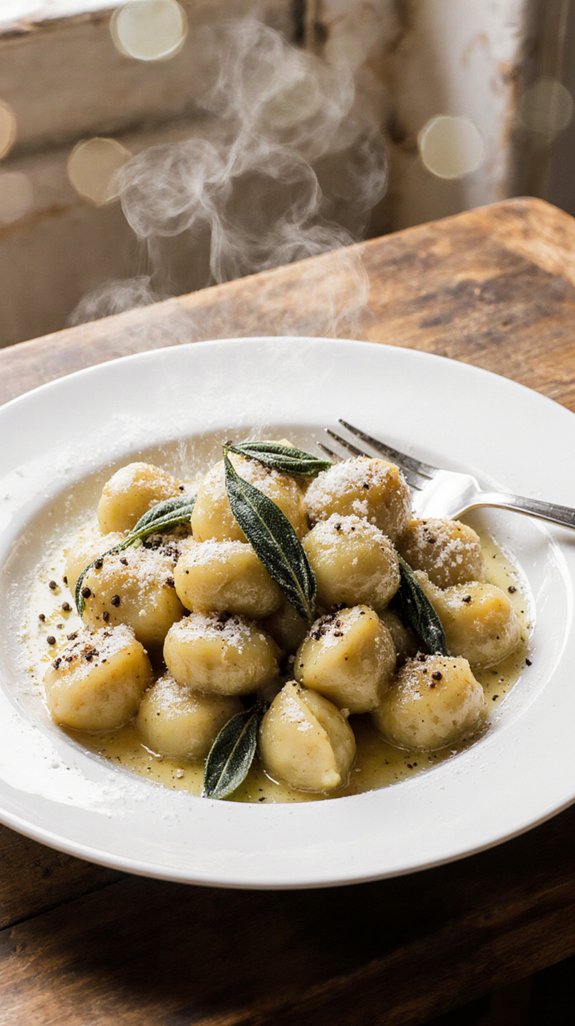
Making gnocchi from scratch might sound intimidating, but I’m here to tell you it’s actually surprisingly simple and totally worth the effort. This recipe transforms humble mashed potatoes into pillowy dumplings that’ll become your new favorite comfort food.
You’ll need just a few basic ingredients you probably already have in your pantry, and the process takes less time than you’d think. What I love most is the culinary creativity it invites—once you master the basic technique, you can experiment with different sauces, from classic marinara to brown butter sage.
Plus, there’s something deeply satisfying about rolling each piece across a fork and watching them float to the surface when they’re perfectly cooked.
What ingredients are in Homemade Gnocchi?
This homemade gnocchi recipe calls for wonderfully simple ingredients that come together to create tender, flavorful potato dumplings. The foundation is cold mashed potatoes combined with just enough flour to bind everything together, along with a handful of seasonings that elevate the flavor profile beyond basic potato and flour.
Ingredients:
- 2 cups mashed potatoes (cold)
- 1-1½ cups flour
- 1 tablespoon olive oil
- 1 teaspoon salt
- 1 teaspoon pepper
- 1 teaspoon Italian seasoning
- 1 teaspoon garlic powder
- 1 teaspoon onion salt
When preparing your ingredients, make sure your mashed potatoes are completely cold before beginning—warm potatoes will require more flour, which can make your gnocchi dense and heavy.
The flour measurement has a range because the exact amount needed depends on the moisture content of your potatoes. Start with the lower amount and add more only if the dough feels too sticky to work with.
The combination of seasonings—Italian seasoning, garlic powder, and onion salt—adds depth of flavor directly into the dough, so your gnocchi tastes delicious even before you add any sauce.
How to make this Homemade Gnocchi
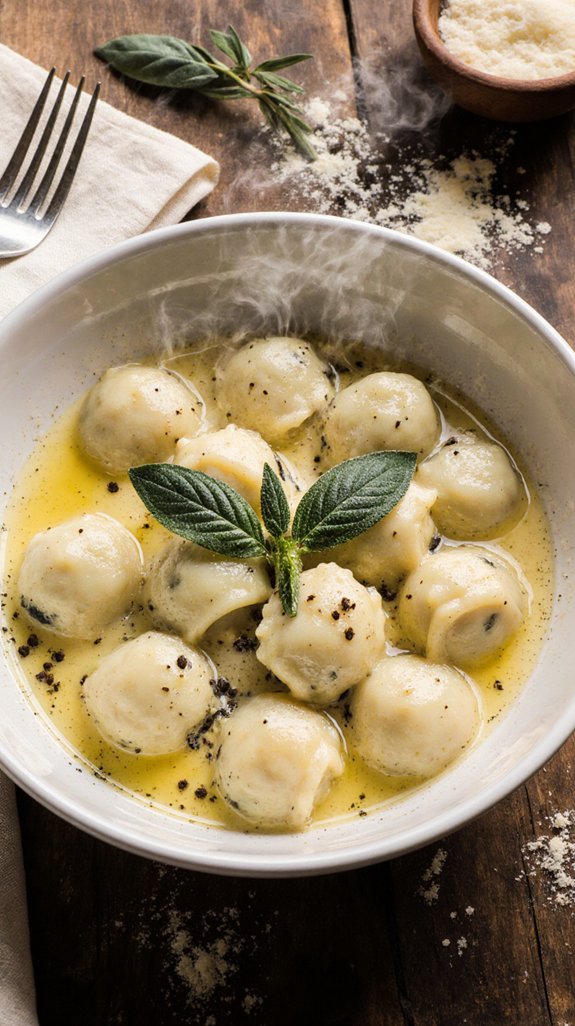
Making homemade gnocchi is surprisingly straightforward once you understand the process. Start by combining 2 cups of cold mashed potatoes with 1 tablespoon of olive oil, 1 teaspoon each of salt, pepper, Italian seasoning, garlic powder, and onion salt in a large bowl.
Then gradually add 1 to 1½ cups of flour, mixing everything together until you have a soft dough that’s workable but not too sticky. Turn this dough out onto a floured surface and knead it about 20 times—just enough to bring it together smoothly without overworking it, which would make your gnocchi tough. The key here is finding the right balance with the flour amount, so if your dough feels too wet to handle, add a bit more flour a tablespoon at a time.
Once your dough is ready, divide it into four equal portions to make the shaping process more manageable. Roll each quarter into a long rope about 12 inches in length, then cut these ropes into ½-inch pieces.
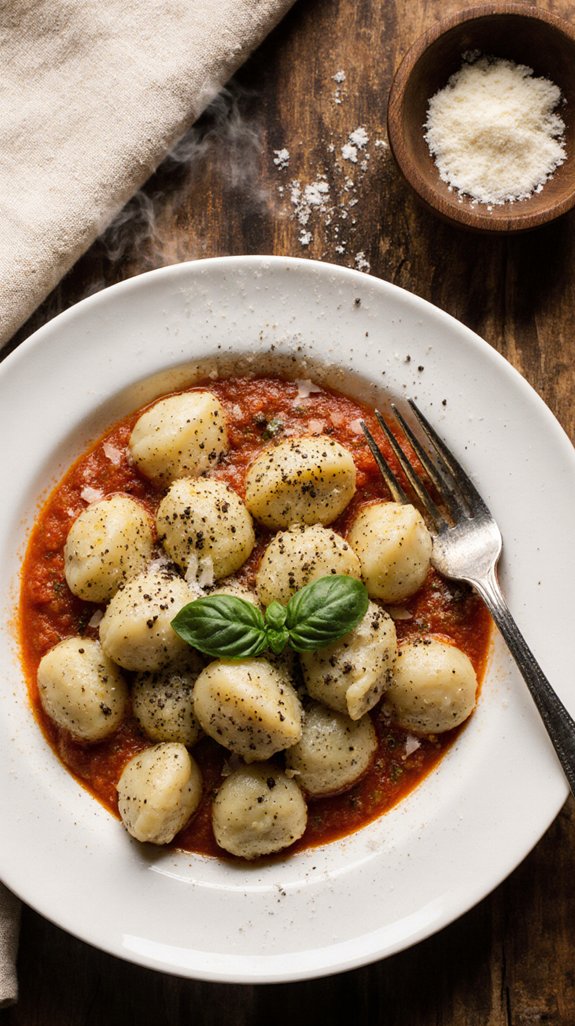
For that classic gnocchi appearance with little grooves that help sauce cling better, roll each piece across the tines of a fork before setting it on a floured surface.
While you’re shaping, bring a large pot of salted water to a rolling boil. Drop your shaped gnocchi into the boiling water in batches, being careful not to overcrowd the pot. The gnocchi will sink at first, but within a few minutes they’ll float to the surface—that’s your signal they’re perfectly cooked and ready to drain.
Serve them immediately with your favorite sauce, and enjoy the tender, pillowy texture of freshly made gnocchi.
Shop Related Products
Ground from whole peeled and dehydrated russet potatoes.

16 ounce package of vegan potato gnocchi

Pack of 6/9 oz.
Homemade Gnocchi Substitutions and Variations
While the classic potato-based gnocchi recipe is wonderful as-is, you’ve got plenty of room to experiment with different ingredients and flavors that can transform this dish into something entirely new.
For gnocchi variations, I love adding roasted garlic or fresh herbs like basil and parsley directly into the dough. You can also try sweet potato or butternut squash instead of regular potatoes for a colorful twist.
When it comes to ingredient swaps, ricotta cheese creates an incredibly light texture, though you’ll need to adjust the flour amount. The Italian seasoning can be replaced with fresh rosemary or sage, and you can skip the onion salt if you’re watching sodium intake.
These simple changes let you customize gnocchi to match your taste preferences perfectly.
What to serve with Homemade Gnocchi

When you’ve gone through the effort of making fresh gnocchi from scratch, you’ll want to pair it with sauces and sides that really let those tender pillows shine.
For sauce pairing, I love a classic brown butter and sage, which adds nutty richness without masking the potato flavor. Marinara and creamy alfredo work beautifully too.
When it comes to side dishes, keep things simple—a crisp Caesar salad or roasted vegetables complement the gnocchi’s soft texture perfectly.
For topping options, consider freshly grated Parmesan, toasted pine nuts, or crispy pancetta bits.
Different serving styles work well here: toss the gnocchi directly in sauce, layer it in a baked casserole, or serve it family-style in a large bowl for everyone to share.
Shop Related Products

【Superior Nonstick Performance】 - Carote non stick frying pan with lid is made with natural granite materials, providing superior nonstick performance with 100% PFOA-free and non-toxic properties. Enjoy healthier cooking with less oil intake. Advanced technology ensures a long-lasting and naturally nonstick surface that effortlessly releases food.

DURABLE, DISHWASHER SAFE COOKING PAN: This dishwasher safe nonstick jumbo cooker's heavy-duty construction heats fast and evenly
Swiss Non-Stick Coating - Switzerland ILAG nonstick granite coating, free of intentionally added PFOA. Smokeless, safe, and healthy—cook with 80% less oil for a healthier diet.
Final Thoughts
Fresh homemade gnocchi truly transforms an ordinary dinner into something special, and once you’ve mastered the basic technique, you’ll find yourself making these little potato dumplings again and again.
While gnocchi history traces back to Northern Italy, you don’t need Italian heritage to perfect this dish. The beauty lies in its simplicity and versatility.
I’ve shared serving suggestions throughout this guide, but don’t hesitate to experiment with your favorite sauces and toppings. Whether you prefer classic butter and sage or a hearty meat ragu, these pillowy dumplings complement nearly any sauce.
The most important lesson? Don’t overwork your dough, and remember that practice makes perfect. Your first batch mightn’t be flawless, but they’ll still taste delicious.
Frequently Asked Questions
Can I Freeze Homemade Gnocchi for Later Use?
Yes, I’ll share my freezing tips for homemade gnocchi. After shaping, I arrange pieces on a floured baking sheet and freeze until solid. Then I transfer them to freezer bags using proper storage methods for up to three months.
How Do I Know When the Gnocchi Is Fully Cooked?
I’ll know your gnocchi is fully cooked when it floats to the surface of the boiling water. This cooking tip indicates the perfect gnocchi texture has been achieved—light, pillowy, and ready to drain and serve immediately.
Why Did My Gnocchi Turn Out Gummy or Dense?
I’ve found that gummy gnocchi texture usually happens when you’ve overworked the dough or added too much flour. Here’s my cooking tip: knead gently and use just enough flour to prevent sticking for best results.
Can I Make Gnocchi Ahead of Time Before Cooking?
Yes, I’ll share make ahead storage tips: You can freeze uncooked gnocchi on a floured baking sheet until solid, then transfer to freezer bags. They’ll keep for up to two months and cook directly from frozen.
How Long Does Cooked Gnocchi Last in the Refrigerator?
I’ll share some storage tips: cooked gnocchi lasts 3-5 days in the refrigerator when stored in an airtight container. For best shelf life, I recommend keeping it separate from sauce and reheating gently before serving.