I’ve spent years perfecting my empanada recipe, and I’m convinced these golden beauties are the best thing you’ll pull from your kitchen this year. The combination of that impossibly flaky crust with the savory-sweet filling creates something special—a perfect balance that’s captivated everyone who’s tried them. Trust me, once you master this technique, you’ll understand why Filipinos have cherished this recipe for generations, and why it deserves a permanent spot in your cooking rotation.
Why You`ll Love this Golden Filipino Empanada
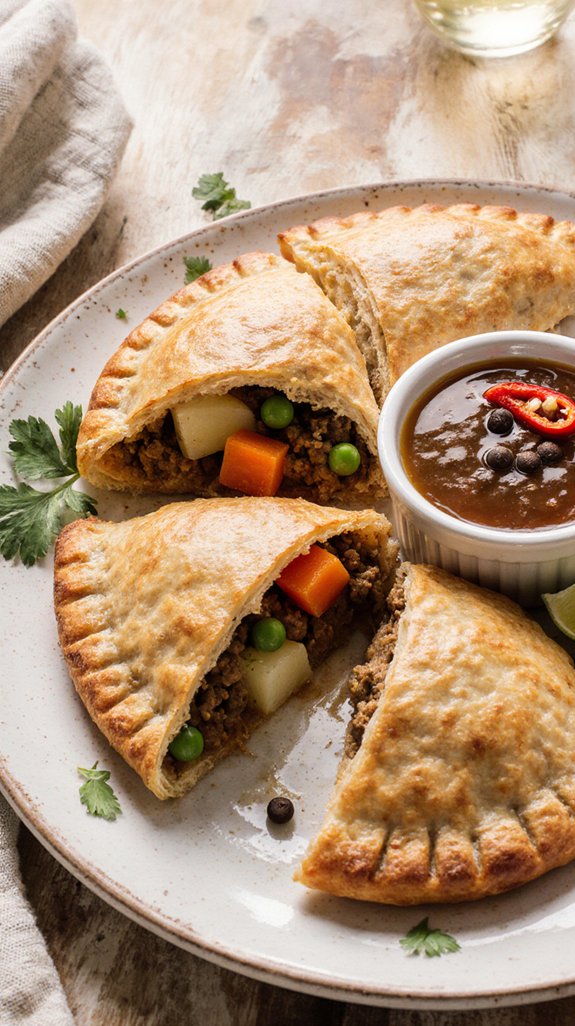
When you bite into a golden Filipino empanada, you’re experiencing layers of flavor and texture that’ll make you wonder why you haven’t been making these all along.
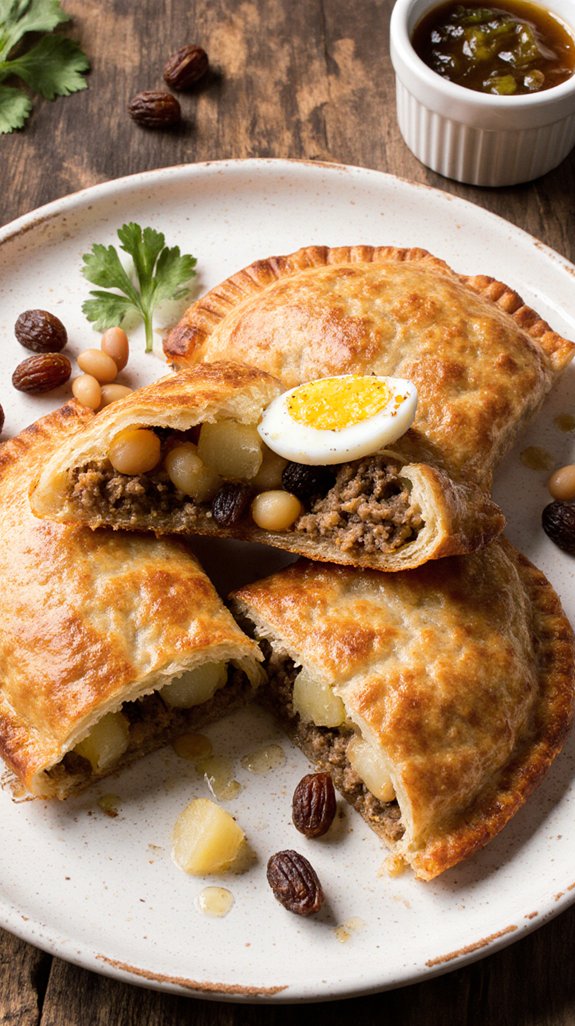
These savory pastries combine crispy crusts with flavorful fillings that create an unforgettable eating experience. The dough achieves an incredibly flaky texture through a unique rolling technique that creates delicate layers, while the filling delivers a perfect balance of savory ground pork, sweet raisins, and tender potatoes.
What I love most is how versatile these empanadas are. You can serve them as a satisfying snack, pack them for lunch, or feature them as the star of your dinner table.
They’re also fantastic for gatherings because everyone enjoys handheld food that’s both delicious and easy to eat.
What ingredients are in Golden Filipino Empanada?
The golden Filipino empanada requires two sets of ingredients: one for the flaky pastry dough and another for the savory filling. The dough relies on simple pantry staples, while the filling combines a delightful mix of proteins, vegetables, and sweet elements that create the signature flavor profile of this beloved Filipino snack.
For the Dough:
- 4 cups flour
- 3 egg yolks, beaten
- 2 tablespoons sugar
- 1/4 teaspoon salt
- 2/3 cup water
For the Filling:
- 1/2 kg ground pork
- 4 potatoes, diced
- 1/2 cup raisins
- 1/4 cup lard
- 1/4 cup sugar
- 1/2 teaspoon msg
- 1 chopped onion
- 2 tablespoons sweet pickle relish
- 1 cup boiled minced garbanzo beans
- 1/2 cup water
- Salt and pepper to taste
- 4 tablespoons flour (for thickening the filling)
Additional Items:
- Pork lard (for brushing)
- Cornstarch (for dusting)
- Hard boiled eggs, sliced
- Banana leaves (for rolling)
- Oil for deep frying
The recipe’s unique element is the use of lard both in the filling and for brushing the dough layers, which contributes to the characteristic flaky texture and rich flavor.
You’ll also need cornstarch for dusting your work surface and banana leaves to help achieve the thin, delicate rounds. The addition of sweet elements like raisins, sugar, and pickle relish balances the savory pork, creating the complex flavor that makes Filipino empanadas distinctive from other varieties.
Shop Related Products

【Durable Non-stick Coating Performance】The surface of the 12 inch deep frying pan with lid is made of granite non-stick coating, 100% PFOA, PTFE, lead and cadmium free, ideal for healthy cooking. Meet the various needs of the whole family for saute, steam, boil and shallow fry.

Durable & Stylish Vitrified Steel – Made from high-quality vitrified steel, this frying pan offers exceptional hardness, resistance, and a bright-colored finish, ensuring long-lasting performance and a sleek look in any kitchen.

Package Content : Non Stick Appam Pan 12 Pits (Medium Size) with Plastic Scrubber and Plastic Stick or Wooden Stick (any one) and Black Notch(Lid).
How to make this Golden Filipino Empanada
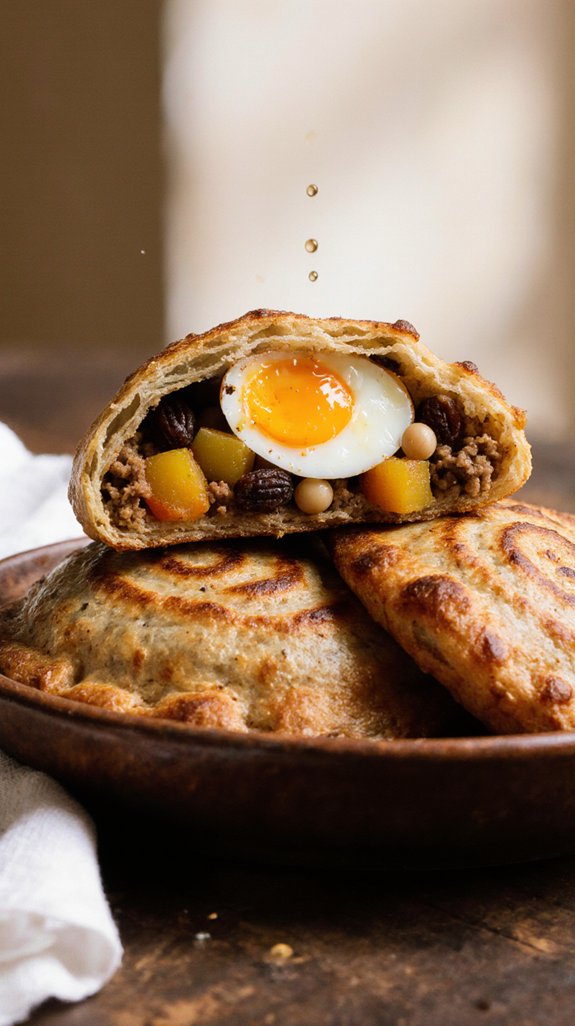
Making Golden Filipino Empanadas is a two-part process that starts with creating a unique flaky dough and preparing a flavorful filling.
To begin the dough, mix together 3 beaten egg yolks, 2/3 cup water, 1/4 teaspoon salt, and 2 tablespoons sugar until well combined. Add this liquid mixture to 4 cups of flour and knead it thoroughly until the dough becomes very smooth. Let it rest for 10-15 minutes, which helps the dough relax and makes it easier to work with.
Here’s where it gets interesting: roll the dough on a board lightly dusted with cornstarch until it’s very thin, then brush the surface thoroughly with pork lard. Roll it up tightly like a jelly roll and cut it into very fine slices, about 2 millimeters thick. These thin spirals are called “ojadre,” and they’re the secret to that incredible flaky texture.
While your dough rests, prepare the filling by heating 1/4 cup lard in a pan and adding garlic, 1 chopped onion, and 1/2 kg ground pork. Cook this for a while, then add 4 diced potatoes along with 1/2 cup raisins, 1/4 cup sugar, 1/2 teaspoon msg, 2 tablespoons sweet pickle relish, 1 cup boiled minced garbanzo beans, and 1/2 cup water.
Season with salt and pepper to taste and cook until all the ingredients are tender. Stir in 4 tablespoons flour to thicken everything up, making sure all the ingredients blend together nicely, then let it cool until you’re ready to assemble.
To form the empanadas, pinch off portions of the plain dough and flatten them, then place one of those spiral ojadre pieces on top. Brush with melted lard and use banana leaves to help press and roll the dough into thin rounds.
Place 1 tablespoon of filling in the center of each round, add a slice of hard-boiled egg, then fold the dough over to create a turnover shape. Flute the edges to seal them securely, and fry the empanadas in deep hot oil until they turn golden brown.
The result is a beautifully crispy, layered pastry filled with sweet and savory goodness that’s absolutely worth the effort. Using a premium cookware set with heavy-bottomed pans ensures even heat distribution for perfectly golden empanadas every time.
Shop Related Products

Stainless steel rolling pin with thickness rings: This 17-inch rolling pin is made from high quality stainless steel for superior durability and longevity. It resists rust far better than ordinary aluminium rolling pins, embossed rolling pin or tortilla roller. The sturdy and robust construction ensures it will last a long time even with frequent use. Compared to traditional dough roller such as a rolling pin and mat or silicone rolling pin, this rolling pin for dough will add durability to your baking needs.
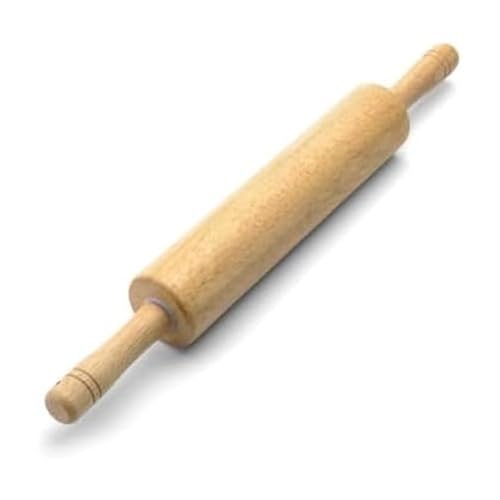
PREMIUM HARDWOOD CONSTRUCTION: Crafted from moisture-resistant hardwood for lasting durability. Smooth rolling surface ensures consistent results for all your baking needs. Perfect 10-inch rolling barrel with 4-inch handles on each side

Solid Wood Construction: This rolling pin is made from solid Walnut wood for required durability and long-lasting use. This rolling pin is suitable to sustain every day, heavy-duty use in the home, as well as restaurants.
Golden Filipino Empanada Substitutions and Variations
If you’re looking to adapt this traditional recipe to suit your preferences or what you’ve got on hand, there are plenty of ways to customize these empanadas while keeping that signature golden, flaky character.
For vegan alternatives, I swap the pork for mushrooms or lentils and use plant-based butter in the dough. Gluten-free options work well with a rice flour blend, though the texture differs slightly.
I love experimenting with spice variations—adding chili flakes or turmeric gives exciting new flavors.
Regional ingredients make each version unique; some areas use sweet potatoes instead of regular potatoes, while coastal regions incorporate fish or shrimp.
You can really make this recipe your own while honoring its Filipino roots.
What to serve with Golden Filipino Empanada
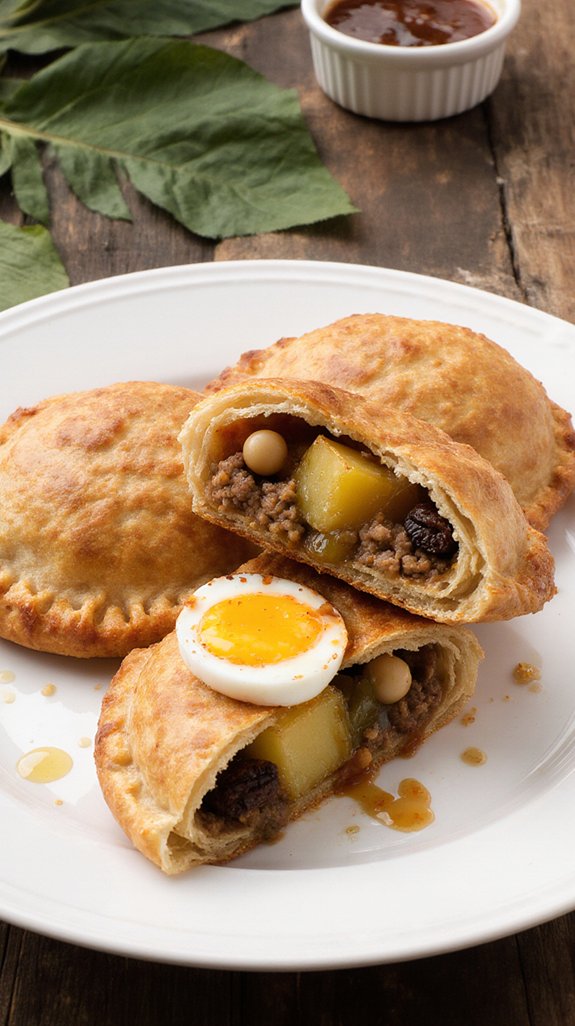
Once you’ve perfected your empanada-making skills and customized the recipe to your liking, you’ll want to think about what dishes complement these golden pastries on your table.
I love serving empanadas with a variety of dipping sauces—sweet chili sauce, garlic aioli, or a tangy vinegar-based sauce all work wonderfully. These sauces add extra flavor and let your guests customize each bite.
Side salads make excellent companions too, providing a revitalizing contrast to the rich, savory filling. A simple green salad with citrus vinaigrette or a tomato-cucumber salad brings lightness to the meal.
I also recommend serving achara, the Filipino pickled papaya, which cuts through the empanada’s richness perfectly.
For beverages, iced tea or fresh calamansi juice rounds out this delicious Filipino feast beautifully.
Final Thoughts
These golden empanadas represent more than just a delicious snack—they’re a connection to Filipino culinary heritage that you can now recreate in your own kitchen.
The empanada history spans centuries, with each region developing its own unique variations and techniques. What makes this recipe special is its cultural significance within Filipino celebrations and everyday life.
I’ve found that making these empanadas brings families together, whether you’re preparing the filling, rolling the delicate dough, or teaching the next generation how to crimp those beautiful edges.
Each bite carries generations of tradition, and now you’re part of that story. Don’t worry if your first batch isn’t perfect—practice makes these pastries even more rewarding to share.
Frequently Asked Questions
Can I Prepare the Empanada Dough Ahead of Time and Refrigerate It?
Yes, I’d recommend preparing the empanada dough ahead of time for easier handling. For proper dough storage, wrap it tightly in plastic wrap. My refrigeration tips include chilling for up to 24 hours before rolling.
How Do I Prevent the Empanadas From Bursting Open While Frying?
I’ll guarantee proper dough sealing techniques by firmly pressing and fluting the edges together. I’ll also maintain the right filling consistency—not too wet—and avoid overfilling, which prevents bursting during frying.
What’s the Best Oil Temperature for Frying Empanadas Until Golden Brown?
I recommend frying empanadas at 350-375°F for the ideal frying temperature. This range guarantees they cook through without burning, achieving golden color perfectly. I’ve found this temperature prevents sogginess while creating that beautiful, crispy exterior you’re after.
Can Leftover Cooked Empanadas Be Reheated in an Oven or Air Fryer?
Yes, I’d recommend reheating methods like oven or air fryer for leftover empanadas. Both work excellently—the air fryer’s faster and crispier, while the oven reheats evenly at 350°F for best results.
How Long Can I Store Uncooked Assembled Empanadas Before Frying Them?
I’d store uncooked assembled empanadas in the refrigerator for up to 24 hours before frying. For longer storage, I recommend freezing tips like using airtight storage containers, which keep them fresh for up to three months.