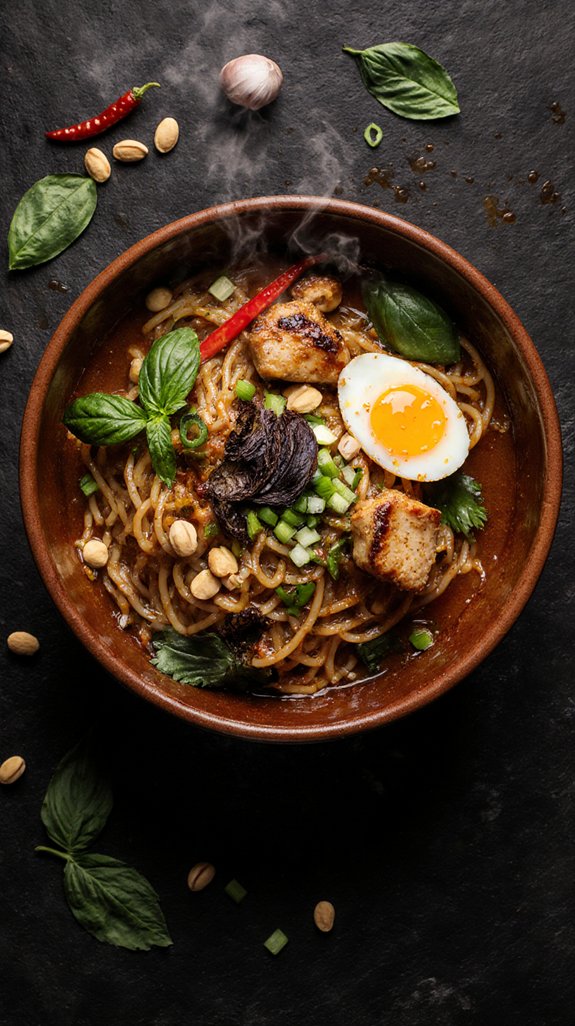
I’ll be honest with you—the first time I made drunken noodles, my kitchen looked like a crime scene, sauce splattered across the stove, noodles clinging to my shirt. But here’s the thing: I didn’t care one bit. The smoky heat, the sweet-savory sauce pooling at the bottom of my wok, those charred edges on perfectly tender rice noodles—it was all worth it. This dish demands a little chaos, and once you understand why, you’ll never look back.
Why You`ll Love these Fiery Drunken Noodles
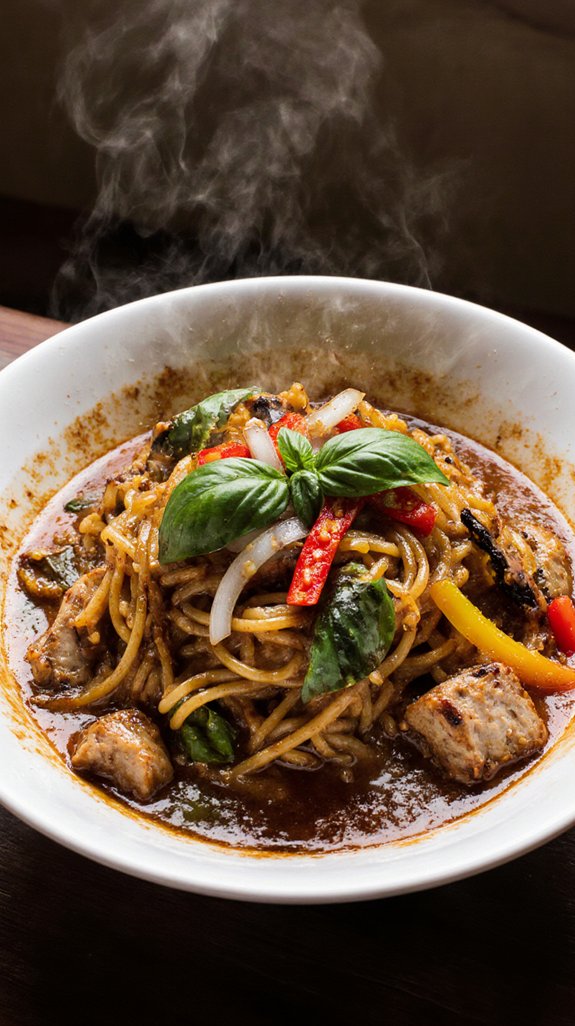
Because these noodles pack an incredible punch of flavor while staying remarkably simple to make, they’ve become my go-to weeknight dinner when I’m craving something that tastes like it came from a proper Thai restaurant.
The spicy flavor hits differently when you control the heat yourself, adjusting the sambal and banana peppers to your exact preference. I love how the fresh basil and coriander brighten everything up, while the fish sauce and oyster sauce create this savory depth that keeps me coming back for another bite.
The noodle texture is absolutely essential here, soft yet slightly chewy, which is why I always soak them properly and never skip that step. Everything comes together in under twenty minutes.
What ingredients are in Fiery Drunken Noodles?
The ingredients for Fiery Drunken Noodles bring together the bold, aromatic flavors that define authentic Thai street food. Fresh rice noodle sheets form the foundation of this dish, while a combination of proteins, vegetables, and herbs create layers of texture and taste. The sauce components work together to balance sweet, salty, sour, and spicy elements that make drunken noodles so addictive.
Ingredients:
- 2 tablespoons peanut oil
- 1 (250 g) packet fresh rice noodle sheets, cut into 5 strips
- 3 garlic cloves, chopped
- 1/2 banana pepper, chopped
- 3 red shallots, chopped (or 1/4 red onion)
- 2 chicken breasts, sliced into thin strips
- 2 eggs, beaten
- 1/2 red capsicum, sliced
- 2 tomatoes, deseeded and chopped
- 3 leaves Chinese cabbage, roughly chopped
- 4 tablespoons oyster sauce
- 2 tablespoons rice wine vinegar
- 2 tablespoons fish sauce
- 1 tablespoon palm sugar
- 1/2 lime, juice of
- 1 teaspoon sambal oelek
- 3 green onions, chopped roughly (green bit only)
- 30 leaves Thai basil (or holy basil)
- 30 leaves coriander
- 3 tablespoons chopped roasted peanuts
- 1 slice pickled garlic, for garnish
- Dried Thai basil, for garnish
When sourcing ingredients, fresh rice noodle sheets can typically be found in the refrigerated section of Asian grocery stores, and they’re vastly superior to dried versions for this particular recipe. If you can’t find palm sugar, light brown sugar makes an acceptable substitute, though the flavor will be slightly different. Holy basil is more traditional than Thai basil for drunken noodles and has a more peppery, slightly spicy flavor, but either variety works beautifully in this dish.
How to make these Fiery Drunken Noodles
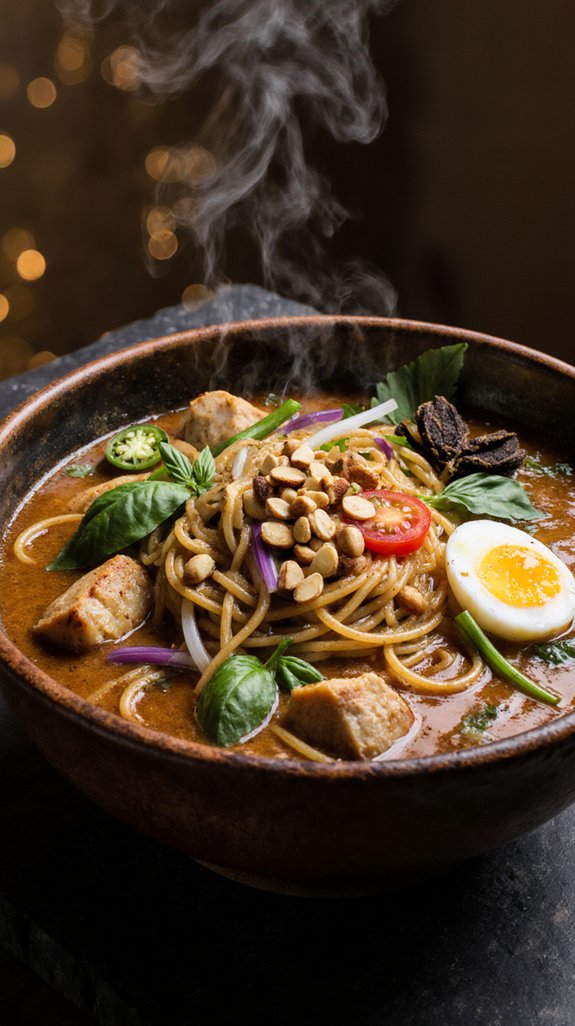
Making Fiery Drunken Noodles is all about working quickly and having everything prepared before you start cooking, since the actual stir-frying happens incredibly fast.
Begin by soaking your 250 g packet of fresh rice noodle sheets in hot water for 15 minutes to soften them up. While the noodles are soaking, get all your ingredients prepped and ready to go—chop the 3 garlic cloves, slice the 1/2 banana pepper, prep your 3 red shallots, cut the 2 chicken breasts into thin strips, and have those 2 beaten eggs standing by.
The key to great stir-fry is having everything within arm’s reach, because once that wok gets hot, there’s no time to hunt around for ingredients.
When you’re ready to cook, heat 2 tablespoons of peanut oil in your wok until it’s absolutely smoking hot. Toss in the garlic, shallots, and chilli, letting them sizzle for just 20 seconds to release their aromatics, then add the chicken and seal it on all sides for about 30 seconds.
Here’s where it gets fun—push everything to the side of the wok and pour the beaten eggs into the center, letting them set for 20 seconds before breaking them up with your tongs. Add the 1/2 sliced red capsicum, 2 chopped tomatoes, and 3 roughly chopped Chinese cabbage leaves, cooking for just 10 seconds.
Now pour in the sauce mixture of 4 tablespoons oyster sauce, 2 tablespoons rice wine vinegar, 2 tablespoons fish sauce, the juice of 1/2 lime, 1 tablespoon palm sugar, and 1 teaspoon sambal oelek, tossing everything together vigorously.
Drain your noodles completely—and I mean really well, since excess water will make your dish soggy—and add them to the wok along with the 3 roughly chopped green onions, 30 leaves of Thai basil, and 30 leaves of coriander. If you’re washing fresh herbs like the Thai basil and coriander beforehand, use a professional salad spinner to ensure they’re completely dry before adding them to the hot wok.
Give everything a final toss to coat the noodles in that gorgeous sauce and wilt the herbs slightly. Serve immediately in bowls and garnish with 3 tablespoons of chopped roasted peanuts, a slice of pickled garlic, and a few dried Thai basil leaves for that authentic street food presentation.
The whole cooking process from start to finish takes less than five minutes once your wok is hot, which is exactly how it should be—fast, furious, and absolutely delicious.
Shop Related Products

[Wok Set & Cookwares] - KAQINU 14 piece wok pan set includes wok pan with lid, wok spatula, wok brush, wok ring, drain oil rack, chopstick, slotted spatula, spaghetti spoon, slotted spoon, rice spoon, soup ladle, carving fork and apron. Owning this all-in-one Chinese wok pan, make cooking easier, faster and more efficient, then your cooking life will be more handy.

[Upgrade Modern Non-Stick Technology] After a long time of research and development, we have developed a new non-stick wok technology to bring you a brand new cooking experience. NOTE: The rough and granular effect on the surface of the wok is a natural non-stick layer formed by the state-of-the-art non-stick technology, which prevents food from sticking to the pan, burning, rusting and is easy to clean

[11PCS WOK SET] You not only have quality 12.8 inch carbon steel pan and wooden lid, but also get 10 accessories include slotted turner, ladle, spatula, skimmer, solid spoon, slotted spoon, egg whisk, wok brush, wok ring and pasta server. The step design wooden lid to precise match the pot and accelerate to your cooking, the soup mouth design is easy to pour soup, the detachable wooden handle is not hot and easy to save, also easy use in the oven
Fiery Drunken Noodles Substitutions and Variations
One of the beautiful things about Fiery Drunken Noodles is how forgiving the recipe is when it comes to swapping ingredients based on what’s in your fridge or what you can actually find at your local grocery store.
My substitutions suggestions start with the protein, where shrimp, beef, or tofu work brilliantly in place of chicken.
Can’t find fresh rice noodles? Dried rice stick noodles soaked properly will do just fine.
For variations ideas, I love adding green beans or baby corn for extra crunch, and sometimes I’ll throw in shiitake mushrooms for earthiness.
If banana peppers aren’t available, jalapeños or serranos bring the heat.
Regular basil works when Thai basil is nowhere to be found, though the flavor changes slightly.
Shop Related Products

GREAT TASTING SINCE 1970s: More than 50 years of heritage to deliver delicious foods and sauces.
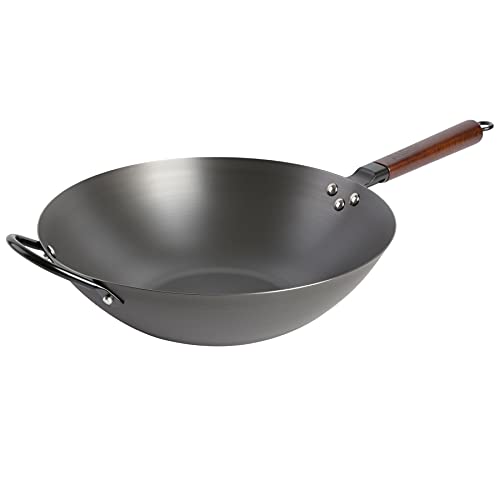
Consumer Reports Top Rated Wok 26': Babish 14 Inch Carbon Steel Wok (6" Flat Bottom)

Helen’s Asian Kitchen Bamboo Wok Tool for stirring, mixing, dividing, tasting, turning, and serving foods
What to serve with Fiery Drunken Noodles
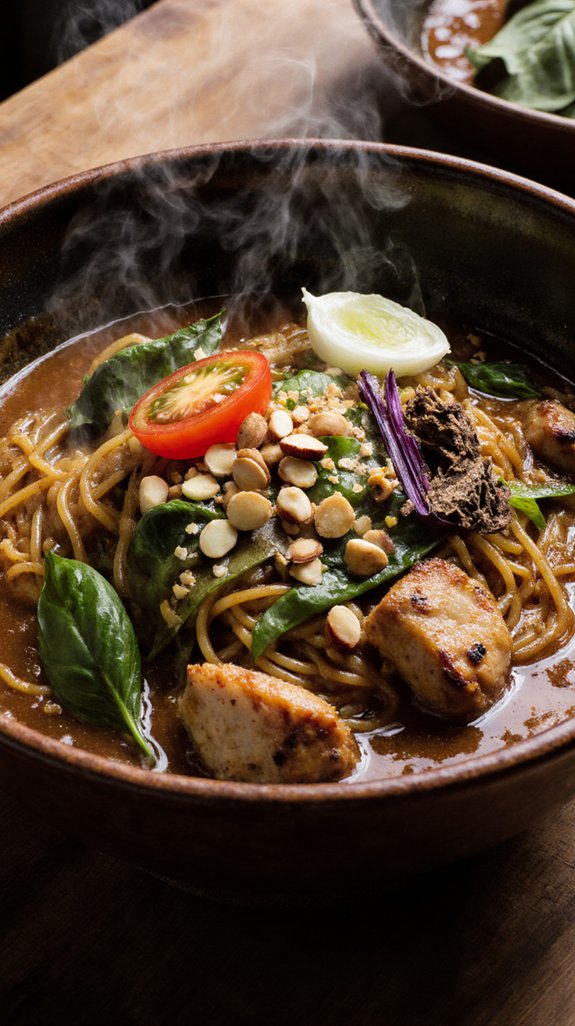
Fiery Drunken Noodles pack so much flavor and substance that they honestly don’t need much company on the plate, but I’ve learned over years of making this dish that the right side can transform a good dinner into a memorable one.
I typically reach for cucumber salad with rice vinegar and sesame oil, which cuts through the heat beautifully. Spring rolls work too, offering textural contrast without competing for attention.
As for beverage pairings, I’ve found that Thai iced tea mellows the spice perfectly, while a crisp lager does wonders if you’re drinking beer.
Avoid heavy side dishes that’ll weigh you down. The noodles already deliver protein, vegetables, and carbs, so think of accompaniments as supporting actors, not co-stars.
Final Thoughts
After you’ve made this dish a few times, you’ll notice something interesting happens—the recipe stops feeling like a recipe and starts feeling like muscle memory.
That’s when you know you’ve really gotten it. These are my final thoughts on drunken noodles: don’t stress about perfection. The beauty of this dish lives in its chaos, in that smoky wok and those charred edges.
My best cooking tips? Trust your instincts with the heat, taste as you go, and remember that the noodles should be slightly chewy, never mushy.
I’ve burned plenty of batches learning this, and honestly, even those weren’t terrible. The flavors are forgiving, the process is fast, and you’ll get better every single time you make it.
Frequently Asked Questions
Can I Make Drunken Noodles Ahead of Time and Reheat Them?
I don’t recommend making drunken noodles ahead for meal prep since they’re best fresh. However, if you’re reheating leftovers, I’ll add a splash of water and quickly stir-fry them to restore their texture.
How Long Do Leftover Drunken Noodles Stay Fresh in the Refrigerator?
I’ll store your leftover drunken noodles in an airtight container in the refrigerator for 3-4 days maximum. For best noodle freshness, I recommend reheating only what you’ll eat since the texture degrades with each reheating cycle.
What’s the Origin of the Name “Drunken Noodles”?
I’ll share that the name’s origin in Thai cuisine remains debated in noodle history. Some believe it references late-night drunk food cravings, while others suggest the “drunken” describes the dish’s wild, intoxicating flavors and spicy heat.
Can I Freeze Drunken Noodles for Meal Prep Purposes?
I don’t recommend freezing drunken noodles for meal prep because the fresh rice noodles become mushy when thawed. Instead, I suggest refrigerating them for up to three days and reheating in a hot wok for best results.
What’s the Difference Between Drunken Noodles and Pad Thai?
I’ll explain the key differences: drunken noodles are spicier with wider rice noodles, holy basil, and variations in heat levels. Pad Thai uses thinner noodle types, tamarind sauce, and isn’t spicy, offering sweeter, tangier flavors instead.