Like discovering coffee all over again for the first time, I stumbled onto espresso tonic last summer when the heat made hot drinks unbearable. You’d think mixing coffee with tonic water sounds weird, maybe even wrong, but that first sip changed everything. The bitter espresso cuts through the tonic’s sweetness while those bubbles lift the whole drink into something bright and energizing. Once you try this simple combination, you’ll wonder why it took so long to find it.
History
While nobody’s entirely sure who invented the espresso tonic, the drink started gaining traction in Scandinavian coffee shops around 2007.
Sweden seems to be where it really took off first. I remember hearing about it from a barista friend who’d visited Oslo and couldn’t stop talking about this weird coffee-soda combination.
The Nordic coffee culture has always been ahead of the curve, experimenting with lighter roasts and unconventional preparations while the rest of us were still ordering triple-shot caramel macchiatos.
By the early 2010s, the drink had spread to trendy cafes in Australia and the Pacific Northwest, where coffee nerds embraced its invigorating qualities.
Now you’ll find variations on menus from Brooklyn to Tokyo, each shop adding their own twist.
Recipe
The espresso tonic is a revitalizing caffeinated beverage that combines the bold, rich flavor of espresso with the crisp effervescence of tonic water. This unexpected pairing creates a complex drink with bitter-sweet notes, citrus undertones, and a sparkling finish that’s lighter and more invigorating than traditional iced coffee drinks.
This drink shines during warm weather months and makes an excellent afternoon pick-me-up when you want caffeine without the heaviness of milk-based drinks. It’s particularly popular in specialty coffee shops and has become a favorite among coffee enthusiasts looking for something beyond the usual cold brew or iced latte.
Ingredients
- 2 shots espresso
- 4-6 ounces tonic water, chilled
- Ice cubes
- 1/2 to 1 tablespoon simple syrup
- Orange peel
Preparation Steps
- Fill a tall glass with ice cubes.
- Pour the chilled tonic water over the ice.
- Add simple syrup to taste and stir gently to combine.
- Pull two fresh shots of espresso.
- Slowly pour the espresso over the back of a spoon onto the tonic mixture to create a layered effect.
- Express the oils from an orange peel over the drink by twisting it, then drop it into the glass as garnish.
Tips and Variations
For a less bitter profile, use a lighter roast espresso or increase the simple syrup to 1.5 tablespoons. Flavored tonic waters like elderflower or Mediterranean varieties add interesting dimensions to the drink.
If you don’t have fresh espresso, strong cold brew concentrate works in a pinch, though you’ll lose the layered visual effect. The simple syrup can be made ahead and stored in the refrigerator for up to two weeks, or substitute with honey or agave syrup dissolved in a small amount of warm water.
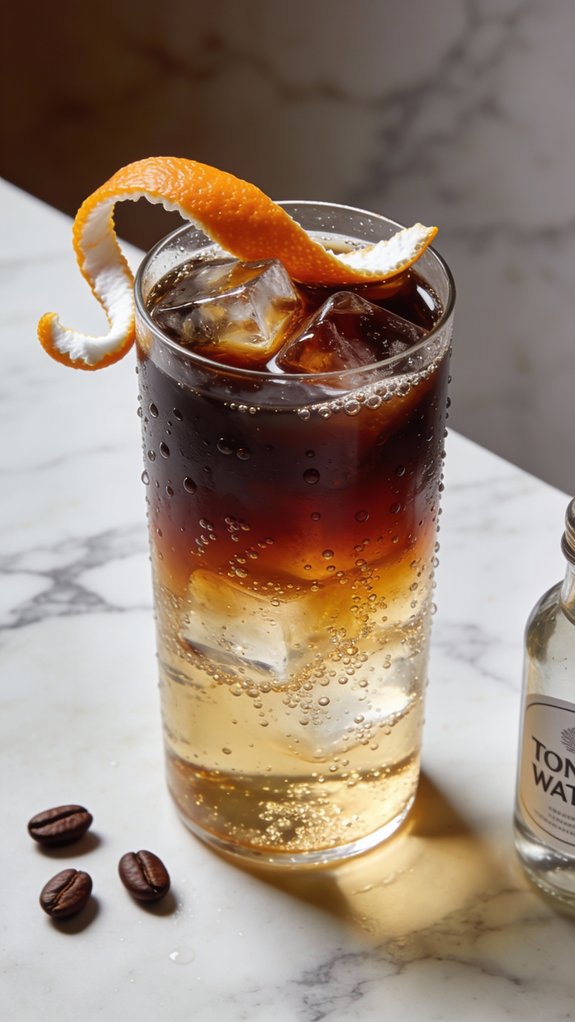
For the best presentation, use a clear glass to showcase the beautiful gradient effect of espresso floating over tonic.
Shop Related Products
Classic Espresso Martini, Effortlessly Elevated: Fever-Tree Classic Espresso Martini Mix delivers a well balanced, rich espresso flavor from the finest coffee beans and...
Preparation Steps
Building this drink takes about five minutes, and you’ll want to work methodically to get that impressive layered look that makes espresso tonics so visually striking.
I always start by chilling my glass with ice and tonic water first, which gives the carbonation time to settle before I add the hot espresso on top.
The key moment comes when you pour those fresh espresso shots slowly over a spoon, creating that beautiful gradient where dark coffee floats above the pale, bubbling tonic.
Shop Related Products
PRODUCT CONFIGURATION: Drinking glass set includes 4 glass cups [ Diameter - 3 inches, Height - 5.6 inches ],4 nature bamboo lids, 4 reusable glass straws and 2 cleaning brushes, Classic design tumbler

Signature Whiskey Wedge Experience – Elevate every pour with the Corkcicle Whiskey Wedge, featuring a floating silicone ice mold that creates a signature angled ice wedge. This premium old fashioned glass delivers a striking presentation while chilling whiskey, bourbon, scotch, and cocktails with style.

Ribbed Glasses Design:Crafted from quality ribbed glass,our 20 oz ribbed glass cups ensure an anti-slip grip and refined look;ideal as your daily iced coffee cup,this set of 4 glass coffee cups with lids and straw unites function and style
Step 1. Chill Glass With Ice
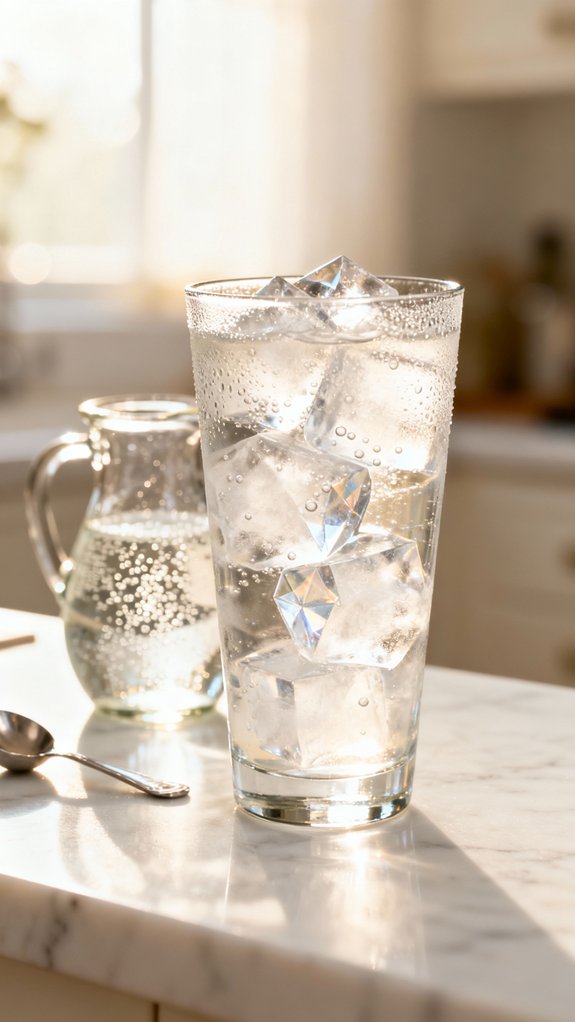
Starting with a chilled glass isn’t strictly necessary, but I’ve found it makes a real difference in how long your espresso tonic stays cold and revitalizing.
Fill your tall glass completely with ice cubes first. Let it sit for about a minute while you’re getting your other ingredients ready. The ice will frost the glass from the inside, creating a barrier that keeps everything colder longer.
I learned this trick after making too many lukewarm espresso tonics on hot afternoons last summer. Once the glass is properly chilled, dump out any melted water and add fresh ice for your drink.
This extra step takes almost no effort but gives you several more minutes of that crisp, invigorating temperature you want.
Step 2. Add Tonic and Syrup
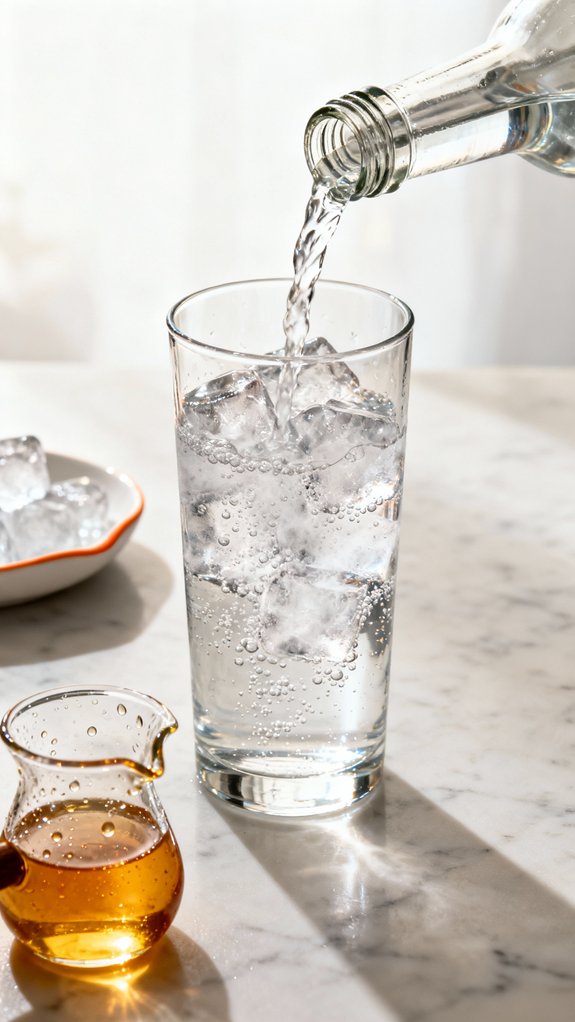
Once your glass is properly chilled with fresh ice, pour in about 4 to 6 ounces of tonic water—I usually eyeball it until the glass is roughly two-thirds full.
The carbonation should fizz enthusiastically against the ice, releasing those herbal aromas that make tonic water distinctive.
Next, add your simple syrup, starting with half a tablespoon if you’re unsure about sweetness.
I’ve learned that it’s easier to add more later than to fix an overly sweet drink.
Give everything a gentle stir with a long spoon, just enough to distribute the syrup without killing all those beautiful bubbles.
You want the tonic to stay lively and effervescent because that sparkle is what makes this drink special, not some flat, sad concoction.
Step 3. Pull Fresh Espresso Shots
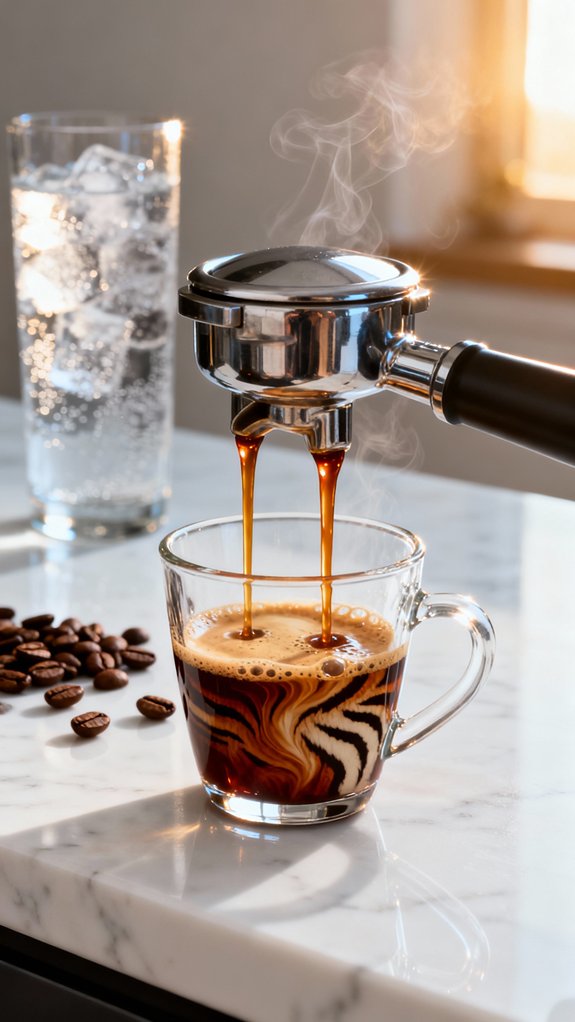
With the tonic ready and waiting in your glass, you need to pull those espresso shots at just the right moment. Timing’s everything here—you’ll want that coffee fresh and hot.
I learned this the hard way when I let shots sit for three minutes once, and they turned bitter and lifeless.
Start your espresso machine now and pull two shots directly into a small cup or shot glass. The whole extraction should take about 25-30 seconds, producing rich, golden-brown crema on top.
That crema’s important—it adds complexity when it mingles with the tonic.
Once your shots are ready, move quickly to the next step. Old espresso loses its magic fast.
Step 4. Layer Espresso Over Spoon
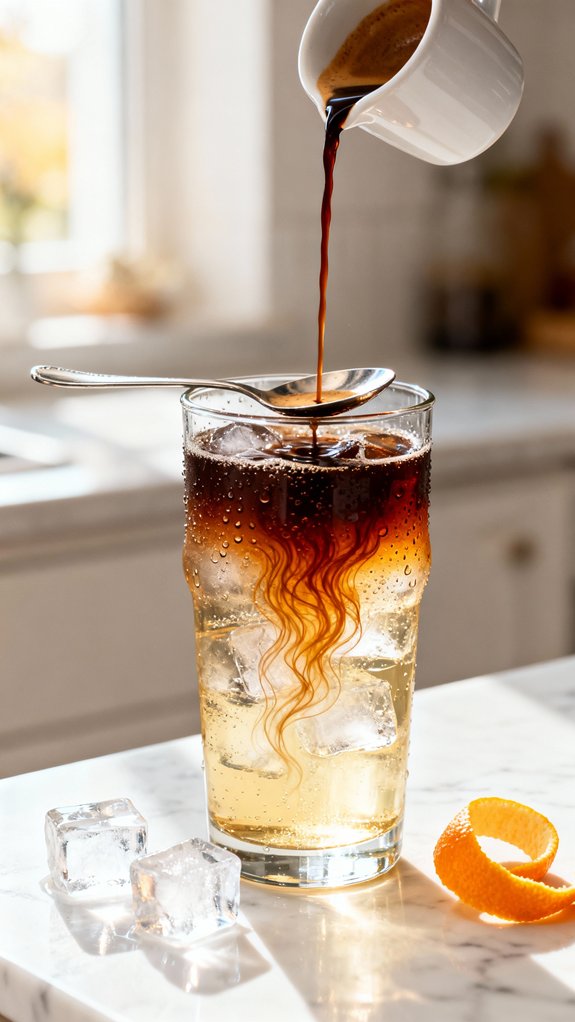
Here’s where the drink becomes something special—you’re creating that Instagram-worthy layered look everyone loves.
Hold a spoon upside-down just above your tonic-filled glass, letting it rest gently on the ice. Pour your espresso slowly over the rounded back of the spoon. The spoon breaks the fall and disperses the coffee, allowing it to float gracefully on top rather than plunging straight through.
You’ll watch as the dark espresso spreads across the surface, creating this beautiful gradient from rich brown to pale gold. I’ve definitely rushed this step before, dumping the espresso too fast, and ended up with a muddy-looking drink instead of those distinct layers.
Take your time here—it only needs thirty seconds of patience for a result that looks professionally crafted.
Step 5. Garnish With Orange Peel
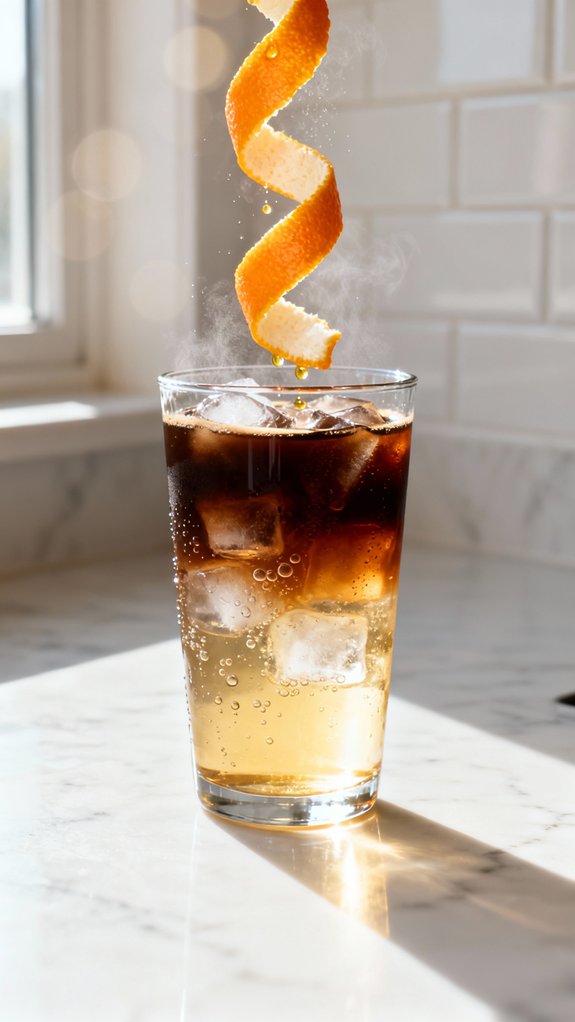
Now that your espresso has settled into those gorgeous layers, you’re going to finish this drink with citrus.
Grab your orange peel and hold it about two inches above the glass. This next part is my favorite. Twist the peel sharply over the drink, colored side facing down. You’ll see tiny droplets of oil spray out, and you might even catch that bright citrus smell hitting your nose. Those oils add a subtle flavor that cuts through the bitterness perfectly.
Once you’ve expressed the oils, just drop the peel right into the glass. It’ll float on top and look pretty great. Some people run the peel around the rim first, which works too if you want more citrus flavor with each sip.
Final Thoughts
The first time I made an espresso tonic, I was skeptical about mixing coffee with something fizzy, but that initial sip completely changed my mind.
Now it’s my go-to drink when temperatures climb above eighty degrees. I’ll make one on Sunday afternoons while reading on the porch, or mix a batch when friends come over for brunch.
The bitterness takes some getting used to if you’re accustomed to sweet coffee drinks. Start with extra simple syrup and gradually reduce it as your palate adjusts.
I’ve converted several coffee-loving friends who initially wrinkled their noses at the combination. Give it an honest try before dismissing it. You might discover your new favorite warm-weather caffeine fix.
Frequently Asked Questions
Can I Make Espresso Tonic Without an Espresso Machine?
You can use strong cold brew concentrate instead of espresso shots, though you’ll lose the layered effect. Alternatively, you’ll find Moka pot coffee or concentrated AeroPress brew works well as substitutes for machine-pulled espresso.
What’s the Best Tonic Water Brand for Espresso Tonics?
You’ll get excellent results with Fever-Tree or Q Tonic, which both have balanced bitterness that complements espresso beautifully. Fever-Tree’s Mediterranean variant adds subtle herbal notes, while their elderflower version creates a more floral profile.
How Many Calories Are in an Espresso Tonic?
You’re sipping liquid minimalism—an espresso tonic typically contains just 30-50 calories, depending on your simple syrup amount. The espresso itself is nearly calorie-free, while tonic water and sweetener contribute the modest count.
Can I Prepare Espresso Tonic Ahead of Time?
You shouldn’t prepare espresso tonic ahead of time. The carbonation will go flat and the espresso loses its freshness quickly. For best results, make it right before serving to maintain the fizz and bold coffee flavor.
Does Espresso Tonic Have More Caffeine Than Regular Coffee?
You’ll get similar caffeine to regular coffee since both use espresso or coffee as the base. Two espresso shots contain roughly 120-150mg of caffeine, comparable to an 8-ounce cup of drip coffee.