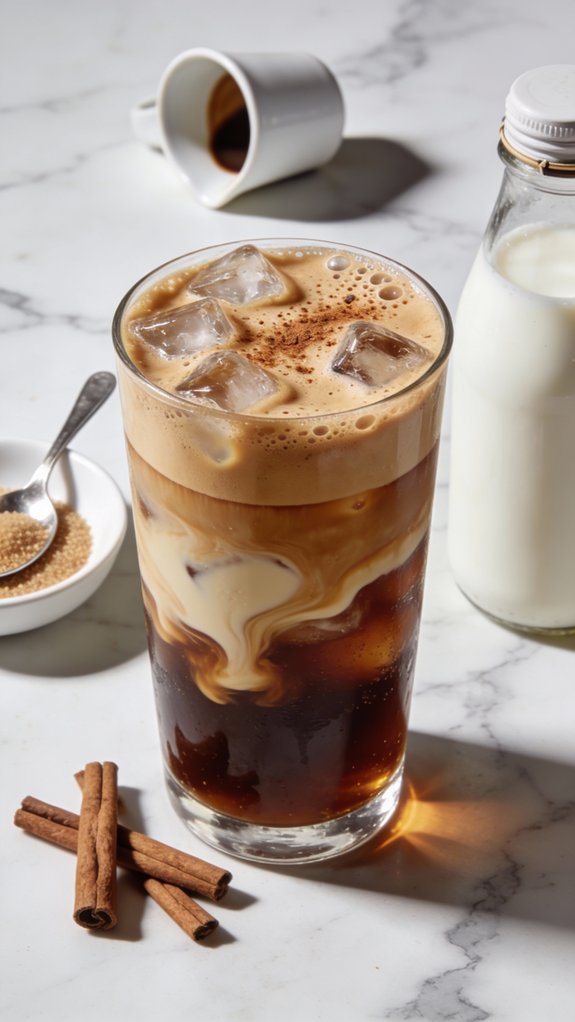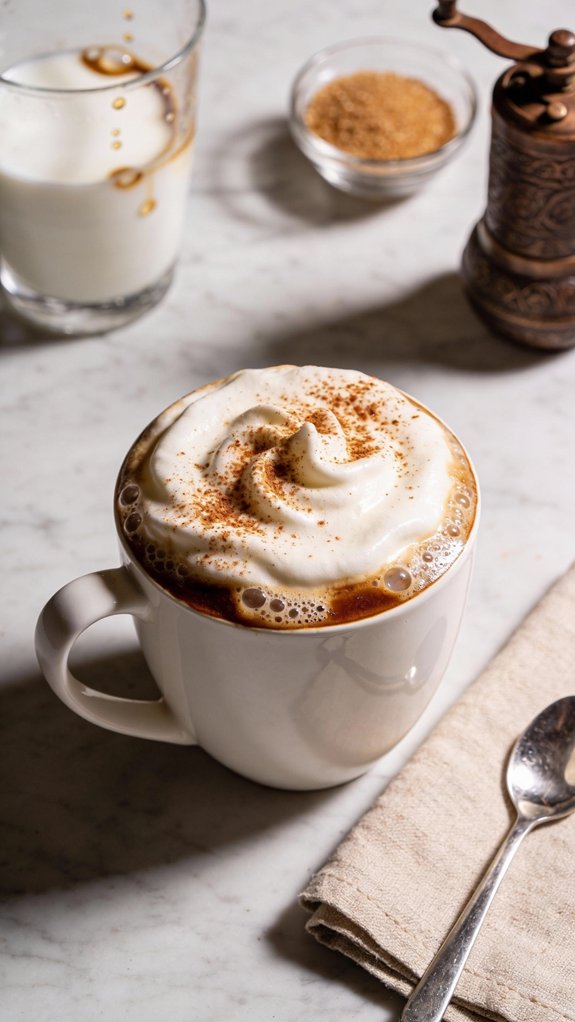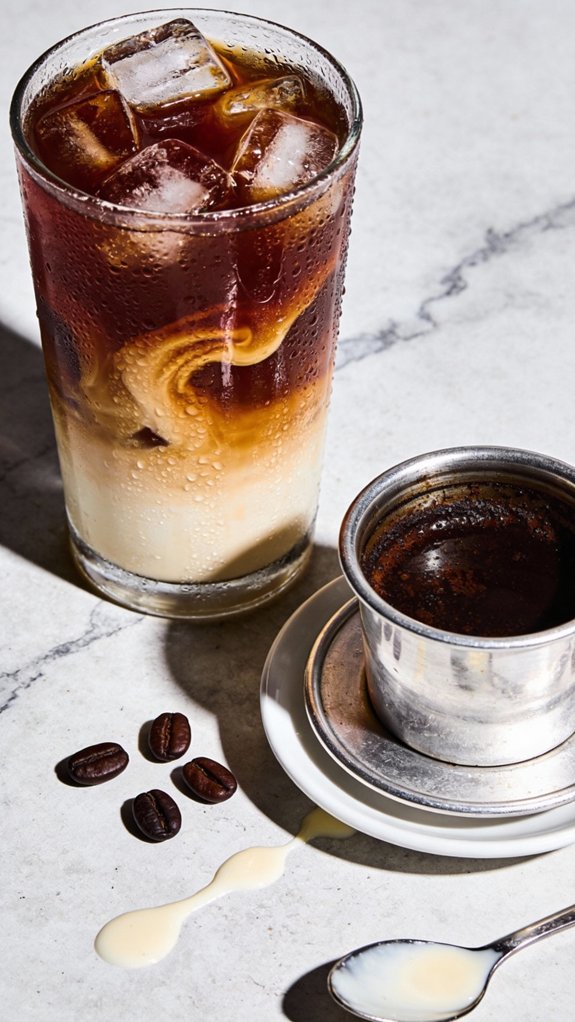

I first tried a brown butter latte at a café in Portland, and honestly, I wasn’t prepared for how different it would taste from my usual order. The barista had browned the butter that morning, filling the shop with this warm, almost caramel-like smell. What made it special wasn’t just the nutty richness, but how the butter transformed simple espresso into something that tasted both familiar and completely new.
History
While brown butter has been a cornerstone of French cooking for centuries—the French call it *beurre noisette*, meaning “hazelnut butter”—the brown butter latte is a decidedly modern invention.
You’ll find that specialty coffee shops started experimenting with it around 2015, when the third-wave coffee movement pushed baristas to explore unconventional flavor combinations beyond the usual vanilla and caramel syrups.
The drink gained serious traction on social media around 2018, with home coffee enthusiasts sharing their versions online.
It makes sense when you think about it—butter coffee was already trending thanks to the bulletproof coffee craze, so adding that nutty, caramelized dimension felt like a natural evolution.
Now you’ll spot brown butter lattes on menus at innovative cafés.
Recipe
The brown butter latte transforms your everyday coffee into a nutty, caramelized indulgence. This drink combines the rich, toasted flavor of browned butter with smooth espresso and creamy milk, creating a warm beverage that tastes like liquid toffee.
The butter adds a velvety texture while infusing each sip with deep, complex notes that complement the coffee’s natural bitterness. This latte works beautifully as a morning treat or an afternoon pick-me-up, especially during cooler months when you crave something comforting and substantial.
The brown butter preparation takes just a few extra minutes but elevates this from a simple latte to a café-worthy specialty drink that feels both decadent and sophisticated.
Shop Related Products

SET INCLUDES: 10-inch x 15-inch cookie pan, Two 9-inch round cake pans, 9-inch x 13-inch rectangular cake pan, 9-inch x 5-inch loaf pan


NONSTICK BAKEWARE SET INCLUDES: 10-inch x 15-inch cookie pan, Two 9-inch round cake pans, 6-cup muffin and cupcake pan
Ingredients
- 1 tablespoon unsalted butter
- 2 shots espresso (or ½ cup strong brewed coffee)
- 1 cup whole milk
- 1 tablespoon brown sugar
- ¼ teaspoon vanilla extract
Shop Related Products


Brought to you by Whole Foods Market

1 pound of unsalted butter in 4 sticks (1/2 cup each)
Steps
- Melt the butter in a small saucepan over medium heat, swirling occasionally until it turns golden brown and smells nutty, about 3-4 minutes.
- Remove from heat and whisk in the brown sugar and vanilla extract until dissolved.
- Brew your espresso shots directly into a mug.
- Pour the brown butter mixture into the mug with the espresso and stir to combine.
- Steam or heat the milk until hot and frothy.
- Pour the milk into the mug, stirring gently to incorporate everything together.
Tips
You can make the brown butter ahead of time and store it in the refrigerator for up to a week—just rewarm it before adding to your latte.
For dairy-free options, oat milk works exceptionally well as it has a natural creaminess that complements the butter, though you’ll want to use plant-based butter as well.
Adjust sweetness by increasing or decreasing the brown sugar to taste, or substitute with maple syrup for a different flavor dimension.
If you don’t have an espresso machine, use strongly brewed coffee from a French press or Moka pot for the best results.
Preparation Steps
Making this latte isn’t complicated, but the brown butter step needs your full attention since it can go from perfectly nutty to burnt in seconds.
I’ve learned to keep the heat at medium and watch for that golden-brown color and toasted aroma, which tells you it’s ready.
Once you’ve got the butter right, the rest comes together quickly—mixing in the sweet stuff, pulling your espresso shots, and frothing up some milk until everything combines into one smooth, caramel-scented drink.
Step 1. Brown the Butter Carefully
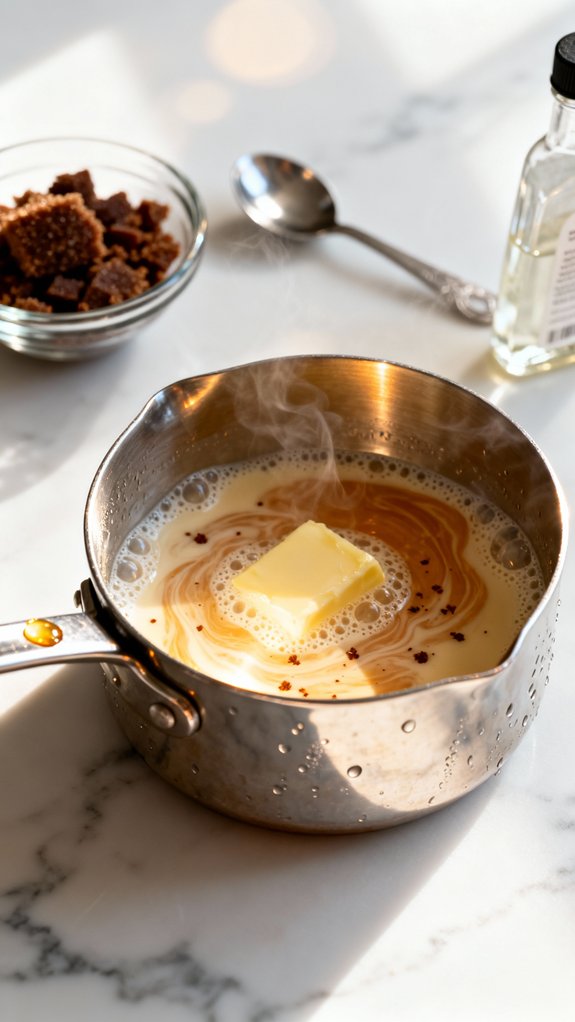
Browning butter requires your full attention because it shifts from perfect to burnt in about thirty seconds. I learned this the hard way when I got distracted checking my phone and ended up with blackened, acrid butter that smelled like a campfire gone wrong.
Now I stay planted at the stove, watching those milk solids turn from pale yellow to golden brown, listening for the sizzling to quiet down. The smell changes too—first it’s just regular melted butter, then suddenly it smells like toasted nuts and caramel.
That’s your signal. Pull it off the heat immediately and swirl the pan a few times to stop the cooking. The whole process takes maybe four minutes, but those last thirty seconds determine everything.
Step 2. Combine Sugar and Vanilla
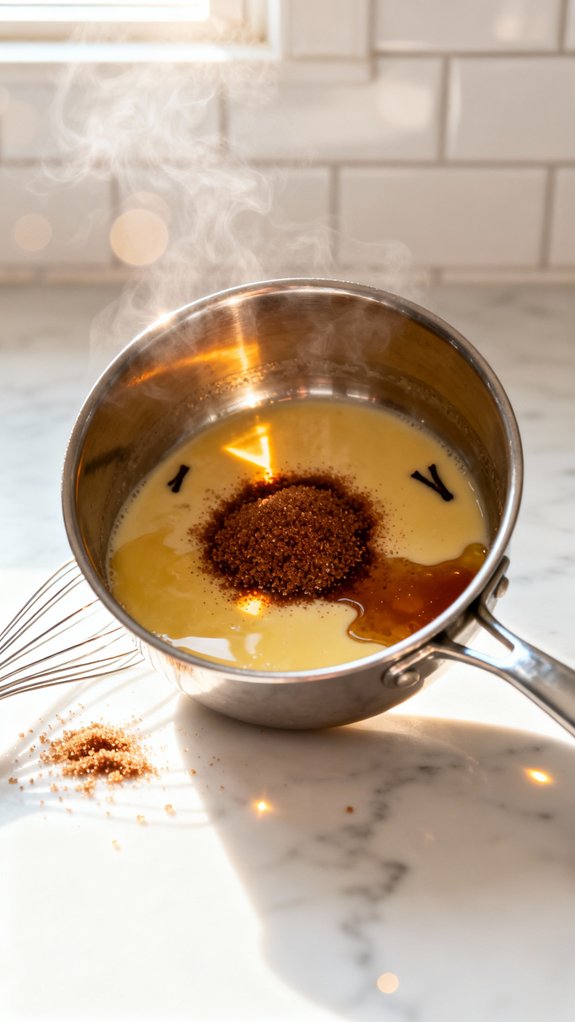
Right after you pull that pan off the heat, you need to add your sugar and vanilla while the butter’s still hot enough to dissolve everything but cool enough that it won’t splatter everywhere.
I learned this timing the hard way after getting a few butter specks on my shirt. The brown sugar melts into the butter almost immediately when you whisk them together, creating this smooth caramel-like mixture that smells incredible.
The vanilla rounds out those toasted, nutty notes from the browned butter, adding warmth without making it taste like a dessert.
Keep whisking for about thirty seconds until you can’t see any sugar crystals anymore. You want a completely smooth mixture before it goes into your espresso.
Step 3. Brew Fresh Espresso Shots
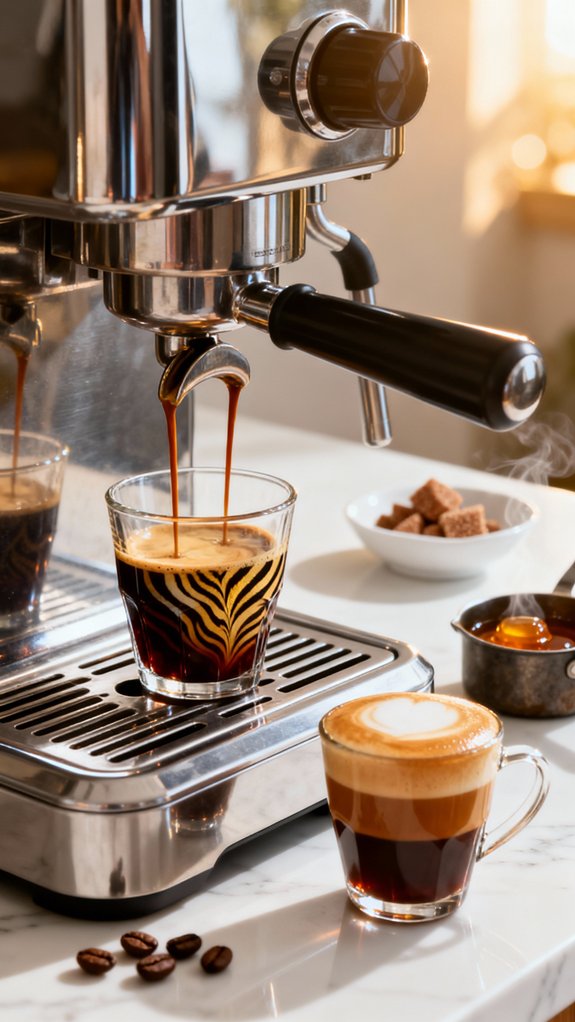
While your brown butter mixture sits in the pan cooling slightly, you’ll want to pull your espresso shots so everything comes together at the right temperature.
I use my espresso machine to brew two shots directly into my favorite mug, which gives me about two ounces of concentrated coffee with that signature crema on top.
The timing works perfectly because the espresso stays hot while you finish prepping everything else.
If you don’t have an espresso machine, I’ve made this with strongly brewed coffee from my Moka pot, using about half a cup instead.
The key is getting coffee that’s bold enough to stand up to the richness of the brown butter without disappearing completely into the background.
Step 4. Heat and Froth Milk
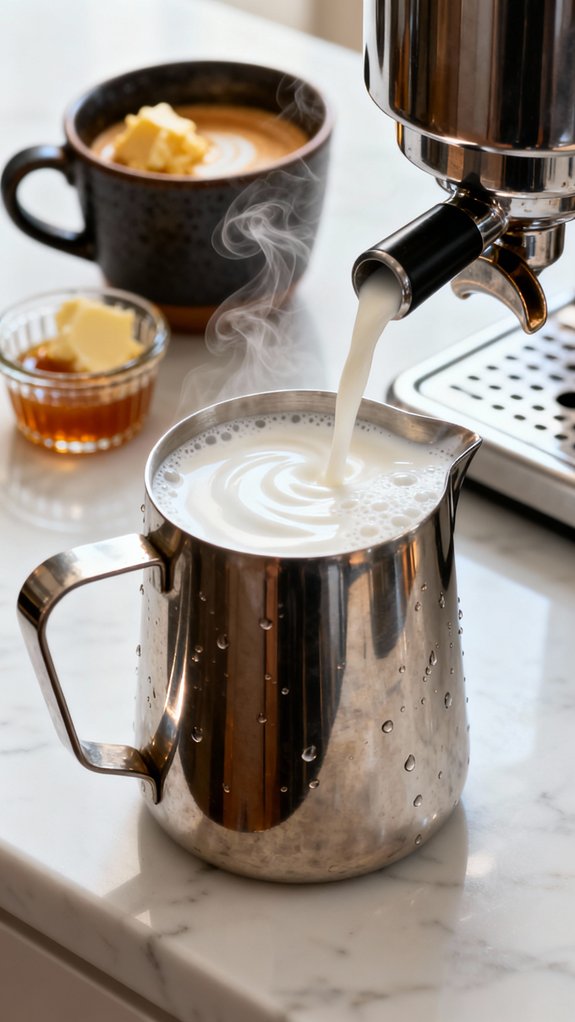
With your espresso ready and the brown butter mixture waiting, I grab my milk from the fridge and pour about a cup into my milk frother pitcher.
I heat it until tiny bubbles form around the edges, right before it starts steaming. If you’ve got an electric frother, this takes about ninety seconds. Without one, I just heat the milk in a small saucepan over medium heat, watching it carefully so it doesn’t boil over.
Once it’s hot, I froth it by pumping a handheld frother up and down until the milk gets foamy and doubles in volume. The whole milk creates this thick, velvety texture that holds together beautifully when you pour it into your mug.
Step 5. Assemble and Stir Together
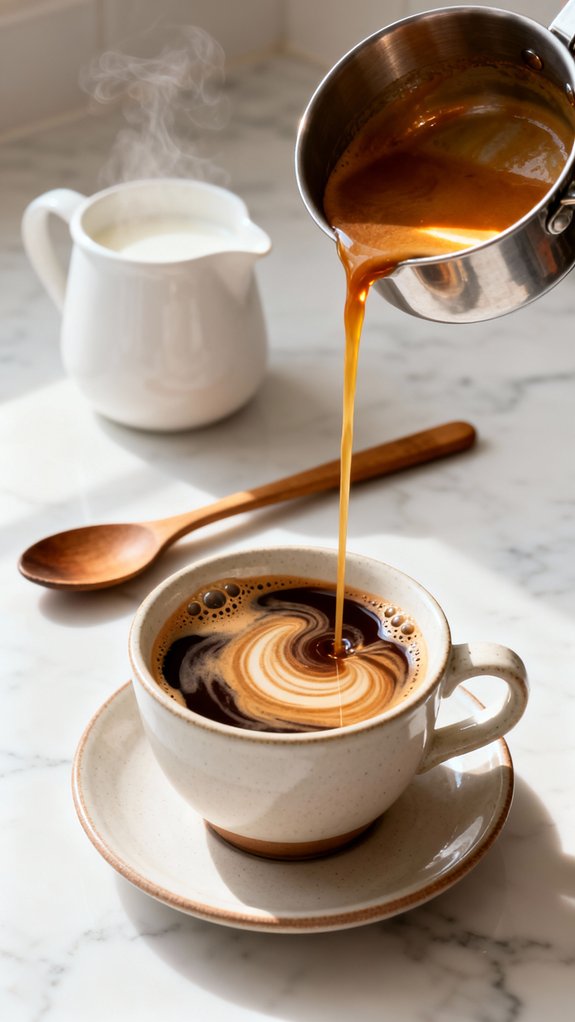
The moment everything comes together is my favorite part because you finally get to see how all these flavors blend into something special.
Pour your espresso shots into your favorite mug first. Add the brown butter mixture right on top and give it a quick stir with a spoon. The butter will swirl through the dark coffee, creating these caramel-colored ribbons that look almost hypnotic.
Now pour in your steamed milk slowly, watching as the color lightens from deep brown to a beautiful tan. Stir everything gently but thoroughly so the butter doesn’t separate and float on top. You want each sip to have that perfect balance of nutty richness and coffee boldness.
The whole thing should look smooth and inviting.
Final Thoughts
I’ve been making this brown butter latte for a few months now, and it’s become one of those drinks I actually look forward to on slow mornings. It feels fancier than regular coffee without requiring much extra effort.
The whole process takes maybe ten minutes if I’m moving casually. I usually make it on weekends when I’ve time to actually sit and enjoy it, sometimes with toast or a muffin.
The brown butter adds this warm, almost caramel-like richness that regular lattes just don’t have. It reminds me of those expensive coffee shop drinks, except I know exactly what’s going into it.
Once you nail the butter-browning part, everything else is pretty straightforward. It’s worth trying at least once.
Frequently Asked Questions
Can I Use Salted Butter Instead of Unsalted Butter?
You can use salted butter, but it’ll add saltiness to your latte. If you’re using it, skip any additional salt and reduce the brown sugar slightly since salt enhances sweetness perception.
How Many Calories Are in a Brown Butter Latte?
The recipe doesn’t include calorie information, but you can estimate around 200-250 calories based on the ingredients: butter, whole milk, brown sugar, and espresso. Using lower-fat milk would reduce this amount.
What’s the Difference Between Brown Butter and Regular Melted Butter?
Brown butter’s been gently coaxed beyond its melting point until the milk solids caramelize, creating nutty, toasty flavors. Regular melted butter stops at liquid form, lacking those complex, rich notes you’ll taste in properly browned butter.
Can I Make This Recipe Iced Instead of Hot?
Yes, you can make it iced! Let the brown butter mixture cool slightly, combine it with espresso, then pour over ice and add cold milk. The butter may solidify slightly when chilled, though.
Does Brown Butter Latte Contain More Caffeine Than Regular Lattes?
No, it doesn’t contain more caffeine since both use identical espresso amounts—two shots with roughly 126mg total. The brown butter simply adds flavor and richness without affecting your latte’s caffeine content whatsoever.