You know that feeling when you’re tired of sweet, fruity drinks and want something with real depth? I’ve been there, standing at my home bar, craving the warmth and complexity that only dark spirits can deliver. Dark liquor cocktails aren’t just drinks—they’re conversations in a glass, each sip revealing layers of caramel, oak, and spice. Whether you’re entertaining friends or unwinding after a long week, these twelve recipes will transform your cocktail game.
Classic Old Fashioned
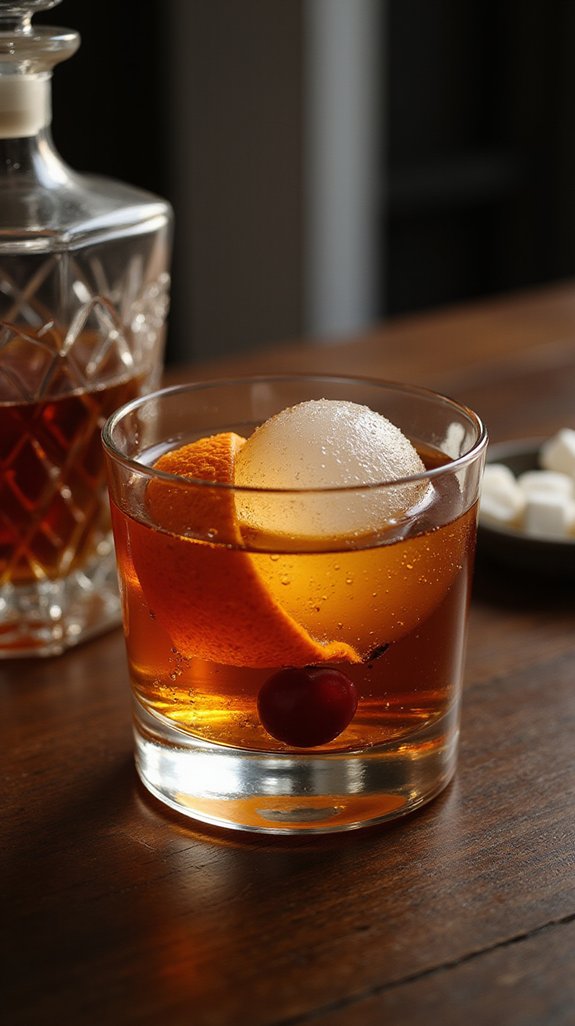
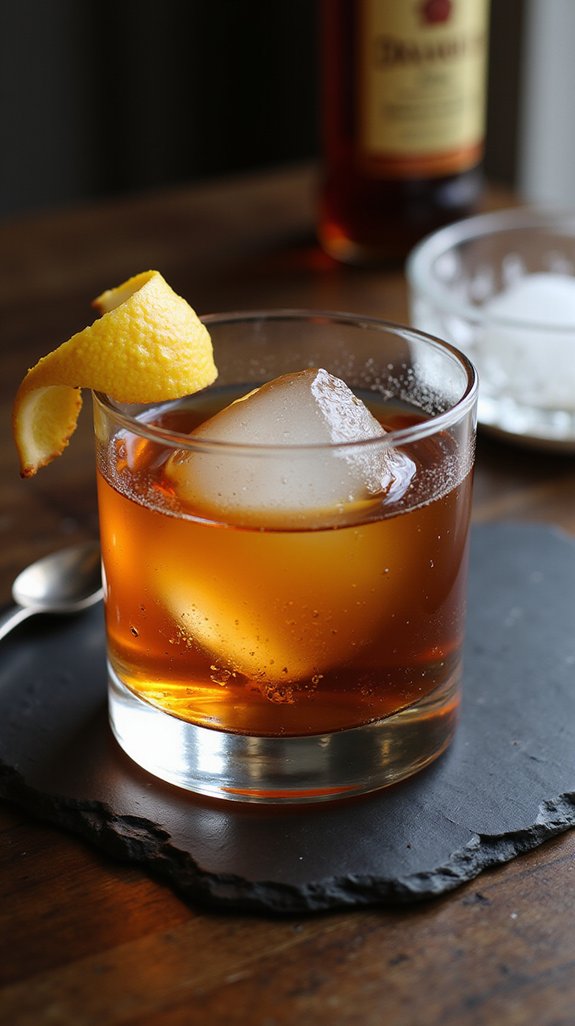
The Old Fashioned stands as one of the most iconic whiskey cocktails in bartending history, dating back to the early 19th century. This timeless drink showcases the quality of your chosen dark liquor—traditionally bourbon or rye whiskey—by enhancing rather than masking its natural flavors. The simple combination of spirit, sugar, bitters, and citrus creates a perfectly balanced cocktail that has remained virtually unchanged for over a century.
What makes the Old Fashioned truly special is its ability to transform a few basic ingredients into something greater than the sum of its parts. The muddled sugar and bitters create a foundation that mellows the whiskey’s bite while the orange peel adds aromatic oils that elevate each sip. Whether you’re a seasoned cocktail enthusiast or just beginning to explore dark liquor drinks, mastering the Old Fashioned is an important skill that will serve you well.
Ingredients
- 2 oz bourbon or rye whiskey
- 1 sugar cube (or ½ teaspoon granulated sugar)
- 2-3 dashes Angostura bitters
- Orange peel
- 1 large ice cube or sphere
- Maraschino cherry (optional)
Shop Related Products

【All in One Set】Mixing glass bartender set is made for cocktail and other drinks.This cocktail mixing glass set comes with 20 oz heavy mixing glass,double jigger,shinning polished strong strainer,super spoon and muddle.You have all for mixing cocktail with this bartender glass mixing set.
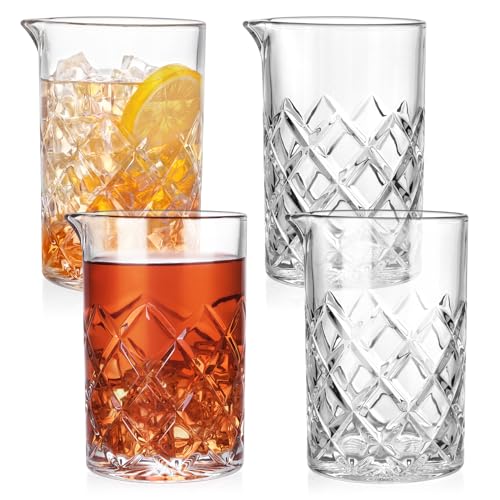
Sufficient Quantity: our product contains 4 pieces of clear bar mixing glasses, which are enough to meet your daily use needs, and enough quantity can also allow you to share with others

Stir like a pro: 24 oz crystal cocktail mixing glass with a weighted base and precise spout; a durable mixing glass that anchors your station and headlines a complete cocktail mixing glass set.
Instructions
Place the sugar cube in an Old Fashioned glass and saturate it with the bitters, then add a few drops of water. Muddle the sugar until it’s mostly dissolved, creating a paste at the bottom of the glass.
Add your whiskey and stir gently to combine with the sugar mixture. Add the large ice cube to the glass. Express the oils from the orange peel by holding it over the glass and giving it a firm twist, then rub the peel around the rim of the glass before dropping it into the drink. If desired, garnish with a maraschino cherry.
Tips
The key to a perfect Old Fashioned lies in using quality ingredients and proper technique. Use a large, single ice cube rather than several small ones to minimize dilution while keeping your drink cold.
When expressing the orange peel, you should see a fine mist of citrus oils spray over the surface of the cocktail—this aromatic element is vital to the drink’s character. Avoid over-muddling the sugar; you want it dissolved but not aerated.
Some bartenders prefer to use simple syrup instead of a sugar cube for easier mixing, which works well but lacks the traditional touch. Experiment with different whiskeys to find your preference, as a spicy rye will create a distinctly different drink than a smooth, sweet bourbon.
Manhattan
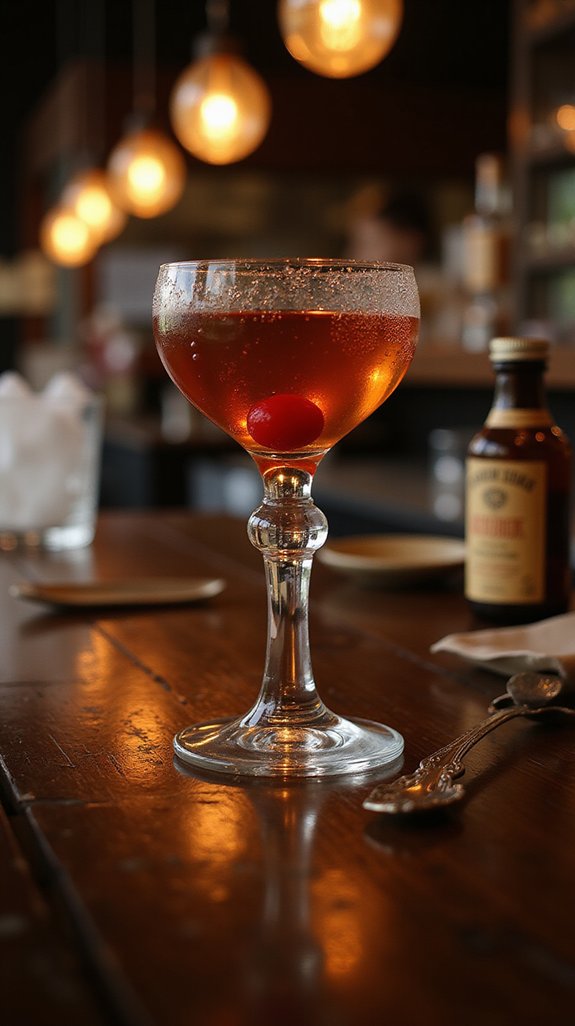
The Manhattan represents the sophisticated side of dark liquor cocktails, combining whiskey with sweet vermouth and bitters to create a drink that’s both complex and approachable. Originating in New York City in the 1870s, this classic cocktail has maintained its status as a staple in cocktail bars worldwide. The marriage of whiskey—typically rye or bourbon—with Italian sweet vermouth creates a harmonious blend where neither ingredient dominates, while aromatic bitters add depth and complexity that elevates the entire experience.
What distinguishes the Manhattan from other whiskey cocktails is its perfect balance between spirit-forward boldness and the subtle sweetness of vermouth. The drink is stirred rather than shaken, resulting in a silky-smooth texture that allows the flavors to integrate seamlessly. Whether enjoyed as a pre-dinner aperitif or a nightcap, the Manhattan’s elegance and depth make it a favorite among both cocktail novices and connoisseurs alike.
Ingredients
- 2 oz rye whiskey or bourbon
- 1 oz sweet vermouth
- 2-3 dashes Angostura bitters
- Maraschino cherry for garnish
- Ice cubes
- Orange peel (optional)
Shop Related Products

[ All-in-One Cocktail Mixing Kit ]: This complete set includes a 24 fl oz crystal mixing glass, stainless steel jigger(2 oz 1 oz), muddler, strainer, spoon, and a recipe card featuring 6 classic stirred cocktails. Perfect for both beginners and seasoned mixologists.

Hand Made Seamless Crystal Construction: Thick crystal mixing pitcher features classic diamond cut embossed texture for enhanced durability and elegant appearance

Quality Seamless Design - Made of ultra-clear lead-free glass with with a thick, weighted bottom to ensure that you get the most from your mixing experience
Instructions
Fill a mixing glass with ice and add the whiskey, sweet vermouth, and bitters. Stir gently but consistently for about 30 seconds to properly chill and dilute the cocktail—stirring rather than shaking guarantees a clear, smooth drink without air bubbles.
Strain the mixture into a chilled coupe glass or martini glass. Garnish with a maraschino cherry, and if desired, express the oils from an orange peel over the drink before discarding or adding to the glass.
Tips
The choice between rye and bourbon greatly impacts your Manhattan’s character—rye provides a spicier, drier finish while bourbon offers more sweetness and vanilla notes.
Always use fresh, quality vermouth and store opened bottles in the refrigerator, as vermouth is a fortified wine that oxidizes and loses flavor over time. The proper stirring technique is essential: stir long enough to achieve the right dilution and temperature (typically 30-40 seconds) but not so much that you over-dilute the drink.
Some variations include the Perfect Manhattan (using equal parts sweet and dry vermouth) or the Dry Manhattan (using dry vermouth instead of sweet). Chilling your serving glass in the freezer beforehand will help your Manhattan stay cold longer without excess dilution.
Whiskey Sour
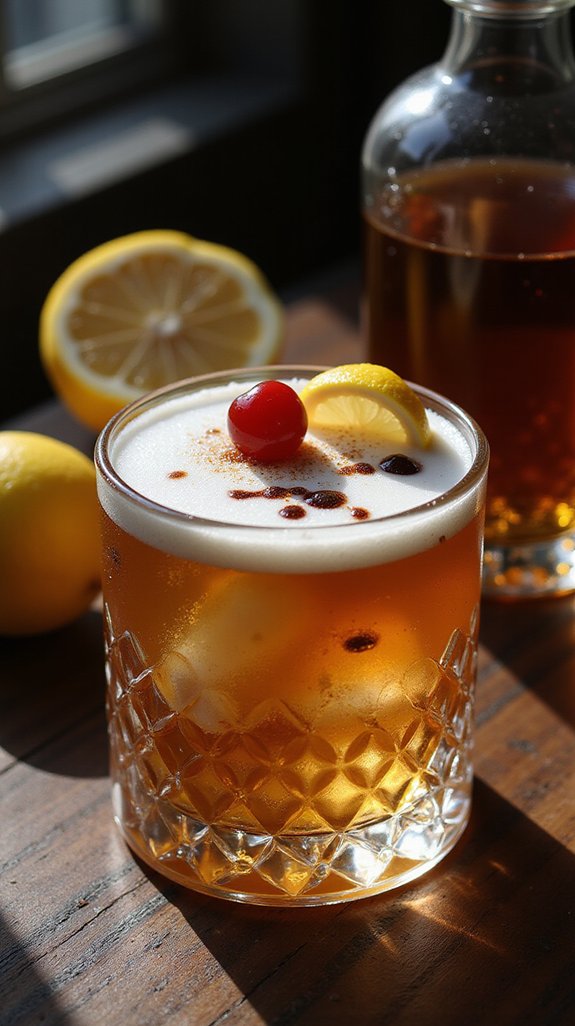
The Whiskey Sour stands as one of the most beloved and enduring cocktails in the dark liquor family, offering a perfect balance of spirit, citrus, and sweetness that has captivated drinkers since the 1860s. This classic sour-style cocktail showcases whiskey’s versatility by pairing its rich, oaky notes with the bright acidity of fresh lemon juice and the smoothness of simple syrup.
The addition of egg white, while optional, transforms this drink from a simple mixed cocktail into a luxurious experience with a velvety texture and impressive foam crown that makes it as visually appealing as it’s delicious.
What makes the Whiskey Sour particularly special is its approachability without sacrificing sophistication. The citrus and sweetness tame the whiskey’s intensity without masking its character, making it an excellent choice for those new to dark spirits while remaining complex enough to satisfy seasoned whiskey enthusiasts.
Whether served straight up in a coupe glass or over ice in a rocks glass, the Whiskey Sour delivers a revitalizing yet substantial drinking experience that works equally well as a summer sipper or a year-round classic.
Ingredients
- 2 oz bourbon or rye whiskey
- 3/4 oz fresh lemon juice
- 1/2 oz simple syrup
- 1 egg white (optional)
- Ice cubes
- Angostura bitters for garnish
- Maraschino cherry and lemon wheel for garnish
Instructions
If using egg white, add all ingredients except ice to a cocktail shaker and perform a dry shake (shaking without ice) for about 15 seconds to emulsify the egg white.
Add ice to the shaker and shake vigorously for another 15-20 seconds until well-chilled and properly diluted. Strain into a chilled rocks glass over fresh ice or straight up into a coupe glass.
If you’ve used egg white, wait a moment for the foam to settle and rise, then add 3-4 drops of Angostura bitters on top of the foam and drag a cocktail pick through them to create a decorative pattern. Garnish with a maraschino cherry and lemon wheel.
Tips
Always use freshly squeezed lemon juice rather than bottled juice, as the difference in flavor is dramatic and essential to a quality Whiskey Sour.
If you’re concerned about using raw egg white, you can substitute with aquafaba (chickpea brine) or pasteurized egg white, though some purists prefer to skip it entirely for a lighter, more straightforward drink.
The simple syrup ratio can be adjusted to taste—start with the standard 1/2 oz and increase if you prefer a sweeter drink.
Bourbon creates a smoother, sweeter cocktail while rye whiskey adds spice and a drier finish. For a more complex flavor profile, consider using a richer sweetener like maple syrup or honey syrup in place of simple syrup.
The dry shake technique is essential when using egg white, as it helps create that signature silky foam without diluting the drink prematurely.
Dark and Stormy
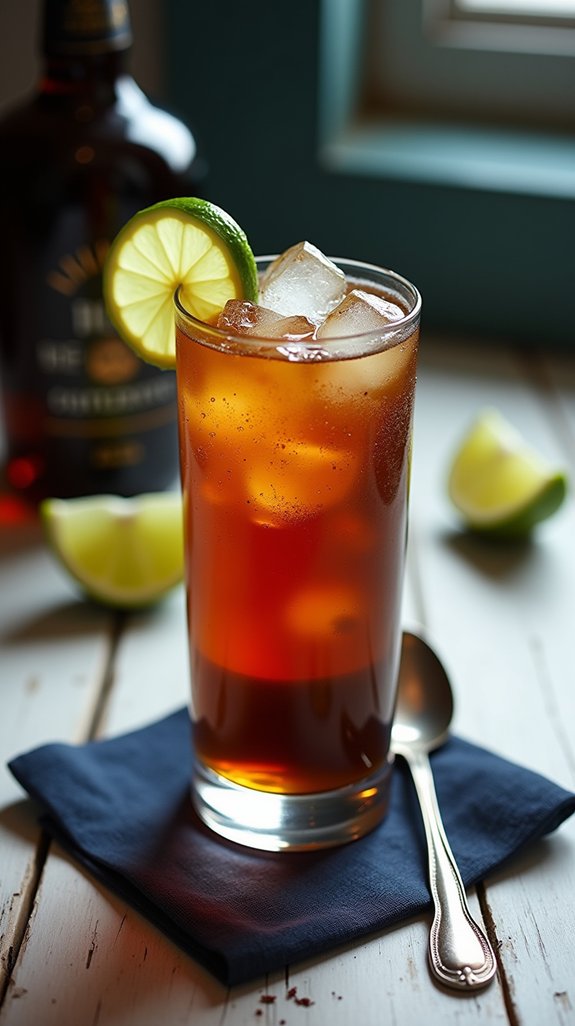
The Dark and Stormy holds a unique position in the cocktail world as one of the few drinks with a trademarked name, officially requiring Gosling’s Black Seal rum from Bermuda to carry the designation. This simple yet sophisticated highball showcases the bold, molasses-rich character of dark rum against the spicy bite of ginger beer, creating a drink that’s both invigorating and deeply flavorful.
Born in Bermuda shortly after World War I, the cocktail earned its evocative name from its appearance—the dark rum floating atop golden ginger beer resembles storm clouds gathering over the ocean, a fitting image for a drink with such strong maritime heritage.
What sets the Dark and Stormy apart from similar rum-and-ginger combinations is the specific intensity of flavor that dark rum brings to the glass. The rum’s deep caramel and spice notes complement rather than compete with the ginger beer’s peppery warmth, while a squeeze of fresh lime adds brightness that cuts through the sweetness and ties the elements together.
This is a cocktail that delivers complexity without requiring multiple spirits or elaborate preparation, making it an ideal choice for casual entertaining or a quick, satisfying drink that doesn’t compromise on character or taste.
Ingredients
- 2 oz dark rum (traditionally Gosling’s Black Seal)
- 4-5 oz ginger beer
- 1/2 oz fresh lime juice
- Ice cubes
- Lime wheel or wedge for garnish
- Candied ginger (optional garnish)
Instructions
Fill a highball or Collins glass with ice cubes and add the fresh lime juice. Pour the ginger beer over the ice, filling the glass about three-quarters full.
Slowly pour the dark rum over the back of a bar spoon held just above the surface of the ginger beer, allowing it to float on top and create the signature layered “stormy” effect. Give the drink a gentle stir before drinking, or let guests stir it themselves to gradually blend the layers.
Garnish with a lime wheel or wedge on the rim, and if desired, add a piece of candied ginger on a cocktail pick for an extra touch of spice.
Tips
The quality and style of ginger beer dramatically affects the final drink—look for brands with real ginger and a pronounced spicy kick rather than mild, sweet versions that will make the cocktail taste flat.
Some bartenders prefer to build the drink in reverse order for easier mixing, but the traditional float method creates visual drama that’s worth preserving for special occasions.
If you can’t find Gosling’s Black Seal, any quality dark rum with robust molasses notes will work, though purists will note it technically shouldn’t be called a Dark and Stormy.
For a less sweet version, reduce the ginger beer slightly and increase the lime juice, or muddle fresh ginger in the glass before building the drink for an extra layer of spicy complexity.
Sazerac
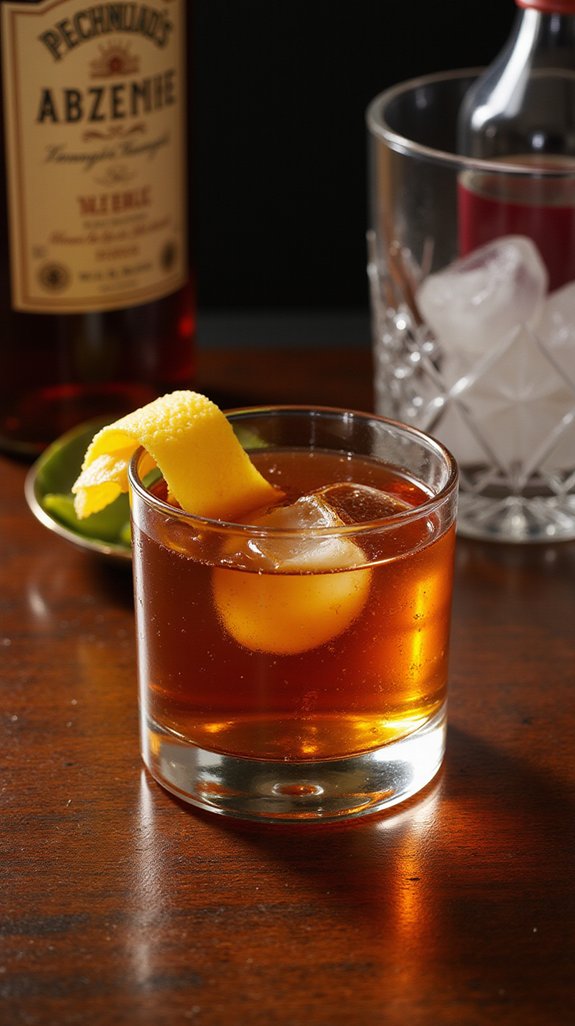
The Sazerac stands as America’s oldest known cocktail, originating in mid-19th century New Orleans and carrying with it the weight of Creole culture and Southern drinking tradition. Originally crafted with cognac before local tastes shifted to rye whiskey, this stirred cocktail represents the essence of dark spirit sophistication—a perfect balance of whiskey’s spice, sugar’s sweetness, aromatic bitters, and the haunting anise notes of absinthe.
The drink was named after Sazerac de Forge et Fils cognac, though today’s version typically features robust rye whiskey that stands up beautifully to the cocktail’s bold flavoring elements. In 2008, Louisiana officially designated the Sazerac as New Orleans’ official cocktail, cementing its place in American cocktail history.
What makes the Sazerac distinctive among whiskey cocktails is the absinthe rinse—a technique that coats the glass with a whisper of the green fairy’s complex botanical character without overwhelming the drink. This method creates aromatic intrigue while allowing the rye whiskey to remain the star, supported by Peychaud’s bitters (another New Orleans creation) whose floral, slightly sweet profile differs markedly from the more common Angostura.
The result is a cocktail of remarkable depth and nuance, served without ice in a chilled glass to showcase the spirit’s full range of flavors undiluted. This is a sipping drink for contemplation, a liquid meditation on the art of cocktail craft.
Ingredients
- 2 oz rye whiskey
- 1 sugar cube or 1/4 oz simple syrup
- 3-4 dashes Peychaud’s bitters
- 2 dashes Angostura bitters (optional)
- Absinthe or Herbsaint for rinse
- Lemon peel for garnish
- Ice cubes for stirring
Instructions
Chill an Old Fashioned glass by filling it with ice water or placing it in the freezer while you prepare the cocktail. In a separate mixing glass, muddle the sugar cube with the bitters until dissolved, or combine simple syrup with bitters if using liquid sweetener.
Add the rye whiskey and fill the mixing glass with ice, then stir for 20-30 seconds until well-chilled and properly diluted. Discard the ice water from your serving glass and add a small amount of absinthe, swirling it around to coat the entire interior before discarding the excess.
Strain the stirred cocktail into the absinthe-rinsed glass and express a lemon peel over the surface by holding it skin-side down and giving it a firm twist to release the oils, then either discard the peel or rest it on the rim as garnish.
Tips
The absinthe rinse should be subtle—you want just enough to perfume the glass without creating a licorice-forward drink, so be generous with the swirl but thorough with discarding the excess.
While purists insist on Peychaud’s bitters alone, many contemporary bartenders add a dash or two of Angostura for additional complexity and a deeper color. The choice between cognac and rye whiskey comes down to personal preference, with cognac offering a rounder, fruitier profile and rye providing more spice and structure; both are historically accurate and delicious.
Never serve a Sazerac with ice in the glass, as the dilution during stirring is all the water this spirit-forward cocktail needs.
Rum Old Fashioned
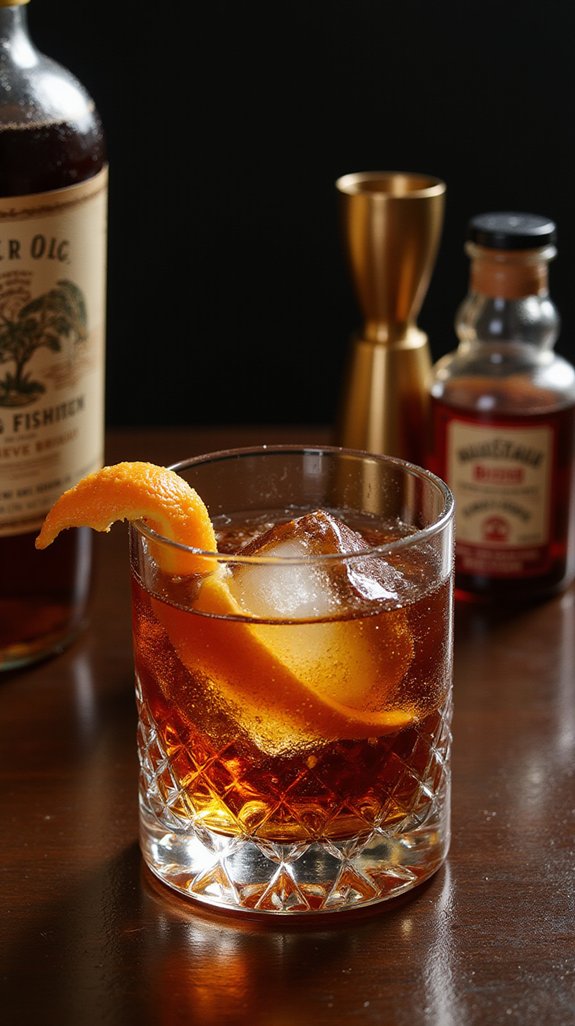
The Old Fashioned template proves remarkably adaptable, and when rye or bourbon yields to aged rum, the cocktail transforms into something altogether tropical yet equally sophisticated. The Rum Old Fashioned showcases the versatility of quality aged rum—whether a rich Jamaican pot still rum with its funky, ester-driven character, a smooth Spanish-style rum with vanilla and caramel notes, or a robust Demerara rum from Guyana with deep molasses undertones. Each rum style brings distinct personality to this classic format, though the foundational principles remain unchanged: spirit, sugar, bitters, and ice working in harmony to create a drink that’s greater than the sum of its parts.
This variation appeals to whiskey drinkers and rum enthusiasts alike, bridging the gap between Caribbean sunshine and classic cocktail craftsmanship.
What distinguishes the Rum Old Fashioned from its whiskey counterpart is the inherent sweetness and complexity that aged rum contributes, often allowing for a lighter hand with the sugar component while introducing notes of dried fruit, baking spices, and tropical richness. The choice of bitters also becomes vital—while Angostura bitters (themselves rum-based) provide a traditional backbone, experimenting with tiki-style bitters or even a combination that includes orange bitters can accentuate rum’s natural flavor profile.
This cocktail serves as an excellent introduction for those who might dismiss rum as merely a mixer for fruity drinks, demonstrating its legitimacy as a contemplative sipping spirit worthy of the same reverence afforded to fine whiskeys.
Ingredients
- 2 oz aged dark rum
- 1/4 oz simple syrup or demerara syrup
- 2-3 dashes Angostura bitters
- Orange peel for garnish
- Ice cubes (large format cube preferred)
Instructions
Add the rum, simple syrup, and bitters to an Old Fashioned glass with a large ice cube. Stir gently for 15-20 seconds to combine and chill the ingredients while achieving minimal dilution. Express an orange peel over the drink by holding it skin-side down above the glass and giving it a firm twist to release the citrus oils onto the surface, then either run the peel around the rim of the glass before dropping it in as a garnish or discard it depending on preference.
Some bartenders prefer to build this drink directly in the serving glass rather than stirring and straining, which allows for a more gradual dilution and evolving flavor profile as you sip.
For best results, select an aged rum with at least 5-7 years of maturation that exhibits sufficient body and complexity to stand up to stirring and dilution—avoid light or silver rums which lack the necessary depth of flavor.
Consider using demerara or rich simple syrup (2:1 sugar to water ratio) instead of standard simple syrup to complement rum’s natural molasses character, and don’t over-stir as rum’s lower proof point compared to whiskey means it chills more quickly and requires less agitation.
The large ice cube is essential for slow, controlled dilution that allows the drink to open up gradually rather than becoming watery, and using one exceptionally clear, dense cube also adds visual appeal to this elegantly simple cocktail.
Rob Roy
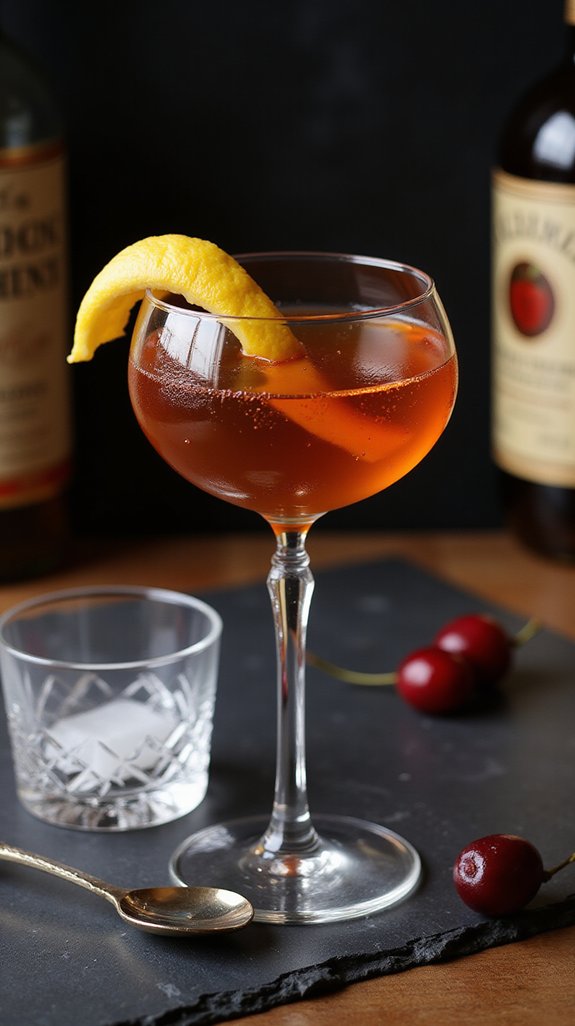
The Rob Roy stands as Scotland’s definitive contribution to the Manhattan family of cocktails, substituting Scotch whisky for the traditional rye or bourbon and creating a drink that captures the rugged elegance of the Highlands in a coupe glass. Named after the Scottish folk hero Robert Roy MacGregor, this cocktail emerged in the 1890s at New York’s Waldorf Astoria Hotel, coinciding with the premiere of an operetta about the legendary outlaw.
The drink exemplifies how a single ingredient swap can fundamentally alter a cocktail’s character while maintaining structural integrity—the peaty, smoky, or honeyed qualities of Scotch interact with sweet vermouth and bitters in ways distinctly different from American whiskey, creating a sophisticated sipper that appeals to those who appreciate whisky’s more refined expressions. Whether built with a blended Scotch for approachability or a single malt for pronounced character, the Rob Roy offers a window into Scottish distilling traditions through the lens of classic mixology.
The beauty of the Rob Roy lies in its balance between the assertive personality of Scotch and the herbal sweetness of Italian vermouth, with aromatic bitters serving as the bridge between these two components. Unlike bourbon-based Manhattans that lean into vanilla and oak, or rye versions that emphasize spice, the Rob Roy introduces dimensions of smoke, heather, dried fruit, or maritime salinity depending on the Scotch selected.
A Highland whisky might contribute orchard fruits and malty sweetness, while an Islay expression adds campfire smoke and iodine notes that transform this into an altogether bolder experience. The cocktail works equally well as an aperitif or a contemplative nightcap, and its variations—the Dry Rob Roy with dry vermouth, or the Perfect Rob Roy split between sweet and dry—demonstrate the template’s flexibility for personal preference.
Ingredients
- 2 oz Scotch whisky
- 1 oz sweet vermouth
- 2-3 dashes Angostura bitters
- Lemon twist or brandied cherry for garnish
- Ice cubes for stirring
Instructions
Combine the Scotch, sweet vermouth, and bitters in a mixing glass filled with ice, then stir smoothly for 20-30 seconds until the mixture is properly chilled and diluted—you’re looking for the glass to frost slightly on the outside and the liquid to feel silky when you test a small amount on your tongue.
Strain the cocktail into a chilled coupe or Nick and Nora glass, which helps maintain temperature and showcases the drink’s clarity and amber hue. Express a lemon twist over the surface by twisting it skin-side down to spray the essential oils across the drink, then either garnish with the twist itself or substitute a brandied cherry for a sweeter, more traditional presentation that complements the vermouth’s fruit-forward qualities.
When selecting Scotch for your Rob Roy, consider that heavier, peat-forward whiskies from Islay can overwhelm the vermouth unless you’re specifically seeking that intensity, while lighter Speyside or Highland expressions allow for better integration and balance—blended Scotch like Famous Grouse or Monkey Shoulder often performs admirably in this application without the premium price of single malts.
The vermouth selection matters tremendously; fresher vermouth that’s been properly refrigerated and consumed within a few months of opening will contribute vibrant herbal notes rather than the tired, oxidized flavors that plague neglected bottles. If you find the standard Rob Roy too sweet, adjust the ratio to 2:1 or even 3:1 Scotch to vermouth, or split your vermouth portion between sweet and dry to create the Perfect Rob Roy variation that offers additional complexity and a drier finish.
Boulevardier
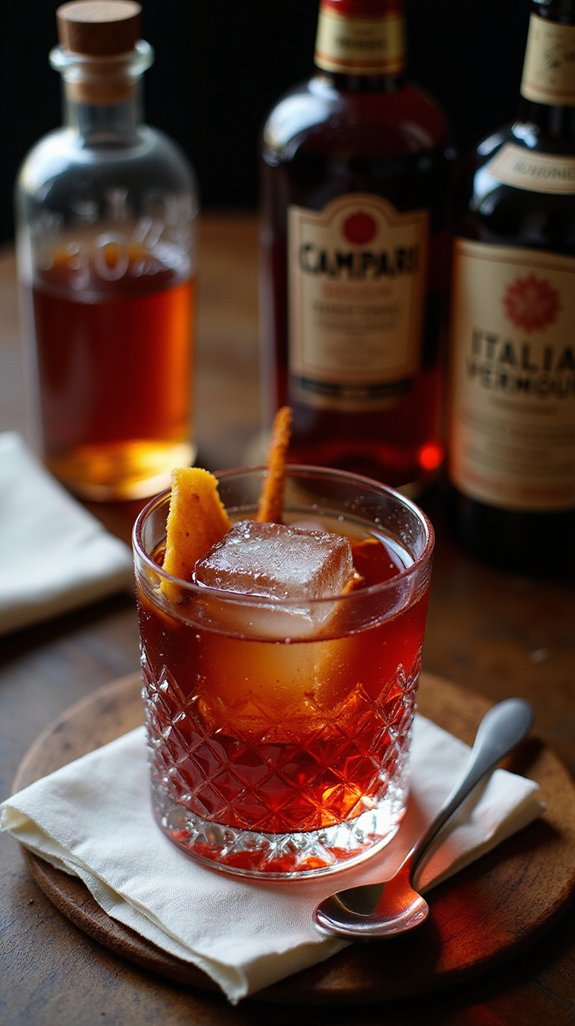
The Boulevardier represents the sophisticated intersection of American whiskey and Italian aperitivo culture, a crimson-hued cocktail that trades the Negroni‘s gin for bourbon or rye whiskey, creating a richer, more robust drinking experience. Born in 1920s Paris at Harry’s New York Bar—the legendary haunt of expatriate writers and artists—the drink was named after Erskine Gwynne, an American writer who published a monthly magazine called “The Boulevardier.”
This classic stands as proof that dark spirits and bitter liqueurs can forge harmonious partnerships, with the whiskey’s caramel and vanilla notes providing a warming backbone to Campari’s assertive bitterness and sweet vermouth’s herbal complexity. The Boulevardier occupies a unique space in the cocktail canon, offering the structural elegance of stirred classics while delivering the bold, unapologetic flavors of aperitivo hour.
The genius of the Boulevardier lies in how bourbon’s sweetness tempers Campari’s aggressive bitterness without neutering it, creating a drink that’s simultaneously approachable and challenging. Where a Negroni presents botanical brightness and sharp edges, the Boulevardier offers deeper, more contemplative flavors—think dried cherries, orange peel steeped in oak barrels, and a warming finish that lingers on the palate.
The choice between bourbon and rye whiskey greatly impacts the final result: bourbon leans into sweetness and creates a more accessible version, while rye’s spice and dryness produce a sharper, more assertive cocktail that stands up beautifully to rich foods. This is a drink for cool evenings and meaningful conversations, a pre-dinner ritual that stimulates the appetite while satisfying the soul.
Ingredients
- 1.5 oz bourbon or rye whiskey
- 1 oz Campari
- 1 oz sweet vermouth
- Orange peel for garnish
- Ice cubes for stirring
Instructions
Add the whiskey, Campari, and sweet vermouth to a mixing glass filled with ice, then stir continuously for 25-30 seconds until the mixture achieves proper dilution and temperature—the goal is a silky texture and complete integration of the three components without over-diluting the bold flavors.
Strain the cocktail into a chilled rocks glass over a single large ice cube or serve up in a chilled coupe glass, then express the oils from an orange peel over the surface by holding it over the drink and giving it a firm twist, releasing the aromatic citrus oils before either dropping it into the glass or running it around the rim and discarding.
Tips
The Boulevardier benefits from quality ingredients since there are only three components and nowhere for inferior spirits to hide—invest in a decent bourbon or rye and use fresh vermouth stored in the refrigerator, as oxidized vermouth will make the drink taste flat and overly sweet.
The traditional equal-parts recipe (1:1:1) creates a more Campari-forward drink, while the slightly whiskey-heavy ratio listed here (1.5:1:1) provides better balance for those new to bitter liqueurs or who want the whiskey to take center stage.
Temperature is essential; make sure your glassware is properly chilled and don’t rush the stirring process, as inadequate dilution will leave the drink overly alcoholic and the flavors disjointed. Some bartenders prefer a flamed orange peel for added caramelized citrus notes, achieved by expressing the oils over an open flame before garnishing, though this technique requires practice to execute safely.
Blood and Sand
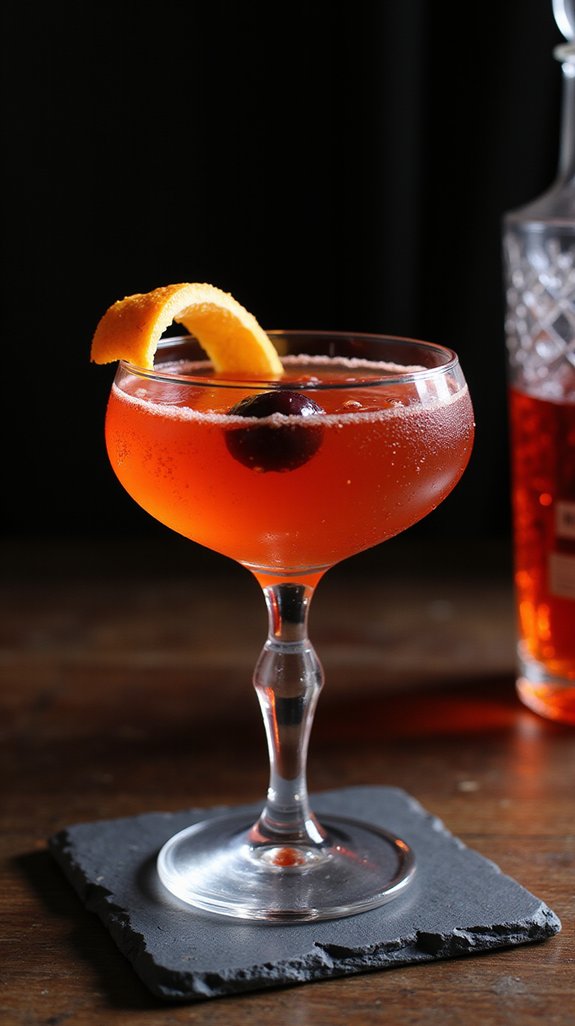
The Blood and Sand stands as one of the most cinematically named cocktails in the classic repertoire, a scotch-based creation that defies conventional whisky cocktail wisdom by pairing the spirit’s smoky, peaty character with sweet and citrus elements in equal measure. Named after the 1922 Rudolph Valentino bullfighting film, this Prohibition-era drink first appeared in print in Harry Craddock‘s seminal “The Savoy Cocktail Book” of 1930, though it languished in relative obscurity for decades before craft cocktail culture resurrected it in the early 2000s.
The equal-parts formula—scotch, Cherry Heering, sweet vermouth, and fresh orange juice—creates a balanced harmony that shouldn’t work on paper but produces a complex, bittersweet elixir with surprising depth. The drink’s ruby-orange hue evokes its namesake’s theatrical bloodshed, while its flavor profile offers a sophisticated meditation on contrasts: the earthy bite of blended scotch against cherry liqueur’s sweet richness, the botanical complexity of vermouth against the bright acidity of fresh citrus.
What makes the Blood and Sand particularly intriguing is how it challenges preconceptions about what scotch cocktails can be, moving away from the spirit-forward templates of Old Fashioneds and Manhattans into fruitier, more exotic territory. The choice of scotch matters greatly—most bartenders favor a quality blended scotch rather than heavily peated single malts, as the latter can overwhelm the drink’s delicate balance, though adventurous drinkers sometimes experiment with lightly peated expressions for added complexity.
Cherry Heering, the Danish cherry liqueur, is non-negotiable here; cheaper cherry brandies or maraschino liqueur produce entirely different, often inferior results. This is a cocktail that rewards fresh orange juice and proper technique, transforming what could be a cloying sweet mess into an elegant pre-dinner drink that stimulates conversation and appetite in equal measure.
Ingredients
- 0.75 oz blended scotch whisky
- 0.75 oz Cherry Heering
- 0.75 oz sweet vermouth
- 0.75 oz fresh orange juice
- Orange peel or cherry for garnish
- Ice cubes for shaking
Instructions
Combine the scotch, Cherry Heering, sweet vermouth, and freshly squeezed orange juice in a cocktail shaker filled with ice, then shake vigorously for 12-15 seconds until the shaker becomes frosty and the citrus juice is fully integrated with the spirits—the shaking is essential here rather than stirring, as the orange juice requires proper emulsification and aeration to blend seamlessly with the other ingredients.
Double-strain the mixture through a fine-mesh strainer into a chilled coupe or Nick and Nora glass to remove any ice shards and pulp, ensuring a smooth, refined texture, then garnish with either an expressed orange peel twisted over the drink to release its oils or a luxardo cherry for a more theatrical presentation.
Tips
Always use freshly squeezed orange juice rather than store-bought, as the fresh citrus brightness is vital to balancing the drink’s sweeter elements and preventing it from becoming syrupy or one-dimensional. If you find the traditional equal-parts recipe too sweet for your palate, consider adjusting to a slightly scotch-forward ratio of 1 oz whisky to 0.75 oz of the other ingredients, or reduce the Cherry Heering by a quarter ounce while maintaining the other proportions.
The quality of your Cherry Heering can’t be overstated—this isn’t the place for bottom-shelf substitutes, as the liqueur’s complex cherry character with subtle almond notes forms the backbone of the drink’s flavor profile.
Penicillin
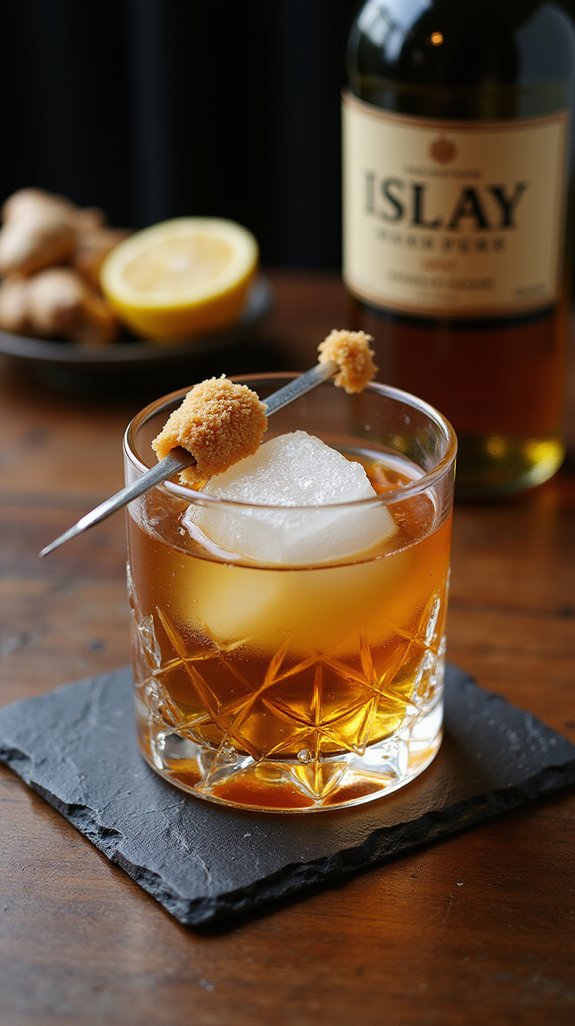
The Penicillin represents modern mixology at its finest—a contemporary classic created by Sam Ross at New York’s Milk & Honey bar in 2005 that has achieved the rare feat of becoming a modern standard in less than two decades. This scotch-based cocktail takes its medicinal name seriously, functioning as a liquid remedy with its honey-ginger syrup base that evokes traditional cold remedies, while the combination of blended and Islay scotch creates a layered complexity that unfolds with each sip.
The drink’s genius lies in its structure: a honey-sweetened, ginger-spiced whisky sour foundation topped with a float of smoky Islay single malt that hits the nose first, creating an aromatic impact before the sweeter, spicier base flavors take over on the palate. The Penicillin has spawned countless variations and established ginger-honey syrup as a modern cocktail staple, proving that contemporary bartenders can create instant classics that stand alongside pre-Prohibition formulas.
What distinguishes the Penicillin from earlier whisky sours is its sophisticated layering technique and its embrace of scotch whisky’s full spectrum of flavors. The base uses a quality blended scotch—something smooth and approachable like Famous Grouse or Monkey Shoulder—while the Islay float demands a heavily peated expression such as Laphroaig or Ardbeg, though many bartenders prefer Laphroaig 10 for its perfect balance of smoke and medicinal iodine notes.
The honey-ginger syrup requires preparation ahead of time but keeps well and proves invaluable for multiple cocktails, while the fresh lemon juice provides the acidic backbone that makes this categorically a sour. The result is a warming, complex cocktail that works equally well as a cold-weather sipper or a sophisticated dinner aperitif, with enough depth to satisfy serious whisky drinkers while remaining approachable enough to convert those who claim not to like scotch.
Ingredients
- 2 oz blended scotch whisky
- 0.75 oz fresh lemon juice
- 0.75 oz honey-ginger syrup
- 0.25 oz Islay single malt scotch (for float)
- Candied ginger for garnish
- Ice cubes for shaking and serving
For Honey-Ginger Syrup
- 1 cup honey
- 1 cup water
- 6-inch piece fresh ginger, peeled and sliced
Instructions
Begin by making the honey-ginger syrup if you haven’t already: combine honey, water, and sliced ginger in a saucepan, bring to a simmer, then remove from heat and let steep for at least one hour before straining out the ginger pieces and refrigerating the syrup.
To make the cocktail, combine the blended scotch, fresh lemon juice, and honey-ginger syrup in a cocktail shaker filled with ice, then shake vigorously for 10-12 seconds until well-chilled and properly diluted. Strain the mixture into a rocks glass filled with fresh ice, preferably one large ice cube if available.
Using a bar spoon, carefully pour the Islay scotch over the back of the spoon so it floats on top of the drink rather than mixing in completely, creating that essential aromatic layer. Garnish with a piece of candied ginger speared on a cocktail pick or simply placed on the rim.
Tips
The honey-ginger syrup is the make-or-break component here, and using fresh ginger rather than dried powder creates incomparably better results—don’t skimp on the steeping time, as longer steeping (up to two hours) produces more pronounced ginger flavor.
The Islay float requires a gentle hand; pour it slowly over the back of a bar spoon held just above the drink’s surface to maintain that layered effect, and resist the urge to stir after adding it, as the gradual integration of smoke into the drink as you sip is part of the intended experience.
Some bartenders prefer a slightly higher ratio of honey-ginger syrup for those who enjoy sweeter drinks, while others add a quarter ounce less for a tarter profile. The choice of Islay scotch notably impacts the final character—Laphroaig offers medicinal, band-aid notes that play into the drink’s pharmaceutical name, while Ardbeg provides more straightforward peat smoke, and Lagavulin adds sherry-like sweetness beneath the smoke.
Godfather
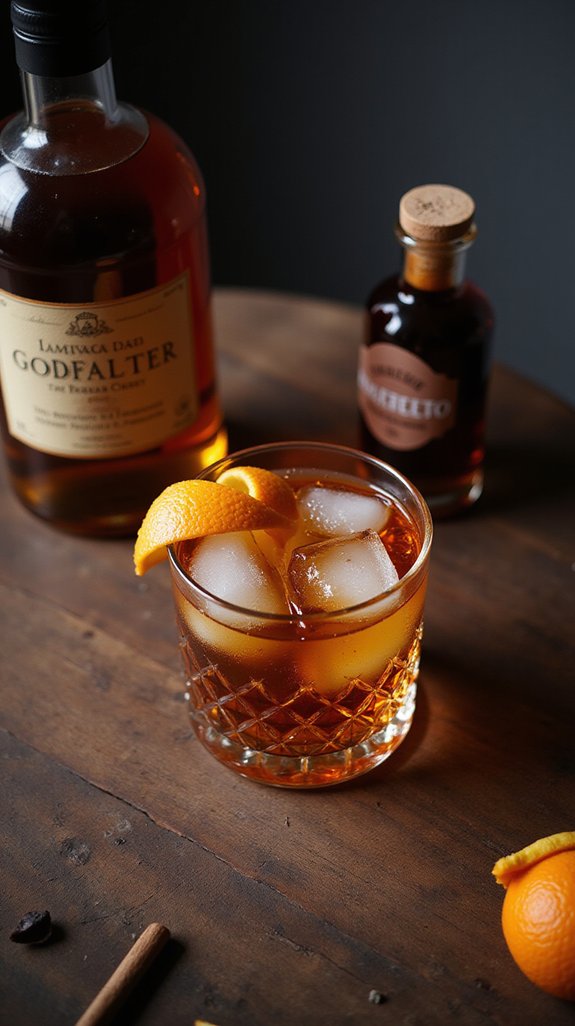
The Godfather stands as one of the simplest yet most sophisticated two-ingredient cocktails in the dark spirits canon, requiring only Scotch whisky and amaretto to create a drink that’s far greater than the sum of its parts. Emerging during the 1970s—likely named after the iconic film released in 1972—this cocktail represents the era’s affinity for sweet, approachable drinks that softened hard liquor without resorting to fruit juices or elaborate preparations.
The marriage of smoky, complex Scotch with the sweet almond notes of amaretto creates a dessert-like sipper that maintains its grown-up credentials, making it equally at home as an after-dinner digestif or a contemplative nightcap. Its enduring appeal lies in its versatility and the ease with which drinkers can adjust the ratio to suit their preferences, from sweeter versions that lean heavily on the amaretto to drier interpretations that allow the Scotch to dominate.
What makes the Godfather particularly interesting from a mixological perspective is how the choice of Scotch dramatically alters the drink’s character. A smooth, honeyed Speyside like Glenlivet or Glenfiddich creates a gentle, almost dessert-like experience where the amaretto’s sweetness integrates seamlessly with the whisky’s natural vanilla and fruit notes.
Conversely, using a peated Islay malt like Bowmore or Talisker transforms the cocktail into something more assertive and complex, with smoke and brine cutting through the almond sweetness to create fascinating contrasts. Most bartenders recommend a quality blended Scotch like Johnnie Walker Black Label as the sweet spot—enough character to stand up to the amaretto without overwhelming it.
The drink is traditionally served on the rocks in an Old Fashioned glass, allowing the ice to gradually dilute and open up the flavors as you sip, though some prefer it stirred and served up for a more concentrated experience.
Ingredients
- 1.5 oz Scotch whisky
- 0.75 oz amaretto liqueur
- Ice cubes for serving
- Orange peel for garnish (optional)
Instructions
Fill an Old Fashioned glass with fresh ice cubes, then pour the Scotch whisky and amaretto directly over the ice. Stir gently for about 10 seconds to combine and slightly chill the ingredients without over-diluting them.
If desired, express an orange peel over the surface of the drink to release its oils, then either discard or drop it into the glass as garnish. The drink should be sipped slowly, allowing the ice to gradually melt and evolve the flavor profile throughout the drinking experience.
The key to an excellent Godfather lies in maintaining the proper balance between the two spirits—the classic 2:1 ratio of Scotch to amaretto is a good starting point, but don’t hesitate to adjust based on your palate or the particular bottles you’re using.
Higher-quality amaretto like Disaronno Originale or Lazzaroni provides a more refined almond flavor that elevates the entire drink beyond what cheaper alternatives can achieve. Some bartenders add a dash of Angostura bitters to add depth, while others prefer a lemon peel garnish instead of orange for a brighter aromatic profile.
The drink can also be scaled up for batch preparation, making it an excellent choice for entertaining when you want to offer a sophisticated cocktail without the complexity of multi-ingredient recipes.
Rusty Nail
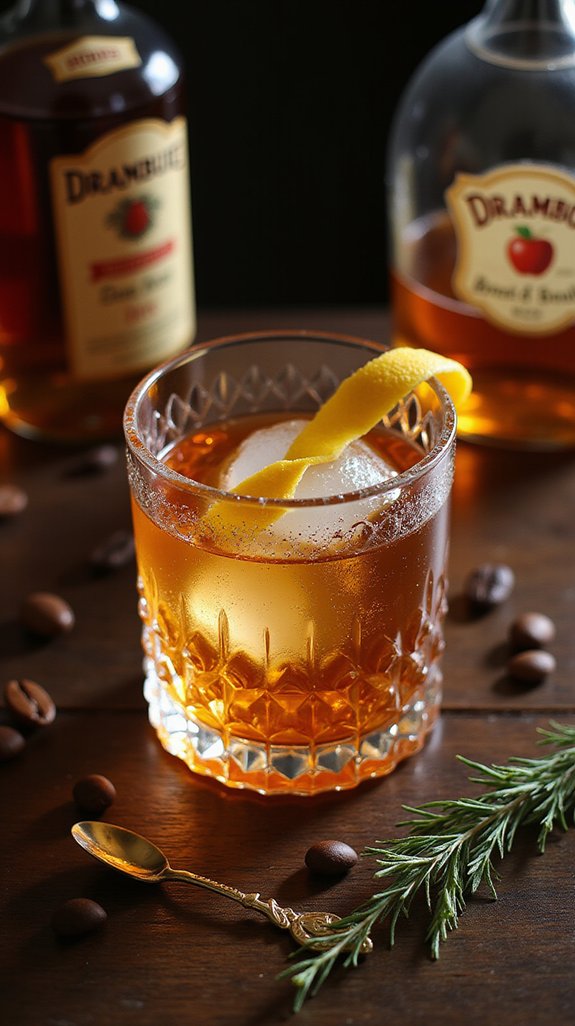
The Rusty Nail represents Scottish drinking culture at its finest, pairing Scotch whisky with Drambuie—a honeyed, herbal liqueur that itself contains Scotch as its base—to create a cocktail that’s fundamentally a whisky lover’s dream. Born in the 1960s and popularized at New York’s 21 Club before becoming the signature drink of the Rat Pack era, the Rusty Nail has maintained a devoted following among those who appreciate spirits-forward cocktails with just enough sweetness to take the edge off.
The drink’s name likely derives from the rusty nail that was supposedly used as a swizzle stick in its early days, though this origin story remains unverified. What’s certain is that this combination showcases how a quality modifier can enhance rather than mask the base spirit, with Drambuie’s heather honey, herbs, and spices adding layers of complexity to the Scotch’s inherent character.
The beauty of the Rusty Nail lies in its ability to introduce whisky novices to Scotch’s pleasures while still satisfying seasoned enthusiasts who appreciate its straightforward elegance. Unlike the Godfather’s almond sweetness, the Rusty Nail’s Drambuie brings a more nuanced sweetness with herbal undertones that complement the whisky’s grain and malt characteristics.
The traditional ratio of 2:1 Scotch to Drambuie creates a balanced sipper, though many bartenders have shifted toward a 3:1 or even 4:1 ratio in recent years as palates have trended toward less sweet cocktails. The choice of Scotch matters here as well, though the Drambuie’s assertive flavor means you can use a slightly less expensive bottle than you might drink neat—a quality blended Scotch like Famous Grouse or Dewar’s works beautifully, while those seeking more complexity might opt for a Highland single malt.
Ingredients
- 2 oz Scotch whisky
- 0.75 oz Drambuie
- Ice cubes for serving
- Lemon twist for garnish (optional)
Instructions
Fill an Old Fashioned glass or rocks glass with fresh ice cubes, then pour the Scotch whisky and Drambuie over the ice. Stir gently for 15-20 seconds to properly chill and integrate the ingredients while achieving slight dilution that helps marry the flavors.
If using a lemon twist, express the oils over the drink’s surface by holding the peel over the glass and giving it a firm twist to release the citrus essence, then run the peel around the rim before either dropping it in or discarding it based on preference.
Tips
The Rusty Nail benefits from using larger ice cubes or a single large ice sphere to minimize dilution, as the drink is meant to be sipped slowly and the Drambuie already provides sufficient mellowing of the whisky’s heat.
Some drinkers prefer serving this cocktail “perfect,” meaning equal parts Scotch and Drambuie, though this creates a considerably sweeter drink better suited as a dessert cocktail. For a drier variation, the “Rusty Bob” uses Drambuie and bourbon instead of Scotch, while the “Donald Sutherland” adds a splash of fresh lemon juice to brighten the drink.
Temperature matters greatly with this cocktail—avoid over-stirring or using crushed ice, as excessive dilution destroys the delicate balance between the whisky’s strength and Drambuie’s sweet complexity.
Frequently Asked Questions
What Is the Difference Between Dark Liquor and Light Liquor?
Dark liquors are aged in barrels, giving them deeper color and richer, bolder flavors. Light liquors aren’t aged as long, so they’re clearer and have milder, smoother tastes. You’ll notice the difference immediately when tasting.
How Should Dark Liquor Be Stored to Maintain Quality?
Store your dark liquor upright in a cool, dark place away from direct sunlight and temperature fluctuations. Keep bottles tightly sealed to prevent oxidation. Once opened, most dark spirits maintain quality for years when stored properly.
Can I Substitute One Dark Liquor for Another in Cocktails?
You can substitute dark liquors, but expect flavor changes. Dark rum’s sweetness differs from bourbon’s caramel notes or scotch’s smokiness. While substitutions work structurally, they’ll greatly alter your cocktail’s taste profile.
What Foods Pair Best With Dark Liquor Cocktails?
Studies show dark liquors’ complex flavors complement 80% of savory foods better than light spirits. You’ll find they pair wonderfully with grilled meats, aged cheeses, chocolate desserts, and smoked dishes that match their robust profiles.
Are Dark Liquor Cocktails Higher in Calories Than Light Liquor Drinks?
You’ll find dark liquor cocktails aren’t necessarily higher in calories than light liquor drinks. The calorie content depends more on mixers and added ingredients rather than the liquor’s color. Base spirits contain similar calories regardless of darkness.