Like the alchemists searching for the perfect formula, you’re probably chasing that ideal balance of sweet and sour in your cocktails. I’ve spent years mixing drinks at home, watching guests’ faces light up when that first sip hits just right. The magic isn’t complicated—it’s about mastering eleven essential recipes that’ll transform your bar cart from basic to impressive, and I’m going to show you exactly which ones matter most.
Whiskey Sour
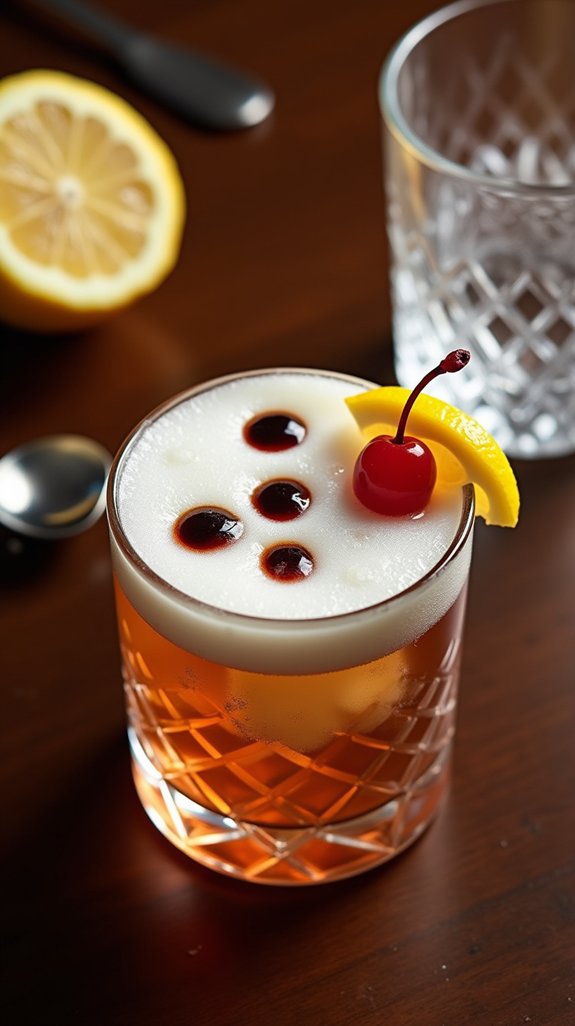
The Whiskey Sour is one of the most beloved classic cocktails, combining the rich warmth of whiskey with the bright tartness of fresh lemon juice and the subtle sweetness of simple syrup. This timeless drink has been a staple in bars since the 1860s and remains popular today for its perfect balance of flavors and satisfying drinkability.
The cocktail showcases how just a few quality ingredients can create something greater than the sum of its parts. The addition of egg white, while optional, transforms this drink from a simple sour into a luxurious experience with a silky texture and beautiful foam cap. The protein in the egg white creates a velvety mouthfeel and allows the flavors to blend seamlessly while providing an elegant presentation.
Whether you prefer bourbon, rye, or another whiskey variety, this cocktail adapts beautifully to different spirits while maintaining its fundamental character.
Ingredients
- 2 oz bourbon or rye whiskey
- 3/4 oz fresh lemon juice
- 1/2 oz simple syrup
- 1/2 oz egg white (optional)
- Ice cubes
- Angostura bitters (for garnish)
- Maraschino cherry and lemon wheel (for garnish)
Shop Related Products
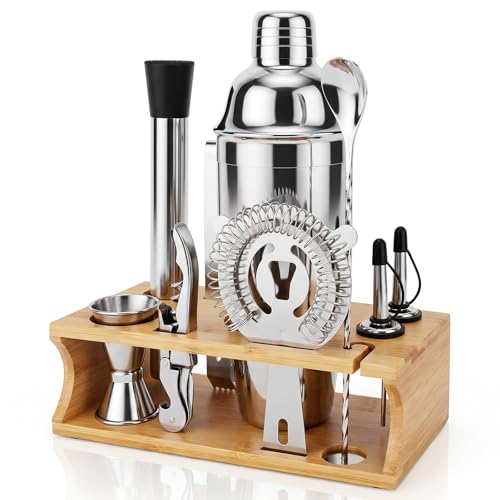
10-Piece Essential Cocktail Shaker Set - This bartender kit includes a 24oz martini shaker, muddler for cocktails, jigger, mixing spoon, cocktail strainer, ice tongs, wine opener, 2PCS liquor pour spout and an exquisite bamboo stand. This bartender set contains all the tools you need for crafting cocktails, eliminating the need to purchase any additional accessories. It is the perfect bar tools for making the perfect Old Fashioned, Margarita, Mojito and Espresso Martini at home, kitchen or bar.

[12-PIECE BARTENDER TOOL KIT] This cocktail shaker set consists of a 24 Oz cocktail shaker, a strainer, a Jigger, a bar spoon, a corkscrew, a muddler, a ice tongs, a bottle stopper, a stylish bamboo stand, a hardcover cocktail recipe book, 2 liquor pourers. This All-in-one bartending tool kit can easily help you make delicious cocktails, so you can become a professional bartender to lay the foundation

【3 -in -1 Design】The professional 3 pcs cocktail shaker set comes with all the tools you need to make delicious cocktails. With a useful measuring cup for stirrer, stylish 750ml shaker, 1 oz and 1/2 oz jiggers.
Instructions
Add the whiskey, lemon juice, simple syrup, and egg white (if using) to a cocktail shaker without ice and dry shake vigorously for 15 seconds to emulsify the egg white.
Add ice to the shaker and shake hard for another 15-20 seconds until well-chilled. Strain the mixture into a rocks glass filled with fresh ice or serve up in a chilled coupe glass. Garnish with 2-3 dashes of Angostura bitters on top of the foam, and add a maraschino cherry and lemon wheel for a classic presentation.
Tips
Always use fresh-squeezed lemon juice rather than bottled juice for the best flavor, as the brightness and acidity of fresh citrus is vital to a proper Whiskey Sour.
If you’re concerned about using raw egg white, you can substitute it with aquafaba (chickpea liquid) or pasteurized egg white, though traditional egg white provides the best texture.
The dry shake technique, shaking without ice first, is significant when using egg white as it helps create that signature creamy foam before the drink is chilled and diluted with ice.
Margarita
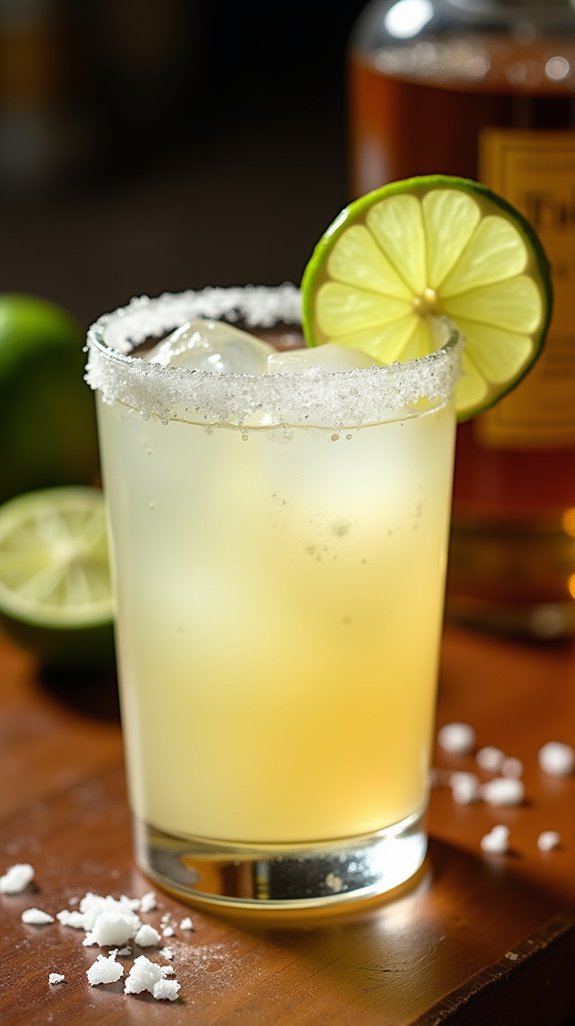
The Margarita stands as Mexico’s most famous cocktail export and one of the world’s most popular drinks, expertly balancing the earthy complexity of tequila with the bright acidity of lime juice and the subtle orange essence of Cointreau or triple sec.
First created in the 1930s or 1940s—its exact origins remain debated—this iconic cocktail has evolved into countless variations, yet the classic recipe remains unsurpassed for its invigorating simplicity and perfectly calibrated flavors. The drink’s popularity stems from its ability to be both sophisticated and approachable, equally at home at upscale cocktail bars and casual gatherings.
The key to an exceptional Margarita lies in using quality ingredients and respecting the proper proportions. Unlike the overly sweet, artificially flavored versions often served at chain restaurants, a properly crafted Margarita should be tart, slightly sweet, and spirit-forward, allowing the tequila’s agave character to shine through.
The salt rim, while optional, provides a savory counterpoint that enhances the drink’s complexity and makes each sip more dynamic. Whether served on the rocks or blended with ice, the classic Margarita remains a tribute to the power of simple, well-executed cocktail craftsmanship.
Ingredients
- 2 oz blanco or reposado tequila
- 1 oz fresh lime juice
- 3/4 oz Cointreau or triple sec
- 1/2 oz agave nectar or simple syrup (optional, to taste)
- Ice cubes
- Coarse salt (for rimming)
- Lime wheel (for garnish)
Shop Related Products
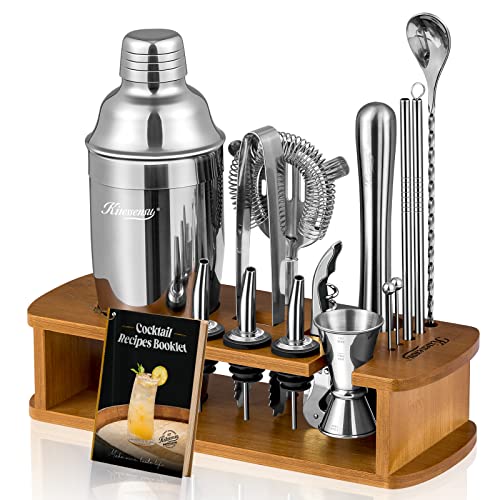
Made to Last: Upgraded 18/8 stainless steel bartender kit cocktail set is your best bet, which is specially thickened (0.8 mm) to protect itself from rust for lifetime and remain shiny and new after years of shaking, and it can withstand lots of rough and tumble, even being dropped, without letting you down. and the bar mixing set is safe in the dishwasher

PROFESSIONAL MIXOLOGY KIT: Handpicked by bartenders, this premium quality, 9 piece bar tool set has a polished silver finish and is presented in a stunning wooden stand. Equipped with all the bar accessories you need to create delicious cocktails from the comfort of your home.

COMPLETE 22-PIECE BARTENDER KIT: Includes a 24oz cobbler shaker, double jigger, muddler, Hawthorne strainer, mixing spoon, liquor pourers, ice tong, stainless steel straw, cocktail picks, cleaning brush, bamboo stand and more. Everything needed for home bartending in one complete set.
Instructions
Run a lime wedge around the rim of a rocks glass and dip the rim into coarse salt to coat half or the entire rim, depending on preference. Fill the glass with fresh ice and set aside.
Add the tequila, fresh lime juice, Cointreau, and agave nectar (if using) to a cocktail shaker filled with ice. Shake vigorously for 15-20 seconds until the mixture is well-chilled and properly diluted. Strain the cocktail into the prepared glass over fresh ice and garnish with a lime wheel on the rim.
Tips
Always use 100% agave tequila rather than mixto tequilas, as the quality of the spirit dramatically affects the final drink—blanco tequila offers crisp, pure agave flavor while reposado adds subtle oak complexity.
Fresh lime juice is absolutely essential and should be squeezed just before making the drink, as bottled lime juice lacks the vibrant acidity and aromatics needed for a proper Margarita.
Adjust the sweetness to your preference and the tartness of your limes; some batches of limes are sweeter than others, so taste and adjust the agave nectar accordingly, keeping in mind that a good Margarita should be pleasantly tart rather than cloying.
Daiquiri
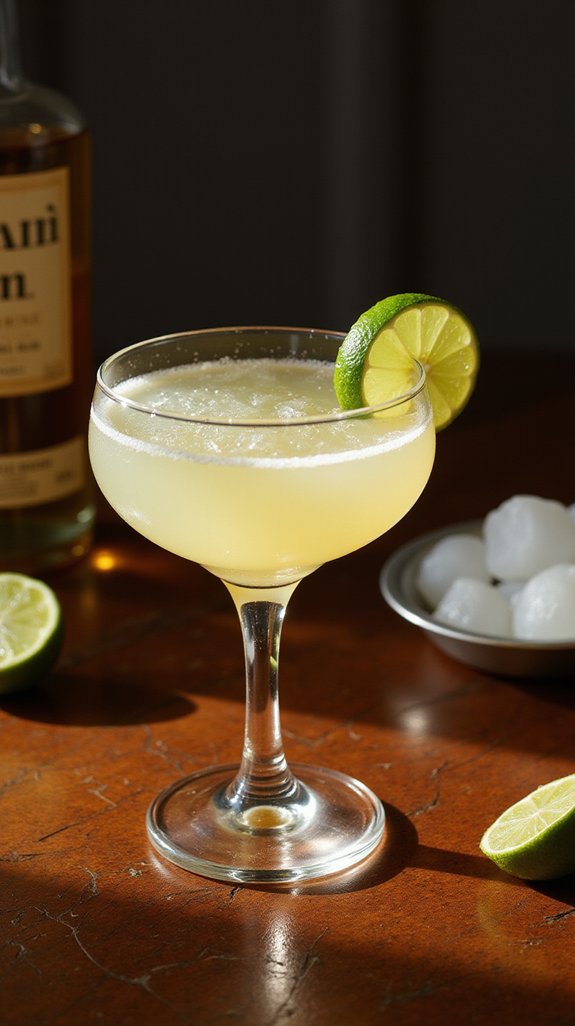
The Daiquiri represents the pinnacle of minimalist cocktail artistry, combining just three ingredients—white rum, fresh lime juice, and sugar—into a drink that has captivated palates since its creation in Cuba around 1900. Named after a beach near Santiago de Cuba, this elegant cocktail was allegedly invented by an American mining engineer named Jennings Cox, though like many classic drinks, its exact origins remain somewhat murky.
What’s certain is that the Daiquiri became a favorite of Ernest Hemingway and countless others who appreciate the perfect marriage of Caribbean rum’s sweetness with lime’s sharp acidity. Unlike the frozen, artificially flavored slushies that have appropriated its name, a proper Daiquiri is a sophisticated, spirit-forward cocktail served straight up in a chilled coupe glass.
The beauty of the Daiquiri lies in its apparent simplicity, which actually demands precise execution and quality ingredients to achieve the ideal balance. The drink should be simultaneously tart, sweet, and strong, with each element supporting rather than overpowering the others.
The key is finding the sweet spot in the proportions—too much lime and the drink becomes puckering and harsh, too much sugar and it loses its invigorating character, too little rum and the cocktail feels weak and unbalanced. When properly made, the Daiquiri is crisp, clean, and incredibly invigorating, showcasing the rum’s character while delivering a perfectly balanced sour cocktail that has earned its place among the true classics.
Ingredients
- 2 oz white rum
- 3/4 oz fresh lime juice
- 3/4 oz simple syrup
- Ice cubes
- Lime wheel or twist (for garnish)
Instructions
Add the white rum, fresh lime juice, and simple syrup to a cocktail shaker filled with ice. Shake vigorously for 15-20 seconds until the exterior of the shaker becomes frosty and very cold, ensuring proper dilution and chilling.
Double-strain the cocktail through a fine-mesh strainer into a chilled coupe glass to remove any ice shards or pulp. Garnish with a lime wheel perched on the rim or express a lime twist over the drink and drop it in.
Tips
Select a quality white rum with good character—Cuban-style rums like Havana Club or Flor de Caña work beautifully, offering clean flavor with subtle complexity that won’t be masked by the citrus.
As with all citrus-based cocktails, fresh lime juice squeezed within hours of serving is absolutely non-negotiable, as pre-bottled juice will produce a flat, lifeless drink that bears little resemblance to the vibrant classic.
The 2:3/4:3/4 ratio is a classic starting point, but feel free to adjust based on the sweetness of your rum and the acidity of your limes—some bartenders prefer a slightly drier version with less simple syrup, while others add an extra quarter-ounce of lime for more tartness.
Always taste your ingredients before mixing, as lime acidity can vary considerably depending on freshness and variety, and adjust your proportions accordingly to achieve that perfect sweet-tart balance.
Pisco Sour
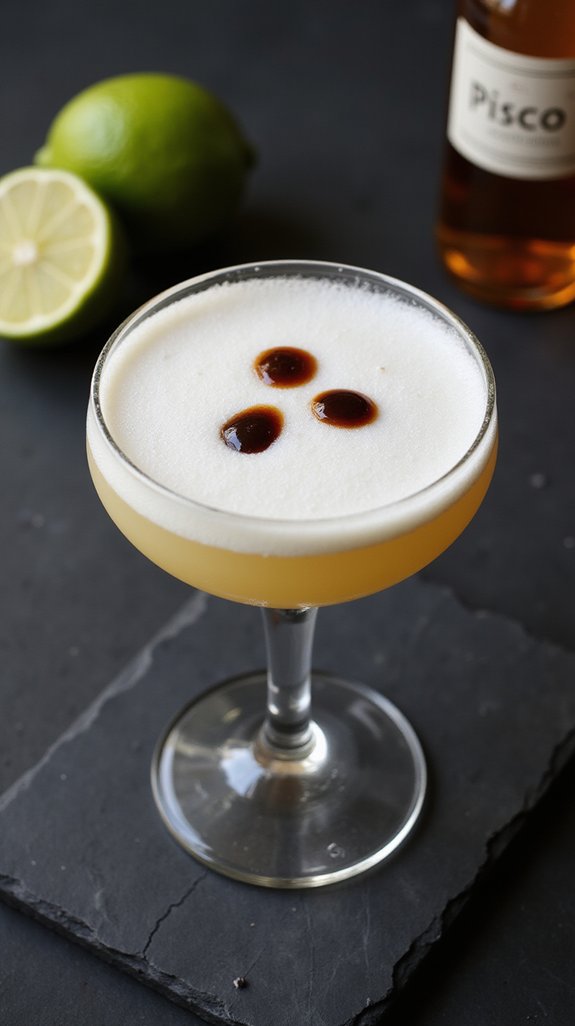
The Pisco Sour stands as Peru’s most celebrated cocktail contribution to the world, a drink so integral to the nation’s identity that it has its own national holiday celebrated each February. This frothy, citrus-forward cocktail showcases pisco, a grape brandy produced in both Peru and Chile (though both countries passionately claim ownership of the drink’s origins), combined with lime juice, simple syrup, egg white, and a finishing touch of aromatic bitters.
Created in the early 1920s at Morris’ Bar in Lima by American bartender Victor Vaughen Morris, the Pisco Sour elevated the South American spirit into an elegant, complex cocktail that rivals any classic sour in sophistication. The addition of egg white—a technique used in various classic cocktails—creates the signature silky foam crown that distinguishes this drink from its simpler cousins.
What makes the Pisco Sour particularly distinctive is its textural complexity and the interplay between the floral, fruity notes of the pisco and the tart lime juice, all unified by the velvety foam that carries aromatic Angostura bitters on top. The egg white doesn’t add flavor but transforms the mouthfeel entirely, creating a luxurious, cloud-like texture that softens the spirit’s intensity while allowing its grape-derived character to shine through.
The final dash of bitters across the foam adds both visual appeal and an aromatic dimension that engages the nose before each sip. Unlike many modern variations that have diluted the original formula, a proper Pisco Sour should maintain a robust spirit presence balanced by bright acidity and subtle sweetness, with the foam providing an elegant delivery system for this harmonious blend.
Ingredients
- 2 oz pisco
- 1 oz fresh lime juice
- 3/4 oz simple syrup
- 1 egg white
- Ice cubes
- 3-5 dashes Angostura bitters (for garnish)
Instructions
Add the pisco, fresh lime juice, simple syrup, and egg white to a cocktail shaker without ice and perform a dry shake for about 15 seconds to emulsify the egg white and begin building the foam.
Add ice to the shaker and shake vigorously for another 20-25 seconds until the mixture is thoroughly chilled and the foam is well-developed.
Double-strain through a fine-mesh strainer into a chilled rocks glass or coupe glass, allowing the foam to settle and form a thick cap on top of the liquid.
Carefully drop 3-5 dashes of Angostura bitters onto the foam surface and optionally drag a toothpick through them to create a decorative pattern.
Tips
Choose a quality pisco that suits your preference—Peruvian pisco tends to be more floral and aromatic (look for Quebranta or Acholado varieties), while Chilean pisco is often smoother and more neutral.
The egg white is essential to the drink’s character, but if you have concerns about raw eggs, use pasteurized eggs or substitute with aquafaba (chickpea liquid) at a 1:1 ratio, though the texture will be slightly different.
The dry shake before adding ice is vital for achieving maximum foam development, and some bartenders even add a spring from a Hawthorne strainer to the shaker to help whip the egg white more effectively.
Always use fresh lime juice squeezed just before making the cocktail, as bottled juice will compromise both flavor and the foam’s stability.
Amaretto Sour
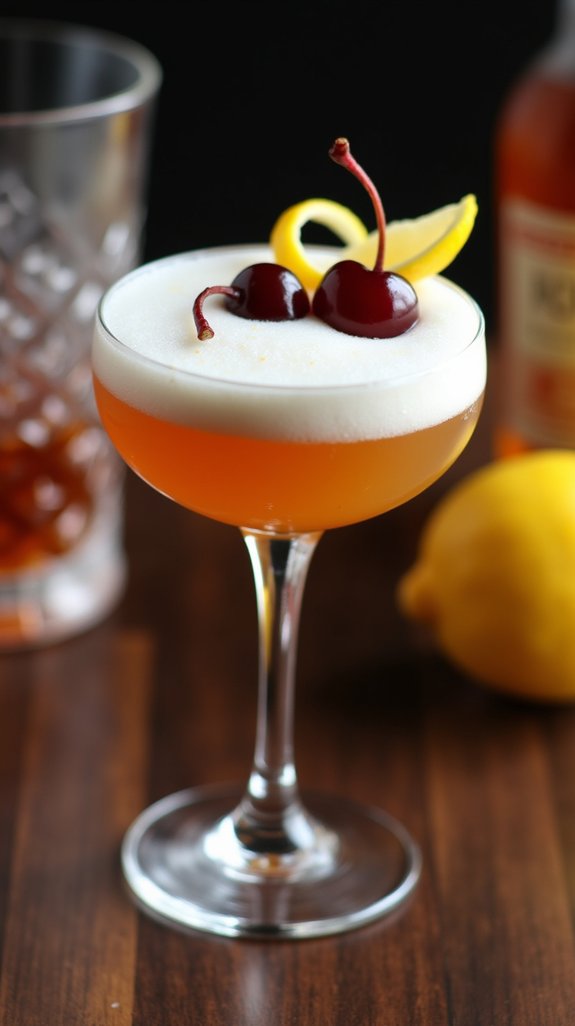
The Amaretto Sour has endured a complicated reputation in cocktail culture, often dismissed as an overly sweet relic of 1970s bartending before experiencing a remarkable renaissance through proper technique and balanced proportions. At its core, this cocktail features amaretto, the Italian almond-flavored liqueur, combined with fresh lemon juice and traditionally sweetened further with simple syrup.
However, the modern revival of this drink—championed by bartender Jeffrey Morgenthaler in the early 2000s—transformed it from a cloying dessert drink into a legitimately sophisticated cocktail by incorporating bourbon or rye whiskey to add depth and structure, along with egg white for textural elegance. This reformulation respects the classic sour template while allowing the distinctive marzipan and stone fruit notes of quality amaretto to shine without overwhelming the palate.
The key to an exceptional Amaretto Sour lies in understanding that amaretto itself is already quite sweet, with most brands containing significant sugar content that can easily tip the cocktail into syrupy territory if not carefully balanced. The addition of bourbon or rye whiskey serves multiple purposes: it provides alcoholic backbone that amaretto alone can’t deliver, introduces complementary vanilla and oak notes that enhance the liqueur’s almond character, and creates a flavor foundation robust enough to stand up to aggressive citrus tartness.
The egg white foam, borrowed from the Pisco Sour tradition, adds a velvety texture that mellows the drink’s intensity while creating an appealing visual presentation. When properly executed with fresh citrus juice and quality ingredients, the Amaretto Sour reveals itself as a nutty, complex, beautifully balanced cocktail that deserves its place among respected sour variations.
Ingredients
- 1 1/2 oz amaretto
- 3/4 oz bourbon or rye whiskey
- 1 oz fresh lemon juice
- 1/2 oz simple syrup
- 1 egg white
- Ice cubes
- Lemon peel and brandied cherries (for garnish)
Instructions
Combine the amaretto, bourbon, fresh lemon juice, simple syrup, and egg white in a cocktail shaker without ice and dry shake vigorously for 15-20 seconds to emulsify the egg white and create initial foam structure.
Add a generous amount of ice to the shaker and shake hard for another 20-25 seconds until the mixture is ice-cold and the foam is thick and stable. Double-strain the cocktail through a fine-mesh strainer into a chilled rocks glass over fresh ice or into a coupe glass served up, depending on preference. The foam should form a substantial white cap on the surface of the drink.
Garnish with a expressed lemon peel twisted over the foam to release its oils, and add one or two brandied cherries either on a cocktail pick or dropped directly into the drink.
Tips
For the best results, use a high-quality amaretto like Disaronno Originale or Lazzaroni rather than bottom-shelf alternatives, as the liqueur is the star ingredient and inferior products will produce medicinal or artificial almond flavors.
Adjust the simple syrup amount based on your amaretto’s sweetness level and personal preference—some bartenders omit it entirely when using particularly sweet amaretto brands. The bourbon-to-amaretto ratio can be modified to suit your taste, with some preferring equal parts for more whiskey presence or reducing the bourbon to 1/2 oz for a gentler spirit backbone.
Fresh lemon juice is absolutely non-negotiable, as bottled juice will result in a flat, artificial-tasting cocktail that resurrects all the worst aspects of the drink’s 1970s reputation.
Sidecar
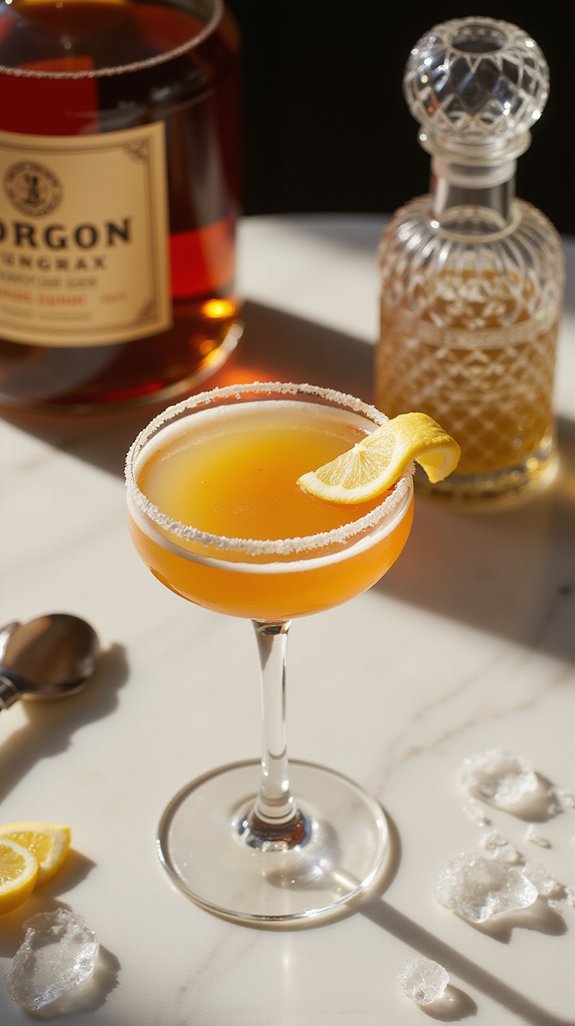
The Sidecar stands as one of the most elegant and enduring cocktails from the golden age of mixology, emerging sometime during or shortly after World War I with disputed origins claimed by both Paris and London. This cognac-based sour represents the pinnacle of simplicity in cocktail construction, combining just three core ingredients—cognac, orange liqueur, and lemon juice—in proportions that create a perfectly balanced interplay between spirit-forward depth, citrus brightness, and subtle sweetness.
The drink’s name allegedly derives from a military motorcycle sidecar, though the exact circumstances remain clouded in cocktail mythology. What remains undisputed is the Sidecar’s status as a foundational template that has influenced countless variations and demonstrated how proper technique and quality ingredients can elevate a straightforward formula into something transcendent. The traditional sugar rim, while optional, provides textural contrast and helps moderate the drink’s considerable tartness for those who prefer a slightly sweeter experience.
The excellence of a Sidecar depends almost entirely on the quality of its base spirit and the precision of its proportions, making it an unforgiving cocktail that reveals any shortcuts or imbalances. Cognac provides the sophisticated backbone with its grape-derived complexity, subtle oak influence, and warming character, though other brandies can be substituted with varying results.
The choice of orange liqueur markedly impacts the final product—premium options like Cointreau or Pierre Ferrand Dry Curaçao contribute refined orange essence and appropriate sweetness, while lesser liqueurs can make the drink taste artificially flavored or cloying. The ratio of ingredients has evolved over time, with the classic equal-parts formula (1:1:1) giving way to more spirit-forward proportions that better showcase the cognac while maintaining citrus brightness.
Fresh lemon juice remains non-negotiable, as bottled juice destroys the delicate balance and vibrant acidity essential to the Sidecar’s character.
Ingredients
- 2 oz cognac
- 3/4 oz orange liqueur (Cointreau or Pierre Ferrand Dry Curaçao)
- 3/4 oz fresh lemon juice
- Superfine sugar (for rimming, optional)
- Ice cubes
- Lemon twist (for garnish)
Instructions
If using a sugar rim, run a lemon wedge around half the outer edge of a chilled coupe glass and dip into superfine sugar, then set aside. Combine the cognac, orange liqueur, and fresh lemon juice in a cocktail shaker filled with ice and shake vigorously for 15-20 seconds until the mixture is thoroughly chilled and properly diluted.
Fine-strain the cocktail into the prepared coupe glass, ensuring no ice shards or pulp make it into the finished drink. Express a lemon twist over the surface to release its oils, then either garnish with the twist or discard according to preference.
The sugar rim should cover only half the glass’s circumference, allowing drinkers to choose whether they want sweetness with each sip or prefer the unadulterated cocktail. Cognac quality directly correlates with the final result—VS grade cognac works adequately for Sidecars, but VSOP expressions provide noticeably superior depth and complexity without requiring the expense of older bottlings.
The 2:3/4:3/4 ratio represents a modern standard, but personal preference may call for adjusting toward a 1.5:1:1 formula for a more citrus-forward profile or even drier interpretations that reduce the orange liqueur slightly. Proper dilution through vigorous shaking is critical, as an under-shaken Sidecar tastes harsh and unintegrated, while over-shaking creates excessive dilution that waters down the cognac’s character.
Gimlet
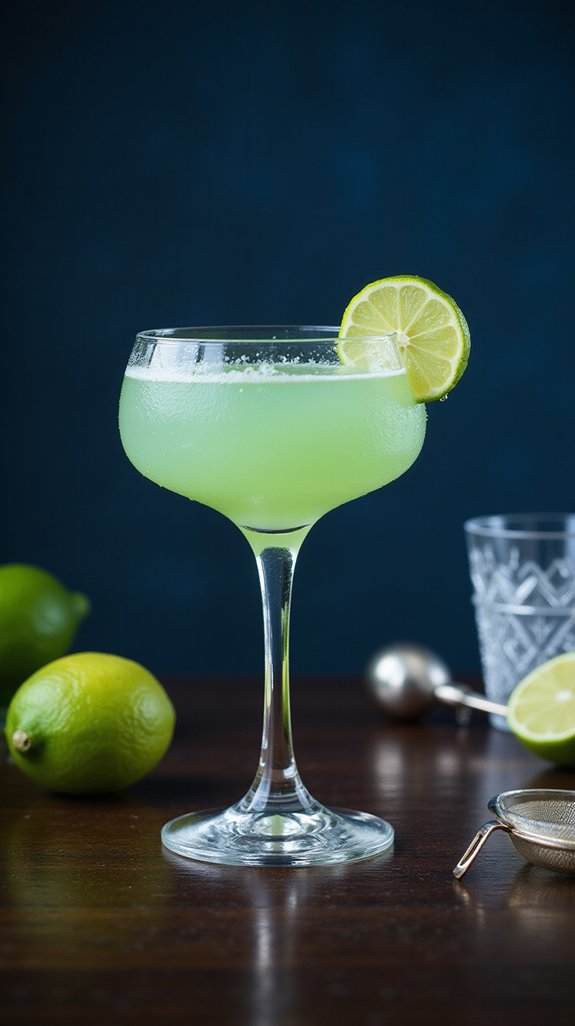
The Gimlet represents British naval history transformed into liquid form, a deceptively simple cocktail born from necessity that has evolved into one of the most refined and debated drinks in the classic cocktail canon. Originally conceived as a way to prevent scurvy among sailors by combining gin with preserved lime juice (Rose’s Lime Cordial), the drink was named after Rear-Admiral Sir Thomas Gimlette or possibly the tool used to bore holes in barrels, depending on which historical account one favors.
While its origins were decidedly utilitarian, the modern Gimlet has transcended its medicinal roots to become a sophisticated showcase for quality gin and the ongoing debate between traditionalists who insist on Rose’s Lime Cordial and modernists who prefer fresh lime juice with simple syrup. This tension between historical authenticity and contemporary technique makes the Gimlet uniquely positioned as both a window into cocktail history and a canvas for present-day refinement.
The transformation of the Gimlet from its original naval formulation to today’s craft cocktail interpretation reflects broader shifts in bartending philosophy toward fresh ingredients and balanced proportions. The traditional version using Rose’s Lime Cordial produces a drink with distinctive sweetness and subtle floral notes that commercial cordial provides, creating a flavor profile impossible to replicate exactly with fresh ingredients.
The fresh lime juice version, however, delivers brighter acidity, cleaner citrus expression, and more pronounced gin botanicals, appealing to modern palates that favor tartness and ingredient transparency over nostalgic sweetness. The ideal ratio has been endlessly debated, with proportions ranging from equal parts gin and lime to more spirit-forward builds that allow premium gins to shine.
Regardless of the approach chosen, the Gimlet’s minimalism demands impeccable execution—there is simply nowhere for inferior ingredients or sloppy technique to hide in a two or three-ingredient cocktail.
Ingredients
- 2 oz gin (London Dry style preferred)
- 3/4 oz fresh lime juice
- 3/4 oz simple syrup (1:1 ratio)
- Ice cubes
- Lime wheel or twist (for garnish)
Instructions
Combine the gin, fresh lime juice, and simple syrup in a cocktail shaker filled with ice. Shake vigorously for 10-15 seconds until the shaker becomes thoroughly frosted and the cocktail is properly chilled and diluted. Strain into a chilled coupe glass or Nick and Nora glass. Garnish with a lime wheel placed on the rim or express a lime twist over the surface and drop it into the drink.
For those seeking the traditional experience, substitute 1 oz of Rose’s Lime Cordial for both the lime juice and simple syrup, adjusting the ratio to 2:1 gin to cordial for proper balance.
The choice of gin greatly impacts the final drink—London Dry styles like Tanqueray or Beefeater provide the crisp juniper-forward backbone that pairs classically with lime, while more contemporary gins with pronounced citrus or floral botanicals can create interesting variations. Some bartenders add a small pinch of salt to enhance the lime flavor and round out the edges.
The Gimlet can also be served on the rocks in an Old Fashioned glass for a more relaxed presentation, though purists generally prefer it straight up to maintain proper temperature and dilution control throughout the drinking experience.
Aviation
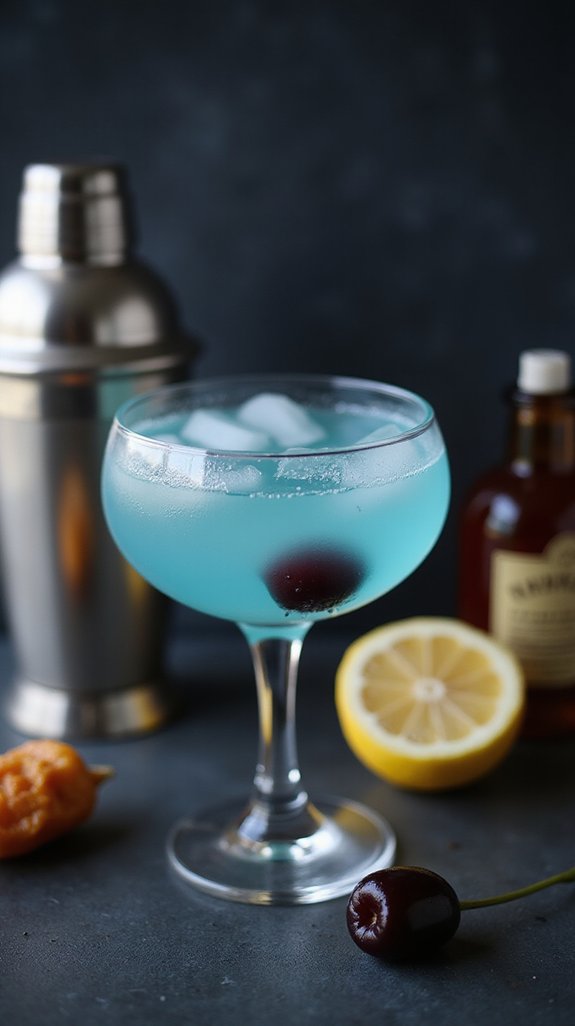
The Aviation cocktail stands as one of the most visually stunning and historically notable drinks from the early 20th century golden age of cocktails, created sometime between 1916 and 1920 by Hugo Ensslin, head bartender at New York’s Hotel Wallick. Named for the then-novel wonder of aviation, the cocktail captures the pale sky-blue color of early morning flight through its distinctive use of crème de violette, a floral liqueur that had all but disappeared from bar shelves by the mid-20th century.
This disappearance led to decades of Aviations made without their signature ingredient, resulting in a drink that, while still delicious, lacked the ethereal color and subtle floral complexity that defines the true Aviation experience. The liqueur’s return to availability in the early 2000s sparked a renaissance of interest in this classic, allowing a new generation of bartenders and enthusiasts to experience the cocktail as originally intended.
The Aviation represents a masterclass in balance, walking a delicate line between gin’s botanical complexity, maraschino liqueur’s subtle sweetness and cherry-almond notes, lemon’s bright acidity, and crème de violette’s perfumed floral character.
The challenge lies in the violette itself—too much transforms the drink into an overly floral, soapy disaster, while too little renders it nearly invisible both in flavor and appearance. The best Aviations showcase premium gin with sufficient botanical complexity to stand up to the supporting ingredients while allowing each element to contribute to a harmonious whole.
Unlike many sours that announce themselves boldly, the Aviation operates in a more refined register, offering layers of subtle flavor that reward careful attention and reveal why this cocktail has captivated bartenders and cocktail enthusiasts for over a century.
Ingredients
- 2 oz gin (preferably a floral or citrus-forward style)
- 3/4 oz fresh lemon juice
- 1/2 oz maraschino liqueur
- 1/4 oz crème de violette (or to taste, can reduce to 1 barspoon)
- Ice cubes
- Brandied cherry (for garnish)
Instructions
Combine the gin, fresh lemon juice, maraschino liqueur, and crème de violette in a cocktail shaker filled with ice. Shake vigorously for 10-15 seconds until the shaker is well-frosted and the cocktail is thoroughly chilled.
Double-strain through a fine-mesh strainer into a chilled coupe or Nick and Nora glass to remove any ice shards and guarantee a silky texture. Garnish with a brandied cherry on a cocktail pick or simply dropped into the glass.
Tips
The amount of crème de violette is the most critical variable in an Aviation and should be adjusted based on the specific brand used, as potency varies considerably between producers—start conservative with 1 barspoon (1/8 oz) and gradually increase to achieve the desired pale blue color without overwhelming the drink with perfume.
The quality of maraschino liqueur matters tremendously; Luxardo is the gold standard, while bottom-shelf alternatives can introduce harsh or artificial flavors that throw off the entire balance.
For the gin selection, avoid heavily juniper-forward London Dry styles in favor of more floral or contemporary gins that complement rather than compete with the violette. Some bartenders prefer to shake this cocktail longer and more gently than typical sours to achieve maximum dilution and a softer, more integrated flavor profile that allows the subtle floral notes to emerge.
Clover Club
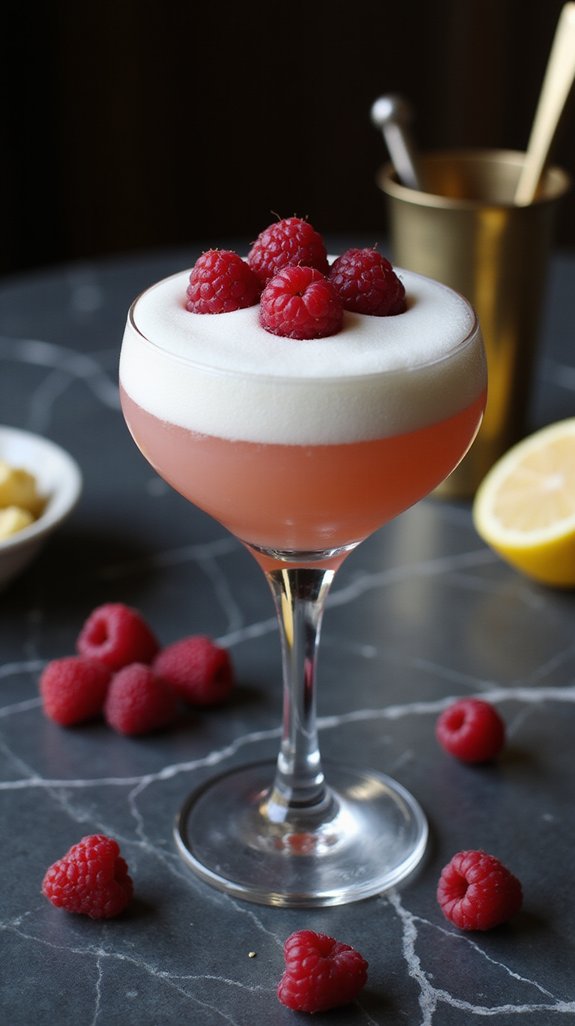
The Clover Club stands as an embodiment of the sophistication of pre-Prohibition cocktail culture, originating at the Philadelphia men’s club of the same name around the turn of the 20th century. This gin-based sour distinguished itself through the addition of raspberry syrup and egg white, creating a lush, pink-hued drink that became one of the era’s most celebrated cocktails.
Despite its early popularity among businessmen and lawyers at the exclusive club, the Clover Club fell into obscurity during the latter half of the 20th century, often dismissed as too sweet or frivolous due to its pink color. The cocktail renaissance of the early 2000s rescued it from near extinction, with bartenders rediscovering the drink’s elegant balance and recognizing it as a serious, complex cocktail that deserved its place among the classics.
Today, the Clover Club has reclaimed its status as a sophisticated choice, proving that a pink cocktail can be every bit as refined and challenging as its darker-hued counterparts.
The magic of the Clover Club lies in its textural complexity and the interplay between tart raspberries, bright lemon, botanical gin, and the silky richness provided by egg white. The raspberry syrup—ideally made fresh rather than using commercial grenadine or raspberry liqueur—provides both the signature color and a nuanced berry flavor that complements rather than overwhelms the gin.
The egg white serves dual purposes: it creates the drink’s characteristic velvety foam cap while also softening the acidity and integrating all the flavors into a cohesive whole. Unlike simpler sours, the Clover Club demands attention to technique, particularly in the shaking process, where a proper dry shake (without ice) followed by a wet shake (with ice) produces the luxurious foam that defines the drink’s appearance and mouthfeel.
When executed properly, the result is a perfectly balanced cocktail that tastes as refined as it looks, offering layers of flavor from the first sip through the foam to the final drops.
Ingredients
- 2 oz gin (London Dry style works well)
- 3/4 oz fresh lemon juice
- 1/2 oz raspberry syrup (homemade preferred)
- 1 egg white (or 3/4 oz aquafaba for vegan version)
- Ice cubes
- Fresh raspberries (for garnish)
Instructions
Combine the gin, fresh lemon juice, raspberry syrup, and egg white in a cocktail shaker without ice. Seal the shaker and perform a dry shake for 15-20 seconds to emulsify the egg white and begin building foam.
Add ice to the shaker and shake vigorously for another 10-15 seconds until the mixture is thoroughly chilled and the shaker is frosted. Double-strain through a fine-mesh strainer into a chilled coupe glass, allowing the foam to settle on top. Wait a moment for the foam to fully form and stabilize before adding garnish.
Thread fresh raspberries onto a cocktail pick or place them gently on top of the foam.
To make raspberry syrup, combine equal parts fresh or frozen raspberries, sugar, and water in a saucepan, bring to a simmer, muddle the berries, strain through a fine-mesh strainer or cheesecloth, and store refrigerated for up to two weeks.
The dry shake is essential for creating proper foam—skipping this step will result in inadequate texture. Some bartenders add a spring from a Hawthorne strainer or a small whisk ball to the shaker during the dry shake to achieve even better foam development.
If the foam doesn’t hold well, your egg white may be too cold or too old; room temperature, fresh egg whites produce the best results. The drink should pour with a substantial layer of dense, creamy foam that persists throughout drinking, and the pink color should be vibrant but not artificial-looking.
Bee’s Knees
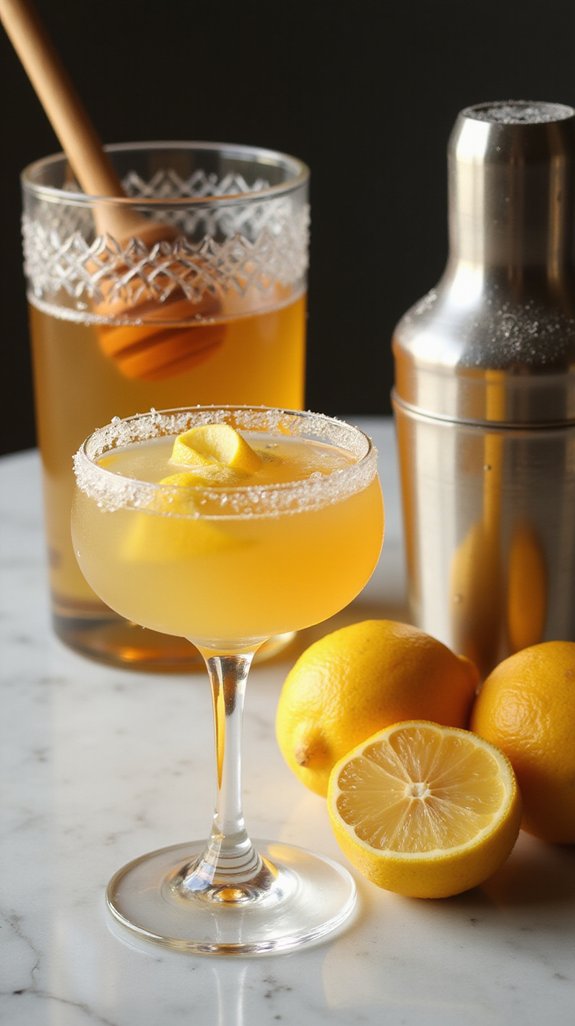
The Bee’s Knees emerged during the Prohibition era as a clever solution to the problem of masking the harsh flavors of bathtub gin, using honey and lemon to smooth out the rough edges of illegally produced spirits. The cocktail’s name itself is a piece of 1920s slang meaning “the best,” and it joined the lexicon alongside other whimsical phrases like “the cat’s pajamas” and “the snake’s hips.”
While its origins are debated—some credit the Ritz Hotel in Paris, while others point to speakeasies in New York—what’s certain is that the drink perfectly captured the spirit of the Jazz Age with its bright, accessible flavors. After Prohibition ended and quality gin became readily available again, the Bee’s Knees faded from prominence, as bartenders no longer needed to disguise their base spirits.
The modern cocktail revival has brought this simple yet elegant drink back into favor, where it now showcases premium gins rather than concealing inferior ones, proving that its honey-lemon combination is delicious regardless of the gin’s quality.
The beauty of the Bee’s Knees lies in its simplicity and the way honey fundamentally transforms the classic sour template. Unlike simple syrup, honey brings its own complex flavor profile—floral, earthy, or fruity depending on the variety—that adds depth beyond mere sweetness.
The key to a successful Bee’s Knees is properly incorporating the honey, which doesn’t dissolve easily in cold liquids; making honey syrup by diluting honey with water creates a mixable ingredient that blends seamlessly with the other components. The ratio of honey syrup to lemon juice is vital: too much honey and the drink becomes cloying, too little and it tastes sharp and unbalanced.
This cocktail also provides an excellent opportunity to experiment with different gin styles and honey varieties, from orange blossom honey with a floral gin to buckwheat honey with a more robust London Dry, allowing bartenders and home enthusiasts to create numerous variations on this Prohibition-era classic.
Ingredients
- 2 oz gin
- 3/4 oz fresh lemon juice
- 3/4 oz honey syrup (1:1 ratio honey to water)
- Ice cubes
- Lemon twist (for garnish)
Instructions
Combine the gin, fresh lemon juice, and honey syrup in a cocktail shaker filled with ice. Shake vigorously for 10-15 seconds until the outside of the shaker becomes frosty and well-chilled. Strain the mixture into a chilled coupe or cocktail glass. Express a lemon twist over the drink to release its oils, then either drop it into the cocktail or rest it on the rim as garnish.
Tips
Make honey syrup ahead of time by combining equal parts honey and warm water, stirring until fully dissolved, then storing it in the refrigerator for up to two weeks—this preparation is essential because raw honey won’t properly mix into a cold cocktail.
Experiment with different honey varieties to dramatically change the drink’s character; lighter honeys like acacia or clover produce a more delicate cocktail, while darker honeys like chestnut or wildflower create a more robust, complex flavor profile.
If you don’t have honey syrup prepared, you can add honey directly to the shaker with a small splash of warm water and shake extra vigorously, though this method is less reliable for achieving smooth integration.
The Bee’s Knees is also excellent served over ice in a rocks glass for a more casual presentation, and some bartenders add a dash of orange bitters to enhance the citrus notes and add additional complexity.
Southside
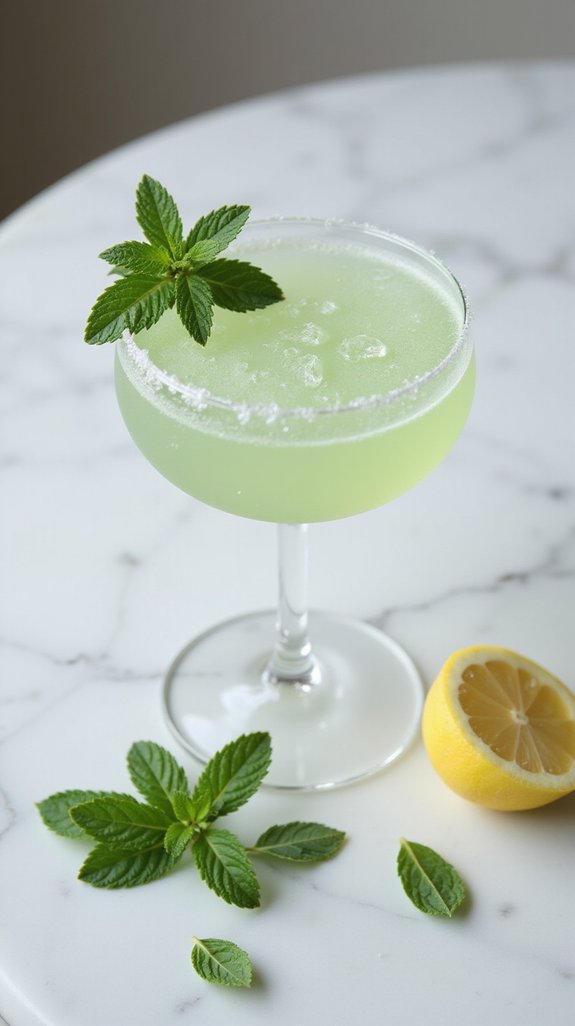
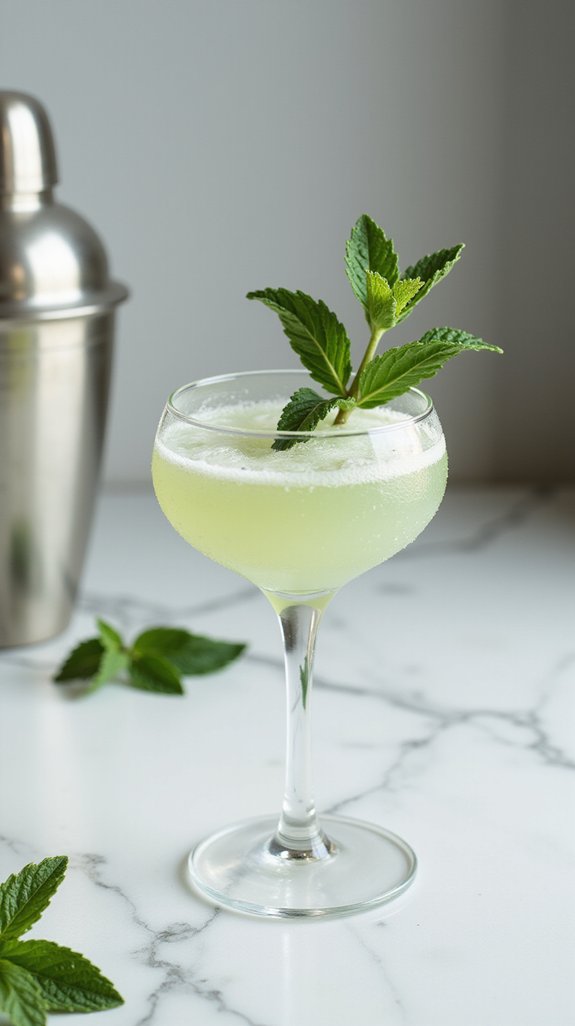
The Southside represents one of the most invigorating variations in the sour cocktail family, distinguished by the addition of fresh mint that transforms the basic gin sour into something altogether more herbaceous and revitalizing. The cocktail’s origins are wrapped in competing legends, with some attributing it to the Southside Sportsmen’s Club on Long Island during the early 20th century, where wealthy members allegedly enjoyed it after hunting and polo matches.
A more colorful story credits Chicago’s South Side gangsters during Prohibition with creating the drink to mask the flavor of their bootleg gin, positioning it as a criminal counterpart to the North Side’s preference for other cocktails. Regardless of its true birthplace, the Southside gained prominence in New York’s elite social clubs and speakeasies during the 1920s and has endured as a sophisticated warm-weather classic. The drink can be served either up in a coupe glass or over ice as a Southside Fizz with the addition of soda water, making it versatile enough for various occasions and preferences.
The Southside’s magic lies in how mint interacts with the other ingredients, creating a cocktail that feels simultaneously bright, cooling, and complex. Unlike drinks where mint is merely a garnish, here it’s an integral component that must be properly integrated through muddling or shaking, releasing the essential oils that give the drink its characteristic aroma and flavor.
The quality of ingredients matters tremendously—fresh mint that’s bruised rather than pulverized, freshly squeezed lemon juice, and a good-quality gin with botanical complexity all contribute to a balanced final product. The simple syrup provides clean sweetness that allows both the mint and gin botanicals to shine without competition from more assertive sweeteners. Some bartenders add a few drops of lime juice alongside the lemon for extra citrus complexity, while others stay faithful to the classic lemon-only formula, but both approaches yield excellent results when properly balanced.
Ingredients
- 2 oz gin
- 1 oz fresh lemon juice
- 3/4 oz simple syrup
- 6-8 fresh mint leaves
- Ice cubes
- Fresh mint sprig (for garnish)
Instructions
Add the fresh mint leaves to a cocktail shaker and gently muddle them with the simple syrup, pressing just enough to release the oils without shredding the leaves into bits. Add the gin and fresh lemon juice to the shaker, then fill with ice cubes. Shake vigorously for 10-15 seconds until the shaker is thoroughly chilled and frosty on the outside.
Double-strain the mixture through a fine-mesh strainer into a chilled coupe glass to remove any small mint fragments and ice chips. Garnish with a fresh mint sprig, gently slapping it between your hands first to release its aromatic oils before placing it in the drink.
When muddling the mint, remember that gentle pressure is key—you want to bruise the leaves to release their essential oils, not tear them apart into small pieces that will make your drink bitter and create an unpleasant texture. If you don’t have a muddler, the handle of a wooden spoon works perfectly well.
The double-straining step is essential for achieving the cocktail’s signature clarity and smooth texture, preventing any mint fragments from floating in the finished drink. For a longer, more invigorating serve on hot days, strain the cocktail into a collins glass filled with fresh ice and top with 1-2 ounces of chilled soda water to create a Southside Fizz.
The choice of gin matters here: London Dry styles work beautifully, but contemporary gins with complementary botanicals like cucumber or additional citrus can add interesting dimensions to the drink.
Frequently Asked Questions
What Is the Difference Between a Sour Cocktail and Other Cocktail Types?
You’ll find that sour cocktails uniquely balance spirit, citrus juice, and sweetener in specific proportions. Other cocktail types don’t require this three-ingredient formula—they might emphasize different flavors, textures, or ingredient combinations entirely.
Can I Make a Healthier Version of Classic Sour Cocktails?
You can make healthier sour cocktails by using fresh-squeezed citrus instead of bottled juice, replacing simple syrup with honey or agave, reducing sweetener amounts, and choosing quality spirits without added sugars or artificial ingredients.
What Tools Do I Need to Make Sour Cocktails at Home?
You don’t need to break the bank—just grab a cocktail shaker, jigger for measuring, strainer, citrus juicer, and bar spoon. You’ll also want a muddler and fine-mesh strainer for pulp-free drinks.
How Long Do Citrus Juices Stay Fresh for Cocktail Making?
You’ll get the best flavor from freshly squeezed citrus juices within four hours. After that, they’ll start losing their brightness and aromatic qualities. Don’t use pre-squeezed juice that’s older than one day.
Can Sour Cocktails Be Batched Ahead for Parties?
You can batch the spirit, sweetener, and citrus juice together, but you’ll lose carbonation if it’s included. Add egg white and ice individually when serving to maintain proper texture and dilution.