
Like James Bond ordering “shaken, not stirred,” you’ve probably noticed how a proper martini commands attention at any gathering. I remember watching my uncle mix his first gin martini at a family dinner, the way the vermouth barely kissed the glass before he poured it out. That’s when I realized these twelve variations aren’t just drinks—they’re techniques that’ll transform how you think about cocktails, starting with the most fundamental question: dry or wet?
The Classic Dry Martini
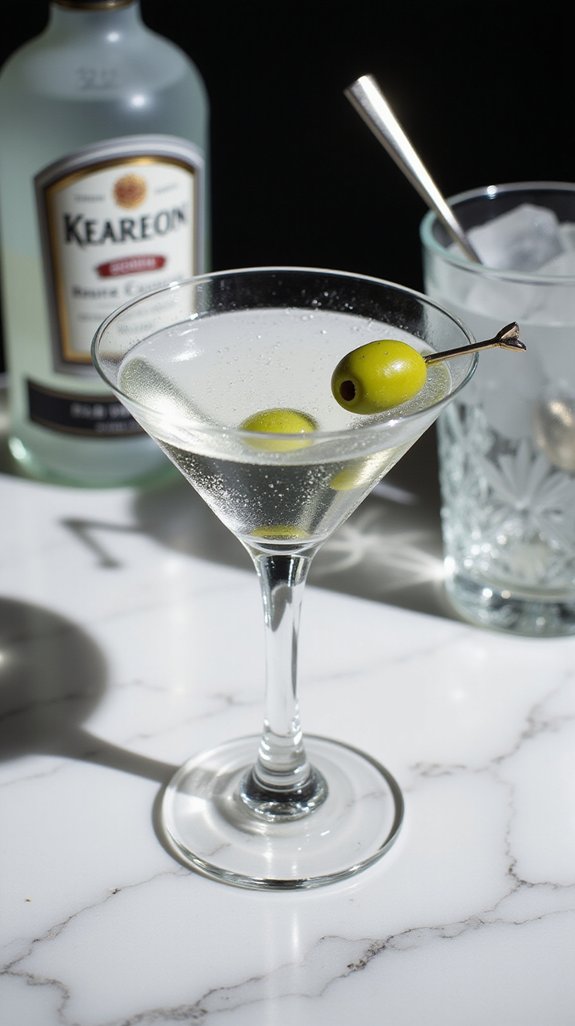
The dry martini stands as the pinnacle of cocktail sophistication, a drink that has graced the hands of cultural icons and defined an era of elegant drinking. This timeless concoction combines gin and dry vermouth in precise proportions, served ice-cold in a chilled cocktail glass and garnished traditionally with either an olive or a lemon twist. The term “dry” refers to the reduced amount of vermouth used, creating a spirit-forward cocktail that showcases the botanical complexity of quality gin.
Achieving the ideal dry martini requires attention to detail and quality ingredients. The ratio of gin to vermouth can vary according to personal preference, but the classic dry martini typically uses a 6:1 or even 8:1 ratio, allowing the gin to dominate while the vermouth provides subtle aromatic depth. The key to excellence lies in proper dilution through stirring with ice and serving the drink at the best temperature.
Ingredients
- 2½ ounces gin
- ½ ounce dry vermouth
- Ice cubes
- 1 lemon twist or 1 green olive for garnish
Shop Related Products

Sufficient Quantity: our product contains 4 pieces of clear bar mixing glasses, which are enough to meet your daily use needs, and enough quantity can also allow you to share with others

DESIGNED FOR PROFESSIONAL BARTENDING - specially selected by KITESSENSU's professional bartenders, the 530ml/18oz size makes one or two cocktails, and the cocktail mixing glasses are designed to match the professional-grade equipment used by bartenders.

SEAMLESS ONE-PIECE DESIGN - The mixing glasses are made of lead-free glass to maintain the temperature of the drink. 24 ounces can be used to make two cocktails. The mixing glass set contains two different patterns of glass mixing glasses.
Instructions
Fill a mixing glass with ice cubes and pour in the gin and dry vermouth. Stir gently but thoroughly for 30 seconds to properly chill and dilute the spirits without over-aerating the mixture. Strain the cocktail into a chilled martini glass using a cocktail strainer.
Express the oils from a lemon twist over the drink by twisting it over the surface, then either drop it into the glass or run it around the rim before discarding, or alternatively, garnish with a green olive on a cocktail pick.
Tips
Always chill your martini glass beforehand by filling it with ice water or placing it in the freezer for at least 15 minutes before serving.
The quality of gin makes a tremendous difference in the final product, so choose a premium brand with botanicals you enjoy.
Stirring rather than shaking produces a smoother, clearer martini with better texture, though some prefer the colder temperature and slight cloudiness that shaking provides.
Adjust the vermouth ratio to your taste preferences—some aficionados prefer an even drier martini with just a rinse of vermouth swirled in the glass and discarded before adding the gin.
The Wet Martini
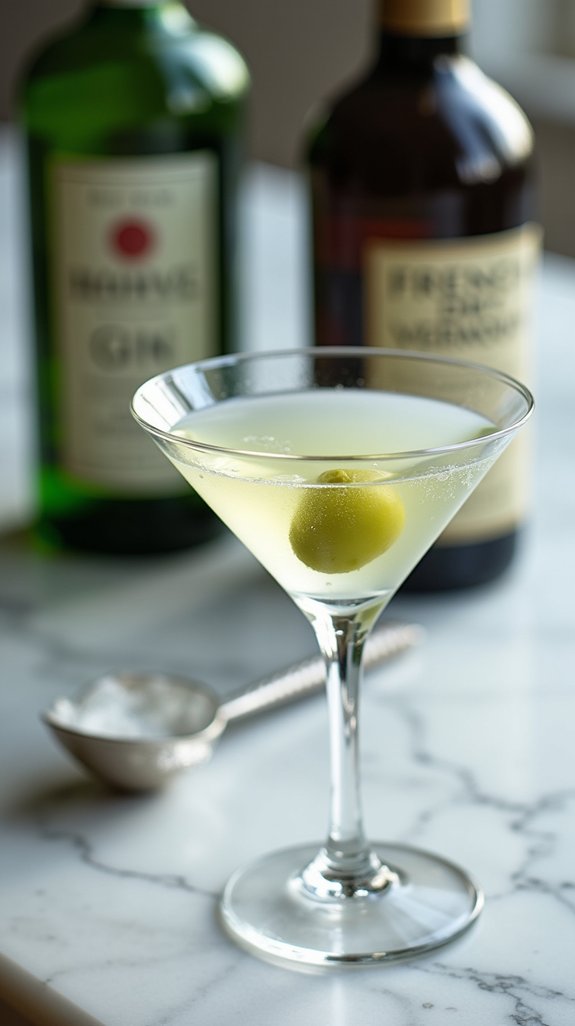
The wet martini represents a departure from the modern preference for bone-dry martinis, harking back to the cocktail’s original formulations when vermouth played a more prominent role in the flavor profile. This variation embraces a higher proportion of dry vermouth, typically using a 3:1 or 4:1 ratio of gin to vermouth, creating a more balanced and aromatic cocktail. The increased vermouth content softens the gin’s intensity while adding layers of herbal and floral notes that complement rather than merely accent the base spirit.
For those who find the dry martini too spirit-forward or harsh, the wet martini offers a more approachable and nuanced drinking experience. The additional vermouth creates a rounder mouthfeel and introduces complexity that can make the cocktail more food-friendly and sessionable. This style was more common in the early to mid-20th century before the trend toward increasingly dry martinis took hold, and it continues to appeal to cocktail enthusiasts who appreciate the interplay between quality gin and artisanal vermouth.
Ingredients
- 2 ounces gin
- ¾ ounce dry vermouth
- Ice cubes
- 1 lemon twist or 1 green olive for garnish
Shop Related Products

Sufficient Quantity: this set includes 4 clear cocktail mixing glasses, providing enough quantity for your daily cocktail making needs; Perfect for home bars, entertaining guests, or sharing with friends and family during gatherings and parties

LEAD FREE CRYSTAL FOR BRILLIANT CLARITY: Premium lead-free crystal showcases color and clarity while resisting cloudiness, perfect for spirits forward drinks and presentation on a home bar or bar cart. Levate your bar set with this professional quality crystal mixing glass.

Quality Seamless Design - Made of ultra-clear lead-free glass with with a thick, weighted bottom to ensure that you get the most from your mixing experience
Instructions
Fill a mixing glass with ice cubes and add the gin and dry vermouth. Stir gently for 25-30 seconds until the mixture is well-chilled and properly diluted. Strain the cocktail into a pre-chilled martini glass using a cocktail strainer. If using a lemon twist, express the citrus oils over the surface of the drink by gently twisting the peel, then either garnish the glass with the twist or discard it after running it around the rim. Alternatively, garnish with a single green olive on a cocktail pick.
Tips
The wet martini benefits particularly from using a high-quality dry vermouth, as its more prominent presence means the vermouth’s character greatly impacts the final drink. Store your vermouth in the refrigerator after opening and use it within a few weeks for best freshness, as vermouth is a fortified wine that can oxidize and lose its vibrant flavors.
Experiment with different vermouth brands to find flavor combinations you prefer, as each brings distinct botanical profiles that interact differently with various gins. Some drinkers enjoy ratios as high as 2:1 for an even wetter martini that truly showcases the vermouth alongside the gin.
The Dirty Martini
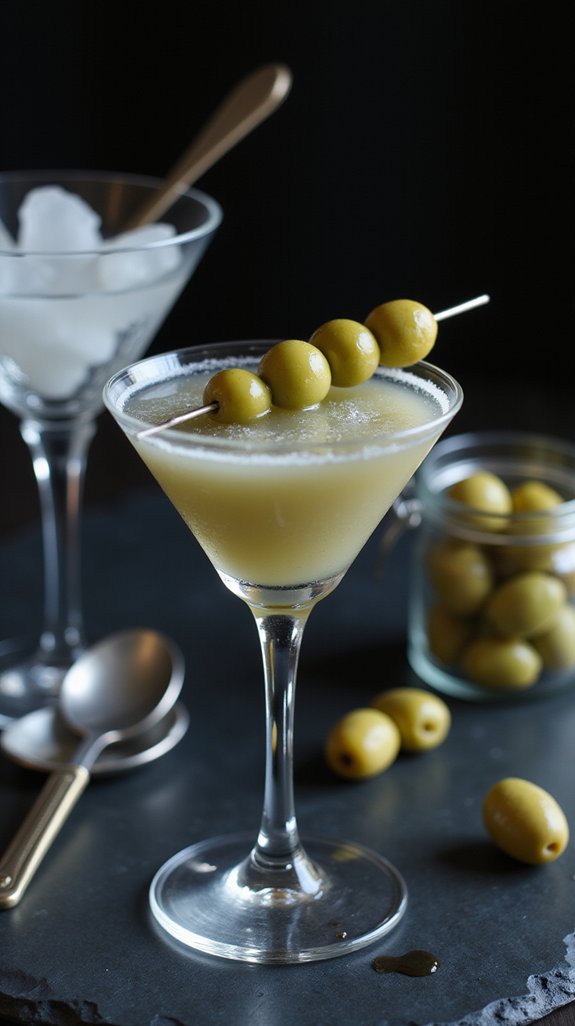
The dirty martini introduces a savory, briny dimension to the classic cocktail by incorporating olive brine into the traditional gin and vermouth formula. This variation emerged in the mid-20th century and has become one of the most popular martini riffs, appealing to those who crave a more assertive, umami-rich drinking experience.
The addition of olive brine transforms the martini from a crisp, clean cocktail into something with a cloudy appearance and a distinctly salty, olive-forward character that divides cocktail enthusiasts into passionate camps of devotees and detractors.
The beauty of the dirty martini lies in its ability to bridge the gap between cocktail and savory snack, making it an excellent aperitif that stimulates the appetite while providing substantial flavor. The saltiness from the brine enhances the botanical notes in the gin while cutting through the herbal qualities of the vermouth, creating a unique balance that feels almost like drinking a liquid charcuterie board.
The level of “dirtiness” is entirely customizable, ranging from a subtle hint of brine to an assertively murky concoction that foregrounds the olive flavor above all else.
Ingredients
- 2½ ounces gin
- ½ ounce dry vermouth
- ½ to ¾ ounce olive brine
- Ice cubes
- 2-3 green olives for garnish
Instructions
Fill a mixing glass with ice cubes and add the gin, dry vermouth, and olive brine according to your preferred level of dirtiness. Stir gently for 20-25 seconds until well-chilled, as the brine adds flavor but shouldn’t be over-diluted.
Strain into a pre-chilled martini glass using a cocktail strainer, ensuring the mixture maintains its characteristic cloudy appearance. Thread two or three green olives onto a cocktail pick and rest it across the rim of the glass or drop them directly into the cocktail.
Tips
The quality of your olive brine notably impacts the final cocktail, so use brine from high-quality olives rather than mass-produced varieties that may contain preservatives or off-flavors.
Start with less brine than you think you need and adjust to taste in subsequent drinks, as it’s easier to make a martini dirtier than to rescue one that’s become too salty. Some bartenders prefer vodka over gin for dirty martinis, as the neutral spirit allows the olive brine to take center stage without competing botanical flavors.
For an extra layer of complexity, consider using brine from specialty olives like Castelvetrano or Spanish Manzanilla, each of which brings unique flavor characteristics to the finished drink.
The Gibson
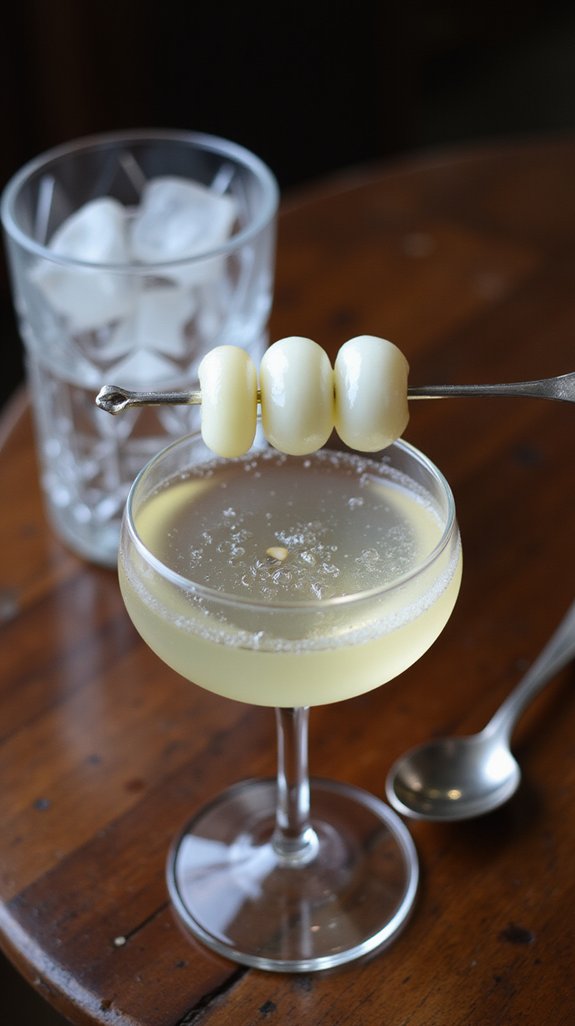
The Gibson stands as one of the most elegant and mysterious variations in the martini family, distinguished solely by its garnish of cocktail onions rather than olives or a lemon twist. This seemingly simple substitution creates a surprisingly different drinking experience, as the subtle sweetness and mild pungency of the pickled onions impart a delicate flavor that complements rather than competes with the gin and vermouth.
First appearing in the 1890s, the Gibson’s origins remain disputed, with multiple bartenders and socialites claiming credit for its invention, though the most popular story attributes it to Charles Dana Gibson, the famous illustrator, or to a businessman named Walter D.K. Gibson who requested the variation at the Players Club in New York.
What makes the Gibson particularly intriguing is its understated sophistication—it maintains the pure, spirit-forward character of a classic martini while introducing just a whisper of sweetness and aromatics from the onion garnish. This variation appeals to purists who want something slightly different without venturing into the more dramatic flavor territories of dirty or flavored martinis.
The Gibson also carries an air of old-world refinement, evoking images of mahogany-paneled clubs and three-piece suits, making it the choice of those who appreciate cocktail history and timeless elegance.
Ingredients
- 2½ ounces gin
- ½ ounce dry vermouth
- Ice cubes
- 2-3 cocktail onions for garnish
Instructions
Fill a mixing glass with ice cubes and add the gin and dry vermouth. Stir gently for 20-30 seconds until the mixture is thoroughly chilled and properly diluted, being careful not to over-stir, which can make the drink watery.
Strain into a pre-chilled martini glass or coupe using a cocktail strainer. Thread two or three cocktail onions onto a cocktail pick and rest it across the rim of the glass or drop them directly into the drink.
Tips
The quality of your cocktail onions is paramount to a successful Gibson, so seek out premium pickled pearl onions rather than standard grocery store varieties that may be overly vinegary or mushy.
Some bartenders prefer a drier Gibson with a 5:1 or even 6:1 ratio of gin to vermouth to guarantee the onions’ subtle flavor isn’t overshadowed by too much vermouth. Allow the onions to drain well before garnishing to avoid diluting the cocktail with excess brine.
For those who find traditional cocktail onions too sharp, look for sweeter variations or those pickled in balsamic vinegar for a more refined flavor profile.
The Vesper
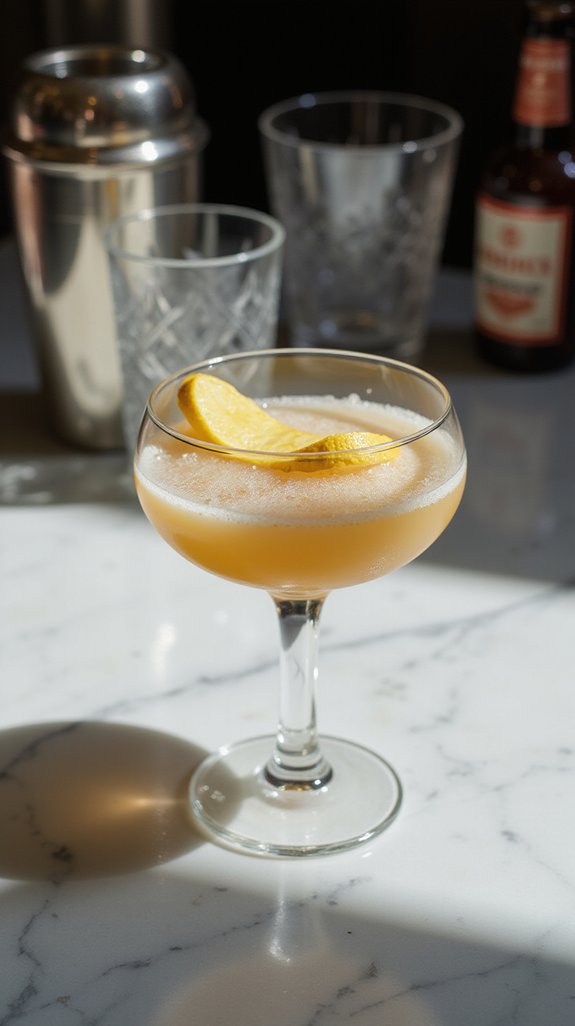
The Vesper holds a unique position in martini lore as the only variation to be immortalized in literature before it existed in reality. Created by Ian Fleming for his 1953 novel “Casino Royale,” the drink was named after the enigmatic double agent Vesper Lynd and was described by James Bond himself with his famous directive: “Three measures of Gordon’s, one of vodka, half a measure of Kina Lillet. Shake it very well until it’s ice-cold, then add a large thin slice of lemon peel.”
Fleming’s cocktail represented a departure from the traditional gin martini by incorporating vodka and the now-discontinued Kina Lillet, a French aperitif wine that was reformulated in the 1980s to remove its quinine content, fundamentally changing the drink’s character.
Modern bartenders face the challenge of recreating the Vesper as Fleming intended, since the original Kina Lillet no longer exists. Most contemporary versions substitute Lillet Blanc combined with a dash of quinine-based bitters, or use Cocchi Americano, which more closely approximates the bitter, quinine-forward profile of the original ingredient.
The Vesper remains stronger and more complex than a standard martini, with the vodka adding smoothness and body while the aromatized wine contributes botanical depth and a subtle bitterness that balances the spirit-forward nature of the drink. This is a cocktail for those who appreciate potency with nuance, and it stands as a symbol of how popular culture can influence cocktail evolution.
Ingredients
- 3 ounces gin (preferably Gordon’s or another traditional London Dry)
- 1 ounce vodka
- ½ ounce Lillet Blanc or Cocchi Americano
- Ice cubes
- 1 large lemon peel for garnish
- Optional: 2 dashes quinine-based bitters (if using Lillet Blanc)
Instructions
Add the gin, vodka, and Lillet Blanc (along with bitters if using) to a cocktail shaker filled with ice cubes. Shake vigorously for 15-20 seconds until the shaker becomes frosty and the drink is thoroughly chilled—this is one of the few martini variations where shaking isn’t only acceptable but required by tradition.
Strain into a pre-chilled coupe or martini glass using a fine-mesh strainer to catch any ice chips. Express the oils from a large lemon peel over the surface of the drink by holding it over the glass and giving it a firm twist, then either drop the peel into the drink or rest it on the rim.
Tips
The Vesper is significantly strong, clocking in at a higher alcohol content than most martinis due to its combination of gin and vodka with minimal modifier, so it should be sipped slowly and appreciated rather than consumed quickly.
If you’re unable to find Cocchi Americano and must use Lillet Blanc, the addition of a quality quinine or gentian bitters is essential to approximate the bitter complexity of the original Kina Lillet.
Use a premium vodka that won’t introduce harsh flavors, as the vodka serves to soften and round out the gin rather than assert its own character.
The vigorous shaking called for in the original recipe not only chills the drink but also creates a slight cloudiness and texture that distinguishes the Vesper from stirred martinis, so don’t be alarmed if your cocktail appears slightly hazy—this is part of its authentic character.
The Perfect Martini
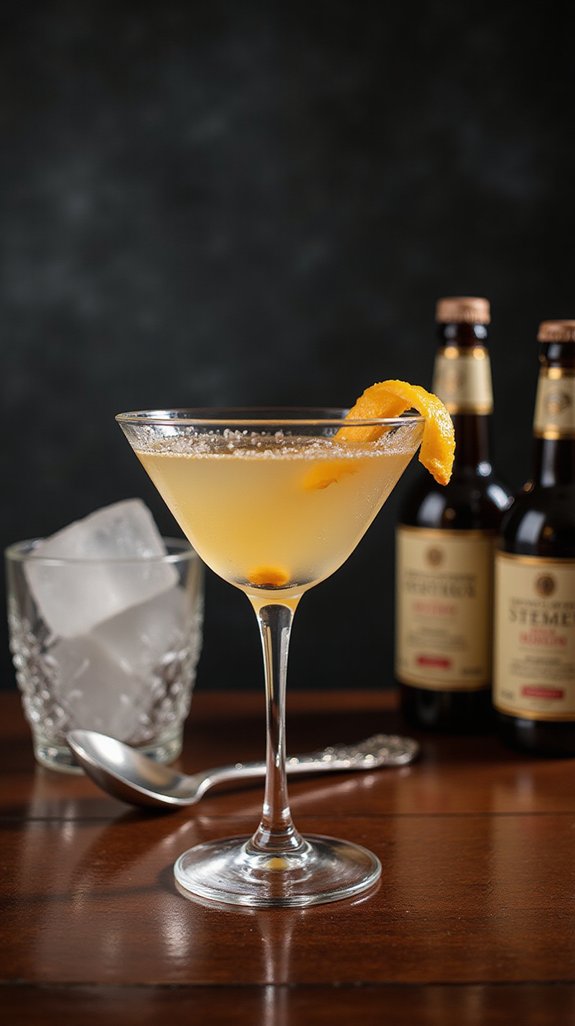
The Perfect Martini occupies a middle ground between the dry and sweet extremes of the martini spectrum, deriving its name not from claims of superiority but from the cocktail term “perfect,” which indicates equal parts of both dry and sweet vermouth. This balanced approach dates back to the late 19th century when vermouths played a more prominent role in cocktails, and bartenders regularly experimented with different vermouth combinations to create drinks with greater complexity.
Unlike the bone-dry modern martini that uses minimal vermouth, the Perfect Martini embraces the fortified wine as an equal partner, allowing the botanical profiles of both vermouth styles to interact with the gin and create a more rounded, aromatic drinking experience.
The interplay between dry and sweet vermouth creates a fascinating duality where herbal, floral notes from the dry vermouth mingle with the richer, spicier, vanilla-tinged characteristics of sweet vermouth. This combination moderates the gin’s juniper intensity while adding layers of flavor that unfold with each sip.
The Perfect Martini appeals to those who find contemporary dry martinis too astringent and spirit-forward but don’t want the overtly sweet profile of a traditional sweet martini. It represents the cocktail’s earlier incarnation when balance and complexity were valued over pure alcoholic strength, and it remains a sophisticated choice for drinkers who appreciate nuanced, vermouth-forward preparations.
Ingredients
- 2 ounces gin
- ½ ounce dry vermouth
- ½ ounce sweet vermouth
- Ice cubes
- 1 lemon twist for garnish
- 1 orange twist for garnish (optional)
- Dash of orange bitters (optional)
Instructions
Add the gin, dry vermouth, and sweet vermouth to a mixing glass filled with ice cubes, along with orange bitters if desired. Stir gently but consistently for 30-40 seconds until the mixture is well-chilled and properly diluted—the goal is to achieve a silky texture without over-diluting the vermouths’ delicate flavors.
Strain into a pre-chilled coupe or Nick and Nora glass using a julep strainer or Hawthorne strainer. Express the oils from a lemon twist over the surface of the drink and either garnish with the lemon twist alone or add an orange twist as well to emphasize the sweet vermouth’s citrus notes.
Tips
The quality of your vermouths is essential for the Perfect Martini since they comprise half the drink’s volume—always use fresh vermouth stored in the refrigerator and consume within a month of opening, as vermouth oxidizes quickly once exposed to air.
The choice between a traditional lemon twist or the addition of an orange twist depends on which vermouth characteristics you want to highlight, with orange complementing the sweet vermouth’s spice notes while lemon accentuates the dry vermouth’s crispness.
Some bartenders prefer a 2:¾:¼ ratio favoring the dry vermouth slightly for a less sweet result, so feel free to adjust the vermouth proportions to your taste preferences.
The 50/50 Martini
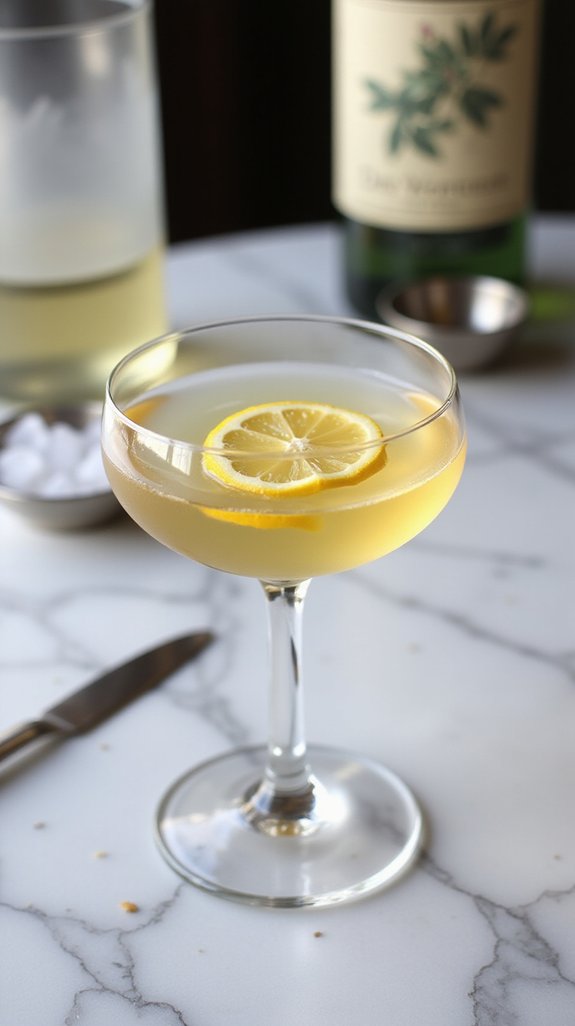
The 50/50 Martini takes the concept of vermouth prominence to its logical extreme, combining equal parts gin and dry vermouth to create a cocktail that completely reimagines the modern martini’s spirit-forward character. This preparation emerged during the craft cocktail renaissance of the early 2000s when bartenders began exploring historical ratios and questioning the ultra-dry martini‘s dominance.
By giving vermouth equal billing with gin, the 50/50 Martini transforms the drink into something more approachable and complex, where the vermouth’s botanical ingredients—wormwood, herbs, spices, and citrus peels—share the spotlight with the gin’s juniper and aromatics rather than playing a supporting role.
The 50/50 ratio creates a cocktail with notably lower alcohol content and a flavor profile that emphasizes harmony and integration over the bracing intensity of a dry martini. The vermouth’s herbal complexity softens the gin’s edges while contributing its own distinct personality, resulting in a drink that’s revitalizing, nuanced, and surprisingly food-friendly.
This martini variation works particularly well as an aperitif, stimulating the palate without overwhelming it, and appeals to drinkers who appreciate vermouth as a sophisticated ingredient worthy of celebration rather than an afterthought. It also serves as an excellent introduction to martinis for those intimidated by the traditional preparation’s high alcohol content.
Ingredients
- 1½ ounces gin
- 1½ ounces dry vermouth
- Ice cubes
- 1 lemon twist for garnish
- Dash of orange bitters (optional)
Instructions
Combine the gin and dry vermouth in a mixing glass filled with ice cubes, adding a dash of orange bitters if using. Stir continuously for 25-30 seconds to chill and dilute the mixture—the lower alcohol content means slightly less stirring time is needed compared to a traditional martini.
Strain into a chilled coupe or Nick and Nora glass using your preferred strainer. Express the lemon twist’s oils over the drink’s surface by holding it over the glass and giving it a firm twist, then drop it into the cocktail or rest it on the rim.
Tips
Vermouth selection becomes critically important in the 50/50 Martini since it constitutes half the drink—choose a high-quality, recently opened bottle stored in the refrigerator to guarantee maximum freshness and vibrancy.
Consider trying different vermouth brands to discover how dramatically they change the cocktail’s character, from lighter, more floral French vermouths to richer, more herbaceous Italian varieties. Some bartenders prefer using a slightly botanical-forward gin to maintain juniper presence, while others choose more delicate gins to let the vermouth shine.
This ratio also works beautifully with blanc or dry vermouth alternatives for completely different flavor profiles.
The Reverse Martini
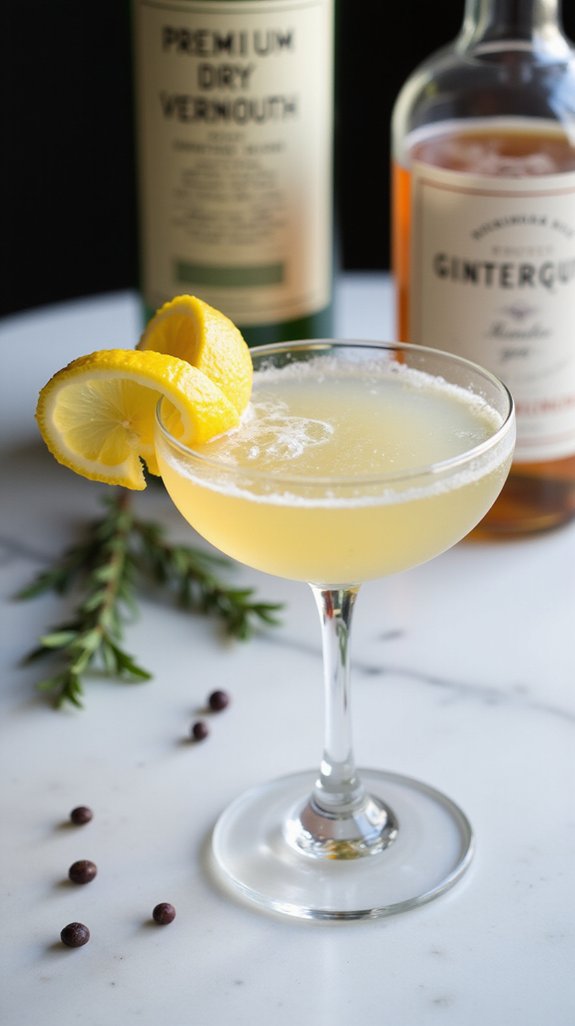
The Reverse Martini, also known as the Reverse or Inverted Martini, pushes the vermouth-forward concept beyond the 50/50 ratio by flipping the traditional proportions entirely, featuring more vermouth than gin. This unconventional preparation typically employs a 2:1 or 3:1 ratio of dry vermouth to gin, creating a radically different drinking experience that prioritizes the vermouth’s herbaceous complexity while using gin as an aromatic accent rather than the base spirit.
This style emerged alongside the 50/50 Martini during the vermouth revival of the 2010s, when bartenders and enthusiasts began championing quality vermouth as a legitimate focal point for cocktails rather than a mere modifier.
The Reverse Martini offers an exceptionally light, botanical-forward cocktail with considerably lower alcohol content than traditional martinis, making it ideal for extended aperitivo sessions or when a revitalizing, sessionable drink is desired. The vermouth’s wine base and herbal infusions take center stage, while the gin contributes its juniper and botanical notes as supporting flavors that enhance rather than dominate.
This preparation demands premium, fresh vermouth since any oxidation or staleness becomes immediately apparent, but when executed properly, it delivers a sophisticated, complex drink that challenges preconceptions about what a martini can be and celebrates vermouth as a star ingredient in its own right.
Ingredients
- 2 ounces dry vermouth
- 1 ounce gin
- Ice cubes
- 1 lemon twist for garnish
- Dash of orange bitters (optional)
Instructions
Add the dry vermouth and gin to a mixing glass filled with ice cubes, along with a dash of orange bitters if desired. Stir gently for 20-25 seconds to properly chill and lightly dilute the mixture—the high vermouth content and lower alcohol percentage require less stirring than spirit-forward martinis to avoid over-dilution.
Strain into a chilled coupe, Nick and Nora, or small wine glass using a Hawthorne or julep strainer. Express the lemon twist’s oils over the surface of the drink by twisting it firmly above the glass, then either garnish the rim with the twist or drop it directly into the cocktail.
Tips
The Reverse Martini’s success depends almost entirely on vermouth quality and freshness—use only recently opened bottles stored refrigerated and consume within three to four weeks of opening to prevent oxidation that will ruin the drink’s delicate profile.
Experiment with different premium dry vermouths to explore how brands like Dolin, Cocchi Americano Bianco, or La Quintinye dramatically alter the final cocktail’s character, and consider serving in a smaller vessel than traditional martini glasses since the lighter, more delicate flavors work better in moderate portions that maintain ideal temperature throughout drinking.
The Vodka Martini
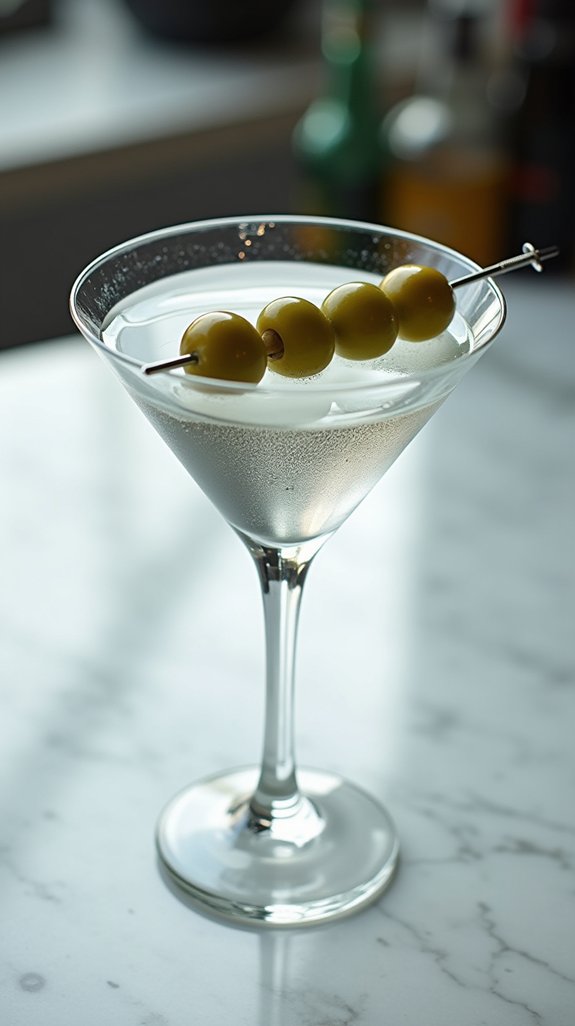
The Vodka Martini represents a significant departure from the gin-based original, substituting vodka’s neutral, clean profile for gin’s botanical complexity. This variation gained widespread popularity in the mid-20th century, particularly after James Bond’s famous “shaken, not stirred” preference brought it into the cultural mainstream during the 1960s.
While purists often debate whether a vodka-based version can truly be called a martini, the Vodka Martini has earned its place as a legitimate classic in its own right, offering a smoother, less assertive drinking experience that appeals to those who find gin’s juniper-forward character too pronounced. The lack of competing botanicals allows the vermouth’s herbal notes and any garnish flavors to shine through more distinctly, creating a cocktail that emphasizes clarity and subtle refinement over bold aromatics.
The Vodka Martini’s popularity stems from its exceptional smoothness and versatility as a canvas for variations—the neutral spirit readily accepts different vermouth styles, bitters, and garnishes without the flavor conflicts that might arise with gin’s distinctive profile. This adaptability has led to countless riffs and flavored versions, though the classic preparation remains timelessly elegant in its simplicity.
The choice between shaking and stirring becomes particularly relevant with vodka martinis, as shaking creates a colder, slightly more diluted drink with a different texture, while stirring maintains the silky clarity that many vodka enthusiasts prefer. Regardless of preparation method, the Vodka Martini delivers a crisp, invigorating cocktail that showcases the marriage of premium vodka with quality vermouth in a supremely sophisticated package.
Ingredients
- 2.5 ounces vodka
- 0.5 ounces dry vermouth
- Ice cubes
- 1 lemon twist or 3 olives for garnish
- Dash of orange bitters (optional)
Instructions
Add the vodka and dry vermouth to a mixing glass filled with ice cubes, along with orange bitters if using. Stir gently for 30-40 seconds to achieve proper dilution and temperature—vodka requires slightly longer stirring than gin to reach ideal coldness due to its neutral character benefiting from additional chilling.
Alternatively, add ingredients to a cocktail shaker with ice and shake vigorously for 10-15 seconds if you prefer the James Bond method, which creates a colder, slightly cloudy drink with fine ice crystals. Strain into a chilled martini glass or coupe using a fine-mesh strainer if shaken, or a Hawthorne strainer if stirred. Express the lemon twist’s oils over the drink’s surface and garnish the rim, or garnish with three olives speared on a cocktail pick.
Tips
Premium vodka quality becomes paramount in this cocktail since there are fewer ingredients to mask imperfections—choose a high-quality, smooth vodka that has been stored in the freezer for extra coldness.
Adjust the vermouth ratio to your preference, anywhere from a 6:1 to 3:1 vodka-to-vermouth ratio, keeping in mind that less vermouth creates a drier, more spirit-forward drink while more vermouth adds complexity and aromatics.
The debate between shaking and stirring is ultimately personal preference, though stirring produces the crystal-clear presentation traditionally associated with classic martinis, while shaking creates a more diluted, textured drink with tiny ice shards that some find more invigorating.
The Martinez
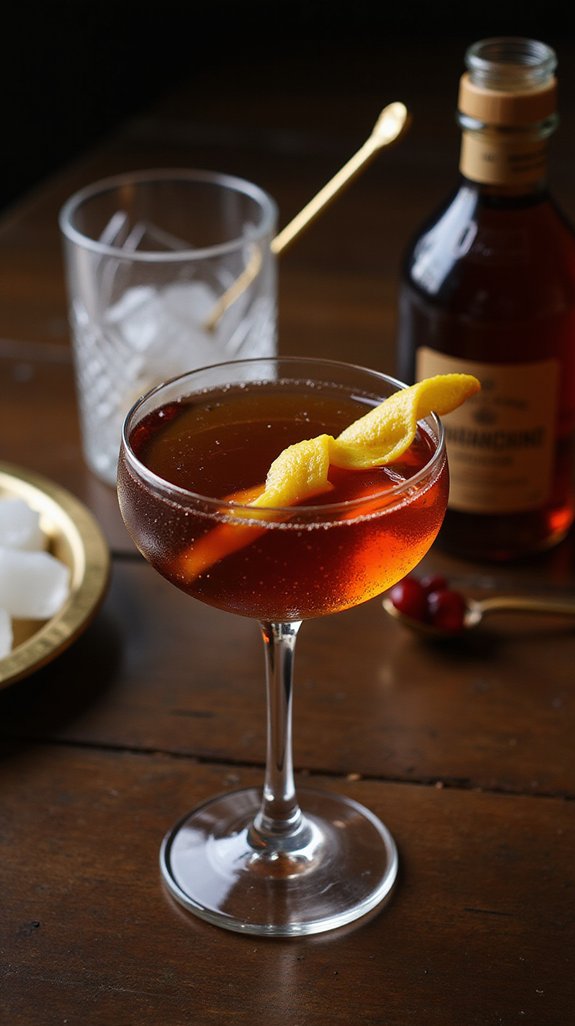
The Martinez stands as one of the most historically noteworthy cocktails in the martini family, often cited as the direct precursor to the modern Martini itself. Originating in the late 19th century—with disputed claims placing its creation either in Martinez, California, or at New York’s Knickerbocker Hotel—this cocktail predates the dry martini by several decades and reflects the sweeter, more robust drinking preferences of the Victorian era.
Unlike its descendant, the Martinez employs Old Tom gin (a slightly sweetened style) or genever, sweet vermouth instead of dry, maraschino liqueur, and aromatic bitters, creating a complex, richly flavored drink that bears only a familial resemblance to today’s bone-dry martinis. The Martinez offers modern drinkers a fascinating glimpse into cocktail history, showcasing the gradual evolution of tastes from sweet and aromatic toward the clean, spirit-forward profiles that dominate contemporary mixology.
The Martinez’s appeal lies in its balanced complexity, with each ingredient contributing distinct layers—the botanicals of Old Tom gin provide a foundation that’s both juniper-forward and slightly sweet, while sweet vermouth adds depth and herbal richness. Maraschino liqueur contributes subtle almond-cherry notes, and bitters tie everything together with warming spice.
This cocktail rewards careful attention to proportions and quality ingredients, as the interplay between sweetness, botanicals, and spirit strength creates a sophisticated drinking experience that’s both accessible and intriguing. The Martinez has enjoyed a notable renaissance in recent years as craft cocktail culture has embraced historical recipes, with bartenders and home enthusiasts rediscovering the pleasures of this elegant, aromatic classic that reminds us that the martini family’s roots run deep and flavorful.
Ingredients
- 2 ounces Old Tom gin or genever
- 1 ounce sweet vermouth
- 1 barspoon maraschino liqueur
- 2 dashes Angostura bitters
- Ice cubes
- 1 lemon twist for garnish
Instructions
Add the Old Tom gin, sweet vermouth, maraschino liqueur, and Angostura bitters to a mixing glass filled with ice cubes. Stir gently but thoroughly for 20-30 seconds until the mixture is properly chilled and diluted—the Martinez benefits from slightly less dilution than a modern martini to preserve its rich, complex character.
Strain into a chilled coupe glass or Nick and Nora glass, which better showcases the cocktail’s aromatic qualities than a traditional martini glass. Express the oils from a lemon twist over the drink’s surface by holding it over the glass and giving it a firm twist, then either drop it into the cocktail or rest it on the rim as garnish.
Tips
The choice of gin greatly impacts the Martinez’s character—authentic Old Tom gin creates the most historically accurate version with its subtle sweetness complementing the sweet vermouth, while London Dry gin produces a drier, more assertive variation and genever offers a maltier, more robust profile.
Quality sweet vermouth is essential and should be fresh, stored in the refrigerator after opening and used within a month for best flavor. If maraschino liqueur seems unavailable, Luxardo is the gold standard brand, but use it sparingly as too much can overwhelm the other ingredients with sweetness and almond notes.
Some recipes call for orange bitters instead of Angostura, which creates a brighter, more citrus-forward profile that some drinkers prefer—experiment to find your ideal balance.
The Smoky Martini
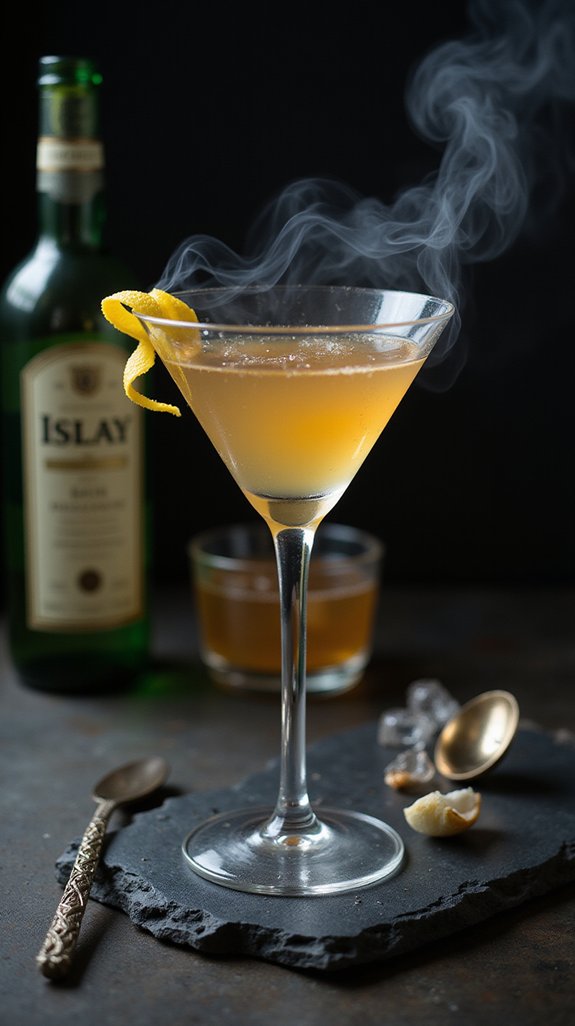
The Smoky Martini represents a bold contemporary evolution of the classic martini, introducing the distinctive peaty, smoky character of Scotch whisky to the traditional gin-and-vermouth formula. This modern variation has gained considerable popularity in craft cocktail bars over the past two decades, appealing to those who appreciate the martini’s elegant simplicity but crave additional depth and complexity.
The technique typically involves either rinsing the glass with a smoky Islay Scotch before building the drink, or adding a small measure of peated whisky directly to the mixture, allowing the assertive smoke notes to mingle with the botanical gin and aromatic vermouth without overwhelming the cocktail’s fundamental character. The result is a sophisticated, layered drinking experience that maintains the martini’s essential spirit-forward nature while introducing an intriguing smoky dimension that evokes everything from campfires to coastal sea spray.
What makes the Smoky Martini particularly appealing is its versatility and the way it bridges different spirits categories, offering whisky enthusiasts an entry point into gin cocktails while providing martini devotees with an exciting new variation to explore.
The smoke element adds an almost savory quality that pairs exceptionally well with the juniper and botanicals in gin, while dry vermouth‘s herbal notes complement rather than compete with the peaty characteristics. This cocktail works especially well as an aperitif before rich, hearty meals, or as a contemplative sipper for those who enjoy complex, challenging flavors.
The Smoky Martini demonstrates how classic cocktails can be thoughtfully reimagined for modern palates, respecting tradition while embracing innovation and the expanding world of craft spirits.
Ingredients
- 2½ ounces London Dry gin
- ½ ounce dry vermouth
- ¼ ounce Islay Scotch whisky (such as Laphroaig or Ardbeg)
- Ice cubes
- 1 lemon twist or olive for garnish
Instructions
Add the gin, dry vermouth, and Islay Scotch to a mixing glass filled with ice cubes. Stir smoothly and continuously for 25-30 seconds until the cocktail is well-chilled and properly diluted—the stirring should be gentle enough to avoid excessive dilution but thorough enough to integrate the smoky Scotch fully with the other ingredients.
Strain into a chilled martini glass or coupe, ensuring a smooth pour without ice shards. Express the oils from a lemon twist over the surface of the drink by holding it over the glass and giving it a firm twist, then either drop it into the cocktail or run it around the rim before discarding, depending on your preference; alternatively, garnish with a single quality olive if you prefer a more savory presentation.
Tips
The key to a successful Smoky Martini lies in balancing the assertive peaty character of the Scotch—start with the suggested ¼ ounce measure and adjust according to your taste preferences, as Islay Scotches vary greatly in intensity.
For a more subtle smoke presence, consider using the rinse method: pour about ¼ ounce of peated Scotch into your chilled glass, swirl to coat, then discard the excess before straining in your gin and vermouth mixture.
The choice of gin matters considerably; London Dry styles with pronounced juniper work best as they stand up to the smoke, while more delicate or floral gins may be overpowered. Temperature is essential—ensure both your mixing glass and serving glass are thoroughly chilled, as the Smoky Martini is best enjoyed ice-cold to maintain its crisp, clean finish despite the additional flavor complexity.
The Espresso Martini
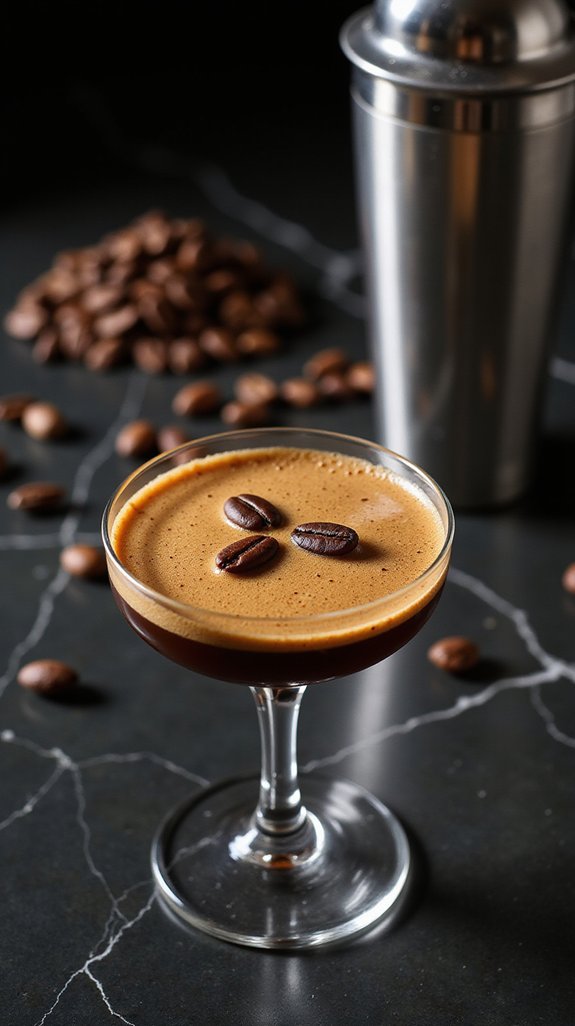
What sets the Espresso Martini apart from other coffee-based cocktails is its perfect balance between bitter and sweet, along with its luxurious texture and striking presentation. The fresh espresso is non-negotiable for achieving the proper depth of flavor and the characteristic crema-like foam on top, while the coffee liqueur reinforces the coffee notes and adds necessary sweetness without making the drink cloying.
The result is a dessert-worthy cocktail that maintains sophistication and complexity, appealing to coffee lovers and cocktail enthusiasts alike. Its versatility allows for numerous variations, from adding flavored vodkas to incorporating different coffee liqueurs or adjusting sweetness levels, but the classic formula remains the gold standard for good reason.
Ingredients
- 2 ounces vodka
- 1 ounce fresh espresso (cooled to room temperature)
- ½ ounce coffee liqueur (such as Kahlúa or Mr. Black)
- ½ ounce simple syrup
- Ice cubes
- 3 coffee beans for garnish
Instructions
Combine the vodka, fresh espresso, coffee liqueur, and simple syrup in a cocktail shaker filled with ice cubes. Shake vigorously and energetically for 15-20 seconds—more aggressive than typical cocktail shaking—to create proper aeration and achieve the signature thick foam layer on top of the finished drink.
The shaking should be hard enough that you can hear the ice breaking apart, which helps create the silky texture and emulsified foam. Strain through a fine-mesh strainer into a chilled coupe or martini glass, making sure the foam forms a thick, creamy layer on the surface. Float three coffee beans in the center of the foam as the traditional garnish, which represents health, wealth, and happiness.
Tips
The most critical element for a successful Espresso Martini is using freshly pulled espresso that has been allowed to cool to at least room temperature, as hot espresso will melt the ice too quickly and create excessive dilution while preventing proper chilling.
If you don’t have an espresso machine, strong cold brew concentrate can work in a pinch, though it won’t produce quite the same foam quality. The choice of coffee liqueur greatly impacts the final flavor profile—traditional Kahlúa offers familiar sweetness, while craft options like Mr. Black provide more authentic coffee character with less sugar.
Adjust the simple syrup based on your coffee liqueur’s sweetness level and personal preference, starting with less and adding more if needed. For the best foam formation, confirm your shaker is properly sealed and shake with genuine vigor; a weak shake will result in a disappointing flat surface rather than the luxurious foam crown that defines this cocktail.
Frequently Asked Questions
What Is the Proper Way to Chill a Martini Glass Before Serving?
You’ll want to fill your martini glass with ice and cold water while you’re mixing the drink. Let it sit for a few minutes, then dump it out right before pouring your finished martini.
How Long Should a Martini Be Stirred or Shaken for Optimal Dilution?
Timing is everything in the martini world. You’ll want to stir for 30-40 seconds or shake vigorously for 10-15 seconds. This achieves that perfect balance between cold temperature and proper dilution without over-watering your drink.
What Is the Shelf Life of Vermouth Once Opened?
Once opened, you’ll want to use dry vermouth within three to four weeks when stored in the refrigerator. Sweet vermouth lasts slightly longer, around one to two months refrigerated.
Can Martinis Be Made in Advance for Parties or Gatherings?
Yes, you can batch martinis ahead of time by mixing gin and vermouth, then refrigerating them. Just don’t add ice until serving. They’ll stay fresh for several hours when kept cold and properly stored.
What Are the Best Garnish Alternatives Beyond Olives, Lemon Twists, and Onions?
You’ll love experimenting with cucumber ribbons, pickled cocktail onions, blue cheese-stuffed olives, fresh herbs like rosemary or thyme, caperberries, or even a grapefruit twist for sophisticated flavor variations that’ll impress your guests.