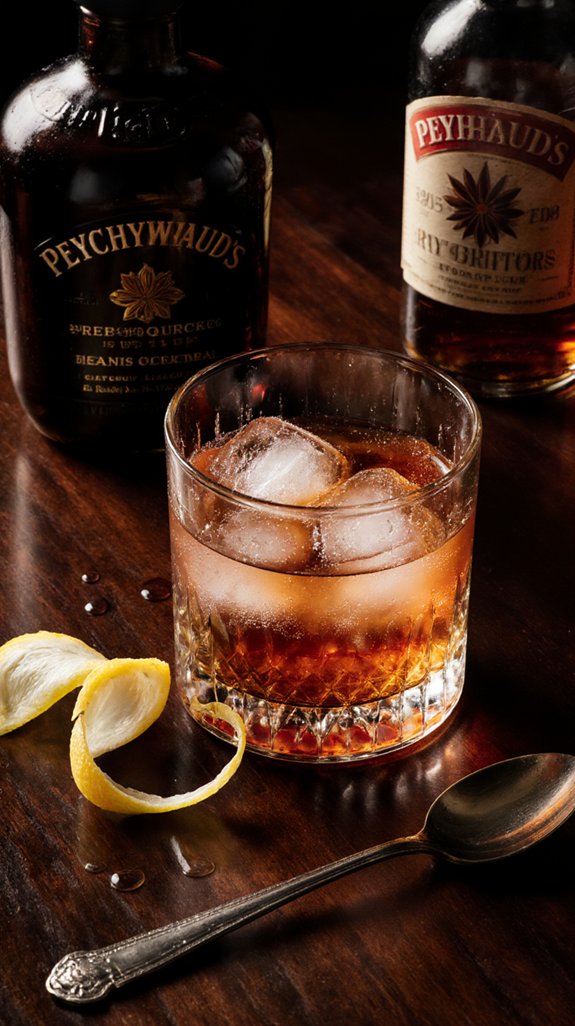
I’ve been fascinated by the Sazerac ever since my first sip in a dimly lit New Orleans bar, where the bartender treated this cocktail like liquid history. What makes it special isn’t just the rye whiskey or those aromatic bitters—it’s how these ingredients come together in a ritual that’s remained virtually unchanged for over 150 years. If you’re ready to master this legendary drink, I’ll show you exactly how it’s done.
Why You`ll Love this New Orleans Whiskey Magic
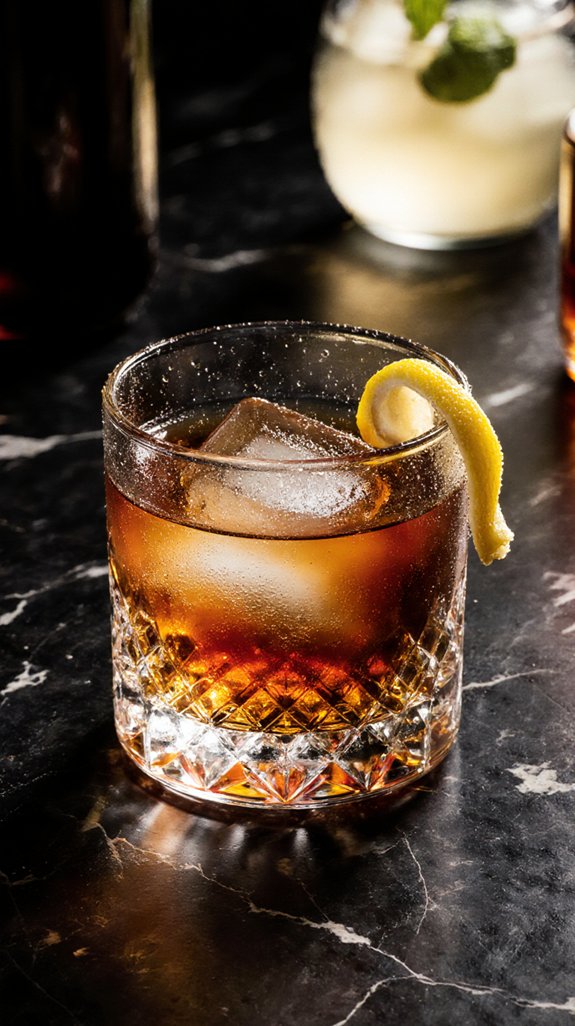
Since the 1830s, this iconic cocktail has been enchanting drinkers with its bold, herbaceous profile that sets it apart from every other whiskey drink.
I’m captivated by how this New Orleans treasure combines rye’s spiciness with Peychaud’s bitters and a whisper of anise from Herbsaint, creating layers of flavor that dance on your palate.
The whiskey history behind the Sazerac is fascinating—it’s considered America’s first cocktail, born in the French Quarter’s vibrant bars.
What I love most is how it represents cocktail culture at its finest: simple ingredients, precise technique, and unforgettable results.
You’re not just mixing a drink; you’re participating in nearly two centuries of tradition.
The balance between sweet, bitter, and botanical notes makes every sip an experience worth savoring.
What ingredients are in New Orleans Whiskey Magic?
The Sazerac’s ingredient list is deceptively simple, requiring just a handful of components that work together to create this legendary New Orleans cocktail. Each element plays a vital role in building the drink’s distinctive character, from the base spirit to the aromatic rinse that defines its signature profile.
Ingredients:
- 1/2-1 teaspoon simple syrup (or 1/2-1 teaspoon granulated sugar with a slight splash of water)
- 4 dashes Peychaud’s bitters
- 1/8-1/4 fluid ounce Herbsaint (Pernod can be substituted if unavailable)
- 2 ounces rye whiskey
- Ice cubes
The quality of your ingredients matters greatly when making a Sazerac. Peychaud’s bitters are essential to achieving the authentic flavor—no substitutions will deliver the same result. While Herbsaint is the traditional choice for the anise-flavored rinse, Pernod works as an acceptable alternative. When it comes to rye whiskey, select a quality bottle with enough spice and character to stand up to the other bold flavors. The choice between simple syrup and granulated sugar is largely a matter of personal preference and convenience, though simple syrup dissolves more easily in the cold mixture.
How to make this New Orleans Whiskey Magic
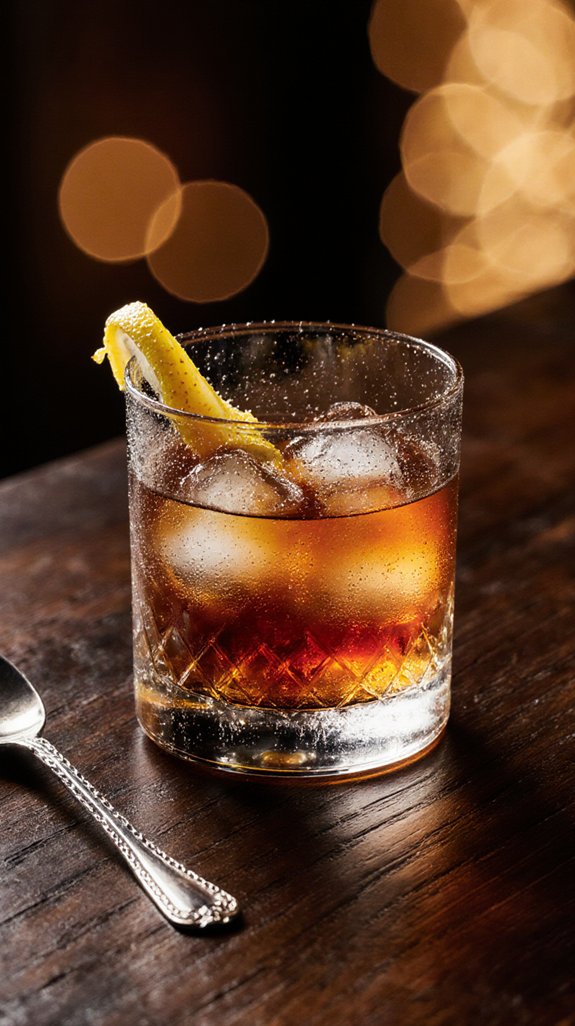
Making a Sazerac requires a unique preparation method that sets it apart from most other cocktails. Start by preparing your old fashioned glass with the distinctive anise rinse that gives this drink its character.
Pour 1/8-1/4 fluid ounce of Herbsaint (or Pernod if that’s what you have) into the glass, then turn it on its side and rotate it slowly to coat the interior surfaces. Allow any excess to flow out—you’re looking for just a light coating that will perfume the drink without overpowering it. This step is what transforms a simple whiskey cocktail into something truly special.
Once your glass is prepared, add 1/2-1 teaspoon of simple syrup (or granulated sugar with a slight splash of water), 4 dashes of Peychaud’s bitters, and 2 ounces of rye whiskey directly into the anise-coated glass.
Now comes an important departure from typical cocktail-making wisdom: instead of packing the glass full of ice, use just 3-4 cubes. This measured approach to ice is intentional, allowing you to stir and chill the drink without over-diluting the bold flavors that make the Sazerac so memorable.
The limited ice also means you’ll want to work efficiently, getting the drink properly chilled and mixed before serving. Just as premium kitchen appliances can elevate your cooking, the right bar tools and glassware will enhance your cocktail-making experience.
New Orleans Whiskey Magic Substitutions and Variations
While purists might insist on the classic formula, I’ve found that the Sazerac actually welcomes thoughtful variations that can highlight different flavor profiles or work with what you have on hand.
Rye whiskey alternatives include bourbon for a sweeter take, or even cognac, which honors the drink’s original spirit base from the 1800s. If you can’t find Herbsaint, absinthe works beautifully as the rinse.
For Sazerac variations, try adding a lemon twist instead of the traditional lemon peel for extra brightness, or experiment with different bitters like orange alongside the Peychaud’s.
Some bartenders use demerara syrup instead of simple syrup to add a molasses note. These adjustments respect the cocktail’s heritage while making it your own.
Shop Related Products

【All in One Set】Mixing glass bartender set is made for cocktail and other drinks.This cocktail mixing glass set comes with 20 oz heavy mixing glass,double jigger,shinning polished strong strainer,super spoon and muddle.You have all for mixing cocktail with this bartender glass mixing set.
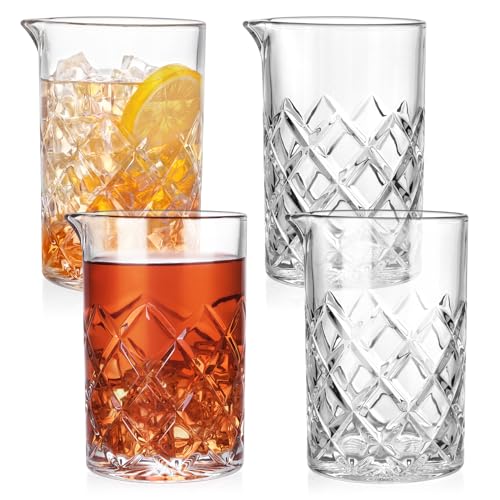
Sufficient Quantity: our product contains 4 pieces of clear bar mixing glasses, which are enough to meet your daily use needs, and enough quantity can also allow you to share with others

Stir like a pro: 24 oz crystal cocktail mixing glass with a weighted base and precise spout; a durable mixing glass that anchors your station and headlines a complete cocktail mixing glass set.
What to serve with New Orleans Whiskey Magic
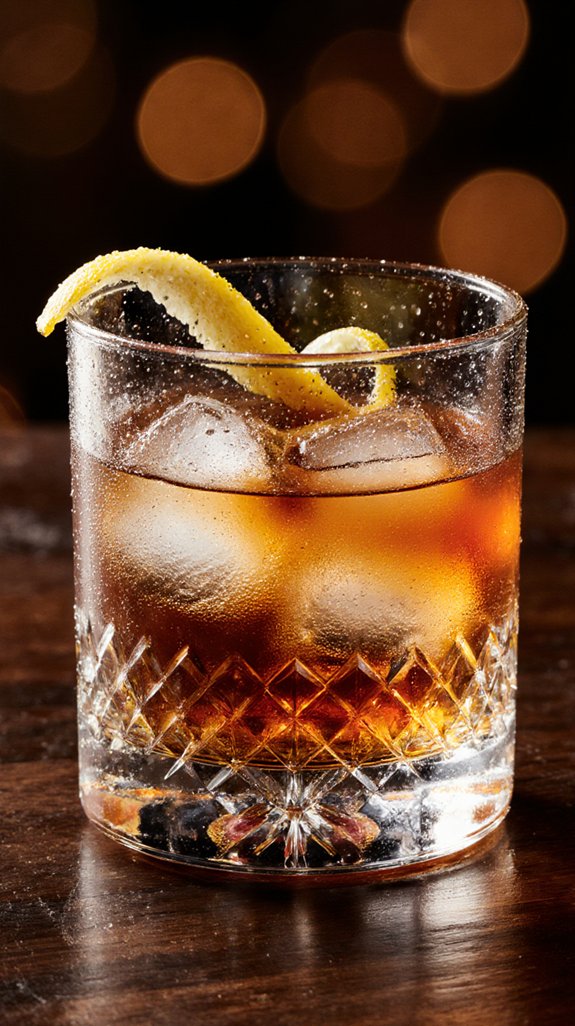
Since the Sazerac is such a spirit-forward, aromatic cocktail, I’ve learned it pairs best with foods that won’t compete with its complex flavors.
For cocktail pairings, I recommend rich, savory dishes like oysters Rockefeller, shrimp remoulade, or a classic New Orleans muffaletta sandwich. The briny seafood complements the whiskey’s spice notes beautifully.
When considering serving suggestions, think about timing too. I love sipping a Sazerac before dinner as an aperitif, since the Peychaud’s bitters and Herbsaint stimulate your appetite.
Grilled meats work wonderfully, especially blackened steak or barbecued ribs. The char echoes the cocktail’s smoky undertones.
For lighter fare, try aged cheeses or charcuterie. Whatever you choose, keep portions moderate—this cocktail deserves your full attention.
Final Thoughts
The Sazerac isn’t just another whiskey cocktail—it’s a piece of American history you can hold in your hand. When you make this drink, you’re connecting with a tradition that started in 1850s New Orleans.
I’ve shown you the classic method, and now it’s your turn to master it. Understanding cocktail history makes each sip more meaningful, and the Sazerac tells a story of French influence meeting American whiskey culture.
Remember, the key is in the details: coating that glass with Herbsaint, using quality rye, and not overdoing the ice.
I’ve covered drink pairing suggestions earlier, so you’re ready to serve this cocktail with confidence. Mix one tonight and taste what generations before you have enjoyed.
Frequently Asked Questions
Why Is the Sazerac Considered the Official Cocktail of New Orleans?
I’ll tell you that the Sazerac’s history dates back to 1850s New Orleans, where it was created. Its cultural significance grew so deeply rooted in the city that Louisiana officially designated it New Orleans’ cocktail in 2008.
Can I Make a Sazerac Without Peychaud’s Bitters?
I wouldn’t recommend it, as Peychaud’s defines the Sazerac’s signature flavor. However, you can experiment with alternative bitters like Angostura for cocktail variations, though you’ll lose the authentic New Orleans character.
What’s the Difference Between Using Rye Whiskey Versus Cognac?
I’ll get a spicier, more robust cocktail with rye whiskey, while cognac flavor brings a smoother, fruitier profile. The original Sazerac used cognac, but rye’s become the modern standard for this classic drink.
How Long Has the Sazerac Cocktail Been Around?
The Sazerac’s historical origins date back to the 1830s in New Orleans, making it one of America’s oldest cocktails. I find its cocktail evolution fascinating—it originally used cognac before rye whiskey became the standard ingredient during the phylloxera epidemic.
Should a Sazerac Be Served With Ice or Strained?
I’ll serve my Sazerac strained without ice. While the recipe uses ice for chilling and ice dilution during preparation, the traditional serving temperature is achieved by straining it into a chilled glass for ideal flavor.