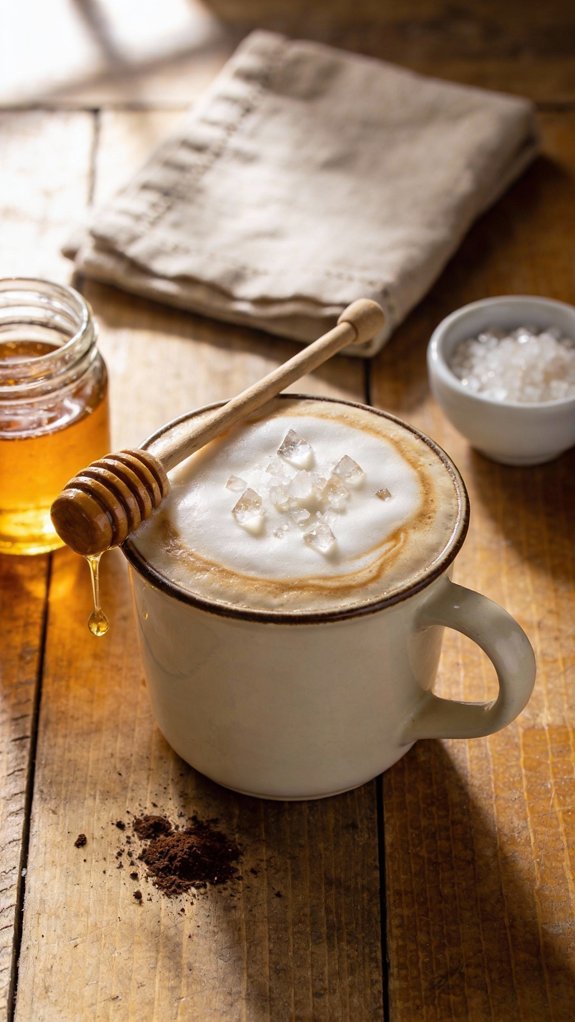

You’re probably wondering how a coffee drink can taste like your favorite spiced tea and still pack that espresso punch you need. I stumbled onto this combination last winter when I couldn’t decide between chai and coffee at my local café, and honestly, it changed my morning routine. The vanilla brings everything together in a way that’s smoother than you’d expect, creating something that works whether you need comfort or caffeine.
History
The vanilla chai espresso latte doesn’t have some grand origin story in a European café or an ancient tea ceremony.
It’s a modern mash-up that probably started when someone got bored with their regular order. Coffee shops began experimenting with chai lattes in the 1990s, bringing the Indian spiced tea tradition to espresso bars across America.
The vanilla chai espresso version likely emerged in the early 2000s when baristas started combining chai with coffee drinks instead of keeping them separate.
You’ll find different variations at every café now because there’s no official recipe to follow. It’s just one of those drinks that evolved naturally when people realized chai spices and espresso actually complement each other pretty well.
Recipe
This warming beverage combines the bold intensity of espresso with aromatic chai spices and a touch of vanilla sweetness. The result is a sophisticated drink that balances coffee’s rich bitterness with the complex warmth of cinnamon, cardamom, and ginger notes from the chai, all smoothed out by creamy milk and vanilla undertones.
Perfect for cool mornings when you need both comfort and energy, this latte works equally well as an afternoon pick-me-up or a cozy evening treat. The combination creates a more nuanced flavor than a standard latte while remaining approachable for those who find chai tea alone too mellow or straight espresso too intense.
Ingredients:
- 2 shots espresso (2 ounces)
- 1 chai tea bag
- 1 cup milk
- 1 tablespoon vanilla syrup
- Ground cinnamon for topping
- 2 ounces hot water
Preparation:
- Steep the chai tea bag in 2 ounces of hot water for 3-4 minutes, then remove the bag and set the concentrated chai aside.
- Pull two shots of espresso directly into your serving mug.
- Add the vanilla syrup and chai concentrate to the espresso and stir briefly to combine.
- Steam the milk until it reaches 150-160°F with a light microfoam.
- Pour the steamed milk over the espresso mixture, holding back the foam with a spoon.
- Spoon the remaining foam on top.
- Dust lightly with ground cinnamon.
For a dairy-free version, oat milk creates the creamiest texture while almond milk offers a lighter option. Adjust sweetness by increasing vanilla syrup to 2 tablespoons or omitting it entirely if you prefer the natural spice flavors to shine.
You can prepare a batch of chai concentrate by steeping multiple tea bags in advance and refrigerating for up to five days. For an iced version, brew a stronger chai concentrate, combine all ingredients over ice, and shake vigorously before serving.
Preparation Steps
Making this latte is simpler than you’d think, especially once you’ve done it a few times.
I’ll walk you through each step, from brewing that rich chai concentrate to creating the perfect foam on top.
The whole process takes about ten minutes, and most of that’s just waiting for things to steep or steam.
Step 1. Brew Concentrated Chai Tea

Before you pull your espresso shots, you’ll want to get that chai concentrate brewing since it needs a few minutes to develop its full flavor.
Heat two ounces of water until it’s just off the boil, then pour it over your chai tea bag in a small cup.
I usually set a timer for three to four minutes because that’s the sweet spot where you get those warm cardamom and cinnamon notes without any bitterness creeping in.
The liquid should turn a deep amber color, almost like strong black tea.
Once your timer goes off, pull out the tea bag and give it a gentle squeeze against the side of the cup to extract those last flavor drops.
Set it aside while you work on the espresso.
Step 2. Pull Espresso Shots
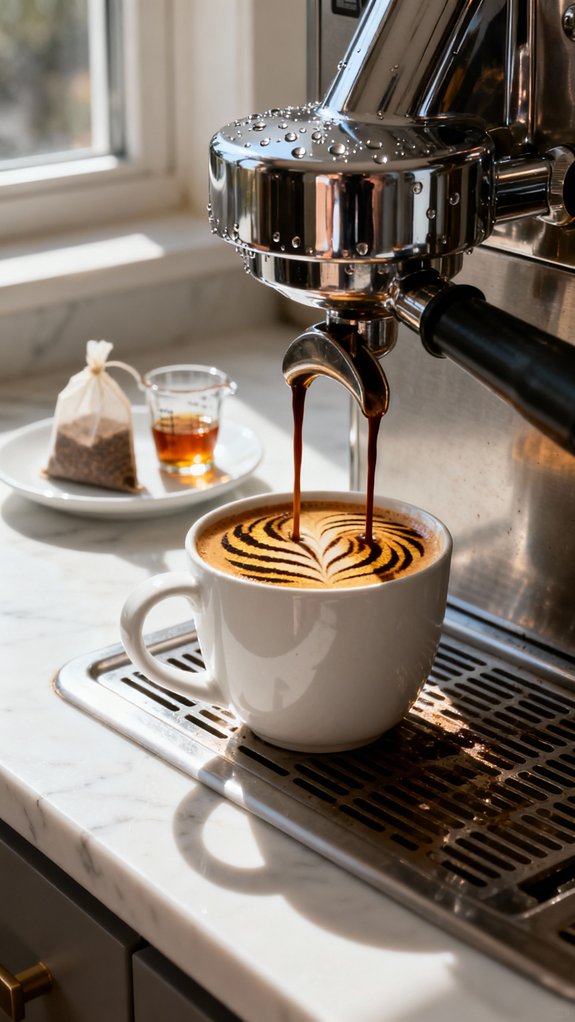
While your chai concentrate cools slightly, grab your espresso portafilter and dose out about 18 grams of freshly ground coffee.
I find that a medium-fine grind works best—think slightly coarser than table salt. Tamp the grounds firmly and evenly with about 30 pounds of pressure.
You’ll know you’ve got it right when the surface looks smooth and level. Lock the portafilter into your machine and place your serving mug directly underneath the spouts.
Start your extraction and watch as those rich, caramel-colored streams begin flowing. You’re aiming for a 25-30 second pull that yields two ounces of concentrated espresso.
The finished shots should have a golden-brown crema floating on top, which adds a subtle sweetness that complements the chai spices perfectly.
Step 3. Steam Milk to Temperature
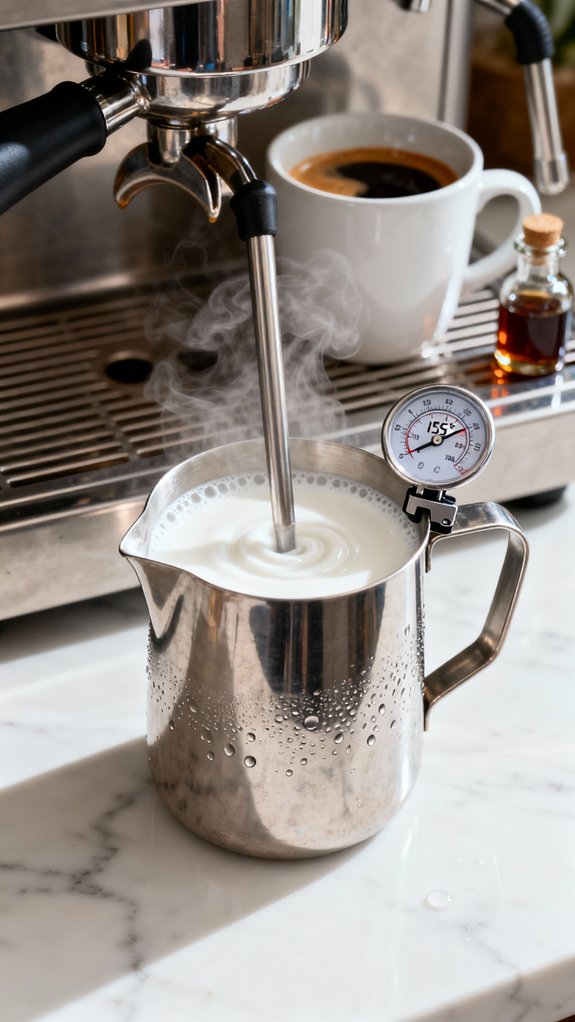
The milk steaming step happens right after you’ve pulled your espresso shots, and honestly, it’s where a lot of people mess up their lattes.
You’re aiming for 150-160°F, which feels hot but not scalding when you touch the pitcher.
I usually place the steam wand just below the milk’s surface and listen for that gentle hissing sound, not angry screaming bubbles.
The milk should look glossy and move in a whirlpool pattern.
When tiny bubbles form into microfoam instead of big soapy ones, you’re doing it right. It takes maybe thirty seconds total.
If you don’t have a thermometer, the pitcher becomes too hot to hold comfortably right around 150°F. That’s your cue to stop.
Step 4. Combine Chai and Espresso
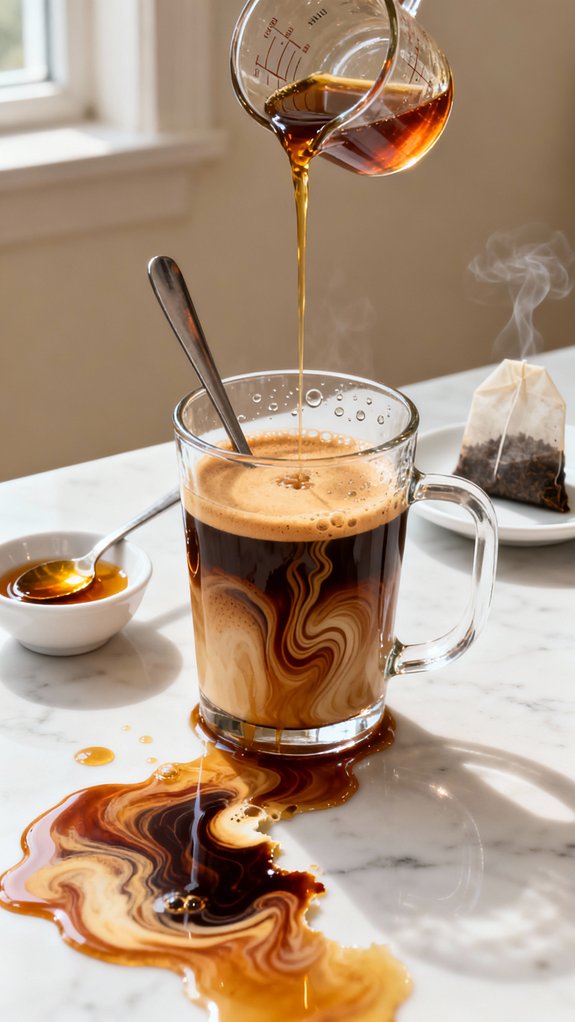
With your milk properly steamed and waiting, you’re ready to build the actual drink.
Pour both espresso shots into your serving mug first—they’ll form the foundation of everything that follows.
Add the tablespoon of vanilla syrup next, watching it swirl into the dark espresso like amber ribbons.
Now comes the chai concentrate you steeped earlier, still warm and fragrant with all those spices.
Give everything a quick stir with a spoon, just three or four swirls to blend the vanilla and chai into the espresso base.
The combined liquid should look lighter than straight espresso, almost caramel-colored.
This mixture creates the flavor backbone of your latte before the milk smooths everything out.
Step 5. Add Milk and Foam

Now that your espresso-chai-vanilla mixture sits ready in the mug, it’s time to transform it into an actual latte with that steamed milk you prepared.
Pour the milk steadily over the back of a spoon if you want more control, or just pour it straight in—both work fine. The milk will blend with the darker liquid below, creating those pretty layers you see in coffee shops, though they’ll mix together once you take your first sip anyway.
Hold back the foam with your spoon while pouring, then scoop the remaining foam on top at the end. This gives you that classic latte texture with creamy liquid and airy foam.
Dust the top with a pinch of cinnamon.
Final Thoughts
Since discovering this drink last winter, I’ve made it at least twice a week. It’s become my default when I can’t decide between coffee and tea, which happens more often than I’d like to admit.
The recipe looks complicated at first, but after making it three or four times, the whole process takes maybe five minutes. I usually prep extra chai concentrate on Sunday nights so I’m not fishing for tea bags at 6 AM.
My sister tried it during her last visit and immediately asked me to text her the measurements. Now she sends me photos of her attempts, which range from Instagram-worthy to “well, it probably tastes fine.”
That’s honestly the best part—it’s forgiving enough for experimentation.
Frequently Asked Questions
Can I Make This Without an Espresso Machine?
Yes, you can substitute strong brewed coffee or moka pot coffee for espresso. Use about 4 ounces of concentrated coffee instead of the espresso shots, though the flavor won’t be quite as intense.
How Many Calories Are in a Vanilla Chai Espresso Latte?
You’re looking at approximately 120-150 calories depending on your milk choice. Using whole milk hits around 150, while skim milk drops it to 120. The vanilla syrup adds about 50 calories to the total.
What’s the Caffeine Content Compared to Regular Coffee?
You’ll get a caffeine boost that packs a punch—around 128mg from the double espresso shot, which is more than an 8-ounce cup of regular coffee containing approximately 95mg of caffeine.
Can I Use Decaf Espresso Instead?
Yes, you can absolutely use decaf espresso. The recipe works identically with decaf shots, maintaining all the same flavors while considerably reducing caffeine content. The chai tea still contributes minimal caffeine.
How Long Does Homemade Vanilla Syrup Last?
Homemade vanilla syrup lasts about one month when stored in an airtight container in your refrigerator. You’ll know it’s gone bad if you notice cloudiness, mold, or off smells developing before then.