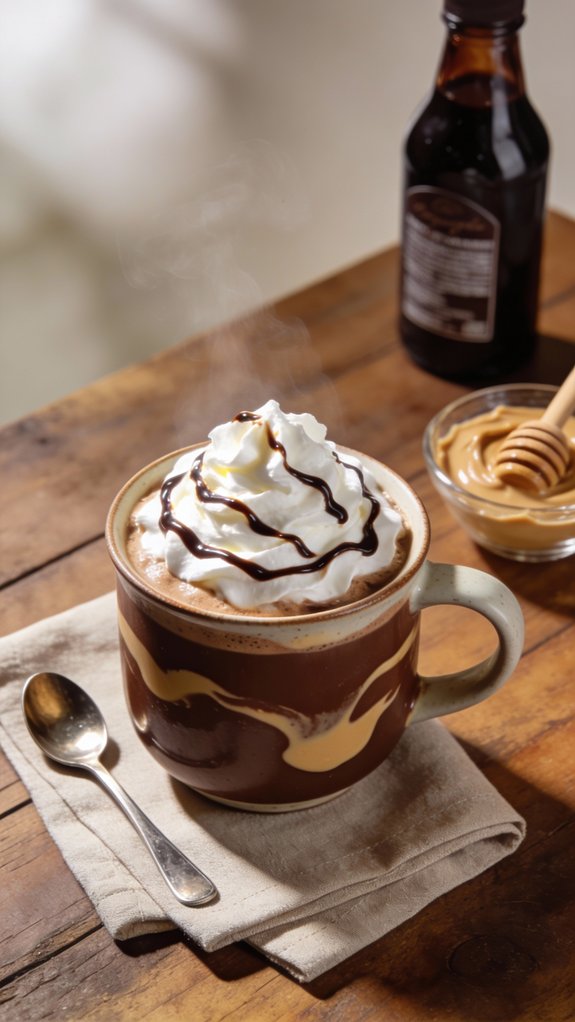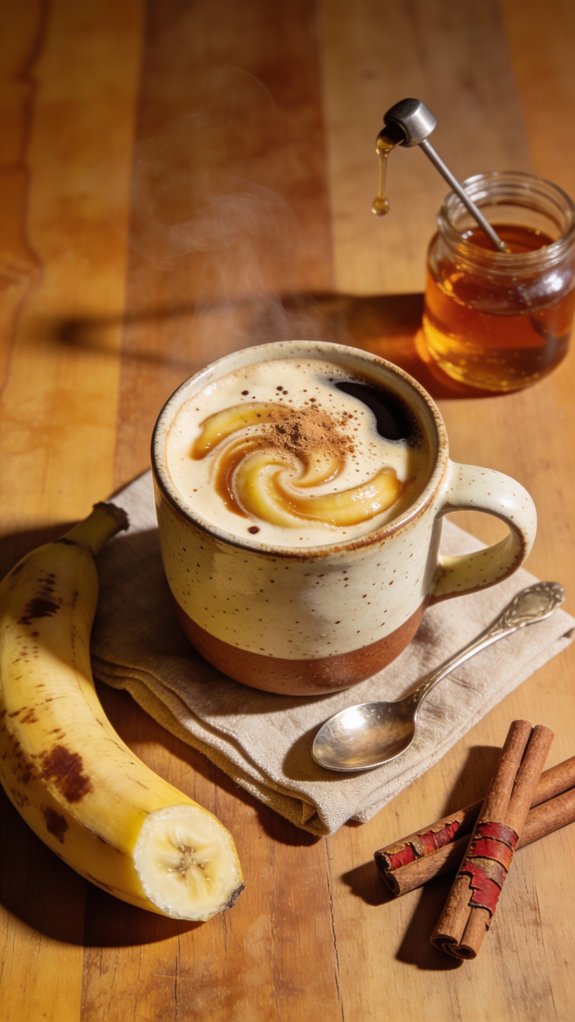

Last December, I made my first gingerbread latte at home after spending way too much at coffee shops, and honestly, it turned out better than I expected. You don’t need fancy equipment or a barista certification to pull this off. The trick is getting those warm spices just right—not too heavy on the ginger, but enough that you know it’s there. I’ll walk you through exactly how I figured out the balance.
History
While the modern gingerbread latte only became a coffeehouse staple in the early 2000s, its roots stretch back centuries to when gingerbread itself first captured people’s hearts.
Medieval Europeans combined ginger with honey and breadcrumbs, creating treats that eventually evolved into the spiced cookies we recognize today.
When coffee culture exploded in the 1990s, baristas started experimenting with seasonal flavors beyond the usual vanilla and caramel. The gingerbread latte emerged as coffee chains searched for new holiday offerings.
It paired perfectly with the nostalgia people felt for Christmas baking. I remember when these drinks first appeared—they seemed novel, almost rebellious compared to plain coffee.
Now they’re as traditional as decorating trees, showing up reliably each November in cafes everywhere.
Recipe
The gingerbread latte captures the warm, spicy essence of the beloved holiday cookie in a comforting coffee drink. This beverage combines rich espresso with the distinctive flavors of ginger, cinnamon, and molasses, creating a perfectly balanced cup that’s both bold and sweet.
The aromatic spices mingle with creamy steamed milk to produce a drink that tastes like liquid gingerbread. This latte is ideal for cold winter mornings, holiday gatherings, or as an afternoon pick-me-up during the festive season.
The warming spices make it particularly satisfying when you need comfort on a chilly day, and it pairs beautifully with breakfast pastries or as a standalone treat.
Ingredients
- 2 shots espresso (or ½ cup strong brewed coffee)
- 1 cup milk
- 2 tablespoons molasses
- ½ teaspoon ground ginger
- ¼ teaspoon ground cinnamon
Instructions
- Brew 2 shots of espresso or ½ cup of strong coffee and set aside.
- In a small saucepan, combine the milk, molasses, ground ginger, and cinnamon over medium heat.
- Whisk continuously until the mixture is hot and the molasses is fully dissolved, about 3-4 minutes, being careful not to let it boil.
- Use a milk frother or whisk vigorously to create foam if desired.
- Pour the espresso into your mug, then add the spiced milk mixture, stirring gently to combine.
Tips
For a dairy-free version, substitute oat milk or almond milk, though oat milk froths best and provides the creamiest texture.
If the drink is too sweet, reduce the molasses to 1 tablespoon, or if you prefer it sweeter, add an extra tablespoon.
You can make a gingerbread syrup concentrate by combining the molasses and spices with a tablespoon of hot water, which stores in the refrigerator for up to a week.
For extra indulgence, top with whipped cream and a sprinkle of cinnamon or ginger.
Preparation Steps
Making this gingerbread latte takes about five minutes, and I promise it’s easier than you’d think.
You’ll start by brewing your espresso while heating the milk with those warm spices on the stove, whisking everything together until it smells like Christmas morning in your kitchen.
The final step is just combining the espresso and spiced milk, then adding whipped cream if you’re feeling fancy.
Step 1. Brew Espresso or Coffee

Starting your gingerbread latte means getting that coffee base right, and honestly, this part is pretty straightforward.
You’ll need two shots of espresso, which takes maybe thirty seconds if you’ve got an espresso machine at home. I use mine every morning, and it’s become second nature—just tamp the grounds, lock the portafilter, and press the button.
If you don’t have an espresso machine, don’t worry. Just brew half a cup of really strong coffee instead. I’m talking darker than your usual breakfast cup, something with enough backbone to stand up to all those spices and molasses coming later.
Once it’s ready, set it aside while you work on the spiced milk mixture.
Step 2. Heat Milk With Spices
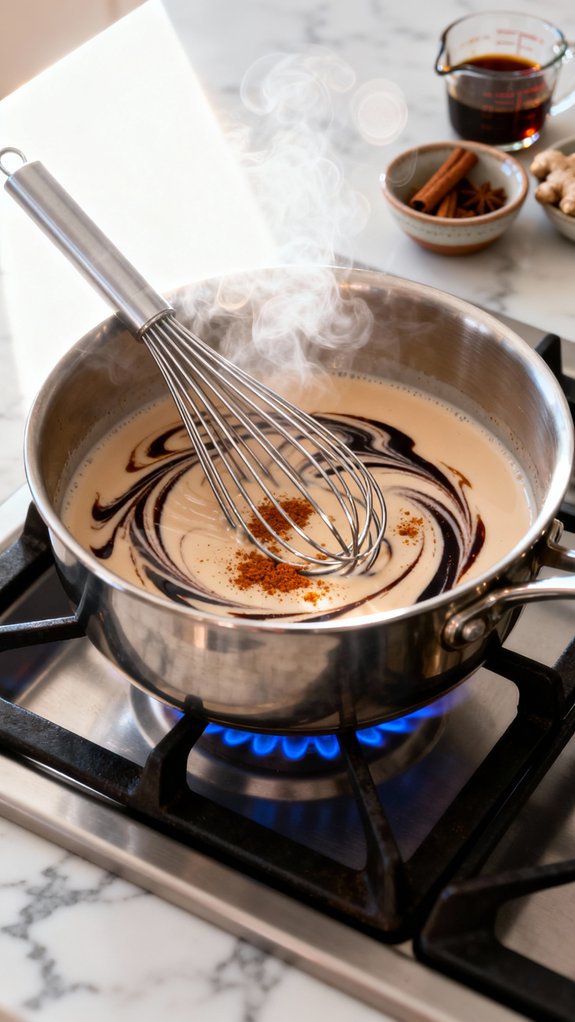
With your coffee ready and waiting, grab a small saucepan and pour in the milk—I use whatever’s in my fridge, usually whole milk because it creates that velvety texture I’m after.
Add the molasses, ginger, and cinnamon directly to the cold milk. Turn the heat to medium and start whisking right away. The molasses tends to sink to the bottom if you don’t keep things moving, and you’ll end up with clumps nobody wants.
Keep whisking for three to four minutes until small bubbles form around the edges. You’re looking for that just-before-boiling point where steam rises and the mixture smells like a gingerbread bakery.
The spices will darken the milk to a light tan color, and everything should look completely smooth.
Step 3. Froth the Milk Mixture
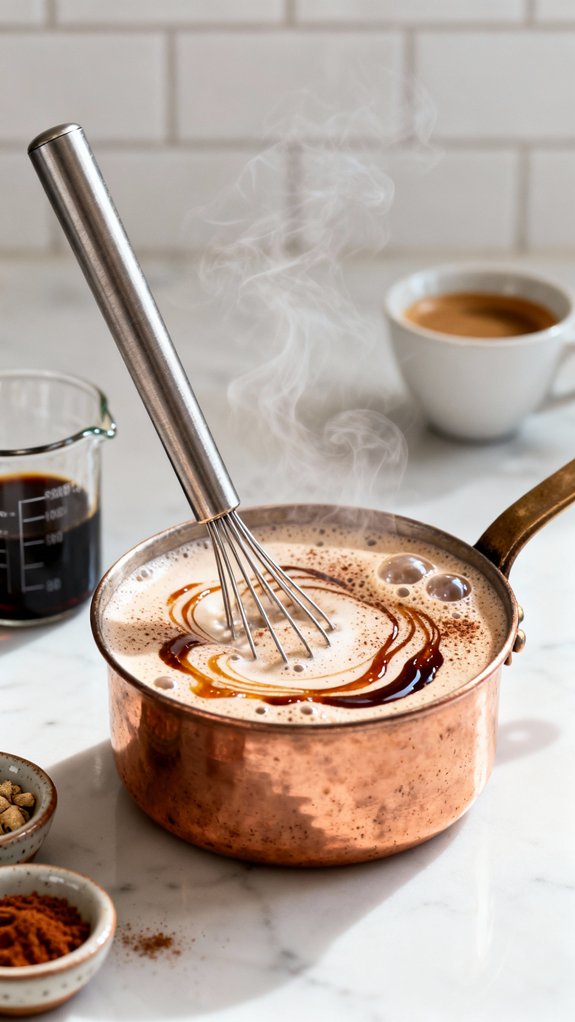
Once the milk hits that perfect temperature, it’s time to transform it into something cloud-like.
You can use a handheld frother if you’ve got one—just stick it in and run it for about twenty seconds until you see bubbles forming on top. I usually move mine in small circles near the surface.
If you don’t have a frother, no problem. Just whisk it fast for thirty seconds or so. The foam won’t be quite as thick, but it’ll still add that nice texture.
You want to see some lightness, maybe double the volume if you’re doing it right. The spiced milk should look creamy and inviting, ready to meet that espresso waiting in your mug.
Step 4. Combine Espresso and Milk

Your espresso’s been sitting there getting lonely, so let’s fix that. Grab your favorite mug and pour in those two shots of espresso first. This creates a nice base layer.
Now comes the good part—slowly pour that spiced milk mixture right over the espresso, watching as the dark coffee swirls together with the pale, cinnamon-flecked milk.
I like to give it a gentle stir with a spoon, just enough to blend everything without killing the foam on top. The smell hits you immediately—ginger and cinnamon mixing with that coffee aroma.
If you made foam earlier, spoon some extra on top for that coffeehouse look. The drink should be steaming hot but not scalding, perfect for wrapping your hands around.
Step 5. Add Optional Toppings

Want to make this latte look like it came from an expensive coffee shop? The toppings are where you get to play around.
I usually dollop some whipped cream on top—the real stuff from a can works fine, but homemade is better if you’ve got time. Then I grab my cinnamon shaker and dust a light layer across the cream.
Sometimes I’ll add a pinch of ground ginger instead for extra spice. A few crushed gingersnap cookies scattered on top make it feel really special, especially when I’m serving these at brunch.
You could drizzle a thin stream of molasses over everything, though that makes it sweeter. The toppings aren’t necessary, but they definitely make the drink feel more festive.
Final Thoughts
When the holidays roll around, I find myself craving this gingerbread latte almost daily.
There’s something about that combination of molasses and warm spices that just hits differently during winter months. I’ve made this recipe on rushed weekday mornings and lazy Sunday afternoons, and it works perfectly both ways.
The best part is how your kitchen smells while you’re making it—like a gingerbread house came to life. I usually keep the ingredients stocked from November through January because I know I’ll want one at least a few times a week.
It’s become my go-to drink when I need a break from plain coffee but don’t want anything too complicated.
Frequently Asked Questions
Can I Make This Recipe Without an Espresso Machine?
Yes, you can! Brew strong coffee instead of espresso, heat your milk with spices, and combine them. You’ll get the same warming flavors, enjoy the same cozy experience, savor the same holiday treat.
How Many Calories Are in a Gingerbread Latte?
You’ll consume approximately 200-250 calories per serving, depending on your milk choice. Using whole milk lands around 240 calories, while skim milk reduces it to about 180. The molasses contributes roughly 60 calories to your drink.
What’s the Difference Between Gingerbread Latte and Chai Latte?
Like two winter travelers taking different paths through the same snowy forest, you’ll find gingerbread lattes feature molasses with ginger and cinnamon, while chai lattes blend black tea with cardamom, cloves, and peppercorns—distinct spice journeys entirely.
Can I Use Fresh Ginger Instead of Ground Ginger?
Yes, you can use fresh ginger! Grate about 1 teaspoon and simmer it with the milk, then strain before adding to your espresso. Fresh ginger provides a brighter, more intense flavor than ground.
How Long Does Homemade Gingerbread Syrup Last in the Refrigerator?
You can store homemade gingerbread syrup in the refrigerator for up to one week. Make sure you keep it in an airtight container to maintain its freshness and flavor throughout that time.