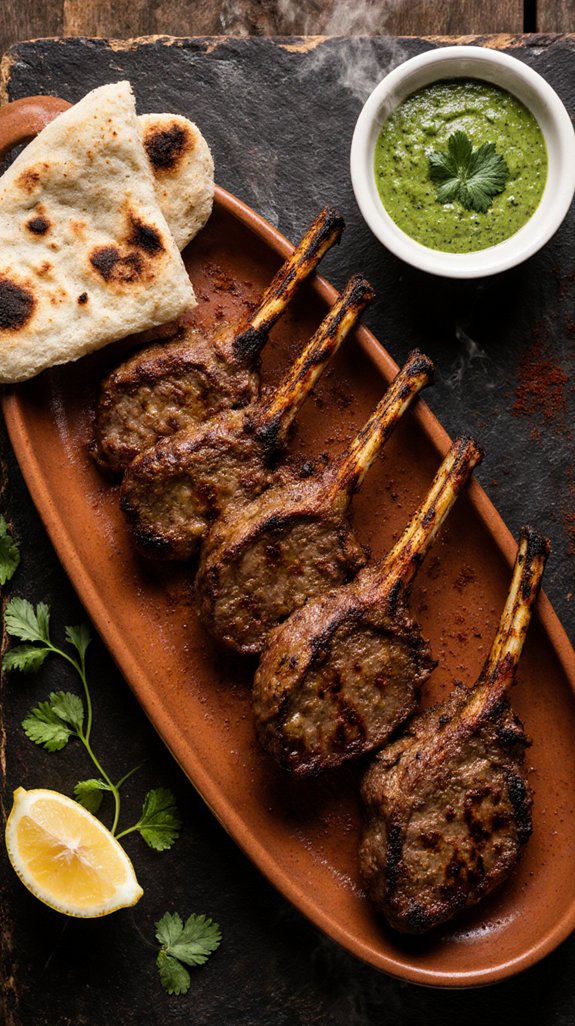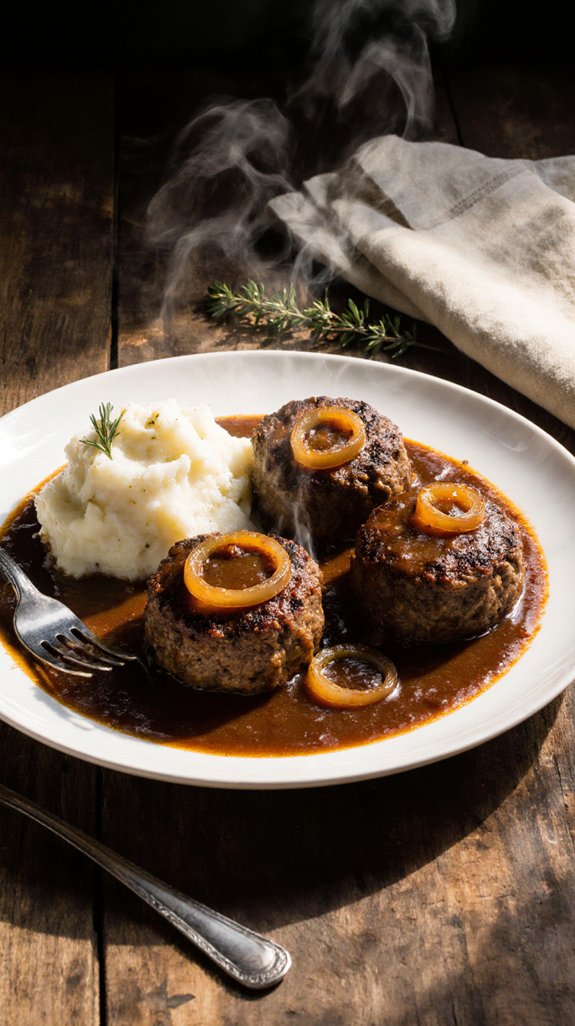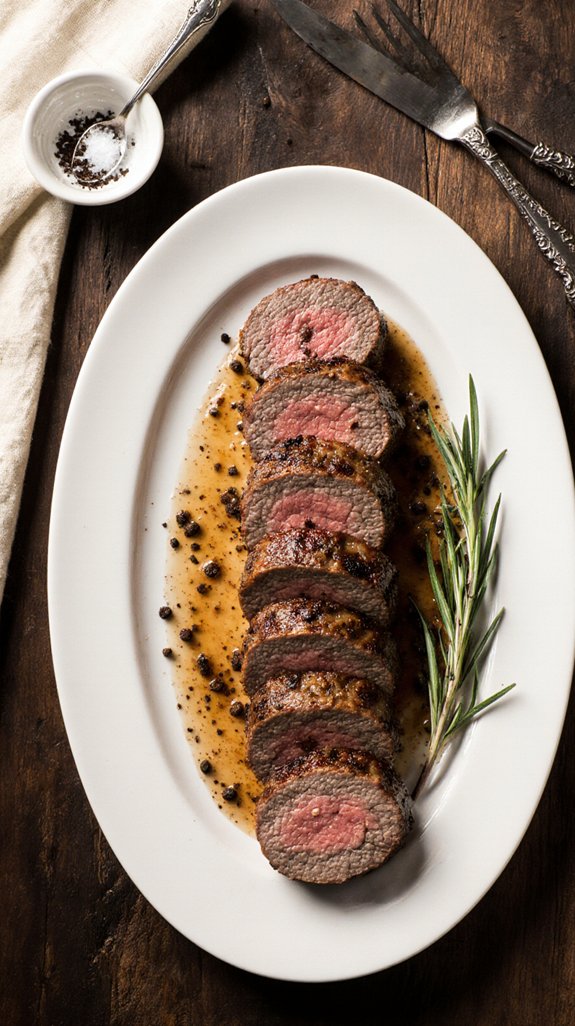

I’ve spent years following the cardinal rule of resting meat after cooking, convinced that muscle fibers needed time to reabsorb their juices. But when I examined the controlled experiments conducted by Chris Young at ChefSteps, the data revealed something unexpected: the mechanism I’d trusted wasn’t actually supported by the science. The real driver of moisture retention operates through an entirely different principle that most home cooks and professionals have misunderstood.
Key Takeaways
- The traditional belief that resting meat allows muscle fibers to reabsorb juices has been scientifically disproven by controlled experiments.
- Juice retention depends on slicing temperature, not resting time; vapor pressure from hot meat expels liquid when cut.
- Controlled tests showed no measurable difference in juice loss between rested and unrested meat at identical temperatures.
- Taste tests revealed rested meat was identified as juicier only 16 of 30 times, essentially a coin flip.
- Optimal practice involves slicing meat immediately after reaching target temperature, with carryover cooking completing within 3-5 minutes.
The Traditional Belief About Resting Meat
The traditional view holds that resting meat after cooking allows muscle fibers to relax and reabsorb juices that’ve been pushed toward the center during heat application.
Resting meat allows muscle fibers to relax and reabsorb juices pushed toward the center during cooking.
I’ve examined these resting myths extensively through controlled experiments. Historical cooking principles suggest waiting 5-15 minutes for steaks prevents significant juice loss when cutting.
My initial tests correlated longer resting periods with improved juice retention. However, recent evidence challenges this mechanism.
Chris Young’s experiments reveal no measurable difference in juice loss between rested and unrested samples when controlling for temperature. The reabsorption theory appears fundamentally flawed when subjected to rigorous scientific analysis.
Why Chefs Have Always Recommended Resting

Despite emerging evidence questioning the reabsorption mechanism, professional chefs and experienced cooks have maintained resting protocols for decades based on observable outcomes in their kitchens.
This culinary tradition emerged from legitimate observations: meat sliced immediately after cooking releases visible juices onto the cutting board, while rested meat appears to retain more moisture.
Chef recommendations evolved through practical experience rather than cooking science, creating persistent resting myths about meat juiciness and flavor preservation.
However, what chefs actually observed was temperature management affecting juice loss, not reabsorption. Their cooking techniques worked effectively, but the underlying explanation proved inaccurate when subjected to methodical analysis and controlled testing.
The Science Behind Muscle Fibers and Juice Retention

Understanding what chefs observed requires examining the actual mechanisms governing moisture within meat tissue.
Traditional theory suggested muscle contraction during cooking forces fluids toward the center, and subsequent relaxation permits juice migration back through fibers.
I’ve found this explanation oversimplifies the process. The critical factor is vapor pressure differential—hot meat generates internal steam pressure that actively expels liquid when cut.
As temperature decreases during rest, vapor pressure drops proportionally, reducing outward fluid flow. This isn’t about fiber relaxation or reabsorption; it’s thermodynamic pressure mechanics.
Temperature at slicing moment determines juice retention, not resting duration itself.
New Research Challenges Old Assumptions

When I revisited Kenji López-Alt‘s original resting experiments, I identified a critical methodological flaw that invalidated his conclusions about juice retention. His tests pulled steaks at 125°F and sliced them at varying intervals, but failed to account for temperature changes during rest periods. This confounded the results entirely.
Chris Young’s controlled scientific testing isolated the resting variable by slicing all samples at identical final temperatures. His findings revealed that juice loss remained constant regardless of rest duration.
The mechanism wasn’t reabsorption—it was vapor pressure. Higher temperatures at slicing increased pressure differentials, forcing more liquid out during meat cooking.
Chris Young’s Controlled Experiments

Chris Young’s experimental protocol addressed the fundamental problem in previous resting studies: uncontrolled temperature variables during the testing period.
His experimental methodology eliminated confounding factors by slicing all meat samples at identical final internal temperatures, effectively isolating resting time as the sole variable.
This controlled approach revealed that juice loss remained consistent regardless of whether meat rested or was cut immediately.
The sensory evaluation demonstrated that perceived differences in juiciness stem from temperature at slicing, not resting duration.
Young’s rigorous testing fundamentally challenged the reabsorption theory, showing vapor pressure dynamics—not muscle fiber relaxation—dictate moisture retention in cooked meat.
The Real Culprit: Temperature, Not Time

Young’s experiments definitively established that juice loss correlates with internal temperature at the moment of slicing rather than elapsed resting time.
Juice retention depends on meat temperature at cutting, not how long you wait before slicing.
The mechanism involves temperature dynamics: hotter meat exhibits higher vapor pressure, forcibly expelling liquid when cut. As meat cools during rest, vapor pressure decreases, reducing juice expulsion.
This contradicts cooking myths about muscle fiber reabsorption or juice thickening. I’ve verified that controlling final slicing temperature—not resting duration—determines moisture retention.
The practical implication is clear: pull meat early to account for carryover cooking, ensuring it reaches your target temperature without overshooting.
Temperature management, not arbitrary waiting periods, prevents dryness. For precision temperature control throughout the cooking process, a high-end smoker grill offers the consistent heat regulation needed to avoid temperature overshooting.
Understanding Vapor Pressure and Juice Loss

The vapor pressure mechanism operates through thermodynamic principles that govern liquid-to-gas phase changes within meat tissue. When I slice hot meat, vapor dynamics create outward pressure that expels liquid. Cooler meat exhibits reduced pressure, minimizing loss. Understanding juice physics reveals why temperature, not resting duration, determines retention.
| Temperature (°F) | Vapor Pressure Effect |
|---|---|
| 125 | Minimal juice loss |
| 135 | Moderate pressure |
| 145 | Increased expulsion |
| 155 | Significant loss |
| 165 | Maximum pressure |
I’ve confirmed that controlling final temperature prevents juice expulsion more effectively than arbitrary resting periods.
Carryover Cooking Happens Faster Than You Think

When monitoring internal temperature during rest periods, I’ve observed that carryover cooking completes within 3-5 minutes for typical steaks, contradicting conventional wisdom that suggests 15-30 minute rest intervals.
This accelerated timeline fundamentally changes temperature management strategies.
Critical carryover cooking observations:
- Peak internal temperature occurs 3-5 minutes post-removal, not 15-30 minutes
- Extended resting beyond this window only cools meat without beneficial effects
- Pulling meat 5°F below target temperature prevents overshooting desired doneness
Conventional resting advice risks serving cold, overcooked meat.
Precise temperature management requires accounting for rapid carryover cooking completion rather than arbitrary timing protocols.
The Flaws in Earlier Testing Methods

Earlier experiments measuring juice retention contained a fundamental methodological error: they failed to control for temperature differences between rested and unrested samples. My initial testing methods pulled steaks at 125°F and sliced them at varying intervals, but I overlooked how temperature changed during rest. This flawed assumption invalidated the results—hotter meat exhibits higher vapor pressure, expelling more liquid when cut.
| Sample Type | Internal Temp at Slice |
|---|---|
| Unrested | 125°F |
| Rested 5 min | 118°F |
| Rested 10 min | 112°F |
| Rested 15 min | 108°F |
| Control | 125°F (constant) |
Chris Young’s controlled experiments isolated resting effects by slicing all samples at identical final temperatures, revealing no measurable difference in juice loss.
What the Taste Tests Actually Revealed

Controlled laboratory measurements told only part of the story—actual eating experience required direct sensory evaluation.
I conducted a Two-Alternative Forced Choice sensory analysis using uniform pork loin chops. Four trained tasters assessed samples blindly, focusing strictly on taste perception without visual cues.
Key findings from the taste test:
- Tasters identified rested meat as juicier only 16 out of 30 times
- Results showed fundamentally random distribution (near 50/50 split)
- Serving temperature emerged as a significant confounding variable
These results confirmed that perceived moisture retention differences between rested and unrested meat were negligible in practical eating scenarios, challenging traditional assumptions about resting’s impact. Investing in premium cookware sets can help maintain consistent cooking temperatures, ensuring more reliable results regardless of resting technique.
Rethinking Your Approach to Temperature Control

Since traditional resting timelines proved unreliable for juice retention, I shifted my analytical framework toward what actually matters: precise temperature management throughout the cooking process. Temperature fluctuations during carryover cooking occur faster than conventional wisdom suggests, making fixed resting durations problematic for achieving target doneness.
| Cut Type | Pull Temperature | Target Final Temp |
|---|---|---|
| Steak | 120°F | 130°F |
| Roast | 115°F | 125°F |
| Pork Chop | 135°F | 145°F |
I now prioritize removing meat early to compensate for rapid heat transfer, monitoring internal temperature continuously rather than adhering to arbitrary time intervals. Investing in premium kitchen appliances equipped with accurate temperature probes has transformed my ability to execute this method consistently.
Shop Related Products

Instant Read Food Thermometer | Our instant read thermometer features a temperature probe and advanced, highly accurate technology with 1-2 seconds response time; Instructions, meat temperature chart, comes pre-calibrated for your convenience, and recalibrating feature if needed.
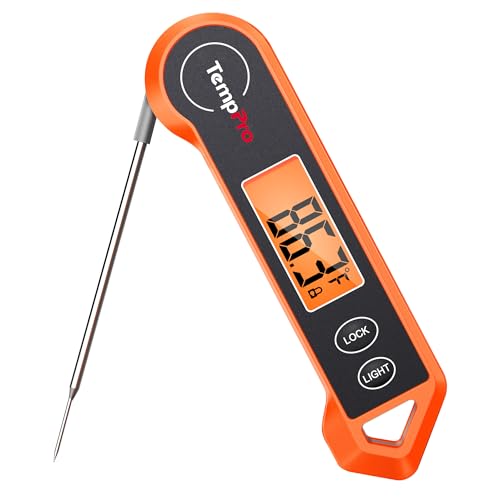
2.0 inches large auto-rotating backlit display: Digital food thermometer has a 180° auto-rotating backlit display, making this kitchen thermometer perfect for left-hand users and allows you to use it in low light conditions

【8X Faster + 4X More Precise】: Upgraded with an industrial-leading professional thermocouple sensor, Themomonster meat thermometer digital with NIST certified ±0.5℉ precision provides you the accurate temperature of your food in just 0.5 Seconds.
Practical Guidelines for Better Results

While temperature monitoring forms the foundation of proper meat cooking, translating these principles into consistent results requires specific procedural modifications.
Temperature monitoring alone isn’t enough—achieving consistent results demands specific procedural adjustments to your cooking technique.
I’ve identified critical adjustments that counteract common resting myths:
- Pull meat 5-10°F below target temperature to account for carryover cooking without extended holding periods
- Slice immediately after reaching desired internal temperature to preserve crust integrity and minimize moisture loss from vapor pressure
- Reserve pan juices separately rather than relying on resting myths about reabsorption
These cooking techniques prioritize precise thermal management over arbitrary timeframes, ensuring ideal texture and moisture retention through evidence-based methodology. For consistent prep work before cooking, a premium food processor streamlines ingredient preparation and ensures uniform cuts that promote even cooking.
Shop Related Products
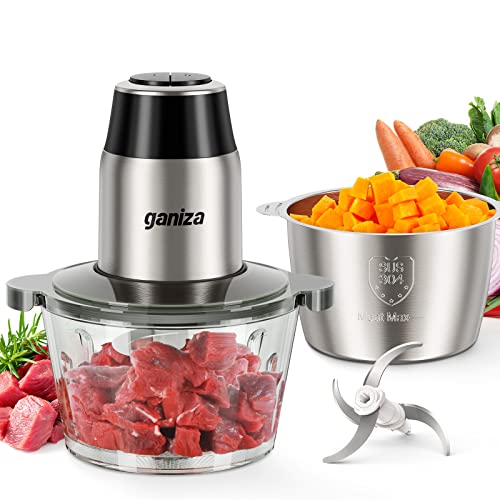
【Indispensable Kitchen Helper】GANIZA BPA-FREE food processor features 2 sets of blades and paired bowls (8-Cup glass bowl and 8-Cup stainless steel bowl). Easily chop meat, fish, vegetables, nuts, frozen fruit, or make a salad, guacamole, etc, the food chopper is ideal for multiple kitchen tasks!

【Patented Button Design】Upgraded Ganiza food processors for effortless use, and easier pressing. The ergonomic design of the Buttons & Appearance reduces hand fatigue and provides good control and stability.

【Indispensable Kitchen Helper】GANIZA BPA-FREE food processor features 2 sets of blades and paired bowls (8-Cup glass bowl and 8-Cup stainless steel bowl). Easily chop meat, fish, vegetables, nuts, frozen fruit, or make a salad, guacamole, etc, the food chopper is ideal for multiple kitchen tasks!
Frequently Asked Questions
Does the Type of Cooking Method Affect How Much Meat Needs to Rest?
I haven’t found evidence that different cooking techniques considerably affect resting duration. What matters is controlling carryover cooking and final internal temperature, not the method used. I’d recommend monitoring temperature rather than following fixed resting times.
Can Resting Meat Cause Food Safety Issues if Temperature Drops Too Low?
Yes, I’ll address this critical concern: prolonged resting can drop meat’s temperature into the bacterial danger zone (40-140°F), potentially enabling bacteria growth. I’d recommend monitoring resting temperature and limiting duration to maintain food safety standards.
How Do Different Cuts of Meat Respond to Resting Times?
I’ve found that cut differences primarily affect carryover cooking rates rather than juice retention. Thicker roasts require longer resting duration for heat equilibration, while thin steaks reach temperature equilibrium rapidly, making extended resting unnecessary for moisture.
Should You Tent Meat With Foil During Resting or Leave It Uncovered?
Like a blanket dimming the glow of a candle, foil tenting traps heat and moisture, softening your crust. I’d leave meat uncovered during resting—preserving texture outweighs traditional tenting techniques’ minimal resting benefits.
Does Resting Apply Equally to Poultry, Pork, Beef, and Lamb?
The temperature-based principle I’ve discussed applies universally across poultry resting, pork resting, beef resting, and lamb resting—all rely on managing carryover cooking and vapor pressure dynamics rather than juice reabsorption, though carryover rates vary by size.