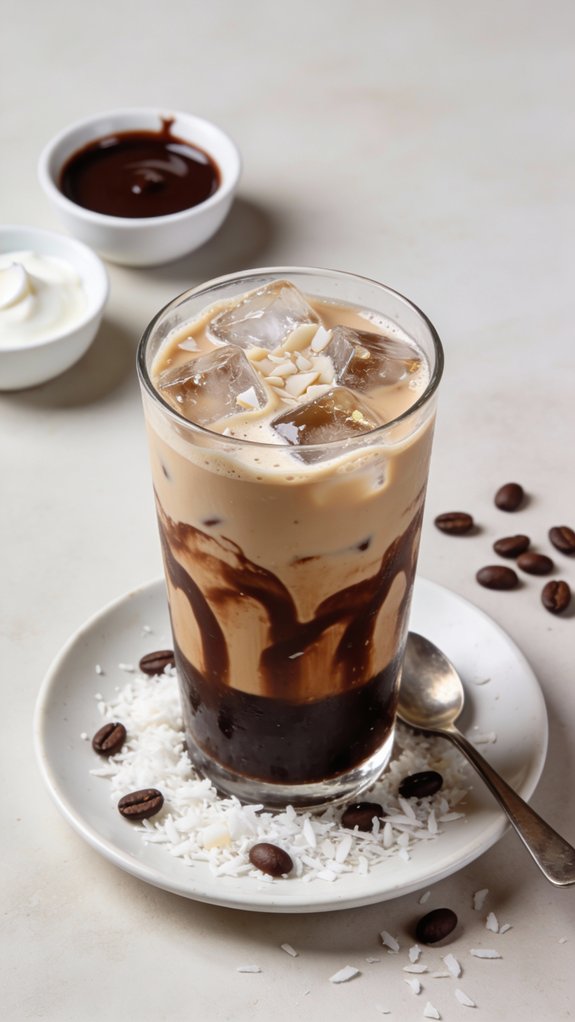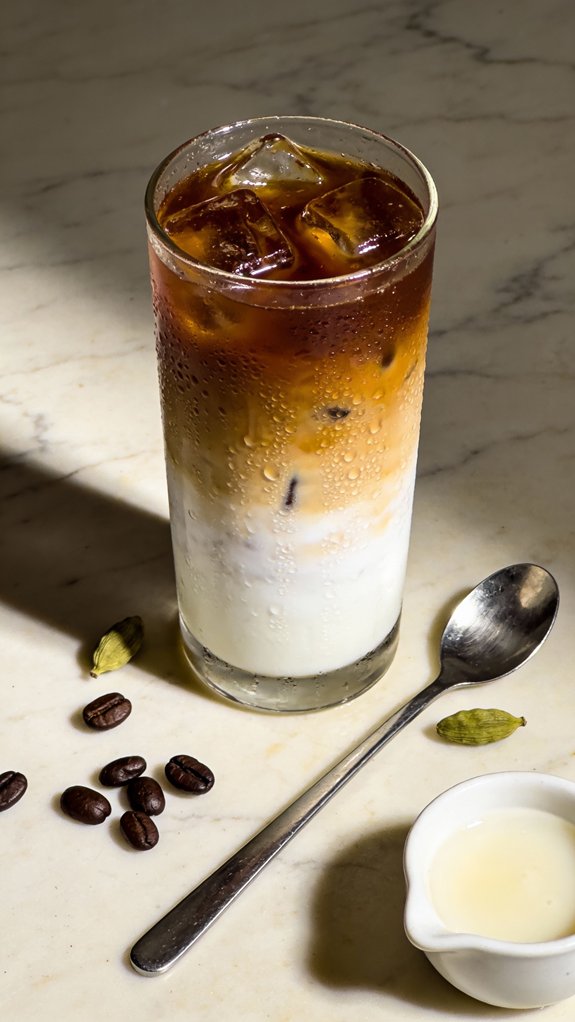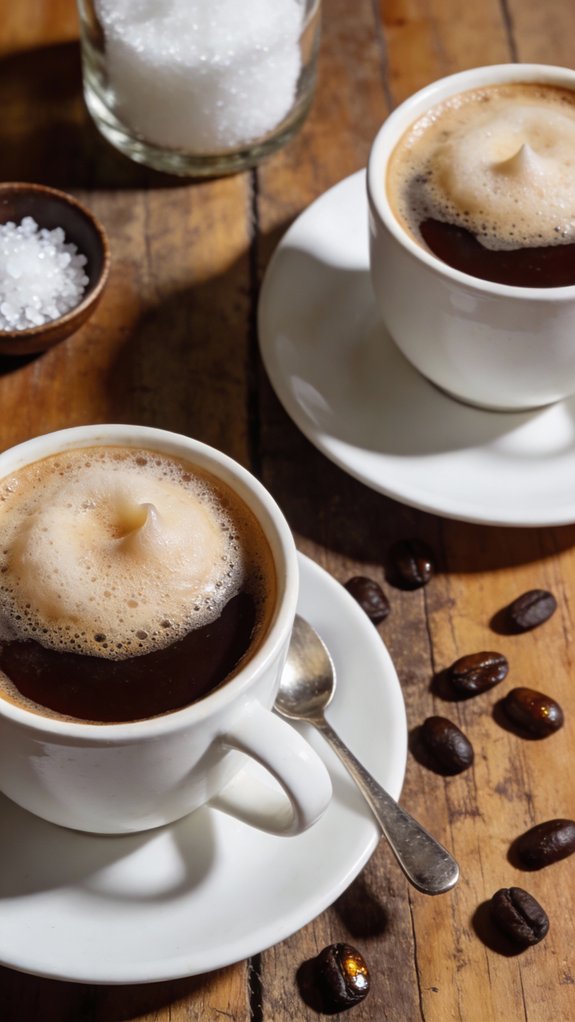
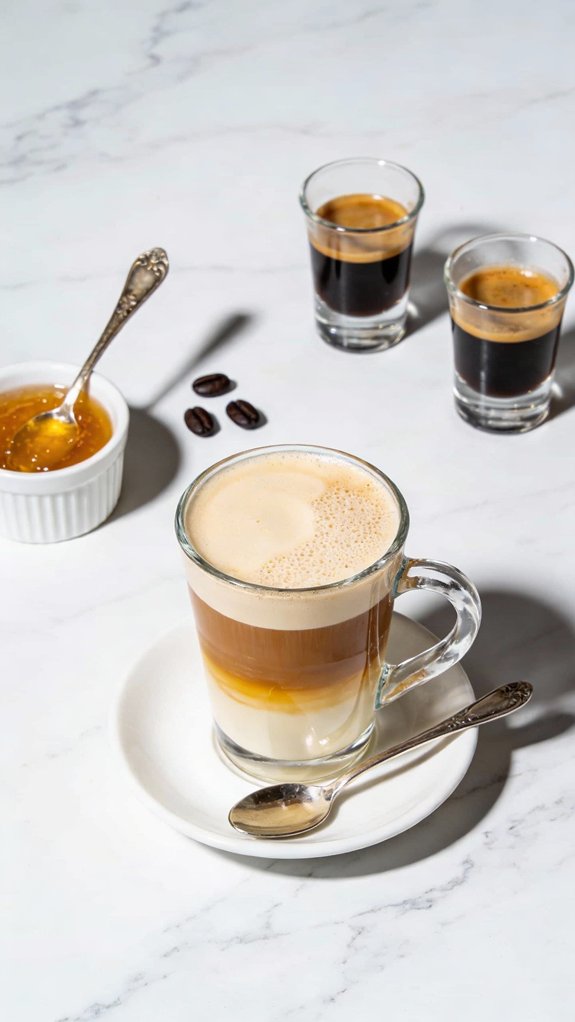
You’ve probably walked past those trendy coffee shops with their fancy Spanish lattes on the menu, priced at what feels like a small fortune. I remember my first sip at a café downtown—sweet, creamy, and somehow different from my usual order. The secret isn’t complicated magic or barista school training. It’s actually about finding the right balance between three simple ingredients that transform your morning routine into something worth waking up for.
History
While many assume the Spanish latte comes from Spain, I’ve found the drink’s true origins are a bit more complicated than that.
The beverage actually gained popularity in Southeast Asian cafés, particularly in Malaysia and Singapore, where baristas created their own interpretation of Spanish coffee culture. They combined espresso with sweetened condensed milk, a pantry staple in tropical regions where refrigeration wasn’t always reliable.
The name “Spanish latte” came from these cafés marketing it as a European-style drink, though you won’t find it in traditional Spanish coffee shops.
Over time, the drink spread globally through social media and café trends. Now it’s become its own distinct creation, bridging cultures and coffee traditions in one sweet, creamy cup.
Recipe
The Spanish latte is a silky, sweet coffee drink that combines rich espresso with sweetened condensed milk for a uniquely indulgent experience. Unlike traditional lattes, this variation delivers a caramelized sweetness and velvety texture that makes each sip feel like a treat.
The condensed milk creates a perfectly balanced beverage that’s less bitter than standard coffee drinks while maintaining that energizing espresso kick. This drink works beautifully as a morning pick-me-up or an afternoon indulgence when you’re craving something comforting.
The natural sweetness makes it ideal for those who typically add sugar to their coffee, while the creamy consistency offers a satisfying alternative to heavier desserts. Enjoy it hot on chilly mornings or poured over ice when the weather warms up.
Ingredients:
- 2 shots espresso (or 1/4 cup strong brewed coffee)
- 2-3 tablespoons sweetened condensed milk
- 3/4 cup whole milk
- Ice (optional, for iced version)
Preparation Steps:
- Brew a double shot of espresso or prepare 1/4 cup of strong coffee.
- Add 2-3 tablespoons of sweetened condensed milk to your serving glass or mug.
- Pour the hot espresso over the condensed milk and stir vigorously until fully dissolved.
- Steam or heat the whole milk until hot and frothy (or keep cold for an iced version).
- Pour the milk into the espresso mixture, stirring gently to combine.
- For an iced version, pour everything over a glass filled with ice and stir well.
Tips:
Adjust sweetness by using 2 tablespoons of condensed milk for a lighter drink or up to 4 tablespoons for something more dessert-like.
While whole milk creates the most authentic creamy texture, oat milk or almond milk work as substitutes, though they’ll produce a slightly thinner consistency.
For convenience, mix the espresso and condensed milk ahead of time and refrigerate for up to three days—just add hot or cold milk when ready to serve.
If you don’t have an espresso machine, a Moka pot or extra-strong coffee made with double the usual grounds works perfectly.
Shop Related Products

Make Your Favorite Espresso Coffee At Home: The CASABREWS coffee machine with milk frother allows you to prepare all your favorite espresso-based coffees. You can enjoy a barista-brewed latte, cappuccino or macchiato at home. Stainless steel appearance, stylish and durable, ideal for any size kitchen. This compact espresso coffee maker is perfect for home or office use

304 STAINLESS STEEL: Amrules 12oz creamer pitcher are crafted of 18/8 food grade stainless steel. The pitcher features external mirror finish and internal hairline finish. It is sturdy, durability, rust-resistant and resistant to deformation

【Make Favorite Espresso Coffee by Yourself】The espresso machine with milk frother allows you to prepare all your favorite espresso-based coffees. You can enjoy a barista-brewed latte, cappuccino or macchiato at home. This compact espresso coffee maker is perfect for home or office use
Preparation Steps
Making a Spanish latte is easier than you’d think, and once you’ve done it a few times, it becomes second nature.
The key is working quickly while your espresso is still hot, so the condensed milk dissolves smoothly and doesn’t turn into stubborn clumps at the bottom of your cup.
I’ll walk you through each step, from pulling that perfect shot to pouring the final creamy layer that makes this drink so satisfying.
Shop Related Products

CRAFT COFFEE AT HOME: Produces six demitasse/espresso servings of rich, smooth espresso coffee in minutes. Craft your own espresso, Americano, Cuban coffee, Italian-style coffee, Moka, lattes, cappuccinos and more from the convenience of your home.Filter type:Reusable

VERSATILE CAPACITY: Brew 6 or 3 espresso cups, 1.5 oz each, letting you adjust the serving size to suit your preference and occasion

The original moka coffee pot: Moka Express is the original stovetop espresso maker, it provides the experience of the real Italian way of preparing a tasteful coffee, its unique shape and the inimitable gentleman with moustache date back to 1933, when Alfonso Bialetti invented it.
Step 1. Brew Your Espresso Shot
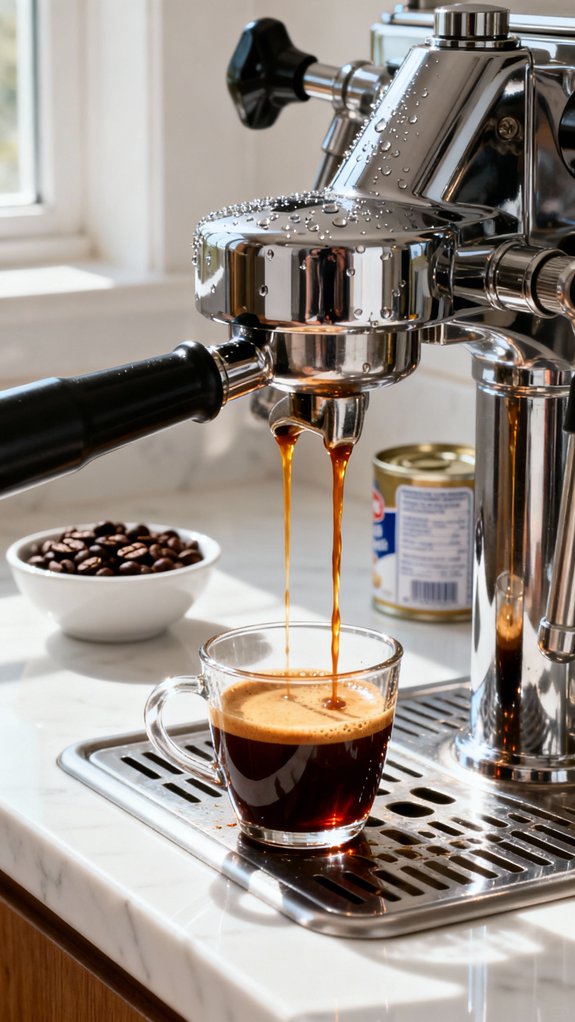
Start by pulling a double shot of espresso if you’ve got an espresso machine—it takes about 25-30 seconds and should give you roughly 2 ounces of dark, aromatic coffee with that characteristic crema on top.
I remember the first time I actually timed it and realized how quick the process really is. If you don’t have an espresso machine, don’t worry about it. Use a Moka pot instead, which makes strong, concentrated coffee that works perfectly here.
You can even brew regular coffee if that’s all you’ve got—just use twice the amount of grounds you’d normally use. The goal is getting something bold enough that won’t disappear once you add all that sweetened condensed milk and regular milk later.
Step 2. Mix Condensed Milk In
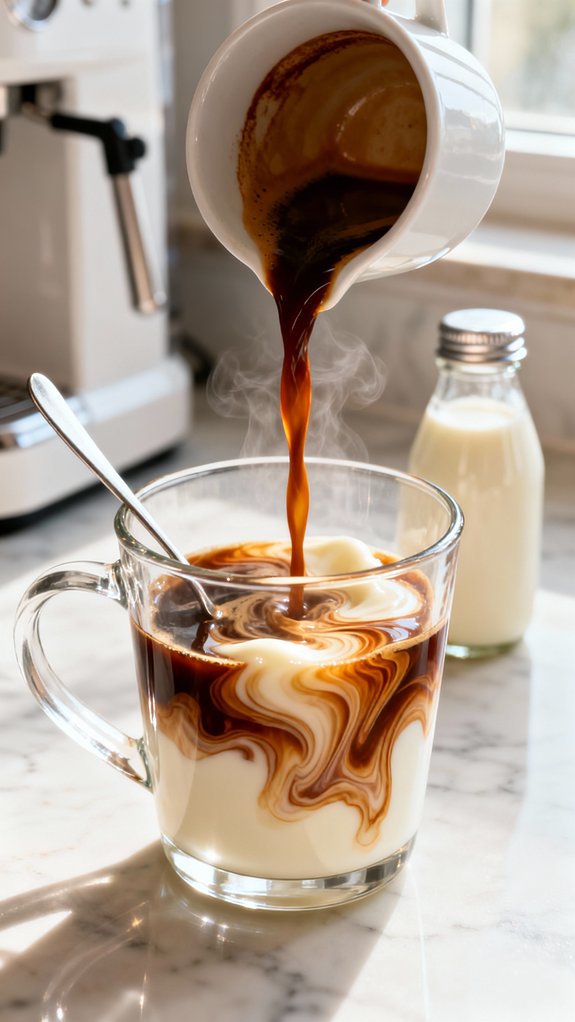
Once you’ve got your espresso ready, grab your serving glass or mug and spoon in about 2-3 tablespoons of sweetened condensed milk.
I usually aim for the middle ground—about 2.5 tablespoons—because you can always add more later if it’s not sweet enough.
Pour your hot espresso directly over the condensed milk and watch it pool around the thick, sticky sweetness at the bottom.
Now comes the important part: stir vigorously for at least 15-20 seconds. You’re trying to dissolve all that condensed milk completely, breaking up those stubborn clumps that like to hide at the bottom.
The mixture should turn a beautiful caramel color, smooth and glossy, with no white streaks remaining. This creates your sweet coffee base.
Step 3. Heat and Froth Milk
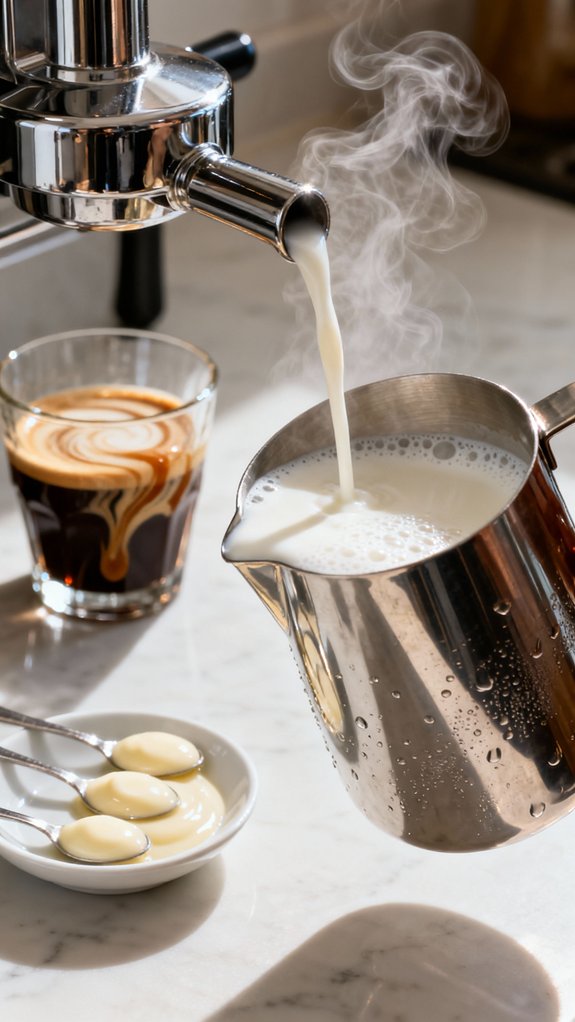
With your sweet coffee base ready to go, you’ll need about 3/4 cup of whole milk heated until it’s properly hot and, if you’re feeling fancy, a bit frothy on top.
I usually just microwave mine for about 90 seconds until it’s steaming. You can stop there if you want.
But if you’ve got a milk frother—the little handheld wand kind or a fancy espresso machine steamer—give it a quick whirl to create some foam.
The bubbles aren’t just for looks; they add this airy, creamy texture that makes the drink feel more café-quality.
Even a French press works for frothing if you pump the plunger up and down a few times.
Hot milk transforms everything.
Step 4. Combine All Ingredients Together
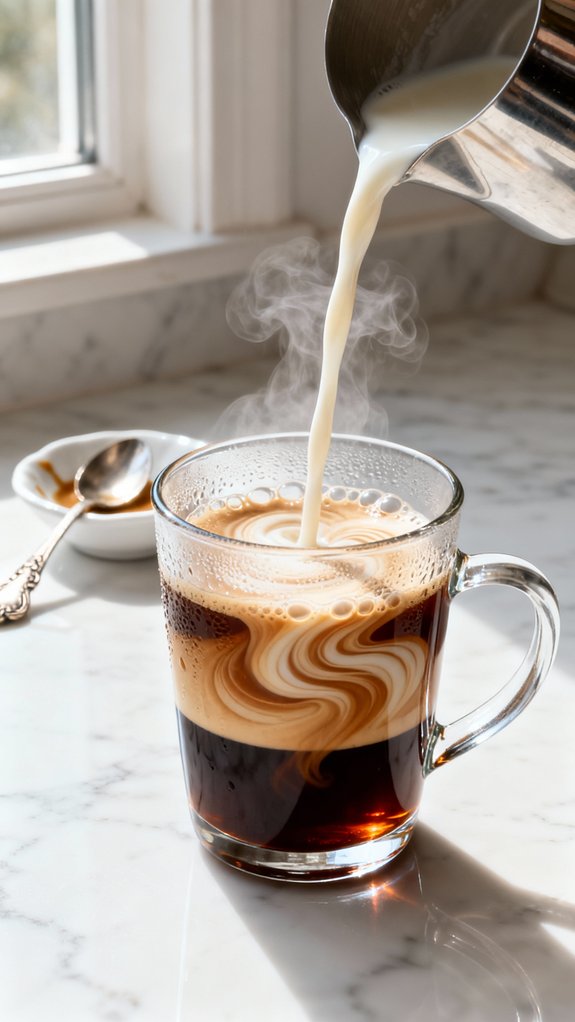
Now you’ve got your espresso-condensed milk mixture and your hot, frothy milk sitting there waiting, and honestly, this part is where everything comes together in the most satisfying way.
Pour that steamed milk slowly into your espresso blend, watching as the two liquids swirl together into this beautiful caramel-colored drink.
I like to hold back some of the foam with a spoon at first, letting the liquid milk flow in, then spooning that airy foam right on top at the end.
Give everything a gentle stir—nothing aggressive, just enough to combine.
The color should be this gorgeous tan-brown shade, and you’ll smell that sweet coffee aroma mixed with the creamy richness of the condensed milk hitting you all at once.
Step 5. Garnish and Serve Immediately
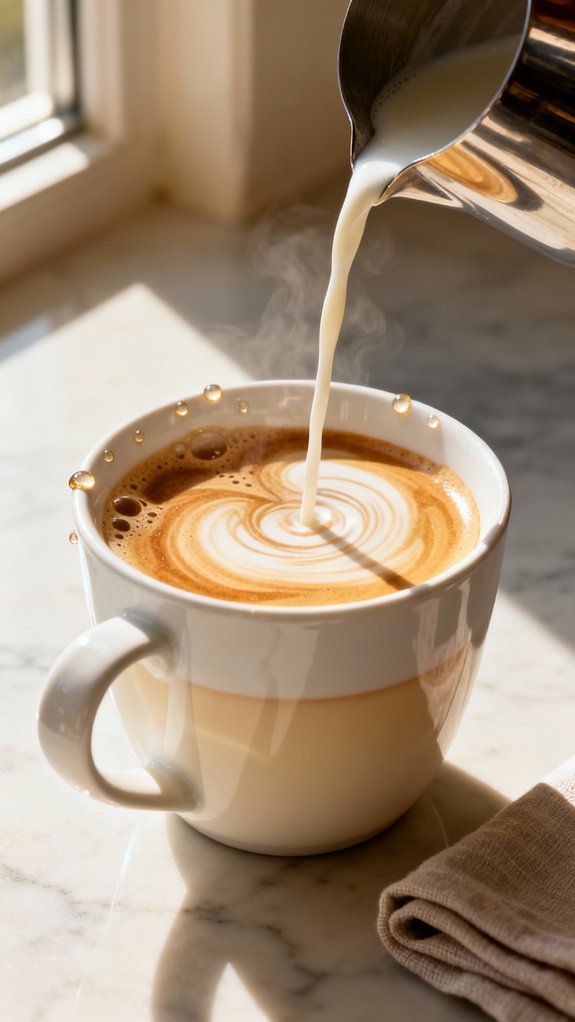
Your Spanish latte is basically done at this point, but those final touches make it feel special instead of just functional.
I like to dust the top with a pinch of cinnamon or cocoa powder, which adds a subtle warmth that complements the sweetness. You can also drizzle a bit more condensed milk on top if you’re feeling fancy, letting it swirl down through the foam in those Instagram-worthy patterns.
Serve it immediately while everything’s still at the right temperature—hot drinks should be steaming, iced ones properly chilled.
The condensed milk settles if it sits too long, so drinking it fresh guarantees you get that perfect creamy consistency in every sip, not just the first few.
Final Thoughts
Since I first tried a Spanish latte at a small café in Madrid, it’s been my go-to coffee drink whenever I need something that feels like a treat without being over the top.
The beauty of this recipe is how forgiving it is—you can make it your own by adjusting the sweetness or trying different milk options until you find what works best.
I’ve served it to friends who usually drink plain black coffee, and they’re always surprised by how much they enjoy the creamy, caramelized flavor without it tasting too sugary.
Whether you’re making one on a quiet Sunday morning or preparing a batch for brunch guests, this drink delivers that café experience right in your kitchen.
Frequently Asked Questions
Can I Make Spanish Latte Without an Espresso Machine?
Yes, you can make it without an espresso machine. Use a Moka pot or brew extra-strong coffee with double the usual grounds. You’ll still get a delicious, authentic-tasting Spanish latte at home.
How Many Calories Are in a Spanish Latte?
A typical Spanish latte contains around 200-300 calories, with the sweetened condensed milk contributing most of the caloric content. You’ll consume fewer calories by reducing the condensed milk or using low-fat milk instead of whole milk.
What’s the Difference Between a Spanish Latte and a Regular Latte?
The main difference is that you’ll use sweetened condensed milk in a Spanish latte instead of plain steamed milk with sugar. This creates a richer, more caramelized sweetness and silkier texture than you’d get from a regular latte.
Can I Use Evaporated Milk Instead of Condensed Milk?
You can’t substitute evaporated milk for condensed milk directly—evaporated milk lacks sweetness, making your latte bitter and thin. Imagine drinking unsweetened coffee with plain cream instead of a rich, caramelized treat. You’d need added sugar.
How Long Does Leftover Spanish Latte Mixture Stay Fresh?
You can store the leftover Spanish latte mixture in your refrigerator for up to three days. Make sure you’ve mixed the espresso and condensed milk together, then keep it in an airtight container.