
I’ve spent years perfecting my pho bac recipe, and I’m convinced there’s nothing quite like the version from Northern Vietnam. The broth takes time, patience, and a few techniques that’ll transform your kitchen into something magical. Most recipes online skip the essential steps that make authentic pho bac different from its southern cousin. Today, I’m sharing the real method my Vietnamese friend’s grandmother taught me, and trust me, you’ll taste the difference immediately.
Why You`ll Love this Authentic Pho Bac

The rich, aromatic broth in this Pho Bac will transform your kitchen into a Vietnamese street market, and that’s just the beginning.
I’m excited to share this recipe because it delivers comforting flavors that warm you from the inside out. The process of charring shallots and ginger, then toasting aromatic spices like star anise and cinnamon, creates layers of depth you won’t find in restaurant versions.
What I love most is how the beef chuck becomes incredibly tender after simmering, while the raw sirloin cooks perfectly when you ladle the hot broth over it.
You’ll appreciate the contrast of textures, from silky rice noodles to crisp onions. This isn’t quick cooking, but the incredible results make every minute worthwhile.
What ingredients are in Authentic Pho Bac?
This Northern Vietnamese beef noodle soup requires a thoughtful selection of aromatics, spices, and proteins to create its signature complex broth. The foundation starts with charred shallots and ginger, which provide a smoky sweetness, while a blend of warming spices adds depth.
Both beef bones and chuck create a rich, full-bodied stock, and the addition of dried scallops contributes an unexpected umami dimension that sets authentic pho apart from simplified versions.
For the Broth:
- 4 large shallots, unpeeled
- 1 piece ginger, unpeeled (4 inches)
- 1 teaspoon fennel seed
- 5 star anise
- 1 stick cinnamon (3 inches)
- 1 pod black cardamom, crushed
- 5 lbs beef leg bones, cut into 3-inch pieces (grass-fed preferred)
- 1½ lbs boneless beef chuck, trimmed and cut into 4 x 2 x 1½ inch pieces
- 6 quarts cold water
- ½ ounce dried scallops
- 2 tablespoons kosher salt, plus more to taste
- ¼ cup fish sauce
For the Noodles and Toppings:
- 2 lbs small flat rice noodles
- 8 ounces beef sirloin, cut across the grain into ½-inch thick slices
- 1 medium yellow onion, thinly sliced and soaked in cold water for 30 minutes
- 8 scallions, green parts thinly sliced and white parts left whole
- ⅓ cup fresh cilantro leaves
- Fresh ground black pepper, to taste
For the Chile Condiment:
- 1½ tablespoons unseasoned rice vinegar
- 2 serrano chilies, stemmed and thinly sliced crosswise
The quality of your beef bones greatly impacts the final broth—grass-fed bones produce a cleaner, more robust flavor.
Dried scallops can be found in Asian markets and are essential for authentic taste, though they’re often overlooked in westernized recipes. Soaking the onions in cold water removes their harsh bite while maintaining their crisp texture, and having both cooked beef chuck and raw sirloin provides textural variety that makes each bowl more interesting.
How to make this Authentic Pho Bac
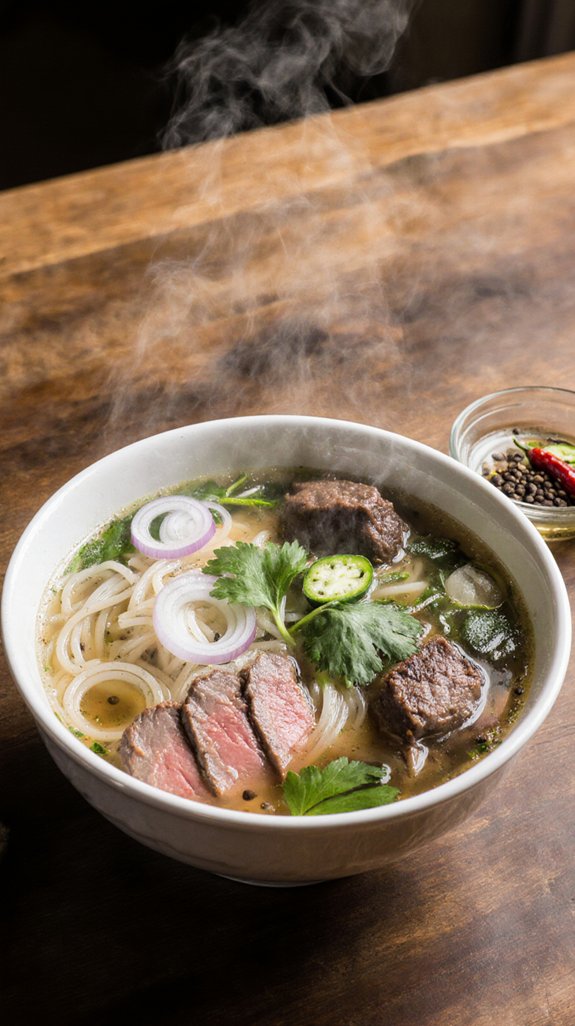
Making authentic pho bac begins with building deep, complex flavors through charring and toasting. Start by broiling 4 large unpeeled shallots and a 4-inch piece of unpeeled ginger about 4 inches from the heat source, turning them frequently until they’re completely blackened, which takes about 15 to 20 minutes.
Once they’ve cooled, scrape away the charred peels and halve the ginger lengthwise, then press each piece flat with the side of your knife. While those cool, toast 1 teaspoon fennel seeds, 5 star anise, a 3-inch cinnamon stick, and 1 crushed black cardamom pod in a dry skillet over medium heat for about 3 minutes, swirling the pan until the spices release their fragrance.
Next, place 5 pounds of beef leg bones in a 12-quart pot, cover them with cold water by about an inch, and bring everything to a boil for 3 minutes. This initial boil removes impurities, so drain and rinse the bones thoroughly, clean the pot, and return the bones along with your charred aromatics, 1½ pounds of trimmed beef chuck, and 6 quarts of cold water.
Bring the broth to a boil, then reduce the heat to medium-low and add your toasted spices, ½ ounce of dried scallops, and 2 tablespoons of kosher salt. Skim the surface regularly as it simmers, and after about 1½ hours when the beef chuck is tender, use tongs to transfer it to a bowl of ice water for 10 minutes.
Once chilled, slice the beef crosswise into thin pieces, cover, and refrigerate while you continue simmering the broth for another 1½ hours. When the broth is ready, strain it through a cheesecloth-lined fine strainer into a clean 6-quart pot, discarding all the solids and skimming off any surface fat.
Stir in ¼ cup fish sauce and the white parts of 8 scallions, keeping the broth hot. Meanwhile, mix 1½ tablespoons unseasoned rice vinegar with 2 thinly sliced serrano chilies in a small bowl and set aside. Soak 2 pounds of small flat rice noodles in boiling water for about 10 minutes until they’re al dente, then rinse them in cold water and divide between eight serving bowls.
Top each bowl with your chilled cooked beef and 8 ounces of thinly sliced raw sirloin, then add 1 thinly sliced yellow onion that’s been soaking in cold water for 30 minutes, the sliced scallion greens, and ⅓ cup fresh cilantro leaves. Season with fresh ground black pepper, ladle the hot broth over everything, making sure each bowl gets one white scallion piece, and serve with the chile mixture on the side.
Shop Related Products

【HEALTHY & NONSTICK GRANITE COATING】 Interior & exterior is coated by high performance nonstick granite coating that makes the casserole easy to cook and clean. Enjoy our lightweight, elegant designed, green & healthy, PTFE and PFOA free, very durable and nonstick surfaced casserole for making delicious meals.

Large Capacity: 12 Quart capacity (11.4 L) is ideal for preparing pasta sauce, soup, and more

6 QUARTS: The NutriChef Stainless Steel Large Cooking Pot features 6-quart capacity weighing 4.5 lbs w/ lid which is the perfect size for boiling eggs, simmering stocks & soups, or making sauces.Great for commercial & home cooking
Authentic Pho Bac Substitutions and Variations
While traditional pho bac follows a specific formula, you’ve got plenty of room to adapt this recipe based on what’s available in your kitchen or your personal preferences.
For ingredient swaps, I’ve successfully replaced beef chuck with brisket or oxtail for richer depth. Can’t find black cardamom? Regular cardamom works, though the flavor differs slightly. If dried scallops aren’t accessible, skip them—the broth remains delicious.
Fresh rice noodles can substitute dried ones; just reduce soaking time considerably. For flavor adjustments, try adding more star anise for sweetness or extra fish sauce for umami punch. Some cooks include rock sugar for subtle sweetness.
You can also increase or decrease the chile-vinegar mixture depending on your heat tolerance.
Shop Related Products

Vietnamese Pho Noodle Broth Base

What to serve with Authentic Pho Bac
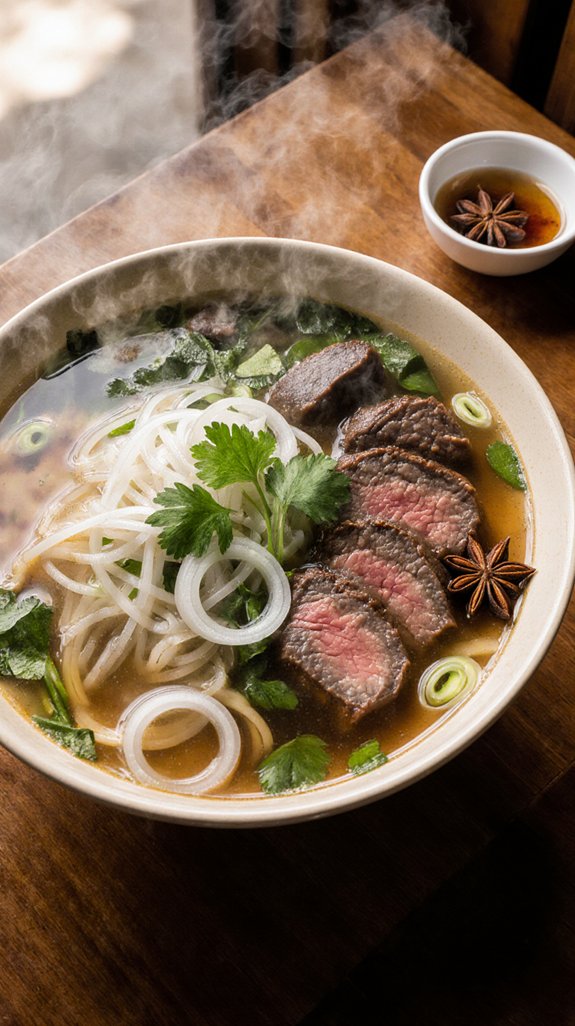
Pho bac shines as a complete meal on its own, but I’ve found that traditional accompaniments elevate the entire experience and give diners control over their bowl’s final flavor profile.
These pho accompaniments are essential: a plate of fresh Thai basil, sawtooth coriander, and bean sprouts adds textural contrast and aromatic brightness. I always include lime wedges, which bring acidity that cuts through the rich broth.
Hoisin sauce and sriracha are classic side dishes that let everyone customize their heat and sweetness levels. For a fuller spread, I’ll serve Vietnamese iced coffee or hot jasmine tea alongside, which complement the savory soup perfectly.
Some diners appreciate fried dough sticks for dipping, though they’re optional for this Northern-style preparation.
Final Thoughts
After spending hours tending to the broth and assembling each component with care, you’ll understand why authentic pho bac has remained unchanged for generations.
This recipe demands patience, but the reward is a bowl of soup that captures northern Vietnam’s culinary soul.
I’ve shared these cooking tips to help you avoid common pitfalls, from properly charring aromatics to achieving the right broth clarity.
Remember that flavor enhancement comes from quality ingredients and proper technique, not shortcuts.
Each serving tells a story of tradition, with the delicate rice noodles, tender beef, and aromatic broth working together in perfect harmony.
Once you master this dish, you’ll have a recipe that brings warmth and comfort to any table, regardless of the season.
Frequently Asked Questions
Can I Make Pho Broth in a Pressure Cooker or Slow Cooker?
I’ve successfully made pho broth in both! For pressure cooker tips, cook 90 minutes at high pressure for rich flavor. Slow cooker advantages include hands-off cooking for 8-10 hours, developing deep, complex taste effortlessly.
How Long Does Homemade Pho Broth Last in the Refrigerator?
I’ll store my homemade pho broth in the refrigerator for up to 5 days in an airtight container. For proper broth storage and soup safety, I always cool it quickly before refrigerating and can freeze it for 3 months.
What’s the Difference Between Northern and Southern Style Pho?
I’ll explain the key differences through flavor profiles and ingredient variations. Northern pho features clearer broth with fewer garnishes and wider noodles, while southern style includes sweeter, more herb-heavy broths with abundant fresh toppings and bean sprouts.
Can I Freeze Leftover Pho Broth for Later Use?
Yes, I recommend freezing leftover pho broth in airtight containers or freezer bags for up to three months. Proper broth storage and freezing techniques preserve the rich flavors perfectly, making meal prep incredibly convenient for future servings.
Why Do You Need to Parboil the Bones Before Making Broth?
I parboil the bones to remove impurities and blood that would make your broth murky. This essential bone cleaning step guarantees you’ll achieve the crystal-clear broth clarity that’s the hallmark of authentic pho.