
You’ve probably ordered a Negroni at your favorite bar, that perfect balance of gin, Campari, and sweet vermouth hitting just right after a long day. But here’s the thing—that classic recipe is just the beginning. I stumbled onto this truth last summer when a bartender swapped my usual gin for whiskey, and suddenly I was tasting something familiar yet completely different. There’s a whole world of Negroni variations out there, each one tweaking the original formula in ways that’ll surprise you.
Boulevardier

The Boulevardier is a whiskey-based variation of the classic Negroni that replaces gin with bourbon or rye whiskey, creating a richer, more robust cocktail. This sophisticated drink was created in the 1920s at Harry’s New York Bar in Paris by Erskine Gwynne, an American expatriate writer who named it after his literary magazine, “The Boulevardier.”
The combination of whiskey’s warmth with Campari’s bitterness and sweet vermouth’s complexity makes this cocktail perfect for cooler evenings and those who prefer a spirit-forward drink with depth.
Like the Negroni, the Boulevardier follows equal parts proportions, though many bartenders adjust the ratios slightly to balance the whiskey’s stronger flavor profile. The choice between bourbon and rye whiskey considerably affects the final taste—bourbon provides caramel and vanilla notes, while rye offers spicier, drier characteristics.
This cocktail has experienced a resurgence in recent years alongside the craft cocktail movement and remains a staple on cocktail menus worldwide.
Ingredients
- 1 ½ oz bourbon or rye whiskey
- 1 oz Campari
- 1 oz sweet vermouth
- Orange peel
- Ice cubes
- Maraschino cherry (optional)
Shop Related Products
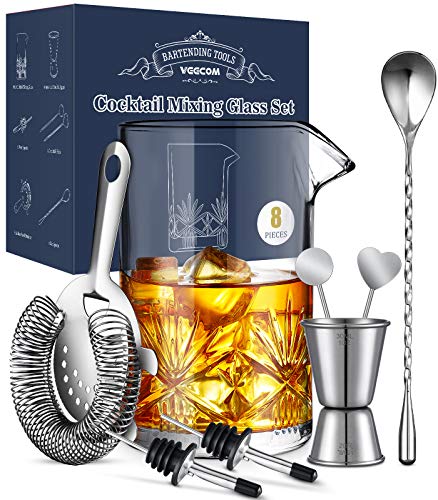
8 Pieces Cocktail Kit: Professional bar tools for 18 oz crystal mixing glass, strainer, jigger 0.5/1 oz, spoon, 2 pourers and 2 cocktail picks. Mixing glass is an alternative to cocktail shaker, and it can minimize the dilution of Manhattan, old fashioned, Negroni and other stirred drinks, enjoy different drinking experience

ELEGANT DESIGN: Oggi's cocktail mixer set is made of ultra-clear lead-free glass with with a thick, weighted bottom to ensure that you get the most from your mixing experience.

A Complete Cocktail Set - This stylish cocktail kit includes all the essential cocktail accessories; an old fashioned mixing glass, strainer, bar spoon, jigger, cocktail picks, and a recipe card.
Instructions
Fill a mixing glass with ice cubes and add the whiskey, Campari, and sweet vermouth. Stir gently for 20-30 seconds until well-chilled and properly diluted.
Strain the mixture into a rocks glass over a large ice cube or into a chilled coupe glass if serving up. Express the oils from an orange peel over the drink by holding it over the glass and giving it a firm twist, then either drop it into the glass or run it around the rim before adding. Optionally, garnish with a maraschino cherry alongside the orange peel.
Tips
The quality of your ingredients matters considerably in this simple three-ingredient cocktail, so use a whiskey you enjoy drinking neat and a good Italian sweet vermouth.
Store vermouth in the refrigerator after opening as it oxidizes quickly and will negatively impact your cocktail’s flavor after a few weeks. If you find the equal parts ratio too bitter, try adjusting to a 2:1:1 ratio favoring the whiskey, or if you prefer more sweetness, increase the vermouth slightly.
The large ice cube is preferable to smaller cubes as it melts more slowly, preventing over-dilution while keeping the drink cold.
White Negroni

The White Negroni is an elegant, lighter-bodied variation of the classic Negroni that substitutes the traditional red ingredients with clear or pale alternatives, creating a visually striking and more delicate cocktail. Created in 2001 by Wayne Collins at the Suze Saveur Club in Paris, this variation replaces Campari with Suze (a French gentian liqueur) and sweet vermouth with Lillet Blanc or dry vermouth.
The result is a complex, floral, and bittersweet cocktail with herbal notes that differs greatly from its ruby-red predecessor while maintaining the spirit of the original balanced template.
The White Negroni appeals to those seeking a more refined, botanical-forward drinking experience with less sweetness than the traditional version. Suze brings a distinctive bitter gentian root flavor with earthy, citrus undertones, while Lillet Blanc contributes wine-based complexity with hints of orange and honey.
This sophisticated variation has become increasingly popular in craft cocktail bars and represents the creative evolution of the Negroni family, offering a perfect aperitif for warm weather or as an introduction to bitter cocktails for those who find Campari too intense.
Ingredients
- 1 oz gin
- 1 oz Suze
- 1 oz Lillet Blanc
- Lemon peel
- Ice cubes
Instructions
Fill a mixing glass with ice cubes and pour in the gin, Suze, and Lillet Blanc. Stir gently for 20-30 seconds to properly chill and dilute the mixture without over-diluting. Strain into a rocks glass filled with fresh ice or into a chilled coupe glass for a more elegant presentation.
Express the oils from a lemon peel over the drink by twisting it firmly above the glass, then run the peel around the rim and drop it into the cocktail as garnish.
Tips
Since Suze can be difficult to find in some markets, acceptable substitutes include other gentian liqueurs like Avèze or Salers, though each will provide slightly different flavor profiles.
Some bartenders prefer using Cocchi Americano instead of Lillet Blanc for added complexity and a touch more bitterness. The White Negroni benefits from quality gin with pronounced botanical notes—London Dry style works particularly well, though floral gins can add interesting dimensions.
Because the ingredients are more delicate than the traditional Negroni, be careful not to over-stir or over-dilute, as this can wash out the subtle flavors that make this variation special.
Negroni Sbagliato

The Negroni Sbagliato, whose name translates to “mistaken Negroni” or “broken Negroni” in Italian, is a delightful accident that occurred in Milan during the 1960s or 1970s at Bar Basso. According to legend, bartender Mirko Stocchetto accidentally grabbed a bottle of prosecco instead of gin while making a Negroni, and the resulting cocktail proved so appealing that it became a permanent fixture on the menu.
This effervescent variation replaces the gin with sparkling wine, transforming the intense, spirit-forward classic into a lighter, more approachable aperitivo that maintains the signature bittersweet balance while adding celebratory bubbles.
The Sbagliato has experienced a surge in popularity in recent years, particularly after going viral on social media, introducing a new generation to the pleasures of Italian aperitivo culture. With a lower alcohol content than the traditional Negroni, this sparkling version is perfect for afternoon drinking or extended social gatherings where multiple rounds are expected.
The prosecco adds a invigorating effervescence and subtle fruitiness that complements the bitter Campari and sweet vermouth beautifully, making it an ideal warm-weather cocktail or a sophisticated brunch option that bridges the gap between a mimosa and a more serious cocktail.
Ingredients
- 1 oz Campari
- 1 oz sweet vermouth
- 2 oz prosecco
- Orange slice or orange peel
- Ice cubes
Instructions
Fill a rocks glass or large wine glass with ice cubes and add the Campari and sweet vermouth. Stir gently for a few seconds to combine and chill the ingredients. Top with prosecco, pouring slowly to preserve the bubbles, and give the drink one gentle stir to integrate the sparkling wine without losing too much carbonation.
Garnish with an orange slice or express the oils from an orange peel over the drink before dropping it in.
Tips
The quality of prosecco matters in this cocktail since it comprises a significant portion of the drink—choose a dry prosecco rather than an extra-dry or sweet version to maintain proper balance.
Some prefer to build this drink directly in the glass rather than stirring the base ingredients first, simply adding all components over ice and giving a gentle stir. For a more elegant presentation, serve in a large wine glass or coupe, which better showcases the bubbles and allows the aromatics to develop.
While prosecco is traditional, other sparkling wines like cava or even champagne can be used, though they’ll alter the flavor profile slightly. Unlike stirred Negronis, the Sbagliato should be consumed relatively quickly before the carbonation dissipates, making it less suitable for slow sipping but perfect for social drinking.
Mezcal Negroni

The Mezcal Negroni represents a bold reimagining of the classic cocktail that trades gin’s botanical complexity for mezcal’s smoky, earthy character. This variation has gained significant traction in the modern cocktail renaissance, particularly among bartenders and drinkers who appreciate agave spirits. The substitution fundamentally transforms the drinking experience—where gin provides a clean, juniper-forward backbone, mezcal introduces layers of smoke, minerality, and terroir that create an entirely different conversation with the Campari and sweet vermouth.
The result is a more primal, assertive cocktail that feels simultaneously ancient and contemporary, honoring both Italian aperitivo traditions and Mexican distilling heritage.
The success of the Mezcal Negroni lies in how beautifully the components complement each other rather than compete. The smoke from the mezcal doesn’t overpower but instead intertwines with Campari’s bitter orange and herbal notes, while the sweet vermouth acts as a bridge between these bold flavors, adding vanilla, spice, and richness.
This variation particularly appeals to those who find traditional Negronis too one-dimensional or who simply want to explore how different base spirits can completely alter a familiar template. The Mezcal Negroni has become a staple on craft cocktail menus worldwide and serves as an excellent gateway for whiskey or gin drinkers looking to explore agave spirits in a familiar context.
Ingredients
- 1 oz mezcal
- 1 oz Campari
- 1 oz sweet vermouth
- Orange peel
- Ice cubes
Instructions
Add the mezcal, Campari, and sweet vermouth to a mixing glass filled with ice cubes. Stir for 20-30 seconds until well-chilled and properly diluted, which helps integrate the bold flavors and softens the intensity of the spirit.
Strain into a rocks glass over a large ice cube or fresh ice cubes. Express the oils from an orange peel over the surface of the drink by holding it over the glass and giving it a firm twist, then either rim the glass with the peel or drop it directly into the cocktail as garnish.
Tips
The type of mezcal you choose will dramatically affect the final cocktail—an espadin mezcal offers a more approachable, subtly smoky profile, while varieties made from tobala or other wild agaves can be intensely smoky and may overwhelm the other ingredients unless used intentionally.
Some bartenders prefer a 50/50 split of gin and mezcal for a more nuanced version that retains botanical notes while introducing smoke. Consider using a slightly larger proportion of sweet vermouth (1.25 oz) if your mezcal is particularly aggressive, as this helps balance the intensity.
A flamed orange peel adds an extra dimension of caramelized citrus oils that pairs exceptionally well with the smokiness of the mezcal.
Old Pal

The Old Pal stands as one of the most distinguished Negroni variations, distinguished by its complete departure from gin and sweet vermouth in favor of rye whiskey and dry vermouth. Created in the 1920s at Harry’s New York Bar in Paris by bartender Harry MacElhone, the cocktail was named after William “Sparrow” Robinson, a sports writer for the New York Herald Tribune and a regular patron MacElhone affectionately called his “old pal.”
This substitution creates a drastically drier, more austere drinking experience that appeals to those who find the traditional Negroni too sweet or cloying. The rye whiskey brings spicy, peppery notes and a robust grain character that stands up admirably to Campari’s aggressive bitterness, while the dry vermouth strips away the sweet vermouth’s vanilla and caramel tones, replacing them with crisp, herbaceous complexity.
What makes the Old Pal particularly compelling is its unflinching commitment to bitter, dry flavors—this isn’t a cocktail for the faint of heart or those seeking balance through sweetness. The drink occupies a fascinating space in the cocktail canon, sharing DNA with both the Negroni and the Boulevard (which uses bourbon instead of rye), yet maintaining its own distinct personality.
The combination of rye’s spice, Campari’s bitter orange, and dry vermouth’s botanical dryness creates a trifecta of assertive flavors that somehow coalesce into a sophisticated, aperitif-style sipper. It’s a cocktail that rewards contemplation and has enjoyed a notable revival in recent years as drinkers have developed more adventurous palates and a greater appreciation for bitter, spirit-forward cocktails.
Ingredients
- 1 oz rye whiskey
- 1 oz Campari
- 1 oz dry vermouth
- Lemon peel
- Ice cubes
Instructions
Combine the rye whiskey, Campari, and dry vermouth in a mixing glass filled with ice cubes. Stir for 20-30 seconds until the mixture is thoroughly chilled and properly diluted, which is essential for taming the aggressive bitterness and integrating the disparate flavors into a cohesive whole.
Strain into a chilled coupe glass or over fresh ice in a rocks glass, depending on preference. Express the oils from a lemon peel over the drink’s surface by twisting it firmly above the glass, then either run the peel around the rim or drop it into the cocktail as garnish.
Tips
The choice of rye whiskey noticeably impacts the final product—a high-rye mashbill bourbon or a bonded rye at 100 proof provides enough backbone to stand up to the Campari without being overwhelmed, while lighter ryes may get lost in the mix.
Some bartenders adjust the ratios slightly, using 1.5 oz of rye to 0.75 oz each of Campari and dry vermouth, to emphasize the whiskey’s character and make the drink slightly less punishingly bitter for those new to the style.
The lemon peel garnish is essential rather than optional, as its bright citrus oils provide an aromatic counterpoint to the drink’s dry, bitter profile and add a dimension that orange peel can’t replicate in this particular variation.
Enzoni

The Enzoni represents a brilliant modern evolution of the Negroni template, credited to bartender Vincenzo Errico who created it in the mid-2000s at Milk & Honey in New York City. This variation takes the audacious step of muddling fresh white grapes directly into the cocktail, transforming the classic stirred aperitivo into a shaken, fruit-forward concoction that retains the Negroni’s bitter backbone while introducing unexpected freshness and natural sweetness.
The substitution of Campari remains constant, but gin takes center stage as the base spirit, while sweet vermouth is replaced entirely by the grape’s juice and pulp, creating a drink that bridges the gap between classic Italian aperitivo culture and contemporary craft cocktail innovation. The result is a surprisingly harmonious blend where the grapes’ delicate sweetness and texture soften Campari’s aggressive bitterness without eliminating it, while the gin’s botanicals weave through the fruit to create layers of complexity that feel both familiar and novel.
What distinguishes the Enzoni from mere novelty is its thoughtful construction and the way it honors the Negroni’s essential character while charting new territory. The muddled grapes provide not just sweetness but also body and a subtle tannic quality that echoes the role vermouth plays in the original formula, while fresh lemon juice adds brightness that keeps the drink from becoming cloying.
Unlike many Negroni variations that simply swap one spirit for another, the Enzoni reimagines the cocktail’s very structure, proving that innovation need not mean abandonment of tradition. The drink has become a modern classic in its own right, appearing on cocktail menus worldwide and inspiring bartenders to think more creatively about how fresh ingredients can be incorporated into spirit-forward templates without compromising their integrity.
Ingredients
- 1 oz gin
- 1 oz Campari
- 0.75 oz fresh lemon juice
- 0.5 oz simple syrup
- 5-6 white grapes
- Lemon wheel or grape cluster
- Ice cubes
Instructions
Place the white grapes in a cocktail shaker and muddle them thoroughly until they’re completely crushed and have released their juice, ensuring you break down the skins to extract maximum flavor and texture.
Add the gin, Campari, fresh lemon juice, and simple syrup to the shaker, then fill with ice cubes. Shake vigorously for 10-15 seconds until the mixture is well-chilled and the ingredients are fully integrated with the grape pulp.
Double-strain through a fine-mesh strainer into a chilled rocks glass filled with fresh ice, which removes the grape solids while retaining the juice and essence. Garnish with a lemon wheel or a small cluster of white grapes on a cocktail pick.
Tips
The quality and ripeness of the grapes greatly impact the final drink—seek out seedless white grapes that are sweet and juicy, avoiding underripe or mealy specimens that will yield insufficient juice or impart vegetal flavors.
Some bartenders prefer to adjust the simple syrup quantity based on the grapes’ natural sweetness, so taste your grapes first and reduce the syrup to 0.25 oz if they’re exceptionally sweet.
The double-straining step is essential for achieving the proper texture; skipping it results in a pulpy, chunky drink that feels unrefined, though some prefer a single strain for more rustic texture.
A London Dry gin works beautifully here, as its juniper-forward profile complements both the grapes and Campari, though more delicate gins can get lost among the other bold flavors.
Agavoni

The Agavoni represents one of the most successful spirit substitutions in the Negroni canon, replacing London Dry gin with tequila or mezcal to create a cocktail that honors the original’s bitter-sweet balance while introducing the distinctive terroir of agave spirits. This variation emerged from the craft cocktail renaissance of the 2000s, when bartenders began exploring how the Negroni’s template could accommodate base spirits from different traditions.
The substitution proves remarkably harmonious: tequila’s earthy sweetness and peppery notes complement Campari’s bitter orange profile, while the sweet vermouth bridges both elements with its herbaceous complexity. When mezcal is used instead, the drink takes on a smokier, more mysterious character that adds depth without overwhelming the other components. The Agavoni has become particularly popular in regions with strong agave spirit cultures, though its appeal has spread globally as drinkers have come to appreciate how well the Negroni structure translates across different spirits.
What makes the Agavoni more than a simple substitution exercise is how the agave spirit’s unique characteristics actually enhance certain aspects of the Negroni experience. Tequila’s natural vegetal qualities find kinship with the botanical elements in Campari and vermouth, creating a drink that feels cohesive rather than disjointed.
The slight earthiness of quality tequila adds a grounding element that some find more approachable than gin’s sometimes assertive juniper, while still maintaining the drink’s essential sophistication. For those seeking even more complexity, using a reposado tequila introduces subtle oak notes that add another dimension to the cocktail, while blanco keeps the focus on the agave’s pure expression.
The Agavoni demonstrates that the Negroni’s genius lies not in its specific ingredients but in its proportional structure and the interplay between bitter, sweet, and spirit-forward elements.
Ingredients
- 1 oz tequila (blanco or reposado) or mezcal
- 1 oz Campari
- 1 oz sweet vermouth
- Orange peel
- Ice cubes or large ice sphere
Instructions
Fill an old-fashioned glass with ice cubes or a large ice sphere, then add the tequila or mezcal, Campari, and sweet vermouth directly to the glass. Stir gently for 20-30 seconds until the mixture is properly chilled and diluted, allowing the ingredients to marry while maintaining the drink’s strength and character.
Express the oils from an orange peel over the surface of the cocktail by holding it over the glass and giving it a firm twist, then either drop the peel into the drink or drape it over the rim as garnish.
Tips
The choice between tequila and mezcal greatly impacts the final cocktail, so consider your preference for smoke and intensity when selecting your agave spirit. Blanco tequila offers the purest agave expression and creates a cleaner, brighter drink, while reposado adds subtle caramel and vanilla notes from barrel aging that complement the vermouth’s sweetness.
If using mezcal, start with a lighter, more approachable style rather than heavily smoky varieties, as too much smoke can dominate the Campari and vermouth. Quality matters considerably here—avoid mixto tequilas and opt for 100% agave spirits to guarantee the cocktail maintains the sophistication expected of a Negroni variation.
Some bartenders prefer a slightly higher ratio of tequila to the other ingredients (1.25 oz tequila to 1 oz each of Campari and vermouth) to make sure the agave character comes through clearly, so feel free to adjust based on personal taste.
Cynar Negroni

The Cynar Negroni explores the fascinating possibility of replacing Campari with Cynar, an Italian bitter liqueur made from artichokes and thirteen other herbs and plants. This substitution creates a remarkable different drinking experience while maintaining the Negroni’s fundamental architecture of equal parts spirit, bitter liqueur, and sweet vermouth.
Cynar brings a darker, more vegetal bitterness compared to Campari’s bright orange character, with earthy, herbal notes that add complexity and a slightly lower alcohol content that makes for a more approachable aperitivo. The resulting cocktail has a more muted, sophisticated bitterness that some drinkers find less aggressive than the traditional version, making it an excellent gateway for those still developing their palate for bitter cocktails.
The deep brown color also distinguishes it visually from the classic Negroni‘s ruby red, signaling to the drinker that they’re about to experience something familiar yet distinctly different.
What makes the Cynar Negroni particularly compelling is how it shifts the entire flavor profile toward autumn and winter, with its earthy, almost smoky qualities suggesting cooler weather and heartier fare. The artichoke-based liqueur’s natural affinity for gin’s botanicals creates a more unified, less polarized flavor experience, where the bitter and aromatic elements blend seamlessly rather than playing off each other in sharp contrast.
This variation has gained a devoted following among bartenders and cocktail enthusiasts who appreciate its subtlety and the way it showcases Cynar’s unique character, proving that the Negroni template can accommodate not just different base spirits but also variations in the bitter component itself.
Ingredients
- 1 oz London Dry gin
- 1 oz Cynar
- 1 oz sweet vermouth
- Orange peel or lemon peel
- Ice cubes or large ice sphere
Instructions
Fill an old-fashioned glass with ice cubes or a large ice sphere, then add the gin, Cynar, and sweet vermouth directly to the glass. Stir gently for 20-30 seconds until well-chilled and properly diluted, allowing the earthier notes of the Cynar to integrate fully with the gin’s botanicals and the vermouth’s herbal complexity.
Express the oils from an orange or lemon peel over the surface of the drink, then either drop it into the glass or run it around the rim before discarding, depending on your preference for citrus presence in the finished cocktail.
The choice between orange and lemon peel garnish is more significant with the Cynar Negroni than with the classic version, as lemon’s brightness can help lift the darker, earthier flavors while orange provides a more traditional aromatic complement.
Some bartenders prefer using a slightly longer stirring time with this variation to guarantee the Cynar’s thicker texture fully incorporates with the other ingredients. If you find the drink’s vegetal qualities too pronounced, try using a sweeter style of vermouth like Carpano Antica Formula, which can add vanilla and dried fruit notes that balance Cynar’s earthiness.
For an even more complex version, consider using an aged gin or adding a bar spoon of amaro as a modifier to deepen the herbal character.
Kingston Negroni

The Kingston Negroni represents one of the most successful and beloved Negroni variations, swapping out gin for Jamaican rum to create a drink that’s simultaneously tropical and bitter, funky and refined. This variation draws its name from Jamaica’s capital city, home to some of the world’s most distinctive rums, and the substitution fundamentally transforms the cocktail’s character while maintaining its essential balance.
The rum—particularly when using a pot-still Jamaican variety with its characteristic hogo funk and fruity ester notes—brings a richness and sweetness that plays beautifully against Campari’s aggressive bitterness, while the sweet vermouth acts as a bridge between these two bold flavors. The result is a Negroni that feels more lush and full-bodied, with the rum’s molasses and tropical fruit notes adding warmth and depth that gin’s cleaner botanical profile can’t provide.
What makes the Kingston Negroni particularly remarkable is how it demonstrates the Negroni’s adaptability to spirits from entirely different traditions and terroirs. The funky, estery qualities of authentic Jamaican rum create fascinating interactions with Campari’s complex bitter orange and herb profile, producing flavors that neither ingredient could achieve alone—hints of overripe banana, allspice, and caramelized sugar weaving through the familiar bitter framework.
This variation has become a modern classic in its own right, frequently appearing on cocktail menus worldwide and serving as proof that the equal-parts Negroni template can accommodate not just different spirits but entirely different flavor families, opening the door to endless creative possibilities while honoring the original’s perfect proportions.
Ingredients
- 1 oz Jamaican rum (preferably pot-still)
- 1 oz Campari
- 1 oz sweet vermouth
- Orange peel
- Ice cubes or large ice sphere
Instructions
Fill an old-fashioned glass with ice cubes or a large ice sphere, then add the Jamaican rum, Campari, and sweet vermouth directly to the glass. Stir gently for 20-30 seconds until the drink is well-chilled and properly diluted, allowing the rum’s funky esters to mellow and integrate with the bitter and sweet components.
Express the oils from an orange peel over the surface of the drink by holding it over the glass and giving it a firm twist, then garnish by either dropping the peel into the glass or running it around the rim before adding it to the drink.
The choice of rum is vital for this variation—opt for a pot-still Jamaican rum with pronounced funky characteristics rather than a lighter, cleaner style, as the bold flavors are necessary to stand up to Campari’s intensity. Rums like Smith & Cross, Rum-Bar, or Hampden Estate work exceptionally well, their high ester content creating the complex interplay that makes this drink special.
If you find the funkiness overwhelming, you can split the rum portion between a funky Jamaican and a more approachable aged rum, though purists argue this dilutes the variation’s essential character. The Kingston Negroni is best enjoyed slightly less cold than a classic Negroni, as too much dilution can mute the rum’s distinctive qualities, so consider stirring for a shorter time or using larger ice that melts more slowly.
Rosita

The Rosita stands as one of the most sophisticated and overlooked variations in the Negroni family, replacing gin with tequila (or mezcal) to create a drink that showcases the complexity of agave spirits against the familiar bitter-sweet framework. Created in the 1990s by Gary Regan, this variation takes its name from the Spanish diminutive for “rose,” perhaps a nod to both the drink’s blush color and its delicate balance of flavors.
Unlike the straightforward substitution of the Kingston Negroni, the Rosita introduces additional complexity by splitting the vermouth between sweet and dry varieties and incorporating Angostura bitters, creating a more nuanced interplay of flavors. When made with a quality blanco or reposado tequila, the drink brings forward the agave’s earthy, vegetal qualities and hints of black pepper, while mezcal versions add smoky depth that transforms the cocktail into something even more mysterious and compelling.
The Rosita exemplifies how the Negroni template can evolve beyond simple spirit swaps to incorporate structural modifications that enhance the base spirit’s character. The combination of sweet and dry vermouth creates a more herbaceous, less cloying backbone than sweet vermouth alone, allowing the tequila’s mineral qualities and subtle sweetness to shine through without being overwhelmed by Campari‘s aggressive bitterness.
The addition of Angostura bitters introduces warming baking spices—cinnamon, clove, and cardamom—that complement agave spirits beautifully and tie the disparate elements together. This thoughtful construction results in a drink that’s drier and more complex than a traditional Negroni, with layers of flavor that unfold gradually: the initial brightness of Campari, the earthy agave notes, the herbal vermouth complexity, and finally the warming spice finish that lingers on the palate.
Ingredients
- 1.5 oz tequila reposado (or mezcal)
- 0.5 oz Campari
- 0.5 oz sweet vermouth
- 0.5 oz dry vermouth
- 1 dash Angostura bitters
- Lemon peel or grapefruit peel
- Ice cubes or large ice sphere
Instructions
Fill an old-fashioned glass with ice cubes or a large ice sphere, then combine the tequila, Campari, sweet vermouth, dry vermouth, and Angostura bitters directly in the glass. Stir gently but thoroughly for 20-30 seconds to achieve proper dilution and integration, allowing the tequila’s sharper edges to soften while the vermouths and bitters meld into a cohesive whole.
Express the oils from a lemon peel (for a brighter, more citrus-forward profile) or grapefruit peel (for a more bitter, complex character) over the drink’s surface, then garnish by placing the peel in the glass or running it around the rim before adding it.
The choice between tequila and mezcal fundamentally alters the Rosita’s character—tequila creates a cleaner, more approachable version that highlights the drink’s herbal and citrus notes, while mezcal introduces smoky complexity that can overwhelm if not carefully balanced, so consider using a gentler mezcal rather than heavily smoked varieties.
The vermouth split is vital to this variation’s success, so avoid the temptation to simplify by using only sweet vermouth, as the dry vermouth’s herbal dryness is essential for balancing the agave spirit and preventing the drink from becoming too sweet.
Some bartenders prefer to adjust the proportions slightly, reducing the Campari to emphasize the tequila, but the recipe as written maintains a beautiful equilibrium where no single ingredient dominates, allowing each component to contribute its unique character to the final composition.
1794

The Boulevardier represents the Negroni‘s sophisticated, whiskey-drinking cousin—a variation that emerged in 1920s Paris when American expatriate writer Erskine Gwynne, founder of the monthly magazine “The Boulevardier,” popularized this bourbon-based riff at Harry’s New York Bar. This classic variation substitutes bourbon or rye whiskey for gin, fundamentally transforming the drink’s character from botanical and bright to rich, warming, and oak-forward.
The whiskey’s vanilla, caramel, and spice notes create a deeper, more contemplative cocktail that feels particularly suited to cooler weather and after-dinner sipping. While the original equal-parts ratio (1:1:1) mirrors the Negroni, many modern bartenders adjust the proportions to favor the whiskey, allowing its complexity to stand up to Campari’s assertive bitterness without being overwhelmed.
The beauty of the Boulevardier lies in how the whiskey’s sweetness and barrel-aged character interact with the other ingredients to create something entirely distinct from its gin-based predecessor. Bourbon brings soft sweetness with notes of corn, vanilla, and butterscotch that complement the sweet vermouth’s richness while providing a counterpoint to Campari’s bitter orange intensity.
Rye whiskey, with its spicier, drier profile featuring black pepper and baking spice notes, creates a more assertive, structured drink with sharper edges and less overt sweetness. The cocktail’s amber color also sets it apart visually from the Negroni’s ruby hue, hinting at the warmer, more substantial drinking experience within the glass.
Ingredients
- 1.5 oz bourbon or rye whiskey
- 1 oz Campari
- 1 oz sweet vermouth
- Orange peel
- Ice cubes or large ice sphere
Instructions
Add ice cubes or a large ice sphere to an old-fashioned glass, then pour in the whiskey, Campari, and sweet vermouth. Stir gently for 20-30 seconds to properly chill and dilute the drink, allowing the whiskey’s heat to mellow while the flavors integrate into a harmonious whole.
Express the oils from an orange peel over the surface of the drink by holding it over the glass and giving it a firm twist, then either run the peel around the rim of the glass before dropping it in as a garnish or discard it after expressing, depending on your preference for how much citrus oil flavor you want in each sip.
The choice between bourbon and rye dramatically affects the final cocktail, so consider the mood you’re after: bourbon for a sweeter, rounder, more approachable drink, or rye for something spicier and more assertive with a drier finish.
High-proof whiskeys (100 proof or above) work exceptionally well in this cocktail, as they stand up better to dilution and maintain their character against the strong flavors of Campari and vermouth. Some bartenders prefer a 2:1:1 ratio (2 oz whiskey, 1 oz each Campari and vermouth) to emphasize the whiskey’s character, while purists stick to equal parts for a more balanced, Negroni-like intensity.
Experiment with different sweet vermouths as well—richer, spicier Italian vermouths pair beautifully with bourbon, while drier French vermouths can complement rye’s sharper character.
Frequently Asked Questions
What Is the Original Negroni Recipe and Who Invented It?
You’ll discover that Count Camillo Negroni crafted this delightful libation in 1919 Florence by requesting gin replace soda in his Americano. The recipe’s beautifully simple: equal parts gin, Campari, and sweet vermouth.
Can I Make a Negroni Without Campari?
Yes, you can substitute Campari with other bitter liqueurs like Aperol for a sweeter profile, or try Cynar, Gran Classico, or Contratto Bitter. Each alternative creates a unique twist on the classic cocktail you’ll enjoy.
What Is the Best Type of Gin to Use in a Negroni?
You’ll want a London Dry gin for the classic Negroni, as its juniper-forward profile balances Campari’s bitterness beautifully. Beefeater, Tanqueray, or Bombay Sapphire work perfectly, though you can experiment with botanical gins too.
How Do I Properly Garnish a Classic Negroni Cocktail?
You’ll want to garnish your classic Negroni with a single orange peel. Express the citrus oils over the drink’s surface by twisting the peel, then place it directly in the glass for presentation.
What Food Pairs Well With Negroni Cocktails?
You’ll find that Negronis pair beautifully with charcuterie, aged cheeses, olives, and cured meats. They’re also excellent alongside Italian appetizers like bruschetta, antipasto platters, or salty snacks that complement the cocktail’s bitter-sweet profile.