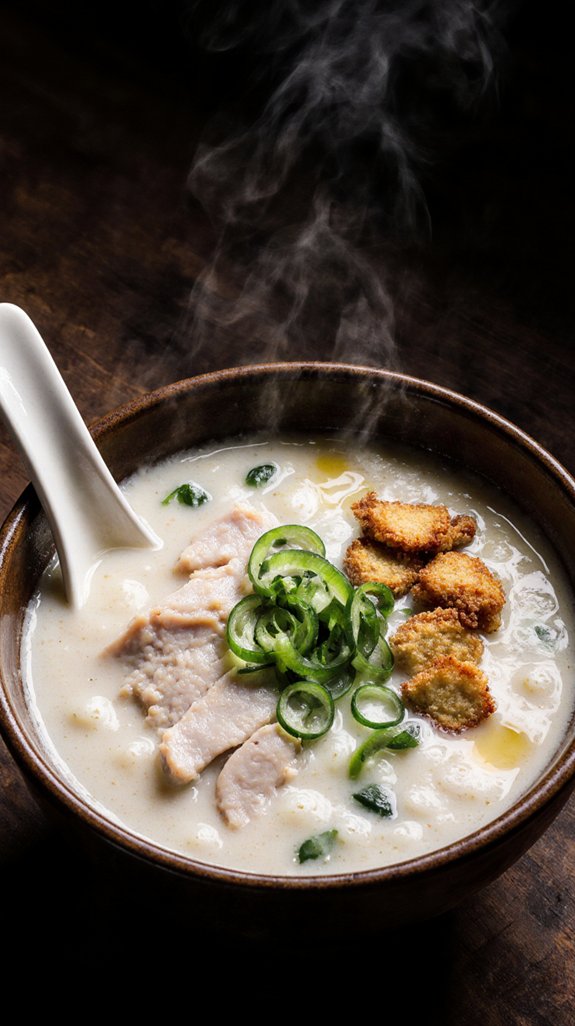

I’ve spent countless weeknights staring into my fridge, exhausted and hungry, searching for something quick yet satisfying. That’s when I discovered miso soup could be so much more than a restaurant appetizer. This comforting bowl takes just ten minutes to prepare, delivers incredible umami flavor, and actually leaves me feeling nourished instead of weighed down. Let me show you why this traditional Japanese dish has become my go-to solution for hectic evenings.
Why You`ll Love this Comforting Miso Soup
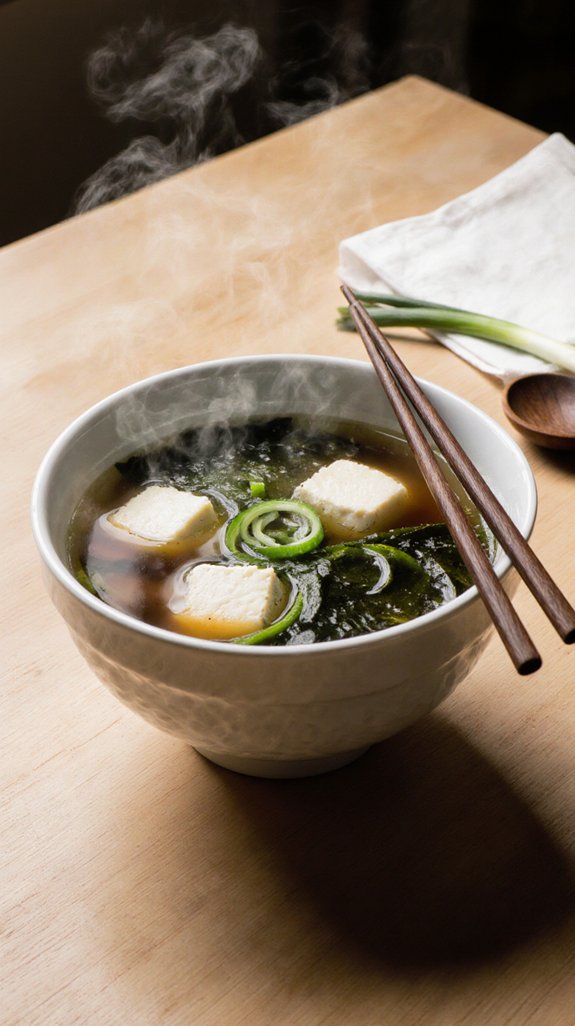
Warmth radiates from a steaming bowl of miso soup in a way few dishes can match. I love how this recipe delivers incredible flavor in just minutes, making it perfect for hectic evenings when you need something nourishing fast.
The health benefits are remarkable—miso provides probiotics for gut health, while wakame seaweed offers essential minerals like calcium and iron. You’ll appreciate the traditional origins of this Japanese staple, which has comforted families for centuries.
What makes this version special is how the watercress and Chinese cabbage add fresh, crisp texture to balance the savory broth. The ginger gives a subtle warming kick that elevates every spoonful. It’s satisfying without being heavy, exactly what busy weeknights demand.
Shop Related Products

Even Heat Distribution Retention: This Umite Chef Dutch oven Made with heavy-duty enameled cast iron, ensures even heat distribution for perfect searing and slow cooking, locking in flavors. thickened walls lock in heat for slow braising, searing, and baking. Unlike thin pots that scorch food, this professional-grade Enameled cast iron potSuperior heat retention after preheating (allow 5-7 mins for even distribution). CRITICAL: Always cool naturally for 45+ mins before cleaning. Thermal shock (hot-to-cold contact) cracks enamel. USE TIP: Preheat 2-3 mins on medium-low only

[Excellent Non Stick Performance] - Crafted with 100% free of PFOS and PFOA granite materials, you will experience hassle-free cooking with our non-stick pot that prevents food from sticking, making cleaning up a breeze.
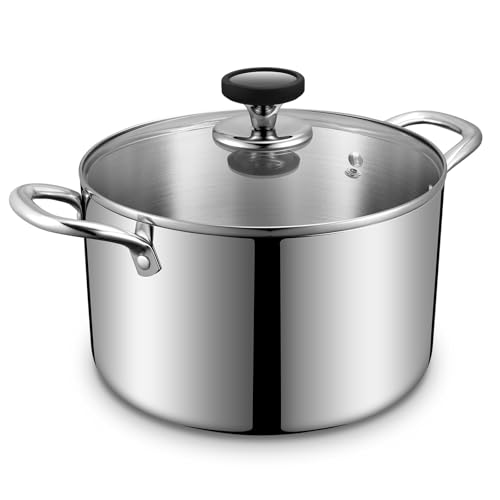
Tri-Ply Stainless Steel Pot: Stainless steel stock pot which made of premium material is non-toxic and food-grade, No harmful material releasing to your food whether at high temperature or not, Tri-ply pot consists of 18/8 stainless steel interior (ensure food-grade quality), aluminum core (for an even heating) and magnetic 18/0 stainless steel exterior.
What ingredients are in Comforting Miso Soup?
This comforting miso soup requires just a handful of simple, wholesome ingredients that come together to create a nourishing bowl of Japanese tradition. Each component plays a distinct role—from the umami-rich miso paste that forms the flavor foundation to the seaweed varieties that add ocean depth and nutritional value.
Fresh vegetables provide color, texture, and a subtle sweetness that balances the salty, fermented notes of the miso.
- 3 inches wakame seaweed strip
- 1 tablespoon miso paste
- 1 handful watercress, finely chopped
- 2 leaves Chinese cabbage, finely chopped
- 2 sheets nori seaweed, cut into fine strips
- 1/2 teaspoon ginger, grated
- 4 cups water
When selecting your miso paste, you’ll find several varieties at Asian markets or well-stocked grocery stores—white (shiro) miso offers a milder, slightly sweet flavor while red (aka) miso provides a deeper, more robust taste.
The wakame seaweed expands considerably when rehydrated, so the small strip measurement is intentional. Fresh watercress and Chinese cabbage can typically be found in the produce section, though bok choy makes an excellent substitute if Chinese cabbage isn’t available.
For the best flavor, use fresh ginger root rather than powdered, as it provides a brighter, more aromatic quality to the finished soup.
How to make this Comforting Miso Soup
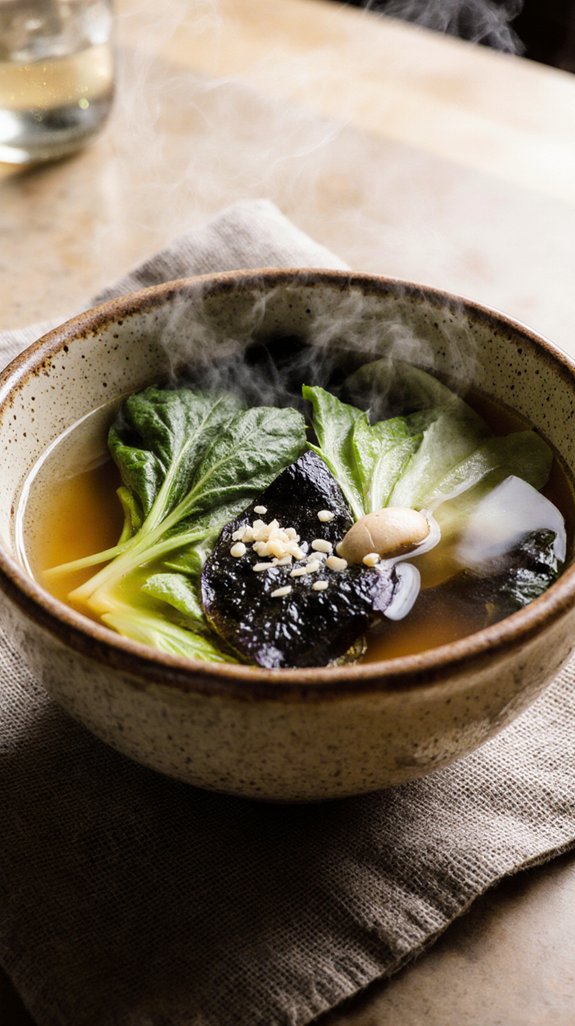
Making this comforting miso soup is wonderfully straightforward, beginning with the wakame seaweed preparation. Start by placing your 3-inch wakame strip in a small bowl of water and let it pre-soak for 2 minutes—you’ll be amazed at how much it expands during this brief time.
While the wakame softens, bring 4 cups of water to a rolling boil in a medium saucepan, then reduce the heat to achieve a gentle simmer. Add the pre-soaked wakame strip to the simmering water and let it cook for 3 minutes, allowing the seaweed to fully rehydrate and release its subtle ocean flavors into the broth. The key here is maintaining that gentle simmer rather than a vigorous boil, which helps preserve the delicate textures and prevents the soup from becoming cloudy.
Next comes the essential step of incorporating the miso paste, which requires a bit of care to guarantee smooth distribution throughout the soup. Take your 1 tablespoon of miso paste and place it in a small cup, then dilute it with 2 tablespoons of cold water, stirring until you have a smooth, pourable mixture.
This dilution step prevents clumping when the miso meets the hot broth, ensuring an evenly flavored soup. Pour this miso mixture into the simmering pan, stir gently to combine, and continue simmering for just 1 minute—avoid boiling the soup once the miso has been added, as excessive heat can diminish its probiotic benefits and alter the flavor profile.
To finish, add your 1 handful of finely chopped watercress and 2 finely chopped Chinese cabbage leaves to the pot, then immediately turn off the heat. The residual warmth will gently wilt these greens while preserving their bright color and nutritional value.
Ladle the soup into serving bowls and top each portion with strips of nori seaweed and a small pinch of the 1/2 teaspoon grated ginger. The nori adds a pleasant textural contrast and additional umami depth, while the fresh ginger provides a warm, aromatic finish that elevates the entire bowl.
Shop Related Products

Daisho Nabe Hot Pot Soup Base Miso Flavor

Size (W x D x H): 9.4 x 16.1 x 3.9 inches

Healthy Nonstick Saucepan with Granite Coating: This nonstick saucepan features a Swiss nonstick granite coating—PFOA-free, smokeless, and safe for cooking. Use less oil for healthier meals, making it an excellent small saucepan for daily cooking needs
Comforting Miso Soup Substitutions and Variations
While traditional miso soup remains delicious as written, you’ll find countless opportunities to customize this recipe based on what’s available in your pantry or your personal taste preferences.
If you’re exploring miso alternatives, white miso offers a milder, slightly sweeter flavor, while red miso delivers a stronger, saltier punch.
For seaweed options, try kombu instead of wakame for a different texture, or skip it entirely if you’re new to these ingredients.
I love adding cubed tofu for extra protein or thinly sliced mushrooms for earthiness. You can swap watercress for spinach or bok choy, and feel free to include green onions, carrots, or daikon radish.
Each variation creates a unique bowl while maintaining that comforting warmth.
What to serve with Comforting Miso Soup
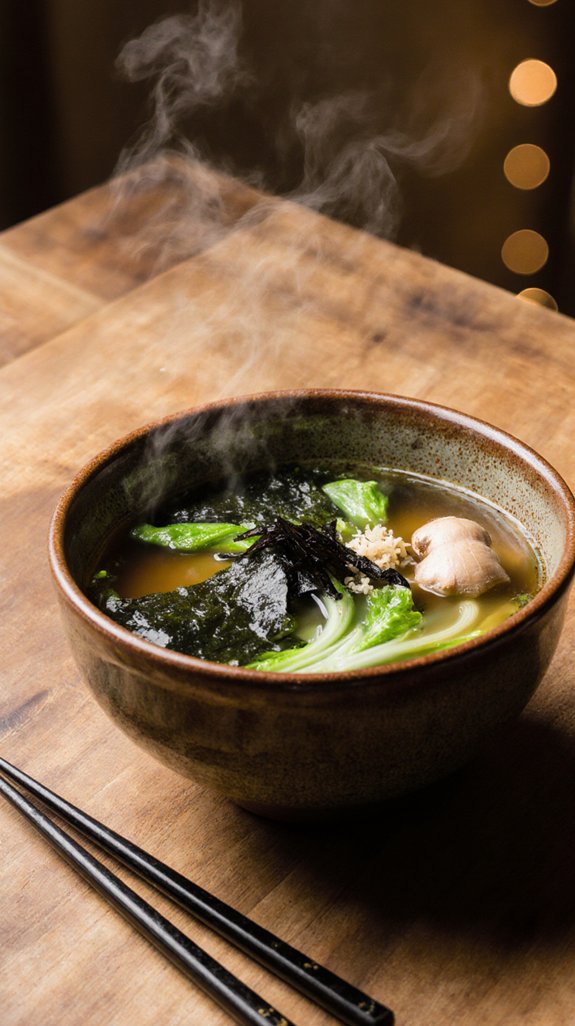
Miso soup shines as a starter or side dish in Japanese meals, but it pairs beautifully with a wide range of foods beyond traditional settings.
I love serving it alongside grilled salmon or teriyaki chicken, where the soup’s umami depth complements savory proteins perfectly. Rice bowls topped with vegetables or tofu make excellent companions, creating a balanced meal that’s both satisfying and nutritious.
For lighter fare, consider pairing miso soup with fresh salads or steamed dumplings. The flavor pairings are surprisingly versatile—I’ve even served it with simple avocado toast for a fusion-style brunch.
When planning side dishes, think about contrasting textures and temperatures. Cold cucumber salad or warm edamame work wonderfully alongside this comforting soup, rounding out your weeknight dinner with minimal effort.
Final Thoughts
Once you’ve mastered this basic miso soup recipe, you’ll discover just how simple it’s to create restaurant-quality soup in your own kitchen.
I’ve found this recipe incredibly valuable for busy weeknights when I need quick meals without sacrificing nutrition. The health benefits of miso soup are remarkable, from promoting gut health with probiotics to providing essential minerals and vitamins.
What I love most is how adaptable this soup is—you can add tofu, mushrooms, or seasonal vegetables based on what’s available. The entire process takes less than fifteen minutes, making it perfect when you’re short on time but craving something warm and nourishing. Plus, using premium copper cookware can elevate the cooking experience and enhance flavor retention.
I hope you enjoy making this comforting soup as much as I do.
Frequently Asked Questions
Can I Make Miso Soup Ahead of Time and Reheat It?
I don’t recommend making miso soup ahead for meal prep because reheating degrades the beneficial probiotics in miso paste. For best soup storage, I’d prepare the broth base separately and add fresh miso when serving.
How Long Does Leftover Miso Soup Last in the Refrigerator?
I’ll store leftover miso soup in an airtight container in the refrigerator for up to 3 days. Proper leftover storage maintains soup freshness, though the seaweed may soften and the vegetables will lose some texture over time.
What Type of Miso Paste Works Best for This Recipe?
I’d recommend white or yellow miso for this recipe since they offer mild, slightly sweet flavor profiles. While different miso varieties exist, these lighter types won’t overpower the delicate watercress and seaweed in your soup.
Can I Freeze Miso Soup for Later Use?
I don’t recommend freezing miso soup because the seaweed becomes slimy and vegetables turn mushy. However, I’ll share freezing techniques for miso storage: freeze the paste separately in ice cube trays for convenient portioning later.
Is Miso Soup Gluten-Free and Suitable for Special Diets?
I’ll check the miso soup ingredients to confirm it depends on your miso paste brand. Traditional miso contains soybeans and sometimes barley, which has gluten. For dietary restrictions, choose certified gluten-free miso paste varieties.