
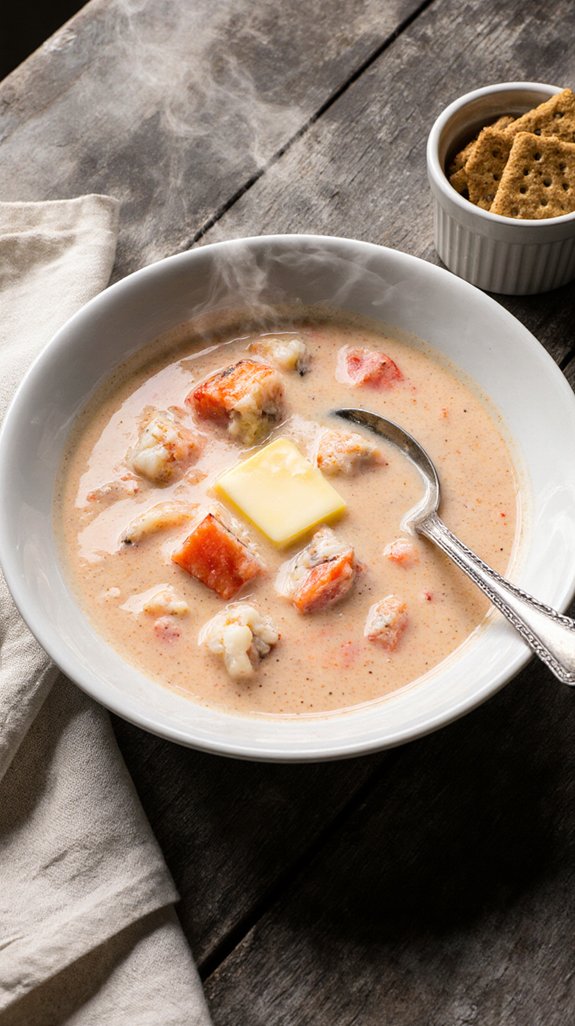
I’ll admit, I used to think lobster bisque was reserved for fancy restaurants with cloth napkins and prices that made my wallet weep. Then I discovered how to make it at home, transforming what seemed like culinary wizardry into a surprisingly manageable weeknight luxury. The secret isn’t complicated techniques or a culinary degree, it’s understanding a few key steps that’ll have your kitchen smelling like a French bistro and your taste buds wondering why you ever waited this long.
Why You`ll Love this Rich Lobster Bisque

Because this bisque transforms humble ingredients into something that tastes like luxury, you’ll find yourself making it again and again, even on ordinary weeknights when you want to feel a little fancy.
The flavor profile delivers that restaurant-quality richness without requiring a culinary degree or emptying your wallet. I remember the first time I made this, surprised that evaporated milk could create such silky decadence.
The cooking techniques are wonderfully forgiving—there’s no tricky roux or cream reduction to stress over. You’re basically building a simple stock, enriching it with canned milk, and gently warming everything together.
It’s the kind of recipe that makes you look like a genius while you’re secretly just following straightforward steps. Pure comfort in a bowl.
What ingredients are in Rich Lobster Bisque?
This lobster bisque brings together surprisingly accessible ingredients that create an elegant, restaurant-worthy soup. The foundation starts with chicken thighs and aromatics for a flavorful stock, which gets enriched with creamy dairy and tender lobster meat.
Whether you’re using leftover lobster from a special dinner or reaching for convenient canned lobster, this recipe adapts beautifully to what you have on hand.
Ingredients:
- 2 skinless chicken thighs
- 1 onion, quartered
- Salt and pepper
- 4 cups water
- 1 lb leftover cooked lobster or 1 lb canned lobster
- 2 cans evaporated milk
- 1 tablespoon butter
The beauty of this ingredient list lies in its flexibility and simplicity. Canned lobster makes this bisque accessible year-round without the expense or hassle of preparing fresh lobster, though leftover lobster shells and meat work wonderfully if you have them.
The evaporated milk is the secret weapon here, providing richness and body without the need for heavy cream or complicated reductions. The chicken stock base might seem unconventional for a seafood bisque, but it adds depth without overpowering the delicate lobster flavor.
Keep your seasonings simple with just salt and pepper—the quality ingredients speak for themselves.
How to make this Rich Lobster Bisque

Making this lobster bisque is a straightforward two-part process that builds incredible flavor through a homemade stock before transforming it into a luxurious soup.
Start by creating your stock base: place 2 skinless chicken thighs and 1 quartered onion in a pot with 4 cups of water, seasoning with salt and pepper to taste. Let this simmer away until the liquid reduces down to approximately 2 cups—this concentration is where the magic happens, intensifying all those savory flavors.
Once reduced, strain the stock carefully and discard the solids. You’ve now got a rich, flavorful foundation that’s worth the wait.
With your concentrated stock ready, it’s time to build the bisque itself. Warm your strained stock over medium heat, then add 2 cans of evaporated milk and 1 tablespoon of butter, stirring gently to combine everything smoothly.
Here’s an important tip: keep the heat moderate and watch carefully as you bring the mixture to temperature. You want it hot enough to be perfectly steamy and inviting, but not so hot that it reaches a boil, which could cause the milk to separate or curdle.
Once your creamy base is heated through, add 1 pound of your cooked lobster meat and let it warm gently in the soup for just a few minutes. The lobster is already cooked, so you’re simply bringing it up to temperature and allowing the flavors to meld together.
For best results when cooking delicate soups like this, invest in a premium cookware set that provides even heat distribution and prevents hot spots.
Serve your bisque piping hot with common crackers or oyster crackers on the side for that classic New England touch.
Shop Related Products

Concord Stainless Steel Stockpot with Lid and Basket. Heavy Gauge

Healthy & sturdy, 14qt cooking pot is made of food grade stainless steel without any toxic or chemical coating, ensure no harmful substances react with food, rust free and corrosion resistant, solid and thick steel body not easy to warp or break for long service life

Food grade material, 16qt stock pot is crafted of high end stainless steel without chemical substance or coating leaching into food ensures safe and healthy cooking, strong structure with a good resistance and corrosion provides long-lasting durability, heavy construction can hold large portions of food without deforming
Rich Lobster Bisque Substitutions and Variations
While I’ve kept this recipe fairly traditional, there’s plenty of room to make it your own depending on what you’ve got in your pantry or what flavors speak to you. For lobster alternatives, I’ve successfully used crab meat, shrimp, or even a combination of seafood when lobster prices make my wallet weep. The cream variations are equally flexible—you can swap the evaporated milk for heavy cream if you want something richer, or use half-and-half for a lighter version that won’t weigh you down. I’ve even stirred in a splash of sherry or cognac when I’m feeling fancy, which adds a sophisticated depth my grandmother would’ve secretly approved of. Don’t be afraid to experiment with what works for your taste and budget.
Shop Related Products

Decadent, savory-sweet lobster soup thickened with cream, seasoned with paprika and finished with a splash of sherry

Locally made in New England
![Bar Harbor New England Lobster Bisque, Ready to Serve, 14.5 oz – BPA-NI Lined Can [Pack of 2]](https://m.media-amazon.com/images/I/4114+Y3T0ZL._SL500_.jpg)
AUTHENTIC NEW ENGLAND FLAVOR – Rich, creamy lobster bisque crafted for classic coastal taste
What to serve with Rich Lobster Bisque
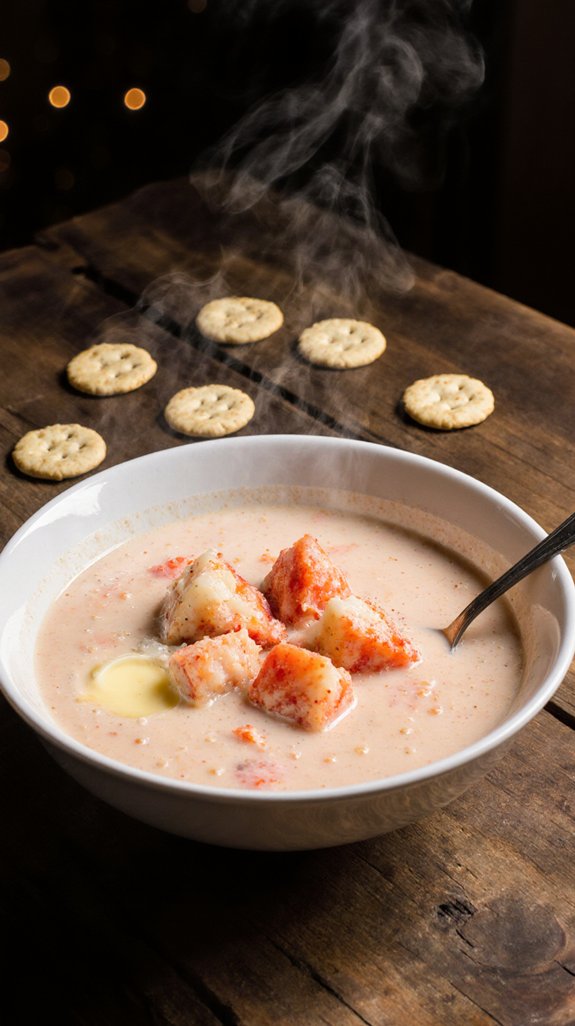
When you’re serving a bisque this rich and indulgent, you’ll want sides that complement rather than compete with those luxurious flavors.
I always keep a bowl of common crackers or oyster crackers nearby—their simple, buttery crunch provides the perfect textural contrast without overwhelming the delicate lobster. The crackers pairing transforms each spoonful into something special, like my grandmother used to say.
For wine choices, I lean toward a crisp Chablis or unoaked Chardonnay, though a dry Champagne works beautifully for celebrations.
A simple green salad dressed lightly with lemon vinaigrette cuts through the richness nicely, and crusty French bread lets you savor every last drop.
Keep everything else minimal—this bisque deserves center stage on your table.
Final Thoughts
This recipe holds a special place in my heart because it taught me that elegance doesn’t require perfection, just quality ingredients and a gentle hand.
The key to flavor enhancement lies in taking your time with the stock, letting those shells release every ounce of their sweet, briny essence. Don’t rush the reduction, even when you’re tempted.
For presentation tips, I’ve learned that a simple swirl of cream and a few fresh chives make all the difference, transforming a humble bowl into something restaurant-worthy.
Remember, the gentle heat is essential, never let it boil once you’ve added the milk.
This bisque proves that impressive cooking doesn’t mean complicated cooking, it just means caring about what you’re making.
Frequently Asked Questions
Can I Make Lobster Bisque Ahead of Time and Reheat It?
Yes, I’ll share my make ahead tips: you can prepare lobster bisque up to two days in advance. For reheating methods, I recommend using low heat on the stovetop, stirring frequently to prevent curdling the cream.
How Long Does Leftover Lobster Bisque Last in the Refrigerator?
I’d store your bisque for 3-4 days maximum in the fridge. For proper leftover storage, use an airtight container and keep it refrigerated promptly. Bisque freshness diminishes quickly due to the dairy and seafood, so I recommend freezing portions if you need longer storage.
Can Lobster Bisque Be Frozen for Later Use?
Yes, I can freeze lobster bisque for up to three months. I’ll use proper freezing techniques and airtight storage containers, leaving headspace for expansion. I’ll thaw it overnight in the refrigerator before gently reheating.
What’s the Difference Between Lobster Bisque and Lobster Chowder?
The main difference is soup textures—I make bisque smooth and creamy by pureeing lobster ingredients, while chowder stays chunky with visible potato pieces and lobster meat. Bisque uses cream; chowder typically includes milk.
How Do I Prevent the Bisque From Curdling When Heating?
I prevent curdling by heating the bisque gently over low heat and never letting it boil. Understanding curdling causes helps me apply proper heating tips: I stir constantly and add the evaporated milk gradually while maintaining gentle temperatures.