I’ll admit, my first encounter with real Kung Pao Chicken wasn’t at some fancy restaurant—it was at my friend’s mom’s kitchen table, where the Szechuan peppercorns made my lips tingle in ways I’d never experienced. That moment changed everything I thought I knew about Chinese takeout. The authentic version, with its perfect balance of heat and that signature numbing sensation, bears little resemblance to the sweet, gloopy stuff most of us grew up ordering. Here’s what you need to know.
Why You`ll Love this Fiery Kung Pao Chicken
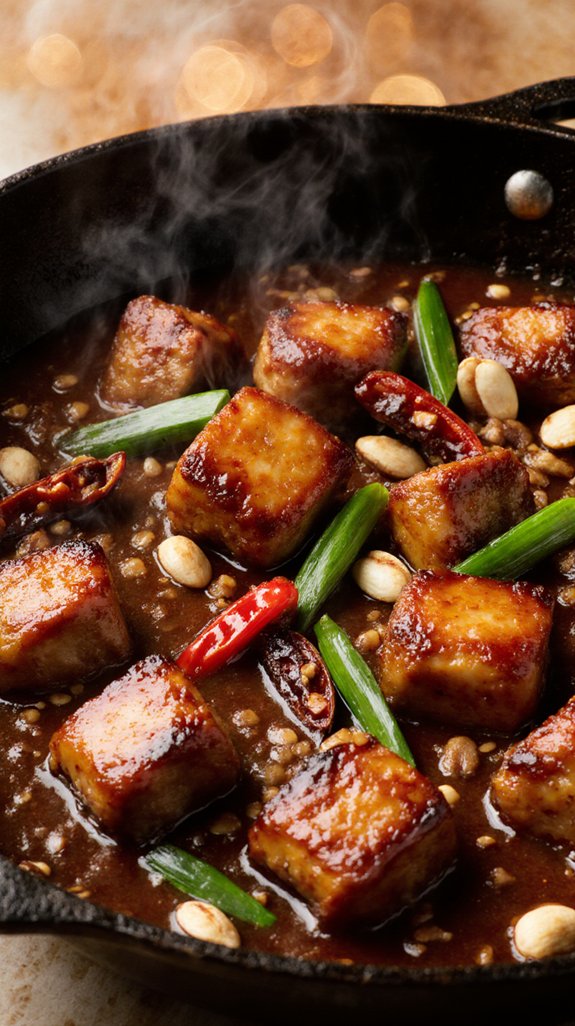
When I first tasted authentic kung pao chicken at a tiny Sichuan restaurant in college, the combination of heat, sweetness, and that addictive numbing sensation completely changed what I thought Chinese takeout could be.
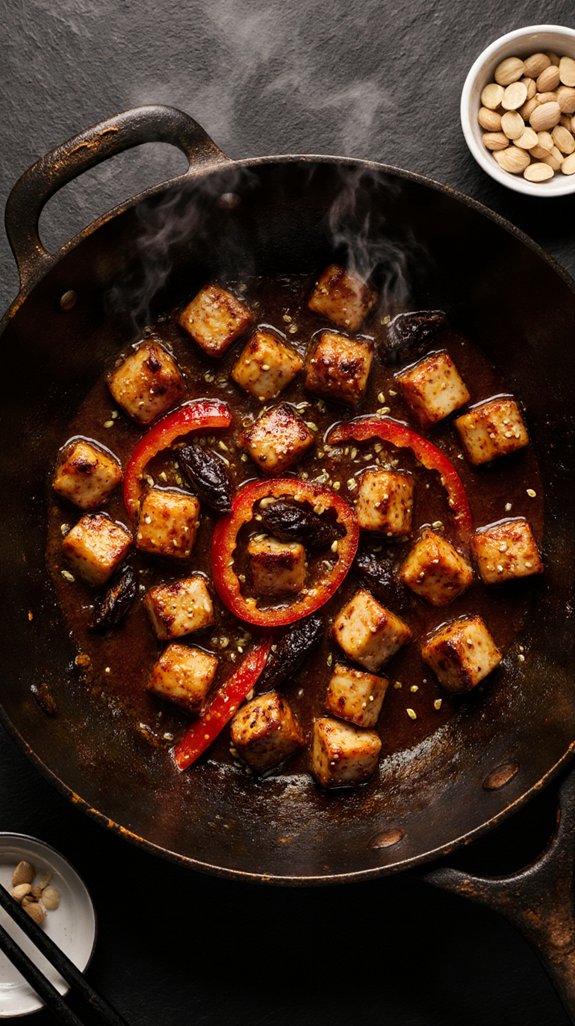
This recipe captures that exact balance—the spicy flavor builds gradually from dried chilies and Szechuan sauce, while rice vinegar and sugar create a glossy sweet-and-sour coating that clings to every piece.
The chicken texture stays incredibly tender because you marinate it briefly in soy and sherry before stir-frying over high heat.
What I love most is how quickly it comes together—you’ll have dinner on the table in twenty minutes, which beats waiting for delivery any day, and honestly tastes better too.
What ingredients are in Fiery Kung Pao Chicken?
The foundation of great kung pao chicken starts with boneless, skinless chicken breasts that you’ll cut into bite-sized pieces for quick cooking.
Beyond the protein, you’ll need a combination of Asian pantry staples and fresh aromatics that layer together to create the signature flavor profile—the savory depth comes from soy sauce, while dried red chilies and Szechuan sauce bring authentic heat.
Rice vinegar and sugar balance the spice with bright acidity and sweetness, and aromatic ingredients like fresh ginger and garlic add complexity that makes every bite interesting.
Ingredients:
- 4 boneless skinless chicken breasts
- 5 tablespoons soy sauce
- 2 teaspoons sugar
- 4 Asian dried red chilies, split
- 1/2 tablespoon grated ginger
- 1 pinch red pepper flakes
- 1 1/2 tablespoons canned Szechuan sauce
- 2 tablespoons sherry wine
- 2 teaspoons sesame oil
- 2 tablespoons rice vinegar
- 1/4 cup water
- 1 tablespoon minced garlic
- 2 tablespoons peanut oil (or other light oil)
- 1 red bell pepper, cut into chunks
- 2 teaspoons cornstarch
The Szechuan sauce is what gives this dish its authentic flavor—you can find it in the Asian section of most grocery stores, though if you want to control the heat level, start with the lower amount and add more at the end.
Peanut oil is traditional for stir-frying because it has a high smoke point, but any neutral cooking oil works if that’s what you have on hand.
The cornstarch acts as a thickener that transforms the sauce into a glossy coating rather than leaving you with a watery puddle at the bottom of your bowl.
How to make this Fiery Kung Pao Chicken
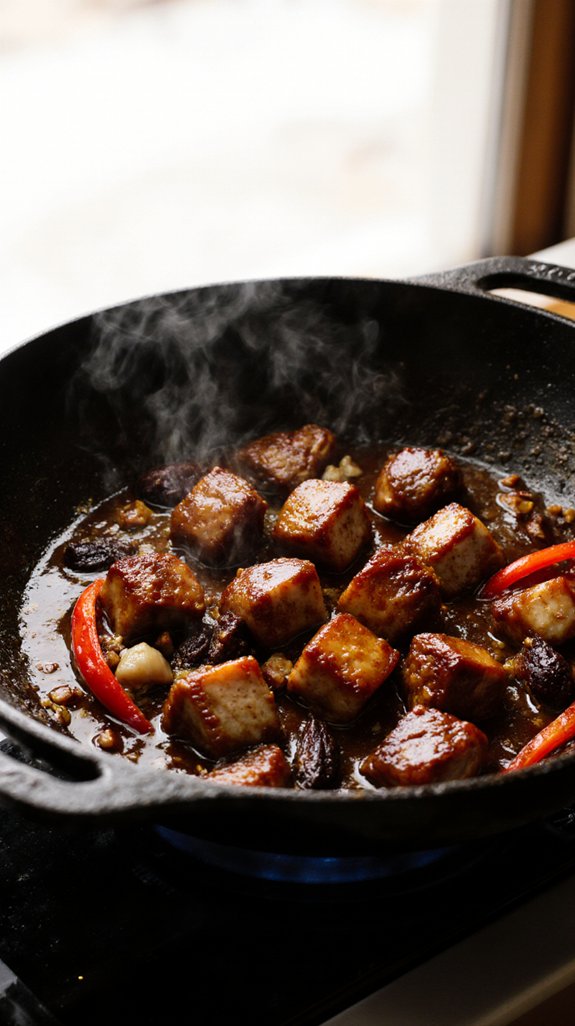
Start by cutting your 4 boneless skinless chicken breasts into bite-sized cubes—you want them roughly uniform so they cook evenly in the wok. Toss the chicken with 1 tablespoon of soy sauce and 1 tablespoon of sherry wine, then set it aside to marinate while you prepare the sauce.
In a separate bowl, whisk together the remaining ingredients: 2 teaspoons sugar, 2 tablespoons rice vinegar, 2 teaspoons sesame oil, 1/4 cup water, the remaining sherry, the rest of your soy sauce, and 2 teaspoons cornstarch. This sauce mixture is what brings everything together at the end, so make sure the cornstarch is fully dissolved without any lumps.
Heat 2 tablespoons of peanut oil in your wok over medium-high heat until it’s shimmering but not smoking. Add the 4 split Asian dried red chilies first and cook them until they start turning dark—this blooms their flavor and infuses the oil with that signature heat.
Next, toss in 1 tablespoon minced garlic, 1/2 tablespoon grated ginger, and a pinch of red pepper flakes, cooking for about 30 seconds until the kitchen smells amazing and aromatic. Add your marinated chicken along with any liquid from the marinade, stirring constantly for 1-2 minutes to get a good sear on the outside.
Pour in your prepared soy sauce mixture and add the chunked red bell pepper, continuing to cook until the chicken is just cooked through—this should only take about another minute since you’re working with small pieces. The sauce will thicken quickly thanks to the cornstarch, coating everything in a glossy sheen.
Remove the wok from heat, and if you want a stronger, more authentic flavor kick, toss everything with 1 to 1 1/2 tablespoons of canned Szechuan sauce before serving. The whole cooking process happens fast, so have everything prepped and ready before you start heating that wok. Having premium kitchen gadgets like a quality wok and sharp chef’s knife makes this stir-fry technique much easier to execute.
Shop Related Products

【SNOW FLAKE TECHNOLOGY】Our design is created through a laser etching process to provide both stainless steel and non stick surface. This dual surface allows to cook with less oil, grease, and butter.Our clad surface is 50% more than usual Hex surface non stick frying pans.

【Advanced Nonstick Tech | PFOA-Free & Healthy】Features innovative laser-etching that creates a precise raised pattern on this premium stainless steel wok. This 0.3mm deep physical barrier reduces sticking by 50%, providing superior food release without harmful chemicals. Requires minimal oil for healthier cooking—100% free from PFOA/PFAS/PTFE. Enjoy exceptional durability and effortless cleaning for stir-fries, meats without scraping. Engineered for a lifetime of healthy cooking.

Healthy Ceramic Coating: Crafted from natural ceramic, this wok is completely free of intentionally added PFOA, PTFE, PFAS, lead, and cadmium. No toxic fumes—even when overheated. Cook safely and confidently for your whole family.
Fiery Kung Pao Chicken Substitutions and Variations
Although I love the traditional version, kung pao chicken is actually one of those dishes that practically begs you to make it your own based on what’s in your fridge or what your family will actually eat.
For protein variations, I’ve swapped chicken for shrimp, tofu, or even turkey with excellent results. If you can’t handle the heat, spicy alternatives include cutting the chilies in half or removing them entirely while keeping the Szechuan sauce for flavor.
The peanuts work wonderfully, but nut substitutes like cashews or sunflower seeds make great stand-ins, especially if you’re dealing with allergies.
As for vegetable options, I often throw in snap peas, water chestnuts, or broccoli florets alongside the bell peppers, creating a more substantial meal that stretches the protein further.
Shop Related Products

🔥 READY TO USE, ZERO COATING NON-STICK: Skip the complicated seasoning process! Our Sanho wok is pre-seasoned using advanced micro-nano technology, creating a durable, 0-coating physical non-stick surface right out of the box. Unlike traditional woks that rely on PTFE or PFOA-based chemicals, our wok is 100% non-toxic. Just rinse, heat, and cook – it’s that simple. The non-stick performance will only improve with proper care, becoming your most reliable kitchen companion

【WHY WE DESIGNED THIS 13-INCH WOK】 We created this 6.7 lb wok to remove the usual hassle of everyday cookware—no seasoning, no complicated upkeep, and no need to buy basic accessories separately. From the moment it arrives, it is designed to be ready for everyday family cooking.
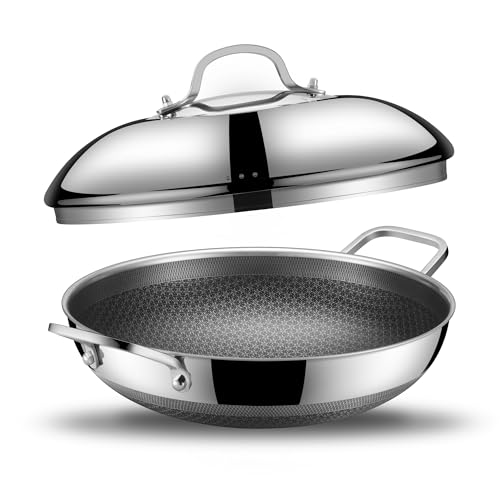
[SNOWCLAD ENHANCED TECH]: Featuring a cutting-edge enhanced nonstick coating with a snowclad surface design, our non stick frying pans offers longer-lasting, superior non-stick performance. No more worries about peeling or flaking—this set offers exceptional durability and is designed to withstand the use of metal utensils. Additionally, our clad surface is 50% larger than that of typical hex pans.
What to serve with Fiery Kung Pao Chicken
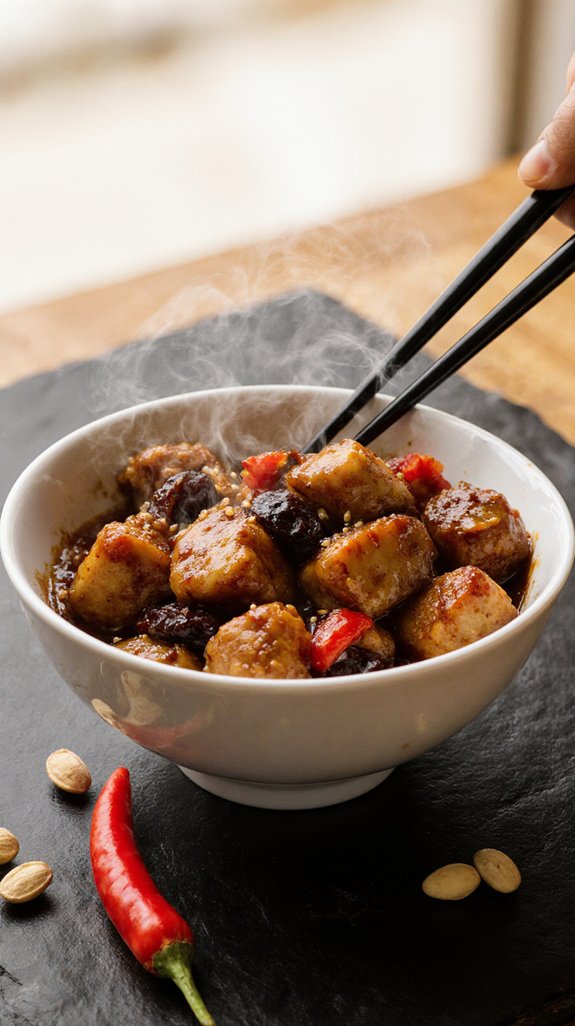
When it comes to pairing sides with kung pao chicken, I’ve learned through countless weeknight dinners that you want something that’ll soak up that incredible sauce without competing with the bold flavors.
Steamed jasmine rice is my go-to because those tender grains catch every drop of that spicy-sweet glaze. For something more substantial, I’ll make fried rice with scrambled eggs and peas, though honestly, simple white rice lets the chicken shine brightest.
My serving suggestions always include a light cucumber salad dressed with rice vinegar to cut through the richness, or quickly blanched green beans for a fresh contrast.
These side dishes create balance on your plate, giving you those cooling bites between forkfuls of fiery chicken that make the whole meal more enjoyable.
Final Thoughts
After making this kung pao chicken recipe dozens of times over the years, I’ve come to appreciate how it bridges the gap between restaurant cravings and home cooking reality.
The beauty lies in its flexibility—you can adjust spice levels to match your tolerance, and the dish practically begs for meal prep. I usually double the recipe on Sundays, portioning it into containers with steamed rice for quick weeknight dinners.
The flavors actually deepen after a day in the fridge, which means Monday’s lunch tastes even better than Sunday’s dinner. Whether you’re cooking for picky eaters or spice enthusiasts, this recipe adapts beautifully.
Just remember to keep those dried chilies handy, and you’ll never need takeout again.
Frequently Asked Questions
Can I Make Kung Pao Chicken Ahead of Time and Reheat It?
Yes, I can make kung pao chicken ahead for meal prep. I’ll store it refrigerated up to three days and reheat gently. However, I’d add the Szechuan sauce when reheating for best flavor enhancement.
How Long Does Leftover Kung Pao Chicken Stay Fresh in the Refrigerator?
I’ll store your leftover kung pao chicken in an airtight container in the refrigerator, where it maintains ideal freshness duration for 3-4 days. The leftover storage method guarantees the chicken stays safe and delicious for reheating.
What Is the Best Way to Store Kung Pao Chicken?
I’ll store kung pao chicken in airtight storage containers once it’s completely cooled. For meal prep, I portion it into individual containers and refrigerate within two hours of cooking to maintain freshness and food safety.
Can Kung Pao Chicken Be Frozen for Later Use?
I’ll share some freezing tips for your meal prep success. Yes, you can freeze kung pao chicken for up to three months. I recommend storing it in airtight containers, leaving space for expansion during freezing.
Is Kung Pao Chicken Gluten-Free or Can It Be Made Gluten-Free?
Traditional kung pao chicken isn’t gluten-free due to regular soy sauce, but I can easily make gluten free substitutions. Using soy sauce alternatives like tamari or coconut aminos makes this dish completely gluten-free while maintaining its authentic flavor.