There’s something about the first real cold snap that makes me crave my grandmother’s goulash, that deep, paprika-rich stew that filled her tiny kitchen with warmth every winter. I’ve spent years trying to recreate her version, the one that turned tough beef into fork-tender magic, and I’ve finally cracked the code. The secret isn’t complicated, but it does require patience and one ingredient you might not expect.
Why You`ll Love this Hearty Hungarian Goulash
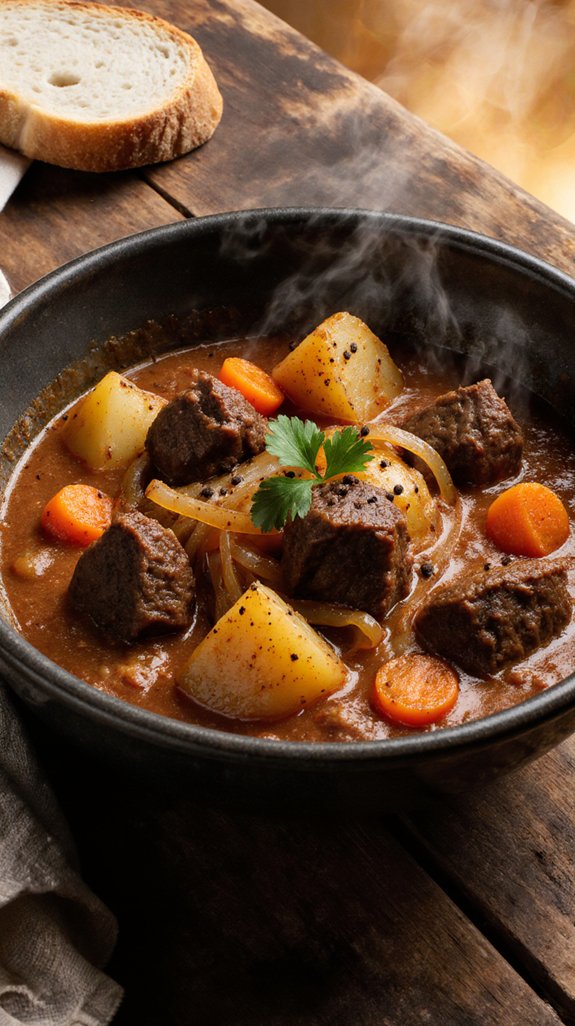
Comfort food doesn’t get much better than a bubbling pot of Hungarian goulash, with its rich, paprika-infused sauce coating tender chunks of beef that practically fall apart at the touch of a fork. I’ve been making this dish for years, and it never fails to warm me from the inside out when cold weather hits. The hearty flavors develop slowly as the beef simmers, creating layers of complexity that you simply can’t rush. What I love most is how forgiving this recipe is—you can adjust the spices to your taste, add more vegetables if you’d like, and the longer it cooks, the better it gets. It’s perfect for feeding a crowd or enjoying leftovers that taste even better the next day.
What ingredients are in Hearty Hungarian Goulash?
The beauty of Hungarian goulash lies in its relatively simple list of ingredients that come together to create something truly spectacular. While the ingredient list may look long at first glance, most items are common spices and pantry staples that build the dish’s signature deep, warming flavor profile. The star of the show is quality beef chuck, which becomes melt-in-your-mouth tender during the slow cooking process.
For the Goulash:
- 2 1/2 lbs beef chuck roast, cut into 2-inch cubes
- 1/4 cup unbleached all-purpose flour
- 1/2 teaspoon paprika (for coating)
- 2 tablespoons olive oil
- 4 cups white onions, chopped in chunks
- 1 1/2 cups red peppers, chopped in chunks
- 1 1/2 cups green peppers, chopped in chunks
- 1/4 teaspoon ground sea salt (to taste)
- 1 1/2 tablespoons mild paprika
- 1/2 tablespoon smoked paprika
- 2 teaspoons caraway seeds, ground
- 1 teaspoon marjoram
- 1/2 teaspoon thyme
- 1/4 teaspoon cayenne pepper
- 1/2 teaspoon fresh ground black pepper (to taste)
- 1/4 cup dry red wine
- 4 cups low sodium beef broth
- 1/4 cup tomato paste
- 3 large garlic cloves, pressed
- 1 tablespoon balsamic vinegar
- 1 teaspoon granulated sugar
- 1 bay leaf
For Garnish:
- 3-4 tablespoons light sour cream
- 1 tablespoon chopped fresh parsley
When shopping for ingredients, don’t skimp on the quality of paprika—both the mild and smoked varieties are essential for achieving that authentic Hungarian flavor. If you can’t find smoked paprika, you can use all mild paprika, though you’ll lose some depth of flavor. The caraway seeds should be freshly ground if possible, as pre-ground spices lose their potency over time. Choose a beef chuck roast with good marbling, as the fat will render during cooking and contribute to the richness of the sauce. For serving, the recipe also suggests preparing buttered egg noodles using 4 cups egg noodles, 2 cups chicken broth, and 1/4 cup butter with optional garlic salt, though mashed potatoes work equally well as a base for this hearty stew.
How to make this Hearty Hungarian Goulash
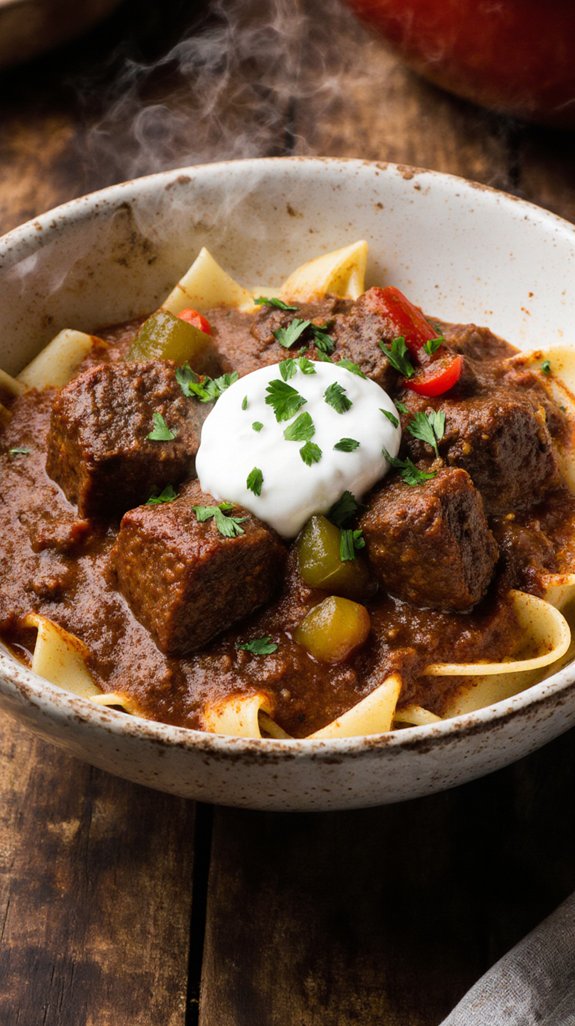
Making Hungarian goulash is a labor of love that rewards patience with incredibly tender, flavorful beef in a rich, paprika-infused sauce. Start by combining 1/4 cup all-purpose flour with 1/2 teaspoon paprika in a small bowl, then sift this mixture over your 2 1/2 pounds of beef chuck cubes to create a light coating.
Heat 2 tablespoons of olive oil in a large deep skillet over high heat, and working in batches to avoid crowding, sear the beef cubes for about 2 minutes until they just start to brown. Transfer each batch to a large bowl with a slotted spoon.
Next, reduce the heat to medium and add your 4 cups of chopped white onions and 1 1/2 cups each of red and green peppers, sprinkling with 1/4 teaspoon sea salt. Cook these vegetables for about 5 minutes until softened, then transfer them to the bowl with the beef. Let the skillet cool slightly before returning it to medium-low heat.
Now comes the vital step of building the sauce’s complex flavor. Grind 2 teaspoons of caraway seeds in a spice grinder, then add them to the skillet along with 1 1/2 tablespoons mild paprika, 1/2 tablespoon smoked paprika, 1 teaspoon marjoram, 1/2 teaspoon thyme, 1/4 teaspoon cayenne pepper, and 1/2 teaspoon black pepper.
Toast these spices for about 2 minutes, stirring constantly to prevent burning. Pour in 1/4 cup dry red wine and stir until it forms a paste with the spices, then add 1 cup of beef broth while scraping up any flavorful bits from the bottom of the pan.
Increase the heat to medium and stir in 1/4 cup tomato paste until dissolved, followed by 3 pressed garlic cloves. When the mixture begins to simmer, return the beef and vegetables to the skillet, pour in the remaining 3 cups of beef broth, and add 1 tablespoon balsamic vinegar, 1 teaspoon sugar, and 1 bay leaf.
Bring everything to a boil over high heat, then reduce to a steady simmer and let the goulash work its magic for 1 1/2 to 2 hours, or until the meat is fork-tender. During cooking, skim off any fat that rises to the surface and add a splash of stock if the liquid level gets too low.
After about 1 1/2 hours, test the meat for tenderness and adjust the seasoning if needed. For the final 30 minutes, increase the heat to medium to reduce and thicken the sauce.
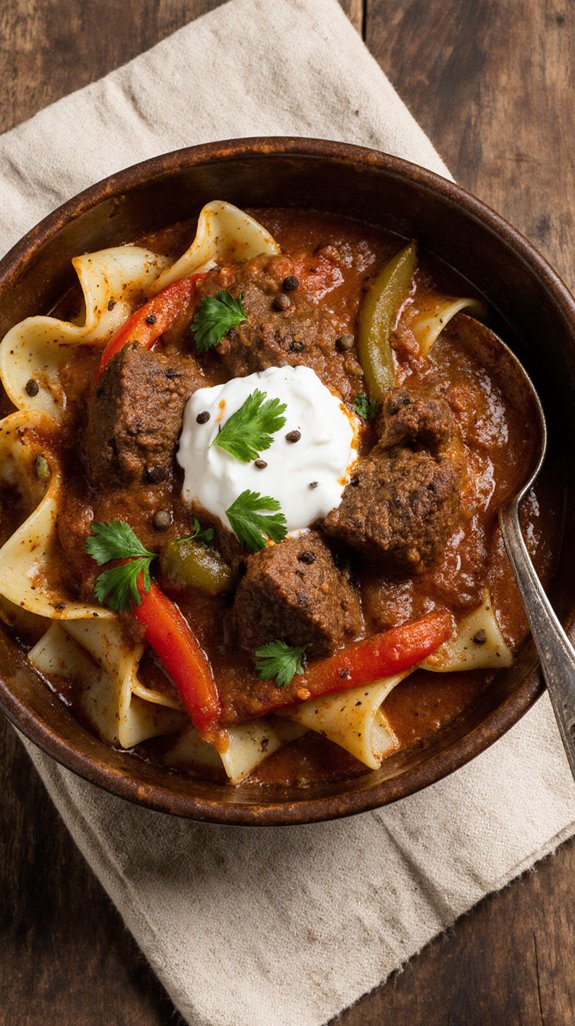
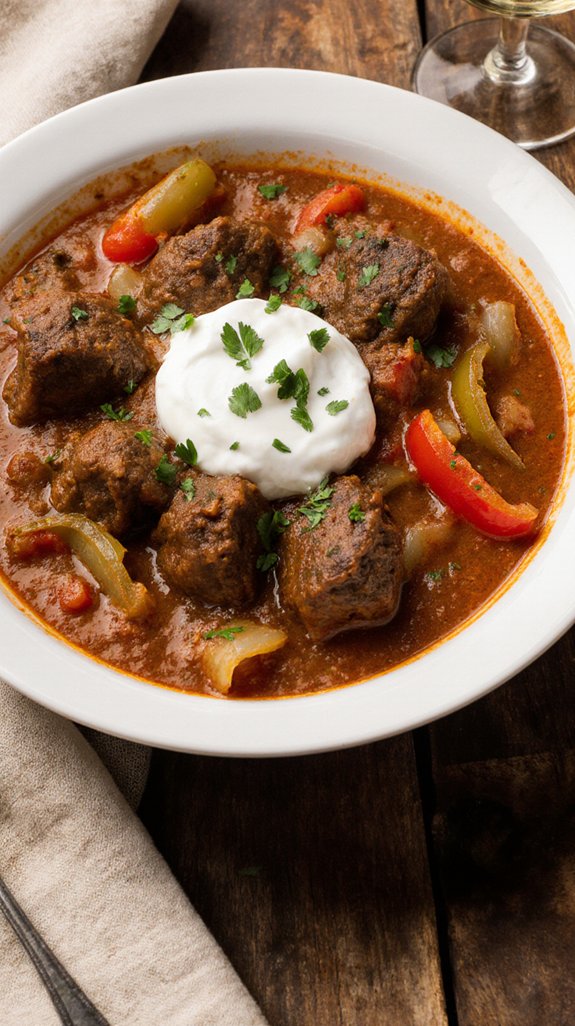
Remove the bay leaf before serving, then ladle the goulash over buttered egg noodles or mashed potatoes and top each portion with a dollop of sour cream and a sprinkle of fresh parsley for a beautiful, authentic presentation. Investing in premium cookware sets ensures even heat distribution throughout the long simmering process, helping you achieve perfectly tender meat and a rich, concentrated sauce every time.
Shop Related Products

YOUR NEW GO-TO PAN: Lodge cast iron cookware is the perfect kitchen tool for beginners, home cooks and chefs. Cast iron can handle any kitchen cooktop, oven, grill, and open flame. Crafted in America with iron and oil, its naturally seasoned cooking surface creates an easy-release and improves with use.

【Superior Nonstick Performance】 - Carote deep non stick frying pan with lid is made with natural granite materials, providing superior nonstick performance with 100% PFOA-free and non-toxic properties. Enjoy healthier cooking with less oil intake. Advanced technology ensures a long-lasting and naturally nonstick surface that effortlessly releases food.
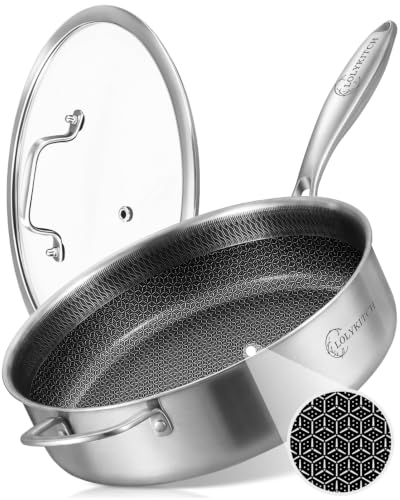
【MASTER ONE-PAN MEALS FOR THE FAMILY】 Stop struggling with cramped cookware. Boasting a generous 6 qt capacity and extra-deep sides, this 12 inch frying pan is the ultimate deep pan to 'feed a family of 6'. This large skillet with lid effortlessly handles big batches of chili or thick stews without spatter. Whether you are mastering weekend meal prep or daily cooking, this large skillet is your everyday workhorse.
Hearty Hungarian Goulash Substitutions and Variations
While traditional Hungarian goulash is absolutely worth making as written, I’ve learned over the years that this recipe adapts beautifully to whatever ingredients you have on hand or dietary needs you’re working with.
For vegetable substitutions, I’ve swapped bell peppers for poblanos when I wanted smokier depth, or added carrots and potatoes for a heartier one-pot meal.
Protein alternatives work surprisingly well—pork shoulder, lamb, or even mushrooms for vegetarians create delicious variations.
Regarding spice variations, you can adjust the paprika levels to your heat preference, though I recommend keeping some smoked paprika for that authentic flavor.
As for cooking methods, this translates perfectly to a slow cooker (8 hours on low) or pressure cooker (35 minutes), making weeknight preparation much simpler.
Shop Related Products
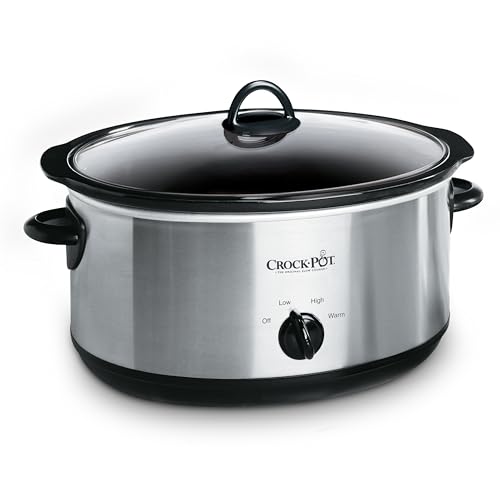
Generous Capacity: 7-quart slow cooker that comfortably serves 9+ people or fits a 7-pound roast

Elevated Design: Streamlined, modern-vintage aesthetic, and earthy Desert Sage green color
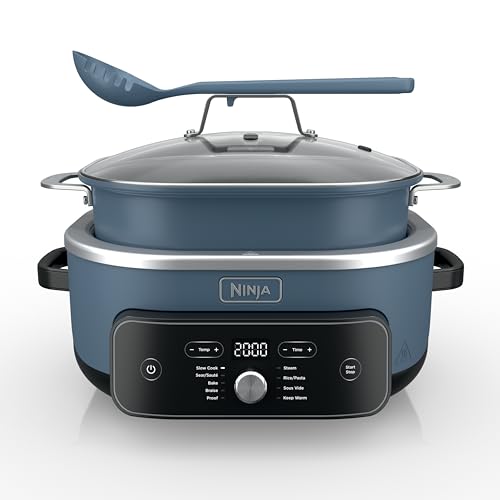
REPLACES 16 COOKING TOOLS & APPLIANCES: This cooker replaces the need for a slow cooker, steam oven, food warmer, nonstick pot, sauté pan, cast iron skillet, saucier, steamer, saucepan, stock pot, Dutch oven, roasting pan, bread proofer, pasta strainer, rice cooker, and utensil.
What to serve with Hearty Hungarian Goulash
Now that you’ve mastered the recipe and know how to adapt it to your preferences, let’s talk about the perfect accompaniments that turn this Hungarian classic into a complete meal.
The recipe already mentions buttered egg noodles, which I’ll always choose first because they soak up that incredible paprika-rich sauce beautifully. Mashed potatoes work wonderfully too, creating a comforting, stick-to-your-ribs experience.
For sides options, I like serving crusty bread for mopping up every last drop, or a simple cucumber salad with sour cream and dill to cut through the richness.
These perfect pairings balance the hearty stew without competing for attention, letting the goulash remain the star while rounding out your meal into something truly satisfying and memorable.
Final Thoughts
This hearty Hungarian goulash has become one of those recipes I return to again and again, especially when the weather turns cold and I’m craving something that fills both the belly and the soul. I’ve shared my cooking tips throughout this recipe, from browning the beef properly to toasting those spices until they release their fragrance, and I hope they help you avoid the mistakes I made when I first attempted this dish. The serving suggestions I’ve mentioned, whether you choose buttered egg noodles or creamy mashed potatoes, really do make a difference in how the rich sauce clings to every bite. Make this goulash your own, adjust the spices to your taste, and create memories around your table.
Frequently Asked Questions
Can I Make Hungarian Goulash in a Slow Cooker or Instant Pot?
Yes, I’d recommend both methods for goulash! For slow cooker tips, brown the meat first and cook on low for 6-8 hours. Instant pot advantages include faster cooking—just 35 minutes under pressure after sautéing.
How Long Does Leftover Goulash Last in the Refrigerator?
I’ll store your leftover goulash in an airtight container in the refrigerator for 3-4 days. Proper leftover storage guarantees goulash freshness, and the flavors actually improve overnight. Just reheat thoroughly before serving again.
Can I Freeze Hungarian Goulash for Later Use?
Yes, I recommend freezing Hungarian goulash in airtight storage containers for up to three months. Here are my freezing tips: let it cool completely first, leave headspace for expansion, and label containers with the date.
What’s the Difference Between Hungarian Goulash and American Goulash?
I’ll explain the key differences: Hungarian goulash uses traditional ingredients like paprika, caraway, and beef chunks in a soup-like consistency, while American goulash contains ground beef, elbow macaroni, and tomato sauce with completely different flavor profiles.
Can I Make This Recipe Gluten-Free?
Yes, I can help you make gluten-free substitutions! Simply replace the all-purpose flour with cornstarch, rice flour, or another gluten-free thickening agent. The rest of the ingredients are naturally gluten-free.