A steaming mug of frothed coffee is like a warm hug on a Monday morning, transforming your regular cup into something special without requiring barista-level skills. I still remember the first time I made one at home—it felt fancy, almost like I’d revealed a secret. You’ll need just a few basic ingredients and about five minutes. The best part? Once you learn the technique, you’ll wonder why you ever settled for plain coffee.
History
The practice of frothing milk for coffee didn’t start in some fancy Italian café like you might think. It actually began in the 1950s when Italian baristas started experimenting with espresso machines that had steam wands.
They discovered you could create this amazing foam by forcing steam through cold milk, and it completely changed how people enjoyed their morning coffee. The cappuccino became wildly popular across Europe, then eventually made its way to American coffee shops in the 1980s.
Now you can make that same silky, airy foam at home without expensive equipment. A simple handheld frother, French press, or even a jar with a tight lid works surprisingly well, giving you café-quality drinks whenever you want them.
Recipe
This luxurious frothed coffee brings together bold espresso and silky, aerated milk to create a drink that rivals anything you’d order at your favorite café.
The foam sits like a cloud on top of the strong coffee, offering a velvety texture that makes each sip feel special. With hints of vanilla and warm cinnamon, it transforms your everyday coffee routine into something truly indulgent.
Whether you’re treating yourself on a lazy Sunday morning or need an afternoon energy boost with a touch of elegance, this frothed coffee delivers the perfect combination of comfort and caffeine.
The subtle sweetness enhances rather than masks the coffee’s rich flavor, while the spices add depth and warmth to every cup.
Ingredients:
- 2 shots espresso (or 1/2 cup strong brewed coffee)
- 3/4 cup whole milk
- 1 tablespoon granulated sugar
- 1/4 teaspoon vanilla extract
- 1/4 teaspoon ground cinnamon
Preparation:
- Brew your espresso or strong coffee and pour into a large mug.
- Heat the milk in a small saucepan over medium heat until warm but not boiling (about 150°F).
- Remove from heat and whisk in the sugar, vanilla extract, and half the cinnamon.
- Use a milk frother, French press, or whisk vigorously for 30-60 seconds until the milk becomes foamy and doubles in volume.
- Pour the frothed milk over the espresso, holding back the foam with a spoon.
- Spoon the remaining foam on top and dust with the remaining cinnamon.
Tips & Variations:
For a dairy-free option, oat milk froths beautifully and creates a similar creamy texture, though almond or coconut milk work too.
Adjust sweetness to your preference—use 2 tablespoons of sugar for a sweeter drink or skip it entirely.
Experiment with different extracts like almond or hazelnut instead of vanilla, or swap the cinnamon for cocoa powder or nutmeg.
You can brew extra coffee ahead of time and reheat it as needed, but always froth the milk fresh since foam doesn’t hold well when made in advance.
Preparation Steps
Making frothed coffee at home is easier than you’d think, and once you get the rhythm down, you’ll be skipping the coffee shop line.
The process takes about five minutes from start to finish, and most of that time is just waiting for your espresso to brew and milk to heat.
I’ll walk you through each step so you can nail that perfect layer of foam on your first try.
Shop Related Products
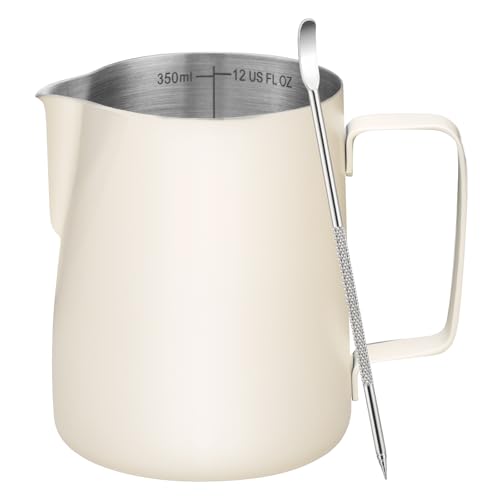
304 STAINLESS STEEL: Amrules 12oz creamer pitcher are crafted of 18/8 food grade stainless steel. The pitcher features external mirror finish and internal hairline finish. It is sturdy, durability, rust-resistant and resistant to deformation

304 STAINLESS STEEL: Amrules 12oz creamer pitcher are crafted of 18/8 food grade stainless steel. The pitcher features external mirror finish and internal hairline finish. It is sturdy, durability, rust-resistant and resistant to deformation

Including 12oz & 20oz each of 4.4" x 3" x 3.6" and 5.2" x 3.66" x 4.4", right for home or office for you and a couple of friends use
Step 1. Brew Espresso or Coffee

Before anything else, you’ll need to brew your espresso or coffee—and I mean really strong coffee if you’re not using an espresso machine.
Pour two shots of espresso into your favorite large mug. If you don’t have an espresso maker, that’s totally fine. I use my regular coffee maker and just increase the grounds-to-water ratio until the brew tastes bold and concentrated, not weak or watery.
You want about half a cup of seriously strong coffee here. The robust flavor matters because you’re about to add a bunch of milk, and wimpy coffee will disappear completely under all that froth.
Think of it like painting—you need a dark base color to show through the lighter layers you’re adding on top.
Step 2. Heat and Sweeten Milk
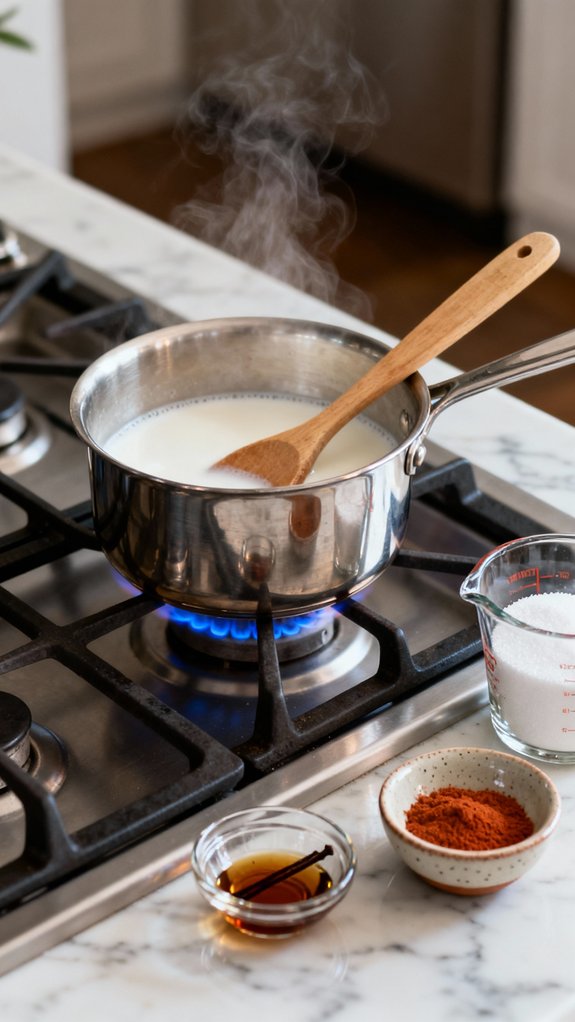
With your strong coffee waiting in the mug, grab a small saucepan and pour in three-quarters of a cup of whole milk.
Place it over medium heat and watch carefully. You’re aiming for warm, not boiling—about 150°F if you’ve got a thermometer, or until small bubbles form around the edges.
I learned the hard way that boiling milk creates a skin on top, which nobody wants in their coffee.
Once it’s heated through, remove the pan from the burner and whisk in a tablespoon of sugar, a quarter teaspoon of vanilla extract, and half your cinnamon.
The sugar dissolves quickly in the warm milk, and the vanilla adds this subtle sweetness that makes everything taste fancier than it actually is.
Step 3. Froth Milk Until Foamy
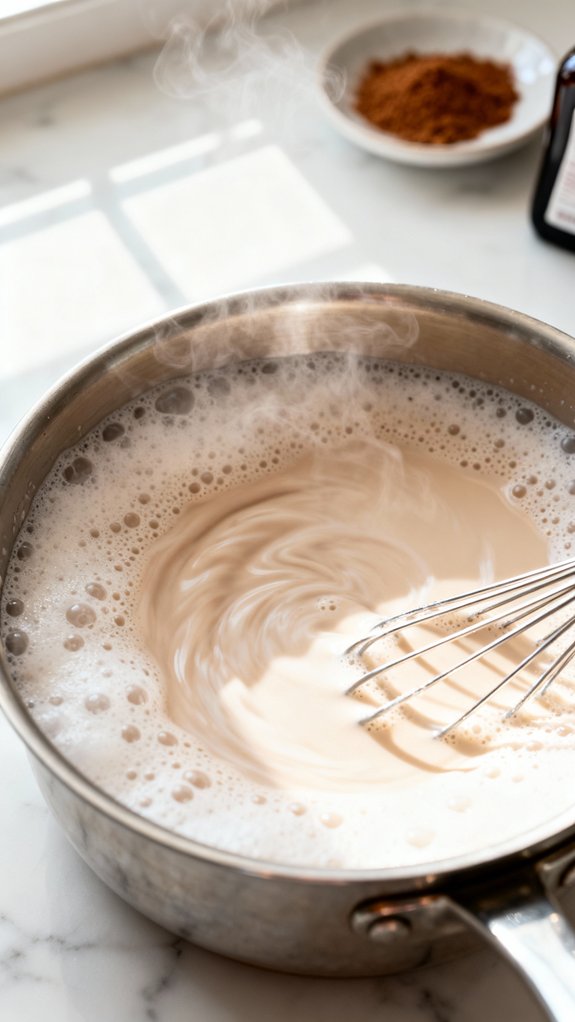
Now comes my favorite part—turning that sweetened milk into something cloud-like and luxurious.
You’ve got three solid options here, and I’ve used all of them at different points. A handheld milk frother is easiest—just stick it in your saucepan and whir for thirty to sixty seconds until the milk doubles in volume and gets foamy.
If you’re using a French press, pour the warm milk in and pump the plunger vigorously up and down about twenty times.
No special tools? A whisk works fine, though your arm will get a workout.
You’ll know it’s ready when the texture transforms from liquid to airy, with tiny bubbles covering the surface.
Step 4. Pour Milk Over Coffee
Once you’ve got that beautiful foam, the moment of assembly is actually more technique than you’d think.
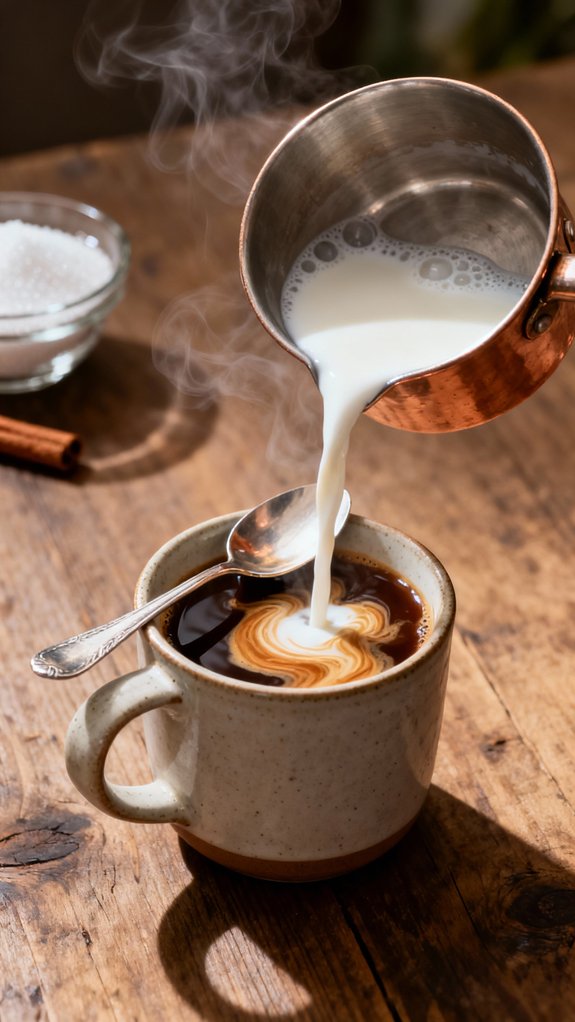
Here’s what I do: pour the frothed milk slowly, holding a spoon across the top of your pitcher or saucepan to hold back most of the foam at first. You want that warm, sweetened milk to mix with the espresso below, creating that signature layered look.
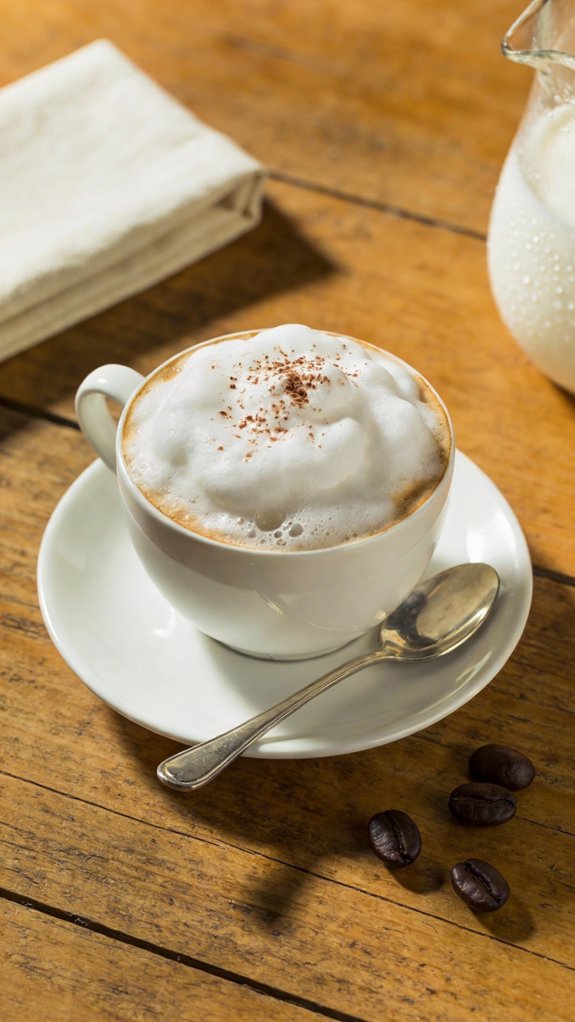
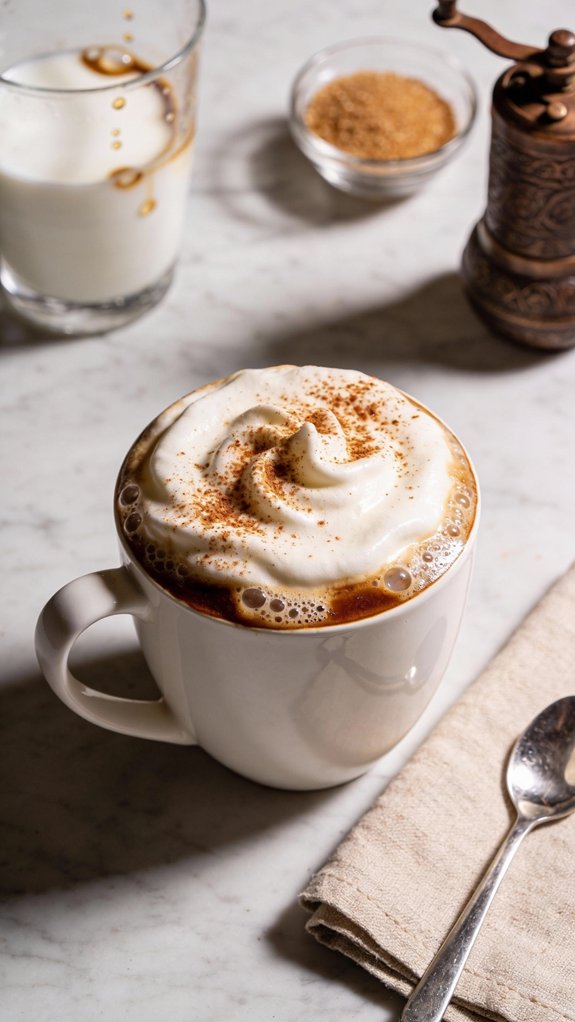
I aim the stream right into the center of my mug. After the liquid’s poured, use your spoon to scoop out the remaining foam and gently place it on top. It should sit there like a little cloud.
Then dust with that extra cinnamon for the finishing touch.
Step 5. Top With Remaining Cinnamon
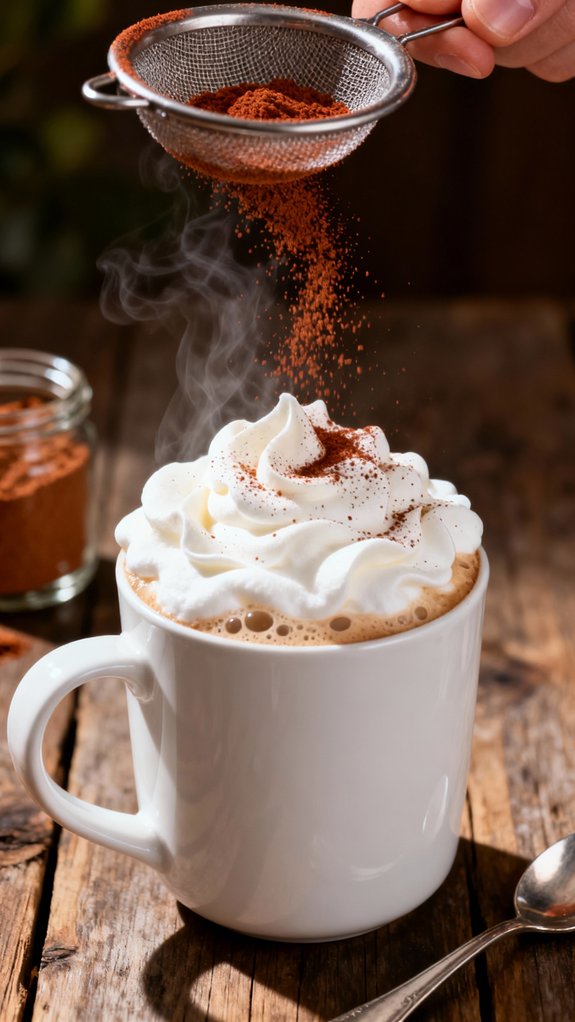
A light dusting is all you need here—seriously, less is more. Hold the shaker about six inches above your mug and give it one gentle tap. The cinnamon should fall like a whisper across the foam, creating those pretty speckled patterns you see at coffee shops.
I learned this the hard way after accidentally dumping half a teaspoon on top once—it turned my drink bitter and chalky instead of subtly spiced.
You’re aiming for visual appeal and just a hint of warmth in each sip. The foam acts like a canvas, so the cinnamon sits right on top where you’ll smell it before tasting.
That little aromatherapy moment makes the whole drink feel fancier than it actually is.
Final Thoughts
When I first started making frothed coffee at home, I didn’t think it’d taste anywhere near what I got at my favorite café.
But honestly, after a few tries, I couldn’t believe how close it was. The key is getting that milk warm enough and frothing it until it’s really foamy.
I make this every Saturday morning now, and it’s become part of my weekend routine. My sister visited last month and was shocked when I handed her a mug that looked like it came from a coffee shop.
The best part is you can adjust everything to your taste. More sugar, less cinnamon, different extracts—it’s all up to you.
This recipe gave me back my mornings.
Frequently Asked Questions
What Type of Coffee Maker Is Best for Making Frothed Coffee at Home?
You’ll want an espresso machine for authentic shots, but a strong drip coffee maker works too. What matters most isn’t the brewer—it’s having a milk frother, French press, or whisk to create that essential foam.
How Many Calories Are in a Serving of Frothed Coffee?
You’ll be absolutely shocked to learn this frothed coffee contains approximately 100-120 calories per serving. The whole milk contributes most calories, while the espresso, sugar, and spices add minimal amounts to your delicious drink.
Can I Make Frothed Coffee Without an Espresso Machine?
Yes, you can substitute espresso with strong brewed coffee. Simply use 1/2 cup of your preferred strongly brewed coffee instead of the two espresso shots, and you’ll achieve similar results with excellent flavor.
How Long Does Frothed Milk Stay Foamy Before Deflating?
Strike while the iron’s hot—frothed milk deflates within 2-3 minutes, so you’ll want to serve your coffee immediately. The foam doesn’t hold well when made ahead, which is why you should always froth fresh milk right before enjoying.
What’s the Difference Between Frothed Coffee and a Cappuccino?
A cappuccino has specific proportions: equal parts espresso, steamed milk, and foam. Your frothed coffee is more flexible—you’re combining coffee with frothed milk in any ratio you prefer, without strict measurements or traditional cappuccino structure.