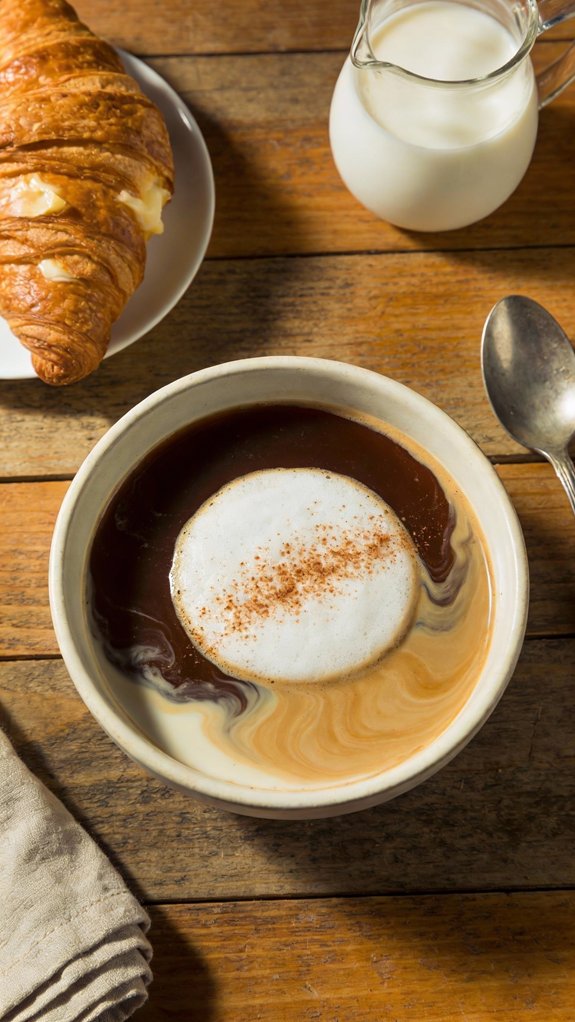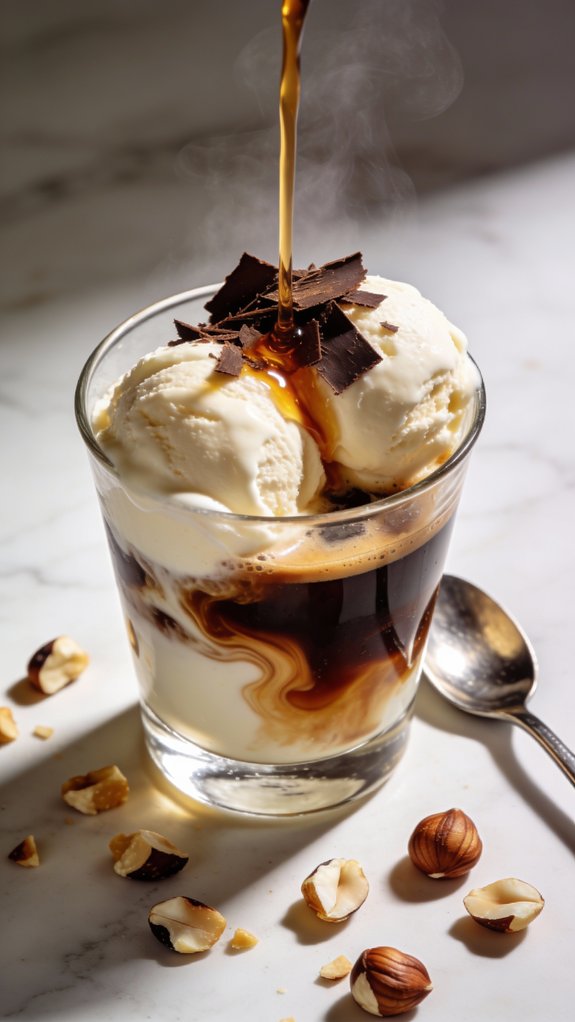
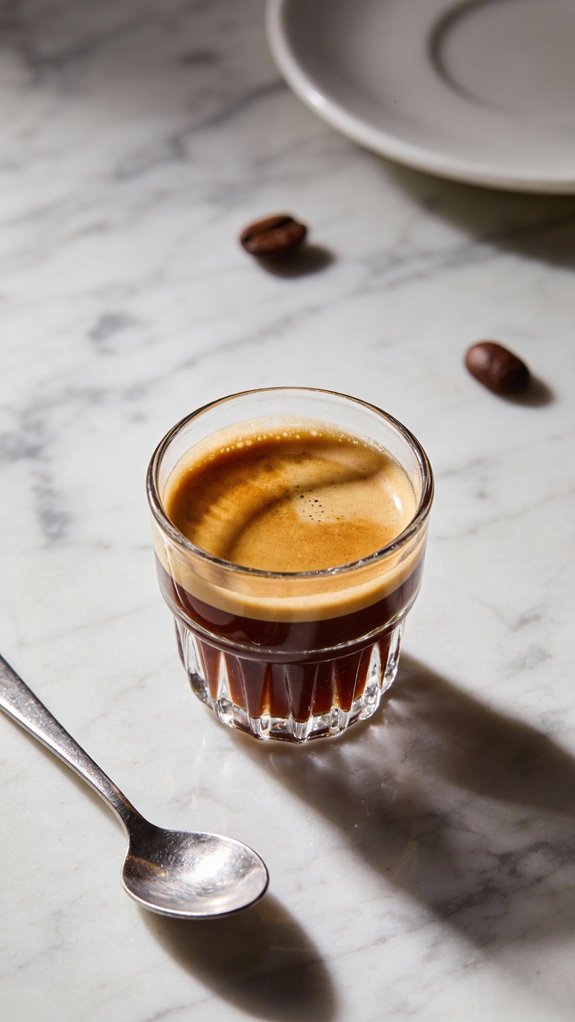
You probably don’t realize that the cortado got its name from the Spanish word “cortar,” which means “to cut,” referring to how the milk cuts through the espresso’s intensity. I first tried one during a rushed morning meeting, and honestly, it changed how I think about coffee breaks. The small glass sat there looking deceptively simple—just two ingredients in perfect harmony—but there’s actually a technique to getting that silky texture just right.
History
When I first encountered the cortado during a trip to Madrid, I learned it had been a staple in Spanish cafés since the early 1960s.
The bartenders there explained how it emerged from a simple need—coffee lovers wanted their espresso mellowed without drowning in milk like the Italian cappuccino did. It spread through Spain’s Basque Country first, then became common throughout the country.
I noticed how locals would order them casually, almost like asking for water.
The drink eventually made its way to Cuba and Latin America, where it developed regional variations.
Recipe
The cortado is a beautifully balanced Spanish coffee drink that brings together equal parts espresso and steamed milk in perfect harmony. Unlike milkier drinks like lattes or cappuccinos, the cortado lets the espresso shine through while the warm milk gently softens its intensity, creating a smooth, rich flavor that’s neither too strong nor too mild.
This drink is ideal for late morning or early afternoon when you want something more substantial than a straight espresso but without the commitment of a larger beverage. Its small size makes it perfect for a quick, satisfying coffee break that you can savor in just a few delicious sips.
Ingredients
- 2 ounces espresso (freshly brewed)
- 2 ounces whole milk
- Pinch of fine sea salt (optional)
- 2 drops vanilla extract (optional)
- ½ teaspoon honey (optional)
Preparation Steps
- Brew 2 ounces of espresso using freshly ground coffee beans.
- Pour the espresso into a small glass or cortado cup.
- Heat the whole milk to 140-150°F using a steam wand or in the microwave.
- Froth the milk to create a light, silky microfoam.
- If using, add a tiny pinch of sea salt, 2 drops of vanilla extract, and ½ teaspoon of honey to the espresso and stir until dissolved.
- Gently pour the steamed milk over the espresso, allowing it to naturally blend.
Tips
For a dairy-free option, oat milk works exceptionally well in cortados thanks to its natural sweetness and ability to create nice microfoam. You can adjust or skip the honey entirely if you prefer less sweetness—the milk’s natural sugars often provide enough.
The salt, while optional, enhances the coffee’s flavor complexity without making it taste salty, so use just a barely visible pinch. If you make cortados regularly, consider creating a honey syrup by mixing equal parts honey and hot water, which dissolves more easily and stores in the refrigerator for up to two weeks.
Preparation Steps
Making a cortado is straightforward once you’ve got your rhythm down.
I’ll walk you through each step, from pulling that espresso shot to creating the signature milk gradient that makes this drink so visually appealing.
The whole process takes about five minutes, and you’ll notice how the tiny additions of salt, vanilla, and honey transform a simple espresso and milk combination into something more complex and satisfying.
Step 1. Brew Fresh Espresso Shot
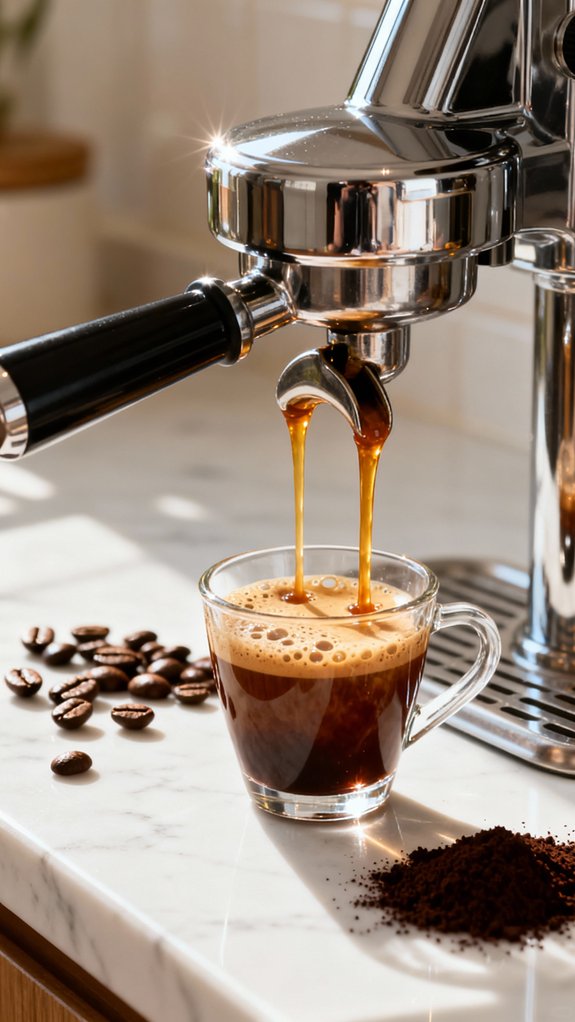
Starting with freshly ground coffee beans makes all the difference in your cortado’s final taste.
I learned this the hard way after using pre-ground coffee for months and wondering why my cortados tasted flat.
You’ll want to grind about 18-20 grams of beans right before brewing—aim for a fine consistency similar to table salt.
Lock the portafilter into your espresso machine and start the extraction, watching as the rich, dark liquid flows into your glass.
The whole process should take 25-30 seconds and yield those essential 2 ounces of espresso.
You’re looking for a beautiful crema on top, that golden-brown foam that signals a well-pulled shot.
If it’s too light or nonexistent, adjust your grind finer next time.
Step 2. Heat Milk to 140-150°F
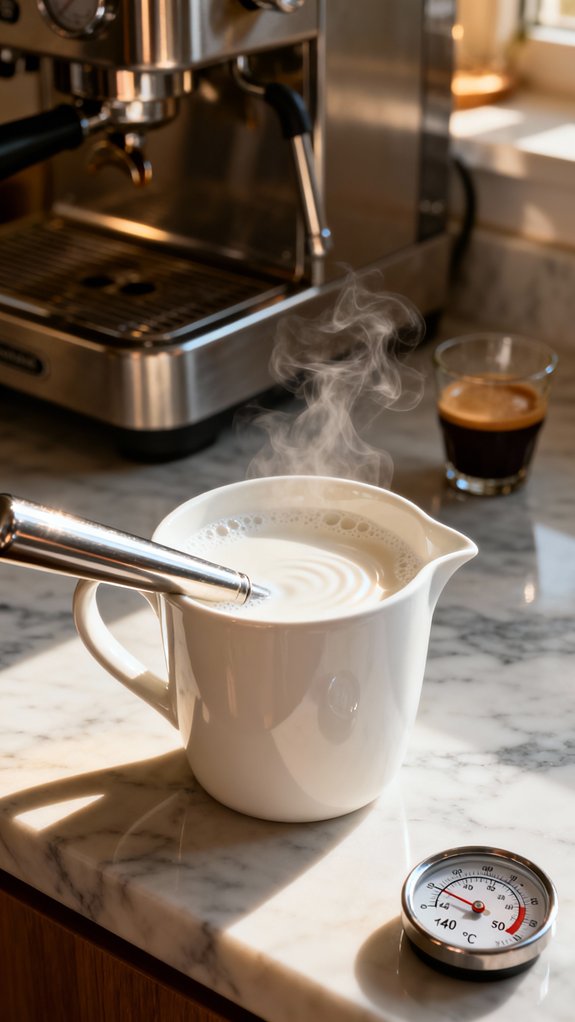
Getting your milk to exactly the right temperature transforms an okay cortado into something worth remembering.
You’ll want to heat your whole milk to between 140 and 150°F, which sounds precise but makes all the difference. I learned this the hard way after scalding milk too many times, creating that burnt taste nobody wants in their morning coffee.
Use a thermometer if you’re new to this—it’s not cheating, it’s smart. The milk should feel warm against your wrist, similar to bathwater temperature, hot enough to release its natural sweetness but cool enough that you won’t burn your tongue on the first sip.
This sweet spot creates that silky texture cortados are famous for.
Step 3. Add Salt and Vanilla
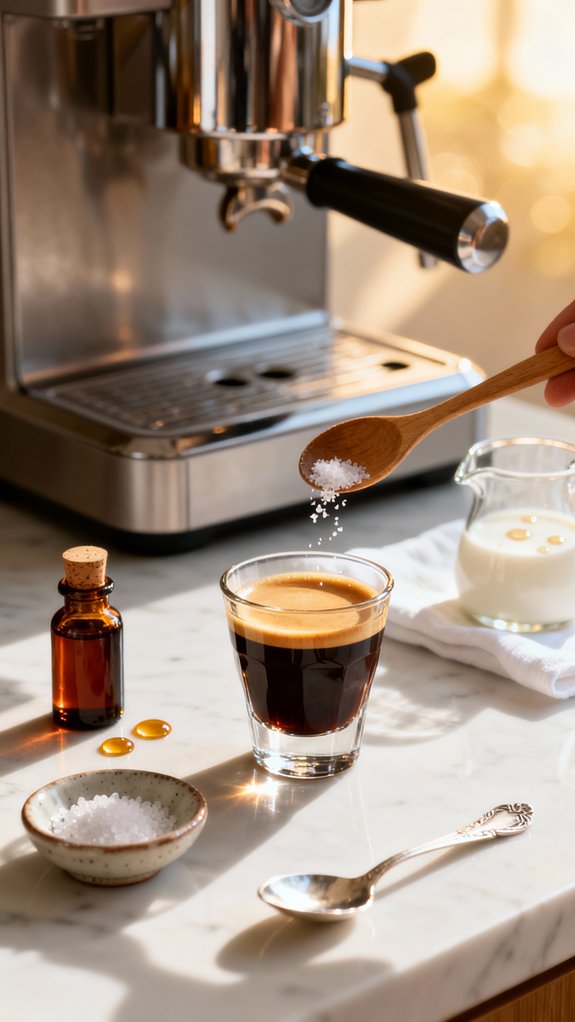
After your espresso settles into the cup, it’s time for what my barista friend calls the “secret weapon” ingredients that most people skip.
Drop in two vanilla extract drops—not more, since you’re enhancing coffee flavor, not making a vanilla latte. I learned this after accidentally dumping in half a teaspoon once and ending up with something that tasted like melted ice cream.
Then add the tiniest pinch of salt you can manage. It sounds weird, I know, but salt brings out coffee’s natural sweetness and tones down any bitterness, kind of like how it makes chocolate chip cookies taste better.
Stir everything together with a spoon until the honey dissolves completely and the vanilla disperses evenly throughout the espresso.
Step 4. Stir in Honey Completely
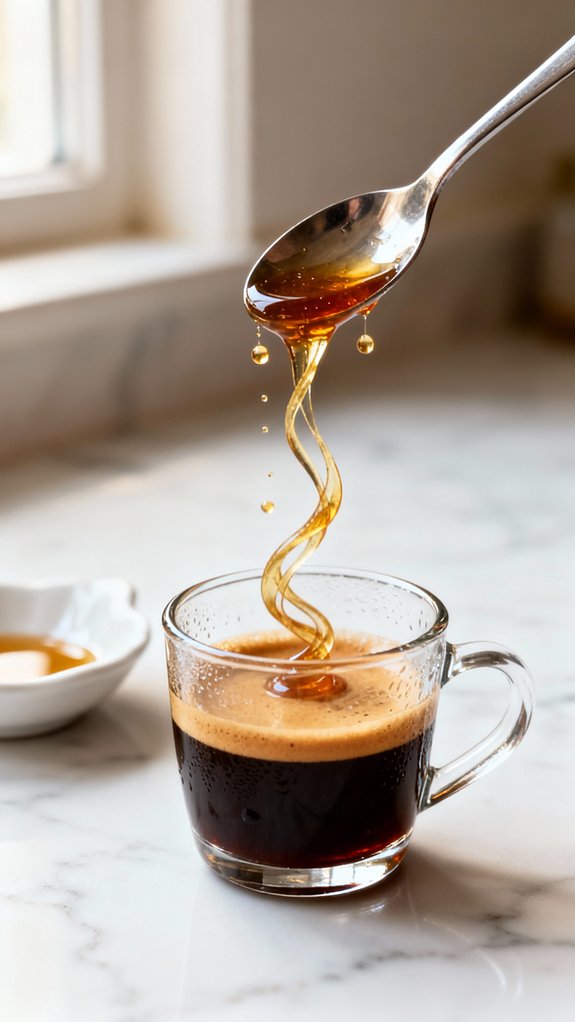
The honey needs about fifteen seconds of solid stirring to fully dissolve into the espresso, which is hotter and more cooperative than you’d think.
I used to just give it a quick swirl and wonder why I’d get that weird sweet sludge at the bottom of my cup.
You’ll want to use a small spoon and actually commit to the stirring motion, working it around the edges where honey likes to cling.
The espresso’s heat does most of the work here. You’ll see the golden threads disappear as you stir, and the coffee will look slightly lighter, almost amber-toned.
When you can’t see any honey streaks anymore and the spoon glides smoothly without resistance, you’re done.
Step 5. Pour Milk Creating Gradient
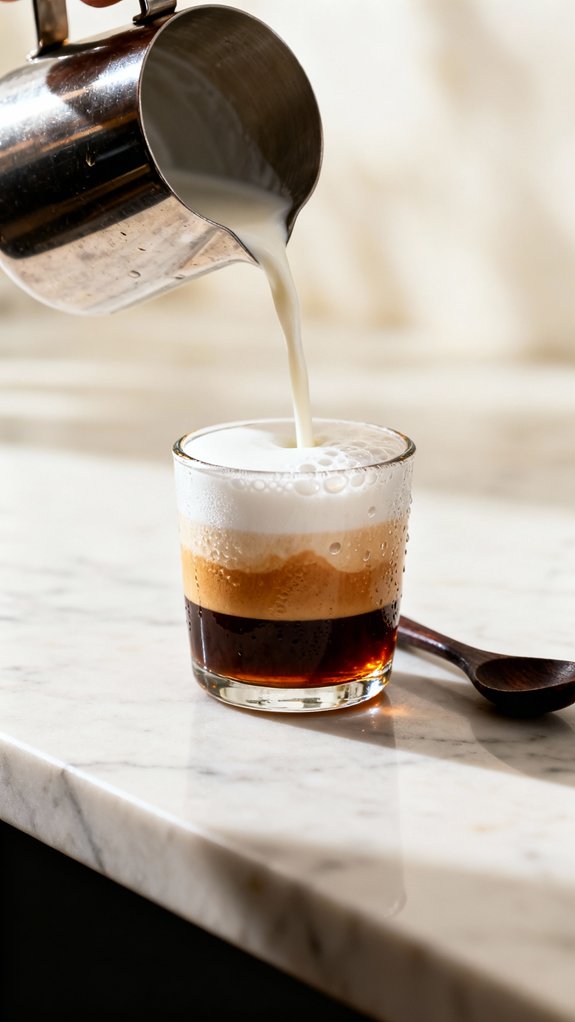
With your honey fully dissolved, you’re ready for what I think is the most satisfying part of making a cortado.
Hold your pitcher of steamed milk about an inch above the espresso. Pour slowly and steadily into the center of the glass.
I remember the first time I watched this happen at a café in Madrid—the way those two layers started swirling together without mixing completely.
You’ll see lighter brown tones gradually blending into darker coffee below, creating this beautiful gradient effect that looks almost like caramel melting into chocolate.
Don’t stir it. The milk will naturally find its way through the espresso, settling into that signature cortado appearance that makes every cup feel special.
Final Thoughts
I’ve been making cortados for years now, and honestly, they’ve become my go-to drink when I need something comforting but not too heavy.
There’s something special about that first sip, when the silky milk mingles with the espresso and you taste the hint of honey cutting through.
It’s not complicated, which I appreciate on busy mornings when I just want good coffee without fussing around. The whole thing takes maybe five minutes once you get the hang of it.
I’ve served these to friends who usually drink lattes, and they’re always surprised by how much flavor comes through in such a small cup.
It’s just a really satisfying drink that never gets old.
Frequently Asked Questions
What Is the Difference Between a Cortado and a Macchiato?
A cortado contains equal parts espresso and steamed milk, while you’ll find a macchiato has just a small dollop of foamed milk marking the espresso. The cortado’s milkier, creating more balance than a macchiato’s bold intensity.
Can I Make a Cortado Without an Espresso Machine?
Yes, you can brew strong coffee using a Moka pot, AeroPress, or French press as your espresso substitute. Heat and froth milk separately, then combine equal parts for a delicious homemade cortado.
What Type of Glass Should Be Used for Serving a Cortado?
You should use a small glass or cortado cup that holds 4-5 ounces. Traditional Gibraltar glasses work perfectly, but any small, clear glass will showcase the beautiful gradient effect between the espresso and milk.
How Many Calories Are in a Traditional Cortado?
A traditional cortado contains approximately 30-40 calories. You’ll find this figure fluctuates based on milk fat content, but the equal espresso-to-milk ratio keeps calories considerably lower than lattes or cappuccinos.
What Is the Best Time of Day to Drink a Cortado?
You’ll enjoy a cortado best during late morning or early afternoon. It’s perfect when you’re taking a break and want something more substantial than espresso but less milky than a latte.