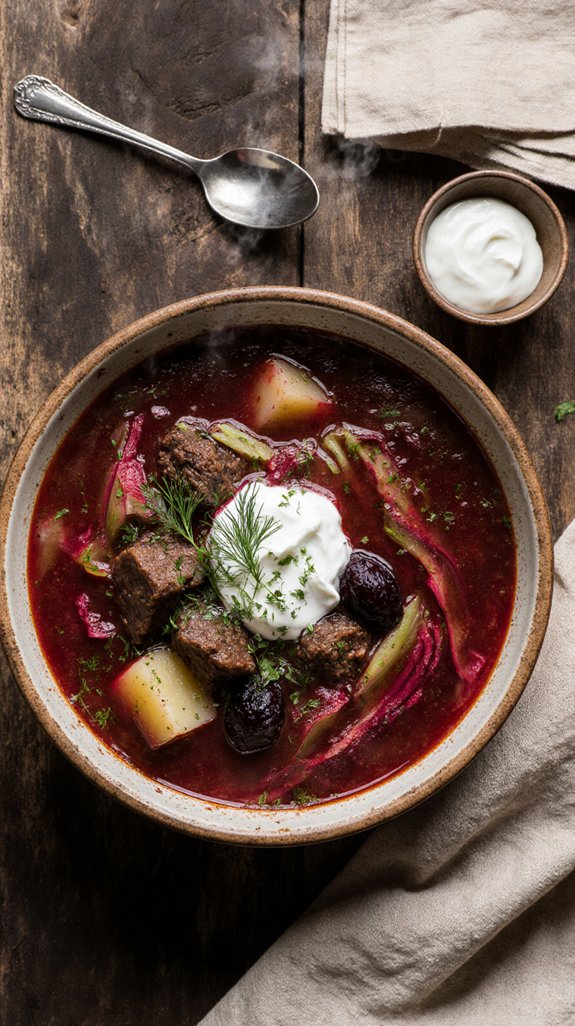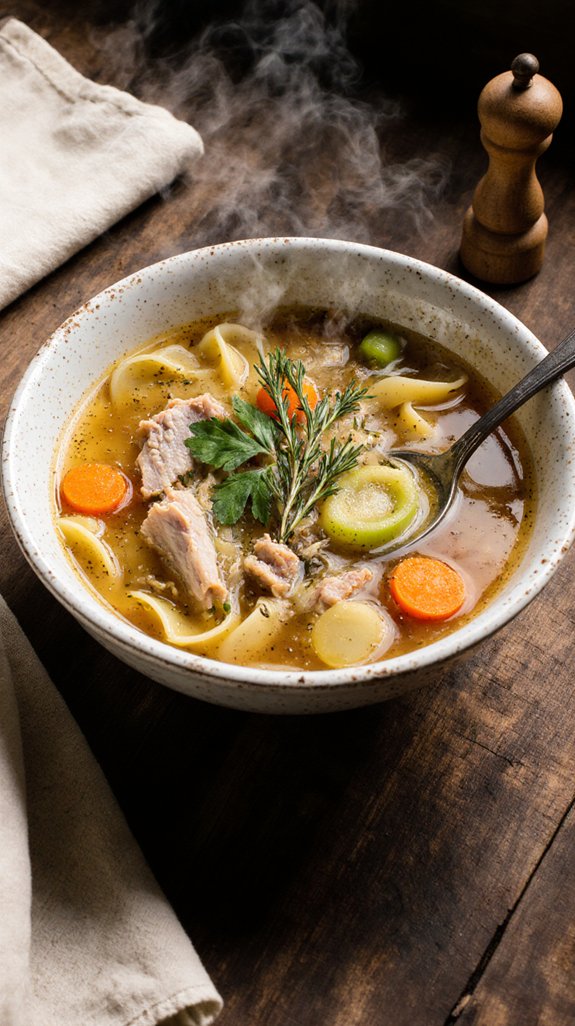
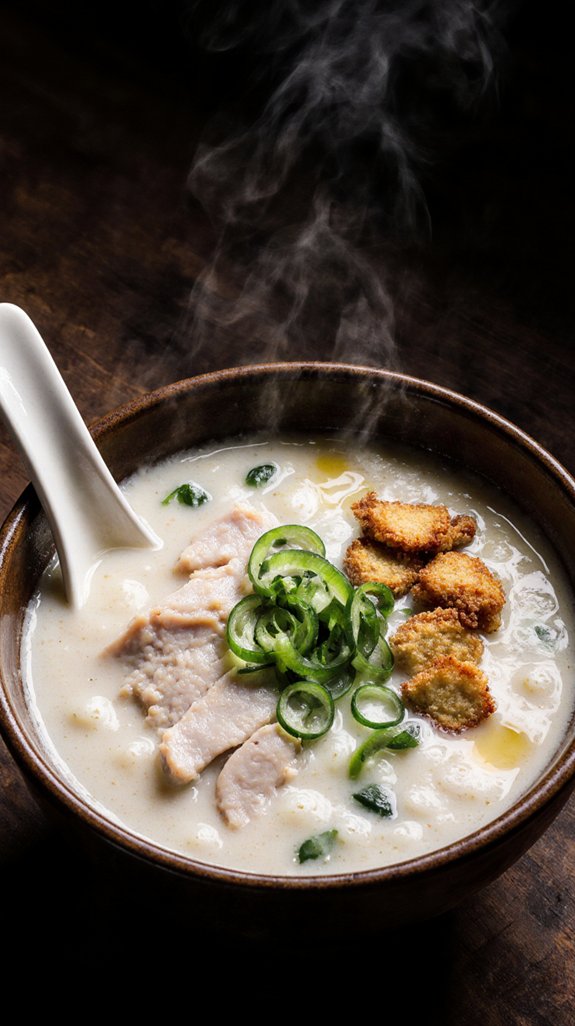
I’ve spent years perfecting my goto recipe, and I’m excited to share what makes this Filipino-style congee so special. There’s something deeply satisfying about watching simple rice transform into a silky, comforting bowl that rivals anything you’d find at your favorite restaurant. The secret lies in the technique, which I’ll show you step by step, plus a few insider tricks that’ll elevate your goto from good to absolutely craveable.
Why You`ll Love this Comforting Homemade Goto
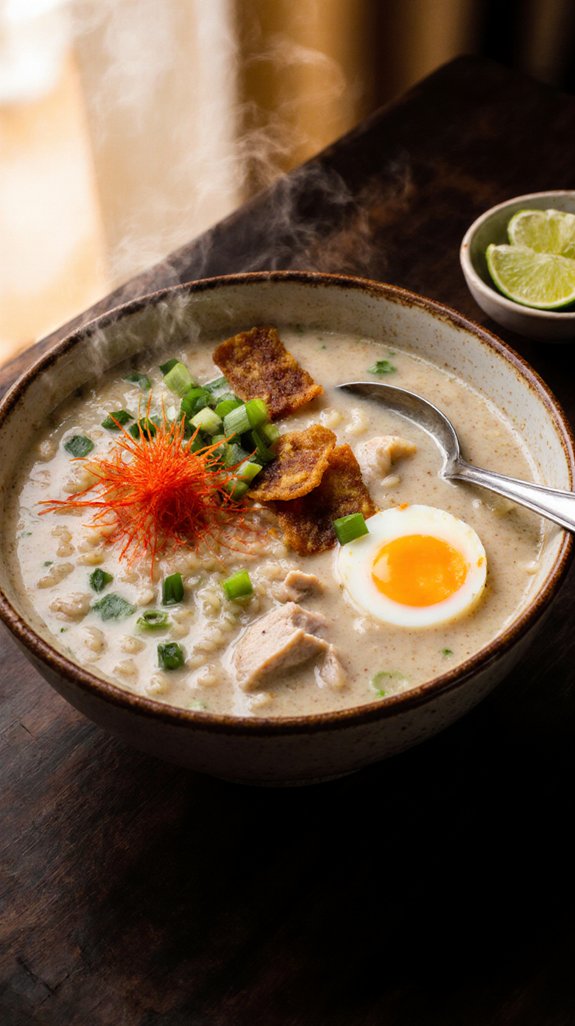
This comforting bowl of goto hits differently when you make it from scratch. I love how this Filipino-style congee transforms simple ingredients into pure comfort food that warms you from the inside out.
The rice breaks down into a creamy, porridge-like consistency that’s incredibly soothing, especially when you’re feeling under the weather. What makes this recipe special is how the garlic-infused oil adds depth, while the tender shredded chicken provides protein and substance.
The health benefits are real too—the ginger helps with digestion, and the slow-cooked broth is gentle on your stomach. Plus, you control the ingredients, which means less sodium and more nutrients compared to restaurant versions.
It’s homemade magic in every spoonful.
What ingredients are in Comforting Homemade Goto?
The beauty of this comforting homemade goto lies in its simple, accessible ingredients that come together to create something truly special. You won’t need to hunt down exotic items at specialty stores—most of these pantry staples and fresh basics are probably already in your kitchen or easily found at your local grocery store.
Ingredients:
- 1 chicken breast, with skin and bone
- 5 cups water
- 3 tablespoons olive oil, divided
- 10 garlic cloves, minced and divided
- 1 piece fresh ginger, crushed (size of a thumb)
- 1 onion, diced
- Rice (amount to be added based on preference)
- Salt and pepper to taste
- 1 chicken bouillon cube
- Green onions for topping
When gathering your ingredients, choose a chicken breast that still has the skin and bone attached, as these add incredible flavor and richness to your broth. The recipe calls for dividing both the olive oil and garlic—you’ll use some for building the base flavors and reserve the rest for that signature crispy garlic topping that makes goto so irresistible. Fresh ginger is essential here; don’t substitute with dried powder as the fresh root provides that aromatic punch that defines authentic Filipino congee. While the original knowledge doesn’t specify the exact rice quantity, traditional goto typically uses about 1 cup of rice for this amount of liquid, though you can adjust based on whether you prefer a thicker or thinner consistency.
How to make this Comforting Homemade Goto
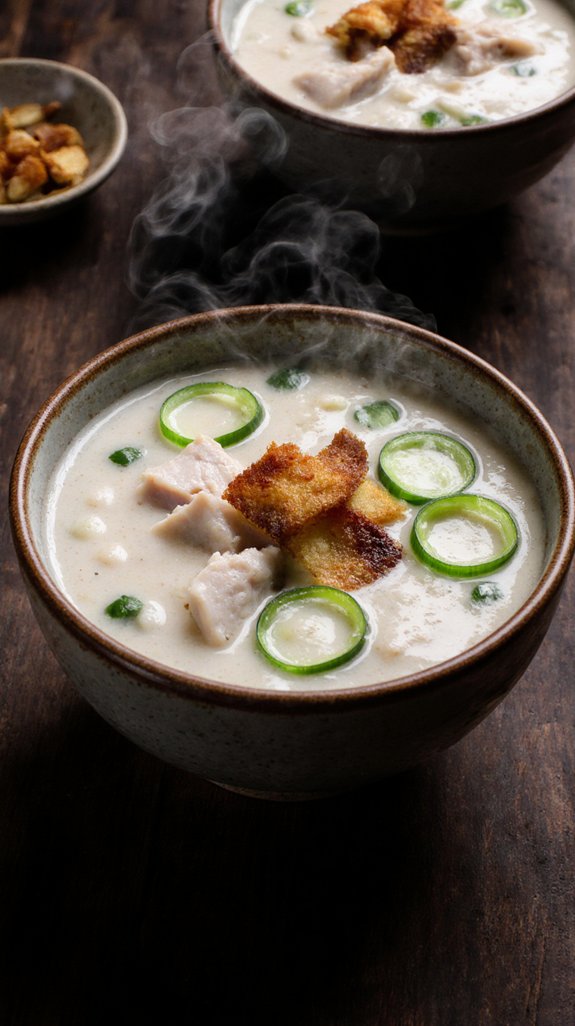
Making this comforting homemade goto is a straightforward process that fills your kitchen with incredible aromas and rewards you with a bowl of pure comfort. Start by placing your 1 chicken breast (with skin and bone) in a pot with 5 cups of water and bring it to a boil. As it cooks, you’ll notice fat and scum floating to the surface—skim this off to keep your broth clear and clean-tasting.
Once the chicken is cooked through and no longer pink in the center, remove it from the pot and set it aside to cool. Pour that beautiful chicken broth into a bowl and keep it nearby, because you’ll be using it again in just a moment.
Now for the flavor-building magic. In that same pot, heat 2 tablespoons of olive oil over medium heat and toss in your diced onion, letting it cook for about 2 minutes until it turns translucent and soft.
Add your crushed piece of ginger (about thumb-sized) and a quarter of your 10 minced garlic cloves, sautéing until that wonderful ginger fragrance fills the air and the garlic turns golden brown—just be careful not to let it burn.
Pour your reserved broth back into the pot along with your rice, then season everything with salt, pepper, and 1 chicken bouillon cube. Bring this mixture to a boil, then reduce the heat and let it simmer with the lid on until the rice puffs up and the congee reaches that creamy, porridge-like consistency.
Remember to stir occasionally so nothing sticks to the bottom of the pot. Using a premium cookware set can make all the difference in achieving even heat distribution and preventing scorching during this slow-simmering process.
While your congee simmers away, grab a small skillet and heat the remaining 1 tablespoon of olive oil. Add the rest of your minced garlic and let it sizzle until it turns crispy and golden brown, then transfer it to a paper towel to drain.
By now, your chicken should be cool enough to handle, so remove the skin and bones, then shred the meat into bite-sized pieces.
When your congee is perfectly cooked and creamy, ladle it into serving bowls and top each one with the shredded chicken, sliced green onions, and that irresistible crispy garlic. The combination of silky congee, tender chicken, and crunchy garlic creates layers of texture and flavor that make every spoonful deeply satisfying.
Shop Related Products

LARGE CAPACITY: The stock pot has a substantial 16-quart size, providing ample space for cooking large quantities of food, making it ideal for family gatherings and meal prepping

Stainless steel and 5 layers bottom: Kirecoo 12-Quart Stainless Steel Stockpot with Lid is an essential kitchen cookware, boasting an advanced stainless steel construction with a 5-layer thickened base. This cooking pot features high temperature and corrosion resistance, promising a long service life without easy deformation. Composed of aluminum, iron, aluminum, and a magnetic base, the 5-layer bottom of stockpot has good sturdiness and performance. It heats quickly and distributes heat evenly.
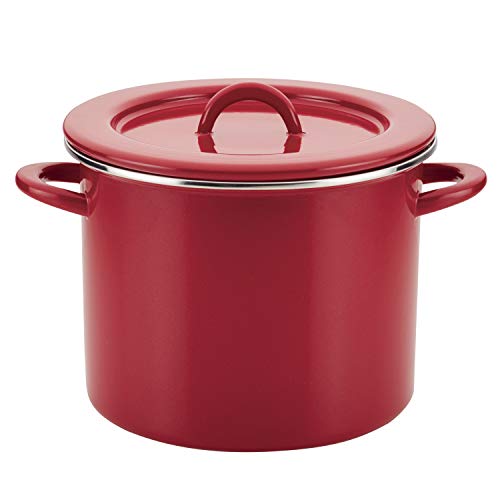
COOK LIKE RACHAEL RAY: Durable enamel on steel construction provides fast, even heating and easy cleaning convenience when cooking with this Rachael Ray stockpot
Comforting Homemade Goto Substitutions and Variations
One of the best things about congee is how flexible it is—you can swap ingredients based on what you have in your kitchen or what flavors you’re craving that day.
For ingredient substitutions, I often use pork shoulder instead of chicken breast for a richer taste. You can also replace the fresh ginger with ginger powder if that’s all you have on hand.
Congee variations are endless—try adding mushrooms, hard-boiled eggs, or even leftover roasted vegetables. Some people love stirring in a raw egg during the last few minutes of cooking for extra creaminess.
I’ve also made this with turkey after Thanksgiving, and it turned out delicious. Feel free to adjust the garlic amount based on your preference, though I personally can’t get enough of that crispy topping.
Shop Related Products

One bone-in pork shoulder blade roast weighing between 1.6 and 3.8 pounds

One bone-in pork shoulder blade roast weighing between 1.6 and 3.8 pounds

One bone-in pork shoulder country style rib weighing between 1.6 and 3.8 pounds
What to serve with Comforting Homemade Goto
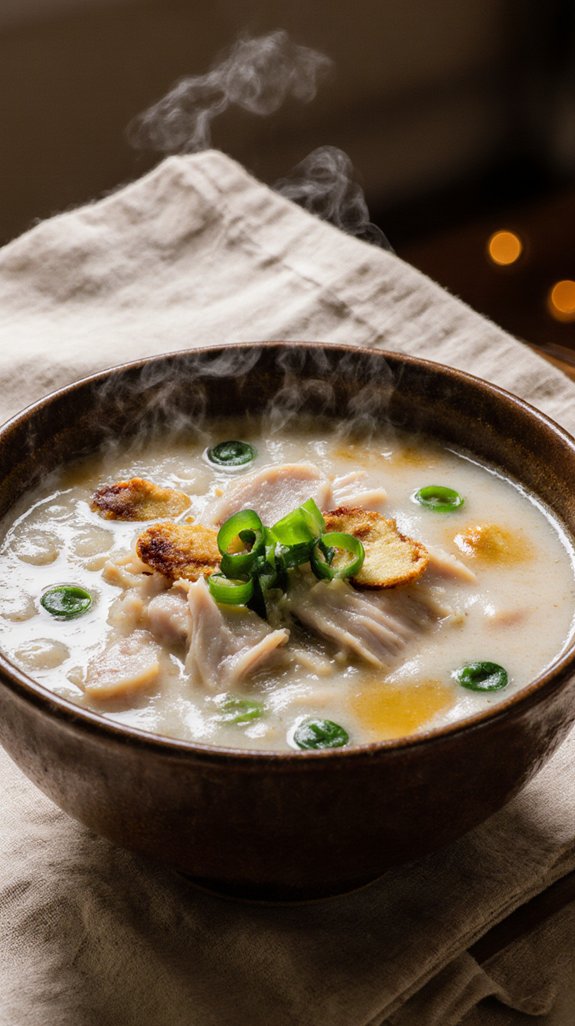
When I serve goto for breakfast or dinner, I always include a few traditional Filipino accompaniments that turn this simple rice porridge into a complete meal.
My favorite topping options include crispy tokwa’t baboy (fried tofu and pork), hard-boiled eggs, and extra calamansi for squeezing. I also put out a small bowl of fish sauce so everyone can adjust the saltiness to their preference.
For side dishes, I love serving goto with pandesal or toasted bread for dipping into the warm broth. Lumpiang shanghai makes an excellent pairing too, adding a satisfying crunch that contrasts beautifully with the smooth porridge.
Sometimes I’ll set out pickled vegetables or atchara to cut through the richness. These additions transform my goto from a simple dish into something truly special.
Final Thoughts
This comforting bowl of goto has become one of my go-to recipes whenever I need something warm, nourishing, and deeply satisfying.
I’ve learned through trial and error that the recipe tips I’ve shared make all the difference in achieving that perfect silky texture.
My personal anecdotes with this dish go back to childhood, watching my grandmother stir the pot patiently while the rice transformed into creamy goodness.
Now I make it for my own family on rainy days and lazy weekends.
The beauty of goto lies in its simplicity and adaptability. You can adjust the thickness, add more garlic if you’re a fan, or keep it mild.
It’s a recipe that forgives mistakes and rewards patience, making it perfect for both beginners and experienced cooks.
Frequently Asked Questions
Can I Make Congee in a Rice Cooker or Instant Pot?
Yes, I’ve made congee in both! For a rice cooker, use the porridge setting. In an Instant Pot, pressure cook for 20 minutes. These cooking tips let you easily experiment with flavor variations.
How Long Does Leftover Goto Keep in the Refrigerator?
I’ll store leftover goto in an airtight container in the refrigerator for up to 3-4 days. For best leftover storage, I keep the toppings separate. Here are my refrigerator tips: reheat thoroughly before serving again.
Can I Freeze Congee for Meal Prep Purposes?
Yes, I can freeze congee for up to three months! For meal prep success, here’s my freezing tips: cool it completely first, portion into airtight containers, and leave headspace for expansion during freezing.
What’s the Difference Between Congee, Goto, and Arroz Caldo?
I’ll explain the key distinctions: they’re similar rice porridges with different flavor variations. Congee is Chinese, goto is Filipino with beef tripe, and arroz caldo is Filipino chicken-based. The cooking techniques remain consistent—simmering rice until creamy.
How Do I Fix Congee That’s Too Thick or Watery?
For adjusting consistency, I’ll add broth or water if it’s too thick, stirring gradually. If too watery, I simmer uncovered longer or use cornstarch as a thickening agent, dissolving it first in cold water.