
I’ve been making chicken adobo for years, and I’m convinced it’s one of the most misunderstood dishes outside the Philippines. Everyone thinks they know adobo, but authentic versions tell a completely different story than what you’ll find in most recipe collections. The real secret isn’t just about tossing chicken in soy sauce and vinegar—there’s a specific technique that transforms simple ingredients into something genuinely extraordinary, and I’m going to show you exactly how it’s done.
Why You`ll Love this Authentic Filipino Chicken Adobo
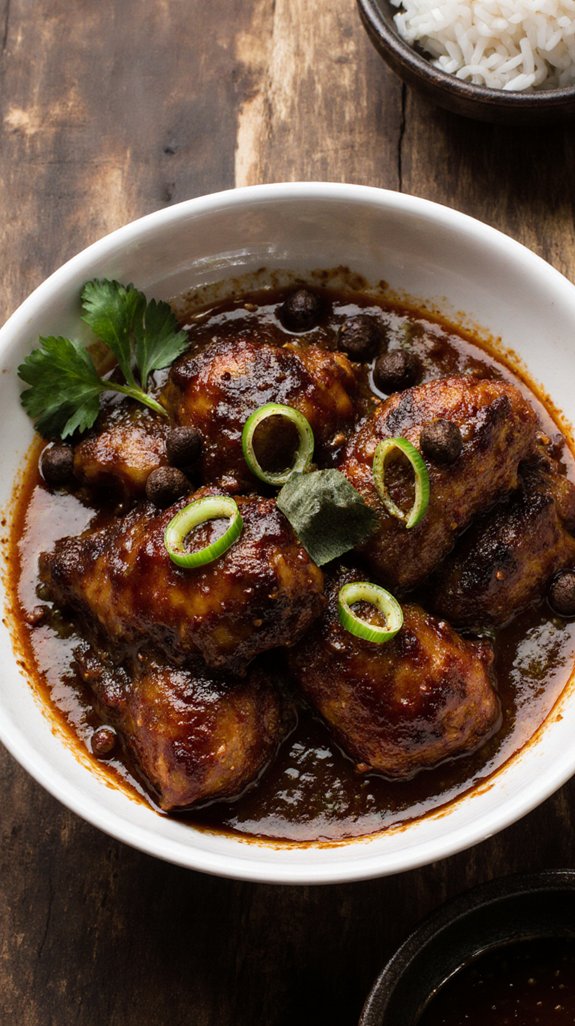
Because this dish delivers bold, complex flavors with surprisingly minimal effort, it’s become one of my go-to recipes when I want something deeply satisfying.
The flavor profile combines tangy vinegar with savory soy sauce, creating that perfect balance between bright acidity and rich umami.
What really sets this apart is how the cooking techniques build layers of taste—first marinating the chicken, then braising it until tender, and finally crisping the skin in hot oil.
You’ll end up with meat that’s incredibly juicy inside with a beautifully browned exterior.
The reduced sauce becomes this glossy, concentrated glaze that coats each piece perfectly.
Plus, you probably already have most ingredients in your pantry, making this an accessible weeknight dinner that tastes like you spent hours cooking.
What ingredients are in Authentic Filipino Chicken Adobo?
The ingredient list for authentic Filipino chicken adobo is invigoratingly short and straightforward, which is part of what makes this dish so appealing. Most of these items are pantry staples you likely already have on hand, with the exception of fresh chicken pieces.
The beauty of adobo lies in how these simple ingredients transform through the cooking process into something remarkably complex and flavorful.
Ingredients:
- 1 cup white vinegar
- 2 garlic cloves, pressed
- 1 bay leaf
- 1 1/2 teaspoons peppercorns, lightly crushed
- 1/2 cup reduced sodium soy sauce
- 6 chicken legs, cut into drumstick and thigh pieces
- 1 cup water
- 3 tablespoons canola oil
- 4 tablespoons cilantro, chopped (optional, for garnish)
When selecting your ingredients, quality matters even in this simple recipe. Choose a good white vinegar—distilled white vinegar works perfectly and provides that signature tang.
For the soy sauce, the recipe calls for reduced sodium, which gives you better control over the saltiness and prevents the final dish from becoming too salty after the sauce reduces. Fresh garlic and whole peppercorns that you crush yourself will deliver more aromatic flavor than pre-minced or pre-ground versions.
Using bone-in, skin-on chicken legs (separated into drumsticks and thighs) is traditional and recommended, as the bones add richness to the sauce and the skin crisps beautifully during the final browning step.
How to make this Authentic Filipino Chicken Adobo
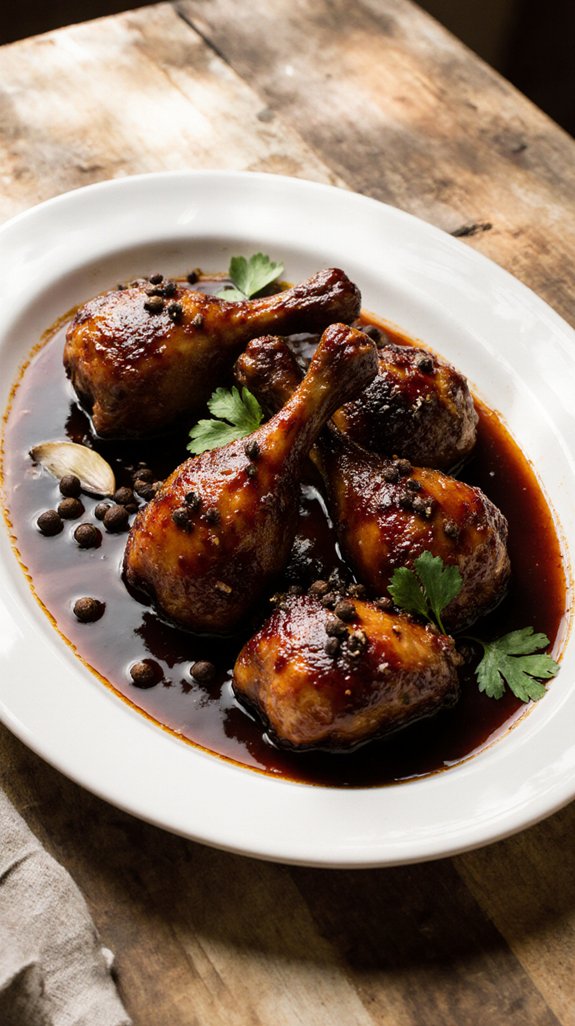
Making authentic Filipino chicken adobo is a wonderfully straightforward process that unfolds in distinct stages, each building layers of flavor.
Start by creating your marinade in a large glass baking dish, combining 1 cup white vinegar, 2 pressed garlic cloves, 1 bay leaf, 1 1/2 teaspoons lightly crushed peppercorns, and 1/2 cup reduced sodium soy sauce. Add your 6 chicken leg pieces (the drumsticks and thighs separated) to this tangy mixture, tossing everything together until the chicken is well coated. Cover the dish and let it marinate in the refrigerator for 1 hour, which allows the acidic marinade to begin tenderizing the meat and infusing it with that signature adobo flavor.
Once marinated, transfer the chicken along with all that flavorful liquid to a large saucepan, add 1 cup water, and bring everything to a boil. Reduce the heat to low, cover the pan, and let it simmer gently for 20 minutes until the chicken is cooked through.
The next phase is where the magic really happens, transforming your cooking liquid into a concentrated, glossy sauce.
Using tongs, carefully remove the chicken pieces to a plate and let them cool while you turn your attention to the liquid left behind. Boil this cooking liquid for about 10 minutes until it reduces down to roughly 1 cup—this concentrates all those wonderful flavors into a rich sauce.
Let the sauce cool slightly, then strain it into a small saucepan and skim off any excess fat that’s risen to the surface before reheating it.
While the sauce is reducing and cooling, pat your chicken pieces dry with paper towels, which is an important step for achieving that beautiful crispy exterior.
Heat 3 tablespoons canola oil in a large skillet over high heat until it’s quite hot, then brown the chicken in batches for about 2 minutes per side, working in batches to avoid crowding the pan. Investing in a premium cookware set can make this browning process even more efficient, as quality pans distribute heat evenly and create superior searing.
Finally, arrange your gorgeously browned chicken on a deep platter, pour that hot, concentrated sauce over the top, and if you’d like, finish with a sprinkle of 4 tablespoons chopped cilantro for a fresh, bright garnish.
Shop Related Products

Healthy & Safe: One of the biggest benefits of baking, cooking and storing foods in glass is that it’s nonporous. You won’t have to worry about food, germs, smells or any nasty chemicals seeping into these glass baking pans.

Glass baking dish made in the USA

【Deepened Design】 Measuring 13.3 x 9 x 3.54 inches (approx. 33.78 x 22.86 x 8.99 cm,without handles ) with a capacity of 5.7 quarts (approx. 5.4 liters).With an extra-deep structure, this baking pan easily accommodates multi-layered dishes and hearty portions while minimizing spills during baking—perfect for diverse cooking needs. Ideal for lasagna, baked rice, roasted chicken, grilled meats, bread, pasta, and more
Authentic Filipino Chicken Adobo Substitutions and Variations
While the traditional recipe delivers incredible flavor exactly as written, chicken adobo is remarkably adaptable and welcomes all sorts of tweaks based on what you have in your kitchen or how you like your food.
I’ve experimented with countless adobo variations over the years, and each brings something unique to the table. For ingredient swaps, try apple cider vinegar instead of white vinegar for a gentler tang, or swap chicken thighs for bone-in breasts if you prefer white meat.
You can add potatoes or hard-boiled eggs during the simmering stage for a heartier meal. Some cooks include coconut milk for a creamier sauce, while others add brown sugar to balance the acidity.
Feel free to adjust the garlic and peppercorns to match your taste preferences.
Shop Related Products

Even Heat Distribution Retention: This Umite Chef Dutch oven Made with heavy-duty enameled cast iron, ensures even heat distribution for perfect searing and slow cooking, locking in flavors. thickened walls lock in heat for slow braising, searing, and baking. Unlike thin pots that scorch food, this professional-grade Enameled cast iron potSuperior heat retention after preheating (allow 5-7 mins for even distribution). CRITICAL: Always cool naturally for 45+ mins before cleaning. Thermal shock (hot-to-cold contact) cracks enamel. USE TIP: Preheat 2-3 mins on medium-low only

Perfectly Size: 6 quart/24 cm hard anodized nonstick casserole dutch oven casserole stockpot is the ideal size for cooking up delicious meals for your family and friends

EXCEPTIONAL DESIGN: Enjoy professional performance with Hard Anodized Exterior, Unsurpassed Heat Distribution–Reinforced PURELYCERAMIC nonstick cooking surface for healthier cooking, lasting food release and easy cleaning
What to serve with Authentic Filipino Chicken Adobo
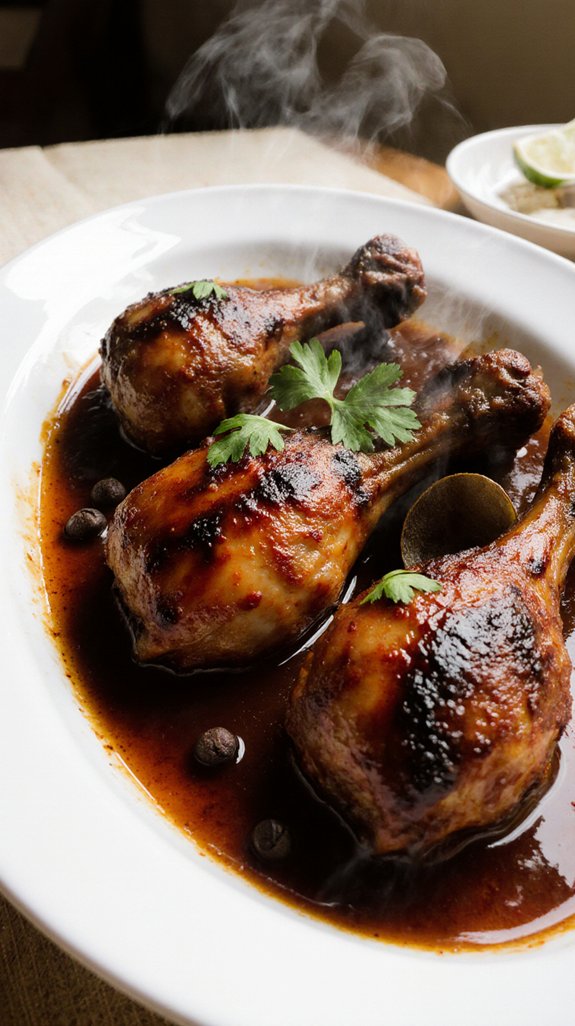
Since chicken adobo has such bold, savory flavors with its tangy vinegar-soy sauce base, you’ll want side dishes that complement rather than compete with it.
I always serve steamed white rice as the foundation—it soaks up that incredible sauce perfectly. For vegetables, I recommend simple steamed or sautéed greens like bok choy or green beans, which provide a fresh contrast without overwhelming your palate.
A light cucumber salad with a mild vinegar dressing works wonderfully too. When thinking about flavor pairings, consider balance: the rice offers neutrality, while crisp vegetables add texture and brightness.
Some people enjoy adding sliced tomatoes or a simple cabbage slaw on the side. These straightforward accompaniments let the adobo shine while creating a complete, satisfying meal.
Final Thoughts
This recipe brings together everything I love about Filipino cooking—bold flavors, simple techniques, and ingredients that transform into something truly special. The cultural significance of adobo runs deep in Filipino households, where every family guards their own version with pride. I’ve shared my cooking tips throughout, from marinating the chicken properly to reducing that sauce until it’s packed with flavor. Once you master these basics, you’ll find yourself making this dish again and again. The beauty of adobo lies in its flexibility—you can adjust the vinegar, soy sauce, or garlic to match your taste. I hope you’ll embrace this recipe and make it your own, creating memories around the dinner table just like generations of Filipino families have done.
Frequently Asked Questions
Can I Make Chicken Adobo in a Slow Cooker or Instant Pot?
Yes, I’ve successfully made chicken adobo in both appliances. For a slow cooker, I combine all ingredients and cook on low for 4-6 hours. In an Instant Pot, I use the pressure cook setting for 15 minutes.
How Long Does Leftover Chicken Adobo Last in the Refrigerator?
I’ll store your leftover chicken adobo in an airtight container for 3-4 days in the refrigerator. For proper food safety and leftover storage, I always make sure it’s completely cooled before refrigerating it.
Can I Freeze Chicken Adobo for Meal Prep Purposes?
Yes, I’ll share freezing tips for your meal prep success. Chicken adobo freezes beautifully for up to three months. I recommend portioning it into airtight containers, leaving space for expansion, and thawing overnight in the refrigerator before reheating.
What Is the History and Origin of Filipino Adobo?
I’ll explain that Filipino adobo predates Spanish colonization, originating as a preservation method using vinegar. Spanish colonizers named it “adobo.” Its cultural significance remains strong today, with countless adobo variations reflecting regional Filipino cooking traditions and family recipes.
Can I Use Bone-In Chicken Breasts Instead of Legs for This Recipe?
Yes, I’d recommend bone-in chicken breasts as a great substitution. They’ll absorb the marinade beautifully, though you’ll need to adjust cooking techniques slightly—breasts cook faster than dark meat, preventing dryness while maintaining authentic flavor variations.