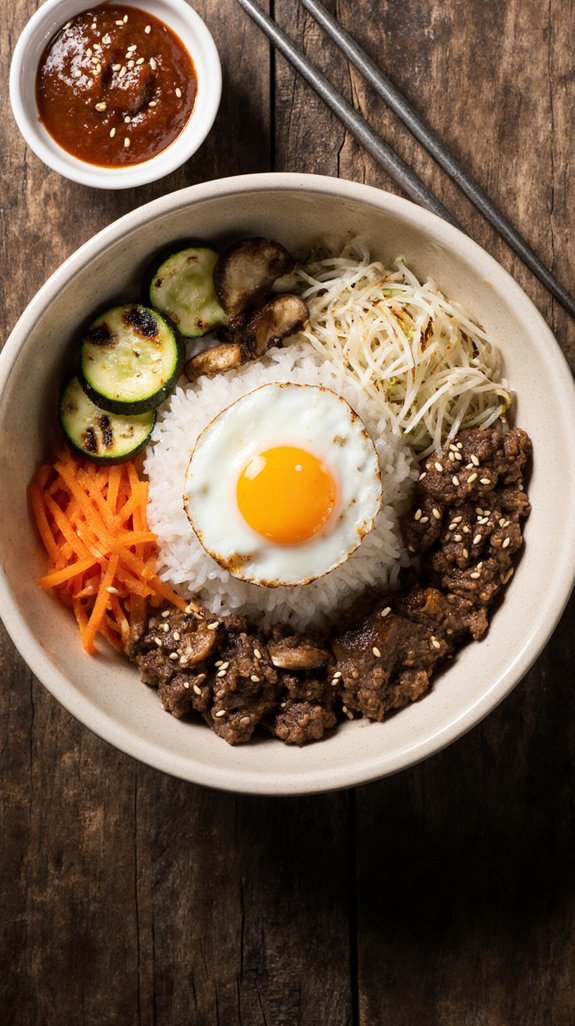
I’ve been making bibimbap for years, and it’s become my go-to meal when I need something that feels both nourishing and exciting. There’s something special about arranging colorful vegetables, perfectly seasoned meat, and a golden fried egg over warm rice, then mixing it all together with spicy gochujang. It looks impressive but honestly comes together faster than you’d think, and the best part is how you can adapt it based on what’s already in your fridge.
Why You`ll Love this Korean Bibimbap
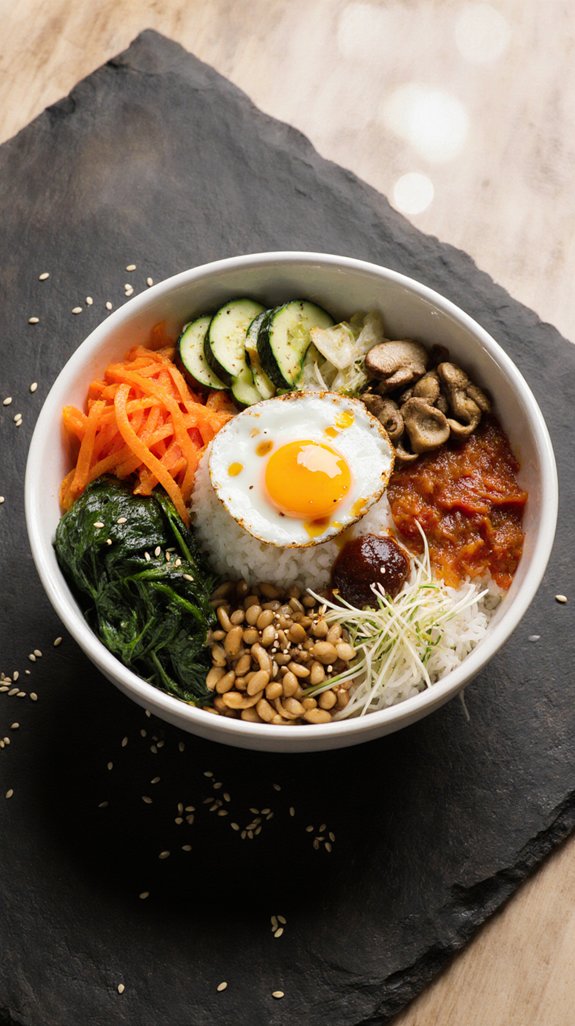
Whether you’re craving a hearty weeknight dinner or looking to impress guests with something special, this Korean bibimbap delivers on every front.
I love how this dish combines incredible flavor profiles—savory beef, earthy mushrooms, and that spicy-sweet chili paste create magic in one bowl. The health benefits are outstanding too, with colorful vegetables providing essential nutrients and lean protein keeping you satisfied.
What makes bibimbap truly special is its cultural significance as Korea’s beloved mixed rice dish, representing harmony and balance. The cooking techniques are surprisingly simple, involving basic sautéing and blanching that anyone can master.
Plus, there’s something deeply satisfying about mixing everything together with that runny egg yolk, creating new flavors with each bite. It’s customizable, nutritious, and absolutely delicious.
What ingredients are in Korean Bibimbap?
This vibrant Korean bibimbap brings together a beautiful harmony of ingredients that create layers of flavor and texture. The foundation starts with short-grain rice, which provides the perfect sticky base for mixing. The star protein is lean ground beef, marinated in a savory-sweet mixture that infuses every bite with depth. Fresh vegetables add color, crunch, and nutrition, while a runny fried egg ties everything together. The finishing touches of Korean chili paste and rice wine vinegar allow you to customize the heat and tanginess to your preference.
For the Beef Marinade:
- 2 tablespoons soy sauce
- 1 tablespoon sesame oil
- 2 teaspoons sugar
- 1 garlic clove, minced
- 1/2 teaspoon ginger, grated
- 1/2 cup apple juice
For the Main Dish:
- 1/2 lb lean ground beef
- 1 cup short-grain rice
- 2 eggs
- 1/2 zucchini, thinly sliced
- 1 cup mushroom, thinly sliced
- 1/2 cup bean sprouts
- 1/2 cup carrot, julienned
- 2 tablespoons sesame oil (for cooking vegetables and eggs)
For Serving:
- 1/4 cup Korean chili paste (gochujang)
- 2 tablespoons rice wine vinegar
When gathering your ingredients, quality matters for achieving authentic flavors. Short-grain rice is essential rather than long-grain varieties, as it provides the proper sticky texture that allows everything to mix together cohesively. Fresh vegetables work best, though you can substitute with whatever seasonal produce you have available. Korean chili paste, or gochujang, can be found in Asian markets or the international aisle of most grocery stores—it’s worth seeking out for its unique fermented flavor that can’t be replicated with regular hot sauce. The apple juice in the marinade adds a subtle sweetness that balances the savory elements, but pear juice works as an excellent alternative if you prefer a more traditional approach.
How to make this Korean Bibimbap
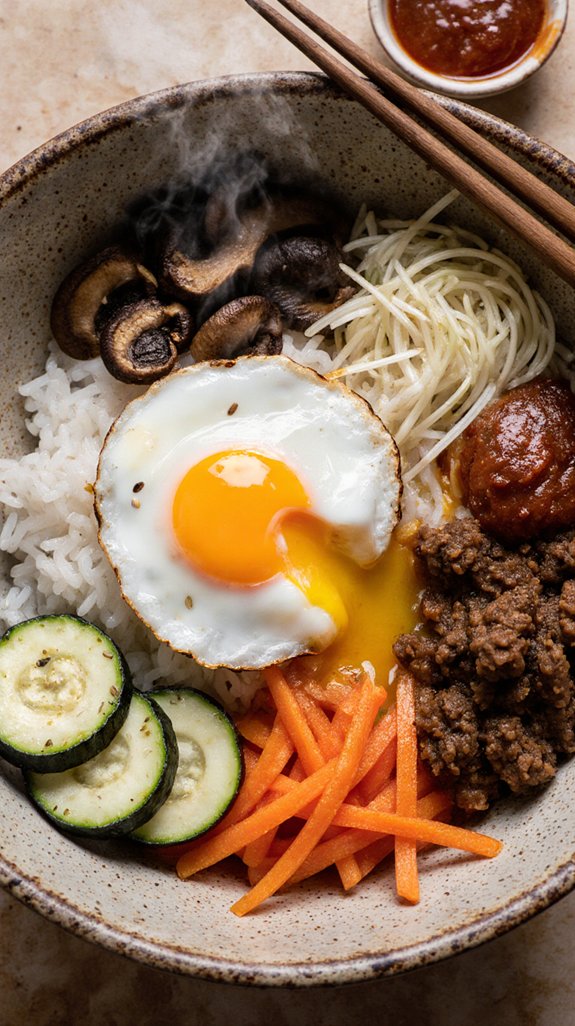
Making bibimbap is easier than you might think, and the process is wonderfully forgiving. Start by preparing your beef marinade in a bowl, whisking together 2 tablespoons soy sauce, 1 tablespoon sesame oil, 2 teaspoons sugar, 1 minced garlic clove, 1/2 teaspoon grated ginger, and 1/2 cup apple juice until everything is well combined.
Add your 1/2 lb lean ground beef to this flavorful mixture, stir it thoroughly to coat every bit of meat, and let it sit while you prepare everything else. Meanwhile, cook 1 cup short-grain rice according to the package directions—this usually takes about 15-20 minutes, so you’ll have plenty of time to tackle the vegetables while it’s bubbling away on the stove.
Now comes the fun part: cooking your vegetables in stages. Heat 1/2 tablespoon sesame oil in a skillet over medium heat and sauté your thinly sliced 1/2 zucchini for about 5 minutes until it’s tender but still has a bit of bite. Transfer it to a bowl, then add another 1/2 tablespoon sesame oil to the same skillet and cook 1 cup thinly sliced mushrooms for another 5 minutes until they release their moisture and turn golden.
Add these to your zucchini bowl. For the 1/2 cup bean sprouts, simply blanch them in boiling water for just 1 minute, then drain them well—this quick cook keeps them crispy and fresh. The 1/2 cup julienned carrots stay raw for a nice crunch. Without adding more oil to your skillet, cook the marinated beef until it’s fully browned and no pink remains, letting all those wonderful marinade flavors caramelize with the meat. Investing in a premium cookware set can make the sautéing and searing process even more efficient with better heat distribution.
The grand finale involves assembling your bowl and frying the eggs. Heat the remaining 1 tablespoon sesame oil in your skillet and crack in 2 eggs, cooking them until the whites are completely set but those yolks stay beautifully runny—they’ll act as a rich, creamy sauce when you mix everything together.
To serve, place half the cooked rice in a mound in the center of a large bowl, then artfully arrange half the zucchini, mushrooms, bean sprouts, and carrots around the edges like colorful spokes of a wheel. Sprinkle half the cooked beef over the top of your vegetable arrangement, then crown it all with one of those perfect fried eggs.
Set out 1/4 cup Korean chili paste and 2 tablespoons rice wine vinegar on the side so everyone can adjust the spice and tang to their liking. When you’re ready to dig in, break that gorgeous runny yolk and stir everything together thoroughly until the rice turns slightly pink and every grain is coated with all those delicious flavors.
Shop Related Products

Eco-friendly Classic Granite – Non-stick Granite Material, PFOS,PFOA free, our cookware ensures your daily cooking is always safer and healthier.
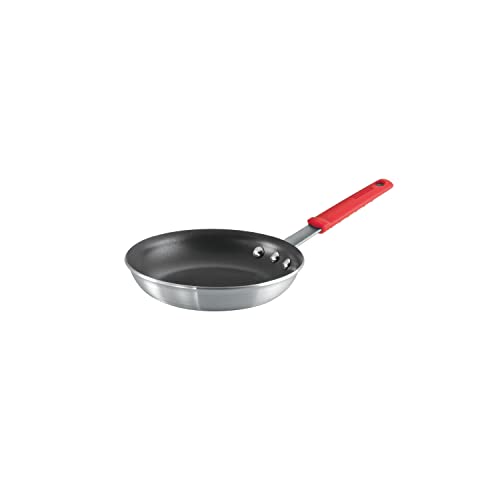
PROFESSIONAL QUALITY: Designed to withstand the rigors of a professional kitchen and perfect for everyday home use.

Eco-friendly Granite Nonstick Material: Nonstick granite material. Less oil needed & less smoke released, our frying pan provides your daily cooking always safer and healthier. Excellent non stick performance keeps food sliding smoothly along the surface for easy clean.
Korean Bibimbap Substitutions and Variations
One of the best things about bibimbap is how flexible it is—you can swap ingredients based on what’s in your fridge or what your taste buds are craving.
For vegetable substitutions, I love using spinach, kale, or bok choy instead of bean sprouts. Protein variations are endless—try tofu, chicken, pork, or even a simple fried egg if you’re skipping the beef.
If you need gluten free options, just use tamari instead of soy sauce and check your chili paste label. For spicy alternatives, gochujang is traditional, but sriracha or sambal oelek work in a pinch. You can also add extra heat with fresh chilies or chili flakes.
The beauty of this dish is making it your own while keeping that essential mix-and-match spirit alive.
What to serve with Korean Bibimbap
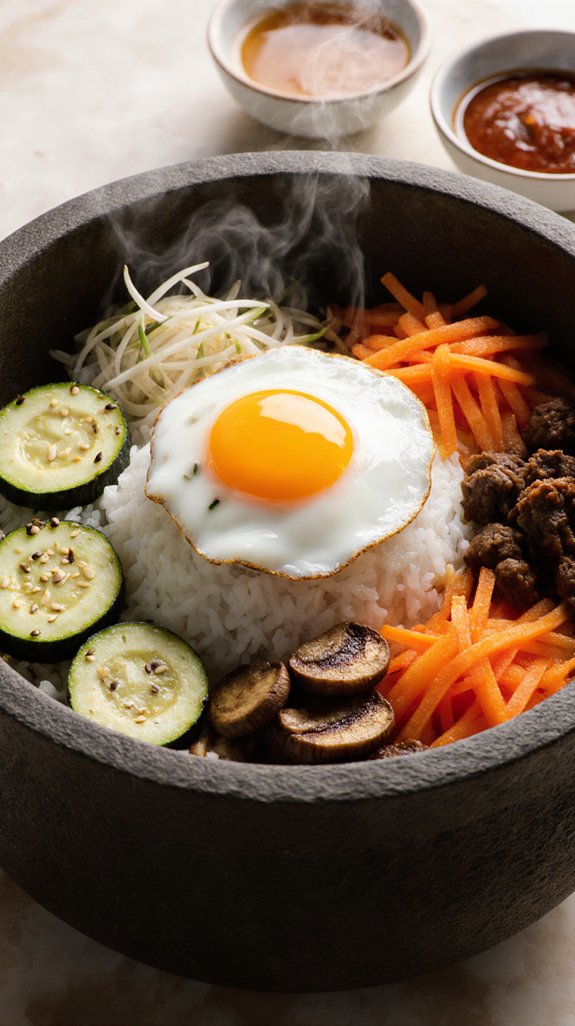
Because bibimbap is such a complete meal on its own, I usually keep the sides simple and let the main dish shine. A few light side dishes work perfectly alongside this hearty bowl.
I like serving kimchi for that tangy, spicy kick that cuts through the richness. Pickled radish adds an invigorating crunch, and seasoned spinach brings another layer of flavor without overwhelming your palate.
For beverage pairings, I reach for barley tea, which has a nutty, slightly sweet taste that complements the savory elements beautifully. Green tea is another excellent choice if you prefer something lighter.
If you want something with more personality, try a crisp Korean rice wine or even sparkling water with lemon to cleanse your palate between bites.
Shop Related Products

If you have a Korean CySILI stone pot, this should be a must, too.

【Korean Traditional Dishes Set】: This stone bowl set comes with a tray and a stainless steel spoon, providing you with all the essentials for a complete Korean dining experience. The tray serves as a stable base for the hot stone bowl, protecting your table or countertop from heat damage.

AUTHENTIC KOREAN STONE POT COOKING - Sizzle and serve in ethnic style with our 100% premium ceramic pot, certified lead and cadmium free for even heating and healthier home cooked meals.
Final Thoughts
Bibimbap has become one of my favorite dishes to make at home because it’s incredibly forgiving and flexible. You can swap vegetables based on what’s in your fridge, adjust the spice level to your preference, and still end up with something delicious.
Beyond its adaptability, I love the cultural significance of this dish—it represents the Korean philosophy of balance and harmony through its colorful presentation. The nutritional benefits are impressive too, with lean protein, whole grains, and plenty of vegetables in every bowl.
Each time I make it, I’m reminded that great cooking doesn’t have to be complicated. Bibimbap proves that simple ingredients, when combined thoughtfully, create something truly special. I hope you’ll give this recipe a try.
Frequently Asked Questions
Can I Make Bibimbap Ahead of Time for Meal Prep?
I’d recommend prepping bibimbap components separately for meal prep success. Store the cooked rice, vegetables, and beef in individual containers. For best bibimbap storage, fry eggs fresh when serving to maintain ideal texture and food safety.
What Type of Bowl Is Traditionally Used to Serve Bibimbap?
Traditional bowls for bibimbap include hot stone bowls (dolsot) that create crispy rice, or regular ceramic bowls. I’ll explain both serving styles: stone bowls keep everything sizzling hot, while ceramic bowls offer easier cleanup and portability.
How Do I Store Leftover Bibimbap Properly?
I’ll store leftover bibimbap by keeping components separate in airtight containers. This meal preservation method maintains freshness for 3-4 days. I’ll refrigerate the rice, vegetables, and beef separately, then reheat and combine when ready to eat.
Is Bibimbap Gluten-Free or Can It Be Made Gluten-Free?
Traditional bibimbap isn’t gluten-free because soy sauce contains wheat. However, I can make it gluten-free by using tamari or coconut aminos and ensuring all other ingredients are gluten free ingredients. Watch for cross contamination concerns when preparing it.
What Does Bibimbap Mean in Korean?
Bibimbap means “mixed rice” in Korean. I’ll show you how this name reflects the dish’s essence: you mix various bibimbap ingredients together before eating. Different bibimbap variations all follow this fundamental mixing principle that defines the dish.