Last Saturday morning, I watched my local barista transform two shots of espresso and steamed milk into what looked like liquid velvet. You’ve probably noticed flat whites popping up everywhere lately, from corner cafés to your office break room. The drink’s become this cult favorite that sits somewhere between a cappuccino and a latte, and honestly, making one at home isn’t as complicated as you’d think. Let me show you why it’s worth learning.
History
The flat white’s origins are about as disputed as whether pineapple belongs on pizza, with both Australia and New Zealand claiming to have invented it during the 1980s.
I remember first hearing about this debate from a barista friend who’d worked in Melbourne cafés, where locals swore the drink started there around 1985.
Meanwhile, New Zealand coffee enthusiasts insist their baristas created it first, pointing to Wellington’s thriving espresso scene during the same era.
The truth is, both countries were experimenting with espresso and microfoam techniques at the time, trying to perfect something smoother than a cappuccino but stronger than a latte.
What matters most isn’t who invented it first, but how this velvety coffee drink became a global sensation.
Recipe
The flat white is a velvety espresso-based drink that originated in Australia and New Zealand, featuring a perfect harmony between bold coffee and microfoam milk.
Unlike a latte, it showcases a higher ratio of coffee to milk with a thinner layer of microfoam, creating a smooth, creamy texture that allows the espresso’s rich, complex flavors to shine through while being softened by sweet steamed milk.
This sophisticated coffee drink is ideal for morning rituals or afternoon pick-me-ups when you want something more substantial than an espresso but less milky than a latte.
The silky microfoam creates a canvas for latte art while delivering a coffee-forward experience that serious espresso lovers appreciate.
Ingredients
- 2 shots espresso (approximately 60ml)
- 150ml whole milk
- Pinch of fine sea salt (optional)
- 1/4 teaspoon vanilla extract (optional)
- 1 teaspoon sugar or sweetener (optional)
Shop Related Products

Make Your Favorite Espresso Coffee At Home: The CASABREWS coffee machine with milk frother allows you to prepare all your favorite espresso-based coffees. You can enjoy a barista-brewed latte, cappuccino or macchiato at home. Stainless steel appearance, stylish and durable, ideal for any size kitchen. This compact espresso coffee maker is perfect for home or office use

More than 30 coffees With different aromas, intensities & flavors

【All-in-One Home Barista Experience】- This Spacekey espresso coffee machine combines a built-in conical burr grinder, a 20-bar professional pump, and a powerful steam wand. Go from whole beans to a perfect espresso, creamy latte, or refreshing iced coffee in minutes. Everything you need for a complete home café experience. Perfect for both beginners and enthusiasts.
Preparation Steps
- Preheat a 5-6 ounce cup by rinsing it with hot water.
- Pull two shots of espresso directly into the preheated cup.
- If using, add the salt, vanilla extract, and sugar to the hot espresso, stirring to dissolve completely.
- Pour the milk into a steaming pitcher.
- Insert the steam wand just below the milk’s surface and create a gentle whirlpool motion while steaming to 55-60°C (130-140°F).
- Tap the pitcher firmly on the counter to eliminate large bubbles, then swirl the milk to create a glossy, velvety microfoam.
- Pour the steamed milk into the espresso from about 3 inches above, gradually lowering the pitcher to integrate the microfoam smoothly.
- Serve immediately while hot.
Shop Related Products

【Multi-Use Steam Brush for Espresso Machines】Specifically designed for espresso steam wands and group heads, this steam cleaning brush effectively removes coffee residue, milk stains, and buildup from various coffee machines

✔ 1 — Deep Steam Wand Cleaning Power — Remove stubborn milk residue, coffee oils, and scale buildup with ease. This espresso machine cleaning brush uses steam pressure and durable bristles to clean hard-to-reach internal areas, helping maintain performance and flavor quality

☕ 【Compatible Models 】The 304 stainless steel steam nozzle is compatible with Delonghi Dedica EC680/EC685, ECP3420/310/330, EC9335/9665, ECAM22.110. SB,ECP(3X,XX) full series.
Tips
For the best results, use fresh, high-quality espresso beans ground immediately before brewing.
While whole milk produces the creamiest microfoam, you can substitute with 2% milk, oat milk, or barista-blend alternative milks designed for steaming.
If you prefer your flat white unsweetened, omit both the sugar and vanilla to let the natural sweetness of the milk and espresso speak for themselves.
The salt enhances the coffee’s flavor notes without making it taste salty—it’s a barista secret that reduces bitterness, though it’s entirely optional for those who prefer a pure coffee flavor.
Preparation Steps
Making a proper flat white isn’t complicated, but the order of your steps matters if you want that signature velvety texture.
I’ve found that getting everything ready before you start—your cup warmed up, your espresso dialed in, your milk pitcher cold—makes the whole process flow smoothly instead of turning into a frantic scramble.
Once you’ve pulled those espresso shots and steamed your milk to that perfect microfoam consistency, you’ll need to work quickly since both elements taste best when they’re fresh and hot.
Step 1. Preheat Your Serving Cup
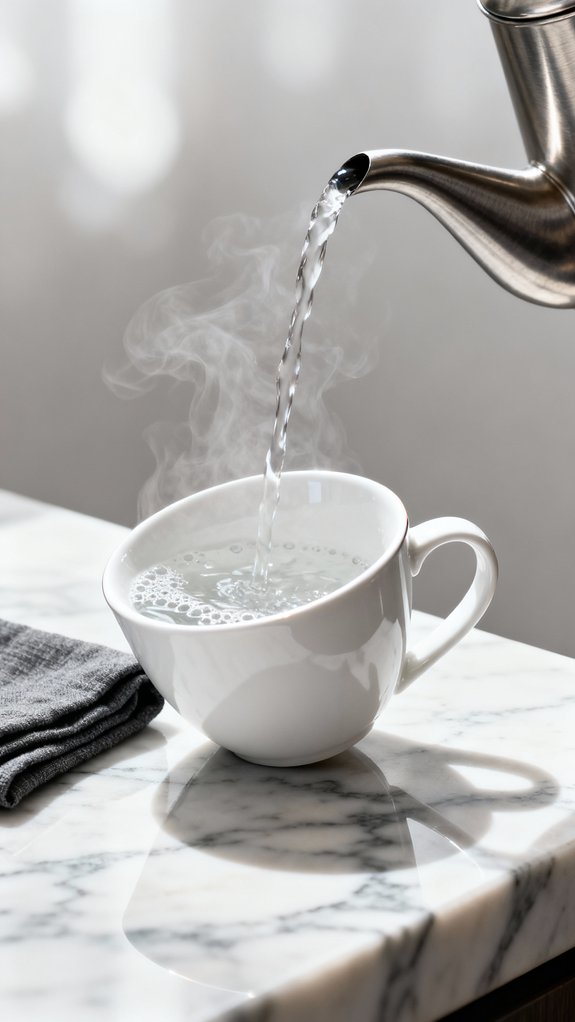
One simple step makes all the difference between a lukewarm disappointment and a properly hot flat white that stays warm while you enjoy it.
You’ll want to preheat your 5-6 ounce cup before pulling your espresso shots. I usually run hot water from the espresso machine’s steam wand directly into the cup and let it sit for about thirty seconds while I’m grinding my beans.
The ceramic absorbs that heat, creating a warm vessel that won’t steal precious degrees from your carefully crafted drink. Just dump out the water right before pulling your shots.
This restaurant trick keeps your flat white at that perfect sipping temperature from the first taste to the last drop, instead of cooling down halfway through.
Step 2. Pull Double Espresso Shots
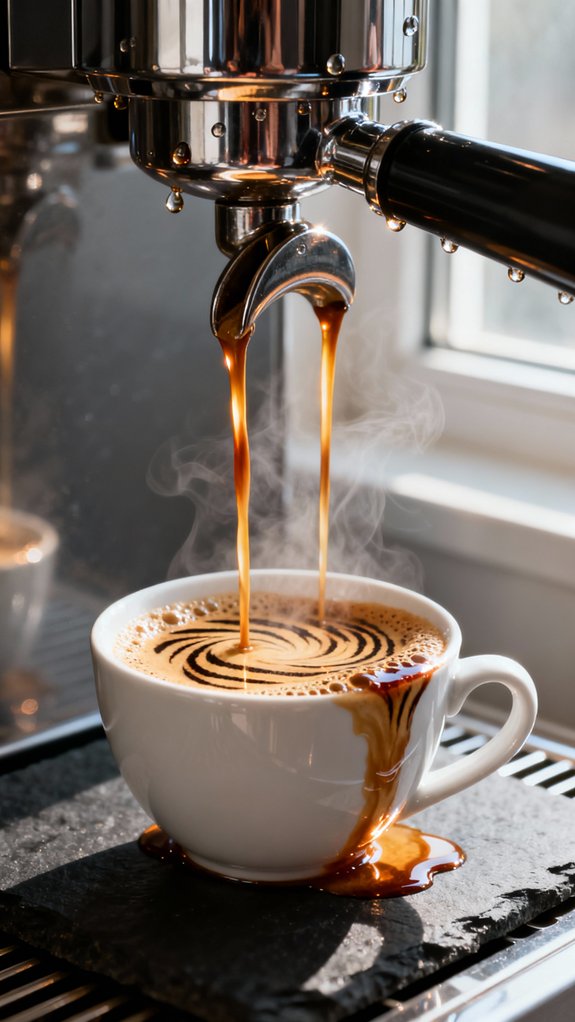
Perfect espresso shots form the soul of your flat white, so getting this step right really matters.
You’ll want to grind your beans just before brewing—I learned this makes a huge difference in flavor. Lock the portafilter into your machine and start pulling those two shots directly into your preheated cup.
The espresso should flow like warm honey, taking about 25-30 seconds to extract. If it’s using, while the espresso is still hot, add that pinch of salt along with vanilla and sugar if you’re using them. The heat helps everything dissolve perfectly.
You’re aiming for roughly 60ml of rich, aromatic espresso with a beautiful crema on top.
Step 3. Steam Milk to Microfoam
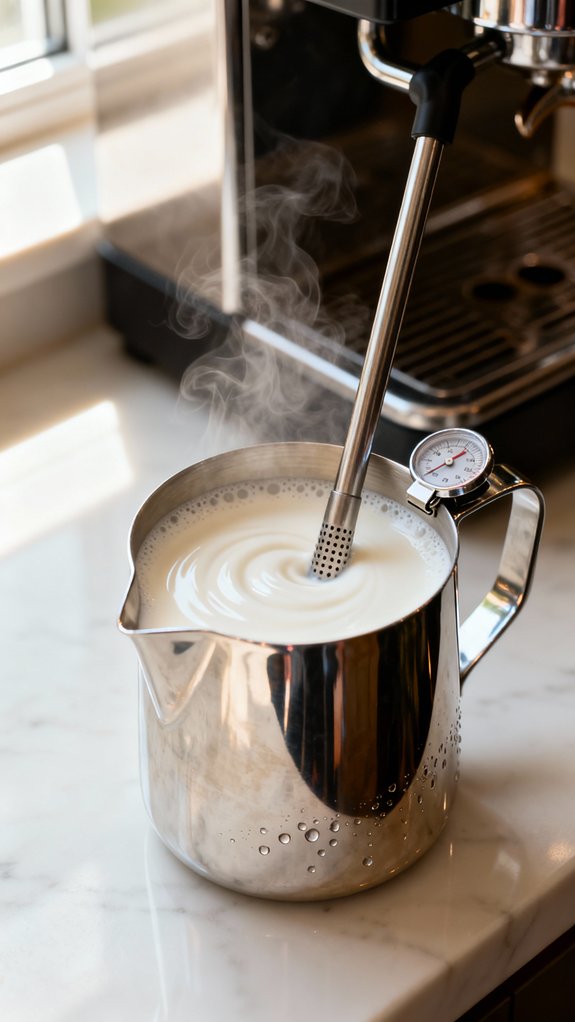
While your espresso sits waiting in its cup, you need to work on getting that milk just right.
Pour your cold whole milk into a stainless steel pitcher, filling it only about halfway so you’ve got room to work.
Position the steam wand just below the surface—you’ll hear a gentle paper-tearing sound when it’s right.
Keep that wand at an angle to create a swirling whirlpool effect, which distributes the heat evenly and builds those tiny, velvety bubbles you’re after.
Watch your thermometer carefully and stop steaming when it hits 55-60°C.
The milk should look glossy and smooth, not frothy like a cappuccino.
Give the pitcher a few taps and swirl it around to pop any stubborn bubbles.
Step 4. Add Optional Flavorings
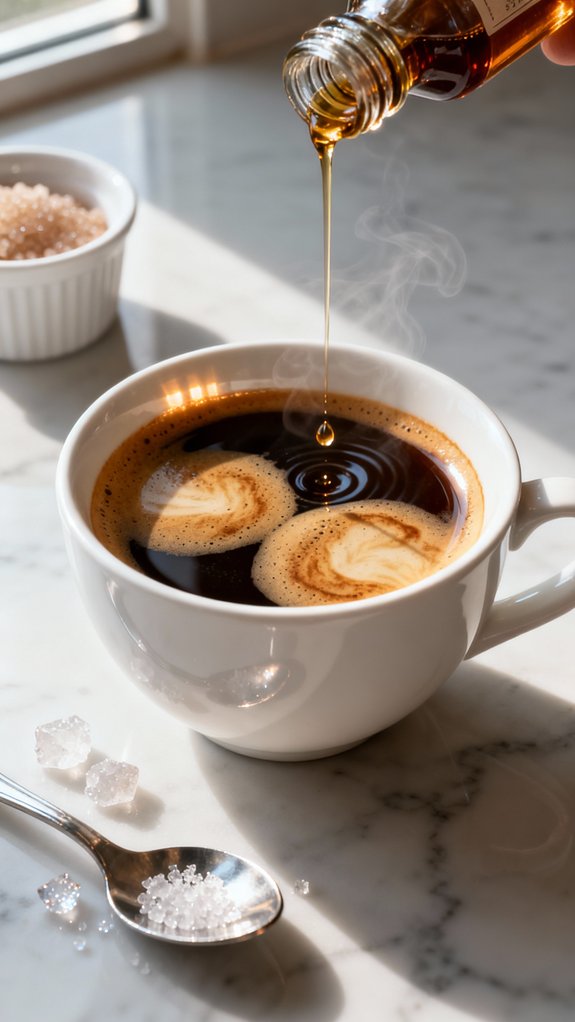
If you’re planning to add those optional flavorings I mentioned—the vanilla extract and sugar—now’s the time to do it, right after you’ve pulled your espresso shots.
I learned this trick from a barista who explained that hot espresso dissolves everything perfectly, so you won’t end up with grainy sugar at the bottom of your cup. Just stir it in quickly with a spoon.
The vanilla adds this subtle sweetness that reminds me of weekend mornings, while the sugar takes the edge off if you find straight espresso too intense.
Don’t overdo it though—you still want to taste the coffee. Some people skip these entirely and let the natural milk sweetness do the work, which honestly works just fine too.
Step 5. Pour Milk Into Espresso
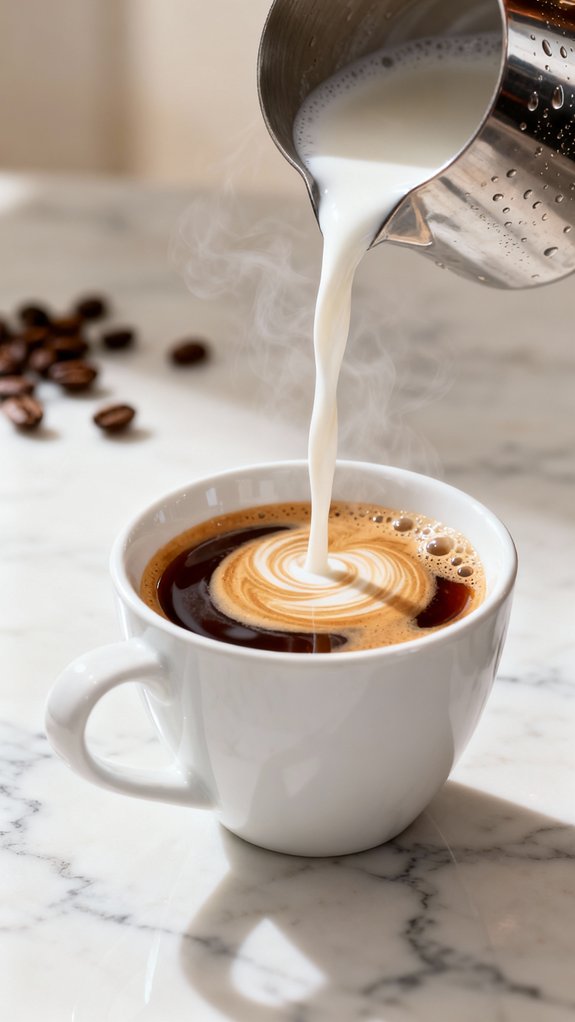
Grab your milk pitcher and position it about three inches above your espresso cup—this height lets the milk dive down through the crema and blend properly with the coffee beneath.
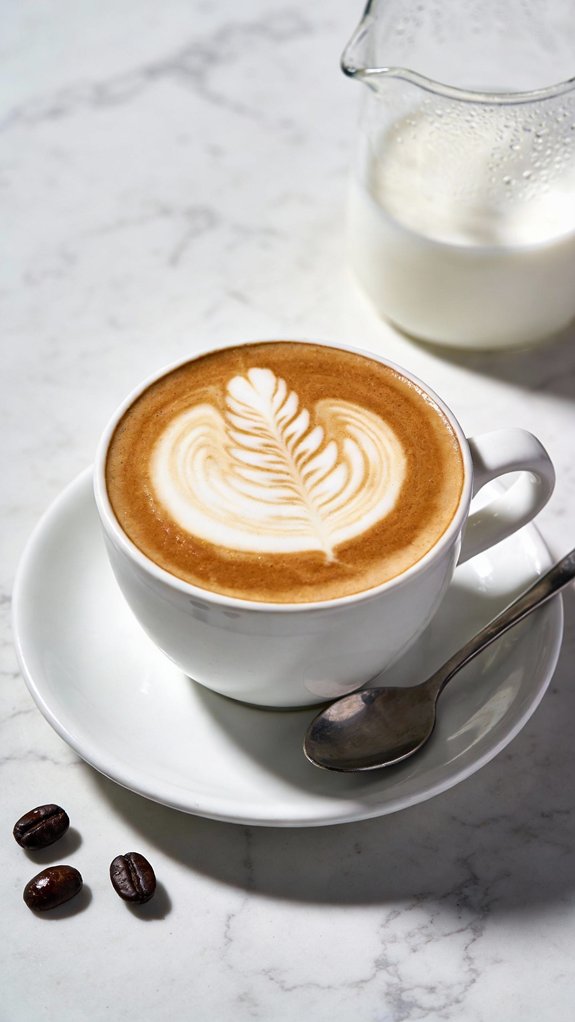
You’ll see the surface swirl as the milk hits, creating those gorgeous marbled patterns that make coffee shops worth visiting. As your cup fills halfway, bring the pitcher closer, tilting it slightly to control the flow.
This is when you can attempt latte art if you’re feeling ambitious, though honestly, I’m still working on making anything beyond blobs. The key is maintaining a steady pour until you’ve added all your steamed milk, watching the microfoam integrate smoothly without leaving thick foam sitting on top.
Final Thoughts
Once you’ve mastered the microfoam technique, making flat whites at home becomes second nature.
I remember when I first nailed that silky texture—it felt like revealing a secret that coffee shops had been keeping from me. Now I skip the café line on busy mornings and make my own in under five minutes.
The beauty of a flat white is its simplicity.
You’re not juggling ten ingredients or complicated steps. Just espresso, milk, and maybe a pinch of salt if you’re feeling fancy. It’s the kind of drink that impresses houseguests but doesn’t stress you out to prepare.
Once you’ve got your technique down, you’ll wonder why you ever paid seven dollars for something this straightforward.
Frequently Asked Questions
What’s the Difference Between a Flat White and a Cappuccino?
A flat white uses a 1:2 coffee-to-milk ratio compared to cappuccino’s 1:1:1 ratio of espresso, steamed milk, and foam. You’ll get silkier microfoam in your flat white, while cappuccinos feature thicker, airier foam on top.
Can I Make a Flat White Without an Espresso Machine?
Yes, you can make a flat white without an espresso machine by using strong coffee from a Moka pot or AeroPress as your base, then creating microfoam with a French press or handheld milk frother.
How Many Calories Are in a Flat White?
A traditional flat white made with whole milk contains approximately 120-150 calories, depending on milk quantity and additions. You’ll consume fewer calories if you skip optional sweeteners or use low-fat milk alternatives instead.
What’s the Ideal Espresso Roast Level for a Flat White?
You’ll want a medium to medium-dark roast that’s absolutely bursting with caramel sweetness and chocolate notes—it’ll balance perfectly with the velvety microfoam without overwhelming your palate with harsh bitterness or acidity.
How Does a Flat White Compare to a Cortado?
A flat white has more milk (150ml vs 60-90ml) and a silkier microfoam texture than a cortado, which uses equal parts espresso and steamed milk with minimal foam for a bolder coffee flavor.