The 1920s were like a rebellious mixologist’s fever dream, where speakeasy bartenders turned questionable booze into liquid gold. I’ve always found it fascinating how Prohibition didn’t kill cocktail culture—it actually forced bartenders to get creative, masking harsh bootleg spirits with honey, citrus, and fresh herbs. These eleven classic recipes aren’t just drinks; they’re tiny time capsules that taste like jazz, danger, and Saturday nights when breaking the law meant ordering a Bee’s Knees.
Bee’s Knees
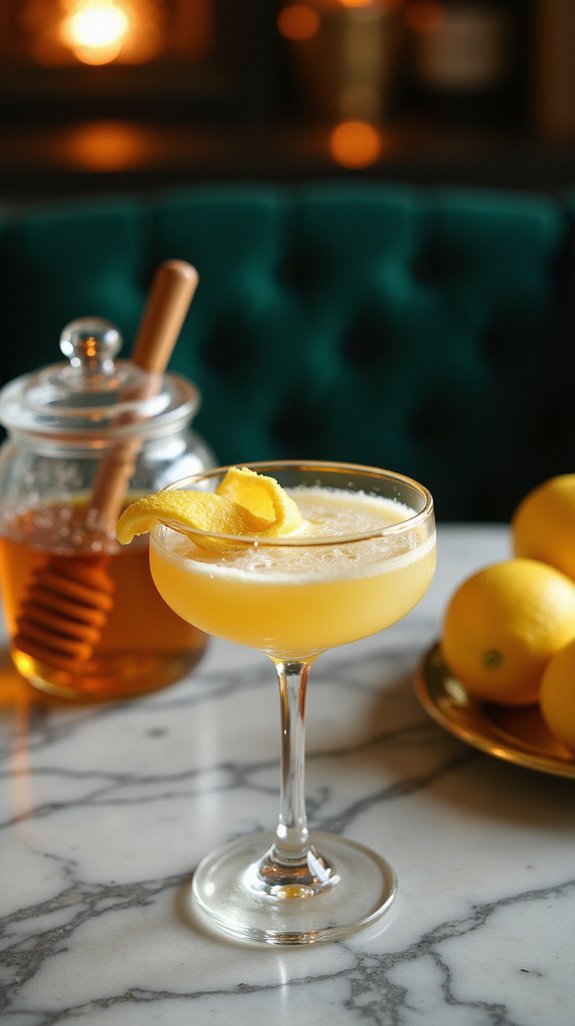
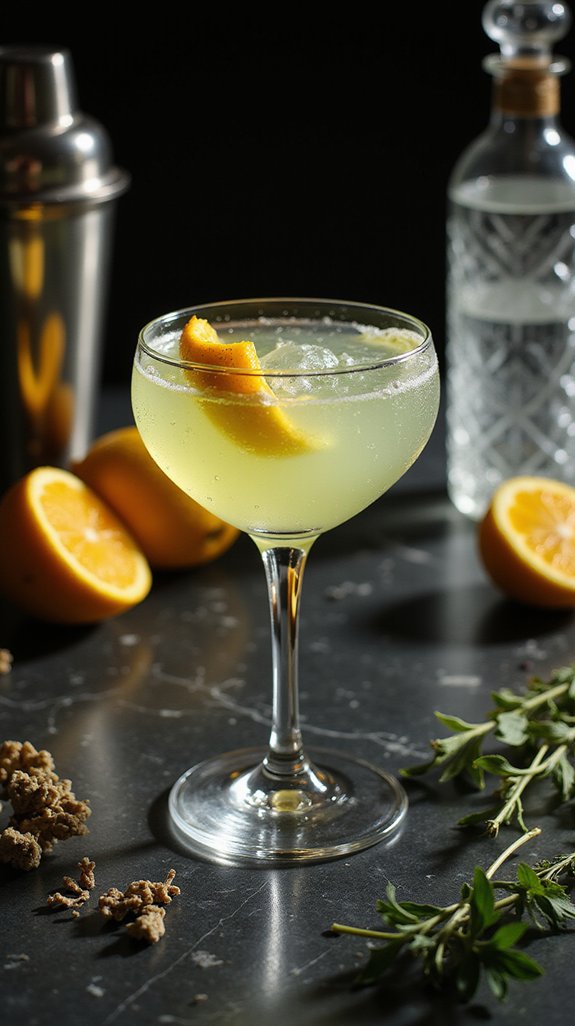
The Bee’s Knees is a classic Prohibition-era cocktail that emerged in the 1920s when gin of questionable quality needed a little help to become palatable. Bartenders cleverly masked the harsh flavors of bathtub gin with honey and fresh lemon juice, creating a drink that was both delicious and deceptively smooth. The name itself is period slang meaning “the best,” and this cocktail certainly lived up to its moniker, becoming one of the most popular drinks of the Jazz Age.
This simple yet sophisticated three-ingredient cocktail showcases how elegance doesn’t require complexity. The honey adds a natural sweetness and silky texture that distinguishes it from other gin sours of the era, while the lemon juice provides the perfect acidic counterbalance.
Today, with access to high-quality gin, the Bee’s Knees shines even brighter, allowing the botanical notes of the spirit to harmonize beautifully with the floral sweetness of honey.
Ingredients
- 2 oz gin
- 3/4 oz fresh lemon juice
- 1/2 oz honey syrup (equal parts honey and warm water, mixed until dissolved)
- Lemon twist for garnish
- Ice
Shop Related Products
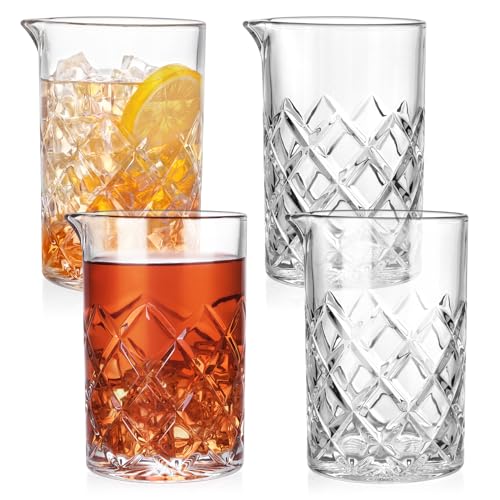
Sufficient Quantity: our product contains 4 pieces of clear bar mixing glasses, which are enough to meet your daily use needs, and enough quantity can also allow you to share with others

DESIGNED FOR PROFESSIONAL BARTENDING - specially selected by KITESSENSU's professional bartenders, the 710ml/24oz size makes two or three cocktails, and the cocktail mixing glasses are designed to match the professional-grade equipment used by bartenders.

DESIGNED AND SIZED FOR EXPERT BARTENDING - Our distinguished mixing glasses are designed for professional bartenders, but they can also be used just as easily for in-home cocktail parties and mixers.
Instructions
Add the gin, fresh lemon juice, and honey syrup to a cocktail shaker filled with ice. Shake vigorously for 10-15 seconds until well-chilled and the outside of the shaker becomes frosty.
Strain the mixture into a chilled coupe glass or martini glass. Express the oils from a lemon twist over the drink by gently twisting it over the surface, then either drop it into the cocktail or rest it on the rim as garnish.
Tips
Make your honey syrup ahead of time and store it in the refrigerator for up to two weeks, as cold honey is difficult to incorporate into a cocktail.
For the best flavor, use a London Dry gin with pronounced juniper notes, though Old Tom gin makes an interesting sweeter variation. The ratio of honey to lemon can be adjusted to personal preference—some prefer a 3:4 ratio for a tarter drink.
Always use fresh-squeezed lemon juice rather than bottled, as the bright, fresh citrus flavor is essential to this cocktail’s appeal.
Southside
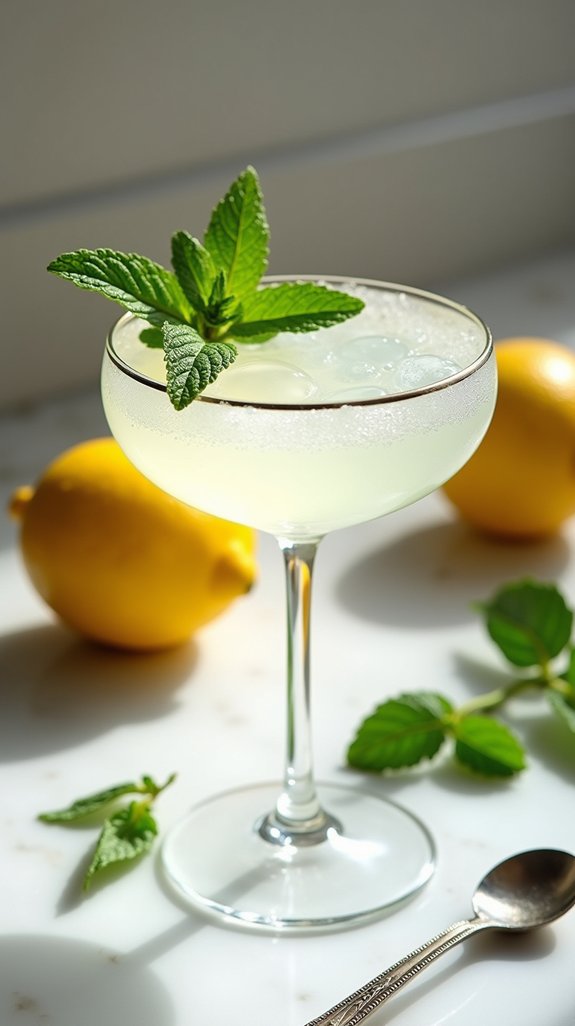
The Southside is a revitalizing gin cocktail that has competed for the title of most civilized drink of the 1920s. While its exact origins are debated—some claim it was born at the Southside Sportsmen’s Club on Long Island, while others attribute it to Chicago’s South Side gangsters during Prohibition—what’s certain is that this minty, citrusy concoction became a favorite among speakeasy patrons.
Like the Bee’s Knees, it served the practical purpose of disguising harsh bootleg spirits while delivering a sophisticated drinking experience that appealed to refined palates seeking elegant revitalization.
What sets the Southside apart from other gin cocktails of the era is the addition of fresh mint, which transforms it into something akin to an alcoholic mojito or a gin-based mint julep. The combination of bright lemon juice, subtle sweetness, and aromatic mint creates a beautifully balanced cocktail that’s simultaneously invigorating and smooth.
Often served in a coupe glass, though occasionally over ice, the Southside has maintained its popularity through the decades, becoming a staple in craft cocktail bars and a favorite choice for warm weather sipping.
Shop Related Products
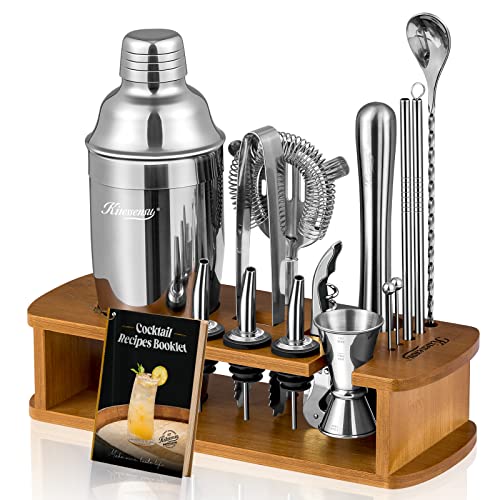
Made to Last: Upgraded 18/8 stainless steel bartender kit cocktail set is your best bet, which is specially thickened (0.8 mm) to protect itself from rust for lifetime and remain shiny and new after years of shaking, and it can withstand lots of rough and tumble, even being dropped, without letting you down. and the bar mixing set is safe in the dishwasher

3-Piece Professional Cocktail Shaker Set - Ohtomber cocktail drink mixer set, a complete set to meet all your needs for a bar tool set. It consists of a 24 Oz/750ml stainless steel cocktail shaker with a cap, a double-sided jigger for bartending (1.0 oz/0.5 oz), and a bar spoon, making it easier to use for beginners or hobby mixologists.

1. Complete 18-Piece Bartender Kit for Home Bar Everything you need to mix classic and modern cocktails in one organized set. Includes a 24 oz martini shaker with built-in strainer, double jigger, muddler, mixing spoon, ice tongs, bottle opener, 2 liquor pourers, 2 wine stoppers, 4 reusable straws, cleaning brush, recipe book, and a clear acrylic stand for neat storage and display.
Ingredients
- 2 oz gin
- 3/4 oz fresh lemon juice
- 3/4 oz simple syrup
- 6-8 fresh mint leaves, plus a sprig for garnish
- Ice
Instructions
Add the fresh mint leaves to a cocktail shaker and gently muddle them to release their oils—press just enough to bruise the leaves without tearing them into small pieces.
Add the gin, fresh lemon juice, and simple syrup to the shaker, then fill with ice. Shake vigorously for 10-15 seconds until the mixture is well-chilled and properly diluted.
Double-strain the cocktail through a fine-mesh strainer into a chilled coupe glass to remove any mint fragments and ice chips. Garnish with a fresh mint sprig, gently slapping it between your hands first to release its aromatic oils.
Tips
The key to a perfect Southside is proper muddling technique—be gentle with the mint to avoid releasing bitter chlorophyll flavors that come from over-worked leaves.
Some bartenders prefer to shake the mint without muddling at all, simply allowing the vigorous shaking to extract the oils.
For a longer, more revitalizing serve, build the cocktail over crushed ice in a highball glass and top with a splash of soda water, transforming it into a Southside Fizz.
Using a London Dry gin allows the mint to shine, though a more botanical gin can add interesting complexity to the drink’s flavor profile.
French 75
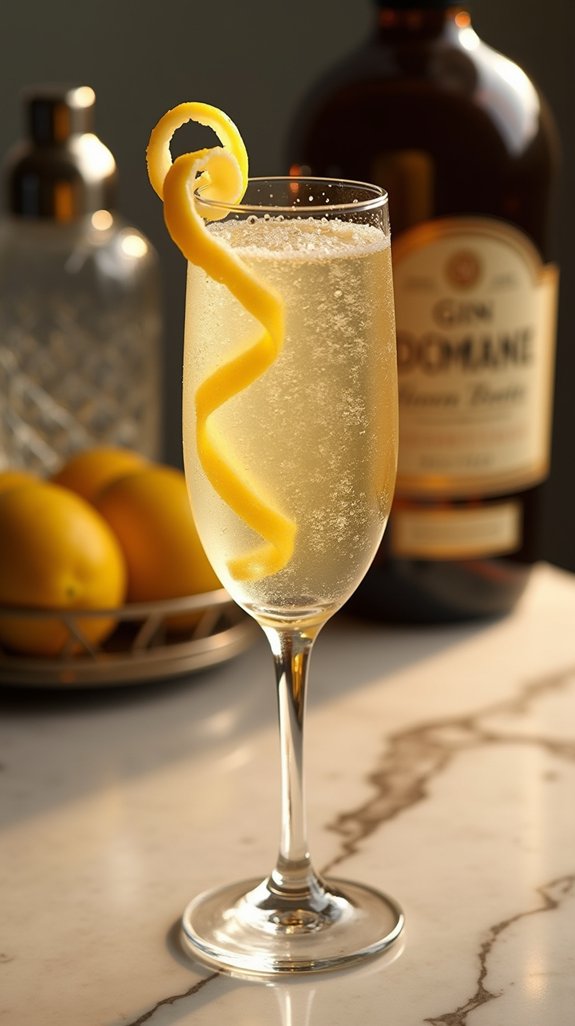
The French 75 stands as one of the most glamorous and celebratory cocktails to emerge from the 1920s, combining the elegance of champagne with the punch of gin. Named after the powerful French 75mm field gun used during World War I, this cocktail lives up to its artillery namesake with a deceptive kick that sneaks up on the drinker.
Created at Harry’s New York Bar in Paris—though some credit the Arnaud’s French 75 Bar in New Orleans—this sophisticated sipper quickly became a symbol of Jazz Age extravagance and post-war celebration. The cocktail’s ability to stretch expensive champagne while adding complexity made it particularly popular during Prohibition, when every drop of quality spirits needed to count.
What makes the French 75 particularly special is its transformation of a simple gin sour into something transcendent through the addition of sparkling wine. The effervescence elevates the botanical notes of the gin while the lemon juice cuts through the sweetness, creating a perfectly balanced drink that’s both invigorating and indulgent.
Traditionally served in a champagne flute to showcase the bubbles and maintain carbonation, this cocktail bridges the gap between casual cocktail hour and special occasion toasting. Its enduring popularity has cemented it as a brunch favorite and New Year’s Eve staple, proving that some 1920s innovations never go out of style.
Ingredients
- 1 oz gin
- 1/2 oz fresh lemon juice
- 1/2 oz simple syrup
- 3-4 oz champagne or dry sparkling wine, chilled
- Ice
- Lemon twist or lemon peel for garnish
Instructions
Add the gin, fresh lemon juice, and simple syrup to a cocktail shaker filled with ice. Shake vigorously for 10-15 seconds until the mixture is well-chilled and properly diluted.
Strain the cocktail into a chilled champagne flute or coupe glass. Top with chilled champagne or dry sparkling wine, pouring slowly down the side of the glass to preserve the bubbles. Gently stir once or twice to integrate the ingredients without losing too much carbonation.
Express a lemon twist over the drink to release its oils, then either drop it into the glass or run it around the rim before discarding.
Tips
The quality of your champagne matters, but you don’t need to use expensive vintage bottles—a good dry Prosecco or Cava works beautifully and keeps costs reasonable.
Some variations call for cognac instead of gin, which creates a drink closer to the original French 75’s earliest iterations and offers a richer, more rounded flavor profile.
Always verify your champagne is well-chilled before mixing, as adding warm sparkling wine will result in excessive foam and lost carbonation.
For a more dramatic presentation, some bartenders prefer serving the French 75 in a coupe glass, which allows the aromatics to concentrate while still showcasing the drink’s elegant appearance.
The Last Word
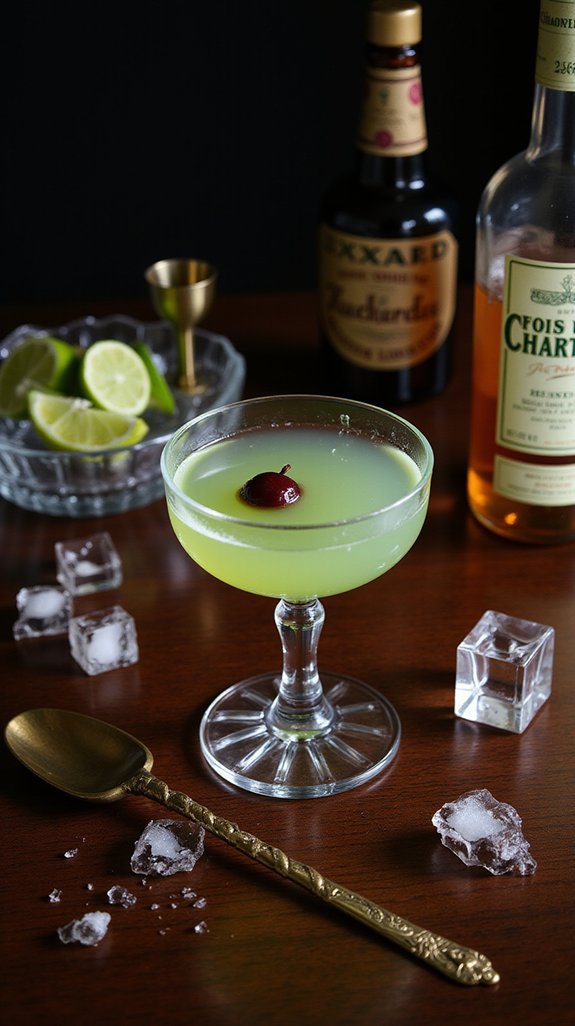
The Last Word emerged from the Detroit Athletic Club during Prohibition, created sometime around 1915 by bartender Frank Fogarty, though it wouldn’t reach its full popularity until the roaring twenties. This equal-parts cocktail represents the era’s fascination with complex, spirit-forward drinks that balanced multiple strong flavors into a harmonious whole. Named either for its knockout punch or for the vaudeville act “The Last Word,” this cocktail disappeared into obscurity for decades before being rediscovered in the early 2000s at Seattle’s Zig Zag Café. Its resurrection sparked a renewed interest in pre-Prohibition cocktails and introduced modern drinkers to the distinctive flavor of Chartreuse, a French herbal liqueur that gives the drink its signature character.
What distinguishes The Last Word from other Jazz Age cocktails is its democratic formula—equal parts of gin, green Chartreuse, maraschino liqueur, and fresh lime juice create a drink where no single ingredient dominates. The botanical complexity of gin mingles with the 130 herbs in Chartreuse, while maraschino adds a subtle sweetness and lime provides the necessary acidity. The result is a pale green cocktail that’s simultaneously herbal, tart, sweet, and spirituous. This balanced approach made it a favorite among serious cocktail enthusiasts of the 1920s who appreciated drinks with depth and complexity rather than simple sweetness.
Its compact, potent nature also made it ideal for the speakeasy culture where quality ingredients were scarce and drinks needed to deliver maximum impact.
Ingredients
- 3/4 oz gin
- 3/4 oz green Chartreuse
- 3/4 oz maraschino liqueur
- 3/4 oz fresh lime juice
- Ice
- Brandied cherry or lime wheel for garnish (optional)
Instructions
Combine the gin, green Chartreuse, maraschino liqueur, and fresh lime juice in a cocktail shaker filled with ice. Shake vigorously for 15-20 seconds until the mixture is thoroughly chilled and the outside of the shaker becomes frosty. The equal-parts formula means proper dilution from shaking is essential to mellowing the strong spirits and integrating the flavors.
Strain the cocktail into a chilled coupe glass or Nick and Nora glass. If desired, garnish with a brandied cherry or a lime wheel, though many purists prefer the drink unadorned to appreciate its pale green hue.
Tips
Green Chartreuse is non-negotiable for this cocktail—yellow Chartreuse will create an entirely different drink with less intensity and complexity. Luxardo maraschino liqueur is the gold standard, as cheaper cherry liqueurs lack the subtle almond-cherry character this recipe demands. Fresh lime juice is absolutely essential; bottled juice will throw off the delicate balance completely.
Some bartenders prefer London Dry gin for its juniper-forward profile, while others opt for Old Tom gin to add a touch of sweetness that rounds out the herbal notes. If you find the drink too intense, resist the urge to alter the ratios—instead, shake it longer for more dilution or let it sit for a minute to open up the flavors.
Mary Pickford
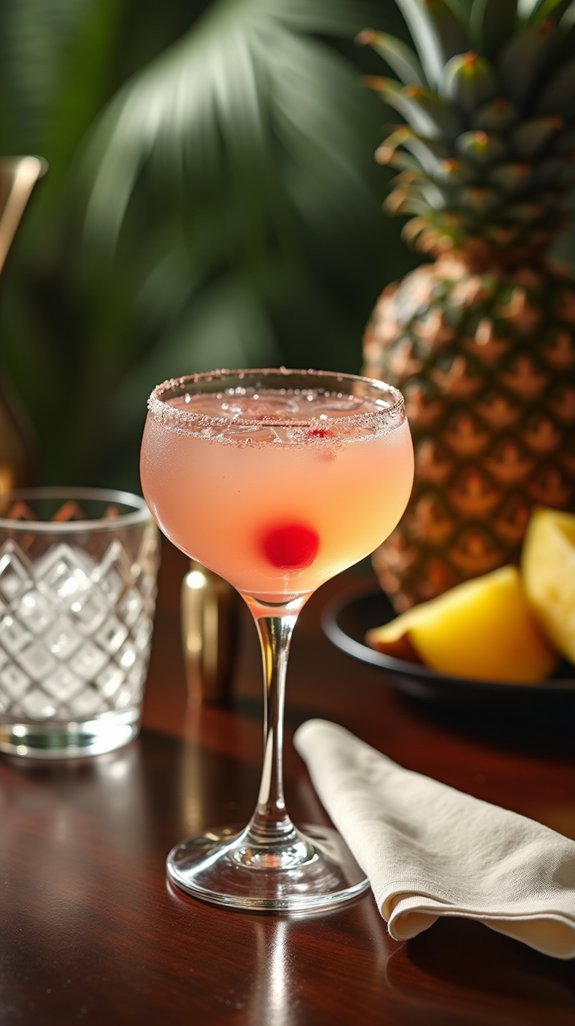
The Mary Pickford cocktail was born in Havana, Cuba, during the 1920s at the famous Hotel Nacional de Cuba or the nearby La Florida bar (also known as El Floridita), created to honor the silent film star who was one of the most famous actresses of the era.
Mary Pickford, known as “America’s Sweetheart,” visited Cuba in the early 1920s along with her husband Douglas Fairbanks and fellow stars Charlie Chaplin and Gloria Swanson, and the bartenders created signature drinks for these Hollywood royalty. The cocktail perfectly captured the essence of its namesake—elegant, sophisticated, and possessing a deceptive strength beneath its sweet, approachable exterior.
Unlike many Prohibition-era American cocktails that masked the flavor of inferior spirits, the Mary Pickford celebrated the accessibility of quality Cuban rum and fresh tropical ingredients that were readily available on the island.
This pink-hued cocktail became a symbol of the glamorous intersection between Hollywood and Havana during the Jazz Age, when Cuba served as a tropical playground for wealthy Americans escaping Prohibition. The drink combines light rum with pineapple juice, grenadine, and maraschino liqueur to create a fruity but balanced cocktail that appealed to the era’s growing appetite for tropical flavors.
The Mary Pickford stands alongside other Cuban classics like the Daiquiri and Mojito as a representation of Cuba’s golden age of cocktail culture. Its popularity extended beyond the island, finding fans in speakeasies and hotel bars throughout the Americas, where it offered a taste of tropical escapism during the austere years of Prohibition.
Ingredients
- 1 1/2 oz white rum
- 1 1/2 oz fresh pineapple juice
- 1/4 oz grenadine
- 1/4 oz maraschino liqueur
- Ice
- Maraschino cherry for garnish (optional)
Instructions
Add the white rum, fresh pineapple juice, grenadine, and maraschino liqueur to a cocktail shaker filled with ice. Shake vigorously for 15-20 seconds until well-chilled and properly diluted, allowing the ingredients to blend harmoniously and create the cocktail’s signature pale pink color.
The shaking should be thorough enough to create a slight froth from the pineapple juice. Strain the mixture into a chilled coupe glass or cocktail glass. Garnish with a maraschino cherry if desired, which adds a visual nod to the drink’s delicate sweetness and vintage appeal.
Tips
Fresh pineapple juice is essential for this cocktail—canned juice often contains too much added sugar and lacks the bright, acidic quality that balances the sweet elements.
Use real grenadine made from pomegranate rather than artificially flavored corn syrup versions, as authentic grenadine provides depth and a natural pink color without cloying sweetness.
The quality of the maraschino liqueur matters greatly; look for Luxardo or another premium brand rather than the syrup from maraschino cherry jars.
A good white or silver Cuban-style rum works best, though any quality light rum will suffice—avoid spiced or dark rums which will overpower the delicate tropical flavors.
The cocktail should taste fruity but not overly sweet, with the rum still present as the backbone of the drink.
Sidecar
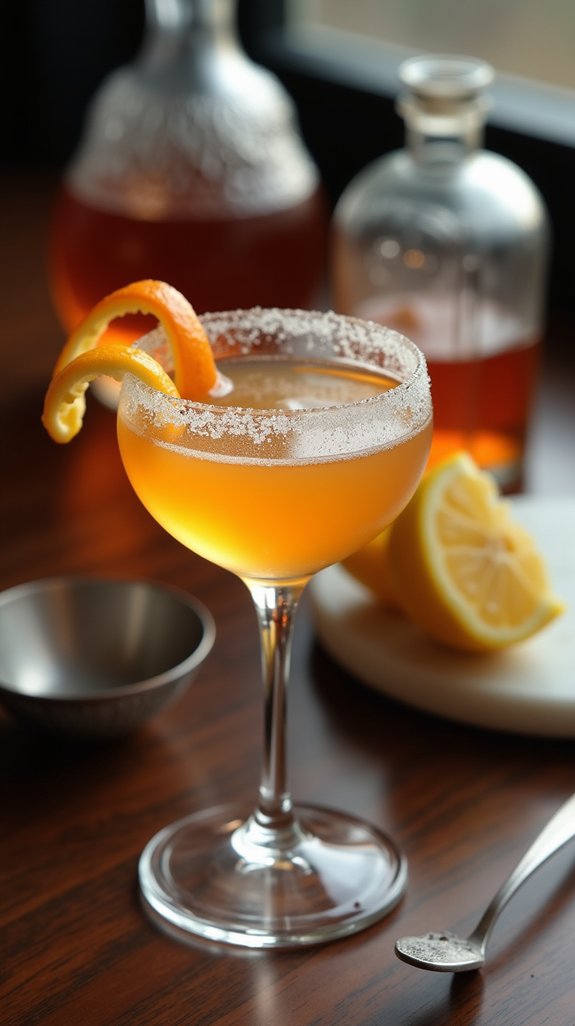
The Sidecar emerged during the 1920s as one of the most iconic cocktails of the era, with its exact origins remaining a subject of friendly dispute between two legendary bartenders. Harry MacElhone of Harry’s New York Bar in Paris and Pat MacGarry of the Buck’s Club in London both claimed credit for the creation, though most cocktail historians lean toward the Parisian origin story.
The drink allegedly earned its name from a military captain who’d arrive at the bar in a motorcycle sidecar, requesting this particular combination of cognac, orange liqueur, and lemon juice. Whether born in Paris or London, the Sidecar quickly became a staple of cocktail culture on both sides of the Atlantic, representing the sophisticated elegance of the Jazz Age.
The Sidecar belongs to the “sour” family of cocktails, sharing the same basic structure as the Margarita and Daisy, with its perfect balance of spirit, citrus, and sweetness. During Prohibition, the cocktail gained popularity in American speakeasies where the bright citrus flavors helped mask the harsh taste of bootleg spirits, though the drink truly shines when made with quality cognac or brandy.
The Sidecar became synonymous with the cosmopolitan lifestyle of the 1920s, enjoyed by flappers and gentleman alike in elegant hotel bars and clandestine drinking establishments. Its enduring appeal lies in its simplicity and the harmonious interplay between the rich cognac, the bitter-sweet orange liqueur, and the sharp brightness of fresh lemon juice.
Ingredients
- 2 oz cognac or brandy
- 3/4 oz orange liqueur (Cointreau or Grand Marnier)
- 3/4 oz fresh lemon juice
- Ice
- Sugar for rimming the glass (optional)
- Lemon twist or orange peel for garnish (optional)
Instructions
If desired, rim a chilled coupe glass with sugar by running a lemon wedge around the edge and dipping it in superfine sugar.
Add the cognac, orange liqueur, and fresh lemon juice to a cocktail shaker filled with ice. Shake vigorously for 15-20 seconds until the mixture is well-chilled and properly diluted, ensuring the ingredients are thoroughly combined and the drink achieves its characteristic smooth, balanced flavor.
The vigorous shaking will also create a slight cloudiness from the citrus juice, which is desirable. Strain the cocktail into the prepared coupe glass, ensuring no ice or pulp makes it into the final drink. Garnish with a lemon twist or orange peel if desired, expressing the oils over the surface of the drink before adding it to the glass.
Tips
The quality of cognac matters greatly in this drink—use at least a VS (Very Special) grade cognac, though a VSOP will produce superior results.
The sugar rim is optional and remains a point of debate among cocktail purists; traditionalists prefer the drink without it to better appreciate the natural balance of sweet and sour, while others enjoy the added sweetness and textural contrast.
Always use fresh-squeezed lemon juice rather than bottled, as the bright, natural acidity is vital to achieving the proper balance. The proportions can be adjusted slightly to taste—some prefer a 2:1:1 ratio for a boozier drink, while the 2:3/4:3/4 ratio provides a more balanced, approachable cocktail.
Serve immediately while cold, as the Sidecar loses its appeal as it warms and dilutes.
Gin Rickey
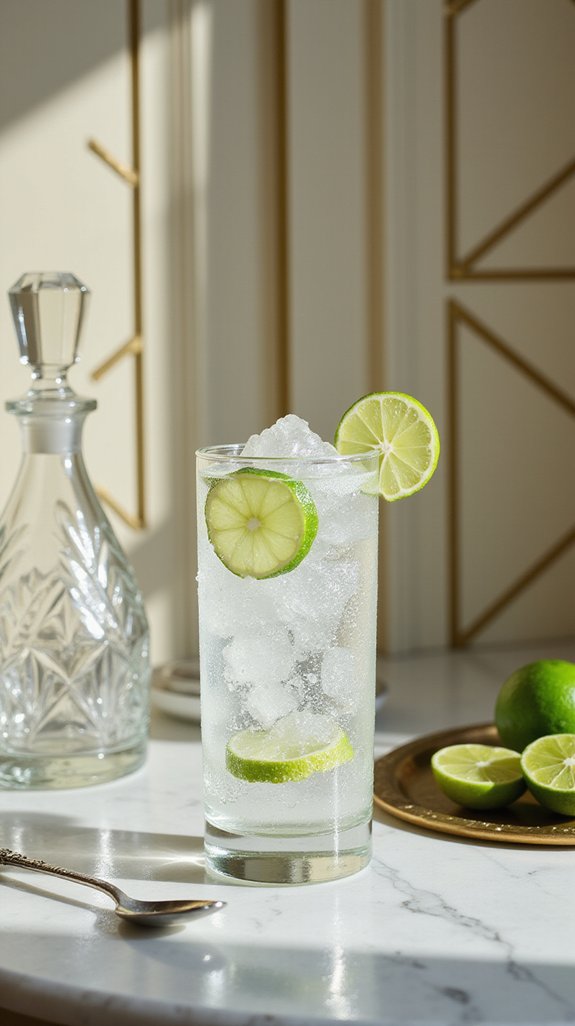
The Gin Rickey stands out among 1920s cocktails as a invigoratingly simple and unpretentious drink that gained tremendous popularity during Prohibition. Created in the 1880s by bartender George Williamson at Shoemaker’s bar in Washington D.C., the drink was originally made with bourbon for Colonel Joe Rickey, a Democratic lobbyist and bourbon enthusiast.
However, by the 1920s, the gin version had eclipsed the original, becoming the definitive Rickey and a favorite in speakeasies across America. Unlike many cocktails of the era that used sugar and elaborate ingredients to mask inferior spirits, the Rickey’s stark simplicity of gin, lime, and soda water meant there was nowhere to hide poor-quality liquor, making it a mark of sophistication when made properly.
The Gin Rickey became particularly beloved during the sweltering summers of the Roaring Twenties, offering a crisp, effervescent alternative to heavier, sweeter cocktails. Its appeal lay in its clean, botanical flavors and thirst-quenching properties, making it equally suitable for afternoon garden parties and late-night jazz club sessions.
The drink represented a departure from the ornate cocktail culture of the pre-Prohibition era, embracing a modernist aesthetic that matched the streamlined Art Deco sensibilities of the 1920s. F. Scott Fitzgerald famously referenced the Rickey in “The Great Gatsby,” cementing its place in Jazz Age lore and American literary history.
Ingredients
- 2 oz gin
- 1/2 fresh lime
- 4-6 oz club soda or seltzer water
- Ice
- Lime wheel for garnish (optional)
Instructions
Fill a highball glass with ice cubes, ensuring the glass is thoroughly chilled. Pour the gin directly over the ice, then squeeze the juice from half a lime into the glass, dropping the spent lime shell into the drink afterward.
Top with club soda or seltzer water, pouring gently to preserve the carbonation. Give the drink a gentle stir with a bar spoon, just one or two rotations to combine the ingredients without losing too much effervescence. Garnish with a lime wheel if desired, though many purists prefer the drink with just the squeezed lime half left in the glass.
The key to a perfect Gin Rickey is using the freshest possible lime and high-quality gin with pronounced botanical notes that can stand up to the dilution from ice and soda water. Always add the soda water last and avoid over-stirring, as the drink’s appeal depends heavily on maintaining vigorous carbonation throughout.
Some drinkers prefer a touch of simple syrup to soften the tartness, though this technically transforms the drink into a Gin Fizz rather than a true Rickey. The traditional Rickey contains no sugar whatsoever, allowing the bright lime and juniper flavors to shine without sweetness, making it one of the most invigorating low-calorie cocktails of the era.
Boulevardier
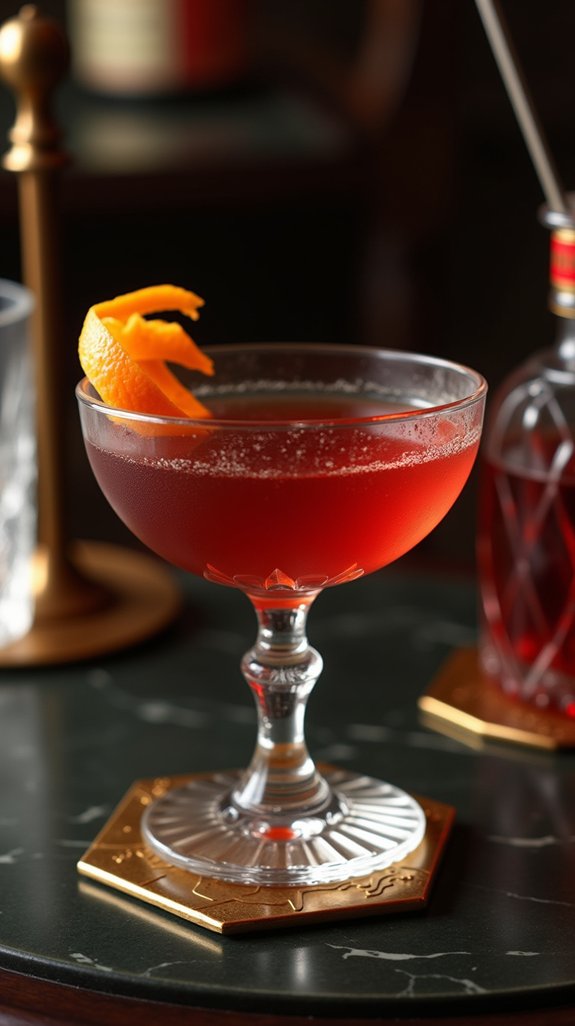
The Boulevardier emerged in the 1920s as a sophisticated sibling to the Negroni, born in the glamorous expatriate bars of Paris where American writers and artists congregated during Prohibition. Created at Harry’s New York Bar by bartender Harry McElhone for Erskine Gwynne, a wealthy American expat who published a monthly magazine called “The Boulevardier,” the cocktail perfectly captured the spirit of Americans abroad seeking the pleasures denied them at home.
While the Negroni used gin as its base, the Boulevardier substituted whiskey—typically bourbon or rye—creating a richer, more robust drinking experience that appealed to those who found the botanical brightness of gin too delicate for their tastes. The drink became a favorite among the Lost Generation writers and artists who made Paris their home, representing the bittersweet complexity of their expatriate existence.
The Boulevardier’s combination of American whiskey with Italian vermouth and Campari created a transatlantic alliance in a glass, bridging the Old World and the New in a way that resonated deeply with the cosmopolitan sensibilities of the Jazz Age. Its deep amber-red hue and bold, bittersweet flavor profile made it an ideal aperitif for the elaborate dinners and salon gatherings that characterized 1920s Parisian cafe society.
Unlike the lighter, fizzy cocktails that dominated American speakeasies, the Boulevardier was a contemplative drink, meant to be sipped slowly while engaging in spirited conversation about art, literature, and politics. The cocktail fell into relative obscurity after World War II but experienced a remarkable renaissance in the early 21st century, becoming a darling of the craft cocktail movement and reclaiming its place as a classic of the Prohibition era.
Ingredients
- 1 1/4 oz bourbon or rye whiskey
- 1 oz Campari
- 1 oz sweet vermouth
- Ice
- Orange peel for garnish
Instructions
Add the bourbon or rye whiskey, Campari, and sweet vermouth to a mixing glass filled with ice. Stir with a bar spoon for 20-30 seconds until the mixture is well-chilled and properly diluted, being careful not to over-stir as this can make the drink watery. Strain into a chilled coupe glass or over a large ice cube in an old fashioned glass, depending on preference.
Express the oils from an orange peel over the surface of the drink by holding it over the glass and giving it a firm twist, then either drop the peel into the drink or run it around the rim before discarding.
The choice between bourbon and rye whiskey greatly impacts the final cocktail, with bourbon providing a sweeter, rounder profile while rye offers spicier, drier notes that play more assertively against the Campari’s bitterness. The ratio of ingredients can be adjusted to personal taste, with some preferring equal parts of all three ingredients for a more bitter, spirit-forward drink, while the classic 1920s proportions favor slightly more whiskey to balance the intensity.
Quality matters enormously in a three-ingredient cocktail like this, so invest in good vermouth and keep it refrigerated after opening, as oxidized vermouth will ruin the drink’s delicate balance. For a more authentic 1920s experience, serve the Boulevardier up in a coupe glass, though the modern preference for serving it over a single large ice cube in a rocks glass allows the flavors to evolve as the drink slowly dilutes.
Whiskey Sour
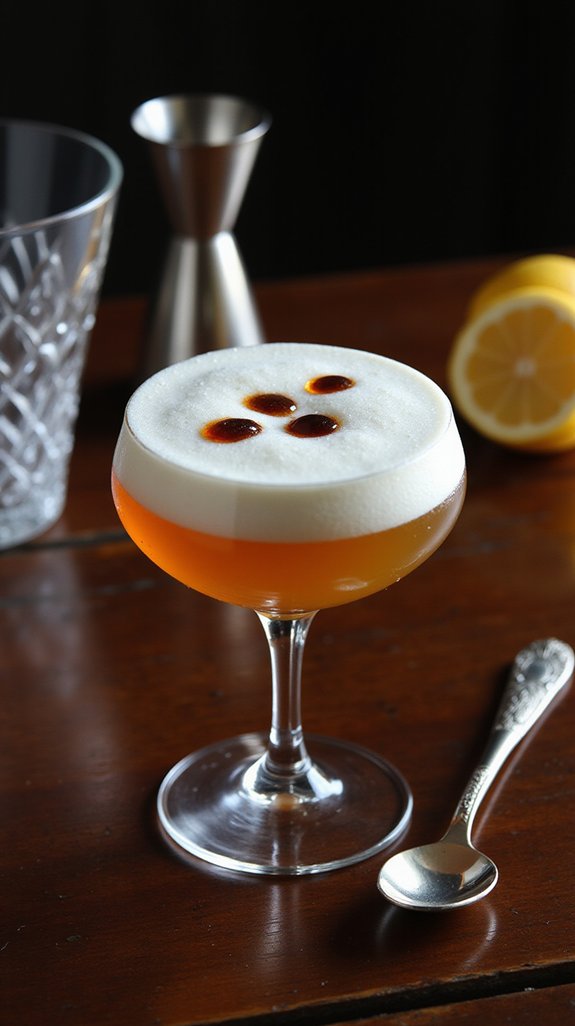
The Whiskey Sour stands as one of the most enduring cocktails of the 1920s, though its origins stretch back to the 1870s when it was first documented in print. During Prohibition, the cocktail took on new significance as bootleggers and home distillers produced whiskey of wildly inconsistent quality, and the addition of fresh lemon juice and sugar helped mask the harsh edges of inferior spirits while enhancing the flavor of better ones.
The drink became a staple in speakeasies across America, where its bright, tangy profile offered a revitalizing alternative to the heavier, spirit-forward cocktails of the era. The classic preparation called for bourbon or rye whiskey balanced with fresh lemon juice and simple syrup, often topped with a frothy egg white that added a luxurious texture and velvety mouthfeel that elevated the drink from simple refreshment to sophisticated indulgence.
The Whiskey Sour’s appeal during the Jazz Age lay in its perfect balance of sweet, sour, and strong—a trinity that bartenders of the era understood was essential to a well-crafted cocktail. The egg white, while optional, became increasingly popular in upscale establishments during the 1920s, creating a dramatic presentation with its creamy foam cap that could be garnished with aromatic bitters in decorative patterns.
This cocktail represented the democratic spirit of American drinking culture, equally at home in a working-class saloon or an exclusive private club, adaptable enough to showcase premium whiskey yet forgiving enough to make rotgut palatable. Its straightforward preparation made it accessible to home bartenders maneuvering the challenges of Prohibition, while its potential for refinement kept professional bartenders engaged in perfecting the technique.
Ingredients
- 2 oz bourbon or rye whiskey
- 3/4 oz fresh lemon juice
- 1/2 oz simple syrup
- 1 egg white (optional)
- Ice
- Angostura bitters for garnish (optional)
- Maraschino cherry and orange slice for garnish (optional)
Instructions
Add the whiskey, fresh lemon juice, simple syrup, and egg white (if using) to a cocktail shaker without ice and shake vigorously for 10-15 seconds to emulsify the egg white in a technique known as a dry shake.
Add ice to the shaker and shake again vigorously for another 15-20 seconds until the mixture is well-chilled and the shaker becomes frosty to the touch. Strain into a chilled rocks glass over fresh ice or straight up into a chilled coupe glass. If using egg white, the drink should have a thick, foamy cap on top that can be decorated with a few drops of Angostura bitters dragged into patterns with a cocktail pick.
Garnish with a maraschino cherry and orange slice if desired, though purists often prefer the clean presentation of the foam alone.
The key to an exceptional Whiskey Sour lies in using fresh-squeezed lemon juice rather than bottled, as the bright, vibrant acidity can’t be replicated with preserved citrus, and in adjusting the simple syrup to taste based on the whiskey’s sweetness and the lemon’s tartness.
The egg white should be as fresh as possible for food safety and ideal foam formation, and those concerned about consuming raw eggs can use pasteurized egg whites or aquafaba as a substitute, though the texture will differ slightly.
When performing the dry shake, shake with genuine vigor to create the silky emulsion that defines a properly executed Whiskey Sour, and make certain the glassware is thoroughly chilled to maintain the drink’s temperature and prevent premature dilution.
Clover Club
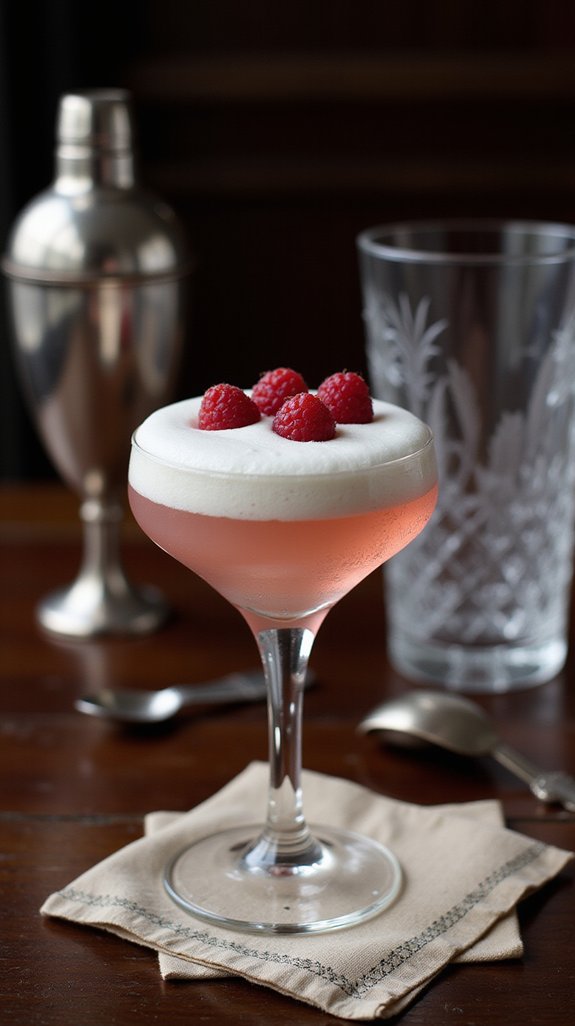
The Clover Club emerged from Philadelphia‘s gentlemen’s club of the same name, where lawyers, writers, and captains of industry gathered in the pre-Prohibition era before the cocktail reached its zenith of popularity during the 1920s. This elegant pink-hued cocktail represented the sophisticated end of the speakeasy spectrum, far removed from the rough-and-tumble gin joints where bathtub spirits were served in teacups. The drink’s distinctive rosy color came from raspberry syrup, while gin provided the backbone, lemon juice added brightness, and egg white created that signature frothy crown that became the hallmark of refined cocktail culture during the Jazz Age.
Despite its origins in an exclusively male social club, the Clover Club paradoxically became associated with feminine tastes due to its fruity profile and delicate appearance, though serious bartenders recognized it as a masterfully balanced sour that demanded precise technique and quality ingredients.
The cocktail’s resurgence in modern craft cocktail bars has restored its reputation as a serious drink that showcases the bartender’s skill in achieving the perfect balance between gin’s botanical complexity, raspberry’s subtle sweetness, and lemon’s acidic punch. During the 1920s, the Clover Club served as a canvas for experimentation as bartenders adapted recipes to work with whatever gin they could source, from quality London Dry imported through elaborate smuggling operations to locally produced bathtub varieties that required the raspberry syrup’s masking properties.
The egg white component remained non-negotiable in upscale establishments, as the luxurious foam demonstrated both the bartender’s technique and the establishment’s commitment to proper cocktail craft, elevating this drink above simple mixed refreshments into the domain of liquid artistry that defined the golden age of American cocktail culture.
Ingredients
- 2 oz gin
- 3/4 oz fresh lemon juice
- 1/2 oz raspberry syrup
- 1 egg white
- Ice
- Fresh raspberries for garnish (optional)
Instructions
Add the gin, fresh lemon juice, raspberry syrup, and egg white to a cocktail shaker without ice and perform a dry shake for 10-15 seconds to properly emulsify the egg white and create the foundation for a stable foam.
Add ice to the shaker and shake vigorously for another 15-20 seconds until the mixture is thoroughly chilled and the metal shaker feels cold in your hands.
Double strain through a fine-mesh strainer into a chilled coupe glass to remove any ice chips or egg white fragments, allowing the smooth pink foam to rise to the top and create the drink’s signature cloud-like appearance that made it a visual centerpiece in speakeasies across America.
Tips
The quality of raspberry syrup greatly impacts the final cocktail, and period-appropriate recipes often called for homemade syrup made by gently heating fresh or frozen raspberries with equal parts sugar and water, then straining out the solids for a pure, vibrant syrup superior to commercial grenadine substitutes.
The dry shake technique is absolutely essential for achieving the proper foam structure, and some bartenders add a spring from a Hawthorne strainer to the shaker during the dry shake to help whip the egg white more effectively.
Fresh egg whites work best, though pasteurized egg whites from a carton can be substituted for safety, and the drink should be consumed relatively quickly before the foam begins to dissipate, typically within five to ten minutes of preparation.
Corpse Reviver No. 2
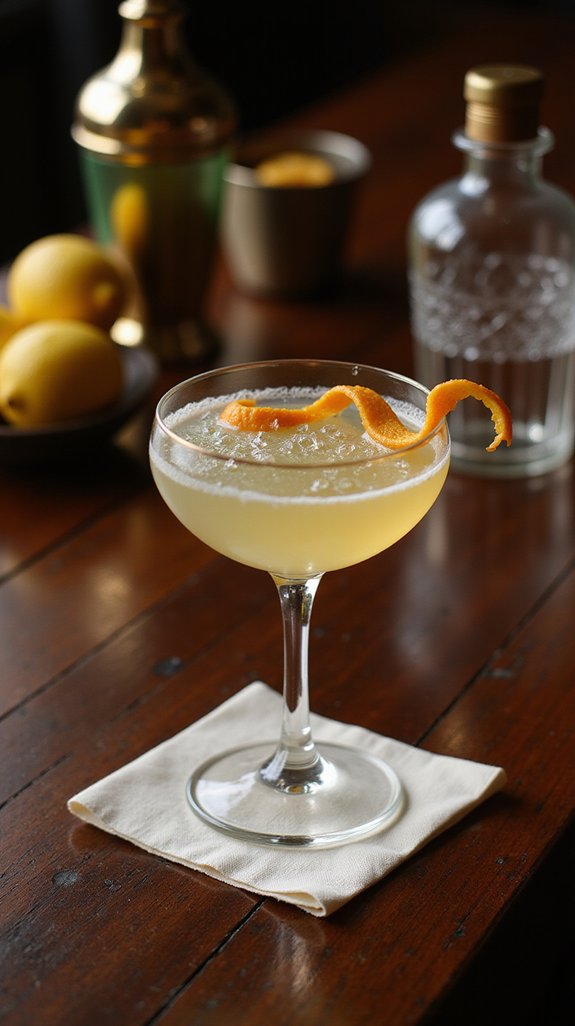
The Corpse Reviver No. 2 stands as one of the most notorious hangover remedies to emerge from the 1920s cocktail canon, originally conceived as a morning-after restorative “to be taken before 11 a.m., or whenever steam and energy are needed.” This legendary cocktail appeared in Harry Craddock‘s seminal 1930 Savoy Cocktail Book with the ominous warning that “four of these taken in swift succession will unrevive the corpse again,” establishing its reputation as both medicinal tonic and potent libation.
The drink’s complex composition of gin, Cointreau, Lillet Blanc, lemon juice, and a whisper of absinthe created a sophisticated balance that appealed to the discerning drinker who sought something more nuanced than the sweet, fruit-forward concoctions that dominated speakeasy menus. Unlike its lesser-known predecessor, the Corpse Reviver No. 1, which relied on brandy and apple brandy, the No. 2 variation achieved far greater popularity and endured as a staple of serious cocktail culture throughout the decades.
During Prohibition, the Corpse Reviver No. 2’s multiple spirit components made it both a challenge and an opportunity for enterprising bartenders who’d to navigate the uncertain landscape of bootlegged and smuggled liquors. The absinthe rinse, originally meant to provide a subtle anise undertone, often became more pronounced when bartenders substituted various pastis or anise-flavored spirits that found their way through underground channels.
The cocktail’s equal-parts formula—unusual for the era when base spirits typically dominated—created a harmonious blend where no single ingredient overpowered the others, resulting in a crisp, herbal, and citrus-forward drink that genuinely seemed capable of reviving even the most weathered reveler. This balanced approach reflected the sophistication of 1920s cocktail culture at its peak, where skilled bartenders demonstrated their artistry not through elaborate garnishes or showmanship, but through precise measurements and an understanding of how complementary flavors could create something greater than the sum of their parts.
Ingredients
- 3/4 oz gin
- 3/4 oz Cointreau
- 3/4 oz Lillet Blanc
- 3/4 oz fresh lemon juice
- Absinthe (for rinse)
- Ice
- Orange peel for garnish
Instructions
Rinse a chilled coupe glass with absinthe by pouring a small amount into the glass, swirling to coat the interior, then discarding the excess liquid. Add the gin, Cointreau, Lillet Blanc, and fresh lemon juice to a cocktail shaker filled with ice and shake vigorously for 15-20 seconds until the mixture is thoroughly chilled and properly diluted.
Double strain the cocktail into the prepared absinthe-rinsed coupe glass and express the oils from an orange peel over the surface of the drink before either placing it on the rim as garnish or dropping it into the cocktail.
Tips
The absinthe rinse requires a delicate touch—too much will overpower the drink’s careful balance, transforming it into an anise bomb rather than a subtle, complex cocktail. Modern bartenders often substitute Cocchi Americano for Lillet Blanc to more closely approximate the original flavor profile, as Lillet’s formula changed in the 1980s and lost much of its quinine bitterness that characterized the 1920s version.
Ascertain all ingredients are properly chilled before mixing, as this equal-parts cocktail relies on precise dilution from shaking with ice to achieve the proper texture and temperature without becoming watered down.
Frequently Asked Questions
What Spirits Were Most Commonly Bootlegged During Prohibition?
You’d find whiskey accounted for nearly 60% of bootlegged spirits during Prohibition. Rum came second, followed by gin. You could easily disguise these spirits in cocktails, making them the bootleggers’ favorites for their profitability and demand.
How Did Speakeasies Avoid Detection by Law Enforcement?
Speakeasies avoided detection by using hidden entrances, requiring passwords, posting lookouts, bribing police officers, and disguising themselves as legitimate businesses. You’d find them behind barbershops, in basements, or through unmarked doors to evade authorities.
Were Women Allowed to Drink in Speakeasies During the 1920S?
Yes, you’d find women drinking freely in speakeasies during the 1920s. Unlike pre-Prohibition saloons that excluded women, speakeasies welcomed everyone. You could’ve seen flappers mixing with men, dancing, and enjoying cocktails in these underground establishments.
What Ingredients Were Used to Mask the Taste of Bathtub Gin?
You’d mask bathtub gin’s harsh bite with sweet fruit juices, honey, and citrus while modern craft cocktails celebrate pure spirits. Mixers like ginger ale, grenadine, and fresh lemon juice transformed rotgut into palatable drinks during Prohibition.
How Much Did Cocktails Typically Cost in Prohibition-Era Speakeasies?
You’d typically pay between 15 cents to $1 for a cocktail in a speakeasy, though prices varied widely based on the establishment’s quality and location. Upscale venues charged more for better-quality drinks.