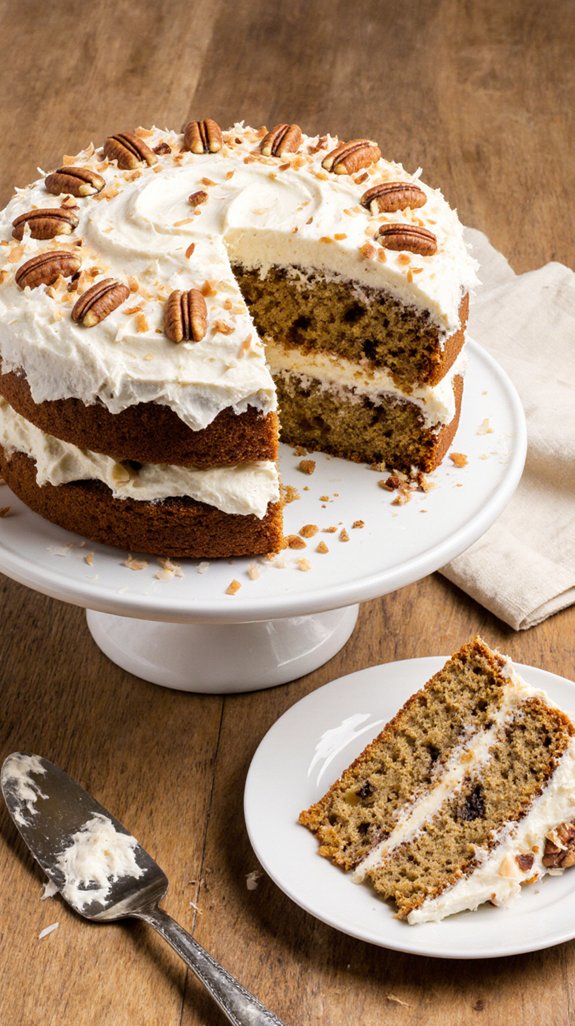

I’m going to show you how to make a German chocolate cake that’ll become your go-to recipe for every celebration. This isn’t just another chocolate dessert—it’s a three-layer masterpiece with that signature coconut-pecan frosting that makes people ask for seconds. The combination of moist chocolate cake and rich, caramel-like topping creates something truly special, and I promise the process is more straightforward than you’d expect.
Why You`ll Love this German Chocolate Cake

Because this cake strikes the perfect balance between impressive and approachable, you’ll find yourself making it again and again for special occasions.
The cake history behind this American classic adds a wonderful conversation starter to any gathering, and I love sharing how Samuel German’s sweet chocolate became the foundation for such an iconic dessert.
What really sets this recipe apart are the frosting techniques that create that signature caramel-like texture. You’ll cook the coconut pecan mixture on the stovetop until it reaches the perfect consistency, thick enough to cling beautifully to each layer but smooth enough to spread easily.
The traditional presentation, with those gorgeous cake layers exposed on the sides, makes it look bakery-worthy without requiring advanced decorating skills.
Shop Related Products


Eight 15 oz cans of Duncan Hines Creamy Coconut Pecan Frosting

Gluten-free formula suitable for those with gluten sensitivities
What ingredients are in this German Chocolate Cake?

The ingredients for this German chocolate cake are divided into two parts: the cake itself and the distinctive coconut pecan frosting. The cake uses sweet baking chocolate as its foundation, which gives it that characteristic mild chocolate flavor rather than the intense cocoa taste of other chocolate cakes. Combined with buttermilk for tenderness and separated eggs for a light texture, these ingredients create the perfect base for the rich frosting.
The frosting ingredients center around a cooked custard-like mixture that transforms into that famous caramel-colored, nutty topping.
For the Cake:
- 4 ounces sweet baking chocolate
- ½ cup boiling water
- 1 cup unsalted butter, softened
- 2 cups granulated sugar
- 4 large eggs, separated
- 2½ cups all-purpose flour
- 1 teaspoon baking soda
- ½ teaspoon salt
- 1 cup buttermilk
- 1 teaspoon vanilla extract
For the Coconut Pecan Frosting:
- 1 cup evaporated milk
- 1 cup granulated sugar
- 3 large egg yolks
- ½ cup unsalted butter
- 1 teaspoon vanilla extract
- 1⅓ cups sweetened shredded coconut
- 1 cup chopped pecans
The sweet baking chocolate is vital to achieving the authentic flavor of German chocolate cake, though you can substitute with 3 ounces of semisweet chocolate plus 1 tablespoon of sugar if needed.
Make sure to use buttermilk rather than regular milk, as its acidity reacts with the baking soda to create the cake’s tender crumb and signature reddish-brown color.
For the frosting, evaporated milk is essential because its concentrated nature helps create the proper thick, spreadable consistency when cooked with the egg yolks and sugar. The coconut should be sweetened and shredded rather than flaked, and the pecans should be chopped into relatively small pieces so they distribute evenly throughout the frosting.
How to make this German Chocolate Cake

Making this German chocolate cake requires some attention to detail, but the steps themselves are quite manageable. Start by preheating your oven to 350°F and preparing three 9-inch round cake pans by greasing and flouring them, then lining the bottoms with parchment paper.
Begin the batter by chopping 4 ounces of sweet baking chocolate and placing it in a small bowl, then pour ½ cup of boiling water over it and stir until it’s completely melted and smooth. Set this aside to cool while you work on the rest.
In a large bowl, cream together 1 cup of softened butter and 2 cups of sugar until the mixture is light and fluffy, which should take about 3-4 minutes. Add the 4 egg yolks one at a time, beating well after each addition, then stir in the cooled chocolate mixture and 1 teaspoon of vanilla extract.
In a separate bowl, whisk together 2½ cups of flour, 1 teaspoon of baking soda, and ½ teaspoon of salt. Add these dry ingredients to your butter mixture alternately with 1 cup of buttermilk, starting and ending with the flour mixture, and mix just until everything is combined.
Here’s where the magic happens: beat the 4 egg whites in a clean bowl with clean beaters until stiff peaks form, then gently fold them into the batter in two additions until no white streaks remain. This step gives the cake its characteristic tender, fine-grained texture, so don’t rush through it.
Divide the batter evenly among your three prepared pans and bake for 25-30 minutes, or until a toothpick inserted in the center comes out clean. Let the cakes cool in their pans for 10 minutes before turning them out onto wire racks to cool completely.
While the cakes are cooling, you’ll make the coconut pecan frosting, which is really what sets this cake apart. In a medium saucepan, combine 1 cup of evaporated milk, 1 cup of sugar, 3 egg yolks, and ½ cup of butter. Cook this mixture over medium heat, stirring constantly to prevent scorching, until it thickens and turns a beautiful golden brown color, which takes about 12-15 minutes.
You’ll know it’s ready when it coats the back of a spoon. Remove the pan from the heat and stir in 1 teaspoon of vanilla, 1⅓ cups of sweetened shredded coconut, and 1 cup of chopped pecans. Let the frosting cool until it reaches a spreadable consistency, stirring it occasionally, which usually takes about 30-45 minutes.
To assemble your cake, place one layer on a serving plate and spread about one-third of the frosting on top. Add the second layer and another third of the frosting, then finish with the final layer and the remaining frosting.
Following the traditional style, leave the sides of the cake unfrosted so everyone can see those gorgeous layers. The frosting will set up nicely as it cools completely, and the cake actually tastes even better the next day after the flavors have had time to meld together.
Just remember that this frosting should be watched carefully while cooking, as it can go from perfect to scorched quickly, and the consistency should be thick but still spreadable when warm. Investing in premium cookware sets can make temperature control much easier when preparing delicate frostings like this one.
Shop Related Products

Quality Baking Essential: The Wilton Aluminum Bakeware set is made without PFAS and with a high-quality aluminum construction for even heat distribution; the pans measure 9 inches in diameter and 2 inches deep
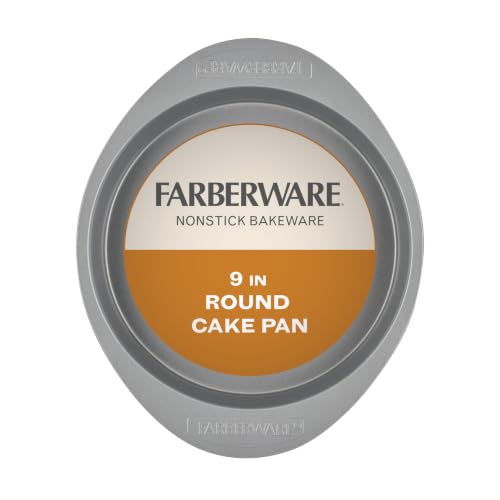
A BAKING DISH MADE TO LAST: Farberware Nonstick Bakeware 9-Inch Round Cake Pan features heavy-duty construction that resists warping and heats evenly to brown beautifully and help reduce hot spots

Healthy Stainless Steel Material: Fcgbdbz round cake pans are made of pure stainless steel without toxic material, shiny and of decent weight, not worry about harmful chemicals leaching into food. Unlike aluminum pans and carbon steel baking pans with Teflon coating which are thin and lightweight, these stainless steel pans are healthy for your daily baking use. Oven safe up to 500°F for versatile baking needs.
German Chocolate Cake Substitutions and Variations

While you can absolutely follow the traditional recipe exactly as written, I want you to know that there’s plenty of room to adapt this cake to what you have on hand or what your preferences might be.
For substitutions tips, you can swap the buttermilk with regular milk mixed with a tablespoon of lemon juice, or use sour cream thinned with a bit of milk.
If you’re exploring flavor variations, try adding a teaspoon of espresso powder to deepen the chocolate flavor, or mix in some bourbon to the frosting for a grown-up twist.
You can also toast the pecans before adding them to the frosting for extra nuttiness, or substitute walnuts if that’s what you prefer.
What to serve with this German Chocolate Cake

Since German chocolate cake is already quite rich and sweet on its own, I’d recommend keeping your accompaniments simple and letting the cake take center stage.
For cake pairings, vanilla ice cream makes an excellent choice because its cool, creamy texture contrasts beautifully with the warm, nutty frosting. Fresh whipped cream also works well if you want something lighter.
When it comes to beverage options, I find that strong black coffee or espresso cuts through the sweetness perfectly, while cold milk offers a classic, comforting pairing.
For special occasions, you might serve it with a dessert wine like Madeira or a smooth Irish coffee. Hot tea, particularly Earl Grey or chai, provides another sophisticated option that complements the coconut and pecan flavors nicely.
Final Thoughts
This cake represents everything I love about classic American baking—it’s straightforward, forgiving, and delivers incredible results that’ll make you look like a professional baker even if you’re just starting out.
I hope the baking tips I’ve shared help you achieve that perfect tender crumb, and the frosting techniques guarantee your coconut pecan topping sets up beautifully.
Don’t be intimidated by the multiple components or the stovetop frosting—once you master the rhythm of folding in those egg whites and stirring the custard-like frosting, you’ll find yourself making this cake for every special occasion.
Trust the process, take your time with each step, and you’ll create something truly memorable that honors this beloved American classic.
Frequently Asked Questions
Why Is It Called German Chocolate Cake if It’s American?
I’ll clarify this historical misconception: the cake’s named after Samuel German, who created sweet baking chocolate in 1852, not the country. This cake origin story surprises many people who assume it’s from Germany.
Can I Frost the Sides of the Cake Instead of Leaving Them Bare?
You can frost the sides, though traditional cake presentation leaves them bare to showcase the layers. I’d suggest making 1.5 times the frosting recipe if you want full coverage, as frosting techniques require more for complete sides.
How Do I Prevent the Frosting From Sliding off the Cake?
I guarantee proper frosting consistency by cooling it until spreadable but not runny, about 30-45 minutes. For cake layering, I let layers cool completely so the frosting sets properly without sliding off.
Can This Cake Be Made as a Sheet Cake Instead of Layers?
Yes, I can adapt this recipe for sheet cake variations. Pour the batter into a greased 9×13-inch pan and adjust the baking time to 35-40 minutes, then spread all the frosting on top.
Does German Chocolate Cake Need to Be Refrigerated Overnight?
No, I don’t recommend refrigerating overnight since it affects frosting texture. For ideal cake storage, keep it covered at room temperature up to two days—it actually tastes better the next day after flavors meld.