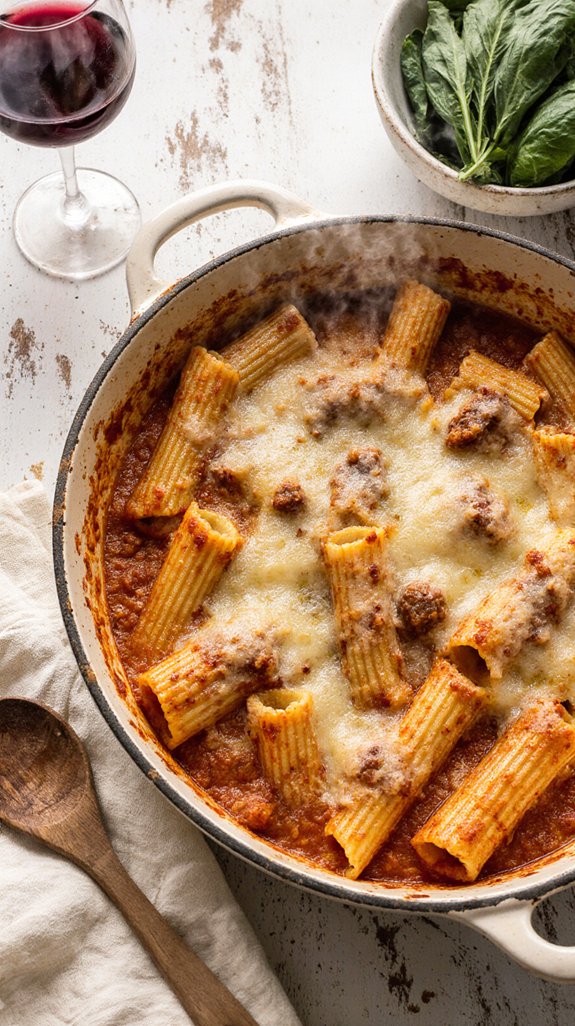
I’ll never forget the first time I tasted this dish at my nonna’s table, watching her toss rigatoni with chunks of browned sausage while steam rose from the pot. The key to getting it right, I’ve learned, is browning that sausage until it’s almost crispy, building layers of flavor that store-bought sauce simply can’t match. What makes this recipe special isn’t just nostalgia, though that helps.
Why You`ll Love this Hearty Italian Rigatoni with Sausage

Every bite of this rigatoni delivers exactly what you want on a chilly evening, with its rich, meaty sauce clinging to those thick pasta tubes in a way that makes you forget about whatever stress the day brought.
The flavor profiles here work together like old friends, with the garlic and wine brightening the tomatoes while the sausage adds depth that keeps you reaching for another forkful.
I love how forgiving the cooking techniques are, too. You’re not juggling fifteen pans or worrying about split sauces. Just brown the meat, simmer everything low and slow, then finish it in the oven with a generous blanket of pecorino that gets all bubbly and golden.
It’s rustic Italian comfort without the fuss.
What ingredients are in Hearty Italian Rigatoni with Sausage?
The beauty of this dish lies in its simplicity—you need just a handful of quality ingredients to create something that tastes like it’s been simmering in a Roman trattoria all afternoon. Each component plays a specific role, from the fatty richness of the sausage to the sharpness of the cheese that pulls everything together in the final bake.
Ingredients:
- 500 g Italian pork sausage
- 2 garlic cloves
- 2 tablespoons olive oil
- 1/8 liter white wine
- Salt
- Fresh ground black pepper
- 1 1/2 liters pureed tomatoes
- 3-4 leaves fresh basil
- 500 g rigatoni pasta
- 1/4 liter freshly grated pecorino cheese
When shopping for this recipe, seek out Italian pork sausage with good fat content—the rendered fat becomes part of your sauce base and carries flavor throughout the dish. The pecorino should be grated fresh rather than bought pre-shredded, as it melts better and has a sharper, more authentic taste. Don’t skimp on the tomatoes either; quality pureed tomatoes make all the difference in a sauce that simmers for over an hour. The white wine doesn’t need to be expensive, but it should be something you’d actually drink—cooking wine won’t give you the bright acidity this sauce needs.
How to make this Hearty Italian Rigatoni with Sausage

The first step is preparing your sausage—remove the casings from 500 g of Italian pork sausage and finely chop the meat into small pieces.
Heat 2 tablespoons of olive oil in a large pan over medium heat, then add the chopped sausage along with 2 garlic cloves. You want to fry this mixture until the garlic becomes soft and fragrant, letting the sausage break down and release its flavorful fat into the oil.
Once the sausage is nicely browned, pour in 1/8 liter of white wine and let it bubble away completely—this step is important because you want the wine to reduce entirely, leaving behind just its concentrated flavor without any harsh alcohol notes.
After the wine has evaporated, stir in 1 1/2 liters of pureed tomatoes, then season with salt and fresh ground black pepper to taste. This sauce needs time to develop, so let it simmer gently for 75 to 90 minutes, allowing the flavors to meld together into something rich and complex.
While your sauce is in its final stages of simmering, cook 500 g of rigatoni pasta until it’s al dente—you want it slightly firm because it will continue cooking in the oven.
Drain the pasta and mix it thoroughly with your finished sauce in an ovenproof dish, making sure every piece of rigatoni gets coated.
Sprinkle 1/4 liter of freshly grated pecorino cheese generously over the top, then slide the whole dish into an oven preheated to 200 degrees Celsius for 10 to 15 minutes.
This final bake creates a golden, slightly crispy top layer while melting the cheese into all the nooks and crannies of the pasta.
When it comes out bubbling and beautiful, serve it alongside a fresh arugula salad and pour yourself a nice glass of red wine—this is comfort food at its finest. For even better results, consider using an Italian cookware set with quality heavy-bottomed pans that distribute heat evenly throughout the cooking process.
Shop Related Products

7x11 INCH: Includes (1) 7x11x2.75 inch glass baking dish with BPA-free plastic lid. This deep baking dish is essential to have in any kitchen as they are versatile in use from prepping to baking and storing.

Meet Your Daily Needs: DOWAN larger and deeper ceramic baking dish measures 15.6"L x 9.3"W x 3.1" H (including handle size)-135 OZ, sized perfectly for cooking lasagna, casseroles, chicken, roast, bread, pasta, beef, and more. Whether you're cooking a family dinner or serving food, this versatile casserole dish has got you covered.

Strong, borosilicate glass construction for freezer to oven use Withstands extreme temperature changes without the risk of cracking or shattering
Hearty Italian Rigatoni with Sausage Substitutions and Variations
While this recipe stands beautifully on its own, I’ve learned over the years that Italian cooking thrives on flexibility, and there’s no reason you can’t adapt this rigatoni to match whatever you’ve got in your kitchen or whatever your taste buds are craving.
For substitutions options, swap Italian sausage for ground beef, turkey, or even crumbled bacon when that’s what’s available. Pecorino can easily become Parmesan, and if white wine isn’t in your pantry, red works just fine too.
As for variations ideas, I sometimes throw in red pepper flakes for heat, or stir in fresh spinach during the last few minutes of simmering.
Mushrooms add earthiness, while a splash of cream creates a richer sauce that my kids absolutely devour.
Shop Related Products

Authentic Italian Pasta: De Cecco Rigatoni No. 24 is a traditional Italian pasta with wide, ridged tubes and a sturdy shape designed to capture and hold thick, rich sauces in every bite

VERSATILE PAIRING - The ample, ridged tubes of Rigatoni, allows the sauce to cling to the ridges and enhance the overall flavor, making it versatile in various dishes

3 - 16 oz boxes of Barilla, Mezzi Rigatoni Pasta
What to serve with Hearty Italian Rigatoni with Sausage

Since this rigatoni is already packed with sausage, tomatoes, and cheese, I’ve found that lighter, fresher side dishes work best to balance out all that richness.
The recipe suggests arugula salad, which I always dress simply with lemon juice and olive oil to cut through the pasta’s heaviness. A crisp green salad with a tangy vinaigrette works beautifully too.
For wine pairings, I reach for medium-bodied reds like Chianti or Sangiovese, which complement the tomato sauce without overwhelming it. If you prefer white, a crisp Pinot Grigio provides nice contrast.
Garlic bread feels redundant here since the dish is already quite filling, but some crusty Italian bread for soaking up extra sauce never hurts.
Final Thoughts
After making this rigatoni dozens of times over the years, I’ve come to think of it as one of those recipes that looks fancy but actually forgives just about every mistake you might make along the way.
The cooking techniques aren’t complicated, just patient simmering that lets the sausage meld with those tomatoes.
I’ve burned the garlic, oversalted the sauce, and once forgot about it entirely until the pot was nearly dry, yet it still turned out delicious.
The flavor profiles are bold enough to withstand my kitchen chaos, which says something about Italian cooking in general.
Whether you nail every step or fumble through like I sometimes do, you’ll end up with something worth sharing around your table.
Frequently Asked Questions
Can I Make This Rigatoni Dish Ahead of Time and Reheat It?
Yes, I’ll recommend this dish for meal prep since it reheats beautifully. You can assemble it completely, then refrigerate for up to two days before baking. This technique works well with most pasta variations too.
How Should I Store Leftover Rigatoni With Sausage?
I’ll store your leftover rigatoni in an airtight container in the refrigerator for up to three days. These storing tips help maintain sausage freshness and flavor. Make sure it’s completely cooled before refrigerating to prevent condensation.
Can I Freeze This Baked Rigatoni Dish?
Yes, I’d recommend freezing this baked rigatoni before the final oven step. Use airtight storage containers, leaving space for expansion. Here’s my freezing tip: thaw overnight in the refrigerator before baking.
What’s the Best Way to Reheat This Pasta Dish?
I’d recommend stovetop reheating for best results. Add a splash of water or broth to prevent drying, then cover and warm over medium-low heat. The microwave method works too, but stir frequently to heat evenly.
How Long Will This Rigatoni Keep in the Refrigerator?
I’d store this rigatoni in an airtight container for 3-4 days in the refrigerator. For best shelf life, keep the sauce and pasta separate if possible. These storage tips help maintain the dish’s quality and texture.