I’ll never forget the first time I sliced into a roasted beet lasagna at my aunt’s farmhouse, watching those deep crimson layers reveal themselves like edible jewels. She’d transformed something as humble as root vegetables into pure comfort food, and I’ve been chasing that memory ever since. This isn’t your traditional lasagna, but trust me, once you understand how those earthy beets play with a silky herbed béchamel, you’ll see why it’s worth making.
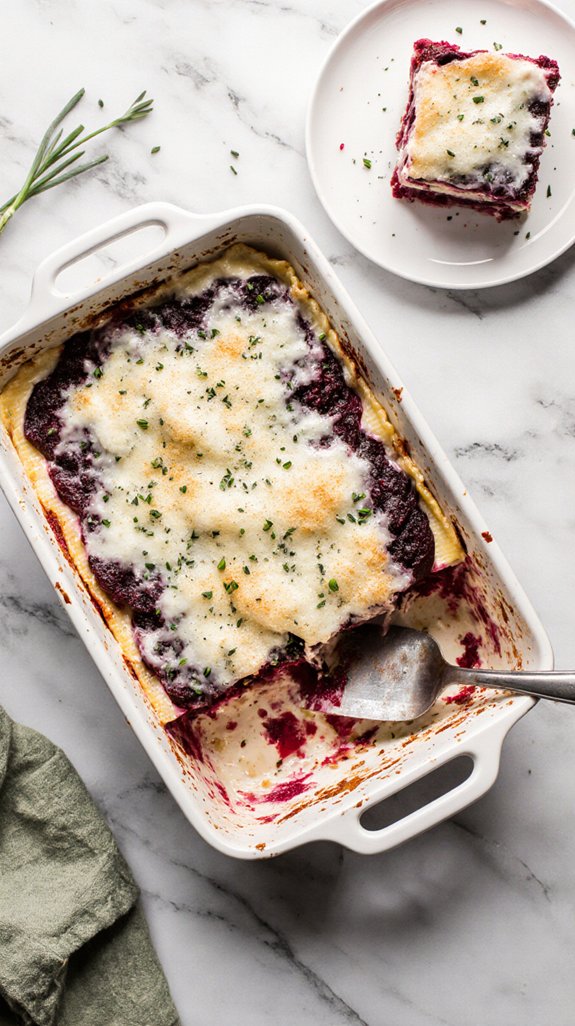
Roasted Beet Lasagna Recipe With Herbed Béchamel
Ingredients
Method
- Preheat the oven to 425°F and cut the greens from the beets, leaving about ¼ inch of stem attached, then scrub them clean.
- Place the beets in a baking dish with ¼ inch of water, cover tightly, and roast for 40 to 45 minutes until tender.
- Allow the beets to cool, trim the ends, slip off the skins, and slice them crosswise into ¼-inch-thick rounds.
- Heat the olive oil in a heavy saucepan over medium heat and cook the minced shallots for about 3 minutes until softened.
- Stir in the sifted flour and cook for 3 minutes until smooth and bubbly without browning.
- Whisk in the skim milk and half-and-half, bring to a simmer, and cook while whisking until thickened.
- Reduce the heat to very low and simmer for 10 to 15 minutes, stirring often, until the sauce no longer tastes of raw flour.
- Season the sauce with salt, pepper, and nutmeg, then strain while hot and stir in the chopped chives or parsley and ¼ cup Parmesan.
- Reduce the oven temperature to 350°F and oil a rectangular baking dish.
- Spread a small amount of béchamel in the dish and layer with lasagna noodles.
- Add a thin layer of béchamel, a layer of beet slices, dots of ricotta, and a sprinkle of Parmesan.
- Repeat the layers, ending with noodles topped with béchamel and Parmesan, ensuring all noodles are well coated.
- Cover tightly with foil and bake for 40 minutes until bubbling and the noodles are tender.
- Uncover and bake an additional 5 to 10 minutes if a lightly browned top is desired.
- Let the lasagna rest for 5 minutes before slicing and serving.
Why You`ll Love this Roasted Beet Lasagna with Herbed Béchamel
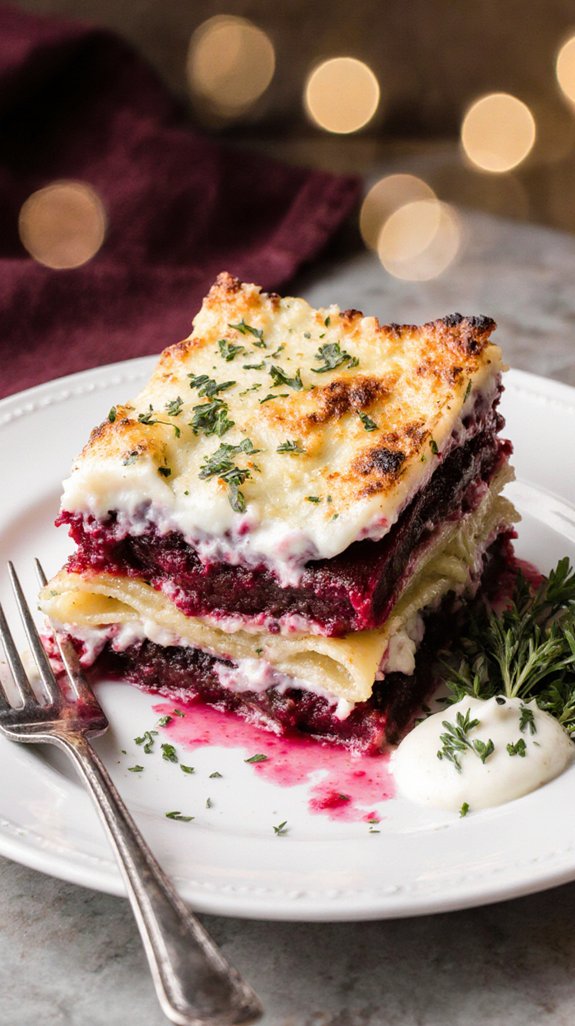
While traditional lasagna holds a special place in my heart, this roasted beet version offers something entirely different, something that feels both elegant and deeply satisfying.
The nutritional benefits alone make it worth trying—beets pack vitamins, minerals, and antioxidants you won’t find in typical meat sauce.
But honestly, I make this because the flavor profile captivates me every single time. The earthy sweetness of roasted beets plays beautifully against the creamy, herb-flecked béchamel, creating layers that taste sophisticated without being fussy.
The shallots add a gentle allium bite, while fresh herbs brighten everything up.
And since we’re using no-boil noodles and lighter cheeses, you won’t feel weighed down afterward.
It’s the kind of dish that impresses dinner guests but doesn’t stress you out.
What ingredients are in Roasted Beet Lasagna with Herbed Béchamel?
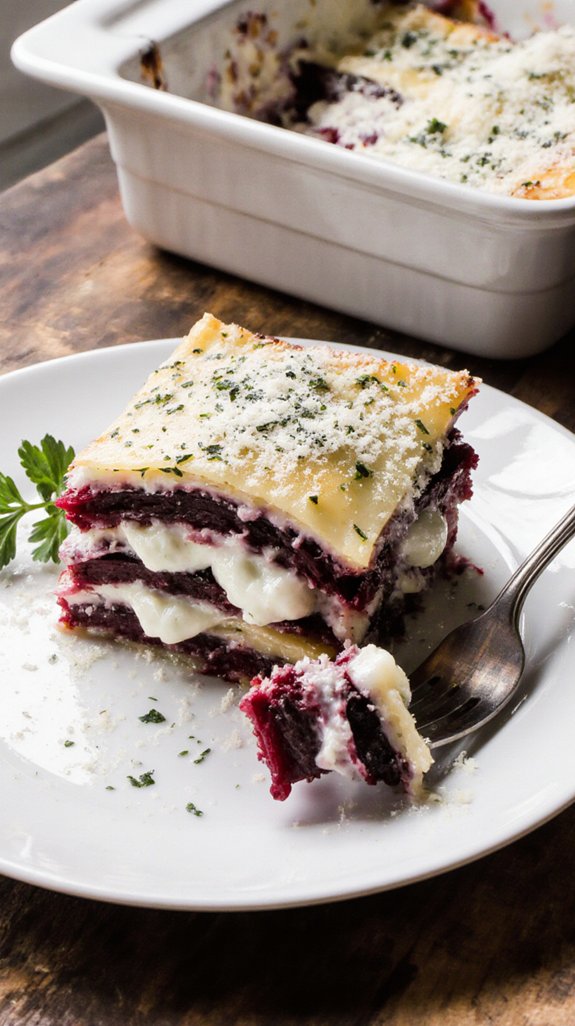
Gathering your ingredients before you begin makes this roasted beet lasagna come together smoothly. While the list might look long at first glance, you’ll notice that most items are pantry staples you likely already have on hand.
The star ingredients—beets, fresh herbs, and quality cheeses—are what transform this from ordinary to extraordinary, so choose them carefully for the best results.
The beauty of this ingredient list lies in its flexibility. You can substitute chives for parsley depending on what’s available at your market or what you have growing in your garden.
The combination of skim milk and half-and-half creates a béchamel that’s lighter than traditional versions but still luxuriously creamy. Freshly grating your own Parmesan makes a noticeable difference in flavor compared to pre-grated versions, and freshly grated nutmeg adds aromatic warmth that ground nutmeg simply can’t match.
When selecting beets, look for firm ones with unblemished skins—they’ll roast more evenly and taste sweeter.
Shop Related Products

【MEET YOUR ALL NEEDS】MALACASA casserole dishes for oven measure 15.6"L x 9.2"W x 3.1"H (including handle size)-142 OZ, straight-sided design allowing it to hold a larger capacity. Perfect for cooking lasagna, casseroles, chicken, roast, bread, pasta, beef, and more. Whether you're preparing a family dinner or serving, this versatile casserole dish has got you covered.
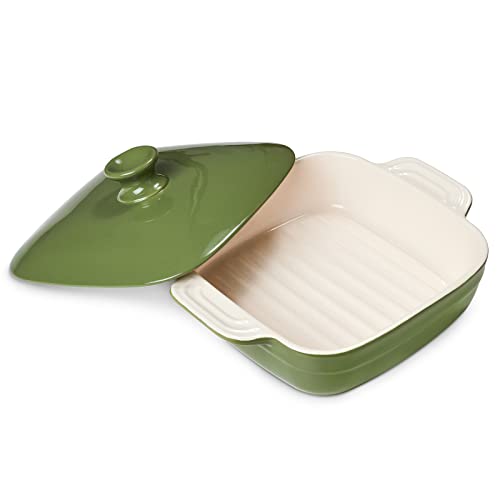
Deep Baking Dish: 8.6" in outer, 7.4" in inner, 2.4" in depth, 53.4 oz. The large baking dish for the oven is perfect for lasagna, pie, chicken, roast, and casseroles. The lasagna made in a perfect size can be divided into 2 layer/4 portions, to satisfy 2 or 3 people.

Meet Your Daily Needs: DOWAN larger and deeper ceramic baking dish measures 15.6"L x 9.3"W x 3.1" H (including handle size)-135 OZ, sized perfectly for cooking lasagna, casseroles, chicken, roast, bread, pasta, beef, and more. Whether you're cooking a family dinner or serving food, this versatile casserole dish has got you covered.
Roasted Beet Lasagna with Herbed Béchamel Substitutions and Variations
This lasagna recipe offers plenty of room to make it your own based on what you have in the pantry or what dietary needs you’re working with.
For beet alternatives, I’ve successfully used roasted butternut squash or sweet potatoes, which create a similarly earthy sweetness. You can also try golden beets if you want a milder flavor.
When it comes to cheese swaps, substitute cottage cheese for ricotta if that’s what you have on hand, or use Gruyère instead of Parmesan for a nuttier taste. I’ve even made this with goat cheese dolloped between the layers, which adds a tangy brightness that cuts through the richness beautifully.
The herbs in the béchamel are flexible too—swap chives for dill or basil depending on what’s growing in your garden.
What to serve with Roasted Beet Lasagna with Herbed Béchamel
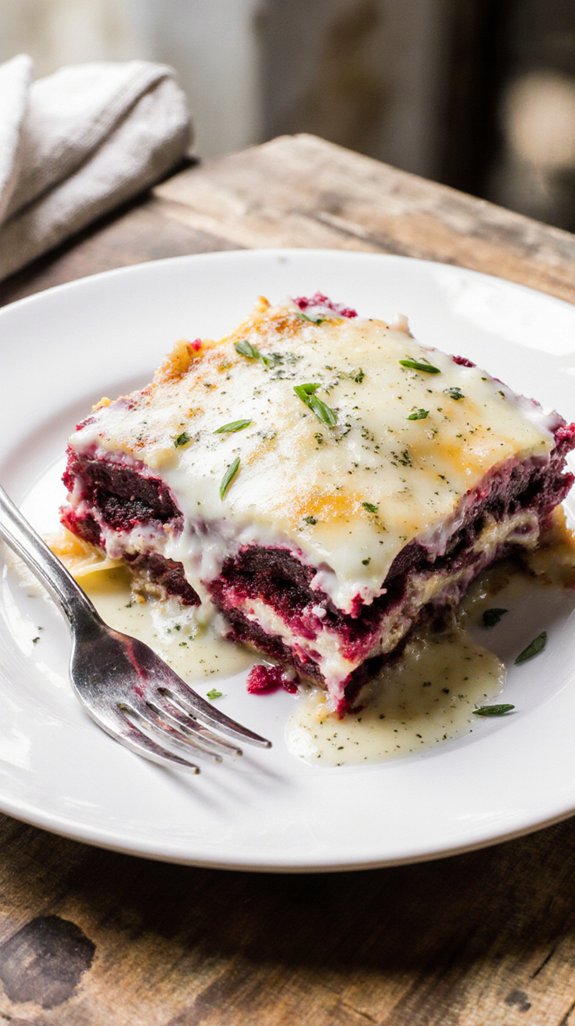
Since this lasagna is already quite rich and substantial, I usually pair it with lighter side dishes that won’t compete with those creamy, earthy layers.
A simple arugula salad with lemon vinaigrette cuts through the richness beautifully, and I often add shaved fennel for crunch. Roasted asparagus or green beans work well too, especially when you’ve got beets stealing the show already.
For wine pairings, I’ve found that a crisp Pinot Grigio or unoaked Chardonnay complements the beets without overwhelming the delicate herb béchamel.
If you prefer red, try a light Pinot Noir. My mother always served crusty bread alongside, which honestly isn’t necessary given the pasta, but sometimes tradition wins over logic, and I’m not complaining when there’s extra béchamel to sop up.
Shop Related Products

Set of 4 bamboo salad bowls, Each measures: 7" diameter x 2 1/4" high, Individual bowls are beautiful as serving bowls for fruits and salads

Woven Wood Construction – Lightweight serving bowl adds a warm natural look to tabletop presentations

Salad set is perfect for intimate dinners or entertaining guests
Final Thoughts
When I first made this roasted beet lasagna years ago, I honestly didn’t expect it to become one of those recipes I’d return to again and again, but something about those sweet, earthy layers has kept me coming back.
The flavor balance between those roasted beets and the herbed béchamel creates something genuinely special, not just pretty on the plate. I’ve served this to skeptical carnivores who’ve gone back for seconds, and that always makes me smile a little.
It’s also fantastic for meal prep since it actually tastes better the next day, once all those flavors have had time to settle in together.
Whether you’re feeding vegetarians or just looking to shake up your dinner routine, this lasagna delivers.
Frequently Asked Questions
Can I Use Golden Beets Instead of Red Beets?
Yes, I recommend using golden beets! You’ll enjoy golden beet benefits like the same sweet flavor and nutrients. The main beet color differences affect presentation—golden beets won’t stain the lasagna pink, creating a lighter appearance.
How Long Does Leftover Beet Lasagna Last in the Refrigerator?
I’d store leftover beet lasagna in an airtight container in the refrigerator for up to 4 days. The béchamel sauce and ricotta keep well when properly covered, ensuring your leftovers stay fresh and delicious.
Can I Make This Lasagna Without a Béchamel Sauce?
Yes, you can skip the béchamel. I’d suggest using substitutes for béchamel like ricotta thinned with milk, or alternative sauces such as marinara or a simple garlic cream sauce to keep the layers moist.
Do I Need to Boil the Lasagna Noodles First?
No, you don’t need to boil the lasagna noodles first since I’m using no-boil noodles. However, if you’re using traditional noodles as noodle alternatives, you’ll need to complete the boiling lasagna process beforehand.
Can I Freeze the Lasagna Before or After Baking?
You can freeze the lasagna before baking for up to a month. When ready to serve, I’d bake it frozen at 350°F, adding extra baking time. These freezing tips guarantee convenient meal prep ahead.