I’ll never forget the first time I attempted a sirloin tip roast, convinced I’d ruin an expensive cut of meat, only to discover it’s surprisingly forgiving. This recipe transformed my Sunday dinners from stressful experiments into confident traditions, and I’ve since learned that perfecting this roast isn’t about fancy techniques or restaurant secrets. The real magic lies in understanding a few simple steps that make all the difference between tough, disappointing meat and fork-tender perfection.
Why You`ll Love this Perfect Sirloin Tip Roast
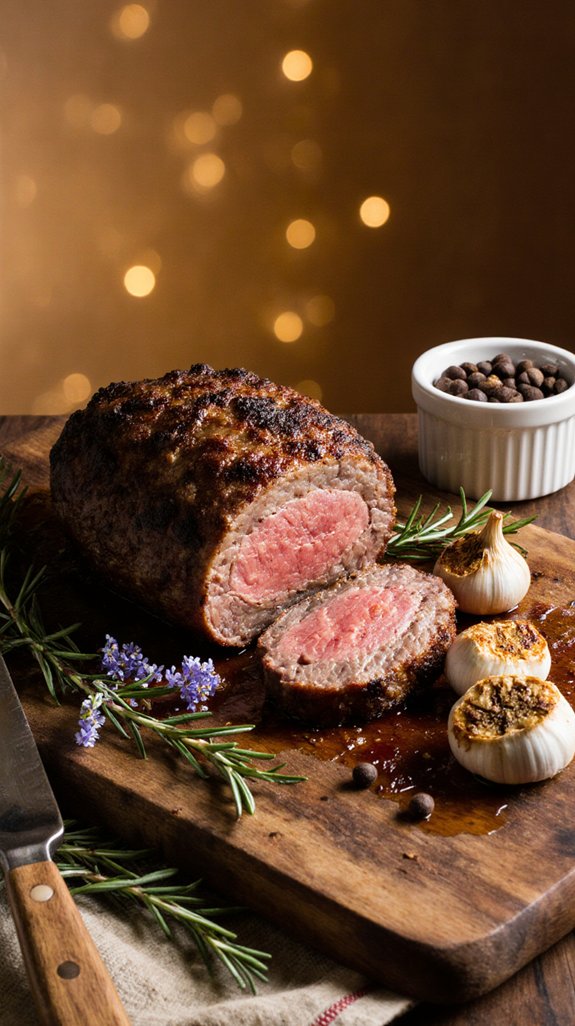
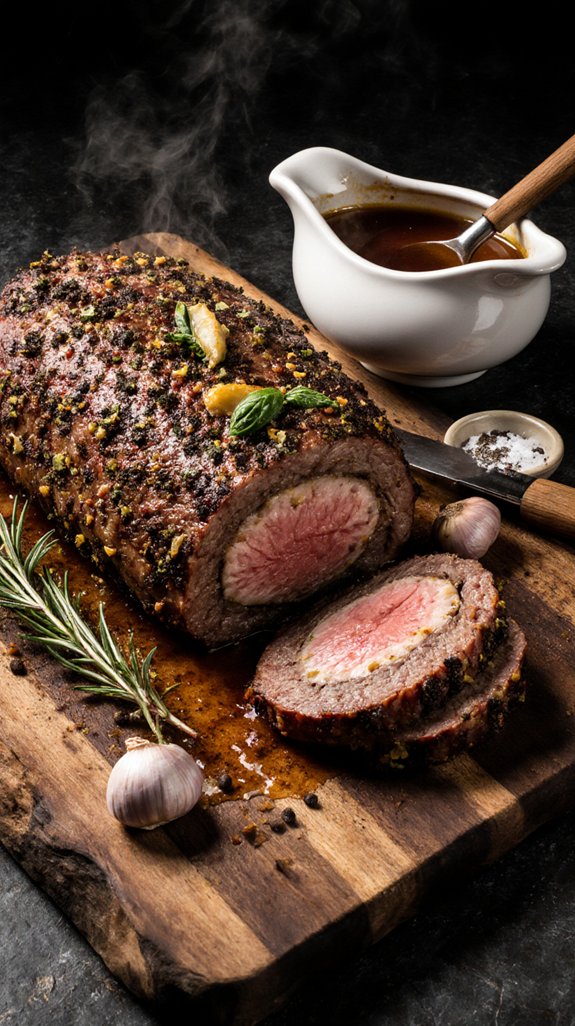
When I first mastered this sirloin tip roast, I felt like I’d revealed a secret that fancy steakhouses had been keeping from me for years. The savory flavors that develop during the searing process, combined with the herb-infused crust, create something truly remarkable.
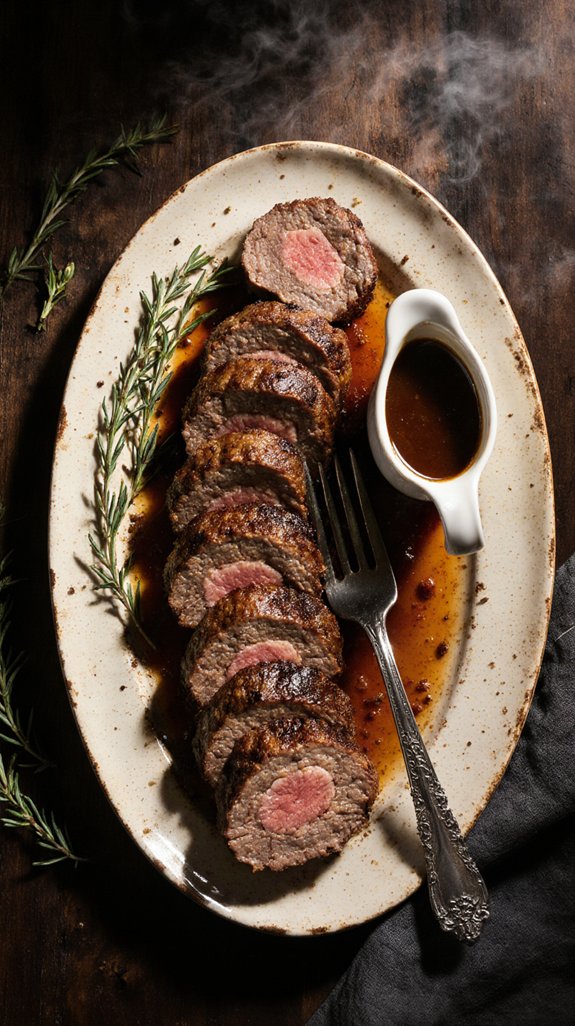
What I love most is how forgiving this method is—the wire rack guarantees even cooking, while the liquid keeps everything moist. You’ll get tender meat that slices beautifully, whether you prefer it medium-rare or medium.
The garlic cloves tucked into those little pockets release their magic as everything roasts, and that au jus? It’s liquid gold.
Best of all, this impressive centerpiece costs a fraction of what you’d pay at a restaurant, yet delivers steakhouse-quality results.
What ingredients are in Perfect Sirloin Tip Roast?
The Perfect Sirloin Tip Roast requires a carefully selected combination of ingredients that work together to create a flavorful, tender result. The foundation is a quality sirloin tip roast weighing between 5 to 8 pounds, which provides enough meat to feed a crowd while remaining manageable in a standard roasting pan.
The supporting ingredients include both fresh aromatics and dried seasonings that build layers of flavor throughout the cooking process.
Ingredients:
- 1 sirloin tip roast (5 to 8 lbs.)
- 1 cup water
- 1/2 cup red wine
- 6 garlic cloves
- 3 bay leaves
- 4 tablespoons au jus mix
- Dijon mustard
- Minced onions or onion powder
- Granulated garlic powder
- Basil
- Rosemary (crushed)
- Tarragon
- Salt
- Ground black pepper
- 100% extra virgin olive oil
The beauty of this recipe lies in its flexibility with the dried seasonings—the amounts are intentionally left to your preference, allowing you to adjust based on your taste and the size of your roast.
The combination of fresh garlic cloves inserted directly into the meat and granulated garlic powder guarantees garlic flavor permeates throughout. Using 100% extra virgin olive oil is important for the initial searing, as it can withstand high heat while adding its own subtle flavor.
The red wine and water mixture creates steam that keeps the roast moist during the long cooking process, while the au jus mix adds depth to the final pan juices.
How to make this Perfect Sirloin Tip Roast
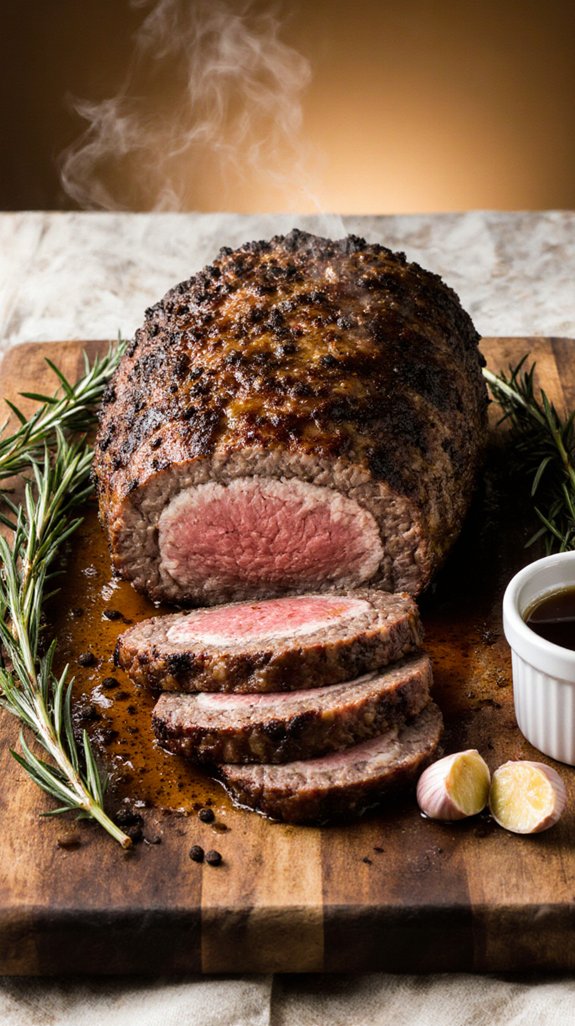
The key to achieving the perfect sirloin tip roast starts well before it enters the oven. Begin by placing your 5 to 8 pound sirloin tip roast in the refrigerator a couple of days ahead of time, then set it at room temperature for 1 hour before cooking—this allows for more even cooking throughout.
After thoroughly rinsing the roast and patting it dry with paper towels, generously season all sides with salt and ground black pepper. Heat your roasting pan on medium-high with a coating of 100% extra virgin olive oil for about 4 minutes until very hot. This next step requires caution, so wear a long sleeve shirt and oven gloves to protect yourself from hot oil splatters.
Place the roast into the hot pan and sear it on all sides until nicely browned, which should take 6 to 8 minutes total and render about 1/2 cup of fat.
Once seared, transfer the roast to a wire rack set in another roasting pan. Pour 1 cup of water over the roast, making sure it covers the bottom of the pan, then add 1/2 cup of red wine.
Take 6 garlic cloves, cut them in half lengthwise, and use a small knife to cut slits into the top of the roast where you’ll insert these garlic halves—this infuses the meat with incredible flavor from the inside out.
Next, generously brush the entire roast with Dijon mustard, which creates a flavorful crust and helps the seasonings stick. Season again with salt and pepper, then sprinkle the minced onions (or onion powder), granulated garlic powder, basil, crushed rosemary, tarragon, and 4 tablespoons of au jus mix evenly over the surface.
Place the uncovered roast in the middle of an oven preheated to 325 degrees and cook for 2 1/2 to 3 1/2 hours, but here’s the trick: remove it slightly before your desired doneness. If you want medium-rare, take it out when it’s rare; for medium, remove it at medium-rare. For consistently excellent results, investing in premium cooking appliances can make temperature control and timing much more precise.
Once out of the oven, tent the roast with aluminum foil and let it stand for 20 to 30 minutes—this resting period allows the juices to redistribute throughout the meat and lets the roast finish cooking to perfection.
After resting, move it to a cutting board, carve immediately, and don’t forget to collect all the pan juices along with that 1/2 cup of rendered fat from the searing process to serve as a delicious au jus alongside your perfectly cooked roast.
Shop Related Products

Safe & Non-Toxic Material: Armorbear roasting pan is crafted from premium, heavy-duty stainless steel that is 100% PFOA and PFAS-free, ensuring a safe, toxic-free cooking environment for your entire family.

NONSTICK ROASTING PAN WITH RACK: The turkey roasting pan (15" x 11") is spacious, deep and sturdy enough to accommodate a 14-pound turkey. Also a solid turkey pan is good for a whole lot more than gearing up for Thanksgiving. Besides a big hunk of meat, the roast pan is great for vegetables, whole or stuffed chicken, steak, marinated salmon and so on.

SUPERIOR CONSTRUCTION: Crafted from aluminized steel, this nonstick roasting pan offers unmatched durability, exceptional heat distribution, and strong resistance to corrosion. The premium food-grade non-stick coating ensures effortless food release and quick cleanup, without any PTFE, PFOA, cadmium, or lead.
Perfect Sirloin Tip Roast Substitutions and Variations
While this recipe produces an outstanding roast with its specific combination of herbs and seasonings, I’ve learned over the years that you can easily adapt it to suit what’s in your pantry or your family’s taste preferences.
For herb alternatives, thyme works beautifully in place of tarragon, and oregano can substitute for basil if that’s what you have available.
I’ve also had success using white wine instead of red, which creates a lighter-tasting au jus that some prefer. The cooking techniques remain the same regardless of your substitutions, though you might adjust the seasoning amounts based on your family’s preferences.
My grandmother always added a touch of Worcestershire sauce to her au jus, which I’ve adopted as my own variation that adds wonderful depth.
Shop Related Products

Versatility For Every Recipe: From roasting turkey and beef to baking lasagna, brownies, or casseroles, this turkey pan with rack adapts to any recipe. The removable rack doubles as a cooling rack for cookies and pastries, adding even more functionality to your kitchen.

HexClad’s Hybrid technology features a laser-etched hexagonal nonstick surface that combines both stainless-steel and our TerraBond ceramic coating for the ultimate sear and easy cleaning.

HEALTHY - E-far metal roasting pan with racks is made of high quality stainless steel without any toxic and chemical coating, No harmful substance leeching into your food, Great alternative to aluminum pans and Teflon coating pans, Healthy for daily use
What to serve with Perfect Sirloin Tip Roast
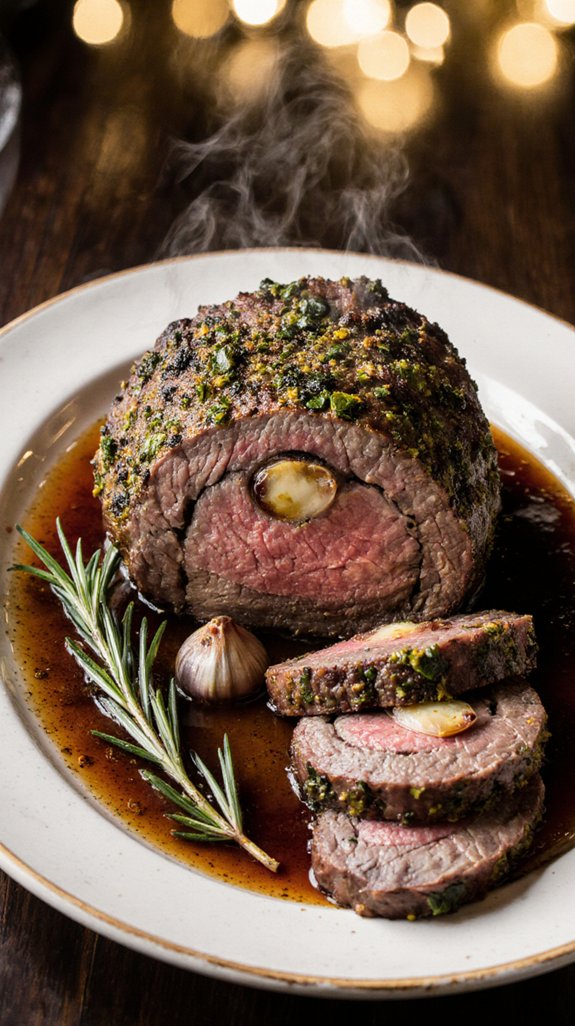
How do you choose the perfect side dishes to complement a roast that’s been seasoned with this many bold flavors?
I’ve learned that simple sides options work best here. The roast carries enough complexity on its own, so I reach for classic pairings like roasted fingerling potatoes, steamed green beans with butter, or a crisp Caesar salad.
My grandmother always served Yorkshire pudding alongside her roasts, and that tradition continues at my table.
For wine pairings, I prefer a medium-bodied Cabernet Sauvignon or Merlot that can stand up to the garlic and herbs without overpowering the meat.
The au jus becomes your secret weapon, so drizzle it generously over everything on the plate.
Final Thoughts
After making this sirloin tip roast dozens of times over the years, I’ve come to appreciate how forgiving it can be for home cooks who might feel intimidated by larger cuts of meat.
The roast preparation might seem involved at first glance, but once you’ve done it a couple of times, the steps become second nature.
What I love most is that even if your timing isn’t perfect, the resting period really does save the day by letting those juices settle back into the meat.
My biggest cooking tips would be to trust your meat thermometer, don’t skip the searing step, and resist cutting into it immediately.
That waiting period feels eternal, I know, but it truly makes all the difference between a good roast and an exceptional one.
Frequently Asked Questions
Can I Use a Different Cut of Beef Instead of Sirloin Tip Roast?
Yes, I’ll gladly help you explore alternative beef cuts! You can substitute top round, bottom round, or tri-tip roast. Each offers unique flavor profiles, though cooking times may vary slightly based on the cut’s thickness and marbling.
How Do I Know When the Roast Has Reached the Desired Internal Temperature?
I’ll use a meat thermometer to check the internal temperature during the cooking time. For medium-rare, I’m looking for 130-135°F, and for medium, I’ll aim for 135-145°F before removing it from the oven.
Can I Make This Recipe in a Slow Cooker or Instant Pot?
Yes, you can adapt this recipe, though I’d need to provide different slow cooker tips and instant pot adjustments since the original searing and roasting method creates a distinct crust and texture that these appliances won’t replicate exactly.
How Should I Store and Reheat Leftover Sirloin Tip Roast?
I’ll store leftovers in an airtight container in the refrigerator for up to four days. When reheating, I recommend using low heat in the oven with a bit of au jus to maintain moisture and prevent the meat from drying out.
What Size Roasting Pan Works Best for This Recipe?
I’d use a roasting pan that’s at least 14×10 inches to accommodate a 5-8 pound roast comfortably. For roasting pan materials, I prefer heavy-duty stainless steel or aluminum, as they distribute heat evenly and won’t warp.