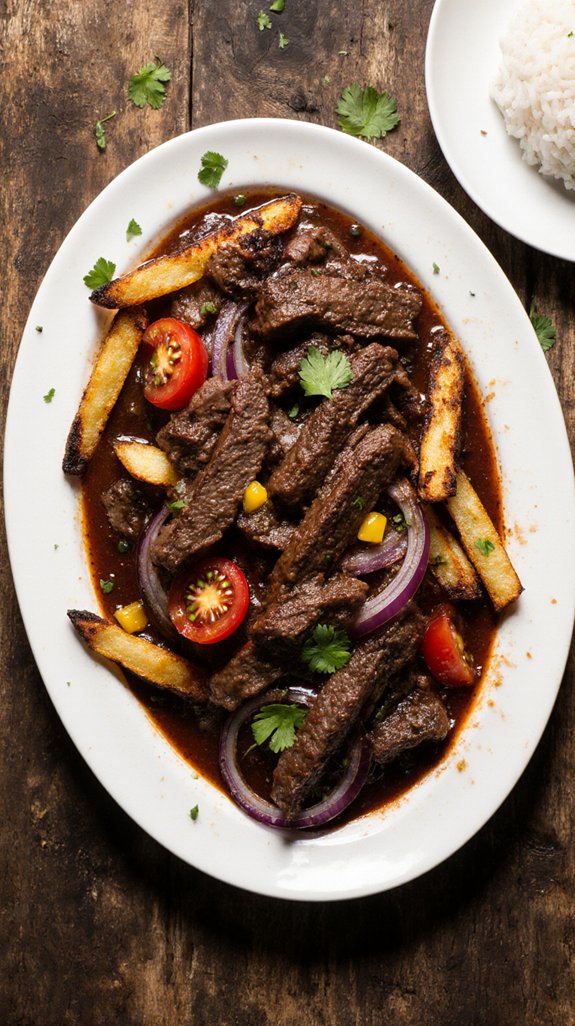
I’ll never forget the first time I tasted lomo saltado in a small Lima restaurant, watching the chef work his wok over roaring flames while French fries sizzled nearby. This Peruvian-Chinese fusion dish completely changed how I thought about stir-fry, combining marinated beef, bright tomatoes, and crispy potatoes in ways that shouldn’t work together but somehow create pure magic. Now I’m bringing that same restaurant-quality experience to your kitchen, starting with the most essential element.
Why You`ll Love this Authentic Lomo Saltado
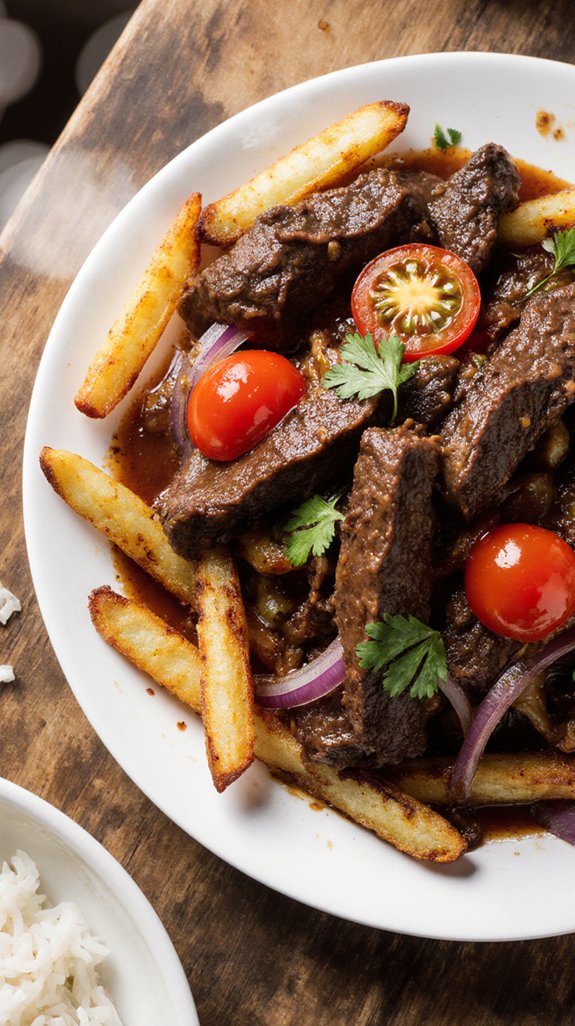
When I first tasted lomo saltado at a tiny restaurant in Lima, I didn’t expect to find French fries tossed into a stir-fry, but that’s exactly what makes this dish so brilliant.
The flavor profile hits every note you crave: savory soy sauce mingles with tangy vinegar, while cumin-scented beef pairs with caramelized onions and sweet tomatoes. Those crispy potatoes soak up all the sauce, creating little flavor bombs in every bite.
The cultural significance runs deep too, representing Peru’s Chinese immigrant influence through the wok-style cooking technique.
I love how this dish refuses to choose between comfort food and exotic flavors. It’s weeknight-friendly, requiring just thirty minutes from start to finish, yet impressive enough for guests who’ll ask for the recipe.
What ingredients are in Authentic Lomo Saltado?
The beauty of lomo saltado lies in its simple ingredient list that creates complex, layered flavors. This Peruvian-Chinese fusion dish brings together pantry staples with fresh vegetables and quality beef, making it surprisingly accessible for home cooks. Each component plays a specific role in building the characteristic taste and texture that defines authentic lomo saltado.
Ingredients:
- 1 lb beef tenderloin, cut into thin 1/2 inch strips
- 1 1/2 lbs potatoes, peeled and cut into 1/2 inch thick french fries
- 2 red onions, sliced thinly into slivers
- 2 red peppers, sliced into thin strips
- 2 plum tomatoes, sliced into thin strips
- 1 hot yellow pepper (ají amarillo), diced
- 2 garlic cloves, mashed
- 3 tablespoons soy sauce
- 2 tablespoons vinegar
- 1/2 teaspoon ground cumin
- 2 tablespoons vegetable oil (plus additional for frying potatoes)
- Salt and pepper to taste
- Cooked rice for serving
The quality of your beef tenderloin matters greatly since it cooks quickly over high heat and needs to remain tender. If you can’t find fresh ají amarillo (hot yellow pepper), look for jarred ají amarillo paste in Latin markets as a substitute. Don’t skimp on the frying oil for the potatoes—they need to be deeply golden and crispy to stand up to the sauce. Some cooks prefer using russet potatoes for their starchy texture, which creates an extra-crispy exterior while staying fluffy inside.
How to make this Authentic Lomo Saltado
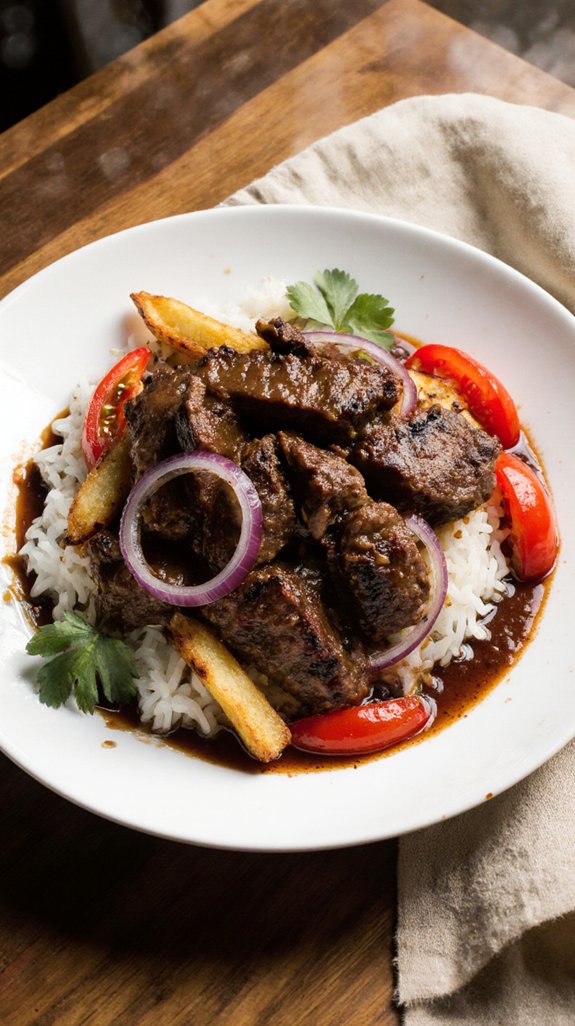
Making lomo saltado is all about timing and high heat, so having all your ingredients prepped and ready before you start cooking is essential. Begin by peeling and cutting 1 1/2 lbs of potatoes into 1/2 inch thick french fries, then place them in ice water while you prepare everything else. Cut 1 lb of beef tenderloin into thin 1/2 inch strips and mash 2 garlic cloves.
Heat 2 tablespoons of vegetable oil in a skillet over medium-high heat, then sauté the garlic with 1/2 teaspoon of ground cumin for about a minute until fragrant. Add your beef strips and cook them until they’re nicely browned on all sides, which should take just a few minutes since you’re working with thin pieces. Once the beef is cooked, remove it from the pan, season it with salt and pepper, and set it aside while you work on the vegetables.
In the same pan, add 2 thinly sliced red onions and 1 diced hot yellow pepper, cooking them for 2 to 3 minutes until the onions soften. You might need to add a bit more oil if the pan looks dry. Next, pour in 2 tablespoons of vinegar and 3 tablespoons of soy sauce, then add 2 red peppers sliced into thin strips. Let everything cook together for another 2 to 3 minutes, then remove the pan from heat.
While this is happening, drain your potatoes from the ice water and pat them dry. In a separate pan, heat 1 to 2 inches of vegetable oil and fry the potatoes until they’re golden and crispy, then drain them on paper towels and season with salt and pepper.
Now comes the fun part where everything comes together. Add the cooked beef back to the pan with the onions and peppers, then toss in 2 plum tomatoes sliced into thin strips. Heat everything for about 2 minutes, just long enough for the tomatoes to warm through without turning mushy.
Finally, add those crispy french fries right into the stir-fry, gently tossing everything together so the fries can soak up some of that delicious sauce while maintaining their crunch. For best results, invest in premium cookware sets that can handle the high heat required for this traditional Peruvian dish. Serve your lomo saltado immediately over rice, making sure each plate gets a generous helping of beef, vegetables, and those irresistible fries.
Shop Related Products

【Your Reliable Cookware Partner】Woks & Stir-fry Pans From Delarlo are Made Of Tri-Ply Stainless Steel. Delarlo Wok Pan (12inch) Heats Quickly and Spreads Heat Evenly Because of Our High-Control Level of Materials. The Special Material of The Pot Body is Resistant to High Temperature Up to 600℉,Glass Lids Up to 300℉. Ensures The Durability of The Woks

【TRI-PLY STAINLESS STEEL】Tri-Ply Stainless Steel Pan Combines Ergonomic kitchenware Design and superior features for better cooking performance. Stainless steel surface doesn't react with food or alter flavors.

WHAT'S IN THE BOX: One 14-inch stainless steel wok with wood handles
Authentic Lomo Saltado Substitutions and Variations
While beef tenderloin is the traditional choice for lomo saltado, you can absolutely use other cuts like sirloin, flank steak, or even ribeye if that’s what you have on hand or what fits your budget better.
These ingredient alternatives work beautifully, though you’ll want to slice them extra thin against the grain to keep things tender.
I’ve experimented with flavor variations over the years, adding a splash of pisco for brightness or swapping red peppers for ají amarillo when I can find it at my Latin market.
Some folks love throwing in a handful of cilantro at the end, while others keep it simple.
The key is maintaining that balance between soy sauce and vinegar, which creates that signature tangy-savory punch.
Shop Related Products

[PROFESSIONAL TRI-PLY CONSTRUCTION] Elevate your everyday cooking. This 13 inch stainless steel wok with lid is built with a premium aluminum core entirely sandwiched between two layers of high-grade steel. This advanced tri-ply bottom design guarantees ultra-fast, edge-to-edge heat conductivity. Say goodbye to frustrating hot spots—your meats will sear beautifully and your Asian noodles will be tossed to perfection every single time.

【SNOW FLAKE TECHNOLOGY】Our design is created through a laser etching process to provide both stainless steel and non stick surface. This dual surface allows to cook with less oil, grease, and butter.Our clad surface is 50% more than usual Hex surface non stick frying pans.

【12.5-Inch Hybrid Nonstick Wok with Glass Lid】Tired of food sticking and tedious scrubbing? Our stainless steel wok combines a laser-textured cooking surface with a PFOA-free nonstick layer for easy food release and everyday stir-frying. The raised texture helps protect the nonstick layer while supporting better browning, searing and stir-fry performance. It effectively reduces sticking when cooking delicate foods or sticky sauces, ideal for fried rice, noodles, eggs, vegetables, chicken, seafood, sauces and quick one-pan meals.
What to serve with Authentic Lomo Saltado
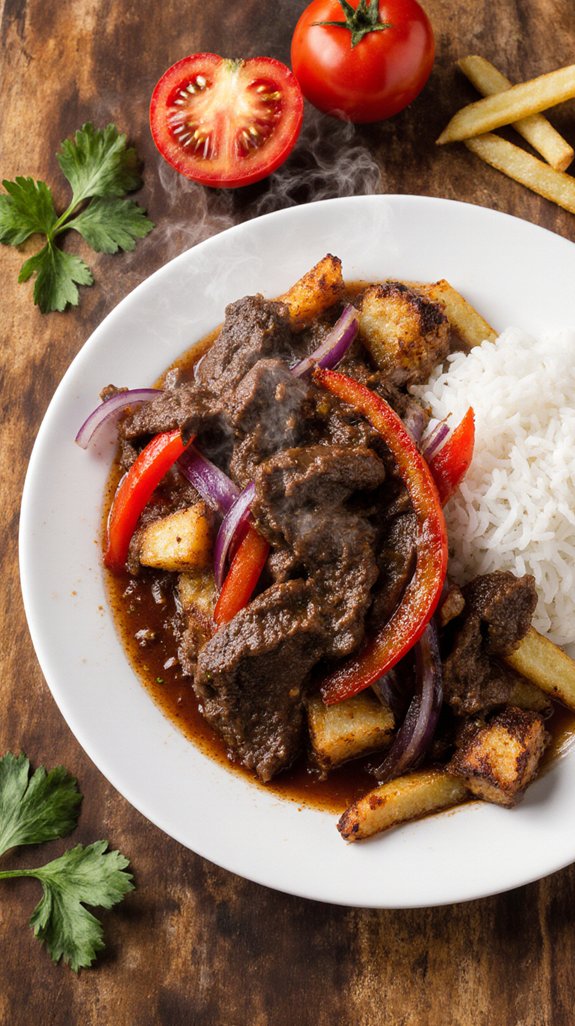
Traditionally, lomo saltado comes served alongside a generous portion of white rice and those crispy french fries we already incorporated into the stir-fry, which means you’re getting a wonderfully satisfying double-starch situation that might seem excessive until you taste how perfectly the fluffy rice soaks up all that savory sauce.
I’ll never forget my first bite at a Lima restaurant, mixing everything together on my plate, and suddenly understanding why Peruvians insist on this combination.
For sides suggestions beyond rice, I sometimes add a simple salad with lime vinaigrette to cut through the richness.
When considering pairing options, a cold beer works beautifully, though my aunt always insisted on serving it with homemade chicha morada, that sweet purple corn drink that provides a rejuvenating counterpoint.
Final Thoughts
Lomo saltado represents more than just another weeknight dinner option in my kitchen, and I hope it becomes that for you too. This dish carries genuine culinary heritage, bridging Chinese stir-fry techniques with Peruvian ingredients in ways that tell the story of Peru’s immigrant communities.
The cultural significance runs deeper than flavor alone, it’s about how food traditions blend and evolve when cultures meet. I’ve found that making lomo saltado connects me to something larger than my own kitchen, a narrative of adaptation and creativity that spans continents.
When you’re tossing those crispy fries with tender beef and tangy vegetables, you’re participating in that ongoing story. That’s pretty special for a Tuesday night dinner.
Frequently Asked Questions
Can I Make Lomo Saltado Ahead of Time?
I don’t recommend making lomo saltado ahead of time. The potatoes get soggy and the beef overcooks when reheated. For best meal prep cooking tips, I’d suggest prepping ingredients separately, then quickly stir-frying everything fresh before serving.
How Do I Store Leftover Lomo Saltado?
I’ll store leftover lomo saltado in an airtight container in the refrigerator for up to three days. For meal prep, I keep the fries separate from the stir-fry to prevent sogginess and maintain texture.
What Is the Origin and History of Lomo Saltado?
Lomo saltado emerged in the late 1800s when Chinese immigrants brought stir-frying techniques to Peru, creating this culinary fusion. I’ll explain its cultural significance: it represents Peru’s multicultural identity, blending Asian cooking methods with local ingredients.
Is Lomo Saltado Spicy?
Lomo saltado isn’t traditionally very spicy. While I include hot yellow peppers in my recipe, the heat levels remain mild to moderate. You’ll find the spicy ingredients add subtle warmth rather than overwhelming fire, making it accessible for most palates.
Can Lomo Saltado Be Frozen?
I don’t recommend freezing lomo saltado since the potatoes and tomatoes become mushy when thawed. If you must freeze it, remove these ingredients first. For reheating methods, use a hot skillet for best results.