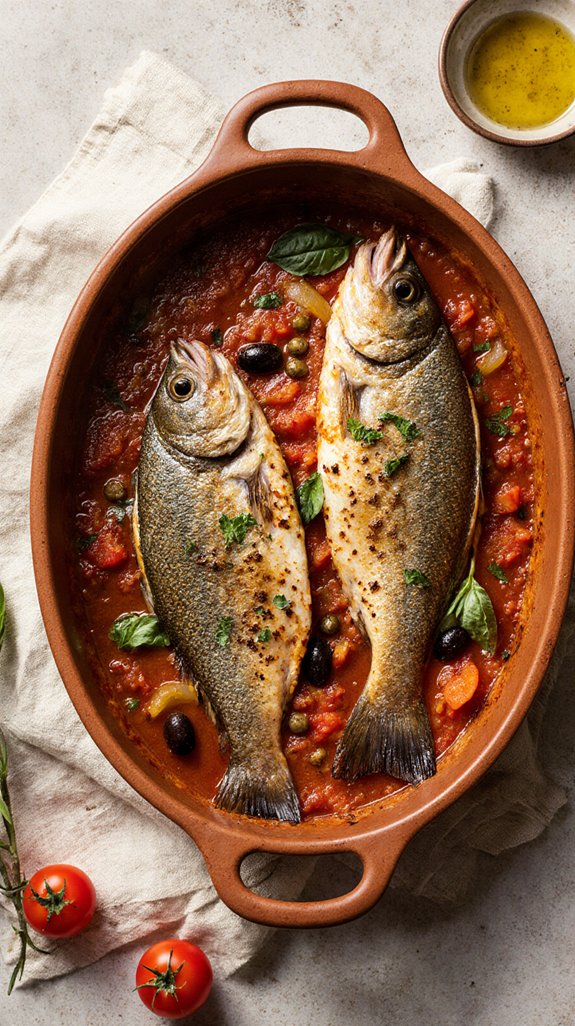
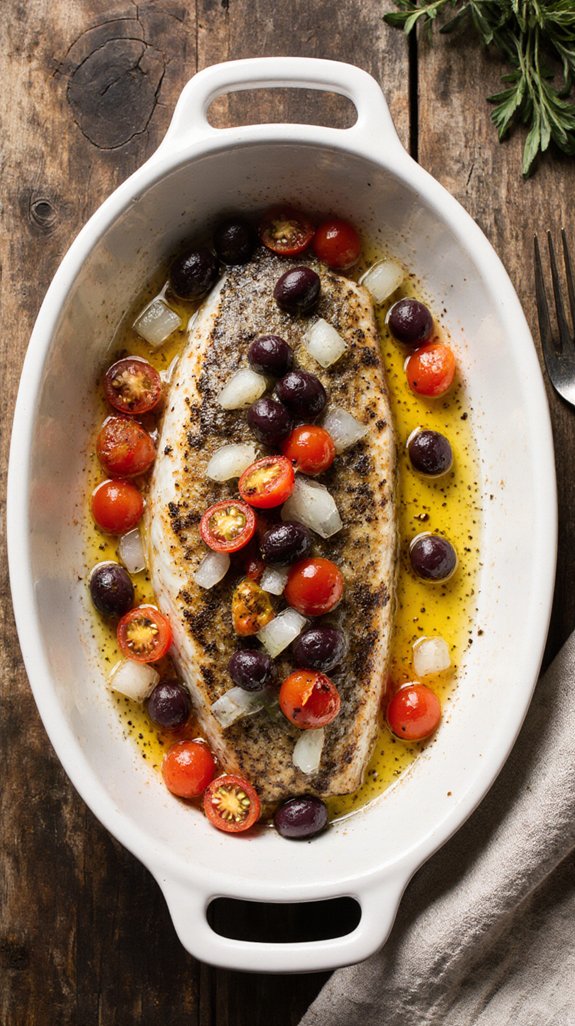
I still remember the first time I tasted swordfish at a little taverna in Greece, where the owner simply grilled thick steaks and topped them with a chunky olive mixture that made everything sing. That trip changed how I think about weeknight dinners, because you don’t need complicated techniques to make something special. This Mediterranean-inspired dish captures that same effortless elegance, and once you see how the salty tapenade transforms mild swordfish, you’ll understand why it’s become my go-to for impressing guests without breaking a sweat.
Why You`ll Love this Mediterranean Swordfish with Olive Tapenade
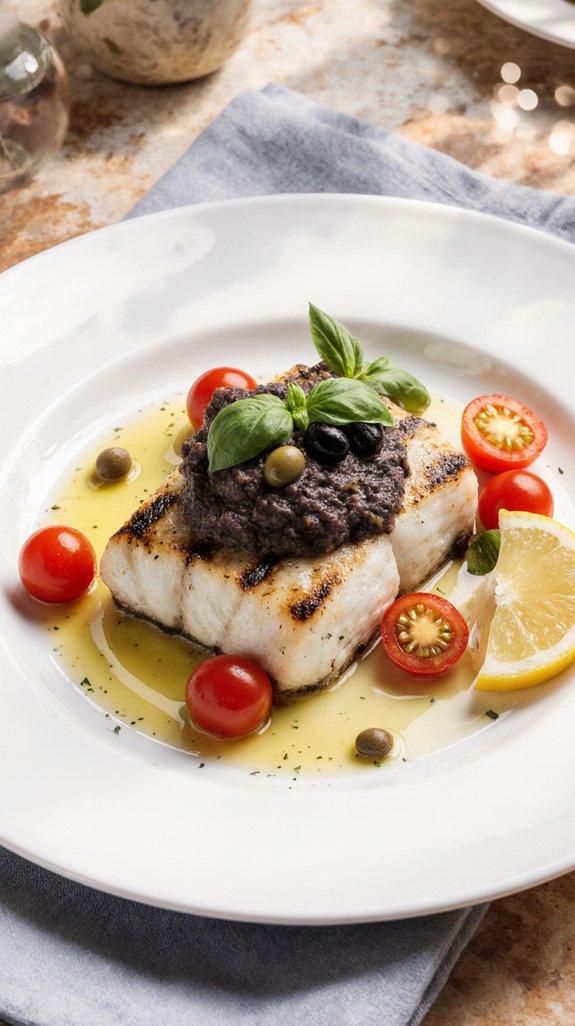
Simplicity makes this Mediterranean swordfish recipe a weeknight winner, and I mean that with my whole heart.
You’ll get dinner on the table in under 40 minutes, which leaves time for everything else life throws at you. The swordfish benefits include those heart-healthy omega-3s we’re always hearing about, plus it’s meaty enough that even picky eaters won’t complain.
Mediterranean flavors shine through without requiring a culinary degree—just olives, tomatoes, onions, and good olive oil doing what they do best.
I love how the tapenade creates this tangy, briny topping that soaks into the fish while baking. It’s the kind of meal that feels fancy enough for guests but easy enough for Tuesday night, when you’re running on fumes and frozen pizza sounds tempting.
What ingredients are in Mediterranean Swordfish with Olive Tapenade?
Getting Mediterranean swordfish on your table starts with just a handful of fresh, quality ingredients that pack serious flavor. This isn’t one of those recipes with a mile-long shopping list—everything you need is straightforward and easy to find at most grocery stores.
The star of the show is the swordfish itself, complemented by a simple but vibrant topping that brings all those Mediterranean vibes.
- 4 ounces swordfish
- 1/2 cup olive (chopped)
- 1/2 cup tomatoes (chopped)
- 1/2 cup onion (chopped)
- 2 teaspoons olive oil
When shopping for this recipe, look for swordfish steaks that are firm and smell fresh—never fishy. The olives can be whatever variety you prefer, though Kalamata or green olives work beautifully for authentic Mediterranean flavor.
Fresh tomatoes will give you the best result, and any onion variety works, though red or yellow onions add a nice sweetness. Don’t skimp on the olive oil quality since it’s one of only five ingredients; a good extra virgin olive oil will make a noticeable difference in the final dish.
How to make this Mediterranean Swordfish with Olive Tapenade
Making Mediterranean swordfish is invigoratingly simple, which is part of what makes this dish so appealing for busy weeknights. Start by preheating your oven to 350 degrees Fahrenheit.
While the oven warms up, prepare your topping by chopping 1/2 cup of olives, 1/2 cup of tomatoes, and 1/2 cup of onion into bite-sized pieces. You want them roughly the same size so they cook evenly and look nice on the finished dish. Mix these three ingredients together in a bowl—this colorful combination is what gives the dish its Mediterranean character and brings brightness to the mild swordfish.
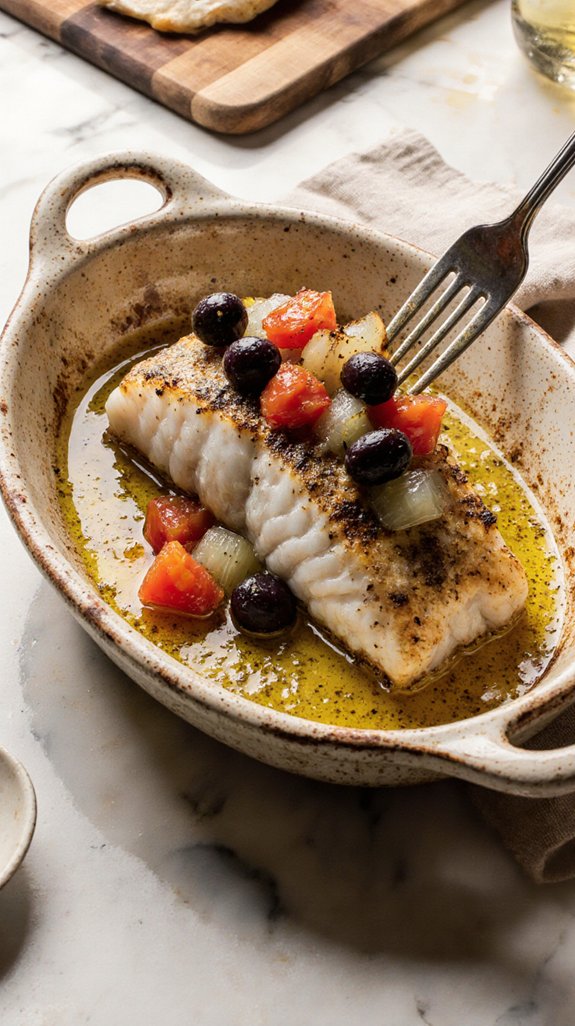
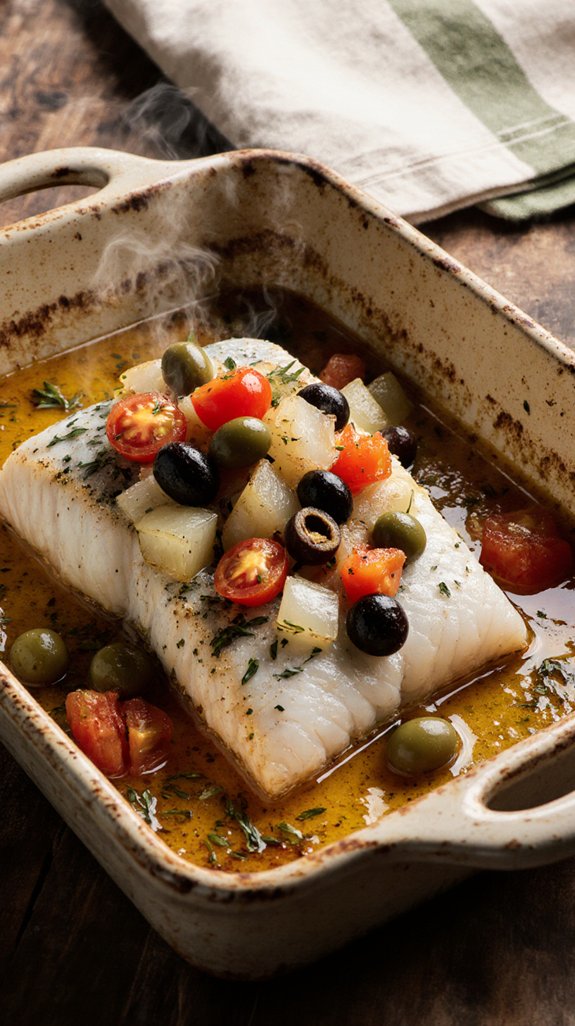
Place your 4 ounces of swordfish in a baking dish, then generously top it with the olive, tomato, and onion mixture. Make sure the topping covers the fish well so every bite gets that burst of flavor. Drizzle 2 teaspoons of olive oil over the entire dish, which helps keep the fish moist during baking and adds richness to the vegetables. The olive oil will also help the flavors meld together beautifully as everything cooks.
Slide the dish into your preheated oven and bake for 30 minutes, or until the fish flakes easily when tested with a fork. The exact cooking time might vary slightly depending on the thickness of your swordfish steak, so start checking around the 25-minute mark if your piece is on the thinner side.
You’ll know it’s done when the flesh turns opaque and separates into tender flakes. The vegetables on top should be softened and fragrant, with the tomatoes releasing their juices to create a light, flavorful sauce that pools around the fish. For consistently excellent results, consider investing in premium cookware sets that distribute heat evenly and prevent hot spots that can overcook delicate fish.
Shop Related Products

Single Layer: Fits casserole and baking dishes from 9"x13" up to 11"x15". Spacious enough for lasagna, fruit pies, and more.


Mediterranean Swordfish with Olive Tapenade Substitutions and Variations
This recipe welcomes your creativity, and I’ve found that swapping ingredients based on what’s in your kitchen often leads to happy accidents. For swordfish alternatives, try halibut, mahi-mahi, or tuna steaks, which all handle the bold Mediterranean flavors beautifully. I once used salmon when swordfish wasn’t available, and while it changed the texture slightly, my guests couldn’t stop asking for seconds. For tapenade variations, experiment with capers, sun-dried tomatoes, or roasted red peppers mixed into your olive base. You can also swap regular olives for kalamata or green varieties, each bringing distinct flavor profiles. My grandmother used to add anchovies to hers, creating a deeper, saltier punch that paired wonderfully with the fish’s meaty texture.
Shop Related Products

FLAVOR ENHANCES OVER TIME: Preseason without added oil or fats for natural nonstick surface - the grilling pan gets better and more flavorful with use over time and will last for decades with proper care
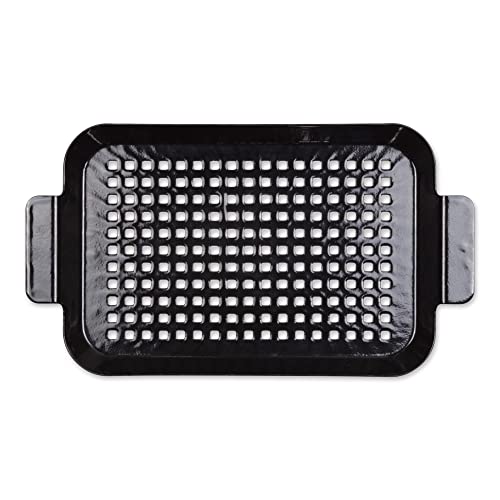
EASY GRILLING: Cook vegetables, flaky fish, shellfish, and small cuts of meat without fear of losing them through spaces in the grill grates

12" NON-STICK GRILL SKILLET WITH CLIP-ON HANDLE FOR INDOOR & OUTDOOR USE – This premium non-stick grilling skillet uniquely combines a cool-touch clip-on wooden handle with 2-inch high sides, delivering superior food control and flare-up prevention. The perfect non-stick grill pan for vegetables, seafood, and meats on gas grills, charcoal grills, and indoor cooking setups.
What to serve with Mediterranean Swordfish with Olive Tapenade
Mediterranean swordfish deserves side dishes that complement rather than compete with its bold, briny flavors, and I’ve learned through years of trial and error that keeping things simple works best.
I typically serve this with roasted vegetables like zucchini, eggplant, or bell peppers, which echo the Mediterranean theme without overwhelming the fish. A simple arugula salad with lemon vinaigrette cuts through the richness beautifully.
For heartier appetites, I’ll add couscous or orzo tossed with fresh herbs. When it comes to wine pairings, a crisp Sauvignon Blanc or unoaked Chardonnay works wonderfully, though I’ve found that a dry rosé from Provence might be my favorite match.
These side dishes create a complete meal that feels transported straight from a coastal Italian village.
Final Thoughts
After countless dinners featuring this swordfish dish, I’ve come to appreciate how a recipe this straightforward can deliver such remarkable flavor, and I think that’s really the heart of Mediterranean cooking.
The swordfish benefits are notable, packed with protein and omega-3s that support heart health, while the olive health properties add anti-inflammatory compounds to every bite.
I find myself returning to this recipe whenever I want something impressive yet effortless, something that tastes like vacation without requiring a plane ticket.
It’s become my reliable answer to “what should I make tonight?” because it delivers consistent results with minimal fuss.
That’s what good cooking should be, simple ingredients working together to create something memorable that keeps you coming back for more.
Frequently Asked Questions
Can I Use Frozen Swordfish Instead of Fresh?
Yes, you can use frozen swordfish instead of fresh swordfish for this recipe. I’d recommend thawing it completely in the refrigerator first, then patting it dry before topping with the olive mixture and baking.
How Do I Know When Swordfish Is Properly Cooked?
I’ll know your swordfish is properly cooked when it reaches an internal cooking temperature of 145°F. Look for visual cues like opaque flesh that flakes easily with a fork, rather than translucent or raw-looking meat.
What’s the Best Way to Store Leftover Cooked Swordfish?
I’ll store your leftover cooked swordfish in an airtight container in the refrigerator for up to three days. The best containers are glass or BPA-free plastic. Following proper storing guidelines guarantees it stays fresh and safe.
Is Swordfish High in Mercury Compared to Other Fish?
Yes, swordfish mercury levels are quite high compared to most other fish. I’d recommend limiting consumption for fish safety reasons—eating it occasionally rather than weekly, especially if you’re pregnant or nursing.
Can This Recipe Be Grilled Instead of Baked?
Yes, I’d recommend grilling this swordfish! Using proper grilling techniques, cook it over medium-high heat for about 4-5 minutes per side. The cooking times are much shorter than baking, ensuring moist, flaky fish.