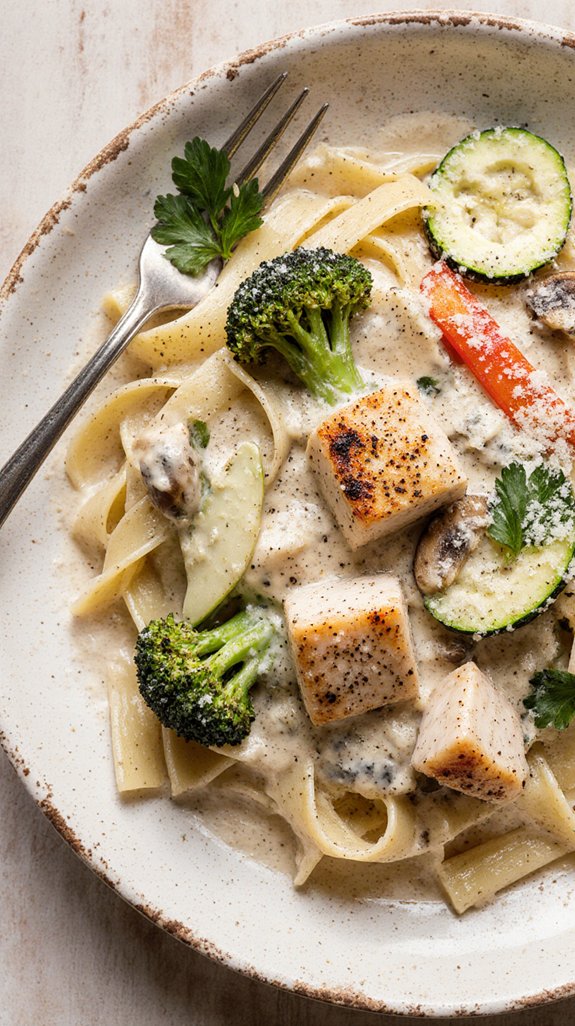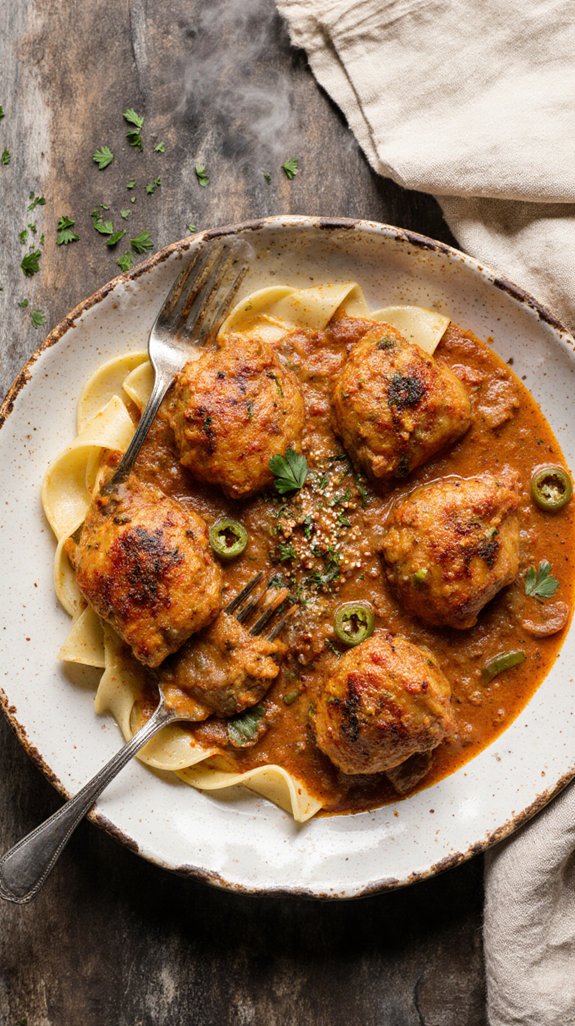
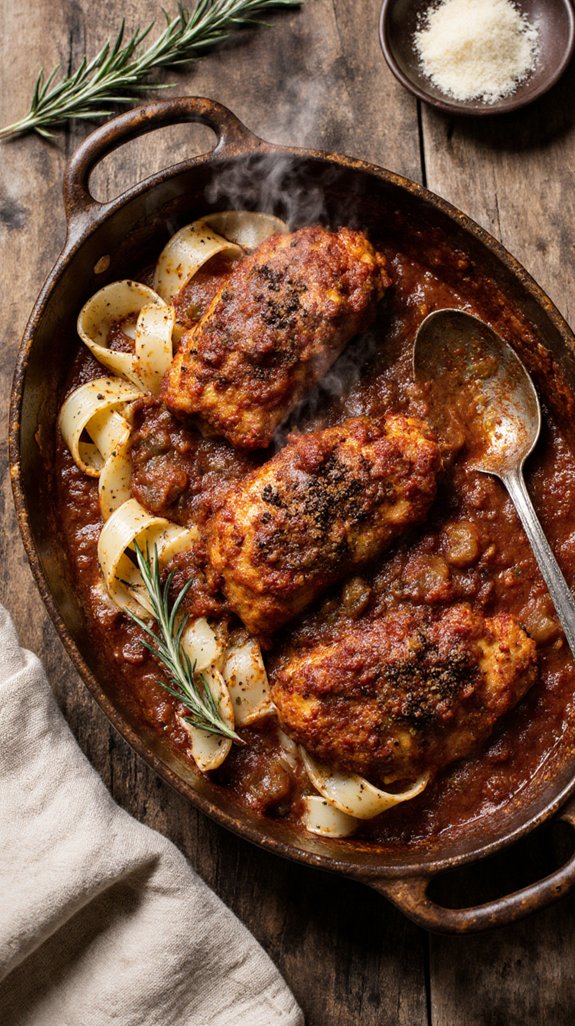
I’ve spent years chasing the perfect comfort food, and this rustic chicken cacciatore has become my answer to those evenings when I need something truly satisfying. The way tender chicken mingles with tomatoes, wine, and herbs creates layers of flavor that’ll make your kitchen smell like an Italian grandmother’s been cooking all day. What makes this recipe special isn’t complicated techniques or hard-to-find ingredients—it’s understanding how simple elements transform into something extraordinary when you give them time.
Why You`ll Love this Rustic Chicken Cacciatore
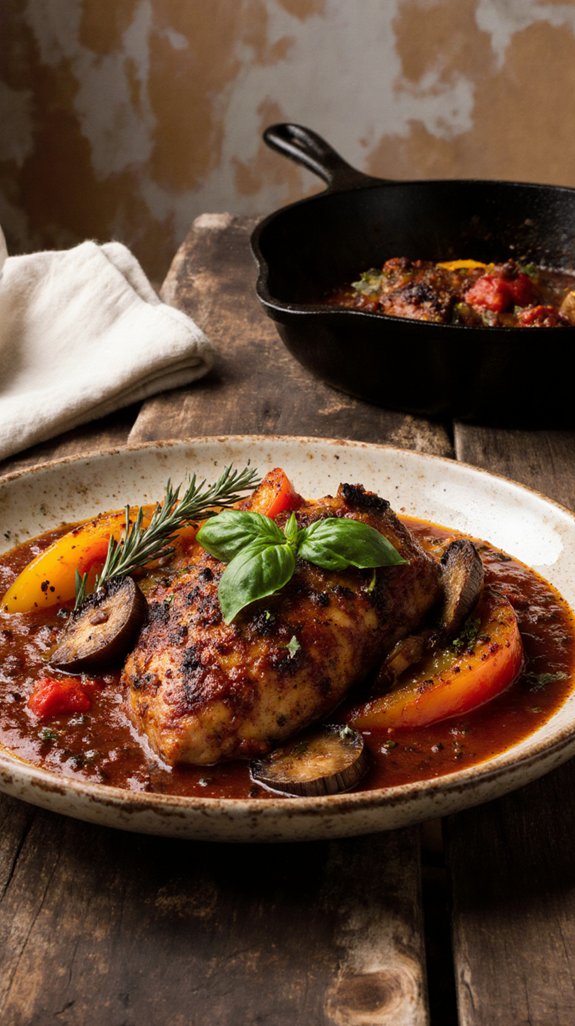
While fancy restaurant dishes have their place, sometimes you need a meal that feels like a warm hug from your Italian grandmother. That’s exactly what this rustic chicken cacciatore delivers.
I love how simple cooking techniques transform everyday ingredients into something extraordinary. The flavorful depth comes from simmering chicken in red wine, tomatoes, and aromatic rosemary for 45 minutes, allowing every element to meld together beautifully.
You’ll appreciate that this isn’t a complicated recipe requiring culinary school expertise. It’s straightforward, honest cooking that fills your kitchen with incredible aromas.
The sauce clings perfectly to the linguine, and each bite delivers that satisfying combination of tender chicken and rich tomato goodness. This is comfort food at its finest, proving that simple approaches often yield the most memorable meals.
What ingredients are in Rustic Chicken Cacciatore?
The beauty of chicken cacciatore lies in its honest, accessible ingredients that you can find at any grocery store. This recipe doesn’t demand specialty items or obscure ingredients – just quality basics that combine to create layers of incredible flavor. From the foundation of boneless chicken breasts to the aromatic rosemary and robust red wine, each component plays a crucial role in building this classic Italian dish.
Ingredients:
- 12 ounces linguine
- 1/4 cup olive oil
- 6 boneless skinless chicken breasts
- 2 yellow onions, peeled and crushed
- 1 (1 lb) can tomatoes
- 3/4 cup dry red wine
- 1/4 cup tomato paste
- 1/2 teaspoon rosemary
- 1 teaspoon salt
- 1/4 teaspoon pepper
When selecting ingredients for this dish, choose a dry red wine that you’d actually enjoy drinking – the wine’s flavor concentrates during cooking and greatly impacts the final sauce. The quality of your canned tomatoes matters too, as they form the base of your sauce alongside the tomato paste. Fresh rosemary can be substituted if you have it on hand, though you’ll want to use about three times the amount since dried herbs are more concentrated. Don’t skip the full 45-minute simmer time, as this allows the chicken to become incredibly tender while the flavors develop their characteristic depth.
How to make this Rustic Chicken Cacciatore
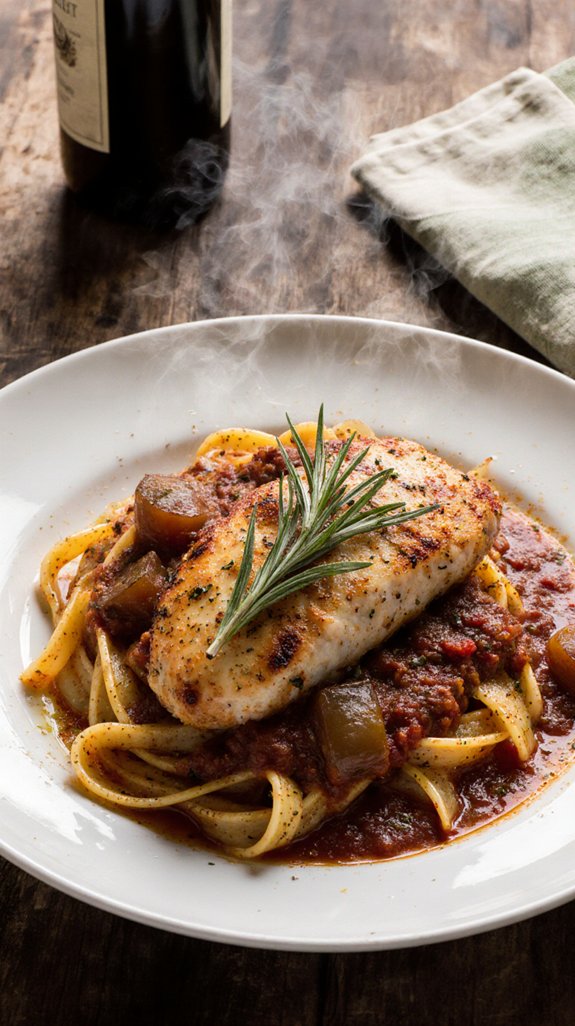
Making chicken cacciatore is a straightforward process that rewards you with deep, satisfying flavors. Start by heating 1/4 cup of olive oil in a large pot over high heat, then cook your 6 boneless skinless chicken breasts until they’re nicely browned on both sides. Remove the chicken from the pot and set it aside – don’t worry about cooking it through at this point, as it’ll finish cooking later in the sauce.
Next, add your 2 peeled and crushed yellow onions to that same pot and cook them for about 5 minutes until they begin to soften. Then add your garlic and let it cook for 4 minutes, filling your kitchen with that irresistible aroma. Pour in the 1-pound can of tomatoes, breaking up any large clumps with your spoon so everything combines smoothly.
Now comes the moment where your sauce really starts to take shape. Mix together 3/4 cup of dry red wine, 1/4 cup of tomato paste, and 1/2 teaspoon of rosemary in a separate bowl, then add this mixture to your pot. Return the chicken breasts to the pot, nestling them into the sauce, and season everything with 1 teaspoon of salt and 1/4 teaspoon of pepper.
Reduce the heat and let the whole dish simmer gently for 45 minutes – this is when the magic happens as the chicken becomes incredibly tender and the flavors meld together beautifully. Investing in premium cookware sets can make a noticeable difference in how evenly your sauce simmers and how well the flavors develop throughout the cooking process.
While your sauce is doing its thing, cook your 12 ounces of linguine according to the package directions. When everything’s ready, toss the cooked pasta with the sauce and chicken, making sure each strand gets coated in that rich, flavorful sauce before serving.
Shop Related Products

【TRI-PLY STAINLESS STEEL】Tri-Ply Stainless Steel Pan Combines Ergonomic kitchenware Design and superior features for better cooking performance. Stainless steel surface doesn't react with food or alter flavors.

【TRI-PLY STAINLESS STEEL】Tri-Ply Stainless Steel Pan Combines Ergonomic kitchenware Design and superior features for better cooking performance. Stainless steel surface doesn't react with food or alter flavors.

【Healthy skillet with lid Style】YEKSUM 7QT Saute Pan are made up of 3-Ply Fully Clad stainless steel frying pan, the entire pan body is all tri-ply Stainless Steel. 18/10 Inner Surface offer completely non toxic Cooking surface
Rustic Chicken Cacciatore Substitutions and Variations
One of the best things about chicken cacciatore is how adaptable it’s to whatever ingredients you have on hand or prefer to use.
I often experiment with herb variations beyond the classic rosemary. Fresh oregano, thyme, or basil work beautifully and add their own distinct character to the sauce. You can even combine a few herbs for a more complex flavor profile.
When it comes to pasta alternatives, don’t feel locked into linguine. I’ve served this dish over penne, rigatoni, or even wide egg noodles with excellent results.
Some nights, I skip pasta entirely and serve the chicken over creamy polenta or with crusty bread for soaking up that incredible sauce. The versatility means you’ll never get bored with this recipe.
What to serve with Rustic Chicken Cacciatore
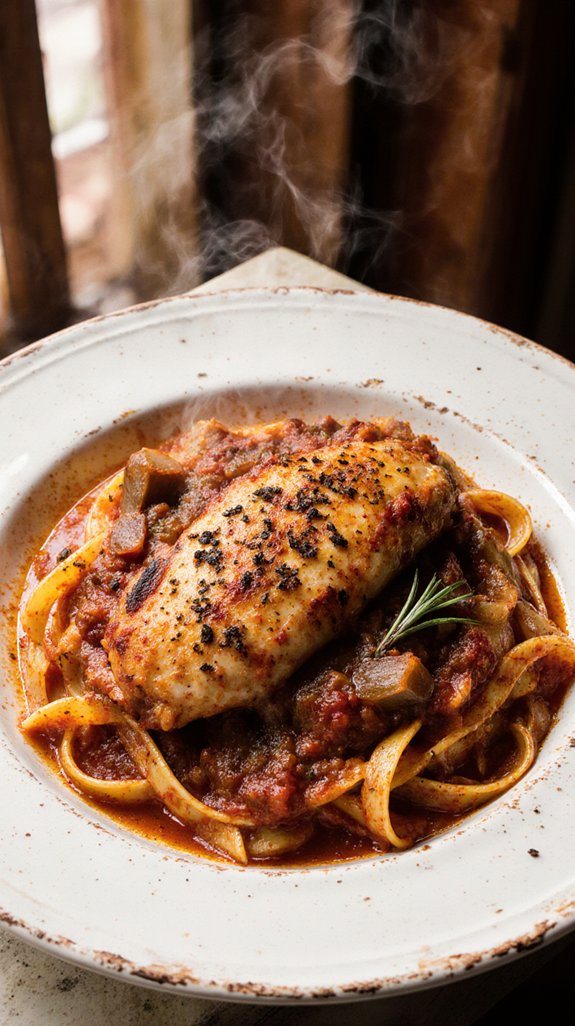
Side dishes for chicken cacciatore should complement the rich, tomato-based sauce without competing with its bold flavors.
I find that serving this dish over pasta, like the linguine in my recipe, works beautifully because it soaks up every bit of that incredible sauce.
However, you can also serve it alongside creamy polenta, crusty Italian bread, or garlic mashed potatoes.
For a lighter option, I’ll pair it with a simple arugula salad dressed with lemon and olive oil.
When it comes to wine pairings, I reach for a medium-bodied red like Chianti or Sangiovese.
These wines have enough acidity to cut through the tomato sauce while enhancing the herbs and savory notes.
A Montepulciano d’Abruzzo also makes an excellent choice.
Final Thoughts
This rustic chicken cacciatore has become one of my go-to recipes when I want to bring comfort and warmth to the dinner table without spending hours in the kitchen.
The beauty of this dish lies in how simple cooking techniques transform basic ingredients into something extraordinary. By browning the chicken first, then building layers with sautéed onions, garlic, and tomatoes, you’re creating depth that can’t be rushed.
The flavor profiles here are perfectly balanced—tangy tomatoes, earthy rosemary, and rich wine work together beautifully.
What I love most is that this recipe doesn’t demand fancy skills or hard-to-find ingredients. It’s honest, hearty food that fills your home with incredible aromas and leaves everyone asking for seconds.
Frequently Asked Questions
Can I Make Chicken Cacciatore Ahead of Time and Reheat It?
Yes, I’ve found chicken cacciatore is perfect for meal prep since it actually tastes better the next day. I always make it ahead for dinner parties, reheating it gently on the stovetop before serving.
How Long Does Leftover Chicken Cacciatore Last in the Refrigerator?
I’ll share my leftover storage experience: properly stored chicken cacciatore lasts 3-4 days in the refrigerator. My refrigerator tips include cooling it completely first, then storing in airtight containers to maintain freshness and prevent contamination.
Can I Freeze Chicken Cacciatore for Later Use?
Yes, I freeze chicken cacciatore regularly for up to three months. Here are my freezing tips: let it cool completely first, then use airtight storage containers or freezer bags, leaving some headspace for expansion.
What’s the Difference Between Chicken Cacciatore and Chicken Marsala?
I’ll explain the key distinctions: Chicken cacciatore features tomato-based sauce with herbs, while marsala uses wine and mushrooms. Their cooking techniques differ too—cacciatore simmers longer, creating heartier flavor profiles compared to marsala’s quick sauté method.
Can I Use Chicken Thighs Instead of Chicken Breasts?
Yes, I’d absolutely recommend using chicken thighs instead! These cuts actually work better for cacciatore since they stay moister during the long simmer and contribute a richer flavor profile to the sauce.